Why "The World's Biggest Battery" Matters to Your EV
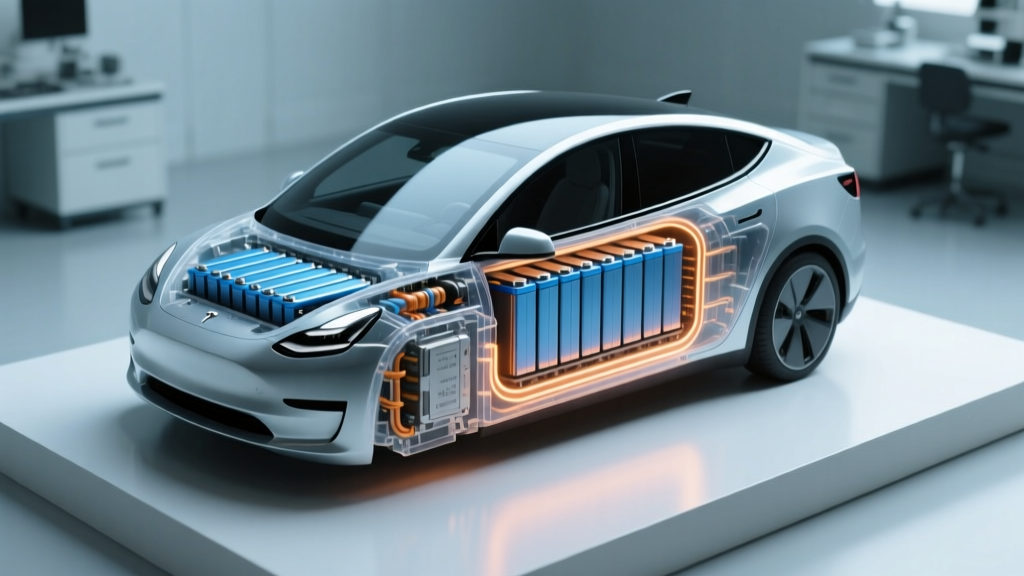
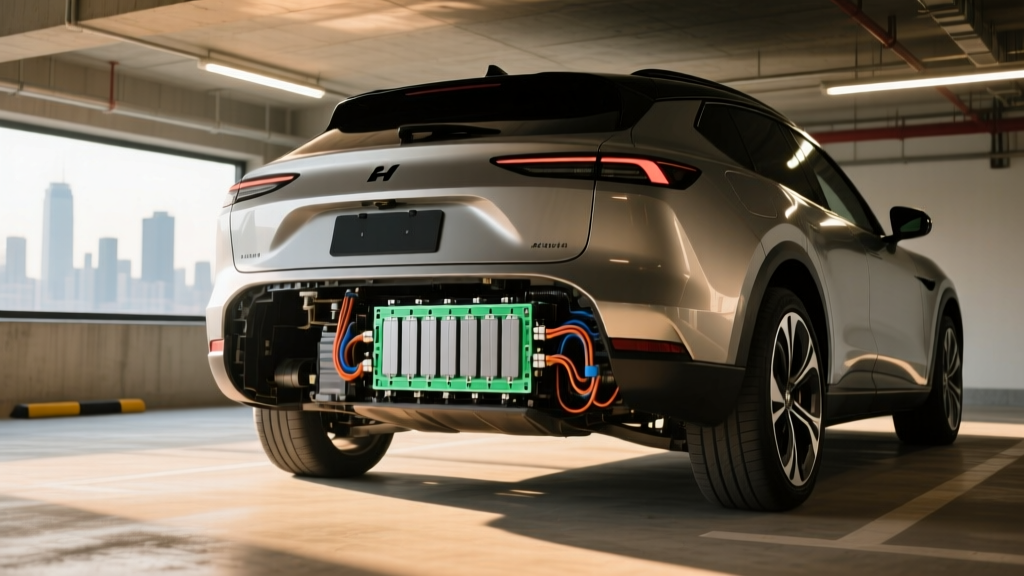
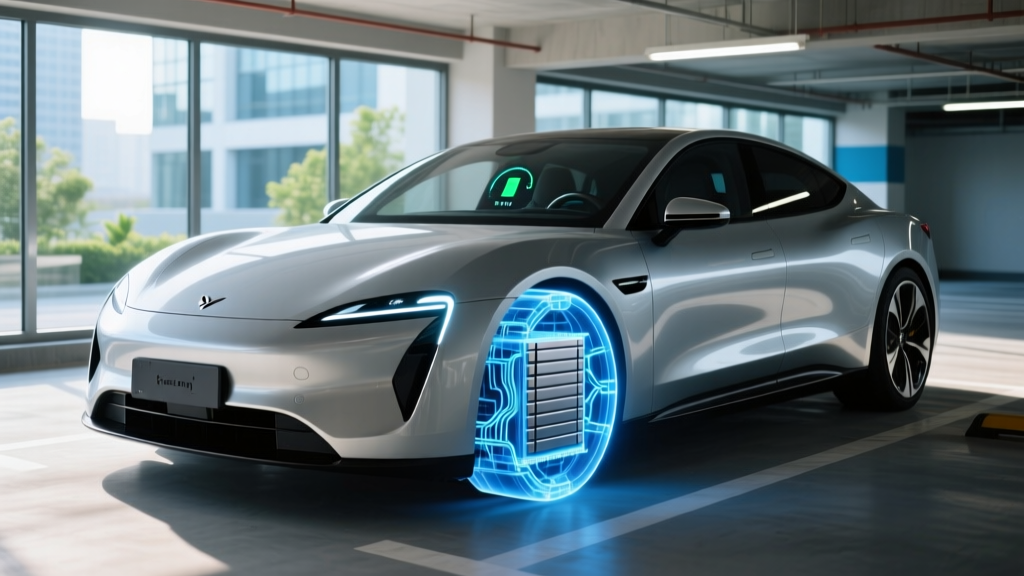
Headlines about the world's biggest battery — like Australia's Hornsdale Power Reserve (150 MW / 194 MWh) or California's Moss Landing facility (750 MWh and expanding) — capture the imagination. But grid-scale energy storage and the 60–120 kWh lithium-ion pack under your EV's floor share the same fundamental DNA: lithium-based cells managed by sophisticated battery management systems (BMS). Understanding how utility-scale battery chemistry, thermal management, and degradation research trickles down to your daily driver is the key to making smarter EV purchase and ownership decisions.
This guide breaks down exactly what's inside your EV's traction battery, how long it realistically lasts, what the warranty actually covers, and what replacement looks like if you ever need it — all with real numbers, not marketing fluff.
LFP vs NMC vs NCA: The Chemistry Under Your Seat
Not all EV batteries are created equal. The cathode chemistry determines your car's energy density, longevity, cold-weather behavior, and price. In 2026, three chemistries dominate the EV market:
- NMC (Nickel Manganese Cobalt): Used in most long-range EVs (Hyundai Ioniq 5, BMW iX, Ford Mustang Mach-E Extended Range). High energy density enables 300+ mile ranges in smaller, lighter packs.
- NCA (Nickel Cobalt Aluminum): Tesla's primary chemistry for Long Range and Performance trims. Similar energy density to NMC with slightly different thermal characteristics.
- LFP (Lithium Iron Phosphate): Found in Tesla Model 3/Y RWD, standard-range BYD models, and the Ford F-150 Lightning standard-range. Lower energy density but dramatically longer cycle life and no cobalt.
| Attribute | LFP | NMC | NCA |
|---|---|---|---|
| Energy Density (Wh/kg, cell-level) | 160–180 | 220–260 | 240–270 |
| Cycle Life (to 80% SoH) | 3,000–5,000+ | 1,000–2,000 | 1,000–1,500 |
| Cold-Weather Performance | Moderate loss; slower charge in cold | Better low-temp discharge | Good low-temp discharge |
| Cost per kWh (pack-level, 2026 est.) | ~$95–$110 | ~$120–$140 | ~$125–$145 |
| Thermal Stability | Excellent (higher runaway threshold) | Good (requires robust BMS) | Good (requires robust BMS) |
| Recommended Daily SoC Limit | 100% (no penalty) | 80% for daily; 100% for trips | 80% for daily; 100% for trips |
| Typical Use Case | Standard-range, fleet, daily commuting | Long-range, AWD, premium models | Long-range, performance (Tesla) |
Which is better? There is no universal winner. If you commute 40 miles daily and can charge at home, LFP's longer cycle life and 100% daily charging convenience make it ideal. If you regularly drive 250+ miles between charges or need AWD performance, NMC/NCA's higher energy density is worth the trade-off. For a Tesla Model 3 RWD, you're getting LFP; step up to the Long Range AWD and you're on NCA.
How Long Do EV Batteries Actually Last?
The short answer: longer than most buyers expect, and in many cases longer than the rest of the car. Data from fleet operators, manufacturer reports, and independent testing paint a consistent picture.
Here's what real-world degradation looks like across major EV platforms:
| Vehicle / Fleet | Battery Chemistry | Capacity (kWh) | Observed Degradation | Source |
|---|---|---|---|---|
| Tesla Model 3/Y (all trims) | NCA / LFP | 60–82 | ~12% loss at 150,000 miles | Tesla Impact Report |
| Nissan Leaf (2018–2023, air-cooled) | NMC | 40–62 | ~15–22% loss at 100,000 miles (climate-dependent) | Owner fleet data / Recurrent |
| Chevrolet Bolt EV/EUV | NMC (LG) | 65 | ~8–10% loss at 80,000 miles | Recurrent Auto data |
| Hyundai Ioniq 5 / Kia EV6 | NMC | 77.4 | ~5–8% loss at 60,000 miles (early data) | Owner reports, fleet sampling |
| Tesla Model S (2013–2017) | NCA | 60–100 | ~15–20% loss at 150,000+ miles | Plug In America survey |
Key takeaway: Most modern liquid-cooled EV battery packs retain 85–90% of their original capacity at 100,000 miles. The Nissan Leaf's air-cooled design is the notable exception — thermal management matters enormously. A 2026 Hyundai Ioniq 5 with its 77.4 kWh NMC pack and liquid cooling should realistically deliver 275+ miles of its EPA-rated 303-mile range even at the 100,000-mile mark.
What the Battery Warranty Actually Covers
Federal law mandates a minimum EV battery warranty of 8 years / 100,000 miles (10 years / 150,000 miles in CARB states like California). But the details matter — specifically, the capacity retention threshold.
| Manufacturer | Warranty Period | Mileage Limit | Capacity Retention Threshold | CARB-State Extension |
|---|---|---|---|---|
| Tesla (Model 3/Y RWD — LFP) | 8 years | 100,000 mi | 70% | Yes |
| Tesla (Model 3/Y LR — NCA) | 8 years | 120,000 mi | 70% | Yes |
| Hyundai / Kia | 8 years | 100,000 mi | 70% | 10 yr / 150,000 mi |
| Ford (Mach-E, F-150 Lightning) | 8 years | 100,000 mi | 70% | Yes |
| General Motors (Ultium platform) | 8 years | 100,000 mi | 70% | Yes |
| BMW | 8 years | 100,000 mi | 70% | Yes |
What triggers a warranty claim? If your battery's State of Health (SoH) drops below 70% of its original capacity within the warranty window. For a 77.4 kWh Ioniq 5, that means the usable capacity falls below ~54 kWh. In practice, most liquid-cooled packs never hit this threshold within the warranty period. The warranty covers defects and abnormal degradation — it does not cover physical damage from accidents or flooding.
EV Battery Replacement Cost: The Numbers
This is the question that keeps prospective buyers up at night. Let's ground it in reality with actual replacement pricing data, then add the context that makes it less alarming.
| Vehicle | Battery Capacity | Full Pack Replacement (parts + labor) | Typical Replacement Trigger |
|---|---|---|---|
| Tesla Model 3 (RWD / LR) | 60–82 kWh | $12,000–$16,000 | Physical damage; rarely degradation |
| Chevrolet Bolt EV | 65 kWh | $14,000–$16,000 | Post-recall replacements; degradation uncommon |
| Hyundai Ioniq 5 | 77.4 kWh | $15,000–$20,000 | Rare; most covered under warranty |
| Ford F-150 Lightning (ER) | 131 kWh | $22,000–$30,000 | Physical damage; extremely rare degradation |
| Tesla Model S / X | 100 kWh | $18,000–$25,000 | Higher on older (pre-2020) vehicles |
| Nissan Leaf | 40–62 kWh | $8,000–$12,000 | Most common replacement candidate (air-cooled) |
Context that matters: According to data from Recurrent Auto, fewer than 1.5% of EVs in their tracked fleet of 15,000+ vehicles have required a battery replacement outside of manufacturer recalls. Most replacements happen due to physical damage (collision, ground strike) rather than degradation. And when replacements are needed, module-level repair — swapping individual degraded cell modules rather than the entire pack — is increasingly common and costs $2,000–$6,000 depending on the number of modules affected.
The world's biggest battery installations at grid scale face similar economics: cell replacement and augmentation over a 15–20 year lifespan is standard practice, not a failure mode.
5 Factors That Accelerate (or Protect) Battery Life
Your battery's longevity is not random. These five factors have the largest measurable impact on long-term State of Health:
- Charging to 100% daily (NMC/NCA only): Sustained high SoC stresses nickel-based cathodes. Tesla, Hyundai, and BMW all recommend setting daily charge limits to 80% for NMC/NCA vehicles. LFP owners can ignore this — charge to 100% freely, and in fact should do so periodically for BMS cell-balancing accuracy.
- DC fast charging frequency: Occasional DC fast charging (1–2 times per week at 150–250 kW) has minimal impact on modern liquid-cooled packs. But daily reliance on 350 kW chargers without preconditioning accelerates degradation. Data from IDTechEx research suggests that exclusive DC fast charging can add 2–4% additional capacity loss over 100,000 miles compared to Level 2 home charging.
- Extreme heat exposure: Battery packs degrade fastest when regularly exposed to ambient temperatures above 95°F (35°C), especially when parked at high SoC. Liquid-cooled packs handle this far better than air-cooled designs (the Leaf's weakness), but parking in shade or a garage still helps. Storage at 100% SoC in 100°F+ heat is the single worst thing you can do to a lithium-ion pack.
- Extreme cold charging: Charging a cold battery (below 32°F / 0°C) without preconditioning forces lithium plating on the anode — a permanent degradation mechanism. Most 2026 EVs automatically precondition the battery when you navigate to a charger, but plugging into an un-preconditioned car in sub-zero weather is harmful. Always use your car's scheduled departure or charger-navigation preconditioning feature.
- Deep discharge storage: Letting SoC drop below 10% for extended periods (weeks) can cause copper dissolution in the anode current collector. If storing your EV for more than a week, leave it plugged in at a 50% SoC setting or use the car's built-in storage mode.
How to Check Your Battery's State of Health
State of Health (SoH) is expressed as a percentage: a brand-new battery is 100% SoH, and a battery that can only hold 70% of its original capacity is at 70% SoH. Here's how to monitor it:
Built-In Vehicle Displays
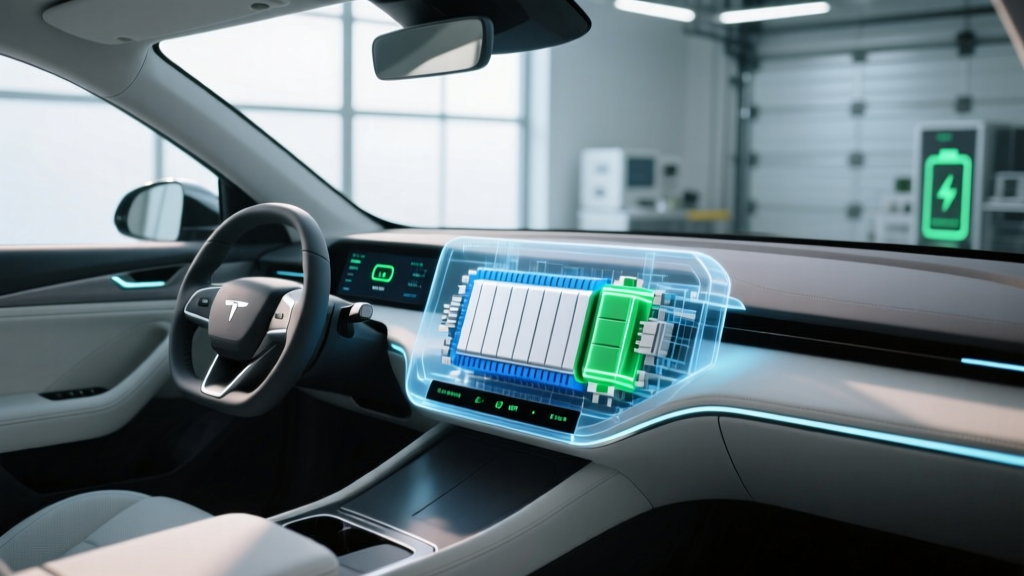
Most 2026 EVs provide some form of battery health readout. Tesla offers a battery health test via the service menu (or through the Tesla app under "Battery Health"). Hyundai and Kia include a SoH indicator in the EV settings menu. BMW's iDrive displays estimated range trends that reflect degradation.
OBD-II Diagnostic Tools
For more granular data, OBD-II dongles paired with apps like Car Scanner, LeafSpy (Nissan Leaf), or Scan My Tesla can read individual cell voltages, pack impedance, and precise SoH percentages directly from the BMS. A $30–50 OBD-II adapter plus a free or low-cost app gives you dealer-level battery diagnostics.
Third-Party Battery Reports
Services like Recurrent and some dealerships now offer battery health certificates — particularly useful when buying a used EV. These reports compare your pack's SoH against a fleet database of identical vehicles, giving you a percentile ranking. Request one before purchasing any used EV with more than 50,000 miles.
What's Next: Solid-State, Silicon Anodes, and Beyond
The battery technology pipeline is active, but timelines matter. Here's what's realistically on the horizon — none of these are available in production EVs as of 2026:
- Silicon-dominant anodes: Companies like Sila Nanotechnologies and Group14 are supplying silicon-carbon composite anodes to manufacturers including Mercedes-Benz and Panasonic. These increase energy density by 10–20% over graphite anodes. Expect limited production vehicles with silicon-anode cells by 2027–2028.
- Semi-solid-state batteries: Toyota, Samsung SDI, and QuantumScape are testing cells with solid or semi-solid electrolytes that promise 30–40% energy density gains and faster charging. Toyota has announced a 2027–2028 target for limited production, but volume availability remains unconfirmed. These are prototype-stage technologies.
- Sodium-ion batteries: CATL and BYD are deploying sodium-ion cells in Chinese-market micro-EVs and energy storage. Lower energy density than lithium-ion but cheaper and cobalt-free. Unlikely to appear in US-market passenger EVs before 2028–2029, but relevant for the same grid-scale "world's biggest battery" installations that anchor renewable energy.
- Improved LFP variants: LMFP (lithium manganese iron phosphate) adds manganese to LFP chemistry, boosting energy density by ~15% while retaining LFP's cycle-life and safety advantages. CATL has begun production; expect US-market vehicles with LMFP packs by 2027.
Bottom line: If you're buying an EV in 2026, you're buying proven lithium-ion technology — NMC, NCA, or LFP — that will reliably serve you for 150,000+ miles. Waiting for solid-state means waiting at least 2–3 more years for limited availability and likely a premium price.
Frequently Asked Questions
How long do EV batteries last in years and miles?
Most modern liquid-cooled EV battery packs last 150,000–200,000 miles (12–15+ years) before degrading to 70–80% of their original capacity. Tesla's fleet data shows an average of ~12% degradation at 150,000 miles. The vehicle's body, suspension, and interior often wear out before the battery does.
How much does an EV battery cost to replace?
Full pack replacements range from $8,000 (Nissan Leaf 40 kWh) to $30,000 (Ford F-150 Lightning 131 kWh extended range), including labor. However, fewer than 1.5% of EVs require out-of-warranty replacements, and module-level repairs ($2,000–$6,000) are increasingly common for isolated cell failures.
What does the EV battery warranty cover?
Federal law mandates a minimum of 8 years / 100,000 miles of coverage against capacity loss below 70% and manufacturing defects. CARB states extend this to 10 years / 150,000 miles. The warranty does not cover physical damage from collisions, flooding, or improper modifications.
How do I maximize my EV battery's health?
Charge NMC/NCA vehicles to 80% daily and 100% only for road trips. LFP vehicles can be charged to 100% daily. Avoid frequent DC fast charging without preconditioning. Don't store the vehicle at 100% SoC or below 10% SoC for extended periods. Park in shade during extreme heat. Always use the car's preconditioning feature before DC fast charging in cold weather.
Is LFP better than NMC for my EV?
It depends on your use case. LFP offers longer cycle life (3,000–5,000+ cycles vs 1,000–2,000), better thermal safety, and the convenience of daily 100% charging — ideal for commuters and fleet vehicles. NMC offers higher energy density, enabling 300+ mile ranges in lighter, more compact packs — better for road-trip-heavy drivers and performance models. Neither is universally superior.
Does the world's biggest battery technology affect my EV?
Directly, no — your EV uses automotive-grade cells, not grid-scale modules. But indirectly, yes: grid-scale battery installations drive down cell costs through manufacturing scale, accelerate R&D in chemistry improvements (LFP, LMFP, sodium-ion), and build the charging infrastructure that your EV relies on. The same CATL and BYD factories producing cells for the world's biggest battery projects also supply automakers.