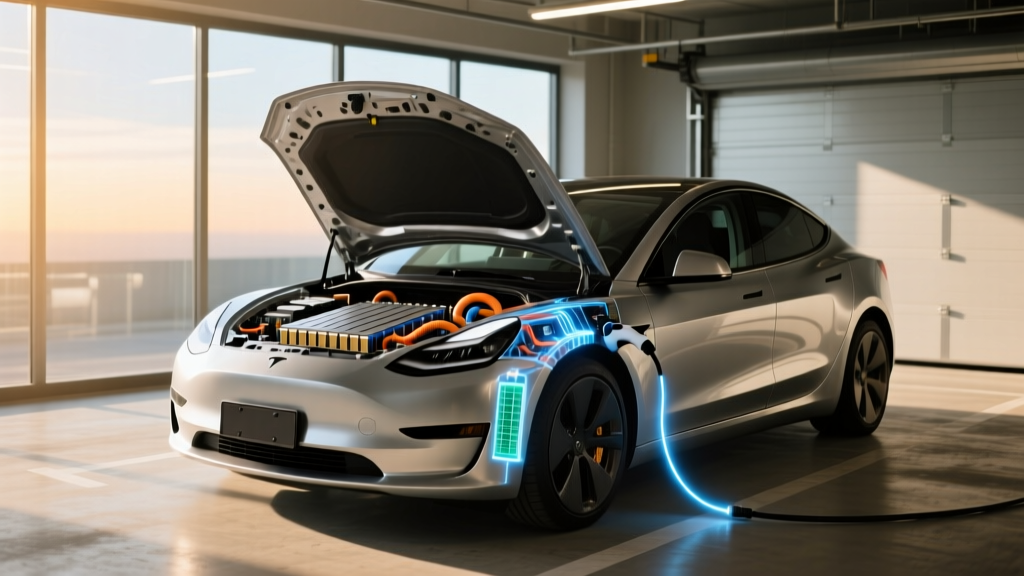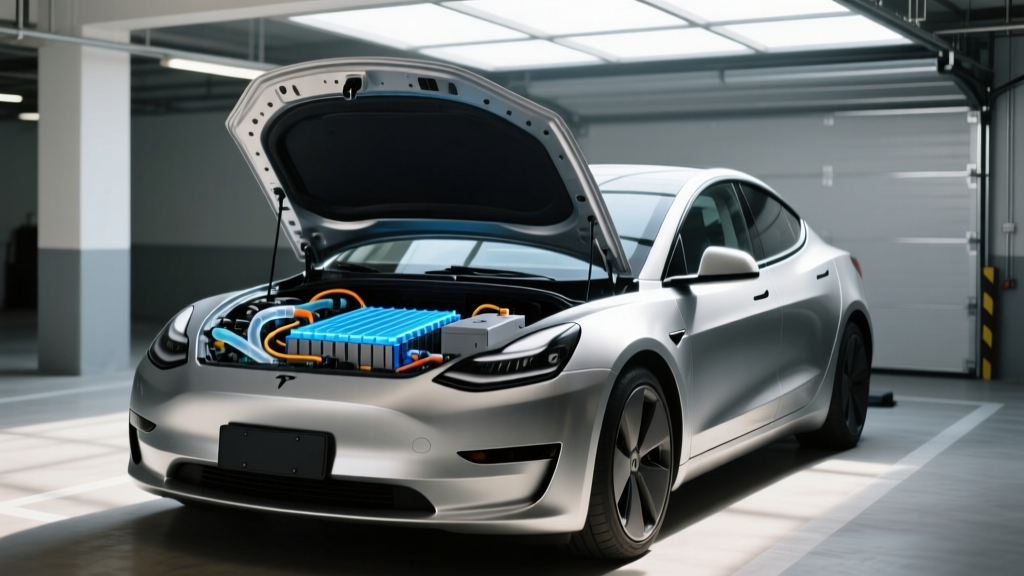
If you've ever searched for a battery for Buick Enclave 2008, you already know the reality of automotive batteries: the 12-volt lead-acid unit under the hood of that 3.6L V6 crossover is a maintenance item you swap every 3–5 years for around $180. It's a simple, well-understood component. Modern electric-vehicle traction batteries are a fundamentally different animal — 60 to 120+ kWh lithium-ion packs operating at 400–800 volts, managed by sophisticated thermal and software systems designed to last the life of the vehicle. Understanding how they work, how they age, and what they cost is the single most important piece of EV ownership literacy.
This guide breaks down the chemistry, degradation realities, warranty coverage, replacement economics, and daily care habits that determine how an EV battery performs over a decade or more. We'll also look at what's coming next — and separate marketing timelines from engineering realities.
LFP vs NMC vs NCA: The Chemistry Trade-Offs That Matter
Not all lithium-ion batteries are the same. The cathode chemistry determines energy density, cycle life, thermal stability, cold-weather performance, and cost. In 2026, two chemistries dominate the EV market: LFP (lithium iron phosphate) and NMC/NCA (nickel manganese cobalt / nickel cobalt aluminum).
| Attribute | LFP (LiFePO₄) | NMC / NCA |
|---|---|---|
| Energy Density | Lower (~160–180 Wh/kg cell-level) | Higher (~220–300 Wh/kg cell-level) |
| Typical Cycle Life | 3,000–5,000+ full cycles | 1,000–2,000 full cycles |
| Cold-Weather Performance | Weaker; more range loss below 32°F | Better low-temp discharge capability |
| Thermal Stability | Excellent; higher runaway threshold | Good; requires more active management |
| Cost (per kWh) | Lower — no cobalt or nickel | Higher — commodity-sensitive metals |
| State of Charge Tolerance | Can sit at 100% SoC regularly | Best kept 20–80% for longevity |
| Common Applications | Tesla Model 3 RWD, BYD, Ford standard-range | Long-range / performance trims, most luxury EVs |
Which is better? Neither, universally. LFP wins on longevity and cost — ideal for daily commuters who charge at home and don't need maximum range. NMC/NCA wins on energy density, making it the choice for long-range models where packing more kWh into the same physical space matters. If you drive a Tesla Model 3 Rear-Wheel Drive with an LFP pack, Tesla actually recommends charging to 100% at least once a week to help the battery management system (BMS) calibrate. With NMC, the general best practice is a daily charge limit of 80%, saving 100% for road trips.
How Long Do EV Batteries Actually Last? Degradation by the Numbers
The short answer: far longer than most buyers assume. Data aggregated from fleet operators, owner surveys, and manufacturer studies consistently show that modern EV batteries lose roughly 1–2% of total capacity per year under typical use, with the steepest drop occurring in the first year or two (often 2–3%) before the curve flattens significantly.
Typical Degradation Curve (NMC pack, moderate climate, mixed charging):
- Year 1 / ~12,000 mi: ~2–3% capacity loss (initial formation settling)
- Year 3 / ~36,000 mi: ~5–7% cumulative loss
- Year 5 / ~60,000 mi: ~8–10% cumulative loss
- Year 8 / ~96,000 mi: ~10–14% cumulative loss
- Year 10 / ~120,000 mi: ~12–18% cumulative loss
Sources: Geotab fleet data, Recurrent Auto battery health reports. Individual results vary based on climate, charging habits, and chemistry.
To put this in perspective: a 2026 Hyundai Ioniq 5 with a 77.4 kWh NMC battery and an EPA range of 305 miles would, after 10 years and 120,000 miles, likely retain roughly 82–88% of its original capacity — translating to approximately 250–268 miles of real-world range. That's still very usable. The days of fearing a sudden battery "cliff" at 100,000 miles are over for liquid-cooled, modern packs.
LFP packs show even slower degradation in many datasets, with some fleet vehicles retaining over 90% capacity after 100,000 miles, thanks to the chemistry's inherently longer cycle life.
What the Battery Warranty Actually Covers — and What It Doesn't
Federal law in the United States mandates that EV batteries carry a minimum warranty of 8 years or 100,000 miles (whichever comes first). In California and states that follow CARB (California Air Resources Board) emissions rules, that mandate extends to 10 years or 150,000 miles. Most manufacturers meet or exceed these thresholds.
| Manufacturer | Warranty Term | Capacity Retention Threshold |
|---|---|---|
| Tesla (Model 3/Y LFP) | 8 yr / 100,000 mi | 70% minimum |
| Tesla (Model 3/Y LR NMC) | 8 yr / 120,000 mi | 70% minimum |
| Hyundai / Kia | 10 yr / 100,000 mi | 70% minimum |
| Ford (Mustang Mach-E) | 8 yr / 100,000 mi | 70% minimum |
| GM (Ultium-based) | 8 yr / 100,000 mi | 70% minimum (some models 60% for EREV) |
| Volkswagen (ID.4) | 8 yr / 100,000 mi | 70% minimum |
| BMW (iX / i4) | 8 yr / 100,000 mi | 70% minimum |
What's covered: If your battery's usable capacity drops below the stated threshold (typically 70% of original) within the warranty period due to normal degradation or a defect, the manufacturer will repair or replace the pack — often by swapping failed modules rather than the entire battery.
What's not covered: Damage from accidents, flooding, improper modifications, or using non-approved charging equipment. Some warranties also exclude capacity loss from consistently ignoring the manufacturer's charging guidelines (e.g., repeatedly storing an NMC pack at 100% SoC for extended periods), though this is rarely enforced in practice.
For detailed federal warranty requirements, see the U.S. Department of Energy's EV technology overview on fueleconomy.gov.
EV Battery Replacement Cost: The Numbers and When It's Needed
Here's the context that fear-based headlines omit: the vast majority of EV batteries outlast the useful life of the vehicle. Data from Recurrent Auto and Geotab suggests that fewer than 2–3% of EV batteries have required out-of-warranty replacement as of 2025. Most EVs are retired due to collision damage, body corrosion, or simple obsolescence long before their packs fail catastrophically.
That said, if you're buying a used EV outside warranty or planning to keep a vehicle for 15+ years, here's what replacement looks like:
| Battery Size / Segment | Typical Replacement Cost (2026) | Example Models |
|---|---|---|
| 40–60 kWh (compact / standard range) | $6,000 – $10,000 | Nissan Leaf, Chevy Bolt EV, Tesla Model 3 RWD |
| 70–90 kWh (mid-size / long range) | $10,000 – $16,000 | Tesla Model Y LR, Hyundai Ioniq 5, Ford Mach-E |
| 90–120+ kWh (large / luxury / truck) | $15,000 – $25,000+ | Tesla Model S, Rivian R1T, GMC Hummer EV, F-150 Lightning Extended |
These figures include the battery pack and labor but can vary significantly by region, dealer vs. independent shop, and whether the replacement uses a new, remanufactured, or salvaged pack. Module-level repairs (replacing only the degraded sections) are increasingly common and can cut costs by 40–60%.
It's also worth noting that battery pack prices have fallen roughly 80–90% since 2010 on a per-kWh basis, and that trend continues. A replacement that costs $14,000 today may cost significantly less by the time you actually need one — if you ever do.
What Kills an EV Battery Faster — and How to Maximize Longevity
EV batteries don't die from mileage alone. They degrade from a combination of chemical stress factors. Understanding these lets you add years and percentage points to your pack's useful life.
Daily Habits That Extend Battery Life
- Limit DC fast charging to road trips. Frequent use of 150+ kW DC fast chargers accelerates degradation. Studies from Geotab and the Idaho National Laboratory show that vehicles fast-charging more than 3 times per week showed measurably higher degradation rates — roughly 1–2% additional loss over several years compared to primarily Level 2 charging.
- Avoid extreme States of Charge for storage. For NMC packs, store between 30–60% SoC if the car will sit for weeks. LFP packs tolerate 100% better but still benefit from not sitting at 0%.
- Use scheduled charging and preconditioning. Most modern EVs let you schedule charging to finish right before departure. This avoids the battery sitting at high SoC overnight and ensures the pack is at optimal temperature for your commute.
- Minimize exposure to extreme heat. Prolonged parking in 100°F+ ambient temps without thermal management running is harder on batteries than cold weather. If you live in a hot climate, a garage or shaded parking spot meaningfully extends pack life.
- Don't obsess over regenerative braking settings. Regen puts charge back into the battery, but the currents involved are well within design tolerances. Use whatever setting you prefer for driving comfort.
Factors That Accelerate Degradation
- Repeatedly charging to 100% and letting an NMC pack sit at full SoC for days
- Frequent DC fast charging in hot weather without preconditioning
- Regularly draining the battery below 10% SoC
- Aftermarket modifications that bypass the BMS or thermal management
- Towing heavy loads in extreme heat (sustained high-current discharge)
How to Check Your EV Battery's State of Health (SoH)
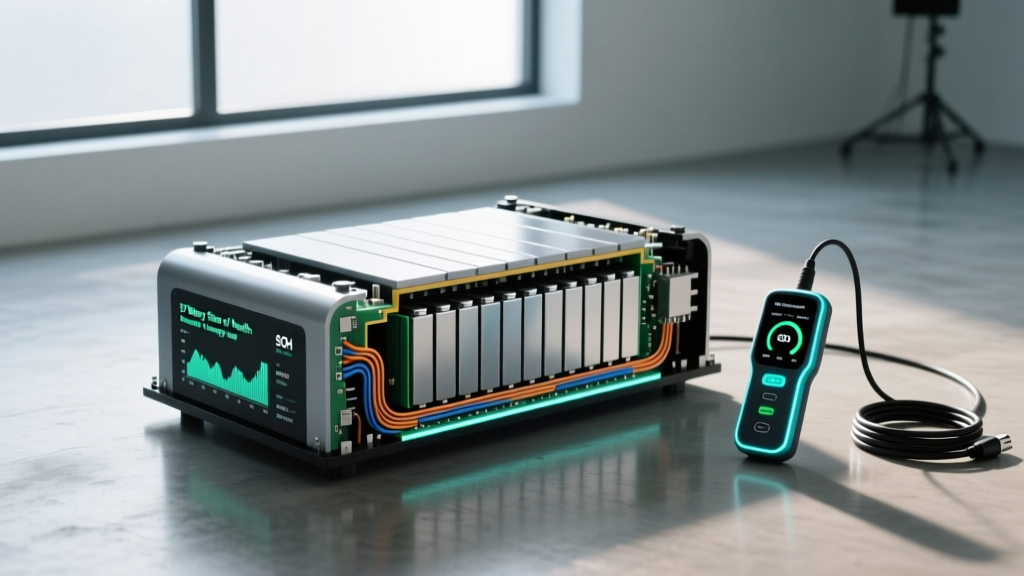
State of Health (SoH) is the metric that tells you what percentage of your battery's original capacity remains usable. Monitoring it is easier than most owners realize:
- In-vehicle displays: Many EVs (Tesla, Hyundai/Kia, BMW) include a battery health or degradation indicator in the settings menu. Tesla shows it under Service > Battery Health in recent software versions.
- OBD-II diagnostic tools: Devices like the OBDLink MX+ paired with apps such as ABRP (A Better Route Planner) or Car Scanner can read the BMS-reported SoH directly. This is the most accurate method available to consumers.
- Manufacturer service checks: During routine service visits, dealerships can pull a full battery health report. Request this when buying a used EV — it's the single most important data point.
- Third-party services: Companies like Recurrent Auto offer battery health reports based on connected-car data, which can be useful for pre-purchase verification on supported models.
- Manual tracking: Record your odometer reading and the kWh added during a full charge (from your charger's app or the car's display). Compare this to the pack's original usable capacity. If your 77.4 kWh pack now accepts only 68 kWh on a full charge, your SoH is roughly 88%.
What's Next: Solid-State, Silicon Anodes, and Realistic Timelines
The next generation of battery technology is real — but it's not here yet, and it won't be in your next purchase. Here's an honest assessment of what's coming and when:
Solid-state batteries replace the liquid electrolyte with a solid material, promising higher energy density (potentially 400+ Wh/kg at the cell level), faster charging, and improved safety. Toyota has announced a solid-state battery targeting 2027–2028 production in limited volumes. Samsung SDI and QuantumScape are also progressing toward commercialization. However, manufacturing scale-up, cost reduction, and durability validation remain significant hurdles. Realistically, solid-state batteries will appear in limited-production or premium vehicles starting in the 2028–2030 timeframe and won't reach mainstream pricing until the early 2030s.
Silicon anode technology is closer to market. By blending silicon into the graphite anode, manufacturers can increase energy density by 10–20% without changing the cathode chemistry. Companies like Sila Nanotechnologies and Group14 are already supplying silicon-dominant anode materials to manufacturers, and we expect to see this in production EVs by 2026–2027. This is an incremental but meaningful improvement, not a revolution.
Sodium-ion batteries are emerging as a low-cost alternative for entry-level and urban EVs. CATL and BYD are already producing sodium-ion cells for certain Chinese-market vehicles. They offer lower energy density than LFP but eliminate lithium entirely, reducing cost and supply-chain risk. U.S.-market adoption is likely in the 2027–2029 window for budget-oriented models.
None of these technologies are reasons to delay an EV purchase today. Current lithium-ion batteries are mature, reliable, and well-warrantied. The improvements coming are real but gradual.
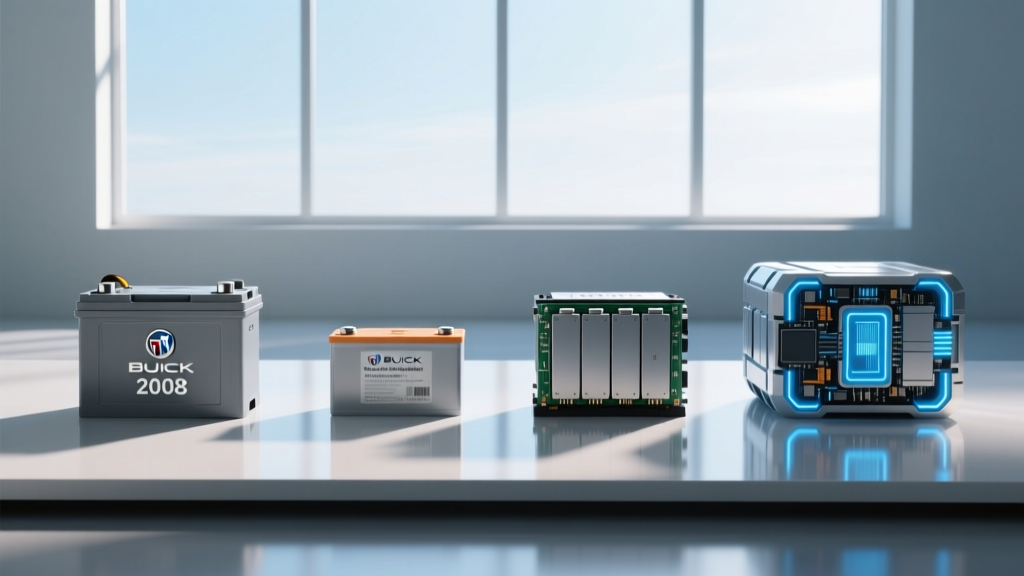
From a 2008 Buick Enclave Battery to an EV Traction Pack: What Changed
It's worth reflecting on how dramatically automotive battery technology has evolved. The 2008 Buick Enclave used a Group 48, 12-volt lead-acid battery producing roughly 0.7 kWh of total energy — enough to crank a 3.6L V6 engine and run the accessories. It weighed about 40 pounds, cost under $200, and lasted 3–5 years before sulfation and plate degradation required replacement.
A 2026 EV traction battery, by contrast, stores 60 to 130+ kWh of energy — roughly 100 to 200 times the capacity of that lead-acid unit. It operates at 400–800 volts, weighs 800–1,500 pounds, and is engineered to deliver consistent performance over 150,000+ miles and 10–15 years. The cost per kWh has dropped from over $1,100 in 2010 to approximately $100–130 in 2026 at the cell level, making EVs increasingly cost-competitive with internal-combustion vehicles.
The maintenance paradigm has inverted entirely. Where the Enclave's battery was a routine wear item, an EV's traction battery is designed to be a lifetime component — and the data overwhelmingly supports that it usually is.
Frequently Asked Questions
How long do EV batteries last in years and miles?
Most modern liquid-cooled EV batteries retain 80–90% of their original capacity after 10 years or 120,000–150,000 miles. They rarely fail catastrophically; instead, they gradually lose range over time. Many packs will outlast the vehicle itself, especially with proper care.
How much does an EV battery cost to replace?
Full pack replacement ranges from roughly $6,000 for a compact 40–60 kWh battery to $25,000+ for a 120+ kWh truck or luxury SUV pack (2026 pricing). Module-level repairs can reduce this by 40–60%. However, fewer than 3% of EV batteries have required out-of-warranty replacement based on current fleet data.
What does the EV battery warranty cover?
Federal law mandates a minimum of 8 years / 100,000 miles (10 years / 150,000 miles in CARB states). The warranty covers capacity loss below a threshold — typically 70% of original — due to degradation or defects. It does not cover accident damage, flooding, or aftermarket modifications.
How do I check my EV battery's health?
Use your vehicle's built-in battery health display (if equipped), an OBD-II scanner with BMS access, a dealership diagnostic report, or manual tracking of kWh accepted during a full charge versus the pack's original usable capacity.
LFP vs NMC — which battery chemistry should I choose?
Choose LFP if you prioritize longevity, lower cost, and the ability to charge to 100% daily — ideal for commuters with home charging. Choose NMC/NCA if you need maximum range, better cold-weather performance, or are buying a long-range/performance trim. Both chemistries are proven and well-warrantied in 2026.
Does fast charging damage my EV battery?
Occasional DC fast charging is fine and accounted for in the battery's design. However, exclusive reliance on DC fast charging (3+ times per week over years) has been shown to accelerate degradation by roughly 1–2% compared to primarily Level 2 home charging. Preconditioning the battery before fast charging — a feature most modern EVs handle automatically when you navigate to a charger — significantly reduces stress.
Will solid-state batteries make current EVs obsolete?
Not in the near term. Solid-state batteries are expected to reach limited production in the 2028–2030 window and mainstream affordability in the early 2030s. Current lithium-ion technology is mature, reliable, and supported by extensive charging infrastructure. There is no practical reason to delay an EV purchase waiting for solid-state.
Battery technology and warranty terms evolve. Always verify current specifications with the manufacturer and consult fueleconomy.gov for EPA-certified range and efficiency data. For federal tax credit implications of battery sourcing, see IRS.gov §30D clean vehicle credit guidelines.