If you've ever searched for a 2017 Chevy Trax battery, you were likely dealing with a conventional 12-volt lead-acid replacement — a $150–$220 part that cranks a 1.4-liter turbocharged engine. But that search also opens a much bigger conversation in 2026: how do the high-voltage traction batteries in modern electric vehicles compare to the simple auxiliary batteries in older gas cars, and what do EV buyers actually need to know about chemistry, degradation, warranty coverage, and replacement costs?
This guide bridges that gap. We'll walk through the battery chemistries powering today's EVs, show real degradation data across tens of thousands of miles, explain exactly what warranties cover (and what they don't), and give you a practical framework for maximizing battery health over a decade or more of ownership.
The 2017 Chevy Trax Battery vs. an EV Traction Battery: What's the Difference?
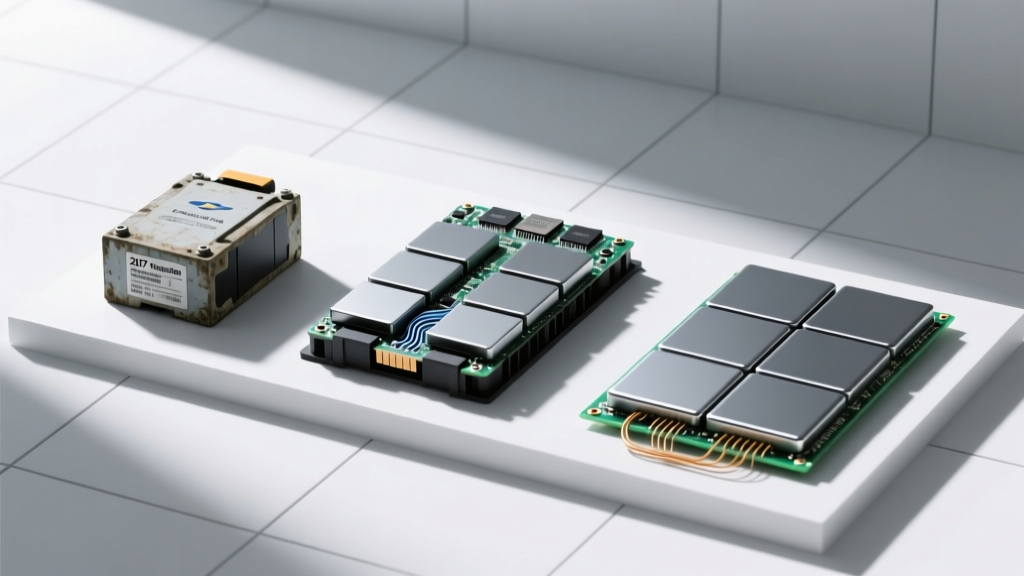
The 2017 Chevrolet Trax uses a standard Group 47 (H5) 12V lead-acid battery rated around 48 Ah and roughly 600 cold-cranking amps. It powers the starter motor, lights, infotainment, and ECU. Replacement is a 15-minute job, and the part costs under $200.
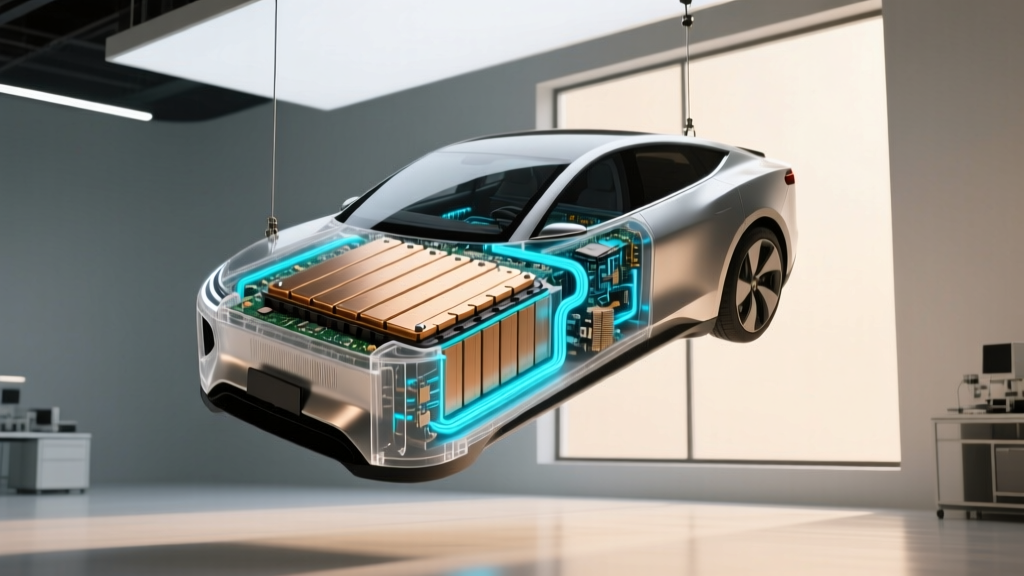
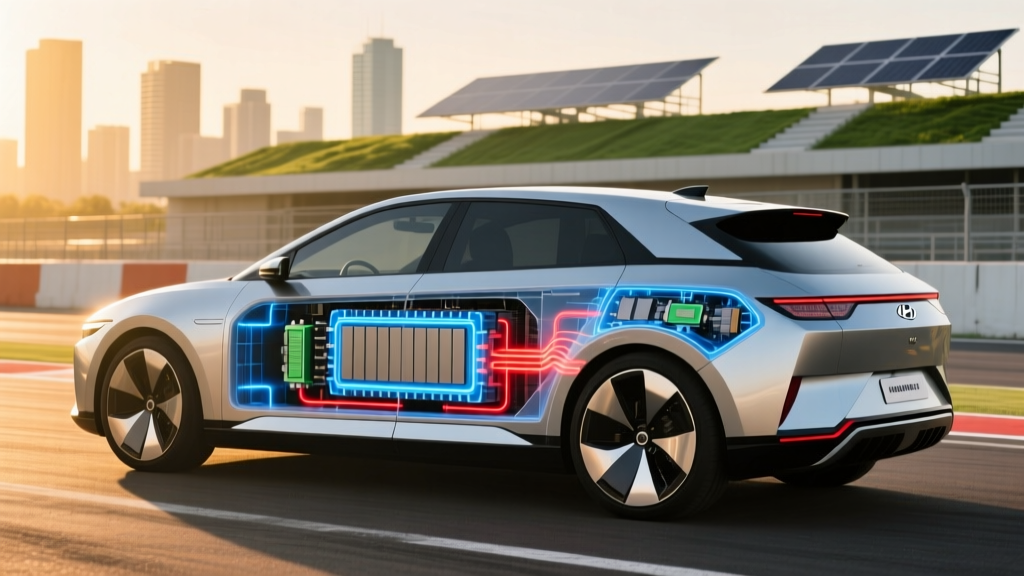
An EV traction battery is an entirely different beast. Consider the 2026 Chevrolet Equinox EV: it carries a 85 kWh usable Ultium lithium-ion pack operating at roughly 400 volts. It doesn't start an engine — it is the powertrain, storing enough energy to push the Equinox EV an EPA-estimated 319 miles (in FWD configuration). The pack weighs over 900 pounds, contains thousands of individual cells, and costs well over $10,000 to replace.
Even EVs have a 12V auxiliary battery (often lithium-ion in newer models) for accessory loads — but when we talk about "EV battery life" and "battery replacement cost," we're talking about the high-voltage traction pack. The two should never be confused.
Battery Chemistry in 2026: LFP vs. NMC vs. NCA
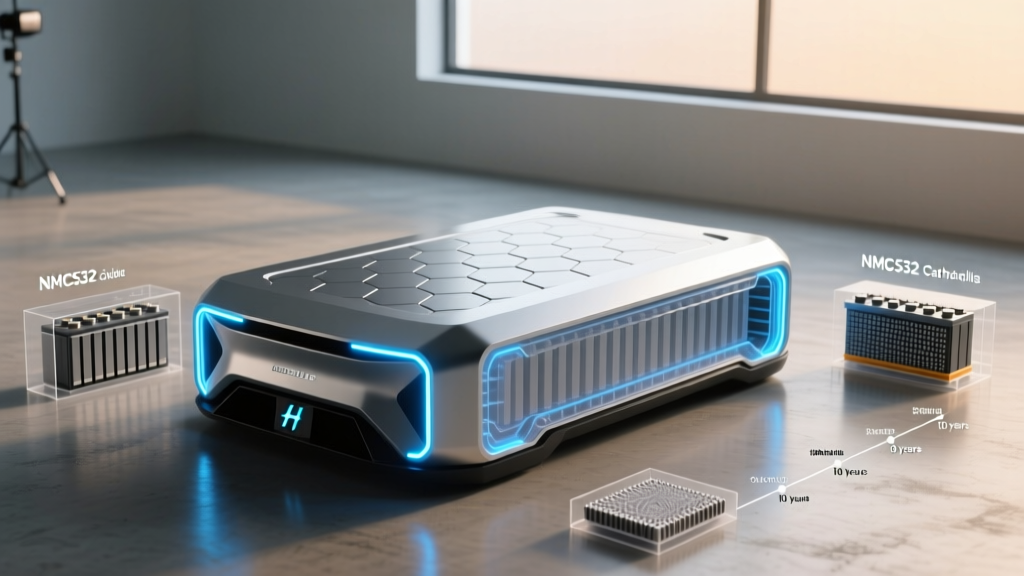
Not all lithium-ion batteries are built the same. The cathode chemistry determines energy density, lifespan, cold-weather behavior, and cost. In 2026, three chemistries dominate the EV market:
- NMC (Nickel Manganese Cobalt): The long-range standard. Used in most Hyundai/Kia E-GMP vehicles, Ford Mustang Mach-E Extended Range, and many BMW and Mercedes EVs.
- NCA (Nickel Cobalt Aluminum): Tesla's historic chemistry (now largely shifting to LFP for standard-range models). Still used in some long-range and performance variants.
- LFP (Lithium Iron Phosphate): The fast-growing challenger. Now standard in Tesla Model 3/Y RWD, Ford F-150 Lightning Standard Range, and the base Chevrolet Equinox EV.
| Attribute | LFP | NMC | NCA |
|---|---|---|---|
| Energy Density (Wh/kg) | 160–180 | 220–270 | 250–280 |
| Cycle Life (to 80% SoH) | 3,000–5,000+ | 1,500–2,500 | 1,200–2,000 |
| Cold-Weather Performance | Moderate (more range loss below 20°F) | Good | Good |
| Cost per kWh (pack-level) | $90–$110 | $120–$145 | $125–$150 |
| Thermal Stability | Excellent (low runaway risk) | Good (requires robust BMS) | Good (requires robust BMS) |
| Recommended Daily Charge Limit | 100% (no penalty) | 80% (for longevity) | 80% (for longevity) |
| Cobalt Content | None | Low–moderate | Low–moderate |
The practical takeaway: LFP wins on longevity and cost but sacrifices some energy density — meaning a heavier pack for the same range. NMC/NCA win on range-per-pound, making them better for long-range or performance vehicles. If you charge at home nightly and want a car that'll outlast 200,000 miles with minimal degradation, LFP is increasingly the pragmatic choice.
How Long Do EV Batteries Actually Last? Real Degradation Data
This is the number-one concern for EV shoppers, and the data in 2026 is reassuring: the vast majority of modern EV batteries outlast the vehicles they're installed in.
Here's what real-world fleet data and longitudinal studies show:
Typical Degradation Curve (NMC/NCA packs, liquid-cooled):
- Year 1 / 15,000 mi: 2–4% capacity loss (initial formation drop)
- Year 3 / 45,000 mi: 5–8% total loss
- Year 5 / 75,000 mi: 7–10% total loss
- Year 8 / 120,000 mi: 10–15% total loss
- Year 10 / 150,000 mi: 12–18% total loss
LFP packs (Tesla Model 3 RWD fleet data):
- Year 5 / 75,000 mi: 3–6% total loss
- Year 8 / 120,000 mi: 5–9% total loss
Sources: Geotab fleet battery health study, Tesla Impact Reports, Recurrent Auto battery data.
A 2017 Chevrolet Bolt EV — one of the first mass-market long-range EVs — provides a useful real-world benchmark. Its 60 kWh NMC pack was EPA-rated at 238 miles. By 2026, well-maintained examples with 80,000–100,000 miles typically show 8–14% degradation, retaining roughly 205–218 miles of range. That's a modest loss over nearly a decade of use, and far less than the catastrophic failure scenarios that early EV skeptics predicted.
Notably, GM issued a recall and battery replacement program for 2017–2019 Bolt EVs due to manufacturing defects that could cause cell shorts — not normal degradation. Replacement packs actually improved range for affected owners, as newer cells offered slightly higher capacity. This underscores a key point: abnormal degradation is almost always a manufacturing defect covered under warranty, not a wear-and-tear inevitability.
Battery Warranty Coverage: What's Protected and for How Long?
Federal law mandates that EV battery packs carry a minimum warranty of 8 years / 100,000 miles (10 years / 150,000 miles in California and states adopting CARB standards). Most manufacturers meet or exceed this baseline. Here's how the major brands stack up in 2026:
| Manufacturer | Duration | Mileage | Capacity Threshold |
|---|---|---|---|
| Tesla (Model 3/Y RWD, LFP) | 8 years | 100,000 mi | 70% retention |
| Tesla (Long Range/Performance, NCA/NMC) | 8 years | 120,000 mi | 70% retention |
| Hyundai / Kia (E-GMP) | 10 years | 100,000 mi | 70% retention |
| Chevrolet (Equinox EV / Blazer EV) | 8 years | 100,000 mi | 70% retention |
| Ford (Mach-E / F-150 Lightning) | 8 years | 100,000 mi | 70% retention |
| BMW / Mercedes-Benz | 8 years | 100,000 mi | 70% retention |
What the warranty covers: If your battery's usable capacity drops below the stated threshold (typically 70% of original capacity) within the warranty period, the manufacturer will repair or replace the pack at no cost. Some OEMs replace individual modules rather than the full pack.
What it doesn't cover: Damage from accidents, flooding, improper modifications, or use outside normal operating parameters. Gradual capacity loss above the 70% threshold is considered normal wear — though as the degradation data above shows, hitting 70% within the warranty window is exceedingly rare with liquid-cooled packs.
For context on the IRS §30D clean vehicle credit, battery sourcing and critical-mineral requirements are separate from warranty coverage — but a robust warranty signals manufacturer confidence in pack longevity, which matters when you're evaluating total cost of ownership.
EV Battery Replacement Cost: What It Actually Takes
Here's the number that generates the most anxiety — and the most misinformation. Let's put real numbers to it.
| Vehicle Class | Battery Size | Part Cost (Est.) | Labor + Total (Est.) |
|---|---|---|---|
| Compact EV (e.g., Chevy Equinox EV) | 85 kWh | $8,500–$12,000 | $11,000–$16,000 |
| Mid-size SUV (e.g., Tesla Model Y, Mach-E) | 75–88 kWh | $9,000–$14,000 | $12,000–$18,000 |
| Full-size truck (e.g., F-150 Lightning Ext.) | 131 kWh | $15,000–$22,000 | $18,000–$28,000 |
| Luxury sedan (e.g., BMW i7, Mercedes EQS) | 100–108 kWh | $14,000–$20,000 | $18,000–$26,000 |
When is replacement actually needed? For most liquid-cooled EVs from 2020 onward, the honest answer is: rarely within the vehicle's useful life. Pack-level failure rates are low — Recurrent Auto's 2025 analysis found that fewer than 2% of EVs required battery replacements outside of recall campaigns. The most common trigger is a manufacturing defect (covered under warranty) or physical damage from a collision.
Compare this to the 2017 Chevy Trax's 12V battery, which you'll replace every 3–5 years at $150–$220 per swap. Over a 10-year ownership period, the Trax owner spends $400–$800 on auxiliary batteries. The EV owner spends $0 on traction battery replacement in the overwhelming majority of cases — and if they do, it's typically covered by warranty.
Factors That Accelerate (or Preserve) Battery Health
Lithium-ion batteries degrade through calendar aging and cycle aging. You can't stop the clock, but you can meaningfully slow it down. Here's what the data says matters most:
Do: Maximize Longevity
- Charge to 80% daily (NMC/NCA): Storing at 100% SoC stresses cathode materials. Set your charge limit to 80% for daily use; charge to 100% only before long road trips.
- Charge to 100% freely (LFP): LFP chemistry doesn't suffer the same high-SoC stress. Tesla and Ford recommend periodic 100% charges for LFP packs to help the BMS recalibrate.
- Use Level 2 home charging as your primary method: Slow, steady AC charging (7–11 kW) generates far less heat than DC fast charging and is gentler on cells.
- Precondition before fast charging: Most EVs do this automatically when you navigate to a charger. A warm battery (around 77–95°F) charges faster and with less stress.
- Keep the pack between 20–80% SoC when possible: The "middle half" of the charge curve is where lithium-ion cells are happiest.
Don't: Avoid These Habits
- Don't rely exclusively on DC fast charging: Frequent 150+ kW sessions accelerate degradation. Research from Geotab shows vehicles that fast-charge more than 3x per week degrade roughly 1–2% faster over 5 years than those primarily using Level 2.
- Don't let the pack sit at 0% or 100% for extended periods: If storing the vehicle for weeks, aim for 50% SoC.
- Don't ignore extreme cold without preconditioning: Charging a freezing-cold battery without thermal preconditioning can cause lithium plating, a permanent degradation mechanism.
Cold-weather nuance: Operating in sub-freezing temperatures doesn't permanently damage the battery — the range loss you see in winter (typically 20–30% at 20°F) is temporary, caused by increased internal resistance and cabin heating load. Permanent damage only occurs if you force high-rate charging into a deeply cold pack without preconditioning. Every modern EV with a liquid-cooled pack has thermal management to prevent this, but it's still worth plugging in and preconditioning before winter fast-charging sessions.
How to Check Your EV Battery's State of Health (SoH)
State of Health (SoH) is the percentage of original capacity your battery can still hold. A brand-new pack is 100% SoH; a pack that can only hold 85 kWh of its original 100 kWh is at 85% SoH.
Built-in methods:
- Tesla: The Service menu (accessed via the touchscreen) displays battery health percentage on software versions from late 2024 onward. You can also check via the Tesla app under "Battery Health."
- Hyundai/Kia: The EV app and infotainment system show a battery health indicator. Dealership diagnostic tools provide exact SoH readings.
- GM (Ultium vehicles): The myChevrolet/myCadillac app includes a battery health monitor. OnStar diagnostics can pull detailed SoH data.
- Ford: The FordPass app shows battery health status. A full diagnostic is available at dealerships.
Third-party tools: Apps like Recurrent, Tessie (for Tesla), and OBD-II dongles paired with apps like ABRP (A Better Routeplanner) or Scan My Tesla can pull detailed SoH data, charge/discharge logs, and cell-balance information.
Dealership check: Any authorized service center can run a full battery diagnostic. If you're buying a used EV, insist on a pre-purchase battery health report — it's the EV equivalent of a compression test on a gas engine.
Emerging Battery Technology: What's Next (and When)
Battery R&D is moving fast, but it's critical to separate lab announcements from production reality. Here's where next-gen technologies actually stand as of 2026:
Silicon-dominant anodes: Companies like Sila Nanotechnologies and Group14 are replacing graphite anodes with silicon composites, boosting energy density by 20–40%. These are beginning to appear in limited production — the Mercedes G-Class EV uses a silicon-anode pack from Sila. Expect broader adoption in premium EVs by 2027–2028, with mainstream rollout by 2030.
Solid-state batteries: The long-promised holy grail — replacing liquid electrolyte with a solid conductor for higher energy density, faster charging, and improved safety. Toyota has announced a solid-state EV for 2027–2028 with a claimed 600+ mile range and 10-minute fast-charge capability. Samsung SDI and QuantumScape are also targeting 2027–2028 production. However, manufacturing scalability remains the bottleneck. These are not yet available in any production vehicle.
Sodium-ion batteries: CATL and BYD are producing sodium-ion packs for lower-cost, shorter-range EVs in China. Energy density is 30–40% lower than LFP, but cost is significantly less. Potential US applications could emerge in fleet and budget EVs by 2028–2029.
For buyers shopping today, current LFP and NMC packs are mature, well-tested, and backed by robust warranties. Waiting for solid-state is a viable strategy only if your purchase timeline extends to 2028 or beyond — and if you're willing to pay early-adopter premiums.
Frequently Asked Questions
How long do EV batteries last in years and miles?
Modern liquid-cooled EV batteries (2020 and newer) typically retain 85–92% of original capacity at 150,000 miles or 10 years. LFP packs often exceed 90% retention at this milestone. Most EV batteries will outlast the vehicle's structural and mechanical components.
How much does an EV battery cost to replace?
Out-of-warranty replacement runs $11,000–$18,000 for most passenger EVs, and up to $28,000 for large-pack trucks like the F-150 Lightning Extended Range. However, fewer than 2% of EVs require out-of-warranty battery replacement, and the 8-year/100,000-mile federal warranty minimum covers defects and abnormal degradation.
What does the EV battery warranty cover?
The standard warranty guarantees the battery will retain at least 70% of its original capacity for 8 years / 100,000 miles (longer in CARB states). If capacity drops below this threshold, the manufacturer repairs or replaces the pack at no cost. Physical damage, accidents, and modifications are excluded.
How do I check and maximize my EV battery's health?
Use your vehicle's built-in battery health monitor (via app or infotainment), or visit a dealership for a full diagnostic. To maximize longevity: charge to 80% daily (NMC/NCA) or 100% (LFP), favor Level 2 home charging over frequent DC fast charging, precondition before fast-charging in cold weather, and avoid prolonged storage at 0% or 100% SoC.
LFP vs. NMC — which is better and why?
Neither is universally "better" — it depends on your priorities. LFP offers superior cycle life (3,000–5,000 cycles vs. 1,500–2,500), lower cost, cobalt-free sourcing, and the ability to charge to 100% daily without penalty. NMC delivers higher energy density, meaning more range in a lighter, more compact pack — important for long-range and performance vehicles. If you want a commuter car you'll keep for 15 years, LFP is the longevity play. If you need 350+ miles of range, NMC is the practical choice.