Why Searching for a "Battery for 2015 Nissan Altima" Leads to a Bigger EV Battery Conversation
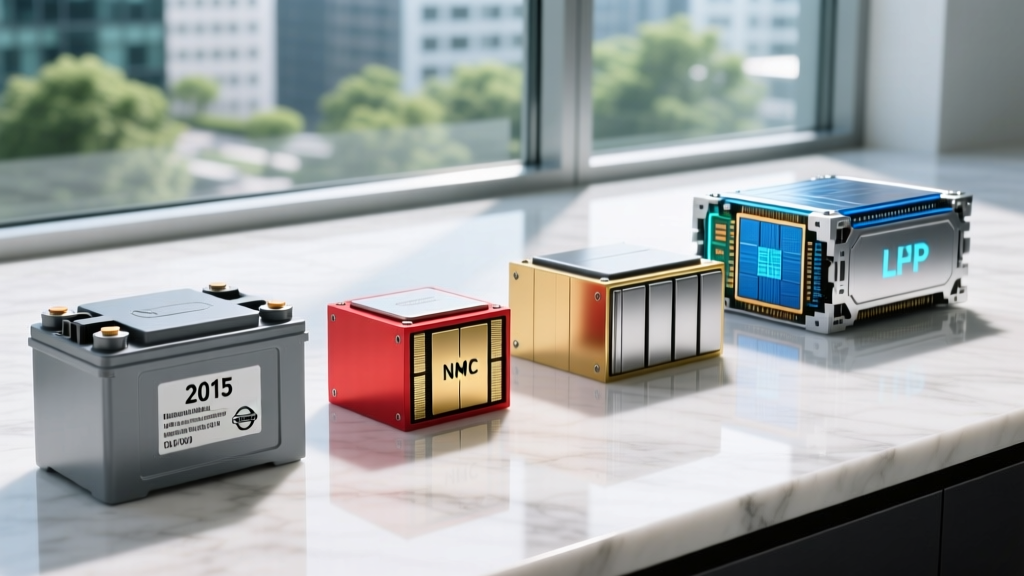
If you've typed "battery for 2015 Nissan Altima" into a search engine recently, you're likely looking for a 12-volt lead-acid replacement — a Group 35 or Group 24F flooded or AGM battery that costs between $120 and $220 at an auto parts store. That 12V battery starts accessories, powers lights, and runs the ECU. It has nothing in common with the high-voltage lithium-ion traction battery that propels a modern electric vehicle.
But the search overlap reveals something useful: drivers think about car batteries in terms of replacement cost, lifespan, and warranty. Those exact concerns transfer to EV ownership — except the stakes, the chemistry, and the timelines are fundamentally different. This guide breaks down everything you need to know about modern EV battery technology, from chemistry trade-offs to real-world degradation data, so you can make an informed decision whether you're upgrading from a 2015 Altima to an EV or you're already an EV owner looking to maximize pack longevity.
LFP vs NMC: The Two Chemistries Powering Today's EVs
Every EV sold in the US in 2026 uses one of two dominant lithium-ion chemistries for its traction battery: LFP (lithium iron phosphate, LiFePO4) or NMC/NCA (nickel manganese cobalt / nickel cobalt aluminum). The chemistry determines energy density, cycle life, cold-weather behavior, and cost.
| Attribute | LFP (LiFePO4) | NMC / NCA |
|---|---|---|
| Energy Density (cell-level) | ~160–180 Wh/kg | ~220–300 Wh/kg |
| Typical Cycle Life | 3,000–6,000+ cycles | 1,000–2,500 cycles |
| Cold Performance (below 32°F) | More range loss; slower charging | Better low-temp discharge |
| Cobalt Content | None | Varies (reduced in newer formulations) |
| Cost per kWh (pack-level) | ~$90–$110 | ~$120–$150 |
| State-of-Charge Recommendation | Can charge to 100% daily | Best kept 20–80% for daily use |
| Common Applications (2026) | Tesla Model 3 RWD, Ford Mustang Mach-E Select (base), BYD models, Rivian Standard | Tesla Long Range, Hyundai Ioniq 5/6, BMW iX, most premium/long-range trims |
Which Is Better — LFP or NMC?
Neither is universally better. Choose LFP if you want maximum cycle life, lower cost, and don't need the longest single-charge range. LFP packs tolerate daily 100% charging, which simplifies ownership. Choose NMC/NCA if you prioritize range per charge, need strong cold-weather performance, or drive a heavier vehicle where energy density matters. Most long-range and performance EV trims still use NMC because packing more kWh into the same physical space is essential for 300+ mile EPA ratings.
How Long Do EV Batteries Actually Last?
The short answer: far longer than most buyers expect. Modern liquid-cooled lithium-ion traction batteries are engineered to outlast the vehicle itself in typical ownership scenarios.
Real-World Degradation Data Points:
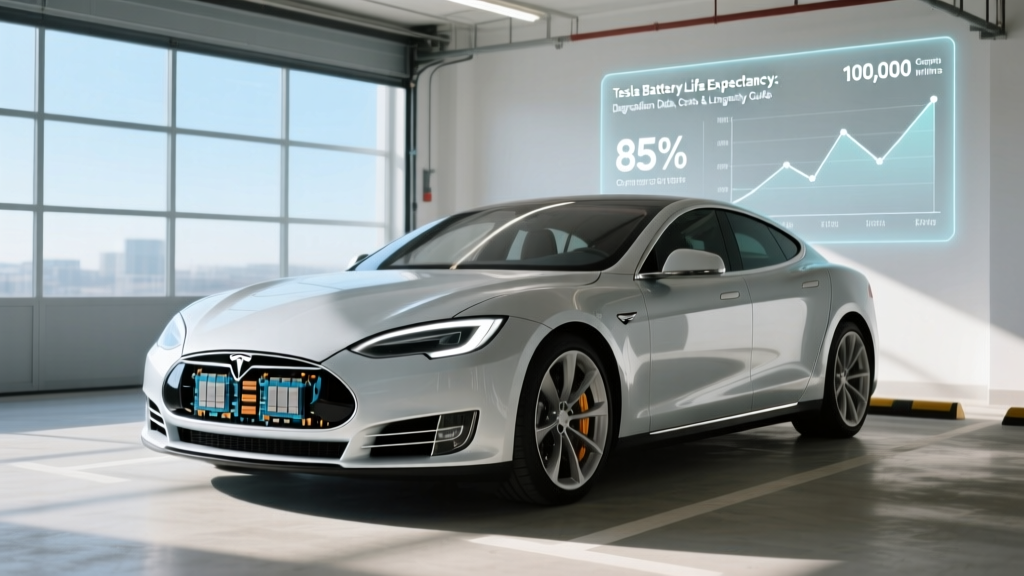
- Tesla Model 3/Y (NMC, 2018–2023): Tesla's 2024 Impact Report showed median degradation of ~12% after 200,000 miles, meaning a 310-mile EPA car retains roughly 273 miles of range at that mileage.
- Nissan LEAF (2013–2017, air-cooled NMC): Earlier LEAFs with passive air cooling showed 20–30% degradation by 100,000 miles in hot climates — a cautionary example of why thermal management matters.
- Chevrolet Bolt EV/EUV (NMC, 2017–2023): Owner surveys on forums like InsideEVs and Reddit show typical 5–8% degradation over 60,000–80,000 miles, aided by robust liquid cooling.
- Hyundai Ioniq 5 (NMC, 2022–2026): Early reports indicate ~3–5% loss in the first 30,000 miles, consistent with modern thermal management expectations.
- LFP packs (Tesla Model 3 RWD, 2021+): Limited long-term data, but LFP's inherent cycle-life advantage suggests slower degradation curves. Geotab fleet data shows LFP packs losing roughly 1–2% per year under normal use.
A typical EV battery in 2026 should retain 70–85% of original capacity after 150,000–200,000 miles or 10–15 years. Catastrophic failure (sudden death) is extremely rare; degradation is gradual and linear after an initial small drop in year one.
EV Battery Warranty Terms: What's Actually Covered
Federal law mandates a minimum 8-year/100,000-mile warranty on EV battery packs (emissions-related component rules). Most manufacturers meet or exceed this. Here's how the major brands stack up:
| Manufacturer | Warranty Period | Capacity Retention Threshold |
|---|---|---|
| Tesla (Model 3/Y) | 8 yr / 120,000 mi (Long Range); 8 yr / 100,000 mi (RWD) | 70% |
| Hyundai / Kia | 10 yr / 100,000 mi | 70% |
| Ford (Mach-E, F-150 Lightning) | 8 yr / 100,000 mi | 70% |
| Chevrolet (Bolt, Blazer EV, Equinox EV) | 8 yr / 100,000 mi | 60% (Bolt); 70% (newer models) |
| BMW | 8 yr / 100,000 mi | 70% |
| Rivian | 8 yr / 175,000 mi (R1T/R1S) | 70% |
The warranty threshold is critical: if your pack drops below 70% capacity within the warranty window, the manufacturer must repair or replace it at no cost. In practice, very few packs breach this threshold under normal use. According to fueleconomy.gov and manufacturer filings, warranty claim rates for battery capacity loss remain well under 1% across major brands with liquid-cooled packs.
EV Battery Replacement Cost: Numbers and Context
This is where the 2015 Altima comparison diverges sharply. A 12V battery for a 2015 Nissan Altima costs $120–$220 installed. An EV traction battery replacement is a five-figure event — but it's also one that most owners will never face.
| Vehicle | Battery Size (kWh) | Estimated Replacement Cost |
|---|---|---|
| Tesla Model 3 (LFP, Standard Range) | ~60 kWh | $8,000–$12,000 |
| Tesla Model Y (Long Range, NMC) | ~75 kWh | $12,000–$16,000 |
| Hyundai Ioniq 5 (Long Range) | 77.4 kWh | $11,000–$15,000 |
| Ford F-150 Lightning (Extended Range) | ~131 kWh | $18,000–$28,000 |
| Chevrolet Bolt EV | 65 kWh | $9,000–$14,000 (recall replacements were free) |
| Nissan LEAF (40 kWh pack) | 40 kWh | $6,500–$9,000 |
When is replacement typically needed? For most liquid-cooled EVs, not within the first 200,000 miles. The vehicles that have needed out-of-warranty replacements are predominantly early-model, passively-cooled EVs (2011–2017 Nissan LEAF, early Fiat 500e) in hot climates. Modern thermal management has largely solved this. If you're buying a 2022+ EV with liquid cooling, the battery will very likely outlast your ownership period.
Factors That Affect EV Battery Life
What Accelerates Degradation
- Frequent DC fast charging above 150 kW: Occasional fast charging is fine. Daily reliance on 250–350 kW chargers generates sustained heat that accelerates cell wear. Data from Geotab's fleet study shows vehicles fast-charging more than 3x/week degrade ~1–2% faster over 5 years than those primarily using Level 2.
- Prolonged storage at 100% SoC: Sitting fully charged for days or weeks stresses NMC cells. LFP is more tolerant but still benefits from not sitting at 100% for extended periods.
- Extreme heat without thermal management: Ambient temps above 95°F combined with aggressive driving or charging cause the most degradation. Liquid-cooled packs mitigate this substantially.
- Consistently draining to 0%: Deep discharges stress the battery buffer. Most EVs have a bottom buffer (typically 2–5 kWh) to protect against this, but habitually arriving at 0% is unnecessary wear.
What Maximizes Longevity
- Daily charging to 80% (NMC) or 100% (LFP): Follow your manufacturer's recommendation. Tesla's app lets you set charge limits; Hyundai and Ford offer similar scheduling.
- Primarily using Level 2 home charging (7–11 kW): Slow, steady charging generates minimal heat and is the healthiest diet for lithium-ion cells.
- Preconditioning before fast charging: Most EVs automatically precondition the battery when you navigate to a DC fast charger. This warms the cells to optimal temperature (~77–95°F) for faster charging and less stress. Always use the vehicle's navigation to route to chargers when possible.
- Storing at 40–60% SoC if leaving the car unused for weeks.
- Parking in shade or a garage during extreme heat.
How to Check and Monitor Battery Health (State of Health)
State of Health (SoH) is the percentage of original capacity your battery can still hold. A new pack is 100% SoH; a pack that held 75 kWh when new and now holds 67.5 kWh is at 90% SoH.
Built-In Monitoring
- Tesla: The app and in-car display don't show a direct SoH percentage, but you can estimate it by charging to 100% and noting the displayed range vs. the original EPA rating. Third-party tools like TeslaFi or Stats track this automatically.
- Hyundai/Kia: The EV-specific menu in the infotainment system shows battery health as a percentage on many models (Ioniq 5, EV6).
- Ford: The FordPass app provides a battery health indicator for the Mach-E and F-150 Lightning.
- BMW: The iDrive system includes a battery health report accessible through the service menu.
Third-Party Diagnostics
OBD-II dongles paired with apps like Car Scanner or Leaf Spy (for Nissan LEAF) can read the battery management system's internal SoH estimate. For a pre-purchase inspection on a used EV, request a battery health report from a dealer or use a service like Recurrent, which provides fleet-sourced degradation data by model.
Emerging Battery Technology: Solid-State and Beyond
Next-generation battery chemistries are in development but are not yet available in production vehicles as of 2026:
- Solid-state batteries: Toyota, Samsung SDI, and QuantumScape are targeting 2027–2030 production timelines. Solid-state cells promise 30–50% higher energy density, faster charging (10–80% in under 10 minutes), and improved safety. Toyota has announced a 2027–2028 pilot in limited-production vehicles, but widespread availability remains 2030+.
- Silicon-anode cells: Companies like Sila Nanotechnologies and Group14 are supplying silicon-dominant anode materials that boost energy density by 15–25% over graphite anodes. These are beginning to appear in limited applications (e.g., Mercedes G-Class 580e) but are not yet mainstream.
- Sodium-ion batteries: CATL and BYD are producing sodium-ion cells for lower-cost, shorter-range EVs in China. US availability is not expected before 2028.
These technologies are real but remain forward-looking and preliminary. If you're buying an EV in 2026, today's LFP and NMC packs — with their proven track records and robust warranties — are the practical choice.
EV Battery FAQ
How long do EV batteries last in years and miles?
Most liquid-cooled EV batteries from 2020 onward retain 70–85% of original capacity after 150,000–200,000 miles or 10–15 years. They rarely need replacement within a typical ownership cycle.
How much does an EV battery cost to replace?
Replacement costs range from ~$6,500 for a 40 kWh Nissan LEAF pack to $28,000 for a Ford F-150 Lightning Extended Range pack. Most owners never pay this — the battery outlasts the car, or degradation stays within the warranty threshold.
What does the EV battery warranty cover?
Federal minimum is 8 years/100,000 miles. Most manufacturers warrant the pack to retain at least 70% of original capacity. If it drops below that threshold within the warranty period, the manufacturer repairs or replaces the pack at no cost.
How do I check my EV battery's State of Health?
Check your vehicle's infotainment battery health menu, use the manufacturer's app, or connect an OBD-II reader with EV-compatible software. For used EVs, request a dealer diagnostic report or use a service like Recurrent.
LFP vs NMC — which battery chemistry should I choose?
Choose LFP for lower cost, longer cycle life, and the convenience of daily 100% charging. Choose NMC for higher range per charge, better cold-weather performance, and the longest single-charge trips. Both are proven and well-warranted in 2026.
Is a battery for a 2015 Nissan Altima the same as an EV battery?
No. A 2015 Altima uses a standard 12V lead-acid battery (Group 35 or 24F, ~$120–$220) for starting accessories. An EV traction battery is a 40–131 kWh lithium-ion pack that propels the vehicle — a completely different component, chemistry, and cost category.
Does fast charging damage my EV battery?
Occasional DC fast charging is fine and expected. Daily use of 250+ kW chargers adds modest extra degradation (~1–2% more over 5 years). For daily charging, Level 2 at home (7–11 kW) is gentler on the pack.