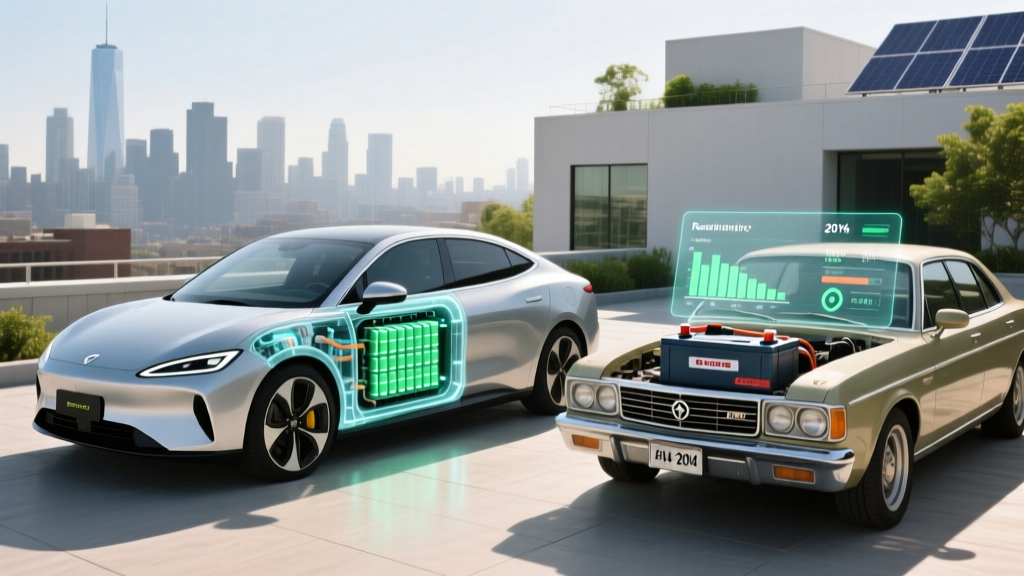
If you've been searching for a battery for 2014 Dodge Avenger, you're likely dealing with a familiar scenario: a mid-size sedan that's now over a decade old, and a 12V starter battery that has finally given out. That's a straightforward $150–$250 fix at any auto parts store. But if that search has you thinking about the broader world of automotive batteries — specifically the high-voltage traction batteries powering today's electric vehicles — you're asking the right questions at the right time.
In 2026, EV battery technology has matured considerably. Real-world degradation data from millions of vehicles on the road has replaced early speculation, replacement costs have dropped sharply, and new chemistries like LFP have reshaped the cost-versus-longevity calculus. This guide covers what modern EV buyers and owners actually need to know about battery chemistry, lifespan, warranty coverage, replacement economics, and care — with hard numbers, not marketing claims.
EV Traction Battery vs. 12V Starter Battery: Clearing Up the Confusion
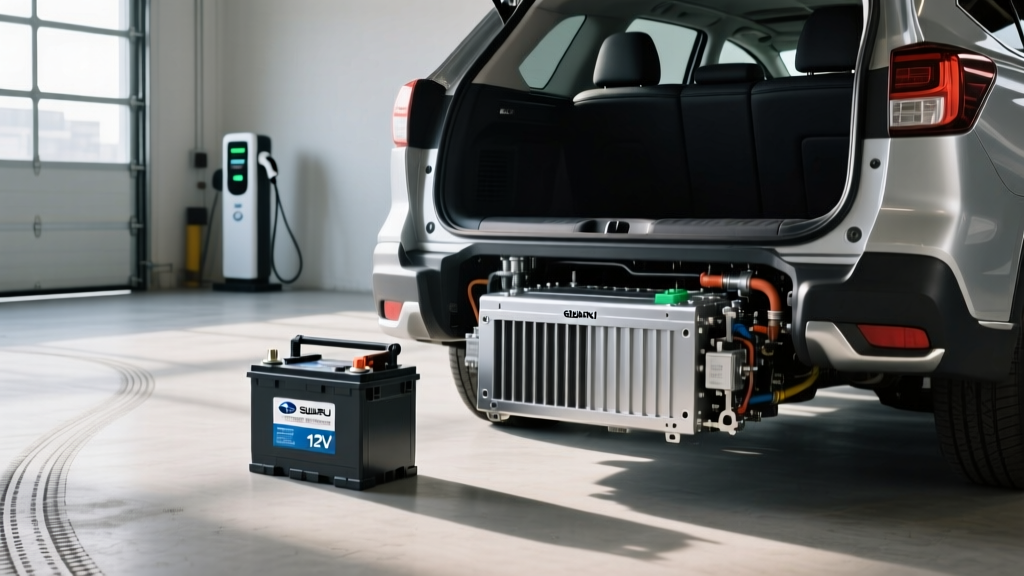
Before we get into chemistry and degradation curves, a critical distinction. When most people search for a "battery for 2014 Dodge Avenger," they need a 12V lead-acid or AGM auxiliary battery — the small unit that starts the engine and powers electronics. That's a commodity part, widely available, and inexpensive.
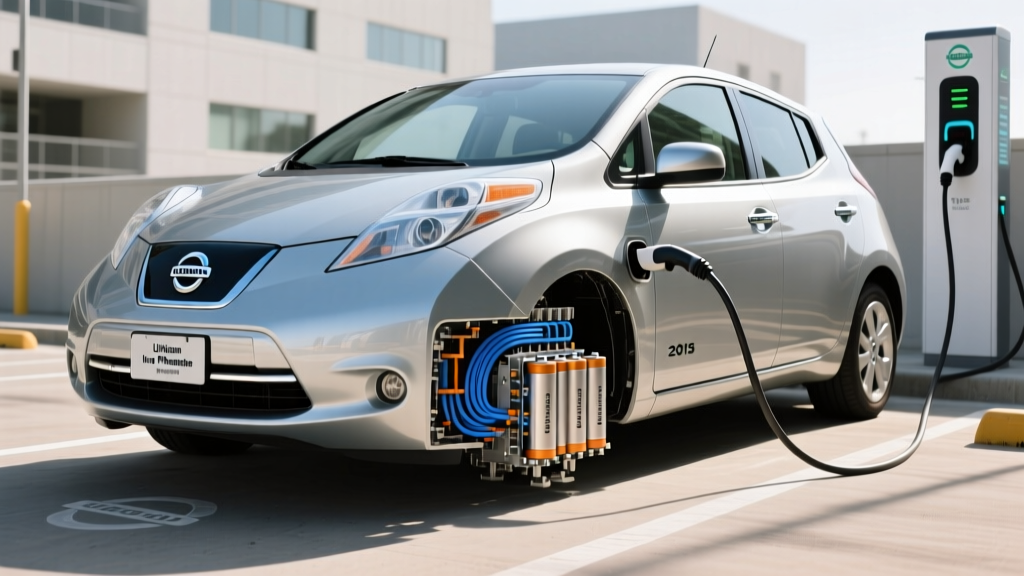
An EV traction battery is an entirely different system. It's a high-voltage (typically 400V or 800V) lithium-ion pack ranging from roughly 40 kWh to over 130 kWh of usable energy, weighing 600–2,000+ lbs, and costing between $5,000 and $20,000+ to replace. EVs also carry a separate 12V auxiliary battery for low-voltage systems, but when we discuss "EV battery" in this guide, we mean the high-voltage traction pack — the component that determines your range, performance, and long-term ownership cost.
LFP vs. NMC/NCA: Which Battery Chemistry Fits Your Ownership Plan?
Modern EVs use one of two dominant lithium-ion cathode chemistries, and the choice between them has real implications for range, longevity, and daily usability.
NMC (Nickel Manganese Cobalt) and NCA (Nickel Cobalt Aluminum) offer high energy density, meaning more range in a smaller, lighter pack. They dominate long-range and performance vehicles. LFP (Lithium Iron Phosphate) trades some energy density for dramatically longer cycle life, better thermal stability, and lower cost. It's become the standard for base-trim and standard-range EVs.
| Attribute | LFP (Lithium Iron Phosphate) | NMC / NCA (Nickel-based) |
|---|---|---|
| Energy Density | ~160–180 Wh/kg (lower) | ~230–300 Wh/kg (higher) |
| Cycle Life | 3,000–5,000+ cycles to 80% SoH | 1,000–2,000 cycles to 80% SoH |
| Cold-Weather Performance | Greater range loss below 32°F; slower cold charging | Better low-temp efficiency and charge acceptance |
| Thermal Stability | Excellent — higher runaway threshold (~270°C) | Good — requires more active thermal management |
| Cost (per kWh, 2026) | ~$80–$100/kWh at pack level | ~$110–$140/kWh at pack level |
| Recommended Daily SoC | 100% is fine; periodic full charges help BMS calibration | 80–90% daily; 100% for trips only |
| Typical Applications | Tesla Model 3/Y RWD, Ford Mustang Mach-E Select, BYD models | Tesla Long Range, Hyundai Ioniq 5/6, Rivian, Lucid |
Which is better? Neither is universally superior. If you plan to keep a vehicle 10+ years or 150,000+ miles, LFP's cycle-life advantage is significant. If you need maximum range in a lighter package — for road trips, towing, or cold-climate driving — NMC/NCA remains the practical choice. Many 2026 buyers are choosing LFP-equipped standard-range trims for daily commuting and accepting a 250–270 mile EPA range rather than paying a $5,000–$8,000 premium for NMC long-range variants.
How Long Do EV Batteries Actually Last? Real Degradation Data
The fear that EV batteries need replacement every few years is not supported by fleet data. Most modern packs are engineered to outlast the vehicle's economic life. Here's what the numbers show:
- Year 1 / ~15,000 mi: 2–5% capacity loss (initial formation loss)
- Year 3 / ~45,000 mi: 5–8% total loss
- Year 5 / ~75,000 mi: 8–12% total loss
- Year 8 / ~120,000 mi: 10–15% total loss
- Year 10 / ~150,000 mi: 12–18% total loss
Sources: Recurrent Auto fleet data, Geotab longitudinal study of 10,000+ EVs.
LFP packs show even slower degradation in comparable fleet data, often retaining 90%+ State of Health (SoH) past 100,000 miles. The key takeaway: a 2026 EV with a 300-mile EPA range will likely still deliver 255–270 miles of real-world range at the 8-year mark. That's not a crisis — it's normal wear, comparable to an engine losing a few horsepower over a decade.
Real-world degradation depends heavily on usage patterns. Vehicles in Phoenix that fast-charge daily in 110°F heat will degrade faster than garage-kept, Level-2-charged vehicles in San Francisco. But even in worst-case scenarios, catastrophic failure before 100,000 miles is rare — and typically covered by warranty.
Battery Warranty Terms: What's Actually Covered in 2026?
Federal law mandates a minimum EV battery warranty of 8 years / 100,000 miles (10 years / 150,000 miles in CARB states like California, New York, and Massachusetts). Most manufacturers meet or exceed this floor. Here's how major 2026 warranties compare:
| Manufacturer | Warranty Term | Capacity Threshold | Notes |
|---|---|---|---|
| Tesla (Model 3/Y LFP) | 8 yr / 100,000 mi | 70% retention | Transferable to subsequent owners |
| Tesla (Model 3/Y LR, S, X) | 8 yr / 120,000 mi | 70% retention | NMC/NCA packs; longer mileage term |
| Hyundai / Kia | 10 yr / 100,000 mi | 70% retention | Among the longest terms; first-owner only for full 10yr |
| Ford (Mach-E, F-150 Lightning) | 8 yr / 100,000 mi | 70% retention | Covers battery and hybrid/electric components |
| GM (Ultium-based) | 8 yr / 100,000 mi | 70% retention (60% for Bolt) | Varies by model; Bolt EV has distinct terms |
| Rivian | 8 yr / 120,000 mi (175k for commercial) | 70% retention | Module-level replacement where possible |
| BMW / Mercedes | 8 yr / 100,000 mi | 70% retention | Some offer extended purchase options |
The 70% capacity retention threshold is critical. If your 300-mile EV drops to 209 miles of range (below 70%) within the warranty period, the manufacturer must repair or replace the battery at no cost. In practice, very few vehicles hit this threshold under normal use. Warranty claims data from fueleconomy.gov and manufacturer filings show claim rates well below 2% for modern packs.
What's not covered: damage from accidents, flooding, improper modifications, or using non-approved charging equipment. Normal gradual degradation above the 70% line is also not a warranty event — it's expected wear.
EV Battery Replacement Cost: Numbers and Context
If your battery does need replacement outside warranty coverage — typically at 150,000+ miles or 12+ years — here's what you're looking at in 2026:
| Battery Size / Vehicle Class | Parts Cost | Labor | Total Estimate | Typical Replacement Timeline |
|---|---|---|---|---|
| 40–60 kWh (Compact EVs, e.g., Chevy Bolt, Nissan Leaf) | $4,000–$8,000 | $1,000–$2,500 | $5,000–$10,500 | 12–15+ years if ever |
| 70–90 kWh (Mid-size sedans/SUVs, e.g., Model 3, Ioniq 5) | $8,000–$14,000 | $1,500–$3,000 | $9,500–$17,000 | 12–15+ years if ever |
| 100–135 kWh (Large SUVs/trucks, e.g., F-150 Lightning, Rivian) | $12,000–$20,000 | $2,000–$4,000 | $14,000–$24,000 | 12–15+ years if ever |
Context that matters: Battery pack prices have fallen from over $1,000/kWh in 2010 to roughly $100–$140/kWh at the pack level in 2026, according to BloombergNEF. Some manufacturers now offer module-level replacements — swapping only the degraded modules rather than the entire pack — which can cut costs by 50–70%. Rivian, GM, and several others support this approach.
Additionally, a growing remanufactured battery market offers refurbished packs at 40–60% of new-pack pricing. For a 10-year-old EV with depreciated value of $12,000–$18,000, a remanufactured pack at $5,000–$8,000 can extend the vehicle's life economically.
The honest reality: the vast majority of EV batteries never need replacement during typical first- or second-owner use. If you're buying a 2014 Dodge Avenger today and replacing its 12V battery, you'll spend $200. If you buy a 2026 EV and drive it 150,000 miles over 10 years, there's a strong statistical likelihood you'll never need a traction battery swap.
Factors That Accelerate (or Preserve) Battery Life
Battery degradation isn't random — it's driven by measurable physical and electrochemical stressors. Understanding these lets you maximize pack life.
- Limit DC fast charging frequency. Occasional road-trip fast charging is fine. Daily reliance on 150+ kW DC charging accelerates degradation by an estimated 1–3% over 5 years vs. Level 2 home charging.
- Avoid extreme State of Charge storage. Don't leave an NMC vehicle at 100% SoC for days. For daily use, set charge limits to 80–90% (NMC) or 100% (LFP — it handles full charges well).
- Minimize deep discharges. Regularly running the battery below 10% SoC stresses cell chemistry. Charge before you hit the low end.
- Use preconditioning. When navigating to a DC fast charger, the vehicle's thermal management system preheats or precools the battery for optimal charge acceptance. This reduces stress and improves charge speed.
- Park in shade or garages during extreme heat. Sustained battery temperatures above 95°F accelerate calendar degradation. Cold is less damaging but reduces temporary range.
- Keep software updated. OEM battery management system (BMS) updates often refine charge algorithms and thermal strategies.
- Drive moderately when the battery is very cold or very hot. Heavy acceleration and regen on a cold-soaked pack increases internal resistance stress.
The single biggest longevity factor is heat. A vehicle in Arizona that fast-charges daily and regularly sits at 100% SoC in summer heat will see measurably faster degradation than one in Oregon that charges on Level 2 overnight to 80%. But even the Arizona scenario typically results in 15–20% loss over 8 years — not a dead battery.
How to Check and Monitor Battery Health (State of Health)
State of Health (SoH) is the percentage of original capacity your battery retains. A new pack is 100% SoH; at 70% SoH, your 300-mile EV delivers roughly 210 miles. Here's how to check it:
- In-vehicle BMS readouts. Some manufacturers (BMW, Hyundai, Mercedes) provide a battery health percentage in the infotainment or service menu. Tesla does not natively display SoH but third-party apps can estimate it.
- OBD-II diagnostic tools. Devices like the OBDLink MX+ paired with apps such as EVbatmon, LeafSpy (Nissan Leaf), or Scan My Tesla can read cell-level voltage data and estimate SoH.
- Dealer diagnostic reports. Any authorized service center can pull a full battery health report, including individual module balance, internal resistance, and capacity test results. Request this when buying a used EV.
- Third-party services. Companies like Recurrent offer battery health reports based on connected-car telemetry data, often available free for enrolled vehicles.
- Manual estimation. Track your actual range over several full-charge cycles and compare to the original EPA rating. Consistent 15% range loss at similar temperatures suggests ~85% SoH.
If you're evaluating a used EV — whether it's a 2020 Tesla Model 3 or something far older like a 2014 vehicle with a battery swap — always verify SoH before purchase. A pre-purchase battery diagnostic is the EV equivalent of a compression test on a used gas car.
Emerging Battery Technology: Solid-State and Silicon Anodes
Two technologies are frequently cited as the next leap in EV batteries. Here's where they actually stand in 2026:
Solid-state batteries replace the liquid electrolyte with a solid conductor, promising higher energy density (potentially 400+ Wh/kg), faster charging, and improved safety. Toyota, Samsung SDI, and QuantumScape have demonstrated prototype cells, and Toyota has announced limited production in select 2027–2028 models. However, manufacturing scalability remains the bottleneck. Realistic timeline: limited premium-vehicle availability 2028–2030; mainstream adoption unlikely before 2032+.
Silicon anode technology replaces graphite anodes with silicon-dominant composites, boosting energy density by 20–40%. Companies like Sila Nanotechnologies and Group14 are already shipping silicon-anode cells to manufacturers. Several 2026–2027 model-year EVs incorporate partial silicon anodes. Realistic timeline: incremental adoption now through 2030; becoming standard in NMC cells by ~2029.
Neither technology is available in a vehicle you can buy today at a mainstream price point. If you're making a purchase decision in 2026, current LFP and NMC chemistries are mature, well-understood, and backed by real fleet data. Waiting for solid-state is not a practical strategy for anyone who needs a vehicle in the next 2–3 years.
Frequently Asked Questions
How long do EV batteries last in years and miles?
Most modern EV batteries (2020+ model years) retain 80–88% of original capacity at 150,000 miles or 10 years based on fleet data from Recurrent Auto and Geotab. Many will outlast the vehicle's economic life. LFP chemistry packs show even slower degradation, with some fleet vehicles retaining 90%+ SoH past 100,000 miles.
How much does an EV battery cost to replace in 2026?
Out-of-warranty replacement ranges from approximately $5,000 for a compact EV pack (40–60 kWh) to $24,000 for a large truck/SUV pack (100–135 kWh), including labor. Module-level repairs and remanufactured packs can reduce costs by 40–70%. However, the majority of EV batteries never require replacement during typical ownership.
What does the EV battery warranty actually cover?
Federal minimum is 8 years / 100,000 miles (10/150k in CARB states) with a 70% capacity retention threshold. If your battery degrades below 70% of original capacity within the warranty term, the manufacturer repairs or replaces it at no cost. Warranties cover defects and abnormal degradation, not accident damage, flooding, or normal wear above the threshold.
How do I check my EV battery's State of Health?
Use the vehicle's built-in battery health display (if available), an OBD-II scanner with EV-specific software, a dealer diagnostic report, or a third-party service like Recurrent. For used-EV purchases, always request a full battery health report before committing.
LFP vs. NMC — which battery chemistry should I choose?
Choose LFP if you prioritize longevity (3,000–5,000+ cycle life), lower cost, and daily 100% charging convenience — ideal for commuting and standard-range needs. Choose NMC/NCA if you need maximum range, better cold-weather performance, or a lighter pack for towing — ideal for road trips and cold climates. Neither is universally "better"; the right choice depends on your driving pattern.
Is it worth buying a used EV given battery degradation concerns?
Yes, provided you verify State of Health before purchase. A 3-year-old EV with 85–92% SoH has the majority of its battery life ahead. Compare the used price plus any potential out-of-warranty battery cost against a new vehicle's price and depreciation. In most cases, a used EV with a healthy battery offers strong value — much like buying a well-maintained gas car with 40,000 miles.