Why Searchers for a Battery for a 2014 Dodge Avenger Land on EV Battery Guides
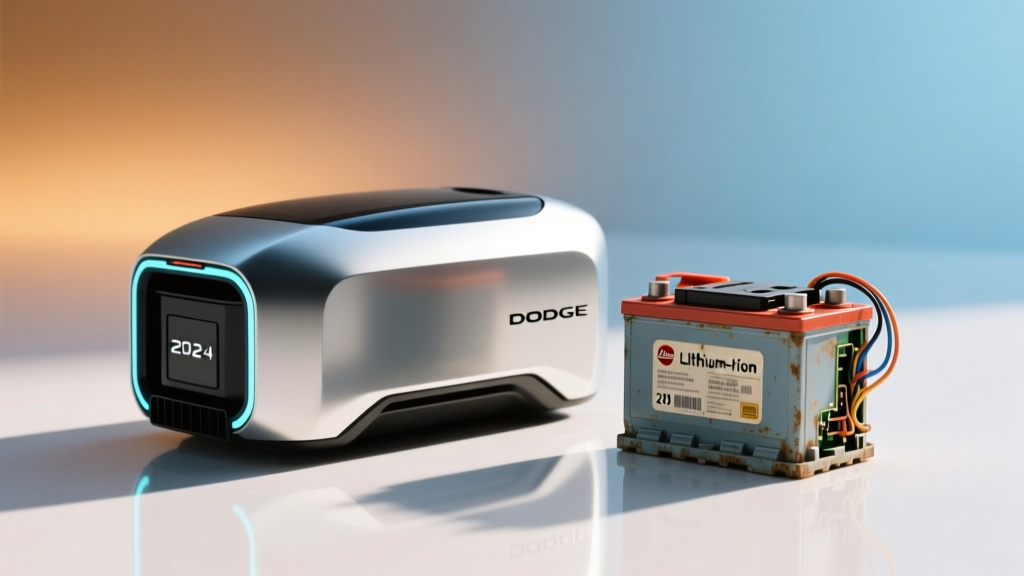
If you typed "battery for a 2014 Dodge Avenger" into a search engine, you're almost certainly looking for a 12-volt lead-acid starter battery — a Group 86 or H6 AGM cell that costs roughly $160–$240 at an auto-parts store and weighs about 40 pounds. That battery's only job is to crank a 2.4L or 3.6L Pentastar engine and run accessories when the alternator isn't spinning.
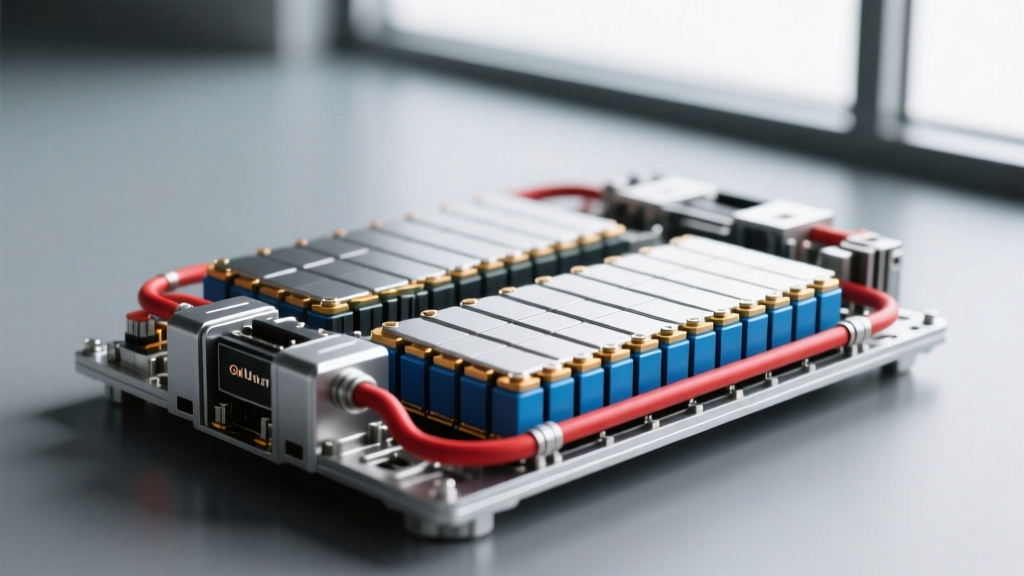
But an increasing number of those searchers are also cross-shopping their next vehicle and wondering: how different is an EV's high-voltage traction battery from the 12V battery I'm used to replacing every four years? The answer is "fundamentally, in almost every way." This guide uses that familiar 12V reference point as a baseline, then walks through exactly how modern EV battery packs are engineered, how they age, what they cost, and how to keep one healthy for 200,000+ miles.
LFP vs NMC vs NCA: The Chemistry That Defines Your EV
Every mainstream EV sold in the U.S. in 2026 uses one of three lithium-ion cathode chemistries. The choice affects range, longevity, cold-weather behavior, and price.
| Attribute | LFP (Lithium Iron Phosphate) | NMC (Nickel Manganese Cobalt) | NCA (Nickel Cobalt Aluminum) |
|---|---|---|---|
| Energy density (Wh/kg) | ~160–180 | ~220–260 | ~250–280 |
| Typical cycle life | 3,000–5,000+ | 1,000–2,000 | 1,000–1,500 |
| Cold-weather range loss | Higher (~35–45% at 20°F) | Moderate (~25–35%) | Moderate (~25–35%) |
| Can charge to 100% daily? | Yes — recommended | No — 80% daily target | No — 80% daily target |
| Cobalt/nickel content | None | Moderate | High nickel, low cobalt |
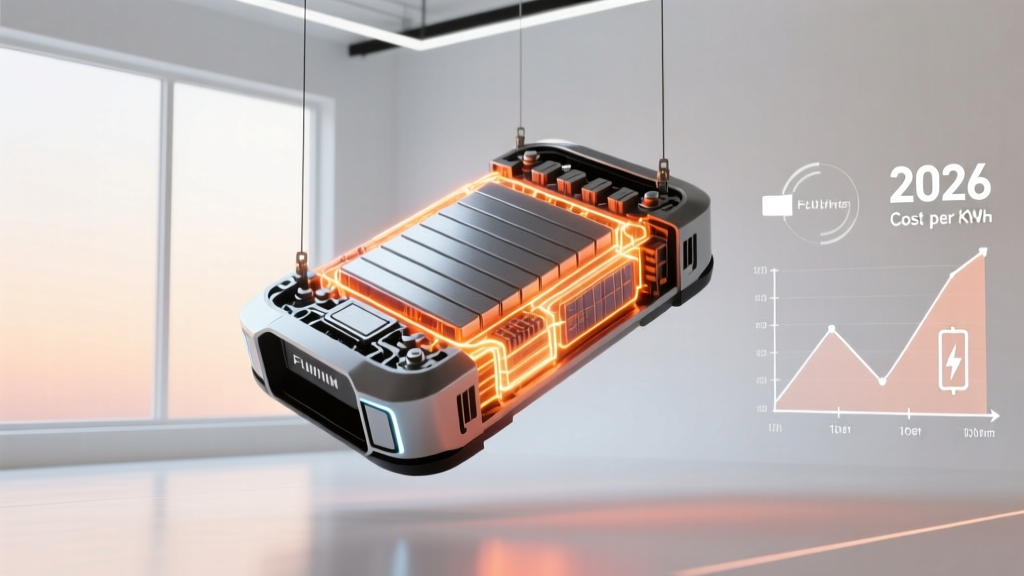
| Cost per kWh (pack-level) | ~$95–$115 | ~$120–$145 | ~$125–$150 |
| Common 2026 applications | Tesla Model 3 RWD, base Model Y, Ford Mustang Mach-E Select (LFP option), Rivian Standard | Hyundai Ioniq 5/6 Long Range, VW ID.4 Pro, most PHEVs | Tesla Long Range/Performance, Lucid Air |
Which is better? There is no single winner. LFP is the right answer for daily commuters who can charge at home, want maximum calendar life, and don't need the last 30 miles of range. NMC/NCA is the answer for road-trippers, cold-climate drivers, and buyers prioritizing maximum range per charge. Tesla's own guidance (Tesla Model 3 Owner's Manual) explicitly tells LFP owners to charge to 100% at least weekly, while NMC/NCA owners are told to cap daily charging at 80%.
How Long Do EV Batteries Actually Last?
The short answer: far longer than most buyers assume, and far longer than the 12V battery in a 2014 Avenger. Most modern traction packs will outlast the rest of the vehicle.
Real-world degradation data compiled by Recurrent Auto, which tracks over 15,000 EVs in daily service, shows the following median capacity retention:
- Year 1 / 15,000 miles: ~95–97% State of Health (SoH) — a small initial drop as the solid-electrolyte interphase (SEI) layer stabilizes.
- Year 4 / 60,000 miles: ~90–93% SoH — degradation curve flattens significantly.
- Year 8 / 120,000 miles: ~85–90% SoH — still well above warranty thresholds.
- Year 12 / 180,000+ miles: ~80–87% SoH for liquid-cooled NMC/NCA packs; LFP packs often exceed 90% here.
For context, a 2014 Dodge Avenger's 12V battery typically lasts 3–5 years and ~45,000 miles before cranking amps fall below spec. An EV traction battery is engineered for 15–20 years and 200,000+ miles.
What Does the Battery Warranty Actually Cover?
Federal law (EPA / CARB emissions-related warranty requirements) effectively mandates that automakers warranty the traction battery for at least 8 years / 100,000 miles in most states, and 10 years / 150,000 miles in California and states that follow CARB rules. Every major automaker meets or exceeds this floor.
| Manufacturer | Term | Capacity Retention Threshold | Notes |
|---|---|---|---|
| Tesla | 8 yr / 100,000 mi (Model 3/Y RWD); 8 yr / 120,000 mi (LR/Perf) | 70% | Covers defects + capacity below threshold |
| Hyundai / Kia | 10 yr / 100,000 mi | 70% | Longest standard term in U.S. |
| Ford | 8 yr / 100,000 mi | 70% | Mach-E, F-150 Lightning |
| GM (Chevy, Cadillac) | 8 yr / 100,000 mi | 70% (60% on Bolt EV/EUV pre-2024) | Ultium packs |
| Volkswagen | 8 yr / 100,000 mi | 70% | ID.4, ID.7 |
| Rivian | 8 yr / 175,000 mi | 70% | Highest mileage cap |
What's covered: Manufacturing defects, cell imbalance that the BMS can't correct, and capacity falling below the stated threshold (typically 70% of original). What's not covered: Damage from collisions, flooding, rodent chewing, unauthorized modifications, or deliberate abuse (e.g., repeated 100%→0% cycling for commercial use). Warranty is transferable to subsequent owners in most states, which supports resale value.
How Much Does an EV Battery Cost to Replace?
This is the question that dominates EV forums, and the honest answer is that most owners will never need to find out. But for planning purposes, here are 2026 replacement figures based on OEM parts pricing and independent-shop data:
| Vehicle / Pack Size | New OEM Pack | Remanufactured / Refurbished | Module-Level Repair |
|---|---|---|---|
| Tesla Model 3 RWD (~60 kWh LFP) | $12,000–$15,000 | $8,000–$10,500 | $1,500–$3,500 (per module) |
| Tesla Model Y LR (~82 kWh NCA) | $16,000–$20,000 | $11,000–$14,000 | $2,000–$4,000 |
| Hyundai Ioniq 5 (~77.4 kWh NMC) | $17,000–$22,000 | $12,000–$16,000 | $2,500–$4,500 |
| Ford F-150 Lightning Ext. Range (~131 kWh) | $25,000–$32,000 | $18,000–$23,000 | $3,500–$6,000 |
| Chevy Bolt EV (~65 kWh NMC) | $14,000–$17,000 | $9,500–$12,500 | $2,000–$3,800 |
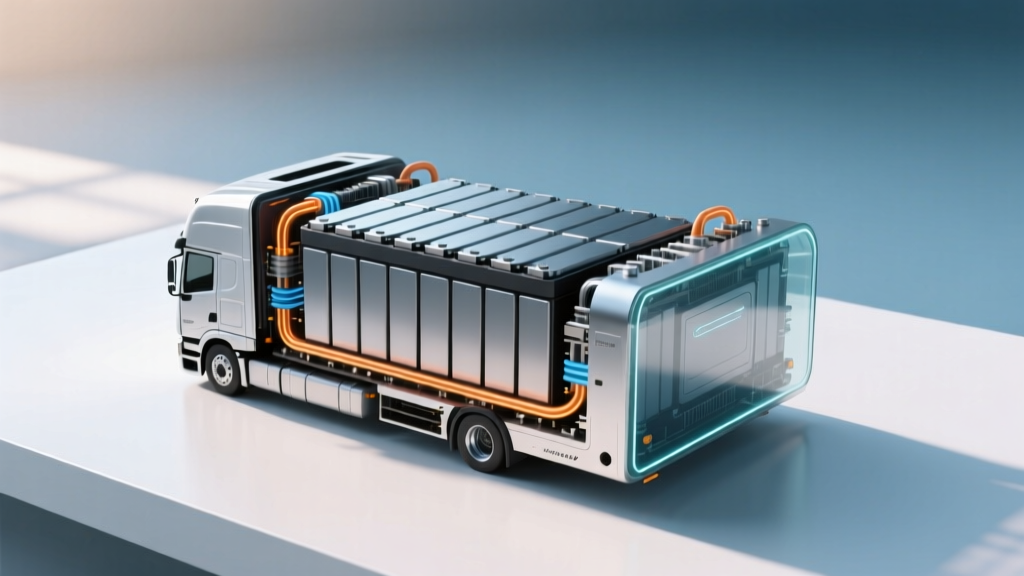
When is replacement actually needed? Almost never before 150,000 miles on a liquid-cooled pack. The most common real-world replacements are from collision damage or from early Nissan Leaf models (2011–2017) that used passively air-cooled packs — a thermal-management design no mainstream 2026 EV uses. Module-level repair, where a shop swaps only the degraded cells rather than the whole pack, is increasingly common and dramatically cheaper.
For comparison, replacing a 12V battery on a 2014 Dodge Avenger runs $160–$240 installed. The traction pack is 50–100× that cost — but it's also expected to last 5–10× longer in both years and miles.
Five Factors That Actually Shorten EV Battery Life
Not all miles age a battery equally. Based on cell-test data and fleet telemetry, these are the five biggest accelerants of degradation, in rough order of impact:
- Sustained high State of Charge (SoC) at high temperature. Sitting at 100% in a 95°F driveway for weeks is the single worst thing you can do to an NMC/NCA pack. LFP is more tolerant but not immune.
- Exclusive DC fast charging without preconditioning. Repeatedly hitting a cold pack with 150–350 kW stresses cells. Always use the vehicle's nav-routed preconditioning (Tesla, Hyundai, Ford, Rivian all do this automatically when you navigate to a charger).
- Deep discharges to 0% or near-0%. Occasional 10%→80% cycles are fine; habitual 100%→5% cycles accelerate SEI growth.
- Prolonged storage at extreme SoC. If storing an EV for 30+ days, target 50% SoC and a cool garage. 100% or 0% storage for weeks causes measurable capacity loss.
- Track use / sustained high-C-rate discharge. Repeated full-power launches and hard regen generate internal heat that degrades cells faster than highway driving.
- Set daily charge limit to 80% (NMC/NCA) or 100% (LFP)
- Plug in whenever possible so the BMS can balance cells
- Use scheduled departure / preconditioning for morning commutes
- DC fast charge when needed — don't avoid it out of fear — but let the car route you there for preconditioning
- In summer, park in shade or a garage when possible
- Avoid leaving the car at 0% or 100% for more than 24 hours
How to Check and Monitor Battery State of Health (SoH)
Unlike a 12V battery where a $30 multimeter tells you most of what you need to know, traction-pack SoH requires the vehicle's own battery management system (BMS) or an OBD-II reader that speaks the manufacturer's CAN protocol. Here are the main methods in 2026:
- In-vehicle display. Tesla (Service Mode → Battery Health), Hyundai/Kia (EV-specific menu in newer infotainment), and Rivian all expose a SoH percentage or "battery health" indicator.
- OEM app. The FordPass, myChevrolet, and Hyundai Bluelink apps show SoH or a health grade, typically updated after each full charge cycle.
- Third-party OBD-II tools. Apps like OBDeleven (VW/Audi), LeafSpy (Nissan), and Scan My Tesla read cell-level voltage delta, internal resistance, and SoH. Cost: $20–$60 for the dongle plus a free/cheap app.
- Dealer diagnostic. Any franchised service department can print a battery health report — useful when buying a used EV. Ask for it in writing before purchase.
- Recurrent / Geotab fleet reports. If you're shopping used, Recurrent publishes model-specific degradation curves (recurrentauto.com) so you can benchmark a specific car against the fleet median.
A healthy used EV will typically show SoH between 88–96% at 40,000–80,000 miles. Anything below 85% at that mileage warrants a deeper diagnostic and negotiation leverage.
What's Coming Next: Solid-State, Silicon Anode, and LMR
Forward-looking context — none of these are in mass-market 2026 vehicles:
- Solid-state batteries (Toyota, Nissan, Samsung SDI prototypes) promise ~30–40% higher energy density and faster charging by replacing the liquid electrolyte with a solid ceramic or sulfide. Toyota has announced a 2027–2028 limited production target; realistic mass-market availability is 2030+.
- Silicon-anode cells (Sila Nanotechnologies, already shipping in the Mercedes G 580 EQ Technology Edition) boost energy density ~15–20% by replacing graphite with silicon at the anode. Expect gradual rollout through luxury segments 2026–2029.
- Lithium Manganese Rich (LMR) cathodes from GM/Ultium and LG Energy Solution aim to cut cobalt further while matching NMC energy density — targeted for high-volume models post-2027.
- Sodium-ion (CATL, BYD) is entering low-cost, low-range city EVs in China in 2026. U.S. availability is uncertain and likely limited to commercial/fleet applications first.
For a buyer in 2026, today's LFP and NMC chemistries are mature, well-understood, and backed by robust warranties. Waiting for solid-state is not a rational purchase strategy unless your timeline extends past 2030.
Frequently Asked Questions
Is the EV traction battery the same as the battery for a 2014 Dodge Avenger?
No. The Avenger uses a 12V lead-acid starter battery (Group 86/H6, ~$160–$240) that cranks an internal-combustion engine. An EV traction battery is a 400V–800V lithium-ion pack of 50–130 kWh that costs $12,000–$32,000 to replace and is engineered for 15–20 years of service.
How long do EV batteries last in years and miles?
Real-world fleet data from Recurrent Auto shows median pack life exceeding 200,000 miles with 80–90% capacity remaining. In years, most liquid-cooled packs are engineered for 15–20 years. The federal warranty floor is 8 years / 100,000 miles at 70% capacity retention.
How much does an EV battery cost to replace in 2026?
Between $12,000 and $32,000 for a new OEM pack depending on capacity, with remanufactured packs 30–40% less and module-level repairs as low as $1,500–$6,000. Most owners never need a replacement during ownership.
LFP vs NMC — which should I choose?
Choose LFP if you charge at home daily, want maximum cycle life, and don't need the longest single-charge range. Choose NMC/NCA if you take regular road trips, live in a cold climate, or want the highest range per charge. Both are excellent; they optimize different use cases.
Does DC fast charging damage the battery?
Occasional DC fast charging has negligible impact on modern liquid-cooled packs. The risk comes from exclusive DC fast charging on a cold, un-preconditioned pack. Use the car's built-in preconditioning (navigate to the charger) and mix in Level 2 home charging when you can.
How do I check my EV's battery health before buying used?
Request a dealer diagnostic printout showing State of Health (SoH) percentage, or plug in an OBD-II reader with EV-specific software (LeafSpy, Scan My Tesla, OBDeleven). Compare the reading to fleet averages on Recurrent Auto. Below 85% SoH at under 80,000 miles is a yellow flag.
Will my EV battery need replacement before the car wears out?
Statistically, no. Recurrent's dataset shows fewer than 1.5% of packs replaced outside of warranty for degradation reasons. Collision damage and early air-cooled packs (pre-2017 Nissan Leaf) are the main exceptions.