If you're searching for a battery for 2014 Chevy Traverse, you're likely dealing with a conventional 12-volt lead-acid replacement for a gasoline SUV — not an electric vehicle traction battery. But that search query highlights a common confusion between the small auxiliary battery every car carries and the massive high-voltage battery pack that powers an EV. Understanding the difference, and knowing how modern EV batteries actually work, is essential for anyone considering an electric vehicle in 2026.
This guide covers everything you need to know about EV battery technology today: chemistry trade-offs, real-world degradation data, warranty coverage, replacement costs, and practical care strategies that can extend pack life well past 200,000 miles.
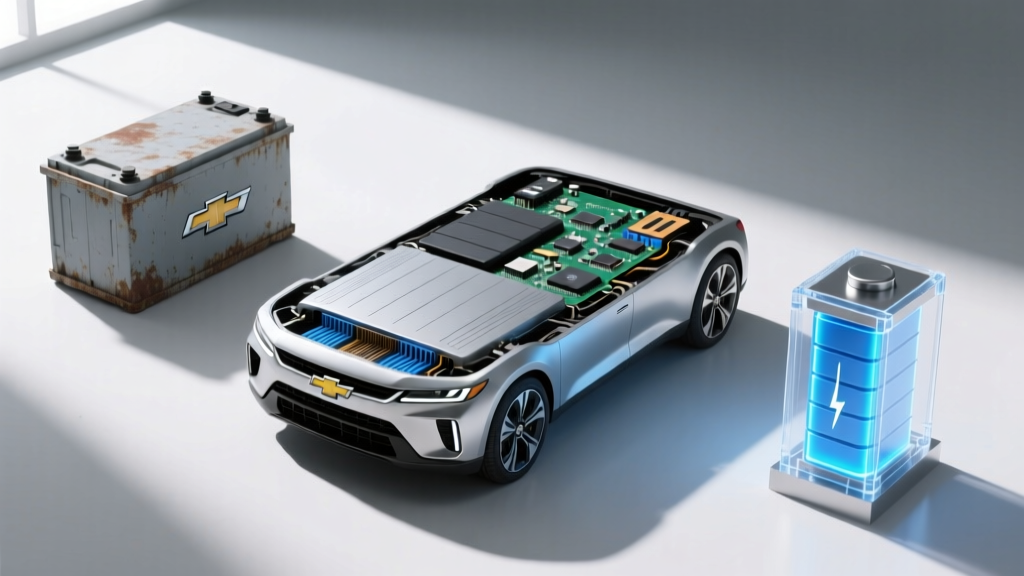
The 12V Battery vs. the EV Traction Battery: Critical Distinction
The 2014 Chevy Traverse uses a Group 48 AGM or flooded lead-acid 12V battery to start its 3.6L V6 engine and run accessories. That battery typically costs $150–$250, lasts 3–5 years, and is a straightforward auto-parts-store swap.
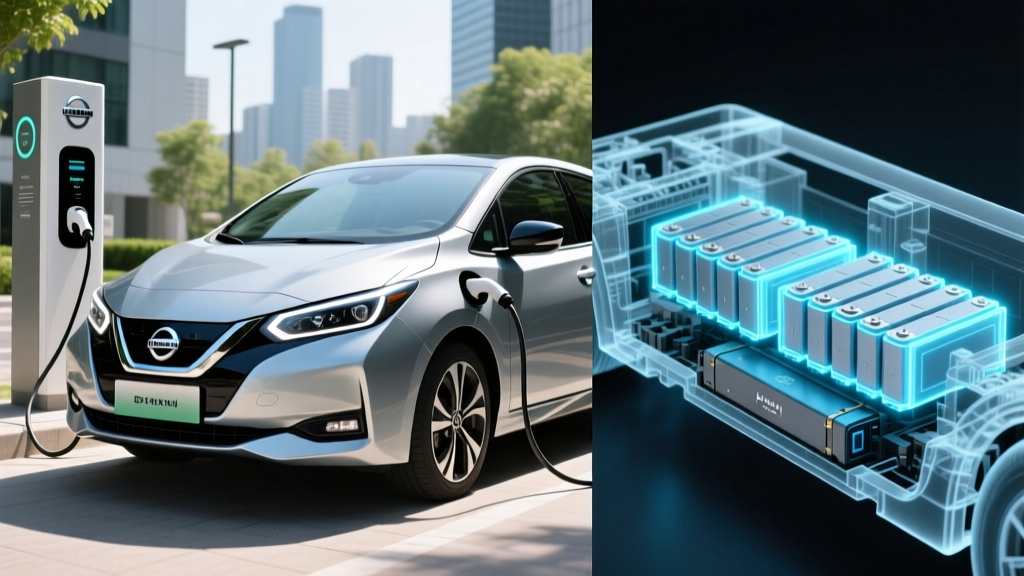
An EV traction battery is an entirely different animal. It's a high-voltage lithium-ion pack (typically 400V or 800V architecture) storing 60–130+ kWh of energy, weighing 800–1,500 lbs, and costing $10,000–$25,000+ to replace. Even EVs that still carry a small 12V auxiliary battery for accessory systems (lights, infotainment, computers) use the traction pack for propulsion. When we say "EV battery" in this guide, we mean the traction battery — the one that determines your range, charging speed, and long-term ownership cost.
Battery Chemistry in 2026: LFP vs. NMC vs. NCA
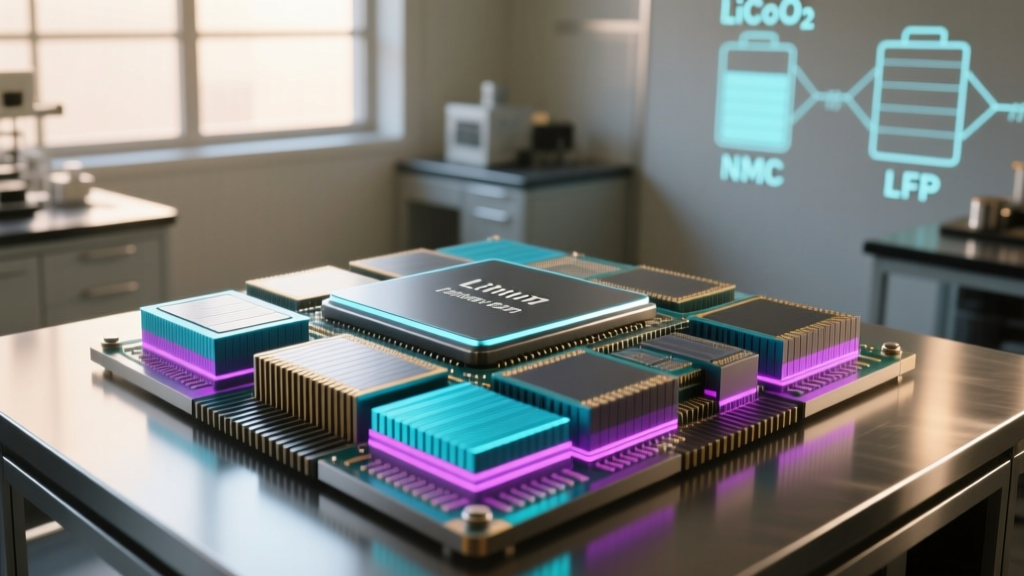
Two dominant lithium-ion chemistries power nearly every EV sold in the US market today, with a third (NCA) appearing in specific applications:
- LFP (Lithium Iron Phosphate): Lower energy density but exceptional cycle life, thermal stability, and lower cost. Used in standard-range Tesla Model 3/Y, base Ford Mustang Mach-E, and many Chinese-market imports.
- NMC (Nickel Manganese Cobalt): Higher energy density for longer range in a given pack size, but more expensive, shorter cycle life, and greater thermal sensitivity. Dominant in long-range and performance trims.
- NCA (Nickel Cobalt Aluminum): Similar high energy density to NMC, used primarily by Tesla in long-range models and by Rivian.
| Attribute | LFP | NMC (811/622) | NCA |
|---|---|---|---|
| Energy Density (Wh/kg) | 160–200 | 220–300 | 250–300 |
| Cycle Life (to 80% SoH) | 3,000–5,000+ | 1,000–2,000 | 1,000–1,500 |
| Cold-Weather Performance | Moderate (slower charge <32°F) | Good | Good |
| Thermal Stability | Excellent (least fire risk) | Moderate (requires robust BMS) | Moderate |
| Cost ($/kWh, pack-level 2026) | ~$90–$110 | ~$120–$150 | ~$120–$145 |
| Recommended SoC Range | 0–100% (can charge to full daily) | 20–80% daily, 100% for trips | |
| Typical Applications | Standard-range, fleet, budget EVs | Long-range, premium EVs | Tesla LR, Rivian |
Which is better? Neither is universally superior. LFP wins on longevity and cost — ideal if you charge at home daily and don't need maximum range. NMC/NCA wins on range-per-pound — essential for 350+ mile EPA ratings and cold-climate drivers who need every mile. According to IEA Global EV Outlook data, LFP market share in global EV battery production reached approximately 40% by 2025, driven by Tesla's standard-range adoption and CATL/BYD scaling.
How Long Do EV Batteries Actually Last?
The short answer: far longer than most buyers fear. Data from fleet operators, manufacturer warranty claims, and independent testing consistently shows that modern lithium-ion traction batteries retain 85–95% of original capacity after 100,000 miles and 70–85% after 200,000 miles, depending on chemistry and usage patterns.
Typical Degradation Trajectory (Real-World Data Points)
| Milestone | NMC/NCA Avg. Capacity Retained | LFP Avg. Capacity Retained | Source/Context |
|---|---|---|---|
| Year 1 / ~15,000 mi | 95–97% | 97–99% | Initial calibration loss; fastest degradation phase |
| Year 3 / ~45,000 mi | 90–94% | 94–97% | Linear slow-degradation phase |
| Year 5 / ~75,000 mi | 87–92% | 92–96% | Tesla fleet data, Recurrent Analytics |
| Year 8 / ~120,000 mi | 82–88% | 88–94% | Within federal warranty threshold |
| Year 10 / ~150,000 mi | 78–85% | 85–92% | Most packs still functional for daily use |
| Year 15 / ~225,000 mi | 70–80% | 80–90% | Approaching or past 70% threshold |
Note: These are aggregated estimates. Individual results vary with climate, charging habits, and thermal management quality. Data synthesized from Recurrent Analytics fleet studies and manufacturer disclosures.
The degradation curve is non-linear: expect a steeper 3–5% drop in year one (calendar aging and initial formation losses), followed by a long, slow linear decline of roughly 1–2% per year under normal use. A 2026 Tesla Model 3 Long Range (82 kWh NMC pack) driven 15,000 miles/year should still deliver approximately 260–280 miles of its original 341-mile EPA range at the 100,000-mile mark.
EV Battery Warranty Coverage: What's Protected
Federal regulation mandates a minimum 8-year/100,000-mile warranty on EV battery packs for emissions-related compliance, and nearly every automaker matches or exceeds this baseline. California and states adopting CARB standards require 10 years/150,000 miles.
| Manufacturer | Warranty Period | Mileage Cap | Capacity Threshold |
|---|---|---|---|
| Tesla (Model 3/Y LFP) | 8 years | 120,000 mi | 70% retention |
| Tesla (Model 3/Y LR NMC) | 8 years | 120,000 mi | 70% retention |
| Hyundai/Kia (E-GMP) | 10 years | 100,000 mi | 70% retention |
| Ford (Mach-E, F-150 Lightning) | 8 years | 100,000 mi | 70% retention |
| GM (Ultium platform) | 8 years | 100,000 mi | 70% retention |
| BMW (iX, i4) | 8 years | 100,000 mi | 70% retention |
| Rivian (R1T, R1S) | 8 years | 175,000 mi | 70% retention |
What the warranty actually covers: If your battery's usable capacity drops below the stated threshold (typically 70% of original kWh) within the warranty period, the manufacturer will repair or replace modules or the full pack at no cost. This covers degradation — not just catastrophic failure. It does not cover damage from accidents, flooding, improper modifications, or use outside manufacturer specifications.
The 70% threshold matters practically: a 75 kWh pack at 70% health still holds ~52.5 kWh, enough for roughly 180–220 miles of real-world range in a midsize crossover. That's diminished but entirely usable for daily commuting.
EV Battery Replacement Cost: What to Expect
Battery replacement remains the single largest potential ownership cost, but context is critical — the vast majority of EV batteries outlast the vehicle's useful economic life. According to Consumer Reports and Recurrent data, fewer than 5% of EV battery packs have required out-of-warranty replacement as of 2025.
| Battery Size / Vehicle Class | Example Models | Pack Cost (Parts) | Installed Cost (Parts + Labor) |
|---|---|---|---|
| 40–60 kWh (Compact/Standard Range) | Nissan Leaf, base Chevy Equinox EV | $6,000–$10,000 | $8,000–$14,000 |
| 60–85 kWh (Midsize/Mid-Range) | Tesla Model 3, Hyundai Ioniq 5 | $10,000–$16,000 | $13,000–$20,000 |
| 85–110 kWh (Long-Range/Premium) | Tesla Model S, BMW iX, Rivian R1T | $14,000–$22,000 | $18,000–$28,000 |
| 110–150+ kWh (Truck/Large SUV) | F-150 Lightning Ext., GMC Hummer EV | $18,000–$30,000 | $22,000–$38,000 |
When is replacement typically needed? Most replacements occur after year 10 or 150,000+ miles — and many are covered under warranty. Out-of-warranty replacements are rare and usually triggered by physical damage, manufacturing defects discovered late, or extreme high-mileage use (fleet/taxi duty). Module-level repair (replacing individual degraded cell groups rather than the full pack) is increasingly available, reducing costs to $3,000–$8,000 in many cases.
Pack-level pricing has fallen dramatically: BloombergNEF reports average lithium-ion pack prices dropped below $130/kWh at the cell level in 2025, with pack-level costs around $150–$180/kWh. A 75 kWh pack that would have cost $25,000+ in 2018 now costs $11,000–$14,000 at the component level.
Factors That Accelerate or Slow Battery Degradation
Not all miles are equal when it comes to battery wear. The following factors have the most measurable impact on long-term State of Health (SoH):
Battery Care Best Practices — 2026 Owner Checklist
- Daily charge limit: Set to 80% for NMC/NCA packs; 100% is fine for LFP. Reserve 100% charges for road trips.
- Avoid deep discharge: Keep above 10–15% SoC; don't regularly drain to 0%.
- DC fast charging frequency: Occasional DCFC (1–2x/week) has minimal impact; daily DCFC accelerates degradation by an estimated 1–3% over 100,000 miles vs. Level 2 home charging.
- Extreme heat exposure: Parking in direct sun in 100°F+ climates without thermal management running causes measurable calendar aging. Use shaded/covered parking when possible.
- Cold-weather charging: Always precondition the battery before DC fast charging in sub-40°F weather. Charging a cold pack stresses cells and triggers the BMS to severely limit charge rate.
- Long-term storage: If storing an EV for weeks, leave it at ~50% SoC, plugged in if possible so the thermal management system can maintain battery temperature.
- Regenerative braking settings: Moderate regen is fine; extreme one-pedal driving doesn't significantly harm the battery but high-current regen pulses on a near-full pack can add stress.
The charging-curve reality: DC fast charging isn't a constant rate. A pack rated for "250 kW peak" only sustains that rate between roughly 10–40% SoC, then tapers progressively. Above 80%, charge rate drops to 30–50 kW to protect cell health. This taper is why 10–80% charge times are the standard metric — and why charging to 100% at a DC fast charger adds 20–40 minutes for relatively few miles gained.
Monitoring Battery Health: How to Check SoH
Most 2026 EVs provide built-in State of Health (SoH) monitoring through the vehicle's infotainment system or companion app. Here's how to access it by platform:
- Tesla: Service mode (accessible via the software menu) displays estimated pack capacity in kWh. Third-party apps like Tessie or TeslaFi log capacity trends over time.
- Hyundai/Kia (E-GMP): The EV app and dealer diagnostic tools report SoH percentage. The Ioniq 5 and EV6 display battery health in the settings menu on 2024+ models.
- GM (Ultium): myChevrolet/myCadillac apps include battery health indicators; OnStar diagnostics provide SoH on request.
- Ford: FordPass app shows estimated range vs. original, which serves as a proxy for SoH. Dealer IDS tool provides precise capacity readings.
- OBD-II scanners: Tools like the OBDLink MX+ paired with apps such as ABRP (A Better Route Planner) or LeafSpy (for Nissan) can read battery management system data including pack voltage, cell imbalance, and estimated capacity.
For the most accurate SoH reading, perform a full 100%→10% discharge cycle once or twice per year and compare the kWh consumed (visible on the trip energy screen or via a smart home charger's logging feature) to the pack's original rated capacity. This real-world test accounts for BMS estimation drift that can occur with partial charge cycles.
Emerging Battery Tech: Solid-State and Silicon Anodes
Two technologies dominate forward-looking battery research, but neither is ready for mainstream consumer EVs as of 2026:
Solid-state batteries replace the liquid electrolyte with a solid ceramic, polymer, or sulfide separator, promising 30–50% higher energy density, faster charging (potentially 10–80% in under 10 minutes), and improved safety. Toyota has announced solid-state-equipped EVs for limited production in 2027–2028, while Samsung SDI targets 2027 for mass production. However, manufacturing yield challenges and cost remain significant barriers. Expect solid-state to debut in premium/low-volume applications before reaching mainstream pricing.
Silicon anode technology replaces or supplements graphite anodes with silicon, which can store roughly 10x more lithium ions per gram. Companies like Sila Nanotechnologies and Group14 are supplying silicon-dominant anode materials for select 2025–2026 models (notably the Mercedes-Benz G-Class electric and Porsche next-gen platforms). Current implementations use silicon as a partial blend (5–15% silicon content) to manage expansion issues, delivering 10–20% energy density gains. Full silicon anodes remain in development.
Sodium-ion batteries are also entering the market in 2026, primarily from CATL and BYD for lower-cost, shorter-range EVs in China. They use no lithium, cobalt, or nickel — reducing cost and supply-chain risk — but offer 20–30% lower energy density than LFP. US availability is not yet confirmed.
For today's buyer: current lithium-ion technology (both LFP and NMC) is mature, well-understood, and backed by extensive warranty coverage. Waiting for next-generation chemistry is not necessary for a sound EV purchase.
Frequently Asked Questions
How long do EV batteries last in years and miles?
Modern EV batteries (2020+ production) typically retain 80–90% capacity at 100,000 miles and 70–85% at 200,000 miles. In calendar terms, expect 15–20+ years of usable service before capacity drops below 70%. LFP chemistries trend toward the higher end of these ranges. The battery will likely outlast other major vehicle components.
How much does an EV battery cost to replace?
Full pack replacement ranges from $8,000–$14,000 installed for a 40–60 kWh compact pack to $22,000–$38,000 for a 110–150 kWh truck/SUV pack as of 2026. Module-level repairs cost $3,000–$8,000. However, fewer than 5% of packs require replacement, and most failures within the first 8 years are covered under warranty at no cost to the owner.
What does the EV battery warranty cover?
Federally mandated minimum coverage is 8 years/100,000 miles (10 years/150,000 miles in CARB states). The warranty covers capacity loss below a defined threshold — typically 70% of original capacity — as well as manufacturing defects and premature cell failure. It does not cover accident damage, improper modifications, or environmental damage (flooding). See the warranty table above for manufacturer-specific terms.
How do I check and maximize my EV battery health?
Check SoH through your vehicle's app, service mode, or an OBD-II scanner with EV-compatible software. Maximize longevity by: limiting NMC/NCA daily charges to 80% (100% for LFP), avoiding frequent DC fast charging when Level 2 is available, preconditioning before cold-weather fast charging, and avoiding prolonged storage at very high or very low SoC. An annual full-cycle test provides the most accurate health reading.
LFP vs. NMC — which battery chemistry is better?
It depends on your priorities. Choose LFP if you want maximum cycle life (3,000–5,000+ cycles), can charge to 100% daily without concern, prioritize lower replacement cost, and don't need the longest possible range. Choose NMC/NCA if you need 300+ miles of EPA range, drive in extreme cold regularly, or want the lightest possible pack for a given capacity. Neither is objectively "better" — they optimize for different use cases.
Does the 2014 Chevy Traverse have an EV battery?
No. The 2014 Chevy Traverse is a conventional gasoline V6 SUV. It uses a standard 12V lead-acid battery (Group 48) for starting and accessories. It has no high-voltage traction battery. If you're replacing the 12V battery in a 2014 Traverse, expect to pay $150–$250 for an AGM or flooded battery at any auto parts retailer. For an EV traction battery guide, all information above applies to battery electric vehicles (BEVs) and plug-in hybrids (PHEVs).