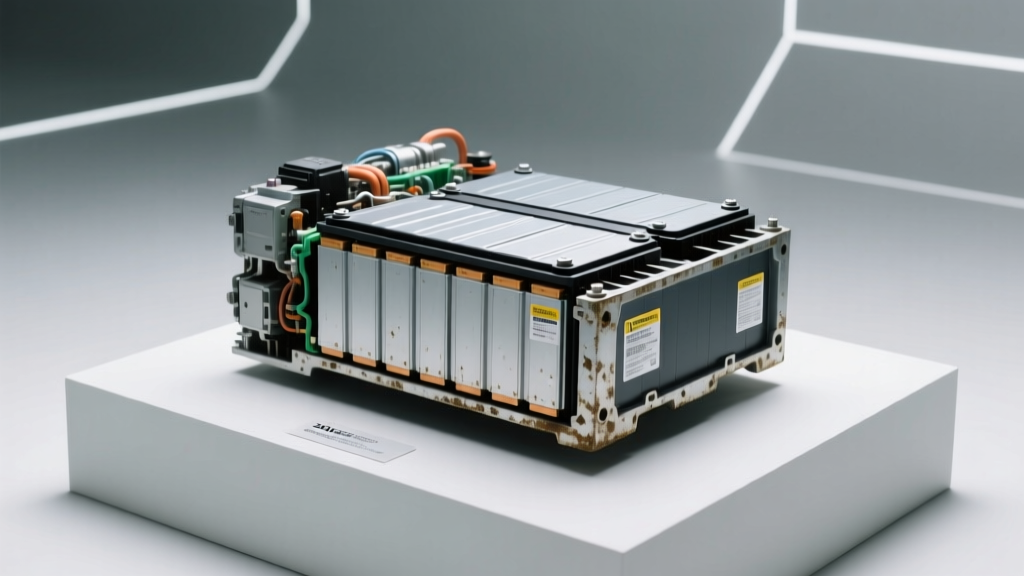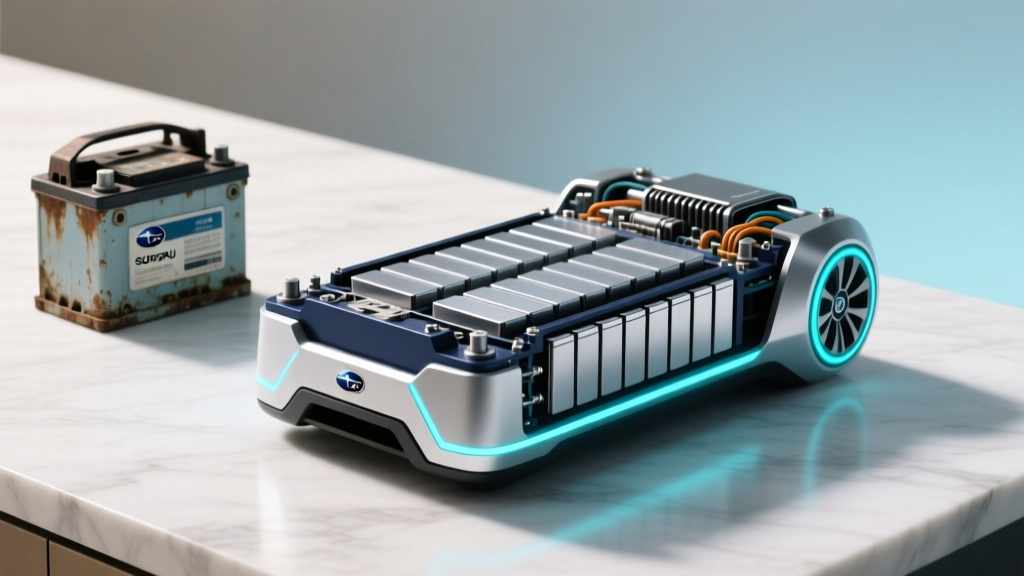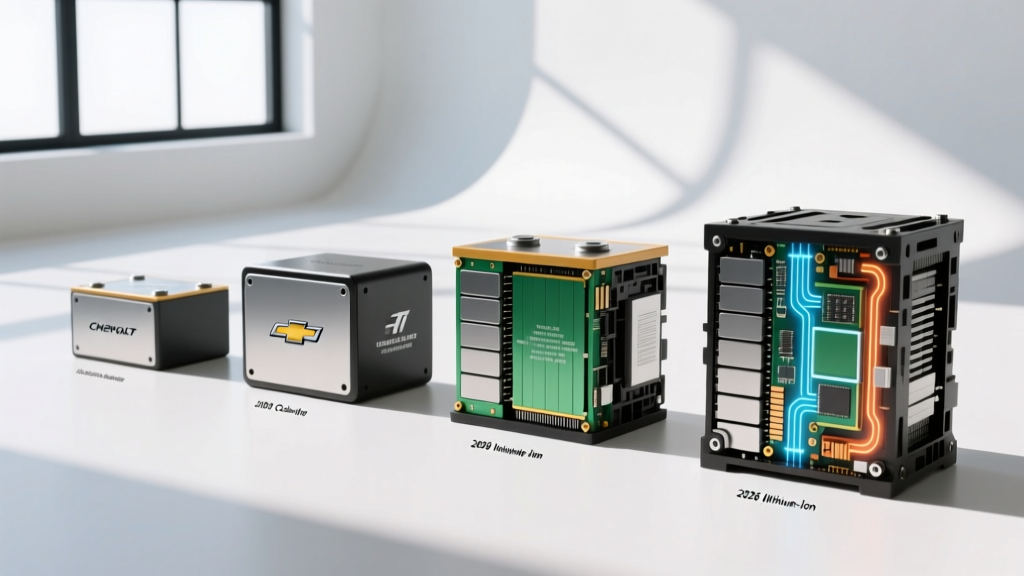
If you've ever searched for a "2008 Chevy Cobalt battery," you were almost certainly looking for a 12-volt lead-acid starter battery — the kind that sits under the hood of a conventional gas car, cranks the engine, and costs about $150 at an auto parts store. That search tells a story about how far automotive batteries have come. In 2008, the idea of a high-voltage lithium-ion traction battery powering a mainstream American car was still a concept. The Chevy Volt wouldn't arrive until late 2010, and the Bolt EV was still eight years away.
Fast-forward to 2026, and battery technology is the single most important variable in electric-vehicle ownership. It determines your range, your charging speed, your long-term costs, and ultimately whether your EV feels like an asset or a liability a decade from now. This guide breaks down the chemistry, degradation realities, warranty protections, and replacement economics that every EV buyer and owner needs to understand.
The 12-Volt Battery vs. the High-Voltage Traction Battery: Know the Difference
Before we get into lithium-ion chemistry, let's clear up the confusion that drives searches like "2008 Chevy Cobalt battery." A conventional car has a single 12V lead-acid battery that starts the engine and powers accessories. An EV also has a 12V auxiliary battery — it runs the infotainment, lights, and control modules — but the real heart of the car is the high-voltage traction battery, typically operating between 350V and 800V and storing 50 to 130+ kWh of energy.
When EV owners talk about "the battery," they mean the traction pack. When a 2008 Cobalt owner says "battery," they mean a Group 26 or Group 35 lead-acid unit rated at around 550 cold-cranking amps. These are fundamentally different components with different lifespans, costs, and failure modes. The 12V battery in an EV typically lasts 3-5 years and costs $200-$350 to replace. The traction battery is designed to last the life of the vehicle — but understanding what "life of the vehicle" actually means requires a closer look at chemistry.
LFP vs. NMC/NCA: The Chemistry That Defines Your EV
Every EV sold in 2026 uses one of two dominant lithium-ion cathode chemistries: LFP (lithium iron phosphate, or LiFePO4) or NMC/NCA (nickel manganese cobalt / nickel cobalt aluminum). The chemistry determines your battery's energy density, lifespan, cold-weather behavior, and cost.
| Attribute | LFP (Lithium Iron Phosphate) | NMC / NCA (Nickel-based) |
|---|---|---|
| Energy Density | Lower (~160-180 Wh/kg cell-level) | Higher (~220-300 Wh/kg cell-level) |
| Typical Cycle Life | 3,000-5,000+ cycles | 1,000-2,500 cycles |
| Cold-Weather Performance | Moderate — slower charging below 32°F; preconditioning critical | Better low-temp charge acceptance |
| Cost per kWh (2026) | ~$80-100/kWh at pack level | ~$110-140/kWh at pack level |
| Optimal Daily SoC | Can charge to 100% daily (recommended by Tesla, BYD) | Best kept 20-80% for daily use; 100% for trips only |
| Safety / Thermal Stability | Superior — much higher thermal runaway threshold | Good with modern BMS, but more sensitive to thermal events |
| Notable 2026 Users | Tesla Model 3/Y RWD, BYD, Ford Mustang Mach-E Select (LFP option), Rivian Standard | Hyundai Ioniq 5/6, Tesla Long Range, BMW iX, Porsche Taycan, GM Ultium-based models |
Which is better? It depends on your use case. LFP is the pragmatic choice for daily commuters who want maximum cycle life and don't mind slightly less range per kilogram. NMC/NCA is better for buyers who prioritize maximum range in a lighter package and who can manage state-of-charge habits (avoiding prolonged 100% storage). Neither chemistry is universally superior — the right choice depends on your driving pattern, climate, and budget.
How Long Do EV Batteries Actually Last? Degradation Data
The fear that EV batteries need replacement every few years is not supported by fleet data. According to analyses by Recurrent Auto, which tracks over 15,000 EVs in real-world conditions, the average EV battery retains approximately 90-95% of its original capacity after 5 years and 85-90% after 100,000 miles. Degradation is not linear — it's steepest in the first 1-2 years (typically 2-5% loss) and then flattens into a slow, predictable decline.
Typical Degradation Curve (NMC, liquid-cooled pack, moderate climate):
- Year 1 / 15,000 mi: ~96-98% State of Health (SoH)
- Year 3 / 45,000 mi: ~92-94% SoH
- Year 5 / 75,000 mi: ~89-92% SoH
- Year 8 / 120,000 mi: ~84-88% SoH
- Year 10 / 150,000 mi: ~80-85% SoH
For context, a Tesla Model 3 Long Range with an original EPA range of 341 miles and 82 kWh of usable capacity might see that drop to roughly 300 miles of real-world range at 100,000 miles. That's meaningful but not catastrophic. LFP batteries tend to degrade even more slowly — Tesla has stated that the LFP Model 3 RWD battery is designed for a million-mile lifespan in lab testing, though real-world figures will be lower.
GM's Ultium platform, used in the Cadillac Lyriq, Chevy Equinox EV, and Blazer EV, has demonstrated strong early degradation data, with most owners reporting less than 3% loss in the first 30,000 miles according to owner forums tracked by EV analysis sites.
What Does the Battery Warranty Cover? 2026 Terms Explained
Federal law mandates that EV battery warranties last a minimum of 8 years or 100,000 miles (whichever comes first). In California Air Resources Board (CARB) states, the requirement extends to 10 years / 150,000 miles. Most manufacturers meet or exceed these minimums.
| Manufacturer | Battery Warranty | Capacity Retention Threshold |
|---|---|---|
| Tesla (Model 3/Y LWD) | 8 yr / 100,000 mi | 70% of original capacity |
| Tesla (Model 3/Y LR & Performance) | 8 yr / 120,000 mi | 70% of original capacity |
| Hyundai / Kia (E-GMP platform) | 10 yr / 100,000 mi | 70% of original capacity |
| GM (Ultium-based EVs) | 8 yr / 100,000 mi | 70% of original capacity |
| Ford (Mach-E, F-150 Lightning) | 8 yr / 100,000 mi | 70% of original capacity |
| Rivian (R1T / R1S) | 8 yr / 175,000 mi (Max pack) | 70% of original capacity |
| BMW (iX, i4) | 8 yr / 100,000 mi | 70% of original capacity |
What triggers a warranty claim? If your battery's State of Health drops below the stated threshold (typically 70%) within the warranty period, the manufacturer will repair or replace the battery — usually by swapping in a refurbished pack with equivalent capacity, not a brand-new one. The warranty covers defects and abnormal degradation, but not damage from accidents, flooding, or unauthorized modifications.
It's worth noting that very few owners actually file warranty claims. The 70% threshold is conservative — most batteries retain 80%+ capacity well past the warranty period. According to data from fueleconomy.gov, modern liquid-cooled battery packs are outlasting initial projections.
EV Battery Replacement Costs: What to Expect and When
Out-of-warranty battery replacement is the number-one fear among prospective EV buyers. Here's what the numbers actually look like in 2026:
| Vehicle / Pack Size | Battery Capacity | Estimated Replacement Cost (2026) |
|---|---|---|
| Tesla Model 3 RWD (LFP) | ~60 kWh | $10,000 - $14,000 |
| Tesla Model Y LR (NMC) | ~82 kWh | $14,000 - $18,000 |
| Hyundai Ioniq 5 (NMC) | 77.4 kWh | $13,000 - $17,000 |
| Chevy Equinox EV (Ultium NMC) | ~85 kWh | $14,000 - $18,000 |
| Ford F-150 Lightning Ext. Range | 131 kWh | $22,000 - $30,000 |
| Rivian R1T Max Pack | 149 kWh | $25,000 - $32,000 |
| Porsche Taycan (Performance Plus) | 83.7 kWh | $18,000 - $24,000 |
These costs include the battery pack and labor but can vary significantly by region, dealer, and whether a refurbished or new pack is used. The critical context: most EV batteries never need replacement during the typical ownership period. The average American keeps a car for 8.4 years and drives roughly 13,500 miles per year, putting them at about 113,000 miles at trade-in. The vast majority of batteries at that mileage still have 82-88% capacity — well above the point where replacement would be necessary.
Battery pack costs have also been declining steadily. In 2010, pack-level costs were over $1,100/kWh. By 2026, they average around $100-140/kWh depending on chemistry, and the trajectory continues downward as manufacturing scales. If you do need a replacement in 2035, it will almost certainly cost significantly less than today's prices.
Factors That Accelerate (or Slow) Battery Degradation
Not all miles are created equal. How you charge, where you live, and how you drive all affect how quickly your battery loses capacity.
Battery Care Best Practices
- Limit DC fast charging to road trips. Frequent use of 150+ kW DC fast chargers generates sustained heat, which accelerates degradation. For daily use, Level 2 home charging (7-11 kW) is gentler on the cells.
- Avoid storing at 100% or near 0% SoC. For NMC batteries, the ideal daily range is 20-80%. LFP batteries tolerate 100% daily charging better and Tesla recommends periodic 100% charges for LFP to recalibrate the BMS.
- Precondition before fast charging. Most EVs automatically precondition the battery when you navigate to a charger. This brings the cells to optimal temperature (~77-95°F) and enables peak charge rates while reducing thermal stress.
- Extreme cold slows charging but doesn't damage the battery. However, charging an LFP battery at full rate in sub-freezing temperatures without preconditioning can cause lithium plating. Always precondition.
- Extreme heat is the real enemy. Sustained ambient temperatures above 100°F, combined with high SoC, accelerate calendar degradation. If you live in Phoenix or Las Vegas, avoid parking at 100% SoC in summer heat.
- Use timed charging. Set your EV to finish charging right before you leave in the morning rather than sitting at 80% for 12 hours. This reduces time spent at elevated voltage.
How to Check Your Battery's State of Health (SoH)
State of Health (SoH) is the percentage of your battery's original capacity that remains usable. Monitoring it helps you track degradation and plan ahead.
In-vehicle methods:
- Tesla: The Tesla app and in-car service menu display estimated range at 100% SoC. Comparing this to the original EPA figure gives a rough SoH estimate. Third-party tools like Tessie or Stats for Tesla pull more granular BMS data.
- Hyundai/Kia: The EV menu in the infotainment system shows battery health percentage on newer models (2024+). Dealers can pull detailed SoH reports via the diagnostic port.
- GM Ultium vehicles: The myChevrolet/myCadillac app provides battery health status. OnStar diagnostics can generate a detailed report.
- Ford: The FordPass app shows estimated range. Dealers can run a Battery State of Health test through the diagnostic system.
OBD-II methods: For a more precise reading, an OBD-II dongle paired with apps like Car Scanner or ABRP (A Better Route Planner) can read the BMS-reported SoH directly. This is the most reliable method across brands.
Dealer assessment: If you suspect abnormal degradation (more than 5% loss per year after the first year), schedule a battery health check at the dealer. They can pull cell-level voltage data to identify weak modules.
What Comes Next: Solid-State, Silicon Anodes, and the Road Ahead
Emerging battery technologies promise step-change improvements, but timelines matter. Here's where things stand in 2026:
Solid-state batteries: These replace the liquid electrolyte with a solid material, enabling higher energy density (potentially 400-500 Wh/kg at the cell level), faster charging, and improved safety. Toyota has announced a solid-state battery targeting 2027-2028 production, initially in limited-run vehicles. Samsung SDI and QuantumScape are also advancing prototypes. However, solid-state batteries are not yet available in any production vehicle as of 2026, and mass-market availability at affordable prices is not expected before 2030 at the earliest. Manufacturing yield and cost remain significant hurdles.
Silicon anode technology: Companies like Sila Nanotechnologies and Group14 are integrating silicon into the anode to increase energy density by 20-40%. The Mercedes G-Class electric SUV (2025) was among the first production vehicles to feature a silicon-anode battery from Group14. Expect this technology to proliferate through 2026-2028 model years, primarily in premium vehicles where cost is less of a barrier.
Sodium-ion batteries: CATL and BYD are producing sodium-ion packs for lower-cost, shorter-range vehicles. These use no lithium, cobalt, or nickel, dramatically reducing material costs. They're currently limited to Chinese-market city cars but could appear in entry-level EVs globally by 2028-2029.
The practical takeaway: today's lithium-ion batteries — both LFP and NMC — are mature, reliable, and well-understood. Waiting for solid-state is not a practical purchase strategy unless your timeline extends to 2030 or beyond.
Frequently Asked Questions
How long do EV batteries last in years and miles?
Modern liquid-cooled EV batteries are designed to last 15-20 years or 200,000+ miles before degrading to 70-80% of original capacity. Real-world fleet data from Recurrent Auto shows most EVs retain 85-90% capacity at 100,000 miles. The battery will likely outlast other major components like the suspension, interior, or infotainment system.
How much does an EV battery cost to replace?
Out-of-warranty replacement costs range from about $10,000 for a 60 kWh pack (Tesla Model 3 RWD) to $30,000+ for a 131-149 kWh pack (F-150 Lightning Extended Range, Rivian Max Pack). Most owners will never need a replacement — the battery typically retains sufficient capacity well past 150,000 miles. Costs are also declining year over year.
What does the battery warranty cover?
Federal law requires a minimum 8-year / 100,000-mile warranty on EV batteries. The warranty guarantees that the battery will retain at least 70% of its original capacity. If it falls below that threshold within the warranty period, the manufacturer repairs or replaces it at no cost. CARB states (including California, New York, and others) require 10 years / 150,000 miles. The warranty covers defects and abnormal degradation but not accident damage or unauthorized modifications.
How do I check and maximize my battery's health?
Check SoH through your vehicle's app, infotainment system, or an OBD-II scanner with BMS access. To maximize longevity: charge to 80% daily (NMC) or 100% (LFP, as recommended), minimize DC fast charging, precondition before charging in cold weather, avoid storing the car at high SoC in extreme heat, and use timed charging to minimize time spent at elevated voltage.
LFP vs NMC — which battery chemistry is better and why?
LFP offers longer cycle life (3,000-5,000+ cycles vs. 1,000-2,500), lower cost (~$80-100/kWh vs. $110-140/kWh), superior thermal safety, and the convenience of daily 100% charging. NMC offers higher energy density (more range per kilogram), better cold-weather charge acceptance, and is preferred in long-range and performance trims. Choose LFP for daily commuting and maximum longevity. Choose NMC if you need maximum range and can manage 20-80% daily charging habits.
Is a 2008 Chevy Cobalt battery the same as an EV battery?
No. The 2008 Chevy Cobalt uses a conventional 12-volt lead-acid battery (Group 26 or 35, ~550 CCA, ~$120-$180) to start its internal combustion engine. An EV traction battery is a high-voltage lithium-ion pack (350-800V, 50-130+ kWh, $10,000-$30,000) that powers the electric motor. EVs also have a separate 12V auxiliary battery for accessories, but the traction battery is the primary energy source.
Understanding battery technology is the foundation of confident EV ownership. The chemistry, degradation patterns, and warranty structures in 2026's EVs reflect over a decade of real-world learning — and the data consistently shows that modern batteries outlast the cars they power.