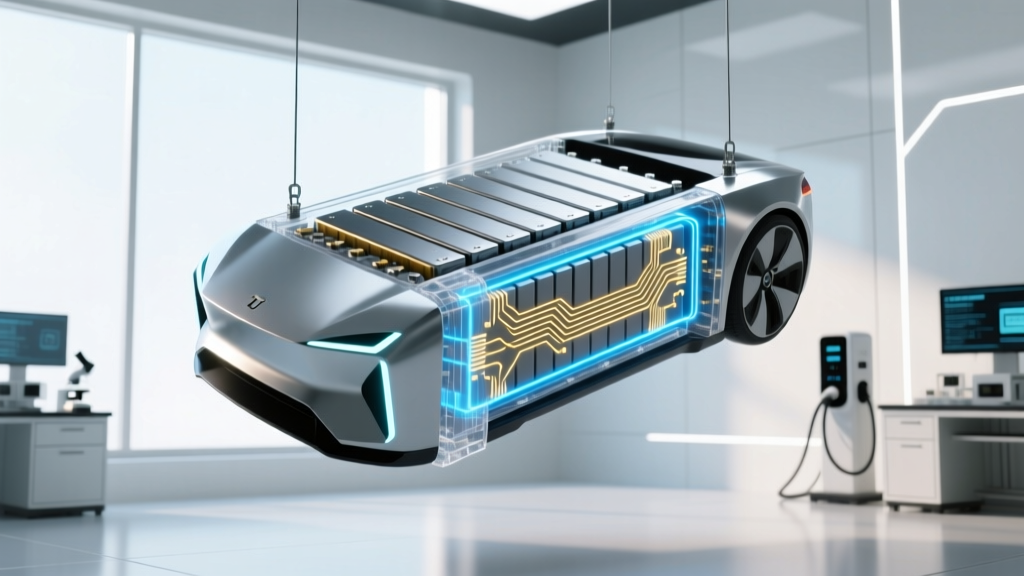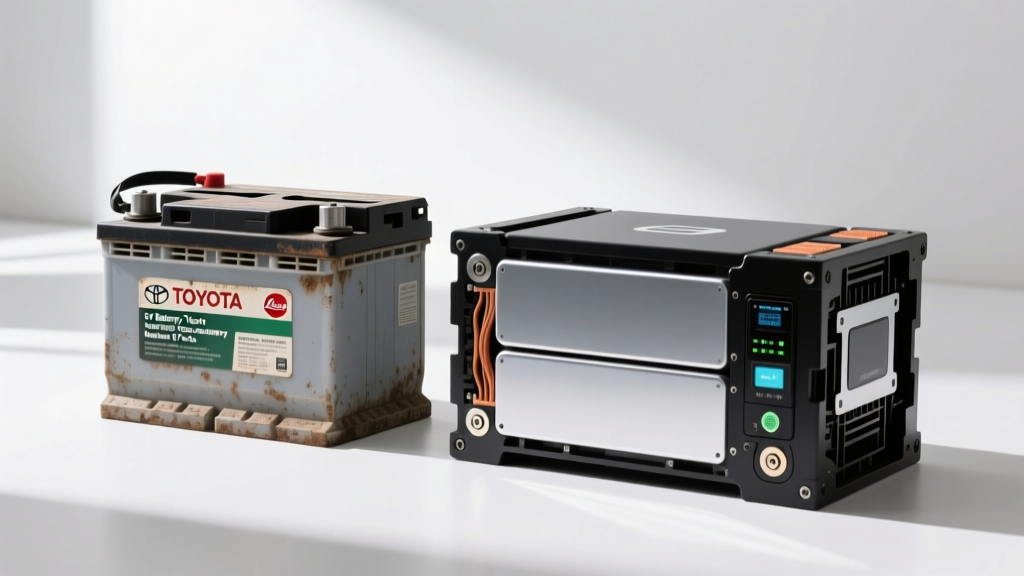
If you owned a 2000 Toyota Camry, you probably replaced its 12V lead-acid battery every three to five years for about $120 at an auto parts store. That 2000 Toyota Camry battery was a simple flooded-cell unit — roughly 50 amp-hours, 12 volts, and about 35 pounds. It started the engine, ran the radio, and powered the headlights. Fast-forward to 2026, and modern electric vehicles carry high-voltage lithium-ion traction packs storing 60 to 120 kWh of energy — enough to propel a 4,500-pound SUV over 300 miles without a drop of gasoline.
The leap from a conventional car battery to an EV traction battery is one of the most significant engineering transformations in automotive history. Yet many shoppers still approach EV battery longevity with the same assumptions they had about that old Camry battery: that it's a wear item requiring expensive, frequent replacement. The data tells a very different story.
This guide breaks down everything you need to know about modern EV battery technology — chemistry, degradation, warranties, replacement costs, and care habits — while putting it all in perspective against the simple battery you might remember from your turn-of-the-millennium sedan.
LFP vs NMC vs NCA: Understanding Modern EV Battery Chemistry
Not all lithium-ion batteries are created equal. The two dominant chemistries in 2026 EVs are LFP (lithium iron phosphate) and NMC/NCA (nickel manganese cobalt / nickel cobalt aluminum). Each has distinct trade-offs that affect range, longevity, cold-weather performance, and price.
LFP (LiFePO₄) batteries use iron and phosphate in the cathode. They're cheaper to produce, offer superior cycle life (often 3,000+ full charge cycles before significant degradation), and are inherently more thermally stable — meaning lower fire risk. The trade-off is lower energy density, which means a heavier or physically larger pack for the same kWh capacity, and reduced performance in freezing temperatures. Tesla's standard-range Model 3 and Model Y, the Ford Mustang Mach-E Select, and BYD's global lineup all use LFP.
NMC and NCA chemistries use nickel-heavy cathodes to maximize energy density. This gives you more range in a lighter, more compact pack — critical for long-range and performance trims. However, they degrade faster under high-heat and high-charge conditions, cost more due to cobalt and nickel content, and have shorter cycle life (typically 1,000–2,000 full cycles). Most long-range EVs — the Hyundai Ioniq 5 Long Range, BMW iX, Rivian R1T — use NMC variants.
| Attribute | LFP (Lithium Iron Phosphate) | NMC / NCA (Nickel-Based) |
|---|---|---|
| Energy Density | ~160–180 Wh/kg (lower) | ~220–300 Wh/kg (higher) |
| Cycle Life | 3,000–5,000+ cycles | 1,000–2,000 cycles |
| Cold-Weather Performance | Moderate — more range loss below 32°F | Better — less range loss in cold |
| Cost per kWh | ~$80–100 (lower) | ~$110–140 (higher) |
| Thermal Stability | Excellent — lower thermal runaway risk | Good — requires robust BMS cooling |
| Recommended Daily SoC | 100% (LFP benefits from full charges) | 80% daily, 100% only for trips |
| Common Applications | Standard-range models, fleet vehicles | Long-range, performance, AWD models |
| 2026 Examples | Tesla Model 3 RWD, BYD Atto 3 | Hyundai Ioniq 5 LR, Rivian R1S, BMW i4 |
Which is better? Neither is universally superior. If you charge at home daily, drive under 250 miles a day, and live in a moderate climate, LFP offers exceptional longevity at lower cost. If you need maximum range, tow frequently, or regularly drive in sub-freezing conditions, NMC's higher energy density and better cold performance justify the premium. The 2000 Toyota Camry battery had no such choices — it was lead-acid, period.
How Long Do EV Batteries Actually Last? Degradation Data
The fear that EV batteries need replacement every few years — like that old 2000 Camry battery — is one of the most persistent myths in automotive buying. Real-world degradation data from millions of EVs on the road tells a far more reassuring story.
Most modern EV batteries lose approximately 1–2% of total capacity per year under normal use. Here's what that looks like in practice:
| Vehicle Age / Mileage | Typical Capacity Retained | Range Impact (300-mi EPA pack) |
|---|---|---|
| Year 1 / 15,000 mi | 97–99% | ~294–297 mi |
| Year 3 / 45,000 mi | 94–97% | ~282–291 mi |
| Year 5 / 75,000 mi | 90–95% | ~270–285 mi |
| Year 8 / 120,000 mi | 85–92% | ~255–276 mi |
| Year 10 / 150,000 mi | 80–90% | ~240–270 mi |
| Year 15 / 200,000+ mi | 70–85% | ~210–255 mi |
Data synthesized from fueleconomy.gov efficiency records, Tesla Impact Reports, and Geotab's longitudinal fleet study of 10,000+ EVs. Individual results vary by climate, charging habits, and chemistry.
Several important patterns emerge from this data. First, degradation is non-linear — the largest drop (2–4%) often occurs in the first year as the battery's solid electrolyte interface (SEI) layer stabilizes. After that, the curve flattens considerably. Second, LFP packs tend to show slower long-term degradation than NMC, though they may show similar initial drop-off. Third, vehicles with active liquid thermal management (nearly all 2026 EVs) degrade more slowly than older passively-cooled packs.
The practical takeaway: a 2026 EV with a 300-mile EPA range will likely still deliver 250+ miles of range after a decade of ownership. Most EV batteries will outlast the vehicle's body, suspension, and interior before they become functionally inadequate.
EV Battery Warranty Coverage: What's Protected and for How Long
Federal law in the United States mandates that EV batteries carry a minimum warranty of 8 years or 100,000 miles (whichever comes first). In California Air Resources Board (CARB) states — which include California, New York, Massachusetts, Oregon, Washington, and several others — that mandate extends to 10 years or 150,000 miles. Most manufacturers meet or exceed these minimums.
| Manufacturer | Battery Warranty | Capacity Threshold | Notes |
|---|---|---|---|
| Tesla (Model 3/Y LFP) | 8 yr / 100,000 mi | 70% retention | Standard-range models |
| Tesla (Model 3/Y LR, S/X) | 8 yr / 120,000–150,000 mi | 70% retention | Varies by model |
| Hyundai / Kia | 10 yr / 100,000 mi | 70% retention | Among the longest coverage |
| Ford (Mach-E, F-150 Lightning) | 8 yr / 100,000 mi | 70% retention | Standard federal terms |
| General Motors (Ultium platform) | 8 yr / 100,000 mi | 70% retention | Covers battery and electric drive |
| Rivian | 8 yr / 175,000 mi | 70% retention | Higher mileage cap for R1 fleet |
| BMW | 8 yr / 100,000 mi | 70% retention | Includes high-voltage components |
The critical detail is the capacity retention threshold — typically 70%. This means the warranty only triggers a replacement or repair if your battery degrades below 70% of its original capacity within the warranty period. Given the degradation data above, very few batteries fall below this threshold within 8 years under normal use. According to IRS guidelines referenced by manufacturers, these warranties are designed to ensure the battery remains a functional, non-cost-prohibitive component throughout typical ownership.
What's covered: cell defects, premature degradation, BMS (battery management system) failures, and thermal management system defects. What's typically excluded: damage from accidents, improper charging equipment, flooding, or modifications to the high-voltage system.
EV Battery Replacement Cost: The Numbers in 2026
When an EV battery does eventually need replacement — typically well beyond the warranty period, often at 150,000+ miles — the cost is substantial but declining. Here's what 2026 pricing looks like across common pack sizes:
| Pack Size | Typical Vehicle Class | Replacement Cost Range | Cost per kWh |
|---|---|---|---|
| 40–55 kWh | Compact EVs (Nissan Leaf, Chevy Bolt) | $5,500–$8,000 | ~$120–150/kWh |
| 60–80 kWh | Midsize sedans/crossovers (Model 3, Ioniq 5) | $8,000–$14,000 | ~$120–175/kWh |
| 85–105 kWh | Long-range SUVs (Model Y LR, Rivian R1S) | $12,000–$18,000 | ~$130–175/kWh |
| 110–135 kWh | Large trucks/SUVs (F-150 Lightning Ext., Hummer EV) | $16,000–$25,000 | ~$140–190/kWh |
For comparison, that 2000 Toyota Camry battery cost about $100–$140 to replace. The EV pack costs 50–200× more — but it also stores 20,000–100,000× more energy and lasts 3–5× longer in calendar years. On a cost-per-kWh-stored-over-lifetime basis, modern EV batteries are remarkably economical.
Several factors are driving replacement costs down. Cell-level pricing has fallen from over $1,000/kWh in 2010 to approximately $80–100/kWh at the factory gate in 2026, according to BloombergNEF tracking. However, the installed replacement cost includes labor, diagnostics, BMS reprogramming, coolant service, and dealer markup — which is why the consumer price remains higher than the raw cell cost.
When is replacement actually needed? Most EVs will reach end-of-life (due to body damage, suspension wear, or electronics failure) before the traction battery becomes unusable. A battery at 70% capacity still provides meaningful range — a 300-mile EV with a degraded pack still delivers 210+ miles. Many high-mileage EVs reach 200,000+ miles on their original pack. Out-of-warranty replacement is more commonly needed for vehicles used in extreme climates with frequent DC fast charging.
Factors That Accelerate (or Preserve) Battery Health
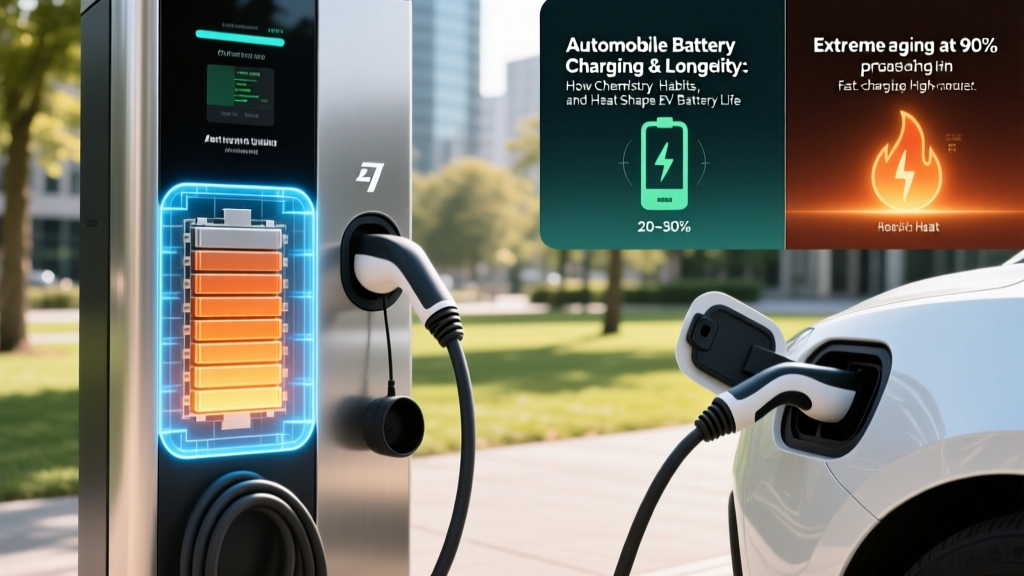
How you charge and drive has a measurable impact on long-term battery health. The physics are well understood — lithium-ion cells degrade faster under specific stress conditions.
Factors That Accelerate Degradation
- Frequent DC fast charging above 150 kW: High charge rates generate internal heat. Occasional road-trip fast charging is fine, but daily use of 250+ kW chargers without preconditioning accelerates cell wear. Studies show exclusive DCFC use can add 1–2% additional degradation over 5 years vs. Level 2 charging.
- Sustained high State of Charge (NMC/NCA): Keeping an NMC battery at 100% SoC for extended periods (days or weeks) stresses the cathode. This is why manufacturers recommend 80% daily charge limits for nickel-based packs.
- Deep discharge below 10%: Regularly running the battery nearly empty causes copper dissolution in the anode. Try to keep SoC above 15–20% for daily use.
- Extreme heat exposure: Ambient temperatures above 95°F combined with high SoC accelerate electrolyte decomposition. Parking in shade or a garage matters in Arizona, Texas, and Florida summers.
- Extreme cold charging without preconditioning: Charging a frozen battery (below 25°F) without warming it first can cause lithium plating on the anode — permanent, irreversible capacity loss.
Habits That Maximize Longevity
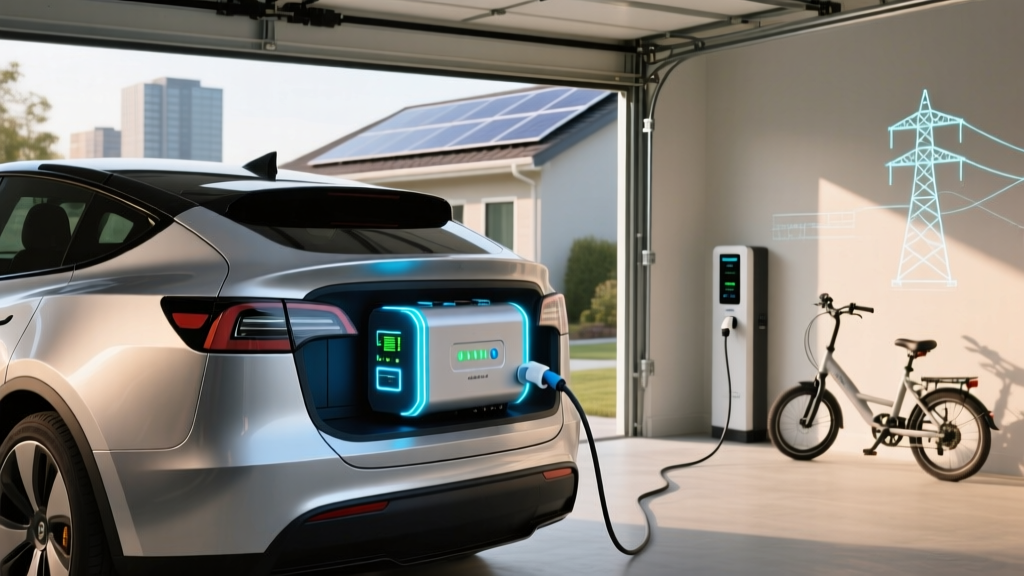
- Level 2 home charging as primary method: Slower charge rates (7–11 kW) generate less heat and stress. This is the equivalent of sipping vs. chugging.
- 20–80% SoC window for NMC: Set your charge limit to 80% for daily driving. Charge to 100% only when you need full range for a trip.
- 100% is fine for LFP: LFP chemistry actually benefits from periodic full charges to recalibrate the BMS. Tesla and BYD recommend 100% at least weekly for LFP packs.
- Use preconditioning: Most 2026 EVs let you schedule departure times or precondition the battery via the app before fast charging. This warms or cools the cells to optimal temperature, reducing stress and improving charge speed.
- Avoid prolonged storage at extreme SoC: If storing an EV for weeks, set SoC to approximately 50% and keep it plugged in so the BMS can maintain thermal management.
How to Check Your EV Battery's State of Health (SoH)
State of Health (SoH) is the metric that tells you how much of your battery's original capacity remains. A new battery is 100% SoH; a battery that can only hold 85% of its original kWh is at 85% SoH. Here's how to monitor it:
In-vehicle displays: Most 2026 EVs include a battery health screen in the infotainment system. Tesla shows estimated range vs. original range at full charge. Hyundai/Kia displays a SoH percentage. BMW provides a battery health certificate accessible through iDrive.
Manufacturer apps: The Tesla app, FordPass, Hyundai Bluelink, and myChevrolet apps all provide estimated range and charging data that lets you infer SoH by comparing current full-charge range to the EPA original figure.
OBD-II diagnostic tools: Third-party tools like OBDLink MX+ paired with apps such as EV Bat Mon or Scan My Tesla can read the BMS directly, providing cell-level voltage data, internal resistance, and precise SoH percentage. These cost $50–$150 and are invaluable for used-EV buyers.
Dealer diagnostic reports: Any authorized dealer can pull a full battery health report during a service visit. Request this when buying a used EV — it's the most authoritative SoH reading available and typically costs nothing if performed during a scheduled service.
The manual calculation method: Charge to 100% (or your normal limit), note the displayed estimated range, and divide by the EPA-rated range when new. A 2022 Ioniq 5 with an EPA rating of 303 miles that shows 272 miles at full charge is at approximately 90% SoH. This isn't perfectly precise (ambient temperature and driving style affect the estimate), but it's a useful ongoing check.
Emerging Battery Technology: What's Next Beyond Lithium-Ion
The battery landscape is evolving rapidly, but it's essential to separate laboratory milestones from production reality. Here's where next-generation technologies stand as of 2026:
Solid-state batteries replace the liquid electrolyte with a solid ceramic, polymer, or glass material. The theoretical benefits are enormous: 2–3× energy density, faster charging (potentially 10–80% in under 10 minutes), improved safety (no flammable electrolyte), and longer cycle life. Toyota has announced solid-state prototypes and targets limited production in select models by 2027–2028. Samsung SDI and QuantumScape are also advancing pilot production lines. However, manufacturing yield challenges and cost remain significant barriers. Realistic timeline for mainstream availability: 2029–2032.
Silicon anode technology replaces or supplements the graphite anode with silicon, which can store roughly 10× more lithium ions per unit mass. Companies like Sila Nanotechnologies and Group14 are supplying silicon-dominant anode materials to manufacturers including Mercedes-Benz and Panasonic. Expect incremental adoption — silicon-blend anodes (5–15% silicon content) are appearing in 2026 model-year premium EVs, offering 5–10% energy density improvements. Already in limited production; broader adoption expected 2027–2029.
Sodium-ion batteries use abundant, cheap sodium instead of lithium. CATL and BYD have begun producing sodium-ion cells for low-cost, short-range EVs in China. Energy density is lower (~120–160 Wh/kg), making them unsuitable for long-range vehicles but viable for urban commuters and energy storage. Limited to Chinese-market vehicles in 2026; US availability uncertain before 2028.
None of these technologies are available in production EVs you can buy in the US today. If you're shopping now, current-generation LFP and NMC packs are mature, well-understood, and backed by robust warranty coverage. Waiting for solid-state is a reasonable strategy if your purchase timeline extends to 2030+, but today's batteries are already lasting 15+ years in real-world service.
Frequently Asked Questions
How long do EV batteries last in years and miles?
Based on fleet data from Geotab and manufacturer reports, modern EV batteries typically retain 80–90% of their original capacity after 10 years or 150,000 miles. Many packs reach 200,000+ miles before dropping below the 70% threshold that most warranties use as the replacement trigger. LFP chemistry packs tend to outlast NMC by a meaningful margin in cycle life, though both are designed to outlive the vehicle's economic lifespan.
How much does it cost to replace an EV battery in 2026?
Out-of-warranty replacement costs range from approximately $5,500 for a small pack (40–55 kWh, as in a Chevy Bolt) to $18,000–$25,000 for large packs (110+ kWh, as in a Ford F-150 Lightning Extended Range). The vast majority of EVs never need a battery replacement during typical ownership. When replacement is needed, it's usually at 150,000+ miles — well beyond the point where most owners have sold or traded the vehicle.
What does the EV battery warranty actually cover?
Federal law mandates at least 8 years/100,000 miles of battery coverage (10 years/150,000 miles in CARB states). The warranty covers cell defects, premature capacity loss below the stated threshold (usually 70%), BMS failures, and thermal management system defects. It does not cover damage from accidents, improper aftermarket modifications, flooding, or use of uncertified charging equipment. Check your specific manufacturer's warranty booklet for exact terms.
How do I check and maximize my EV battery's health?
Check SoH through your vehicle's infotainment battery screen, the manufacturer's mobile app, or an OBD-II diagnostic tool that reads BMS data directly. To maximize health: use Level 2 home charging as your primary method, keep NMC packs between 20–80% SoC for daily use (100% is fine for LFP), avoid frequent DC fast charging above 150 kW, always precondition before fast charging in extreme temperatures, and avoid leaving the vehicle at 100% SoC or below 10% SoC for extended periods.
LFP vs NMC — which battery chemistry is better for me?
Choose LFP if you: charge primarily at home, drive under 250 miles per day, live in a moderate climate, want maximum cycle life and longevity, and prefer lower cost. Choose NMC/NCA if you: need maximum range (300+ miles), tow heavy loads, regularly drive in sub-freezing temperatures, take frequent road trips requiring fast charging, or need the lightest possible pack weight. Both chemistries are proven and reliable — the right choice depends on your driving pattern, not which is objectively "better."
Is an EV battery anything like the 2000 Toyota Camry battery?
Beyond both being called "batteries," they share almost nothing in common. The 2000 Camry used a 12V lead-acid battery storing roughly 0.6 kWh of energy, weighing 35 pounds, and costing $120 to replace every 3–5 years. A 2026 EV traction battery stores 60–135 kWh (100–200× more energy), weighs 800–2,000 pounds, uses lithium-ion chemistry with sophisticated thermal management, and is designed to last 15+ years. Interestingly, your EV still has a separate 12V auxiliary battery (often lithium-ion in 2026 models) that handles accessories and computers — that one is closer in spirit to the old Camry battery, though it's not used for engine starting.
Sources: fueleconomy.gov (EPA range and efficiency data), IRS.gov (clean vehicle credit and battery component rules), manufacturer warranty documentation (Tesla, Hyundai, Ford, GM, Rivian, BMW).