If your EV's dashboard has ever flashed a battery system voltage low warning, your first instinct might be panic — especially if you've heard stories about five-figure battery replacements. But before you schedule a service appointment, it's important to understand what that warning actually means, how EV traction batteries age, and what real-world data says about longevity.
This guide breaks down the chemistry, degradation patterns, warranty protections, and replacement economics of modern EV battery systems — with hard numbers, not marketing fluff. Whether you're troubleshooting a low-voltage alert or simply planning for long-term ownership, the data below will give you a clear picture of what to expect.
What Does a "Battery System Voltage Low" Warning Actually Mean?
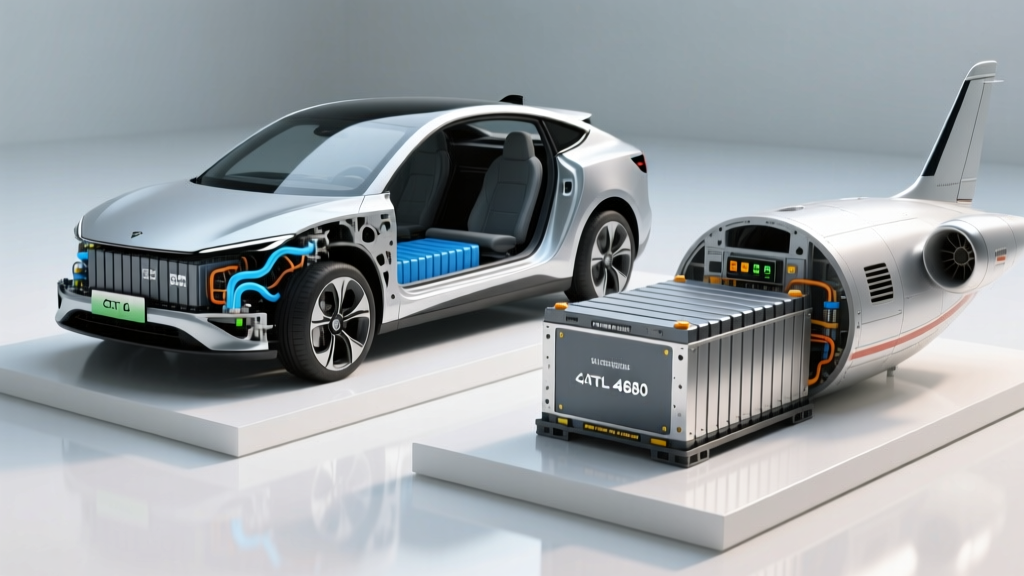
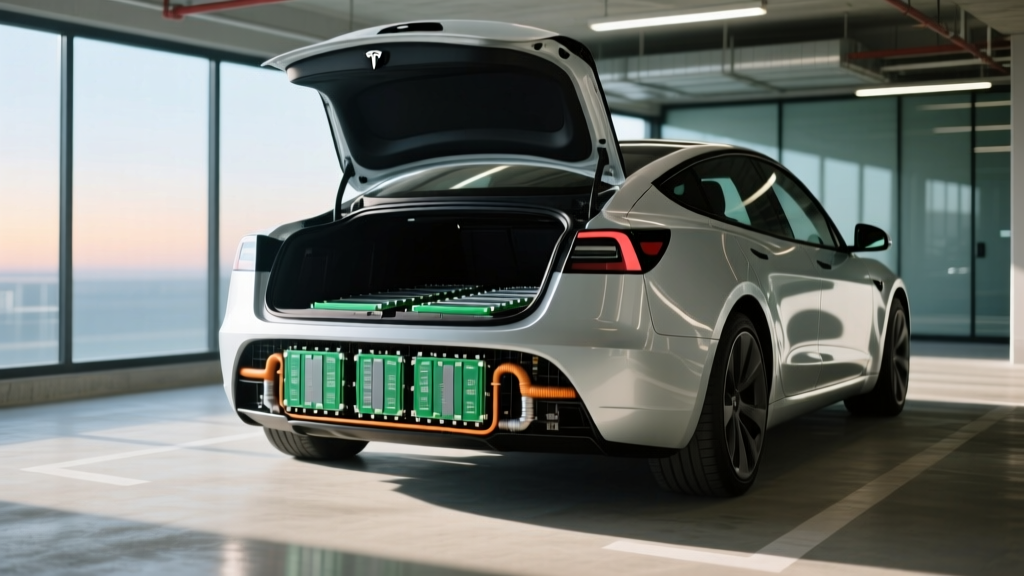
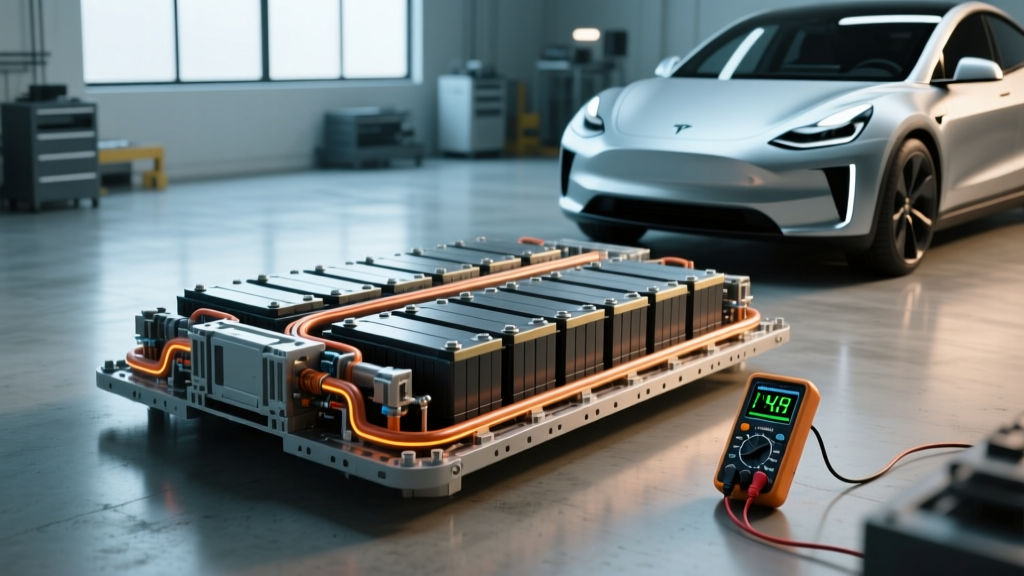
A battery system voltage low alert refers to the high-voltage traction battery — the large lithium-ion pack (typically 50–120 kWh) that powers your EV's electric motor. This is not the 12V auxiliary battery that runs your lights, infotainment, and computers (though a dead 12V battery can also trigger confusing voltage warnings — more on that below).
When the traction battery's state of charge (SoC) drops near zero, or when individual cell groups within the pack show abnormal voltage readings, the vehicle's battery management system (BMS) triggers a warning. Common causes include:
- Deep discharge from extended parking: Leaving an EV unplugged for weeks with a low SoC can allow the pack to self-discharge below safe thresholds. Lithium-ion cells degrade rapidly when held at very low voltage — the BMS will flag this to protect the pack.
- Cell imbalance: Over time, individual cells or modules within the battery pack can drift out of voltage balance. If one cell group reads significantly lower than others, the BMS interprets this as a system-level voltage fault.
- Extreme cold: At temperatures below 14°F (−10°C), lithium-ion chemistry becomes sluggish. The available voltage under load drops temporarily, which can trigger a low-voltage warning even if the SoC reads 20–30%. This is usually temporary and resolves as the pack warms via preconditioning or driving.
- BMS sensor or contactor fault: Occasionally, the voltage reading itself is erroneous — a faulty sensor, corroded connector, or sticking contactor relay can report incorrect data. A dealership diagnostic scan will confirm.
Many "battery voltage low" messages in EVs are actually about the 12V auxiliary battery, not the main traction pack. The 12V battery powers your EV's computers, door locks, and displays. If it dies, the car won't start — even if the main battery is fully charged. If your warning appears alongside an inability to power on the vehicle, suspect the 12V battery first. Replacement costs $150–$350 and is a routine maintenance item, not a catastrophic failure.
EV Battery Chemistry: LFP vs. NMC Explained
The two dominant lithium-ion chemistries in 2026 EVs are LFP (lithium iron phosphate) and NMC (nickel manganese cobalt), with NCA (nickel cobalt aluminum) used primarily by Tesla and a few others. Each has distinct trade-offs that affect range, longevity, charging behavior, and cost.
| Attribute | LFP (LiFePO₄) | NMC / NCA |
|---|---|---|
| Energy Density | ~160–200 Wh/kg (lower) | ~220–300 Wh/kg (higher) |
| Cycle Life | 3,000–6,000+ cycles to 80% SoH | 1,000–2,500 cycles to 80% SoH |
| Recommended Charge Habit | Can charge to 100% regularly (BMS calibration benefits) | Best kept at 20–80% for daily use; 100% for trips only |
| Cold-Weather Performance | More range loss in cold (~30–40% at 20°F) | Moderate cold loss (~20–30% at 20°F) |
| Cost per kWh | Lower (~$80–100/kWh at pack level) | Higher (~$110–140/kWh at pack level) |
| Thermal Stability | Excellent — very low thermal runaway risk | Good — requires more active cooling |
| Common in (2026 models) | Tesla Model 3 RWD, Model Y RWD, BYD, Ford Mustang Mach-E Select (standard range) | Hyundai Ioniq 5/6, Kia EV6/EV9, Chevrolet Equinox EV, Rivian, Tesla Long Range/Performance |
Which is better? There's no universal winner. If you prioritize maximum range per charge and live in a cold climate, NMC/NCA is the better fit. If you want the longest possible battery lifespan, lower replacement cost, and don't mind slightly less range, LFP is the durability champion. LFP's ability to sit at 100% SoC without accelerated degradation makes it particularly well-suited for daily commuters who charge at home every night.
How Long Do EV Batteries Last? Real-World Degradation Data
The fear that EV batteries "need replacing every few years" is not supported by fleet data. Modern lithium-ion packs with active thermal management are lasting significantly longer than early-generation EVs.
Here's what the data shows for typical degradation trajectories:
- Year 1 / 15,000 miles: ~2–5% capacity loss (initial "break-in" drop is normal)
- Year 3 / 45,000 miles: ~5–8% total loss
- Year 5 / 75,000 miles: ~8–12% total loss
- Year 8 / 120,000 miles: ~10–15% total loss
- Year 10 / 150,000 miles: ~12–18% total loss (varies significantly by chemistry and usage)
Sources: Geotab fleet battery health study, Recurrent Auto battery data reports. Figures represent averages across multiple makes/models with active thermal management. Passive-cooled packs (e.g., early Nissan Leaf) degrade faster.
A few critical nuances:
- Calendar aging matters as much as mileage. A 7-year-old EV with 30,000 miles may show similar degradation to one with 80,000 miles. Lithium-ion cells slowly lose capacity even when not cycled.
- LFP packs tend to degrade more slowly in cycle-life terms, but their lower energy density means you start with fewer miles of range — so the absolute range loss in miles may feel similar.
- Early rapid degradation is normal. Most packs lose 2–5% in the first year as the solid electrolyte interphase (SEI) layer forms. After that, degradation typically linearizes to roughly 1–2% per year.
Factors That Accelerate (or Slow) Battery Degradation
Not all EV batteries age equally. Your habits and environment play a measurable role:
| ✅ Practices That Extend Life | ❌ Practices That Accelerate Degradation |
|---|---|
| Keep daily SoC between 20–80% (NMC/NCA) | Frequent 100% charges and sitting at 100% for days (NMC) |
| Use Level 2 home charging as your primary method | Exclusive reliance on DC fast charging (150+ kW) daily |
| Precondition the battery before fast charging in cold weather | Fast charging a cold-soaked battery without preconditioning |
| Park in shade or a garage during extreme heat | Leaving the car at low SoC (<10%) for extended periods |
| Plug in during extreme cold to let the BMS manage temps | Storing the vehicle unplugged at 0–5% SoC for weeks |
| Update BMS firmware when manufacturer releases updates | Ignoring software updates that optimize charge profiles |
On DC fast charging specifically: Occasional road-trip fast charging is perfectly fine. The concern arises when DC fast charging is your only charging method. Studies from Recurrent Auto show that vehicles that fast-charge more than 90% of the time show slightly faster degradation (roughly 1–3% additional loss over 5 years) compared to those that primarily use Level 2. The effect is real but modest — not the battery-killer some forums suggest.
What Does the EV Battery Warranty Cover?
Federal law mandates a minimum battery warranty of 8 years / 100,000 miles for EVs sold in the United States. California and states that follow CARB (California Air Resources Board) standards require 10 years / 150,000 miles. Most manufacturers meet or exceed these minimums.
| Manufacturer | Duration | Capacity Threshold | Notes |
|---|---|---|---|
| Tesla | 8 yr / 100,000–120,000 mi (varies by model) | 70% retention | Model 3/Y: 100k mi; Model S/X: 150k mi |
| Hyundai / Kia | 10 yr / 100,000 mi | 70% retention | Among the longest standard warranties |
| Ford | 8 yr / 100,000 mi | 70% retention | Covers battery and electric drivetrain components |
| Chevrolet (GM Ultium) | 8 yr / 100,000 mi | 70% retention (60% on some commercial) | Modular Ultium packs may allow partial replacement |
| Rivian | 8 yr / 175,000 mi | 70% retention | Higher mileage cap reflects adventure-use positioning |
What triggers a warranty claim? If a diagnostic scan confirms your battery's usable capacity has fallen below the threshold (typically 70% of original) within the warranty period, the manufacturer must repair or replace the pack at no cost. In practice, very few owners hit this threshold — the degradation data above shows most packs retain 85–90% capacity at the 8-year mark.
What's NOT covered: Physical damage (collision, flood, road debris), modifications, or capacity loss from consistently ignoring the manufacturer's charging guidelines (though this is rarely enforced).
EV Battery Replacement Costs: What You'd Actually Pay
If your battery fails outside of warranty — or if you're buying a used EV and want to budget for a worst-case scenario — here's what replacement looks like in 2026:
| Vehicle / Pack Size | Pack kWh (usable) | Estimated Replacement Cost | Notes |
|---|---|---|---|
| Tesla Model 3 RWD (LFP) | ~57 kWh | $8,000–$12,000 | LFP packs cheaper; remanufactured options emerging |
| Tesla Model Y Long Range (NMC) | ~75 kWh | $12,000–$16,000 | Prices declining as pack production scales |
| Hyundai Ioniq 5 (NMC) | ~77.4 kWh | $14,000–$18,000 | Hyundai has module-level repair capability |
| Ford F-150 Lightning (Extended Range) | ~131 kWh | $20,000–$28,000 | Largest consumer packs cost the most |
| Chevrolet Equinox EV (Ultium) | ~85 kWh | $12,000–$16,000 | Ultium modularity may allow partial pack swap |
Context that matters: Pack-level battery prices have fallen from over $1,000/kWh in 2010 to roughly $100–140/kWh in 2026, according to BloombergNEF annual battery price surveys. That trend continues. Additionally, a growing aftermarket for remanufactured and refurbished packs is emerging, offering 20–40% savings over new OEM replacements.
When is replacement actually needed? For most owners, it isn't — at least not during the vehicle's useful life. The average American drives ~13,500 miles per year. At that rate, an EV battery retaining 82–88% of its capacity at 150,000 miles still provides perfectly usable range. A 300-mile EPA vehicle at 85% health still delivers ~255 real-world miles. Most EV batteries are scrapped while still functional, simply because the rest of the vehicle reaches end-of-life first.
How to Check and Monitor Your Battery's State of Health (SoH)
State of Health (SoH) is the metric that tells you how much of your battery's original capacity remains usable. A new battery is at 100% SoH; one that has degraded to hold only 77 kWh of its original 84 kWh is at ~91.7% SoH.
How to check SoH:
- In-vehicle displays: Some EVs show SoH directly. Tesla owners can access battery health via the service menu (or through third-party apps). Hyundai/Kia's infotainment system on newer models includes an EV battery status screen.
- OBD-II diagnostic apps: Tools like OBDLink MX+ paired with apps such as EV Bat Life or LeafSpy (for Nissan) can read the BMS-reported SoH. Most modern EVs expose this data through the CAN bus.
- Manufacturer service visits: A dealership can run a full battery health diagnostic that measures actual capacity by performing a controlled discharge/charge cycle. This is the most accurate method.
- Third-party services: Companies like Recurrent offer battery health reports that compare your pack's degradation against a fleet of identical vehicles — useful context for used-EV buyers.
What to watch for: If your SoH drops more than 3–4% in a single year after the first year, or if you see a sudden drop (rather than gradual decline), schedule a diagnostic. Sudden drops often indicate a failing module or BMS issue rather than normal degradation — and may be covered under warranty.
Emerging Battery Technology: Solid-State and Beyond
If you're researching EV batteries, you've likely seen headlines about solid-state batteries promising 600+ mile range and 10-minute charging. Here's the realistic 2026 outlook:
- Toyota has announced solid-state battery production for a limited number of vehicles beginning in 2027–2028, with initial packs targeting ~750 km (WLTP) range. These are preliminary/announced specs — not yet in consumer hands.
- Samsung SDI is targeting 2027 for solid-state pilot production, with commercial availability in select models by 2028–2029.
- QuantumScape continues to ship prototype cells to automotive partners, with Volkswagen's PowerCo conducting validation testing. Production timelines remain 2028+.
- Silicon-anode batteries (from companies like Sila Nanotechnologies and Group14) are closer to market, with initial deployments in the Mercedes G-Class EV and other premium models. These offer ~20% energy density improvement over conventional graphite anodes but are not yet widespread.
The practical takeaway: Solid-state batteries will not be widely available in mainstream-priced EVs before 2029–2030 at the earliest. If you need an EV now, today's LFP and NMC packs are mature, well-understood, and backed by extensive warranty coverage. Waiting for solid-state means waiting at least 3–4 more years for limited availability — and likely at a significant price premium initially.
FAQ: EV Battery Health and Voltage Questions
How long do EV batteries last in years and miles?
Based on fleet data, most modern EV batteries with active thermal management retain 80–88% of their original capacity after 8 years / 100,000–120,000 miles. Many packs continue functioning with usable capacity well past 150,000 miles. Full battery replacement during the vehicle's life is the exception, not the rule.
How much does an EV battery cost to replace?
In 2026, a full traction battery replacement ranges from roughly $8,000 for smaller LFP packs (Tesla Model 3 RWD) to $20,000–$28,000 for large packs (Ford F-150 Lightning Extended Range). Remanufactured packs and module-level repairs can reduce costs by 20–40%. Pack prices continue declining year over year.
What does the EV battery warranty cover?
Federal minimum is 8 years / 100,000 miles, with CARB states requiring 10 years / 150,000 miles. The warranty guarantees the battery will retain at least 70% of its original capacity. If a diagnostic confirms capacity has fallen below that threshold within the warranty period, the manufacturer must repair or replace the pack at no cost.
How do I check my EV battery's health?
Options include in-vehicle battery status screens, OBD-II diagnostic apps (OBDLink + EV-specific software), dealership battery health scans, and third-party services like Recurrent. For used-EV purchases, a dealer diagnostic scan is the most reliable method.
LFP vs NMC — which battery chemistry is better for me?
Choose LFP if you prioritize longevity, lower replacement cost, and don't mind slightly less range — ideal for daily commuters who charge at home and can charge to 100% regularly. Choose NMC/NCA if you need maximum range, live in a cold climate, or take frequent road trips — its higher energy density and better cold performance come at the cost of a shorter cycle life and a recommended 80% daily charge limit.
Can frequent DC fast charging ruin my EV battery?
"Ruin" is too strong. Fleet data shows that exclusive reliance on DC fast charging adds roughly 1–3% additional degradation over 5 years compared to primarily Level 2 charging. Occasional fast charging on road trips has negligible impact. The bigger risk factors are sustained high SoC storage, extreme heat exposure, and deep discharges.
Is a "battery system voltage low" warning always serious?
Not always. If it appears after the car sat unplugged in extreme cold, preconditioning and driving may clear it. If it recurs frequently, appears alongside reduced range, or shows up on a relatively new battery, have the BMS scanned — it could indicate a cell imbalance, sensor fault, or contactor issue that needs professional attention.