When you read an EV spec sheet, the battery is listed as a single number — something like 77.4 kWh or 82 kWh. But behind that number sits a sprawling global supply chain that determines not just the price of your car, but how far it goes, how long the pack lasts, how fast it charges, and even whether you qualify for a federal tax credit. Understanding the EV battery supply chain isn't an academic exercise; it's a practical buyer's tool.
This guide traces how raw materials, cell chemistry, and manufacturing decisions translate into real-world ownership outcomes: range retention over 100,000 miles, warranty coverage, replacement costs, and the care habits that extend battery life. We'll cover the two dominant chemistries — LFP and NMC/NCA — with hard data on degradation, and look at what's coming next without pretending it's already here.
LFP vs NMC/NCA: The Chemistry Decision Shaped by the Supply Chain
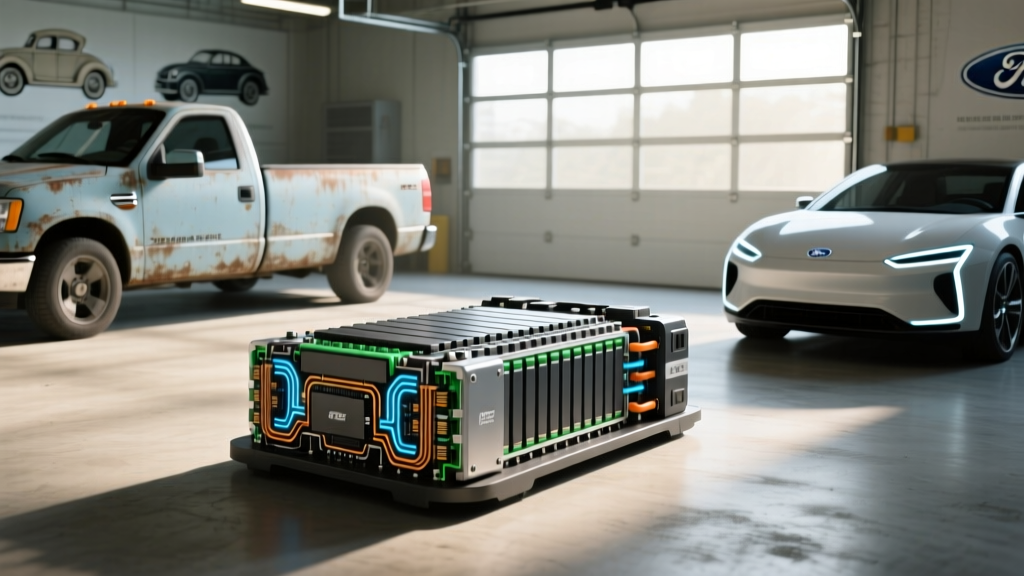
The battery supply chain starts with mining. Lithium, nickel, cobalt, manganese, iron, and phosphate are extracted, refined, and shipped to cell manufacturers. The choice of which materials go into your battery isn't arbitrary — it's a function of cost, energy density requirements, and geopolitical supply risk. In 2026, two chemistry families dominate the US EV market:
- NMC (Nickel Manganese Cobalt) and NCA (Nickel Cobalt Aluminum): Higher energy density, better cold-weather performance, but dependent on nickel and cobalt — two of the most supply-constrained and ethically scrutinized materials in the chain.
- LFP (Lithium Iron Phosphate): Lower energy density but dramatically longer cycle life, no cobalt or nickel, lower cost, and a more resilient supply chain. Iron and phosphate are abundant and cheap.
Here's how they compare across the metrics that matter to owners:
| Attribute | LFP (Lithium Iron Phosphate) | NMC / NCA (Nickel-based) |
|---|---|---|
| Energy Density (cell-level) | 160–180 Wh/kg | 250–300 Wh/kg |
| Typical Cycle Life | 3,000–5,000+ cycles | 1,000–2,000 cycles |
| Cold-Weather Performance | Moderate; greater range loss below 32°F | Better low-temp discharge capability |
| Cost per kWh (cell-level, 2026) | ~$80–$100 | ~$110–$140 |
| Thermal Stability | Excellent; higher runaway threshold | Good; requires more active thermal management |
| Supply Chain Risk | Low; iron and phosphate widely available | Higher; nickel/cobalt concentrated in few countries |
| State of Charge (SoC) Recommendation | Can charge to 100% regularly | Best kept at 80% daily; 100% for trips only |
| Notable US Vehicles (2026) | Tesla Model 3/Y RWD, Ford Mustang Mach-E Select (LFP option) | Hyundai Ioniq 5, Kia EV6, Chevy Equinox EV, Tesla Long Range/Performance |
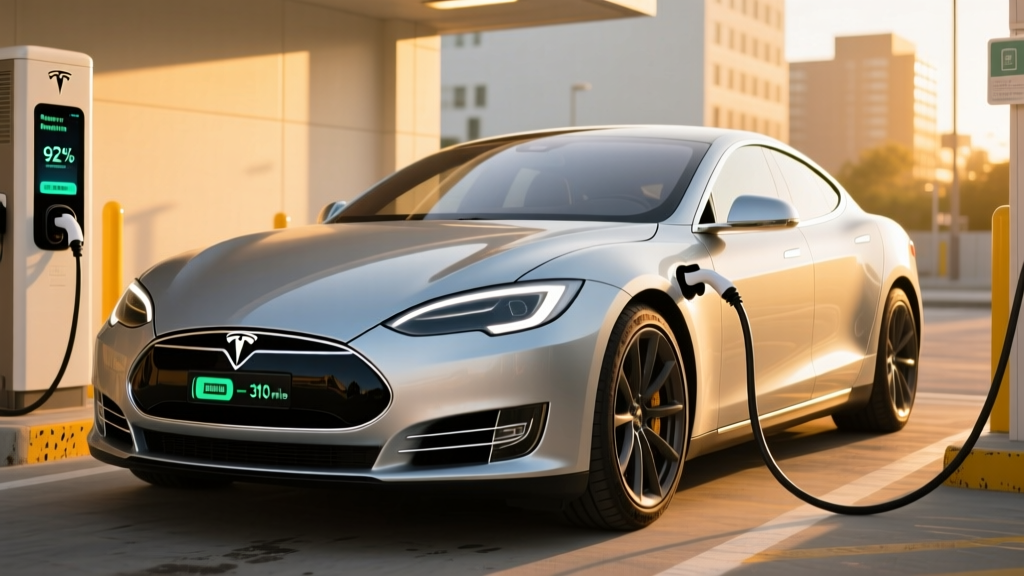
The practical takeaway: If you want maximum range per pound and don't mind managing your state of charge, NMC/NCA delivers. If you want a pack that will outlast the car with minimal babysitting and lower cost, LFP is the supply chain's gift to longevity. Tesla's shift to LFP for standard-range models wasn't just a cost decision — it was a supply chain resilience decision, reducing dependence on cobalt sourced primarily from the Democratic Republic of Congo.
How Long Do EV Batteries Actually Last?
The short answer: longer than most buyers expect. The fear of a $20,000 battery swap at year five is not supported by fleet data. Most modern EV battery packs are designed to last the usable life of the vehicle.
According to data compiled by fueleconomy.gov and real-world fleet studies, here's what degradation looks like over time:
- Year 1 / 15,000 miles: ~2–4% capacity loss (initial formation loss)
- Year 3 / 45,000 miles: ~5–8% total loss
- Year 5 / 75,000 miles: ~8–12% total loss
- Year 8 / 120,000 miles: ~10–15% total loss (varies significantly by chemistry and usage)
- Year 10+ / 150,000+ miles: ~12–20% total loss for NMC; ~8–12% for LFP
Sources: Recurrent Auto fleet data (2024–2025), Geotab fleet study, manufacturer warranty thresholds. Individual results vary by climate, charging habits, and chemistry.
Notice that degradation is not linear. Most capacity loss occurs in the first year or two, then the curve flattens considerably. A 2023 Tesla Model 3 with an NMC pack might show 95% State of Health (SoH) at 30,000 miles and 89% at 100,000 miles — meaning it still delivers roughly 275 miles from an original EPA-rated 310 miles. That's usable range, not a bricked vehicle.
LFP packs degrade even more slowly. Tesla's LFP-equipped Model 3 RWD units in taxi and rideshare fleets have shown 90%+ SoH past 150,000 miles, consistent with the chemistry's rated 3,000–5,000 cycle life. At one full cycle per day, that's 8–13+ years before reaching 80% capacity.
What Does the Battery Warranty Actually Cover?
Federal law mandates a minimum EV battery warranty of 8 years / 100,000 miles (10 years / 150,000 miles in California Air Resources Board states). But the details matter — specifically, the capacity retention threshold and what triggers a claim.
| Manufacturer | Warranty Term | Capacity Threshold | What Triggers a Claim |
|---|---|---|---|
| Tesla (Model 3/Y) | 8 yr / 120,000 mi (LR); 8 yr / 100,000 mi (RWD) | 70% | SoH drops below 70% as measured by Tesla diagnostics |
| Hyundai / Kia | 10 yr / 100,000 mi | 70% | Capacity below 70% confirmed by dealer diagnostic tool |
| General Motors (Ultium) | 8 yr / 100,000 mi | 70% (varies by model) | Verified capacity loss below threshold |
| Ford (Mach-E, F-150 Lightning) | 8 yr / 100,000 mi | 70% | Battery capacity below 70% per Ford diagnostic |
| Volkswagen (ID.4) | 8 yr / 100,000 mi | 70% | Net capacity below 70% |
Key nuance: The warranty covers defects and abnormal degradation, not gradual, expected capacity loss above the threshold. If your pack is at 75% SoH at year seven, you won't get a replacement — the battery is functioning within spec. Also, warranties typically require you to follow the manufacturer's charging and maintenance guidelines; exclusively DC fast-charging to 100% daily on an NMC pack could theoretically complicate a claim, though manufacturers have not broadly used this to deny coverage.
The IRS §30D tax credit has separate battery sourcing requirements that also tie back to the supply chain: for 2026, a percentage of critical minerals must be sourced from the US or free-trade-agreement countries, and battery components must be manufactured or assembled in North America. These requirements don't affect your warranty, but they do affect whether the vehicle qualifies for up to $7,500 in credit — and they're reshaping where batteries are made.
How Much Does an EV Battery Replacement Cost?
This is the question that keeps potential buyers up at night. Let's ground it in data rather than fear.
| Vehicle | Battery Size | Chemistry | Estimated Replacement Cost (parts + labor) |
|---|---|---|---|
| Tesla Model 3 RWD | 60 kWh | LFP | $12,000–$16,000 |
| Tesla Model Y Long Range | 75 kWh | NMC | $14,000–$20,000 |
| Hyundai Ioniq 5 | 77.4 kWh | NMC | $15,000–$22,000 |
| Chevy Equinox EV | 85 kWh | NMC (Ultium) | $16,000–$24,000 |
| Ford F-150 Lightning (Extended) | 131 kWh | NMC | $22,000–$35,000 |
When is replacement actually needed? Almost never within the warranty period for normal owners. Out-of-warranty replacements are most common in high-mileage fleet vehicles, salvaged-title rebuilds, or cars that have suffered physical battery damage (flooding, collision). For a private owner driving 12,000–15,000 miles per year, the battery will likely outlast other major components — suspension, interior, infotainment — before it degrades to a point where replacement is economically justified.
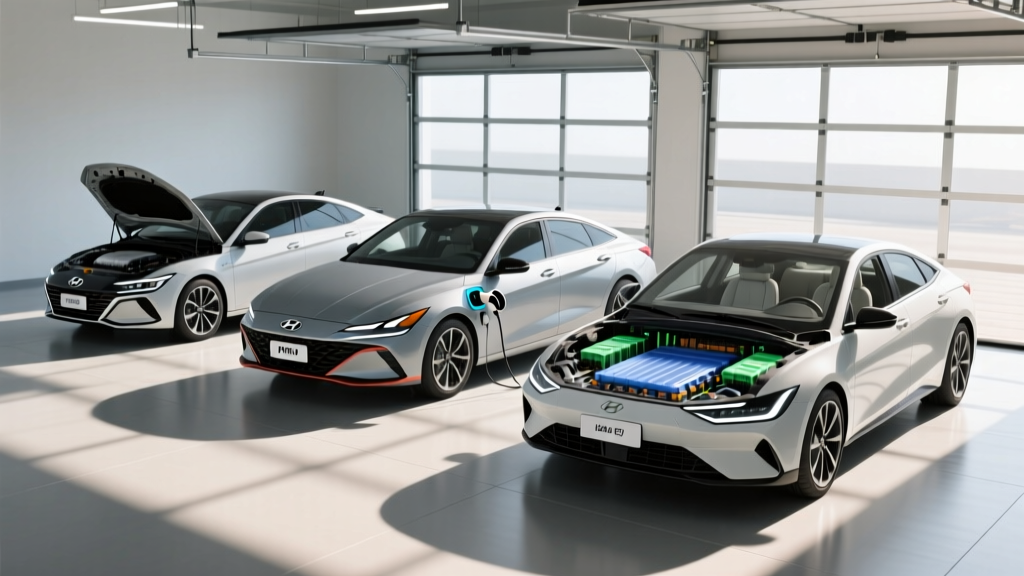
Also worth noting: module-level repair is increasingly an option. Rather than replacing the entire pack, some shops and manufacturers can swap individual degraded modules for $2,000–$5,000, depending on the pack architecture. GM's Ultium platform and the Hyundai E-GMP are designed with modular serviceability in mind.
The Supply Chain Behind Your Tax Credit Eligibility
The battery supply chain isn't just about chemistry — it's now a matter of tax law. Under the Inflation Reduction Act's §30D clean vehicle credit, whether you receive up to $7,500 in federal tax credit (available as a point-of-sale transfer in 2026) depends directly on where your battery's materials come from.
- Critical Minerals (up to $3,750): A specified percentage of critical minerals in the battery must be extracted or processed in the US or a country with a US free-trade agreement, or recycled in North America.
- Battery Components (up to $3,750): A specified percentage of battery components must be manufactured or assembled in North America.
- Foreign Entity of Concern (FEOC) exclusion: Vehicles with battery components or critical minerals from a FEOC (primarily China, Russia, North Korea, Iran) are disqualified from the credit entirely, regardless of other sourcing.
- MSRP Caps: Vans, SUVs, and pickups ≤ $80,000; sedans and other vehicles ≤ $55,000.
- Buyer Income Caps: AGI ≤ $150,000 (single); ≤ $225,000 (head of household); ≤ $300,000 (joint).
Source: IRS.gov — Credits for New Clean Vehicles. Rules are subject to legislative and regulatory changes. Consult a tax professional for your specific eligibility.
This is why automakers are racing to build battery plants in the US, Canada, and Mexico — and why LFP, which historically came almost entirely from China, is now being produced by companies like CATL through licensing deals with Ford in Michigan and by Gotion in Illinois. The supply chain is being redrawn in real time, and it directly affects what you pay at the dealership.
How to Check and Maximize Battery Health
State of Health (SoH) is the metric that tells you what percentage of original capacity your battery retains. Here's how to monitor it and what habits preserve it.
Checking Your Battery's State of Health
- In-vehicle displays: Tesla shows battery health in the service menu (or via the app on newer software). Hyundai/Kia provides SoH through the dealer diagnostic tool — ask at your next service visit.
- OBD-II scanners and apps: Third-party tools like OBDeleven (for VW/Audi) or LeafSpy (for Nissan Leaf) can read SoH directly from the BMS (Battery Management System).
- Recurrent Auto / telematics services: Some services track your battery over time and provide SoH reports — useful for resale documentation.
- Manual estimation: Charge to 100% (on LFP) or a known SoC, note the displayed range, and compare to the EPA-rated range at the same SoC when the car was new. Account for temperature.
Battery Care Checklist
- Set charge limit to 80% for NMC/NCA daily driving; 100% is fine for LFP
- Plug in when possible — shallow, frequent charges stress the battery less than deep cycles
- Use Level 2 (home AC charging) as your primary charging method
- Limit DC fast charging to road trips — frequent 150+ kW sessions accelerate degradation, particularly for NMC
- In extreme heat, park in shade or a garage; in extreme cold, precondition the battery before charging
- Avoid leaving the car at 100% SoC or below 10% SoC for extended periods (days/weeks)
- If storing the vehicle for weeks, leave it plugged in with a charge limit of 50–60%
- Keep tire pressure at spec — underinflated tires increase energy draw and generate more battery heat
- Update BMS firmware when prompted by the manufacturer (over-the-air or at service)
The single biggest degradation accelerant is sustained high temperature combined with high state of charge. A car sitting at 100% SoC in a 100°F parking lot for a week will lose more capacity than months of normal driving. Conversely, a car charged to 80% daily on Level 2 in a moderate climate will show minimal degradation for years.
What's Next: Solid-State, Silicon Anodes, and Realistic Timelines
The battery supply chain is also being reshaped by next-generation chemistries. Here's where things stand — without the hype:
- Solid-state batteries: Replace the liquid electrolyte with a solid material, promising higher energy density (potentially 400+ Wh/kg at cell level), faster charging, and improved safety. Toyota has announced limited production for 2027–2028, initially in low volumes and likely in premium models. Samsung SDI and QuantumScape are targeting similar timelines. This technology is not available in any production vehicle sold in the US as of 2026.
- Silicon-dominant anodes: Replacing graphite anodes with silicon can increase energy density by 20–40%. Companies like Sila Nanotechnologies and Group14 are supplying silicon anode materials to battery manufacturers, with early adoption in premium cells. Expect gradual integration into NMC cells over 2026–2029 rather than a sudden switch.
- Sodium-ion batteries: Use abundant sodium instead of lithium. Lower energy density (~120–150 Wh/kg) limits them to smaller, urban EVs or stationary storage. CATL has begun production in China; US-market adoption is likely 2028+ and initially in commercial/fleet applications.
- LFP improvements: Manganese-enhanced LFP (LMFP) is entering production, adding ~15–20% energy density while retaining LFP's cost and longevity advantages. Expect this in 2026–2027 model-year vehicles from manufacturers already using LFP.
The supply chain implication: as these technologies scale, the demand mix for nickel, cobalt, and lithium will shift. LFP's growing dominance in standard-range vehicles has already reduced cobalt demand per vehicle. Solid-state, if it reaches volume production, could reduce the total amount of raw material per kWh while increasing range — but the manufacturing infrastructure to produce solid-state cells at automotive scale does not yet exist outside of pilot lines.
Frequently Asked Questions
How long do EV batteries last in years and miles?
Most modern EV batteries (2022+) are designed to retain 70–85% of original capacity at 150,000–200,000 miles, which typically corresponds to 10–15 years of average driving. LFP chemistries often exceed this, with fleet data showing 90%+ SoH past 150,000 miles. The battery will usually outlast the vehicle's economic life.
How much does an EV battery cost to replace?
Full pack replacement ranges from roughly $12,000 for a 60 kWh LFP pack (Tesla Model 3 RWD) to $35,000 for a 131 kWh NMC pack (F-150 Lightning Extended Range), including labor. However, full replacement is rare for private owners. Module-level repairs cost $2,000–$5,000 and are increasingly available. Most batteries never need replacement during typical ownership.
What does the EV battery warranty cover?
Federal minimum is 8 years / 100,000 miles (10 years / 150,000 miles in CARB states). Coverage applies if the battery drops below the manufacturer's capacity threshold — typically 70% State of Health. The warranty covers defects and abnormal degradation, not normal gradual capacity loss above the threshold. Some manufacturers, like Hyundai/Kia, offer 10-year terms.
How do I check my EV battery health?
Use your vehicle's built-in diagnostics (Tesla's service menu/app), request a SoH reading from your dealer at service, or use an OBD-II scanner compatible with your EV's BMS. Third-party services like Recurrent Auto also provide ongoing health monitoring. Compare your displayed range at full charge (adjusted for temperature) to the original EPA rating as a rough check.
LFP vs NMC — which battery chemistry is better?
Neither is universally better; it depends on your priorities. Choose LFP if you want maximum longevity (3,000–5,000+ cycles), lower cost, the ability to charge to 100% daily, and a simpler supply chain — and you can accept slightly lower range and more cold-weather range loss. Choose NMC/NCA if you need maximum range, better cold-weather performance, and faster charging speeds — and you're willing to manage daily charge limits at 80%. For most daily commuters, LFP's trade-offs are minor. For road-trip-heavy drivers in cold climates, NMC's advantages matter more.