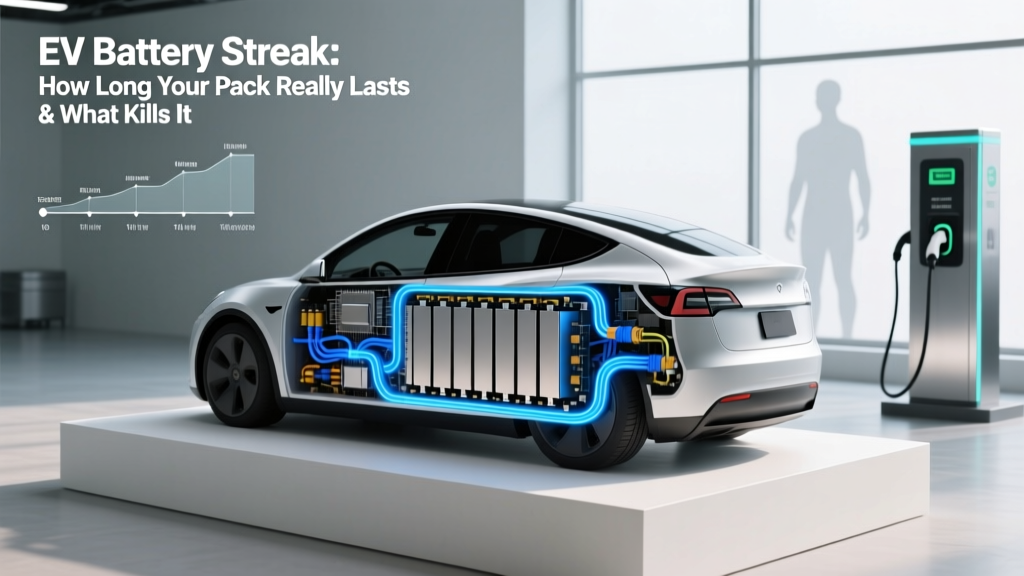
Open any EV owner forum and you'll find threads dedicated to one obsession: the battery streak — the consecutive months or years an owner goes without noticing meaningful range loss. It's the EV equivalent of a fuel-economy hypermiling record, except the stakes are higher. A degraded battery doesn't just cost you miles per charge; it can cost five figures to replace.
But here's what the fear-mongering headlines miss: modern EV traction batteries are remarkably durable. Data aggregated from fleets and long-term owners shows most packs retain 90% or more of their original capacity after 100,000 miles. The question isn't whether your battery will die — it's how fast it fades and what habits accelerate the decline.
This guide breaks down the chemistry, degradation curves, warranty safety nets, replacement economics, and daily habits that determine whether your battery streak lasts three years or thirteen.
LFP vs. NMC vs. NCA: The Chemistry That Sets Your Ceiling
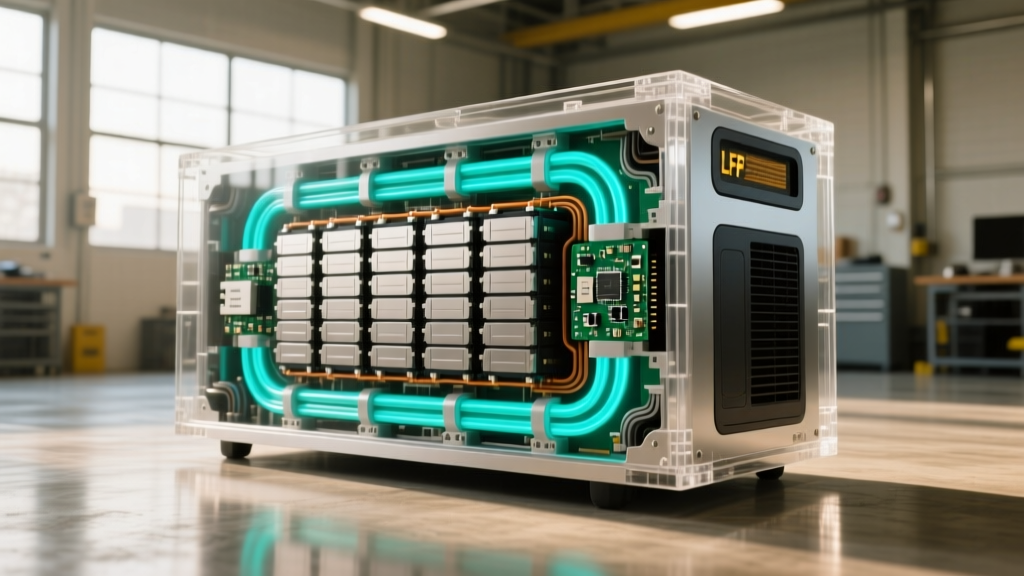
Not all lithium-ion cells are created equal. The cathode chemistry inside your pack dictates energy density, cycle life, cold-weather tolerance, and cost. In 2026, the two dominant families in the U.S. market are LFP (lithium iron phosphate) and NMC/NCA (nickel manganese cobalt / nickel cobalt aluminum).
| Attribute | LFP (LiFePO₄) | NMC / NCA |
|---|---|---|
| Energy density (cell-level) | ~160–180 Wh/kg | ~220–300 Wh/kg |
| Typical cycle life | 3,000–5,000+ cycles | 1,000–2,500 cycles |
| Cold-weather performance | Moderate loss; slower charge acceptance below 32 °F | Better low-temp conductivity |
| Cost per kWh (pack-level) | ~$95–$115 | ~$120–$155 |
| Recommended daily SoC | 100% OK (periodic full charge actually helps BMS calibration) | 80% daily; 100% for trips only |
| Thermal runaway risk | Very low | Low but higher than LFP |
| Notable 2026 U.S. applications | Tesla Model 3/Y RWD, Ford Mustang Mach-E Select (LFP option), Rivian Standard pack | Hyundai Ioniq 5/6 Long Range, BMW iX, Lucid Air, Chevy Silverado EV |
Bottom line: If you want maximum range per kilogram and don't mind charging to 80% daily, NMC/NCA wins. If you prioritize longevity, lower cost, and the simplicity of charging to 100% without guilt, LFP is the better marathon runner. Tesla's shift to LFP in standard-range models was a bet on exactly that trade-off — slightly less range, dramatically more cycle life.
Real Degradation Data: What Owners Actually See
Manufacturer lab tests are optimistic. Real-world degradation depends on climate, charging habits, and thermal management quality. Here's what aggregated owner data and fleet studies show:
| Milestone | Average Capacity Retained | Range Impact Example (300-mi EPA pack) |
|---|---|---|
| Year 1 / 15,000 mi | ~96–98% | ~288–294 mi |
| Year 3 / 45,000 mi | ~92–95% | ~276–285 mi |
| Year 5 / 75,000 mi | ~88–92% | ~264–276 mi |
| Year 8 / 120,000 mi | ~82–88% | ~246–264 mi |
| Year 10 / 150,000 mi | ~78–85% | ~234–255 mi |
The degradation curve is non-linear. Most packs lose 2–4% in the first year (calendar aging and initial formation losses), then settle into a slower decline of roughly 1–2% per year. According to data compiled by Geotab's fleet study of 6,300+ EVs, the average annual loss after the first year is approximately 1.8% — meaning a typical pack retains about 82% capacity at the 10-year mark.
Liquid-cooled packs with active thermal management (Tesla, Hyundai E-GMP, BMW) consistently outperform passively cooled designs. Nissan Leaf owners with air-cooled packs in hot climates have historically seen steeper drops — some reporting 70–75% retention at 8 years.
What the Battery Warranty Actually Covers
Federal law mandates a minimum 8-year / 100,000-mile warranty on EV battery packs (10 years / 150,000 miles in California and states that follow CARB standards). But the fine print matters enormously.
| Manufacturer | Warranty Term | Capacity Threshold | Notes |
|---|---|---|---|
| Tesla (Model 3/Y LFP) | 8 yr / 100,000 mi | 70% retention | Transferable to second owner |
| Tesla (Model S/X, LR/Performance) | 8 yr / 120,000–150,000 mi | 70% retention | Varies by model |
| Hyundai / Kia (E-GMP) | 10 yr / 100,000 mi | 70% retention | Among the longest terms |
| Ford (Mach-E, F-150 Lightning) | 8 yr / 100,000 mi | 70% retention | Covers battery and hybrid components |
| GM (Ultium-based) | 8 yr / 100,000 mi | 70% retention | Includes Bolt EUV, Silverado EV, Blazer EV |
| BMW | 8 yr / 100,000 mi | 70% retention | Module-level replacement when possible |
| Rivian | 8 yr / 120,000 mi | 70% retention | Covers Standard and Max packs |
Critical nuance: The 70% threshold means the manufacturer only owes you a repair or replacement if your pack drops below 70% of its original usable capacity within the warranty period. A pack at 72% that feels range-starved is your problem, not theirs. Document your State of Health readings regularly (see monitoring section below) to build a paper trail.
Warranties typically cover defects and abnormal degradation. They do not cover damage from collisions, flooding, improper modifications, or use of the pack as a stationary power source outside approved V2H/V2L functions.
Replacement Costs: The Number Nobody Wants to Hear
If your pack fails outside warranty — or if you're buying a used EV with a tired battery — replacement is a real expense. However, context matters: the vast majority of EVs are retired, sold, or totaled before the pack needs a full swap.
| Vehicle / Pack Size | Battery Capacity (usable kWh) | Estimated Replacement Cost |
|---|---|---|
| Tesla Model 3 RWD (LFP, ~57 kWh) | 57 | $8,000–$12,000 |
| Tesla Model Y Long Range (~75 kWh) | 75 | $12,000–$16,000 |
| Hyundai Ioniq 5 Long Range (~77 kWh) | 77 | $11,000–$15,000 |
| Ford F-150 Lightning Extended (~131 kWh) | 131 | $18,000–$25,000 |
| Chevy Silverado EV (~200 kWh) | 200 | $22,000–$30,000+ |
| BMW iX xDrive50 (~111 kWh) | 111 | $16,000–$22,000 |
Several factors can reduce the sting:
- Module-level repair: Many packs (BMW, Hyundai, some Tesla) allow individual module replacement rather than a full pack swap, reducing costs to $2,000–$6,000 per module.
- Remanufactured packs: Third-party suppliers and OEM refurbishment programs offer packs at 40–60% of new pricing.
- Declining cell costs: Pack-level pricing has fallen roughly 10–15% per year through 2025–2026, meaning a replacement in 2030 will likely cost significantly less than today's figures.
For perspective, a $14,000 battery replacement at year 12 equates to roughly $1,167 per year — comparable to what many gas-car owners spend annually on transmission and engine repairs over the same period, according to Consumer Reports' long-term cost studies.
Five Factors That Accelerate (or Protect) Your Battery Streak
Degradation isn't random. These five variables have the most measurable impact on how long your pack maintains a healthy streak:
1. DC Fast-Charging Frequency
Occasional DC fast charging (50–350 kW) is fine. But data from Geotab and Idaho National Laboratory testing shows that packs subjected to daily DC fast charging degrade measurably faster — roughly 1–2 additional percentage points of loss over 100,000 miles compared to Level 2-only charging. The heat and high C-rates stress the anode. Rule of thumb: fast-charge when you need to on road trips, but default to Level 2 at home.
2. Extreme Temperature Exposure
Prolonged exposure to ambient heat above 95 °F accelerates electrolyte decomposition. Cold below 20 °F doesn't permanently damage cells but causes lithium plating if you fast-charge without preconditioning. Always precondition (warm the battery via the car's thermal system) before DC fast charging in cold weather — most modern EVs do this automatically when you navigate to a charger.
3. State of Charge Habits
For NMC/NCA packs, storing the battery at 100% SoC for extended periods (days or weeks) accelerates calendar aging. The sweet spot for daily use is 20–80%. For LFP, periodic charges to 100% are actually recommended to help the Battery Management System (BMS) recalibrate cell voltage readings. Never let any pack sit at 0% for extended periods — deep discharge can brick cells.
4. Charging Speed on Level 2
Home Level 2 charging at 7–11 kW (32–48 amps) generates minimal heat and is the gentlest way to charge. There's no meaningful degradation difference between 7 kW and 11 kW on Level 2.
5. Driving Patterns
Frequent hard acceleration and sustained high-speed driving (80+ mph) generate more pack heat than moderate driving. Regenerative braking set to moderate or high reduces brake wear and generates less heat than repeated friction braking followed by re-acceleration.
Battery Care Checklist — Maximize Your Streak
- ☐ Default to Level 2 home charging; use DC fast charging for road trips only
- ☐ Set daily charge limit to 80% for NMC/NCA; 100% for LFP (with a weekly top-off cycle)
- ☐ Precondition the battery before DC fast charging in cold weather
- ☐ Avoid leaving the car at 100% SoC or below 10% SoC for more than 24 hours
- ☐ Park in shade or a garage during summer; use a block heater or garage parking in extreme cold
- ☐ Log your State of Health readings quarterly to track your personal degradation curve
- ☐ Keep software updated — OEM BMS improvements often optimize charge profiles
How to Monitor Your Battery's State of Health (SoH)
State of Health (SoH) is the percentage of your battery's original usable capacity that remains. A pack with 77 kWh usable when new that now holds 70 kWh has an SoH of ~91%.
How to check SoH:
- In-car displays: Tesla shows battery health in the service menu (available since late 2023 updates). Hyundai/Kia include SoH in the EV settings menu on newer models.
- OBD-II apps: Tools like OBDeleven, LeafSpy (Nissan), and Scan My Tesla read BMS data directly, including SoH, cell voltage spread, and cycle count.
- Manual calculation: Charge to 100%, note the displayed range, and compare it to the original EPA-rated range. Adjust for temperature. This is approximate but useful for trend-tracking.
- Dealer diagnostic: Request a battery health report during service visits. Most OEMs can print a detailed cell-balance and capacity report.
A healthy pack should show cell voltage spread (the difference between the highest and lowest cell group) of less than 30–50 mV at rest. Larger spreads indicate imbalance that may warrant module-level attention.
What's Next: Solid-State, Silicon Anodes, and Realistic Timelines
The next generation of battery technology promises step-changes in energy density and longevity — but timelines matter.
Solid-state batteries replace the liquid electrolyte with a solid conductor, potentially doubling energy density and eliminating thermal runaway risk. Toyota has announced limited production in select 2027–2028 models, with a claimed 750+ km (WLTP) range and 10-minute fast charging. However, these are preliminary and announced targets — not vehicles you can buy today. Manufacturing yield and cost remain significant hurdles, and industry analysts at BloombergNEF project solid-state packs won't reach cost parity with current lithium-ion until approximately 2032–2035.
Silicon-dominant anodes (replacing graphite) can increase energy density by 20–40% at the cell level. Companies like Sila Nanotechnologies and Group14 are supplying early production cells, with Mercedes-Benz and other OEMs integrating them into upcoming models. Expect incremental adoption through 2027–2029 rather than a sudden market shift.
Sodium-ion batteries are entering the market for lower-cost, lower-range applications (city cars, fleet vehicles). CATL has begun production, but these packs offer lower energy density (~140 Wh/kg) and are not expected in mainstream U.S. passenger vehicles before 2028.
For buyers in 2026, current LFP and NMC technology is mature, well-understood, and backed by robust warranty coverage. Waiting for solid-state means waiting 3–5+ years for limited availability at premium pricing.
Frequently Asked Questions
How long do EV batteries actually last in years and miles?
Most modern liquid-cooled EV battery packs retain 80–88% of their original capacity at 8 years / 100,000 miles and 78–85% at 10 years / 150,000 miles. Many packs outlast the vehicle itself — it's common for EVs to reach 200,000+ miles on the original battery. According to data from fueleconomy.gov, battery longevity has improved substantially with each generation of thermal management systems.
How much does it cost to replace an EV battery?
Full pack replacement ranges from approximately $8,000 for a smaller LFP pack (Tesla Model 3 RWD) to $25,000+ for a large pack (F-150 Lightning Extended Range, Silverado EV). However, most replacements are covered under warranty, and module-level repairs can cost $2,000–$6,000. The majority of EV owners never need a full replacement during their ownership.
What does the EV battery warranty actually cover?
Federal law mandates a minimum of 8 years / 100,000 miles of coverage against the battery dropping below 70% of its original usable capacity. Some manufacturers (Hyundai, Kia) offer 10 years / 100,000 miles. Coverage includes defects and abnormal degradation but excludes collision damage, flooding, and unauthorized modifications. Always check your specific warranty booklet for exact terms.
How do I check and maximize my EV battery health?
Check SoH through in-car menus, OBD-II diagnostic apps, or dealer service reports. Maximize longevity by defaulting to Level 2 home charging, keeping NMC packs between 20–80% SoC daily (LFP can charge to 100%), preconditioning before DC fast charging in cold weather, and avoiding prolonged storage at extreme SoC levels.
LFP vs. NMC — which battery chemistry is better?
Neither is universally better; it depends on your priorities. LFP offers longer cycle life (3,000–5,000+ cycles), lower cost, safer chemistry, and the convenience of charging to 100% daily — at the trade-off of lower energy density (less range per pound). NMC/NCA delivers more range in a lighter, more compact pack but requires more careful SoC management (80% daily limit) and has a shorter cycle life. For high-mileage commuters who charge at home nightly, LFP is often the better long-term bet. For road-trippers who need maximum range per charge, NMC wins.
Does frequent DC fast charging really damage the battery?
It accelerates degradation modestly — studies show roughly 1–2% additional capacity loss over 100,000 miles for packs that fast-charge daily versus Level 2-only. Occasional fast charging on road trips has negligible impact. The key risk factors are sustained high heat and repeated high-C-rate charging without adequate cooling intervals.
Will my EV battery need replacing before I sell the car?
Statistically, no. The average U.S. driver keeps a vehicle for about 8.4 years and drives roughly 13,500 miles per year (FHWA data). That's ~113,000 miles — well within the period where most packs retain 85%+ capacity. Battery replacement is a real cost but an unlikely one for first and second owners alike.
Your battery streak isn't a matter of luck — it's a function of chemistry, climate, and habit. Choose the right pack for your driving pattern, charge smart, and the data says you'll likely never write that five-figure replacement check.