The Real Price Tag Behind EV Battery Storage
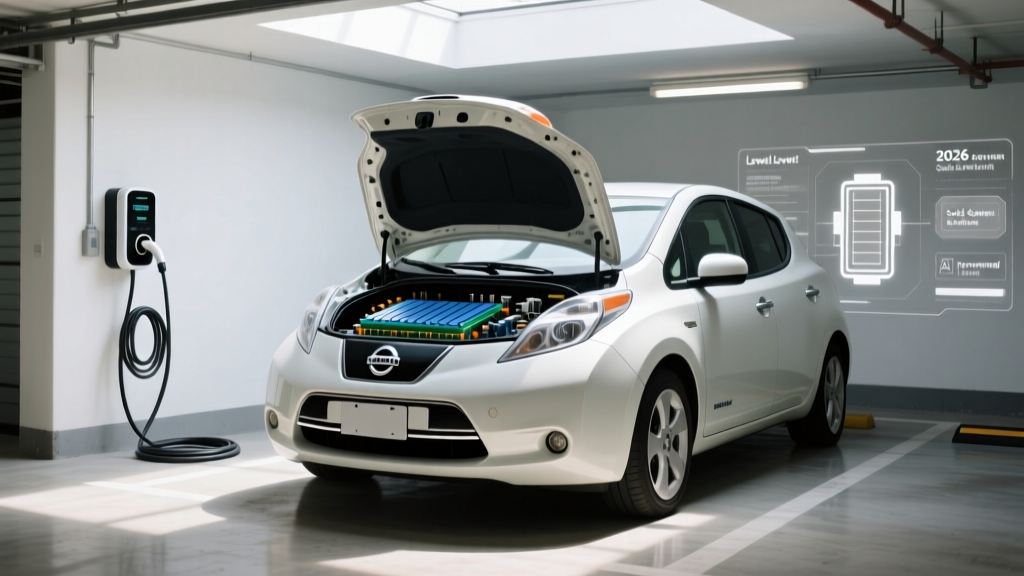
When shoppers research electric vehicles, the conversation almost always turns to one question: what happens when the battery wears out? The cost of battery storage—specifically the high-voltage traction pack that powers an EV—remains the single largest line item in any electric vehicle. In 2026, battery pack prices have fallen to roughly $110–$130 per kilowatt-hour at the cell level, according to BloombergNEF data, but the out-of-pocket replacement cost for a consumer is a different story entirely.
This guide breaks down what EV battery storage actually costs to replace, how long modern packs last, what warranties cover, and what you can do to maximize longevity. We'll also compare the two dominant chemistries—LFP and NMC/NCA—so you can choose the right battery type for your driving pattern.
How Long Do EV Batteries Actually Last?
The short answer: far longer than most buyers assume. Data aggregated from fleet operators and owner surveys shows that the average modern EV battery pack loses roughly 5–10% of its original capacity over the first 100,000 miles, with degradation slowing significantly after the initial break-in period.
Typical EV Battery Degradation Curve (NMC Chemistry):
- Year 1 / 15,000 mi: ~2–4% capacity loss (initial drop)
- Year 3 / 45,000 mi: ~5–7% total loss
- Year 5 / 75,000 mi: ~7–10% total loss
- Year 8 / 120,000 mi: ~10–14% total loss
- Year 10 / 150,000 mi: ~12–18% total loss
Sources: Geotab fleet data (2024–2025), Recurrent Auto battery health reports. LFP packs generally show slower degradation, often retaining 92–95% capacity at 100,000 miles.
The critical takeaway: most EV battery packs will outlast the vehicle they're installed in. The average age of a scrapped passenger vehicle in the U.S. is roughly 15 years, and current lithium-ion packs are engineered to retain 70–80% of their original capacity at 200,000 miles or more. Complete battery failure before 150,000 miles is rare and typically covered under warranty.
LFP vs. NMC/NCA: Which Battery Chemistry Is Right for You?
Two lithium-ion chemistries dominate the 2026 EV market. Understanding the trade-offs between them is essential, because chemistry directly affects range, longevity, cold-weather performance, and ultimately the cost of battery storage over the vehicle's life.
| Attribute | LFP (Lithium Iron Phosphate) | NMC / NCA (Nickel Manganese Cobalt / Nickel Cobalt Aluminum) |
|---|---|---|
| Energy Density | Lower (~160–180 Wh/kg cell-level) | Higher (~220–300 Wh/kg cell-level) |
| Typical Cycle Life | 3,000–5,000+ cycles | 1,000–2,000 cycles |
| Cold-Weather Performance | Weaker — more range loss below 32°F | Better — more resilient in freezing temps |
| Cost per kWh (cell) | Lower (~$80–$100/kWh) | Higher (~$110–$140/kWh) |
| State-of-Charge Recommendation | Can charge to 100% daily without harm | Best kept at 80% daily; 100% for trips only |
| Thermal Stability | Excellent — lower risk of thermal runaway | Good — requires more active thermal management |
| Common in (2026 models) | Tesla Model 3/Y RWD, Ford Mustang Mach-E Select, BYD models | Hyundai Ioniq 5/6, Kia EV6, Chevrolet Equinox EV, most long-range/AWD trims |
The bottom line: If you primarily drive in moderate climates, charge at home, and want maximum battery longevity at a lower upfront cost, LFP is the stronger pick. If you need maximum range per charge, frequently drive in cold weather, or want the fastest DC charging speeds, NMC/NCA packs are still the better fit.
How Much Does It Cost to Replace an EV Battery?
The cost of battery storage replacement varies dramatically by vehicle, battery size, and whether you're paying for a new OEM pack, a refurbished unit, or an independent shop repair. Here's what the market looks like in 2026:
| Vehicle / Battery Size | Battery Chemistry | OEM New Pack (Parts + Labor) | Refurbished / Remanufactured |
|---|---|---|---|
| Tesla Model 3 RWD (60 kWh) | LFP | $8,000 – $12,000 | $5,000 – $7,500 |
| Hyundai Ioniq 5 (77.4 kWh) | NMC | $14,000 – $18,000 | $9,000 – $13,000 |
| Ford F-150 Lightning Ext. Range (131 kWh) | NMC | $20,000 – $28,000 | $14,000 – $19,000 |
| Chevrolet Equinox EV (85 kWh) | NMC | $13,000 – $17,000 | $8,500 – $12,000 |
| Nissan LEAF (62 kWh) | NMC | $9,000 – $13,000 | $6,000 – $8,500 |
When is replacement typically needed? In practice, very few owners ever pay for a full battery replacement out of pocket. Packs that degrade below the warranty threshold (usually 70% capacity retention) within the warranty period are replaced for free. Packs that fail outside warranty are most commonly seen in vehicles at 150,000–250,000 miles—mileage at which many vehicles have already been retired or traded in.
It's also worth noting that module-level repair is increasingly available. Rather than replacing the entire pack, specialized shops can identify and swap individual degraded modules for $2,000–$5,000, depending on the vehicle.
What Does the EV Battery Warranty Actually Cover?
Federal law mandates that EV battery warranties cover a minimum of 8 years / 100,000 miles (10 years / 150,000 miles in California Air Resources Board states). Most automakers meet or exceed this baseline. Here's how major warranties compare:
| Manufacturer | Warranty Period | Capacity Retention Threshold | Notes |
|---|---|---|---|
| Tesla (Model 3/Y RWD – LFP) | 8 yr / 100,000 mi | 70% | Long Range/Performance: 8 yr / 120,000 mi |
| Hyundai / Kia | 10 yr / 100,000 mi | 70% | Among the longest coverage in the industry |
| Ford | 8 yr / 100,000 mi | 70% | Covers battery and hybrid/electric components |
| General Motors (Ultium) | 8 yr / 100,000 mi | 70% | Module-level repair before full replacement |
| Volkswagen | 8 yr / 100,000 mi | 70% | Covers capacity loss and defects |
| BMW | 8 yr / 100,000 mi | 70% | Includes high-voltage storage and components |
What's covered: Capacity loss below the stated threshold, manufacturing defects, and failures of the battery management system (BMS) or thermal management components.
What's typically NOT covered: Damage from accidents, improper charging equipment, modifications, or cosmetic issues. Gradual degradation above the threshold (e.g., losing 15% capacity over 9 years) is considered normal wear and is not warrantable.
For the most current warranty details, always check the manufacturer's official warranty booklet and reference fueleconomy.gov for EPA-verified specifications.
Factors That Accelerate (or Slow) Battery Degradation
Battery chemistry sets the ceiling for longevity, but your habits determine whether you reach it. Here are the primary factors that affect the cost of battery storage over time by influencing how quickly the pack degrades:
1. DC Fast-Charging Frequency
Occasional DC fast charging (50–350 kW) is fine. But data from Geotab and Recurrent shows that vehicles that rely on DC fast charging as their primary charging method—especially at rates above 150 kW—degrade 2–5% faster over 100,000 miles than vehicles that primarily use Level 2 home charging. The heat generated during high-power charging stresses the cells.
2. State of Charge Habits
For NMC/NCA batteries, routinely sitting at 100% SoC accelerates degradation. The sweet spot is 20–80% for daily use. LFP batteries are an exception: manufacturers like Tesla and Ford recommend charging LFP packs to 100% at least once a week to help the BMS calibrate cell voltages accurately.
3. Extreme Temperatures
Prolonged exposure to ambient temperatures above 95°F accelerates chemical aging. Similarly, charging an NMC pack to high SoC and then leaving it in sub-freezing temperatures without preconditioning can cause lithium plating—a permanent form of damage. Most modern EVs have active thermal management that mitigates this, but parking in shade or a garage still helps.
4. Depth of Discharge
Regularly draining the battery to near 0% and then charging to 100% (full cycles) wears cells faster than shallow, partial cycles. Plugging in nightly and letting the car charge to 80% is gentler than running the pack down to 10% twice a week.
Battery Care Best Practices Checklist
- ☐ Use Level 2 home charging as your primary method (7–11 kW)
- ☐ Set daily charge limit to 80% for NMC/NCA; 100% for LFP
- ☐ Limit DC fast charging to road trips when possible
- ☐ Avoid leaving the vehicle at 0% or 100% SoC for extended periods
- ☐ Precondition the battery before fast charging in cold weather
- ☐ Park in shade or a garage during hot summer months
- ☐ Drive the vehicle regularly — prolonged sitting at low SoC is harmful
How to Check and Monitor Your Battery's State of Health
State of Health (SoH) is the percentage of your battery's original capacity that remains usable. Monitoring it helps you plan for warranty claims and understand your real-world range.
Manufacturer Apps and In-Car Displays
Some automakers provide SoH data directly. BMW, Mercedes-Benz, and Hyundai offer battery health indicators in their connected-car apps. Tesla does not display a native SoH percentage, but you can estimate it by comparing your current displayed range at 100% charge to the original EPA rating.
Third-Party Tools
For more precise readings, several tools connect to the vehicle's OBD-II port or CAN bus:
- Recurrent Auto (free app): Provides battery health scores and range estimates based on your actual driving data. Works with most major EV brands.
- OBD-II scanners with EV support: Devices like the OBDeleven or Carly adapter can read SoH data from the BMS on many European and Korean EVs.
- Dealer diagnostics Any authorized dealer can run a full battery health report. Request one during routine service visits, especially as you approach warranty mileage limits.
If your SoH drops below 70% within the warranty period, document it with a dealer report and file a warranty claim immediately. The NHTSA also tracks battery-related complaints and recalls—worth checking if you notice unexpected range loss.
What's Next: Solid-State and Silicon-Anode Batteries
Looking beyond current lithium-ion technology, two advancements are generating significant attention—though neither is available in production vehicles as of 2026:
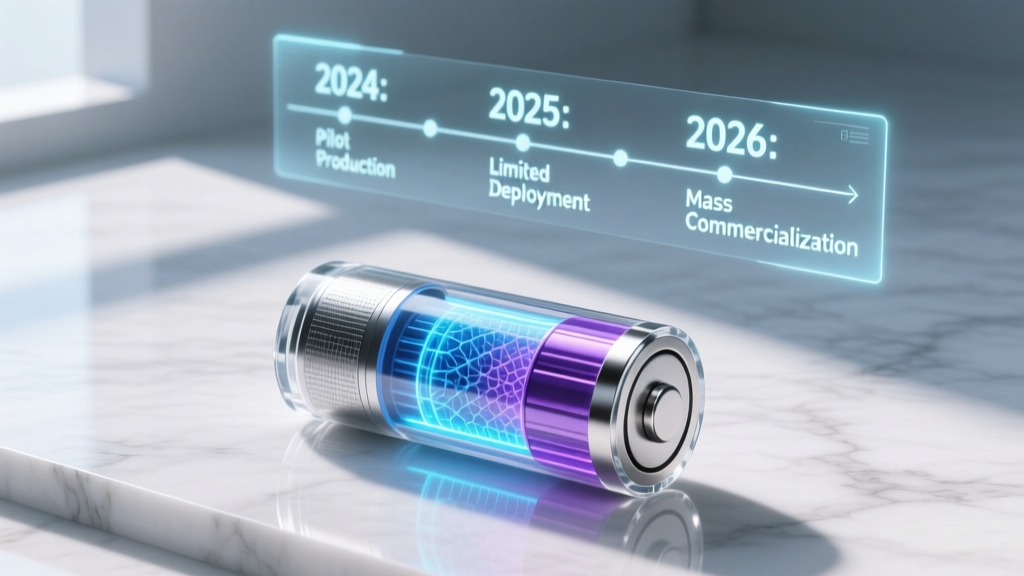
Solid-state batteries replace the liquid electrolyte with a solid material, promising higher energy density (potentially 400+ Wh/kg at the cell level), faster charging, and improved safety. Toyota has announced plans to commercialize solid-state cells in limited production by 2027–2028, while Samsung SDI and QuantumScape target similar timelines. Expect initial deployment in premium models at significant cost premiums. Mass-market availability is not expected before 2030.
Silicon-anode batteries replace the graphite anode with silicon, which can store roughly 10× more lithium ions per gram. Companies like Sila Nanotechnologies and Group14 are supplying silicon-anode materials to automakers for 2026–2027 model-year vehicles in limited applications. The benefit: 10–20% more range from the same physical pack size. This is a near-term evolution, not a revolution.
For buyers today, these technologies are forward-looking context—not purchase factors. Current LFP and NMC packs are mature, well-understood, and backed by extensive warranty coverage.
Frequently Asked Questions
How long do EV batteries last in years and miles?
Most modern EV batteries are designed to retain 70–80% of their original capacity at 200,000 miles or 15+ years. Real-world fleet data shows average degradation of roughly 1.5–2% per year under normal use. LFP batteries often exceed these figures, with some fleet vehicles showing less than 8% loss at 150,000 miles.
How much does an EV battery cost to replace?
Replacement costs range from roughly $5,000 for a refurbished small pack (e.g., Nissan LEAF 40 kWh) to $28,000 for a new large pack (e.g., Ford F-150 Lightning 131 kWh). Most owners never pay out of pocket because degradation-related failures within the 8-year/100,000-mile warranty period are covered. Module-level repairs at independent shops can cost $2,000–$5,000.
What does the battery warranty cover?
Federal law requires a minimum of 8 years / 100,000 miles of battery coverage (10/150,000 in CARB states). Warranties cover capacity loss below a specified threshold (typically 70% of original capacity), manufacturing defects, and BMS/thermal management failures. They do not cover accident damage, misuse, or normal degradation above the threshold.
How do I check my EV battery's health?
Use your manufacturer's connected-car app if it offers SoH data, or compare your displayed range at 100% charge to the original EPA rating. Third-party tools like the Recurrent Auto app provide battery health scores. For the most accurate reading, request a dealer diagnostic report during service visits.
LFP vs. NMC — which battery chemistry is better?
Neither is universally better. LFP offers longer cycle life (3,000–5,000+ cycles), lower cost, better thermal stability, and the convenience of daily 100% charging—but sacrifices energy density and cold-weather performance. NMC/NCA delivers higher range per kWh, better cold performance, and faster peak charging—but costs more and degrades faster if routinely charged to 100%. Choose LFP for daily commuting and longevity; choose NMC for maximum range and cold-climate driving.
Does fast charging damage my EV battery?
Occasional DC fast charging causes minimal additional degradation. However, relying on DC fast charging as your primary method—especially at 150+ kW—can accelerate capacity loss by 2–5% over 100,000 miles compared to Level 2 charging. The heat generated during high-power sessions is the primary stressor. Use Level 2 at home for daily charging and save DC fast charging for road trips.
Will solid-state batteries make current EVs obsolete?
Not in the near term. Solid-state batteries are expected to enter limited production around 2027–2028, initially in premium vehicles at high prices. Mass-market adoption is unlikely before 2030. Current LFP and NMC batteries are proven, well-warrantied, and cost-effective. There is no reason to delay an EV purchase waiting for solid-state technology.
Sources referenced: U.S. EPA / fueleconomy.gov, IRS §30D Clean Vehicle Credit guidelines, NHTSA, Geotab EV Battery Degradation Studies, Recurrent Auto Battery Health Reports, BloombergNEF Battery Price Surveys.