The single most expensive component in any electric vehicle is the high-voltage traction battery — and for buyers and owners alike, understanding the true battery storage cost per kWh is essential for evaluating long-term ownership economics. Whether you're weighing a new purchase, monitoring your current EV's State of Health, or simply trying to project whether a battery replacement might be in your future, the numbers tell a nuanced story of rapidly declining pack prices, evolving chemistries, and real-world degradation patterns that rarely match the worst-case fears.
This guide breaks down exactly what EV batteries cost today, how long they last with hard data, what warranties actually cover, and how chemistry choice (LFP vs. NMC/NCA) affects everything from range to longevity.
How Much Does an EV Battery Cost Per kWh in 2026?
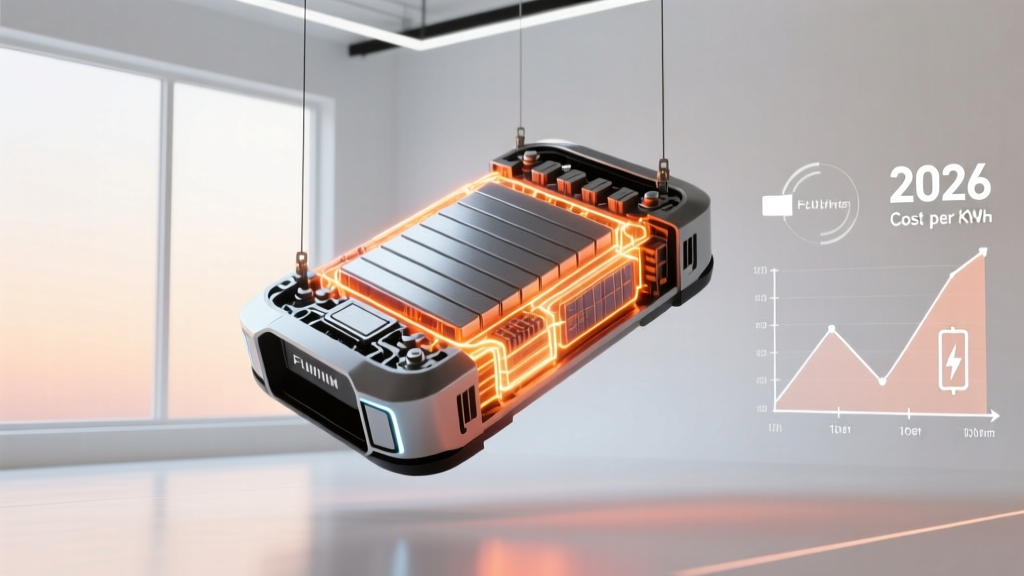
The battery storage cost per kWh at the pack level has fallen dramatically over the past decade. According to BloombergNEF's annual battery price survey, the average lithium-ion battery pack price reached approximately $115 per kWh at the manufacturer level in late 2025. However, what you'll actually pay for a replacement pack at a dealership or service center is significantly higher due to labor, markup, diagnostics, and cooling-system integration.
Here's a breakdown of real-world replacement costs by battery size and representative models:
| Battery Size | Chemistry | Representative Models | Estimated Replacement Cost | Cost Per kWh (Installed) |
|---|---|---|---|---|
| ~58 kWh | NMC | VW ID.4 Standard, base Hyundai Ioniq 5 | $8,500 – $11,000 | $147 – $190/kWh |
| ~72–77 kWh | NMC | Ford Mustang Mach-E Extended, Tesla Model 3 LR | $10,000 – $14,500 | $132 – $193/kWh |
| ~82–100 kWh | NMC/NCA | Tesla Model S, BMW iX, Rivian R1T Large | $14,000 – $22,000 | $140 – $220/kWh |
| ~60 kWh | LFP | Tesla Model 3 RWD, BYD models | $6,500 – $9,000 | $108 – $150/kWh |
| ~15–20 kWh | NMC (PHEV) | Toyota RAV4 Prime, Jeep Wrangler 4xe | $4,000 – $7,000 | $200 – $400/kWh |
Key insight: The installed battery storage cost per kWh for consumers typically runs $130 to $220/kWh for full BEV packs, and considerably more for smaller PHEV packs where labor overhead is spread across fewer kilowatt-hours. LFP packs are consistently cheaper to replace than NMC/NCA equivalents.
How Long Do EV Batteries Actually Last?
The short answer: far longer than most buyers expect. Data from fleet operators, manufacturer reports, and independent tracking consistently show that modern EV batteries outlast the vehicles they power in the vast majority of cases.
Here's what the degradation data actually shows:
- Year 1 / ~15,000 miles: 2–4% capacity loss (initial formation loss)
- Year 3 / ~45,000 miles: 5–8% total capacity loss
- Year 5 / ~75,000 miles: 8–12% total capacity loss
- Year 8 / ~120,000 miles: 10–15% total capacity loss
- Year 10+ / 150,000+ miles: 12–20% total capacity loss (varies widely by usage)
Sources: Recurrent Auto battery health reports, Tesla Impact Reports, Geotab fleet data analysis.
The degradation curve is non-linear: most loss occurs in the first year or two, then the rate flattens considerably. A 2024 Recurrent Auto study of over 15,000 EVs found that the median battery retained roughly 90% of its original capacity at 100,000 miles — well above most warranty thresholds.
When is replacement typically needed? Catastrophic battery failure (sudden, total loss) is rare — estimated at under 1% of vehicles. Most replacements occur after 150,000+ miles when gradual degradation reduces range below the owner's practical threshold, or following physical damage from collisions or flooding. For most original owners who keep a vehicle 8–12 years, the battery will still provide 80–88% of its original range.
LFP vs. NMC/NCA: Which Chemistry Is Better and Why?
Not all EV batteries are created equal. The two dominant lithium-ion chemistries in 2026 passenger vehicles are LFP (Lithium Iron Phosphate) and NMC/NCA (Nickel Manganese Cobalt / Nickel Cobalt Aluminum). Each has distinct trade-offs that affect cost, range, longevity, and daily usability.
| Attribute | LFP (Lithium Iron Phosphate) | NMC / NCA (Nickel-Based) |
|---|---|---|
| Energy Density (cell-level) | ~160–180 Wh/kg (lower) | ~220–270 Wh/kg (higher) |
| Cycle Life | 3,000–5,000+ cycles | 1,000–2,500 cycles |
| Typical Degradation at 100k mi | ~5–8% loss | ~8–12% loss |
| Cold-Weather Performance | Weaker — more range loss below 32°F | Better low-temp conductivity |
| Cost (pack-level) | ~$85–100/kWh | ~$110–130/kWh |
| Cobalt/Nickel Content | None (cobalt-free) | Contains cobalt and/or nickel |
| Recommended SoC for Daily | 100% OK — LFP tolerates full charge | 80% recommended for daily use |
| Common In (2026 Models) | Tesla Model 3/Y RWD, BYD, some base trims | Most LR/AWD/performance trims |
The practical verdict: LFP is the better choice if you prioritize longevity, lower replacement cost, and don't need maximum range. It's ideal for daily commuters who can charge to 100% without worry. NMC/NCA is preferable if you need the longest possible EPA range, better cold-weather performance, or are buying a performance-oriented trim. The battery storage cost per kWh favors LFP substantially — both at purchase and at replacement time.
What Does the Battery Warranty Actually Cover?
Federal law mandates that EV batteries carry a minimum warranty of 8 years / 100,000 miles (whichever comes first). In California Air Resources Board (CARB) states, that extends to 10 years / 150,000 miles. Most manufacturers exceed these minimums in meaningful ways.
| Manufacturer | Warranty Period | Capacity Retention Threshold | Notes |
|---|---|---|---|
| Tesla | 8 yr / 100,000–120,000 mi (varies by model) | 70% | Model S/X: 8yr/150k; Model 3/Y RWD (LFP): 8yr/100k |
| Hyundai / Kia | 10 yr / 100,000 mi | 70% | Among the longest coverage in the industry |
| Ford | 8 yr / 100,000 mi | 70% | Covers battery and high-voltage components |
| General Motors (Chevy, Cadillac) | 8 yr / 100,000 mi | 70% (some models 60% for PHEV) | Ultium platform; covers modules individually |
| Volkswagen | 8 yr / 100,000 mi | 70% | Covers capacity below threshold, not gradual loss above it |
| BMW | 8 yr / 100,000 mi | 70% | Modular replacement — only failed modules swapped |
| Rivian | 8 yr / 120,000 mi (175,000 for Commercial) | 70% | Extended mileage for fleet/commercial use |
Critical nuance: The warranty threshold (typically 70%) means the manufacturer only intervenes if your battery drops below that level within the warranty period. A battery at 72% capacity at year 7 is functioning within spec, even though you've lost roughly 60–80 miles of range on a 300-mile vehicle. Also, warranties cover defects and abnormal degradation — they generally do not cover damage from accidents, flooding, improper charging equipment, or unauthorized modifications.
Factors That Accelerate Battery Degradation
Not all miles are equal when it comes to battery wear. Research from Geotab's fleet analysis and independent labs identifies several key factors that accelerate capacity loss beyond the typical curve:
- Limit DC fast charging to road trips. Daily use of 150+ kW DCFC increases degradation rate by an estimated 1–3% over 5 years vs. Level 2-only charging. Occasional fast charging (2–4 times/month) shows negligible impact.
- Avoid sustained storage at 100% or below 10% SoC. For NMC/NCA batteries, the ideal storage range is 20–80%. LFP batteries tolerate 100% better but still benefit from not sitting at 0% for extended periods.
- Use preconditioning before fast charging. Warming the battery to optimal temperature (via the vehicle's thermal management system) before a DCFC session reduces stress on cells. Most EVs do this automatically when you navigate to a charger.
- Minimize exposure to extreme heat. Sustained ambient temperatures above 95°F accelerate electrolyte decomposition. If you live in hot climates, park in shade or a garage when possible.
- Don't obsess over avoiding 100% charges. Charging to 100% occasionally (for a long trip) causes minimal harm. It's sustained storage at 100% — sitting for days or weeks fully charged — that does damage.
- Use Level 2 (240V) as your primary charging method. At 7–11.5 kW, Level 2 charging generates far less heat and cell stress than DCFC while being dramatically faster than Level 1 (120V).
How to Check and Monitor Your Battery's State of Health
State of Health (SoH) is the percentage of your battery's original usable capacity that remains. A new battery starts at 100% SoH; a battery showing 88% SoH has lost 12% of its capacity to degradation. Monitoring SoH helps you project range, plan for warranty claims, and assess resale value.
How to check SoH in 2026 EVs:
- In-vehicle displays: Tesla (via the Service menu or third-party apps like Tessie), Hyundai/Kia (via the EV battery health screen in newer infotainment systems), and BMW (iDrive battery status) offer varying levels of SoH visibility.
- OBD-II diagnostic tools: Devices like the OBDLink SX paired with apps such as EV Battery Health or LeafSpy (for Nissan Leaf) can read the BMS (Battery Management System) directly for precise SoH figures.
- Third-party services: Recurrent Auto offers free battery health reports that compare your vehicle's degradation to a fleet of identical models. Some dealerships can also pull SoH data during service visits.
- Manual calculation: Charge to 100% (on a calm-temperature day), note the displayed range, and compare to the original EPA-rated range. A car that originally showed 310 miles at 100% but now shows 275 miles has roughly 89% SoH — though this method is imprecise due to temperature and BMS estimation variance.
Pro tip: Track SoH quarterly, not weekly. Short-term fluctuations from temperature, driving style, and BMS recalibration can create noise. A trend over 6–12 months is far more meaningful than any single reading.
Emerging Battery Tech: Solid-State and Silicon Anodes
Next-generation battery technologies promise higher energy density, faster charging, and improved safety — but timelines remain fluid, and none are available in 2026 production vehicles at scale.
Solid-state batteries replace the liquid electrolyte with a solid material (ceramic, sulfide, or polymer), potentially offering 30–50% higher energy density and reduced fire risk. Toyota has announced plans for a solid-state EV around 2027–2028, and Samsung SDI targets 2027 production. However, manufacturing scalability and cost remain unresolved challenges. Expect initial deployment in limited, premium models — not mass-market vehicles — through at least 2030.
Silicon anode technology (used in part by companies like Sila Nanotechnologies and Group14) replaces graphite anodes with silicon-dominant composites, boosting energy density by 10–20% at the cell level. This technology is closer to market, with early adoption appearing in some 2025–2026 premium EVs (Mercedes-Benz has confirmed silicon-anode cells in the upcoming G-Class EV). It's an incremental improvement, not a revolution, but it meaningfully improves range without changing pack size.
What this means for current owners: These technologies will not retroactively apply to your existing EV. However, they signal that the battery storage cost per kWh will continue declining, and replacement costs for today's vehicles should trend downward as newer, cheaper chemistries push legacy pack prices lower over the next 5–10 years.
Frequently Asked Questions
How long do EV batteries last in years and miles?
Based on fleet data from Recurrent Auto and Geotab, most modern EV batteries retain 85–90% of their original capacity at 100,000 miles (roughly 7–8 years of average driving). Many packs reach 200,000 miles before degradation becomes practically limiting. Catastrophic failure is rare (under 1%), and most batteries will outlast the vehicle's body, suspension, and interior.
How much does it cost to replace an EV battery?
Full replacement costs range from roughly $6,500 for a small LFP pack (e.g., Tesla Model 3 RWD) to $22,000+ for a large NMC/NCA pack (e.g., Tesla Model S, Rivian R1T). The installed battery storage cost per kWh typically falls between $130 and $220. However, most owners never need a full replacement — and modular repair (replacing only degraded cell groups) is increasingly available from manufacturers like BMW and GM, reducing costs to $2,000–$5,000 for partial service.
What does the EV battery warranty cover?
Federally mandated minimum coverage is 8 years / 100,000 miles (10 yr / 150,000 mi in CARB states). The warranty guarantees your battery will retain at least 70% of its original capacity (some manufacturers use slightly different thresholds). Coverage includes defects, abnormal degradation, and high-voltage component failures. It does not cover accident damage, unauthorized modifications, or cosmetic issues. Check your specific owner's manual for exact terms, as they vary by manufacturer and model year.
How do I maximize my EV battery's health and lifespan?
The most impactful habits are: (1) use Level 2 charging as your daily method, reserving DC fast charging for road trips; (2) for NMC/NCA batteries, keep daily charge limits at 80% and avoid leaving the car at 100% for extended periods; (3) precondition the battery before fast charging; (4) avoid prolonged exposure to extreme heat; (5) don't let the battery sit at very low SoC (below 10%) for weeks at a time. LFP batteries are more tolerant of 100% charges and generally require less careful management.
LFP vs. NMC — which battery chemistry should I choose?
Choose LFP if: you want the longest cycle life (3,000–5,000+ cycles), lower replacement cost, you primarily drive in moderate climates, and your daily range needs fit within the lower energy density (~250–270 EPA miles in most applications). Choose NMC/NCA if: you need maximum range (300–400+ miles), you regularly drive in cold climates, or you want a performance/AWD trim. For most commuters in temperate regions, LFP offers the better long-term value proposition.
Will EV battery replacement costs come down?
Yes. Pack-level battery storage cost per kWh has dropped from over $1,000/kWh in 2010 to approximately $115/kWh in 2025 (BloombergNEF). As LFP adoption grows, manufacturing scales, and recycling infrastructure matures (companies like Redwood Materials are already supplying recycled cathode material), replacement costs are projected to continue declining through 2030 and beyond. Additionally, modular repair — replacing individual cell modules rather than the entire pack — is reducing real-world service costs significantly.
Bottom line: The battery storage cost per kWh for EV owners in 2026 ranges from roughly $108 to $220/kWh installed, depending on chemistry and pack size. But with median degradation of just 10–12% at 100,000 miles and warranties guaranteeing 70%+ retention for 8–10 years, the vast majority of EV owners will never face a battery replacement bill. The data is clear: today's EV batteries are built to last the life of the car.