The Real Story Behind Falling Battery Prices
The battery storage cost decline over the past decade has been one of the most consequential trends in automotive history. Pack-level lithium-ion prices fell from roughly $1,200 per kWh in 2010 to approximately $115–$130 per kWh by early 2026, according to BloombergNEF tracking. For EV buyers, that decline translates into lower vehicle MSRPs, more affordable out-of-warranty replacements, and longer-lasting packs that rarely need swapping before the car itself retires.
Yet confusion persists. How long will an EV battery actually last? What does a replacement cost today? Which chemistry should you choose? This guide answers those questions with hard data — not marketing copy.
LFP vs NMC/NCA: Choosing Your Battery Chemistry
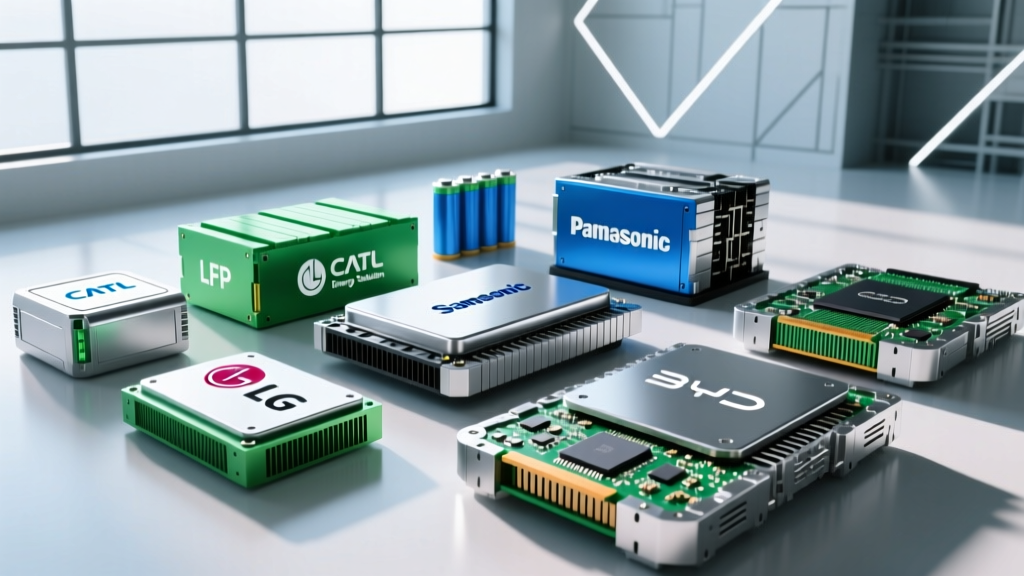
Two dominant chemistries power nearly every EV sold in the U.S. in 2026: Lithium Iron Phosphate (LFP) and Nickel Manganese Cobalt (NMC), with some manufacturers using Nickel Cobalt Aluminum (NCA). Your choice affects range, longevity, cold-weather behavior, and price.
| Attribute | LFP (Lithium Iron Phosphate) | NMC / NCA (Nickel-based) |
|---|---|---|
| Energy Density | Lower (~160–180 Wh/kg cell-level) | Higher (~220–260 Wh/kg cell-level) |
| Cycle Life | 3,000–5,000+ full cycles | 1,500–2,500 full cycles |
| Cold-Weather Performance | Moderate range loss; slower charging in deep cold | Better low-temp conductivity; preconditioning still critical |
| Cost (2026 pack-level) | ~$85–$100/kWh | ~$115–$140/kWh |
| Thermal Stability | Superior; lower runaway risk | Good with active thermal management |
| Charging to 100% Daily | Recommended by most OEMs (Tesla, Ford for LFP trims) | 80% daily recommended to reduce stress |
| Typical Use | Standard-range trims (Model 3 RWD, Mustang Mach-E Select LFP) | Long-range and performance trims |
Bottom line: LFP wins on cost and cycle life — ideal for daily commuters and fleet buyers who charge frequently. NMC/NCA wins on energy density, giving longer EPA range in the same physical pack size. If you regularly drive in sub-freezing climates and prioritize maximum single-charge range, NMC/NCA remains the stronger pick. If you want a battery that can tolerate daily 100% charges and may outlast 300,000+ miles with minimal degradation, LFP is the pragmatic choice.
How Long Do EV Batteries Actually Last?
Most modern EV batteries are engineered to outlast the vehicle's economic life. Real-world fleet data and owner reports consistently show gradual, predictable capacity loss rather than sudden failure.
Typical Degradation Curve (NMC/NCA packs, 2020–2026 models):
- Year 1 / 15,000 mi: ~2–4% capacity loss (initial "break-in" drop)
- Year 3 / 45,000 mi: ~6–8% total loss
- Year 5 / 75,000 mi: ~8–12% total loss
- Year 8 / 120,000 mi: ~10–15% total loss
- Year 10 / 150,000 mi: ~12–18% total loss
LFP packs (Tesla Model 3 RWD, BYD-based platforms) typically show 1–2% less loss at each interval, with many fleet vehicles reporting under 10% degradation at 150,000 miles. Tesla's 2023 Impact Report noted its fleet data showed an average of ~12% degradation at 200,000 miles for NMC packs, and LFP vehicles performing even better. Source: fueleconomy.gov EV technology overview.
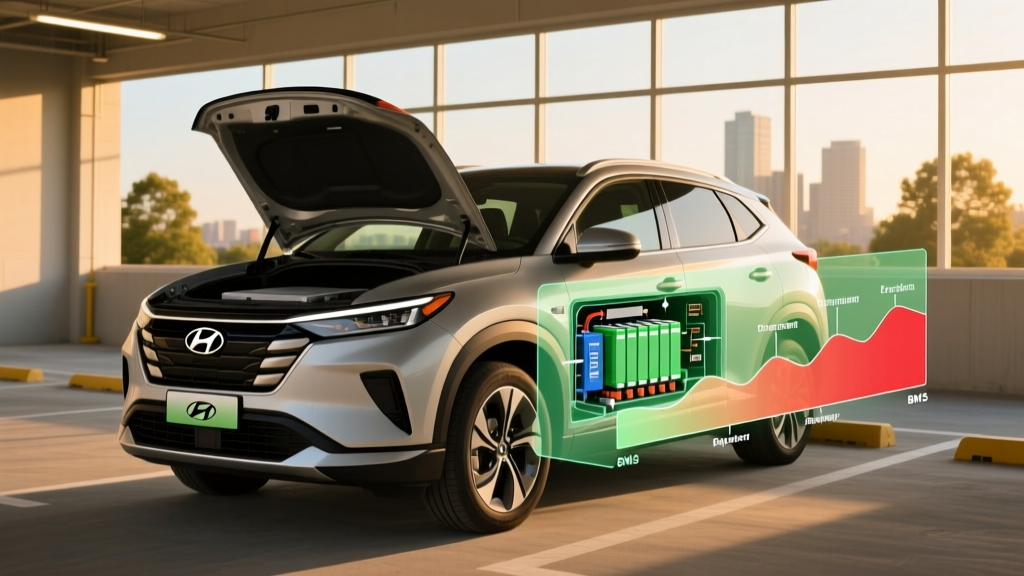
What this means practically: a 2024 Hyundai Ioniq 5 Long Range (77.4 kWh usable, EPA 303 miles) that loses 12% capacity over 8 years still delivers roughly 267 miles of EPA-equivalent range — more than adequate for daily driving and road trips alike. Catastrophic battery failure outside of collision damage is exceedingly rare in modern liquid-cooled packs.
What Does the Battery Warranty Cover?
Federal law mandates a minimum 8-year / 100,000-mile warranty on EV battery packs for emissions-related components, and nearly every major automaker matches or exceeds this for capacity retention.
| Manufacturer | Warranty Term | Capacity Retention Threshold |
|---|---|---|
| Tesla (Model 3/Y LFP) | 8 yr / 100,000 mi | 70% |
| Tesla (Model 3/Y LR/Perf NMC) | 8 yr / 120,000 mi | 70% |
| Hyundai / Kia | 10 yr / 100,000 mi | 70% |
| Ford (Mustang Mach-E, F-150 Lightning) | 8 yr / 100,000 mi | 70% |
| GM (Ultium-based: Equinox EV, Blazer EV, Silverado EV) | 8 yr / 100,000 mi | 70% (some trims 60% for commercial) |
| Rivian | 8 yr / 175,000 mi (150 kWh pack) | 70% |
| BMW | 8 yr / 100,000 mi | 70% |
What triggers a warranty claim: If your battery's State of Health (SoH) drops below the stated threshold (typically 70% of original capacity) within the warranty period, the manufacturer will repair or replace modules — or the full pack — at no cost. This covers defects and abnormal degradation. It does not cover damage from collisions, flooding, improper charging equipment, or aftermarket modifications.
The battery storage cost decline directly benefits warranty replacements: automakers face lower costs when servicing claims, which helps keep warranty terms generous and reduces the risk of disputes over "normal" vs. "abnormal" degradation.
EV Battery Replacement Cost: 2026 Pricing Reality
Out-of-warranty battery replacement remains a top buyer concern — and the single area where the battery storage cost decline has the most tangible impact. While early EVs (2011–2017 Nissan Leaf, Chevy Bolt) faced replacement quotes of $15,000–$22,000, modern pack pricing has dropped significantly.
| Vehicle / Pack Size | Chemistry | Est. Replacement Cost (2026) | Typical Need Timeline |
|---|---|---|---|
| Tesla Model 3 RWD (~60 kWh) | LFP | $7,500–$9,500 | Rarely needed; 300,000+ mi expected life |
| Tesla Model Y LR (~75 kWh) | NMC | $9,000–$12,000 | Rarely needed; 200,000+ mi expected life |
| Hyundai Ioniq 5 (~77.4 kWh) | NMC | $9,500–$13,000 | Rarely needed; 200,000+ mi expected life |
| Ford F-150 Lightning Ext. Range (~131 kWh) | NMC | $16,000–$22,000 | Rarely needed; large buffer extends usable life |
| Chevy Equinox EV (~85 kWh) | NMC (Ultium) | $10,000–$14,000 | Rarely needed; modular Ultium design allows partial replacement |
Critical context: The vast majority of EVs will never need a full pack replacement. Most batteries retain 80–88% capacity at 150,000 miles. When replacement is needed, it's usually after 10–15 years of service — at which point the vehicle's residual value is minimal. Additionally, modular pack designs (GM Ultium, some Hyundai/Kia platforms) allow individual module replacement for $1,500–$3,500 per module rather than a full pack swap.
The battery storage cost decline continues to compress these figures. Industry analysts project pack-level costs could reach $80–$100/kWh by 2028–2029, which would push a 75 kWh replacement under $7,000 at the parts level.
Factors That Accelerate Battery Degradation
Not all miles are equal when it comes to battery wear. The following factors have the most measurable impact on long-term State of Health:
Battery Care Checklist: Maximize Longevity
- Limit DC fast charging to road trips. Frequent 150+ kW sessions generate sustained heat. Occasional use is fine; daily reliance accelerates wear. Aim for Level 2 (7–11 kW) for daily charging.
- Avoid prolonged storage at 100% or 0% SoC. For NMC/NCA packs, the 20–80% window minimizes calendar degradation. LFP packs tolerate 100% better, but still benefit from not sitting fully charged for weeks.
- Use preconditioning. Most EVs let you precondition the battery before fast charging or departure. This brings the pack to optimal temperature (~25–35°C), reducing stress and improving charge speed. A cold battery charged at high kW suffers lithium plating risk.
- Park in shade or a garage in extreme heat. Sustained pack temperatures above 40°C (104°F) accelerate electrolyte breakdown. A garage in Phoenix summer can shave 10–15°C off pack temp versus a sun-baked driveway.
- Don't obsess over regen braking settings. While aggressive regen increases charge/discharge cycles slightly, the effect on degradation is marginal compared to thermal management and SoC habits.
- Keep tire pressure correct and alignment in spec. Higher rolling resistance forces the battery to work harder, generating marginally more heat per mile. It's a small effect, but compounds over 100,000 miles.
How to Monitor Your Battery's State of Health
Knowing your battery's SoH — expressed as a percentage of original capacity — is essential for warranty tracking, resale confidence, and peace of mind.
Manufacturer apps: Tesla's in-car "Battery Health" screen (added via software update in 2023–2024) shows estimated SoH. Hyundai's Blue Link / Kia Connect provides battery-condition reports. GM's myChevrolet/myCadillac apps include battery diagnostics for Ultium vehicles.
OBD-II tools: Third-party apps like ABRP (A Better Route Planner) with OBD dongles, or LeafSpy (for Nissan Leaf owners), can read cell-level voltage data and estimate SoH with reasonable accuracy. For Tesla, apps like TeslaFi or Tessie track charge-session data to model degradation over time.
Dealer diagnostics: Any authorized service center can run a full battery health report, typically showing SoH percentage, cell balance, and thermal management system status. Request this before purchasing a used EV — it's the single most valuable data point for a pre-owned electric car.
The math: If your 77.4 kWh Ioniq 5 now accepts only 67 kWh from a 0–100% charge (accounting for charging losses of ~5%), your SoH is approximately 67 / (77.4 × 0.95) ≈ 91%. That's excellent health at typical ownership milestones.
What's Next: Solid-State, Silicon Anodes, and Realistic Timelines
The battery storage cost decline has been driven primarily by manufacturing scale and incremental chemistry improvements. The next frontier involves more fundamental changes — but timelines matter.
Solid-state batteries replace the liquid electrolyte with a solid ceramic, polymer, or sulfide layer, promising higher energy density (potentially 350–500 Wh/kg at the cell level), faster charging, and improved safety. Toyota has announced solid-state production for limited EV models beginning around 2027–2028, with initial availability likely in Japan-market vehicles. Samsung SDI and QuantumScape are targeting 2028–2030 for commercial-scale automotive production. These are not available in any production EV sold today.
Silicon-dominant anodes (replacing graphite) can boost energy density by 20–40% and are already appearing in limited applications. Porsche and Group 14 Technologies are piloting silicon-anode cells, and some 2025–2026 models use silicon-blend anodes (5–10% silicon content) for modest gains. Full silicon-anode adoption at scale is expected in the 2028–2032 window.
Sodium-ion batteries use abundant, low-cost materials and are entering the market for entry-level EVs in China (BYD, CATL). U.S. availability is not yet confirmed but could emerge in budget segments by 2028–2029, further extending the battery storage cost decline into sub-$25,000 EVs.
For buyers shopping today, current-generation LFP and NMC packs are mature, well-understood, and backed by robust warranties. Waiting for solid-state means waiting at least 3–5 years for meaningful U.S. market availability.
Frequently Asked Questions
How long do EV batteries last in years and miles?
Most modern liquid-cooled EV batteries (2020 and newer) are designed for 200,000–300,000 miles and 12–20 years of service before reaching 70–80% of original capacity. LFP packs tend toward the higher end of that range. Complete failure is rare; gradual capacity loss is the norm. Data from fueleconomy.gov and fleet operators confirms this trajectory.
How much does an EV battery cost to replace?
In 2026, out-of-warranty replacement costs range from roughly $7,500 for a 60 kWh LFP pack (Tesla Model 3 RWD) to $22,000 for a 131 kWh NMC pack (F-150 Lightning Extended Range). Mid-size crossovers (75–85 kWh) typically fall in the $9,000–$14,000 range. Thanks to the battery storage cost decline, these figures are 30–40% lower than equivalent replacements in 2019–2020.
What does the battery warranty actually cover?
Standard warranties cover defects and abnormal degradation below a stated capacity threshold (typically 70% SoH) for 8–10 years or 100,000–175,000 miles, depending on the manufacturer. They do not cover collision damage, flood damage, improper aftermarket chargers, or cosmetic issues. If your SoH drops below the threshold within the warranty window, the OEM repairs or replaces the pack at no cost.
How do I check and maximize my EV battery health?
Check SoH via your manufacturer's app, an OBD-II diagnostic tool, or a dealer service visit. Maximize longevity by favoring Level 2 home charging over DC fast charging, keeping NMC packs in the 20–80% SoC range for daily use (LFP packs can charge to 100%), preconditioning before fast charging, and avoiding prolonged exposure to extreme heat. See the battery care checklist above for specifics.
LFP vs NMC — which battery chemistry is better?
Neither is universally better. LFP offers lower cost, longer cycle life (3,000–5,000+ cycles), superior thermal stability, and the ability to charge to 100% daily — making it ideal for commuters and cost-conscious buyers. NMC/NCA delivers higher energy density, better cold-weather range, and faster DC charging speeds — making it the choice for long-range and performance trims. The battery storage cost decline has narrowed the price gap, but LFP retains a ~$20–$40/kWh advantage at the pack level in 2026.
Will solid-state batteries make current EVs obsolete?
Not in the near term. Solid-state production is expected to begin in limited volumes around 2027–2028 (Toyota, Samsung SDI), with broad U.S. availability unlikely before 2030+. Current LFP and NMC packs already offer 250–350+ miles of EPA range, 10–80% DC charging in 18–30 minutes, and 200,000+ mile lifespans. For buyers shopping in 2026, today's technology is mature and cost-effective.