For EV shoppers researching the battery source of East Montgomery and the broader Gulf Coast region, the conversation goes beyond where cells are manufactured. It extends into what chemistry powers your daily commute along I-85, how Alabama's summer heat affects long-term battery health, and whether the pack under your floor will outlast your ownership. This guide breaks down EV battery technology with the exact numbers, degradation data, and ownership realities that spec-driven buyers need before signing a purchase agreement.
Before diving in: kW (kilowatts) measures power — how fast energy flows during charging. kWh (kilowatt-hours) measures energy capacity — the size of the battery tank. A 75 kWh battery charging at 150 kW is like filling a 75-gallon tank through a high-flow hose. This guide uses kWh for battery size and kW for charge rates throughout.
LFP vs NMC: Which Battery Chemistry Fits Your Driving?
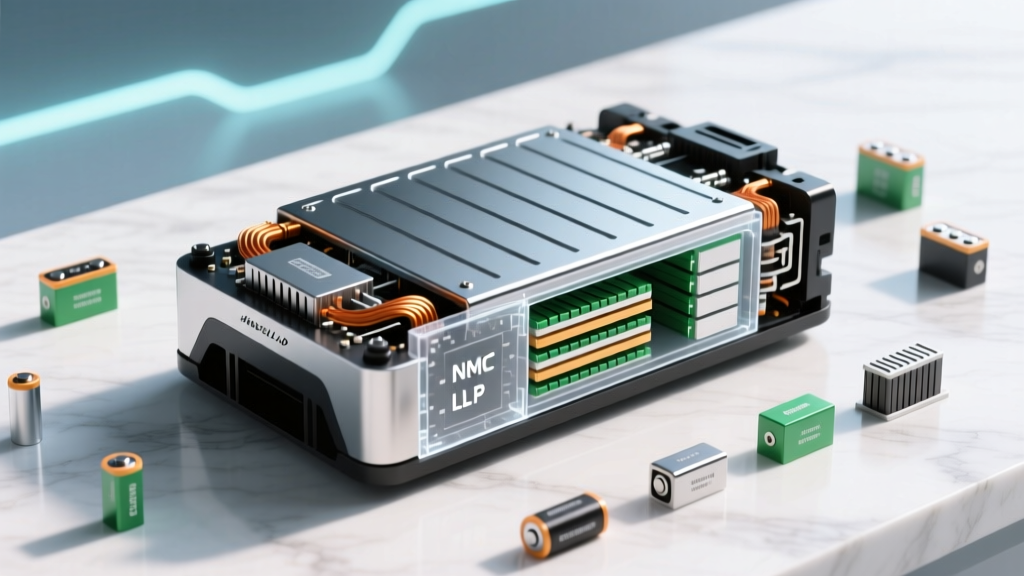
Every EV sold in the U.S. in 2026 uses one of two dominant lithium-ion chemistries: LFP (lithium iron phosphate) or NMC/NCA (nickel manganese cobalt / nickel cobalt aluminum). The chemistry determines your range, charging behavior, longevity, and even whether you should charge to 100% daily.
| Attribute | LFP (Lithium Iron Phosphate) | NMC / NCA (Nickel-based) |
|---|---|---|
| Energy Density | Lower (~160 Wh/kg cell-level) — heavier pack for same range | Higher (~250 Wh/kg cell-level) — more range per pound |
| Cycle Life | 3,000–5,000+ cycles to 80% SoH | 1,000–2,000 cycles to 80% SoH |
| Cold Performance | More range loss in freezing temps (~35-40% loss) | Better cold-weather retention (~25-30% loss) |
| Daily Charging | Can charge to 100% daily — recommended for BMS calibration | Best kept at 80% daily; 100% only for trips |
| Cost | ~20-30% cheaper per kWh to produce | Higher cost due to nickel/cobalt |
| Thermal Stability | Excellent — higher thermal runaway threshold | Good — requires more active thermal management |
| Common In (2026) | Tesla Model 3/Y RWD, Ford Mustang Mach-E Select, base Chevy Equinox EV | Tesla Long Range, Hyundai Ioniq 5/6, BMW iX, Rivian, most luxury EVs |
For East Montgomery and Gulf Coast drivers: The hot-humid climate favors LFP's thermal stability advantage. Summer ambient temperatures regularly exceed 95°F, and LFP's higher thermal runaway threshold (~270°C vs ~210°C for NMC) provides an inherent safety margin. However, if you regularly drive the 150-mile stretch to Atlanta or Birmingham on I-85 and prioritize maximum range per charge, an NMC pack's superior energy density delivers more miles in a lighter package.
How Long Do EV Batteries Last? Real Degradation Data
The most persistent question from EV-curious buyers: will the battery die before the car? The data says almost certainly not — for the original owner, at least.
- Geotab fleet study (2024): Average EV battery degradation across 10,000+ vehicles was 1.8% per year, meaning a typical pack retains ~82% capacity after 10 years.
- Tesla Impact Report (2024): Model 3/Y batteries retain approximately 85% capacity at 200,000 miles — roughly 15 years of average U.S. driving.
- Recurrent Auto data (2025): LFP-equipped vehicles show ~2-3% degradation in the first year, then plateau to less than 0.5% annually — flatter curve than NMC.
- Hyundai/Kia 8-year fleet feedback: Ioniq 5 owners report 4-7% total degradation at the 100,000-mile mark under mixed charging habits.
Most EV batteries sold today are engineered for 1,500–3,000+ full charge cycles before hitting 80% of original capacity. At an average of 250 miles per full cycle (conservative for 2026 models), that translates to 375,000–750,000 miles before reaching the warranty threshold — far beyond what most drivers will accumulate.
For East Montgomery drivers, the primary degradation accelerant isn't mileage — it's heat exposure. Parking in direct sun during July-August with a high state of charge (above 90%) stresses NMC cells more than LFP. Garage parking or using a sunshade meaningfully slows calendar aging in the Deep South.
What Does the EV Battery Warranty Actually Cover?
Federal law mandates a minimum battery warranty of 8 years / 100,000 miles for EVs sold in the U.S., with California-emissions states (including several East Coast states) requiring 10 years / 150,000 miles. Alabama follows the federal minimum.
| Manufacturer | Warranty Period | Capacity Threshold | Notes |
|---|---|---|---|
| Tesla | 8 yr / 100,000 mi (Model 3/Y RWD); 8 yr / 120,000 mi (LR/Perf) | 70% retention | Covers defects + excessive degradation below threshold |
| Hyundai / Kia | 10 yr / 100,000 mi | 70% retention | Among the longest coverage in the segment |
| Ford | 8 yr / 100,000 mi | 70% retention | Covers battery and electric powertrain components |
| GM (Chevy/Cadillac) | 8 yr / 100,000 mi | 60% retention (some models 70%) | Ultium platform; check specific model terms |
| BMW | 8 yr / 100,000 mi | 70% retention | Transferable to second owner |
| Rivian | 8 yr / 175,000 mi (R1T/R1S) | 70% retention | Higher mileage cap reflects truck use case |
Critical fine print: The warranty covers excessive degradation — meaning your battery must fall below the stated threshold (typically 70% of original capacity) to qualify for a replacement or repair module. Gradual, normal degradation from 100% to 75% over 8 years is considered expected wear and is not a warranty claim. Physical damage, flooding, or unauthorized modifications void coverage.
How Much Does EV Battery Replacement Cost?
This is where fear-mongering often eclipses reality. Let's separate the worst-case scenario from the typical ownership experience.
| Vehicle / Battery Size | Full Pack Replacement (Out of Warranty) | Module Repair (Partial) | Typical Need Timeline |
|---|---|---|---|
| Tesla Model 3 RWD (~60 kWh LFP) | $10,000–$14,000 | $3,000–$5,000 | Rarely needed before 250,000+ mi |
| Hyundai Ioniq 5 (~77.4 kWh NMC) | $14,000–$18,000 | $4,000–$7,000 | Rarely needed before 200,000+ mi |
| Ford F-150 Lightning (~131 kWh ext.) | $20,000–$28,000 | $5,000–$10,000 | Very early data; projected 200,000+ mi |
| Chevy Equinox EV (~85 kWh) | $12,000–$16,000 | $3,500–$6,000 | Limited long-term data (new platform) |
| BMW iX (~111.5 kWh NMC) | $18,000–$25,000 | $5,000–$9,000 | Rarely needed before 200,000+ mi |
The reality check: According to Recurrent Auto's 2025 fleet analysis, fewer than 1.5% of EVs have required battery replacement outside of warranty-covered defects. Most EV batteries are outlasting the vehicles they're installed in. The average U.S. vehicle age is 12.6 years; at 13,500 miles/year (FHWA average), that's ~170,000 miles — well within the battery's usable life.
When replacement is needed, it's increasingly a module-level repair rather than a full pack swap. Most modern packs contain 4–16 modules, and individual module replacement at $3,000–$7,000 is becoming standard practice at certified EV service centers — a far cry from the "$30,000 full replacement" horror stories.
Factors That Accelerate (or Slow) Battery Degradation
Not all miles are equal when it comes to battery wear. Here's what actually moves the needle on State of Health (SoH):
- ✓ Avoid sustained 100% SoC: For NMC batteries, daily charging to 80% and only hitting 100% before road trips reduces stress. LFP batteries tolerate 100% better and actually benefit from periodic full charges for BMS recalibration.
- ✓ Minimize DC fast charging as daily routine: Occasional Supercharger/EA stops are fine. Daily 150+ kW DC charging accelerates degradation by ~1-2% over 5 years vs. Level 2 home charging, per Geotab fleet data.
- ✓ Precondition before fast charging: Battery preconditioning (automatic in Tesla, Rivian; manual in some models) warms cells to optimal ~35-40°C, enabling faster charging and reducing lithium plating risk.
- ✓ Park in shade/garage in summer: In East Montgomery's July-August heat, a battery sitting at 90%+ SoC in direct sun can see cell temps exceed 45°C — a key calendar-aging accelerant. Garage parking or a reflective sunshade matters.
- ✓ Don't store at 0% or 100% for weeks: If leaving for vacation, set charge limit to ~50-60%. Extended storage at extremes accelerates capacity loss.
- ✓ Use regenerative braking moderately: Aggressive one-pedal driving in cold weather (below 40°F) can stress cells that haven't warmed up. Most EVs automatically limit regen when cold.
- ✗ Avoid letting SoC drop below 10% regularly: Deep discharges stress the anode. Plan routes to arrive with 15-20% buffer.
For the Montgomery-area driver with home Level 2 charging (240V, typically 7.6–11.5 kW), the optimal routine is straightforward: plug in each evening, set the charge limit to 80% for NMC or 100% for LFP, and use DC fast charging only for trips beyond your daily range. This approach yields the slowest degradation curve modern battery management systems can deliver.
How to Monitor Your Battery's State of Health (SoH)
Knowing your battery's current capacity relative to its original spec is essential for resale value, warranty claims, and peace of mind.
In-vehicle methods:
- Tesla: Navigate to Service → Battery Health in the app or vehicle menu. Displays estimated range at 100% and a degradation percentage. Some models show a SoH percentage directly.
- Hyundai/Kia: The infotainment system's EV menu shows battery health percentage under "Battery → Condition" on 2024+ models.
- Ford: The FordPass app displays estimated range at full charge; comparing this to the original EPA figure gives an approximate SoH calculation.
- GM (Ultium): The myChevrolet/myCadillac app provides a battery health indicator showing remaining capacity percentage.
Third-party tools:
- OBD-II dongles + apps: Devices like OBDLink MX+ paired with apps such as EV Health or LeafSpy (Nissan) can pull detailed cell-level voltage data, internal resistance, and precise SoH percentage from the BMS.
- Recurrent Auto: Offers a free battery health report that compares your pack's degradation against their fleet database — useful for understanding where you stand relative to similar vehicles.
According to fueleconomy.gov, monitoring your battery's state of health at least twice a year — and before any warranty period milestone — ensures you have documentation if a claim becomes necessary.
Battery Sourcing & the East Montgomery Supply Chain
When buyers in East Montgomery and the broader Southeast research the battery source of their EV, they're increasingly looking at a regional supply chain that has expanded significantly by 2026.
Key sourcing facts for 2026 model-year EVs:
- LG Energy Solution operates a major cell manufacturing facility in Lansing, Michigan, and supplies GM's Ultium platform (Chevy Equinox EV, Blazer EV, Cadillac Lyriq). Their joint venture Ultium Cells also has plants in Tennessee and Ohio — within a day's logistics drive of Alabama.
- SK On operates battery cell plants in Commerce, Georgia — roughly 200 miles from Montgomery — supplying Ford and Hyundai. This proximity means some EVs sold in East Montgomery dealerships carry cells manufactured in the Southeast.
- Panasonic continues to supply Tesla from its Gigafactory in Nevada and the newer Kansas facility (operational 2025).
- CATL (China) supplies LFP cells to Tesla for Model 3/Y RWD variants. Under current IRS §30D tax credit rules, vehicles with battery components from a "foreign entity of concern" (FEOC) face restrictions on credit eligibility — a critical factor for buyers counting on the up-to-$7,500 federal credit.
For Montgomery-area buyers specifically evaluating the §30D credit: the vehicle must meet critical minerals sourcing (≥80% from U.S. or FTA partners for 2026) and battery component manufacturing (≥100% from non-FEOC sources) requirements. MSRP caps ($55,000 for sedans, $80,000 for SUVs/trucks) and buyer income limits ($150,000 single / $300,000 joint AGI) also apply. Always verify eligibility on the IRS Clean Vehicle Provisions page and consult a tax professional before relying on the credit.
What's Next: Solid-State and Silicon Anode Batteries
The following technologies are in development or limited production. None are available in mass-market 2026 model-year vehicles sold in the U.S. Timelines are manufacturer estimates and subject to delay.
Solid-state batteries: These replace the liquid electrolyte with a solid ceramic or polymer layer, promising higher energy density (~400 Wh/kg target), faster charging, and improved safety. Toyota has announced a solid-state battery targeting 2027-2028 production in limited volumes, initially in hybrid applications. Samsung SDI and QuantumScape are pursuing similar timelines. Realistic mass-market availability in the U.S. remains 2029-2032 based on current production scaling challenges.
Silicon anode technology: Companies like Sila Nanotechnologies and Group14 are integrating silicon into anodes to boost energy density by 20-40% over current graphite anodes. Mercedes-Benz's upcoming G-Class EV (announced for 2025-2026) is among the first to incorporate silicon-dominant anodes. Expect broader adoption across premium EVs by 2027-2028, with cost reduction enabling mainstream models by ~2030.
Sodium-ion batteries: CATL has begun limited production of sodium-ion cells for lower-range urban EVs in China. While cheaper and free of lithium/cobalt, energy density (~120 Wh/kg) limits them to short-range city cars. U.S. availability is not expected before 2028, if at all.
For buyers in East Montgomery shopping for an EV today: current LFP and NMC chemistries are mature, well-warrantied, and proven in real-world conditions. Waiting for solid-state means a 3-6 year delay with no guaranteed pricing advantage. The batteries available now will reliably serve 150,000-300,000+ miles with proper care.
Frequently Asked Questions
How long do EV batteries last in years and miles?
Based on fleet data from Geotab, Tesla, and Recurrent Auto, most modern EV batteries retain 80-85% of original capacity after 10 years or 200,000 miles. Full replacement is rarely needed before 250,000+ miles for LFP packs and 200,000+ miles for NMC packs under normal use. The federal warranty mandates coverage for at least 8 years / 100,000 miles.
How much does it cost to replace an EV battery in 2026?
Out-of-warranty full pack replacement ranges from approximately $10,000 (smaller LFP packs like Tesla Model 3 RWD) to $28,000 (large packs like the F-150 Lightning extended range). However, most replacements are module-level repairs at $3,000–$7,000. Fewer than 1.5% of EVs have needed battery replacement outside of warranty claims, per Recurrent Auto data.
What does the EV battery warranty cover?
Standard warranties cover battery defects and excessive degradation below a stated capacity threshold — typically 70% of original capacity — for 8 years / 100,000 miles (federal minimum). Hyundai/Kia and Rivian offer longer terms. Normal gradual degradation above the threshold is not covered. Always check the specific warranty booklet for your model and trim.
How do I check and maximize my EV battery health?
Check SoH through your vehicle's infotainment EV menu, the manufacturer's mobile app, or a third-party OBD-II scanner with EV-specific software. To maximize longevity: charge NMC to 80% daily (100% for LFP), minimize daily DC fast charging, precondition before fast charging, avoid storing at extreme SoC levels, and park in shade during East Montgomery summers.
LFP vs NMC — which battery is better for me?
Choose LFP if you want maximum cycle life, can charge at home daily to 100%, prioritize lower cost, and don't need the absolute longest range. Choose NMC if you need maximum range per charge, regularly take long highway trips, live in a cold climate, or want a lighter vehicle. For East Montgomery's warm climate with home charging access, LFP is an excellent fit for daily commuting. For frequent I-85 corridor road trips, NMC's energy density advantage is meaningful.
Does frequent DC fast charging damage my EV battery?
Occasional DC fast charging (1-3 times per week) has minimal measurable impact on battery health. However, daily exclusive use of 150+ kW DC charging accelerates degradation by approximately 1-2% over 5 years compared to Level 2 home charging, per Geotab's fleet study. The practical recommendation: use Level 2 at home for daily needs, and DC fast charge on road trips without concern.
Will solid-state batteries make current EVs obsolete?
Not in the near term. Solid-state batteries remain in limited production with mass-market U.S. availability projected for 2029-2032 at earliest. Current LFP and NMC chemistries are mature, cost-effective, and proven to last 200,000+ miles. Buying an EV now does not mean owning obsolete battery technology — today's packs will remain functional and valuable well into the 2030s.
Sources: U.S. Department of Energy / fueleconomy.gov, IRS Clean Vehicle Tax Credits, Recurrent Auto Battery Research. Tax credit eligibility and battery sourcing rules are subject to change; consult IRS.gov and a qualified tax professional for your specific situation.