That Battery Sign on Your Dashboard: Don't Panic, But Don't Ignore It
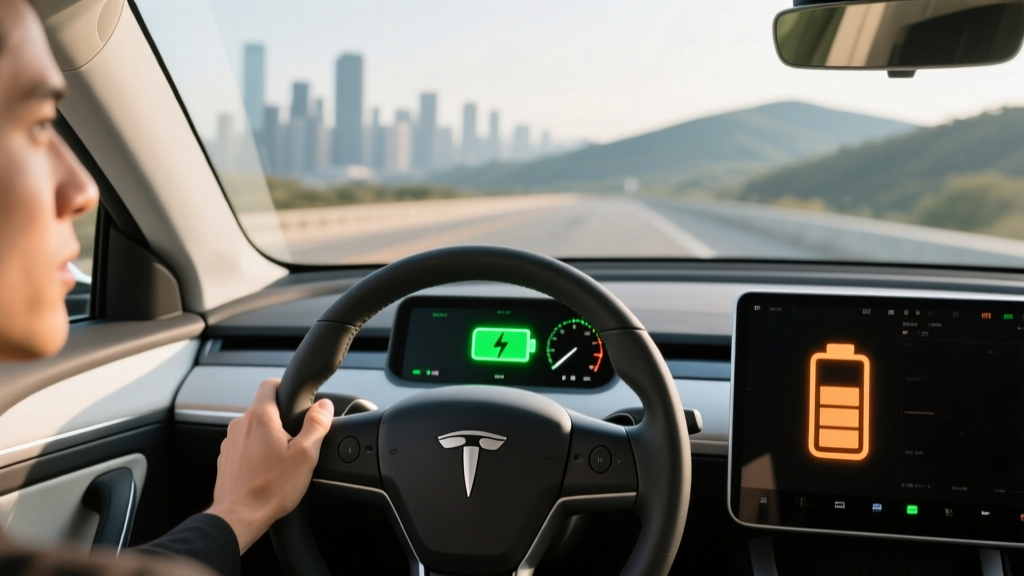
You're driving your EV and a battery sign on the dashboard illuminates — maybe it's a small battery icon with an exclamation mark, or a warning message about reduced power. Before your mind jumps to a $20,000 replacement bill, take a breath. In most cases, a battery-related dashboard warning in a modern electric vehicle is not a death sentence for your pack. It might indicate a sensor fault, a thermal management issue, a cell-imbalance flag, or — in some EVs — a 12V auxiliary battery alert that has nothing to do with your high-voltage traction battery.
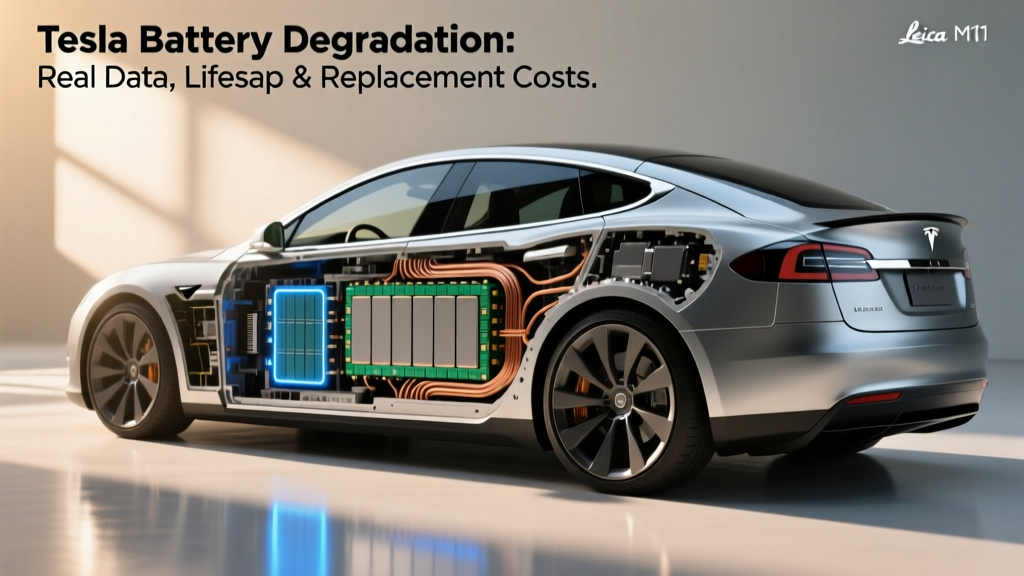
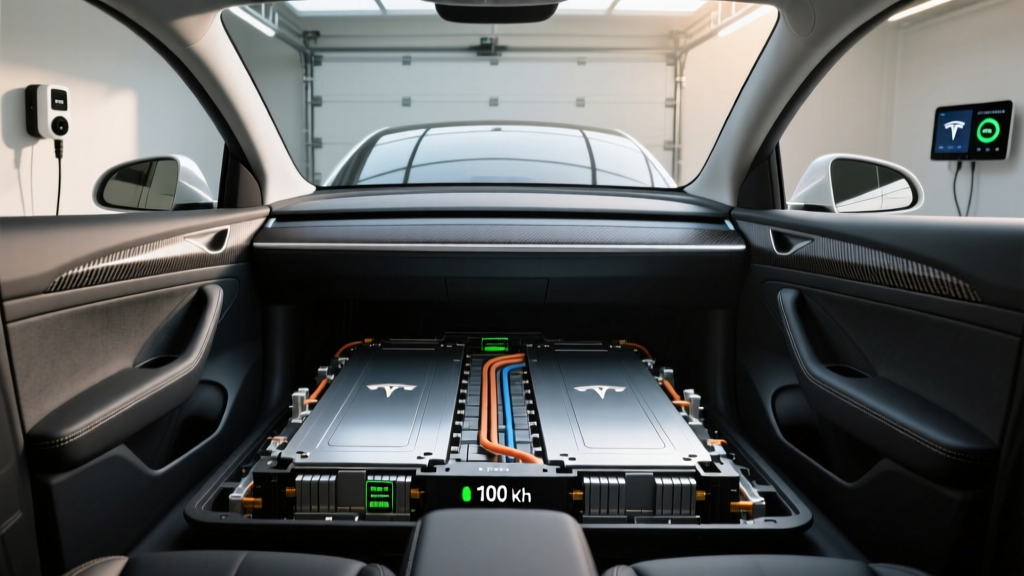
That said, understanding what your EV's battery system is actually telling you requires knowing how the pack works, what chemistry it uses, and what realistic degradation looks like over 100,000+ miles. This guide breaks down everything an EV owner or buyer needs to know about battery health, from the chemistry inside your pack to the real-world cost of a replacement — and how to maximize the life of the most expensive component in your car.
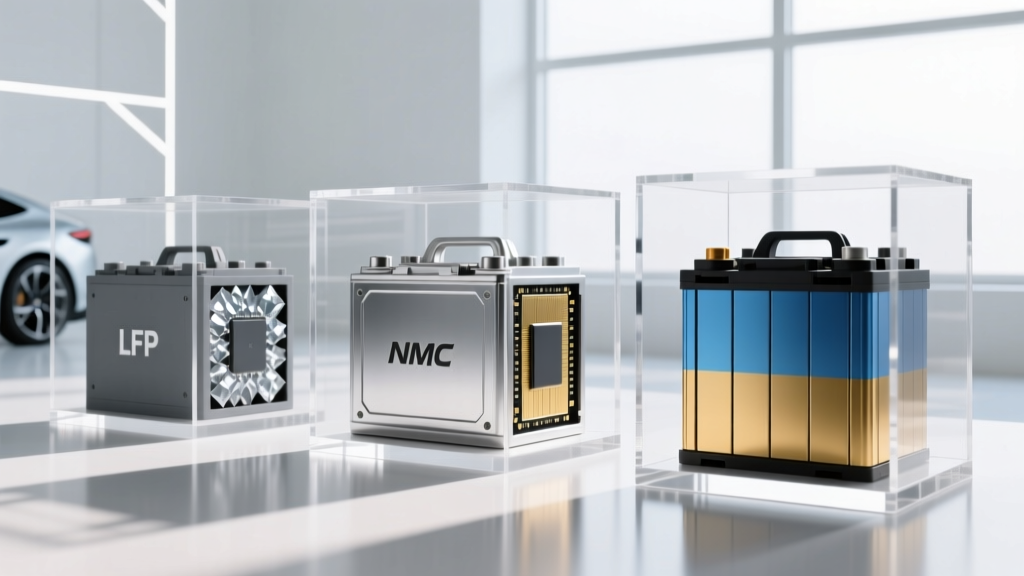
LFP vs NMC: The Chemistry Inside Your EV Battery
The two dominant lithium-ion chemistries in today's EVs are NMC (nickel manganese cobalt) and LFP (lithium iron phosphate). They behave differently in cold weather, degrade at different rates, and carry different cost profiles. Knowing which one is in your EV changes how you should charge and care for it.
| Attribute | NMC / NCA | LFP |
|---|---|---|
| Energy Density | Higher (~250–300 Wh/kg cell-level) | Lower (~160–200 Wh/kg cell-level) |
| Typical Cycle Life | 1,000–2,000 full cycles | 3,000–5,000+ full cycles |
| Cold-Weather Performance | Better conductivity at low temps | More range loss below freezing |
| Cost per kWh | Higher (cobalt/nickel supply chain) | Lower (iron/phosphate abundant) |
| Recommended Daily Charge Limit | 80% to reduce degradation | 100% OK — periodic full charge recommended for BMS calibration |
| Thermal Stability | Good, but more sensitive to heat | Excellent — lower risk of thermal runaway |
| Common In 2025–2026 Models | Tesla Model S/X, Hyundai Ioniq 5 (Long Range), Ford Mustang Mach-E Extended Range | Tesla Model 3/Y RWD, Ford Mustang Mach-E Select, BYD models, Rivian Standard |
Which is better? Neither is universally superior. NMC delivers more range in a smaller, lighter pack — ideal for performance trims and long-range variants. LFP offers dramatically longer cycle life and lower cost, making it the pragmatic choice for standard-range models and high-mileage drivers. Tesla's shift to LFP in Model 3/Y RWD trims reflects this trade-off: slightly less EPA range, but a pack that can tolerate daily 100% charging without accelerated wear.
How Long Do EV Batteries Actually Last?
The short answer: longer than most buyers assume. Data from fleet operators, manufacturer reports, and independent analyses consistently show that modern EV battery packs lose roughly 5–10% of their original capacity over the first 100,000 miles, then degradation slows significantly. Many packs reach 200,000 miles with 80–85% of original capacity still intact.
Typical Degradation Curve (NMC Pack, Moderate Use)
| Mileage | Capacity Retained (approx.) | Notes |
|---|---|---|
| 0–20,000 mi | 95–97% | Initial break-in loss; steepest early drop |
| 50,000 mi | 90–93% | Curve begins to flatten |
| 100,000 mi | 86–91% | Most packs still well above warranty threshold |
| 150,000 mi | 83–88% | Gradual linear decline |
| 200,000 mi | 80–85% | Approaching typical warranty floor (70%) |
Sources: Geotab fleet data analysis, Recurrent Auto battery health reports. Individual results vary based on climate, charging habits, and chemistry.
LFP packs tend to show even slower degradation in real-world data, with some fleet vehicles exceeding 200,000 miles at 90%+ retention. The key insight: the battery in a 2024–2026 EV is very likely to outlast the vehicle's useful economic life. Catastrophic, sudden failure is extremely rare — degradation is a slow, predictable process.
What Does the EV Battery Warranty Actually Cover?
Federal law mandates a minimum battery warranty of 8 years / 100,000 miles for EVs sold in the US, and most manufacturers meet or exceed this. The warranty covers capacity loss below a specified threshold — typically 70% of original capacity — as well as defects and premature failure. It does not cover damage from accidents, flooding, or unauthorized modifications.
| Manufacturer (2025–2026 Models) | Battery Warranty | Capacity Threshold |
|---|---|---|
| Tesla (Model 3/Y) | 8 yr / 100,000 mi (SR) or 120,000 mi (LR/Perf) | 70% retention |
| Hyundai / Kia (Ioniq 5, EV6, EV9) | 10 yr / 100,000 mi | 70% retention |
| Ford (Mach-E, F-150 Lightning) | 8 yr / 100,000 mi | 70% retention |
| Rivian (R1T, R1S) | 8 yr / 175,000 mi | 70% retention |
| GM (Equinox EV, Blazer EV, Silverado EV) | 8 yr / 100,000 mi | 70% retention |
| BMW (i4, iX, i7) | 8 yr / 100,000 mi | 70% retention |
A critical nuance: the warranty threshold is not a prediction of when your battery will fail. A pack at 69% capacity still functions — it simply has reduced range. For a vehicle with an original EPA rating of 310 miles, 70% retention means roughly 217 miles of range. That's still usable for most daily driving. Warranty claims for capacity loss below threshold are actually uncommon; most claims involve defective modules or BMS faults.
EV Battery Replacement Cost: The Real Numbers
This is the concern behind every battery sign on the dashboard. Here's what replacement actually costs in 2025–2026, and when — or whether — you'll need one.
| Vehicle / Pack Size | Battery Capacity | Replacement Cost (Parts + Labor) | Typical When Needed |
|---|---|---|---|
| Tesla Model 3 RWD (LFP) | ~60 kWh | $12,000–$16,000 | Rarely before 250,000+ mi |
| Tesla Model Y Long Range (NMC) | ~75 kWh | $14,000–$20,000 | Rarely before 200,000+ mi |
| Hyundai Ioniq 5 (77.4 kWh NMC) | 77.4 kWh | $14,000–$18,000 | Rarely before 200,000+ mi |
| Ford F-150 Lightning Extended Range | ~131 kWh | $25,000–$35,000 | Very rarely; large pack degrades slowly |
| Chevrolet Bolt EV/EUV (older gen) | 65 kWh | $14,000–$16,000 | Post-recall replacement packs are improved |
| Rivian R1T (Large Pack) | ~128 kWh | $22,000–$30,000 | Modular design may allow partial replacement |
Context matters: the average age of a scrapped vehicle in the US is roughly 20 years (S&P Global Mobility). Most EV batteries will never need replacement within the vehicle's normal lifespan. When replacement is required, it's usually due to a manufacturing defect (covered under warranty) or physical damage (covered by insurance), not end-of-life degradation.
What Factors Actually Degrade an EV Battery?
Battery degradation isn't random — it follows predictable patterns driven by chemistry and usage. Here are the primary factors and how much each one matters.
Battery Life Factors — Ranked by Impact
- Extreme heat exposure (high impact): Sustained ambient temperatures above 95°F / 35°C accelerate chemical degradation. Vehicles parked outdoors in Phoenix or Riyadh will degrade faster than those in Seattle. Active thermal management (liquid cooling) mitigates this significantly — Tesla, Hyundai, Ford, and Rivian all use liquid-cooled packs.
- High state-of-charge storage (high impact for NMC): Storing an NMC pack at 100% SoC for days or weeks accelerates degradation. LFP packs tolerate 100% storage much better. For NMC, the 20–80% daily window is the longevity sweet spot.
- Exclusive DC fast charging (moderate impact): Frequent use of 150+ kW DC fast charging generates heat and stresses cells. Occasional road-trip fast charging is fine; daily reliance on DCFC without Level 2 home charging will accelerate wear by an estimated 2–5% over 100,000 miles.
- Deep discharges to 0% (moderate impact): Regularly draining the pack to zero stresses the chemistry. Most EVs have a buffer (you see 0% on the dash, but ~2–5 kWh remains), but repeatedly hitting that floor is not ideal.
- Cold weather (low long-term impact): Cold reduces available range temporarily (20–40% loss at 20°F / -7°C depending on the pack and whether preconditioning is used), but does not cause permanent degradation. In fact, cold is generally better for long-term pack health than sustained heat.
How to Check Your EV's Battery Health (State of Health)
State of Health (SoH) is the percentage of original capacity your battery currently holds. Monitoring it is easier than most owners realize.
Built-In Vehicle Tools
Some EVs display SoH or battery health metrics directly in the infotainment system or mobile app. Hyundai and Kia include a battery health indicator in their EV menus. Tesla does not natively display SoH as a percentage, but you can estimate it by fully charging the vehicle (to 100% for LFP, or using the projected range at a known SoC for NMC) and comparing to the original EPA rating.
Third-Party Diagnostics
Services like Recurrent Auto offer free battery health reports that connect to your vehicle's telematics and track SoH over time. OBD-II dongles and apps like ABRP (A Better Routeplanner) and TeslaFi can log charge sessions and estimate degradation curves. For a definitive measurement, a dealer service center can run a full capacity test — essentially a controlled discharge that measures exactly how many kWh the pack holds.
The DIY Method
Charge your EV to a known state (e.g., 100% for LFP, or 90% for NMC) and note the projected range. Divide that by the original EPA range at the same SoC. For example, if your Ioniq 5 originally showed 303 miles at 100% and now shows 278 miles, your estimated SoH is approximately 92%. This isn't as precise as a lab test, but it's directionally accurate and free.
Decoding the Battery Sign on Your Dashboard
Not all battery-related warnings are equal. Here's what different indicators typically mean in modern EVs:
- Battery icon with exclamation mark (amber): Usually indicates a fault in the high-voltage system — could be a sensor, cooling loop, or cell-imbalance issue. The vehicle is typically still drivable but should be serviced soon.
- Battery icon (red) or "Stop Safely" message: Serious fault. Pull over safely. This may indicate a high-voltage isolation fault, coolant leak into the pack, or critical cell failure. Do not continue driving.
- "Reduced Power" or turtle icon: The BMS is limiting output, often due to extreme temperature (very cold or very hot pack) or a detected cell imbalance. Usually resolves after the pack reaches normal operating temperature or after a service visit.
- 12V battery warning: This is your auxiliary battery, not the traction pack. EVs still use a 12V battery for electronics, lights, and the computer that manages the high-voltage system. A 12V warning means that small battery is weak — typically a $150–$300 replacement, not a pack issue.
If you see any battery sign on the dashboard that persists after a restart, document it (screenshot the message, note the mileage and SoC) and contact your dealer or service center. Under warranty, diagnostics and any necessary repairs are covered.
Looking Ahead: Solid-State and Silicon Anode Batteries
The next generation of battery technology promises meaningful improvements, but timelines remain uncertain and production-scale availability is still years away.
Solid-state batteries replace the liquid electrolyte with a solid material, potentially offering 40–50% higher energy density, faster charging, and improved safety. Toyota has announced plans for a solid-state EV by 2027–2028, and Samsung SDI targets 2027 for mass production. However, manufacturing challenges — particularly around solid electrolyte cost and production yield — mean these timelines should be treated as preliminary. No solid-state EV is currently available for purchase.
Silicon anode technology is closer to market. Companies like Sila Nanotechnologies and Group14 Technologies are supplying silicon-dominant anode materials that increase energy density by 20–40% compared to graphite anodes. These are beginning to appear in limited production (the Mercedes G-Class 580e PHEV uses a silicon anode battery from Group14), and broader EV adoption is expected in the 2026–2028 timeframe.
For today's buyers: current lithium-ion technology — whether LFP or NMC — is mature, well-understood, and backed by robust warranties. Waiting for solid-state is not a practical strategy for anyone who needs a vehicle in the next 2–3 years.
Frequently Asked Questions
How long do EV batteries last in years and miles?
Most modern EV batteries are designed to last 15–20 years or 200,000+ miles before reaching 70–80% of original capacity. Fleet data from Geotab shows average degradation of approximately 2.3% per year across a broad sample of EVs. LFP packs tend to last even longer, with many exceeding 300,000 miles in commercial service.
How much does an EV battery cost to replace?
Replacement costs range from approximately $12,000 for a ~60 kWh pack (Tesla Model 3 RWD) to $35,000 for a ~131 kWh pack (F-150 Lightning Extended Range), including labor. However, most EV batteries never need replacement within the vehicle's normal lifespan. Defects are covered under the 8-year/100,000-mile federal minimum warranty, and physical damage is typically covered by insurance.
What does the battery warranty cover?
EV battery warranties cover capacity loss below a specified threshold (typically 70% of original capacity), manufacturing defects, and premature failure. They do not cover damage from accidents, environmental events, or unauthorized modifications. Warranty terms range from 8 years/100,000 miles (most manufacturers) to 10 years/100,000 miles (Hyundai/Kia) and 8 years/175,000 miles (Rivian).
How do I check and maximize my EV battery health?
Check SoH using your vehicle's built-in diagnostics, third-party services like Recurrent Auto, or by comparing your current full-charge range to the original EPA rating. To maximize health: avoid prolonged storage at 100% SoC (for NMC packs), minimize exclusive reliance on DC fast charging, use preconditioning in cold weather, and park in shade or a garage in hot climates when possible.
LFP vs NMC — which is better and why?
LFP offers longer cycle life (3,000–5,000+ cycles vs 1,000–2,000), lower cost, better thermal stability, and tolerance for daily 100% charging. NMC offers higher energy density (more range in a lighter pack) and better cold-weather performance. Neither is universally better — LFP is ideal for standard-range models and high-mileage drivers; NMC suits long-range and performance variants where maximizing miles per charge is the priority.
Is it safe to DC fast charge my EV regularly?
Occasional DC fast charging (road trips, a few times per month) has minimal impact on battery health. Daily exclusive reliance on 150+ kW DCFC can accelerate degradation by an estimated 2–5% over 100,000 miles compared to primarily Level 2 home charging. Modern BMS and thermal management systems mitigate much of the stress, but Level 2 remains the gentler option for routine use.