EV Battery Replacement Cost in 2026: The Real Numbers Behind the Headlines
The single biggest fear for prospective EV buyers isn't range or charging speed — it's the battery. Specifically, what happens when it degrades, and what an EV battery replacement cost in 2025-2026 actually looks like. Headlines love to quote $20,000+ replacement figures, but the reality is more nuanced: most EV batteries outlast the vehicles they power, warranty coverage is robust, and replacement prices have dropped significantly over the past five years.
This guide breaks down exactly what EV batteries cost to replace, how long they last based on real degradation data, what warranties cover, and how chemistry choices (LFP vs NMC) affect your long-term ownership experience. We'll also cover how to monitor and maximize battery health so replacement remains a theoretical concern rather than an imminent expense.
How Long Do EV Batteries Actually Last?
Modern lithium-ion EV batteries are engineered for longevity that exceeds most owners' expectations. Based on aggregated fleet data from manufacturers and third-party studies, here's what the degradation curve looks like in practice:
Typical EV Battery Degradation Timeline
- Year 1-2 (0-30,000 miles): 2-5% capacity loss. This initial drop is normal and represents the battery "settling" — the most rapid degradation phase.
- Year 3-5 (30,000-75,000 miles): Degradation slows to roughly 1-2% per year. Total loss typically 6-10%.
- Year 6-10 (75,000-150,000 miles): Continued gradual decline, averaging 1-1.5% per year. Total capacity retention typically 85-90%.
- Year 10+ (150,000+ miles): Batteries that reach this point usually retain 75-85% of original capacity. Many remain functional well beyond 200,000 miles.
Sources: Recurrent Auto fleet data (2024-2025), Tesla Impact Reports, Geotab fleet analysis of 6,300+ EVs.
Real-world data from Tesla's fleet shows that Model S/X batteries retain approximately 88% capacity at 150,000 miles, while Model 3/Y vehicles (particularly those with LFP chemistry) show even slower degradation curves. Hyundai and Kia's E-GMP platform batteries demonstrate similar longevity, with most Ioniq 5 and EV6 owners reporting 90%+ capacity retention at 50,000 miles.
The critical point: battery "failure" — where the pack becomes unusable — is extraordinarily rare in modern EVs. Degradation means reduced range, not a dead vehicle. A 2026 Model Y Long Range with an EPA-estimated 320 miles that degrades 12% over eight years still delivers roughly 282 miles of range — more than sufficient for daily driving and road trips.
LFP vs NMC Battery Chemistry: Which Lasts Longer?
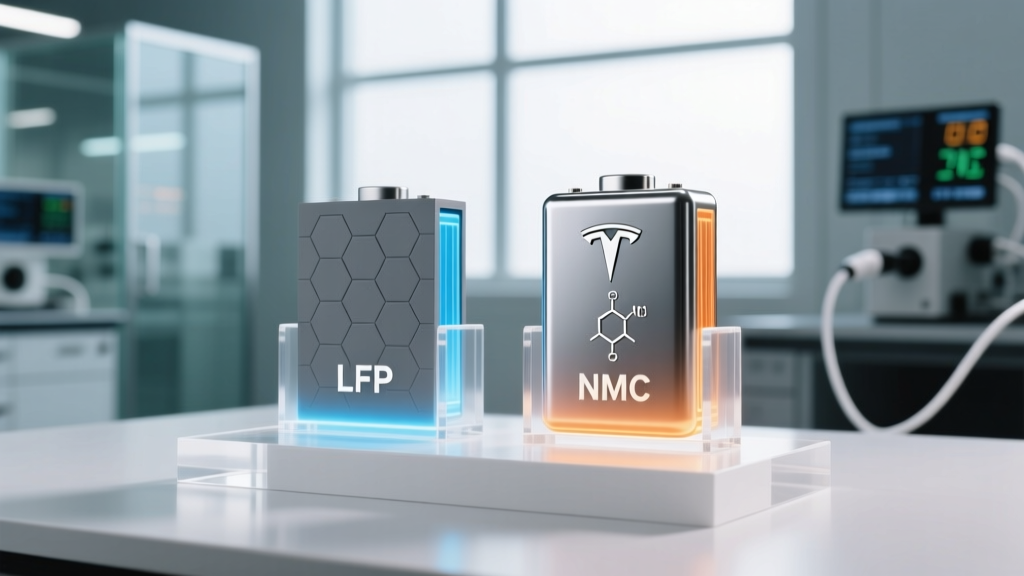
Battery chemistry is the single most important factor in long-term degradation and replacement likelihood. In 2026, the EV market is split primarily between two chemistries: Lithium Iron Phosphate (LFP) and Nickel Manganese Cobalt (NMC), with some manufacturers using Nickel Cobalt Aluminum (NCA).
| Attribute | LFP (Lithium Iron Phosphate) | NMC/NCA (Nickel-based) |
|---|---|---|
| Cycle Life | 3,000-5,000+ cycles | 1,000-2,000 cycles |
| Typical Degradation (150k mi) | 8-12% loss | 10-18% loss |
| Energy Density | Lower (~160 Wh/kg cell-level) | Higher (~250-300 Wh/kg cell-level) |
| Cold Weather Performance | More range loss in cold; slower cold-weather DC charging | Better cold-weather efficiency and charge acceptance |
| Optimal Daily SoC | Can charge to 100% daily without harm | Best kept at 80% daily; 100% for trips only |
| Cost (cell-level) | Lower ($80-100/kWh in 2026) | Higher ($110-140/kWh in 2026) |
| Common In (2026 Models) | Tesla Model 3/Y RWD, Ford Mustang Mach-E Select (base), BYD models | Tesla Long Range, Hyundai Ioniq 5/6, Kia EV6/EV9, Rivian, BMW iX |
Which is better for longevity? LFP wins on pure cycle life and degradation resistance. If your priority is minimizing the chance of ever needing a battery replacement, an LFP-equipped vehicle is the safer long-term bet. However, NMC's higher energy density means more range in a lighter, smaller package — a trade-off most long-range and performance-oriented models make. For owners in cold climates who frequently DC fast-charge, NMC's superior cold-weather charge acceptance is a practical advantage.
EV Battery Replacement Cost in 2025-2026: By Model and Pack Size
When replacement is necessary — typically due to physical damage, manufacturing defect outside warranty, or extreme degradation on high-mileage vehicles — cost varies dramatically based on battery size, chemistry, and manufacturer. Here's what the market looks like in 2026:
| Vehicle / Pack Size | Chemistry | Battery Capacity | Replacement Cost (Parts + Labor) |
|---|---|---|---|
| Tesla Model 3 RWD | LFP | ~60 kWh | $8,000 - $12,000 |
| Tesla Model Y Long Range | NMC | ~75 kWh | $12,000 - $16,000 |
| Hyundai Ioniq 5 | NMC | 77.4 kWh | $13,000 - $18,000 |
| Ford F-150 Lightning (Extended) | NMC | 131 kWh | $18,000 - $22,000+ |
| Chevrolet Equinox EV | NMC | ~85 kWh | $12,000 - $16,000 |
| Nissan LEAF (62 kWh) | NMC | 62 kWh | $6,500 - $9,000 |
| BMW iX xDrive50 | NMC | 111.5 kWh | $18,000 - $22,000 |
Important context on these figures: These are out-of-warranty replacement costs including parts and dealer labor. Third-party EV repair shops and refurbished/remanufactured packs can reduce costs by 20-40%. Additionally, module-level repair — replacing only degraded cells or modules within the pack rather than the entire assembly — is increasingly available for certain models and can bring costs down to $3,000-$7,000 in applicable cases.
Cell pricing has dropped from roughly $140/kWh in 2022 to approximately $80-110/kWh in 2026 depending on chemistry, driven by manufacturing scale and raw material cost stabilization. This trend continues to push replacement costs lower year over year.
What Does the EV Battery Warranty Actually Cover?
Federal law mandates a minimum 8-year/100,000-mile warranty on EV battery packs (with some states requiring 10 years/150,000 miles under CARB rules). Most manufacturers meet or exceed this baseline. Here's how major brands structure coverage in 2026:
| Manufacturer | Warranty Duration | Capacity Retention Threshold | Coverage Notes |
|---|---|---|---|
| Tesla | 8 yr / 120,000 mi (Model 3/Y); 8 yr / 150,000 mi (Model S/X) | 70% | Covers degradation below threshold + defects |
| Hyundai / Kia | 10 yr / 100,000 mi | 70% | Among the longest duration coverage |
| Ford | 8 yr / 100,000 mi | 70% | Covers Mustang Mach-E, F-150 Lightning |
| GM (Chevy/Cadillac) | 8 yr / 100,000 mi | 70% (60% on some Bolt-era packs) | Ultium platform vehicles included |
| BMW | 8 yr / 100,000 mi | 70% | Covers i4, iX, i7 |
| Rivian | 8 yr / 175,000 mi (R1T/R1S) | 70% | Higher mileage cap reflects truck use |
What triggers a warranty claim? If your battery's State of Health (SoH) drops below the stated threshold (typically 70% of original capacity) within the warranty period, the manufacturer will repair or replace the pack at no cost. This covers gradual degradation — not just sudden failure. However, damage from accidents, flooding, or unauthorized modifications is excluded.
Most EV batteries never breach the 70% threshold during warranty coverage. Based on the degradation data above, a battery would need to lose more than 30% of its capacity in 8 years — a rate far exceeding observed norms — to trigger warranty replacement.
Factors That Accelerate EV Battery Degradation
Not all miles are equal when it comes to battery wear. Several factors materially affect how quickly your pack degrades:
Battery Care Checklist: Maximize Your Pack's Life
- Limit DC fast charging to road trips. Frequent use of 150+ kW DC chargers accelerates degradation. For daily charging, Level 2 home charging (7-11 kW) is gentler on the battery. Occasional DC fast charging is fine — it's habitual daily use that adds wear.
- Avoid extreme State of Charge for storage. For NMC batteries, don't leave the vehicle parked at 100% or below 10% for extended periods (weeks). Aim for 50-80% if storing. LFP batteries are more tolerant and can be stored at 100%.
- Use scheduled charging and preconditioning. Most EVs allow you to schedule charging to finish just before departure. This avoids the battery sitting at high SoC overnight and ensures the pack is at optimal temperature for driving.
- Precondition before DC fast charging. Navigation-routed preconditioning (standard on Tesla, Hyundai, and others) warms the battery to the ideal temperature for fast charging, reducing stress on cells.
- Park in shade or a garage when possible. Sustained high battery temperatures (above 95°F ambient, particularly in desert climates) accelerate chemical degradation. Thermal management systems mitigate this but work harder in extreme heat.
- Don't obsess about shallow cycles. Modern BMS (Battery Management Systems) handle daily charging intelligently. The difference between charging to 80% vs 90% daily is marginal over typical ownership periods.
How to Check Your EV Battery's State of Health (SoH)
Monitoring battery health doesn't require a dealership visit. Several methods are available to owners:
1. In-vehicle diagnostics. Some manufacturers provide SoH readings directly. Tesla displays battery health percentage in the service menu (accessed via the touchscreen). Hyundai/Kia includes SoH data in the EV-specific settings on newer models.
2. OBD-II apps and tools. Third-party apps like LeafSpy (Nissan LEAF), Scan My Tesla, and Car Scanner ELM OBD2 can read detailed battery telemetry including SoH, individual cell voltages, and pack temperature. A basic OBD-II Bluetooth adapter ($25-$50) is all you need.
3. Range tracking over time. The simplest method: track your vehicle's displayed range at a consistent SoC (e.g., 100%) over months and years. If your Model Y showed 320 miles at 100% when new and now shows 290 miles at 100%, that's roughly 9.4% degradation. Apps like Recurrent and TeslaFi automate this tracking.
4. Dealer diagnostic reports. During service visits, request a battery health report. Dealerships can run full-capacity tests that provide a precise SoH percentage and flag any cell imbalance issues.
For used-EV buyers, always request a battery health report before purchase. A vehicle with 92% SoH at 40,000 miles is in excellent shape; one at 82% SoH at the same mileage may indicate abusive charging habits or a defective module.
What's Next: Solid-State and Silicon Anode Batteries
Next-generation battery technologies promise step-change improvements in energy density, charging speed, and longevity — but timelines remain the critical question.
Solid-state batteries replace the liquid electrolyte with a solid material, enabling lithium-metal anodes that could double energy density and enable 10-minute charging. Toyota has announced production intent for 2027-2028, while Samsung SDI targets 2027. However, manufacturing scale and cost remain significant hurdles. Expect solid-state batteries to appear first in premium vehicles at high price points, with mainstream adoption likely not before 2030.
Silicon anode batteries (used in limited form by companies like Sila Nanotechnologies and Group14) incrementally increase energy density by replacing graphite anodes with silicon-dominant composites. These are already appearing in some 2025-2026 models in partial form and offer 10-20% energy density improvement over conventional cells. They're a nearer-term, more practical upgrade than full solid-state.
Sodium-ion batteries are emerging as a low-cost alternative for entry-level and urban EVs. CATL and BYD have begun production, with energy density lower than LFP but cost advantages that could enable sub-$25,000 EVs. Expect these in smaller, shorter-range vehicles first.
For current buyers: none of these technologies should delay a purchase. Today's lithium-ion batteries (both LFP and NMC) are mature, reliable, and backed by warranties that cover the ownership period for virtually all drivers. Waiting for solid-state means waiting years for limited availability at premium pricing.
Frequently Asked Questions
How long do EV batteries last in years and miles?
Most modern EV batteries are designed to last 15-20 years or 150,000-200,000+ miles before degrading to a point where range becomes limiting (typically below 70-75% of original capacity). Real-world fleet data shows average degradation of 10-15% over 150,000 miles. Many first-generation Tesla Model S vehicles from 2012-2014 are still on their original packs at 200,000+ miles with 80%+ capacity retention.
How much does an EV battery cost to replace in 2026?
Out-of-warranty EV battery replacement costs in 2026 range from approximately $5,000-$9,000 for smaller packs (40-65 kWh) to $12,000-$22,000 for larger packs (75-131 kWh). Costs have declined roughly 30-40% since 2020 due to falling cell prices. Module-level repairs and refurbished packs can reduce costs further. Most owners never pay for a replacement — the battery outlasts the vehicle or is covered by warranty.
What does the EV battery warranty cover?
Federal law requires a minimum 8-year/100,000-mile battery warranty (10 years/150,000 miles in CARB states). Warranties cover both defects and degradation below a stated capacity threshold — typically 70% of original capacity. If your battery drops below this threshold within the warranty period, the manufacturer replaces or repairs it at no cost. Physical damage, unauthorized modifications, and improper use (such as repeated deep discharges to 0%) are excluded.
How do I check and maximize my EV battery health?
Check SoH via in-vehicle diagnostics (some models), OBD-II apps (LeafSpy, Scan My Tesla), or by tracking displayed range at 100% SoC over time. To maximize health: prioritize Level 2 home charging over frequent DC fast charging, avoid prolonged storage at 100% or 0% SoC (NMC), use preconditioning before fast charging, and park in shade or garages in hot climates. LFP batteries are more tolerant and can be charged to 100% daily without concern.
LFP vs NMC — which battery chemistry is better?
Neither is universally better; it depends on your priorities. LFP offers superior cycle life (3,000-5,000+ cycles vs 1,000-2,000 for NMC), lower cost, and tolerance for 100% daily charging — making it ideal for daily commuters who prioritize longevity. NMC offers higher energy density (more range in a lighter pack) and better cold-weather performance — making it the choice for long-range models and cold-climate drivers. For pure battery replacement risk minimization, LFP has the edge.
Can I upgrade my EV battery to a larger capacity later?
In most cases, no. Battery packs are engineered as integrated structural and electrical components specific to each vehicle platform. Unlike swapping a laptop battery, EV packs are not designed for consumer upgrades. Some manufacturers (notably Tesla in earlier years) offered capacity upgrades for specific models, but this is rare and costly. Buy the range you need at purchase.
Sources: fueleconomy.gov (EPA range data), Recurrent Auto degradation studies, manufacturer warranty documentation (Tesla, Hyundai, Ford, GM, BMW, Rivian), IRS.gov (EV tax credit rules). Replacement cost estimates based on 2025-2026 dealer and third-party repair data.