Why a 2012 Nissan Versa Battery Search Leads to an EV Reality Check
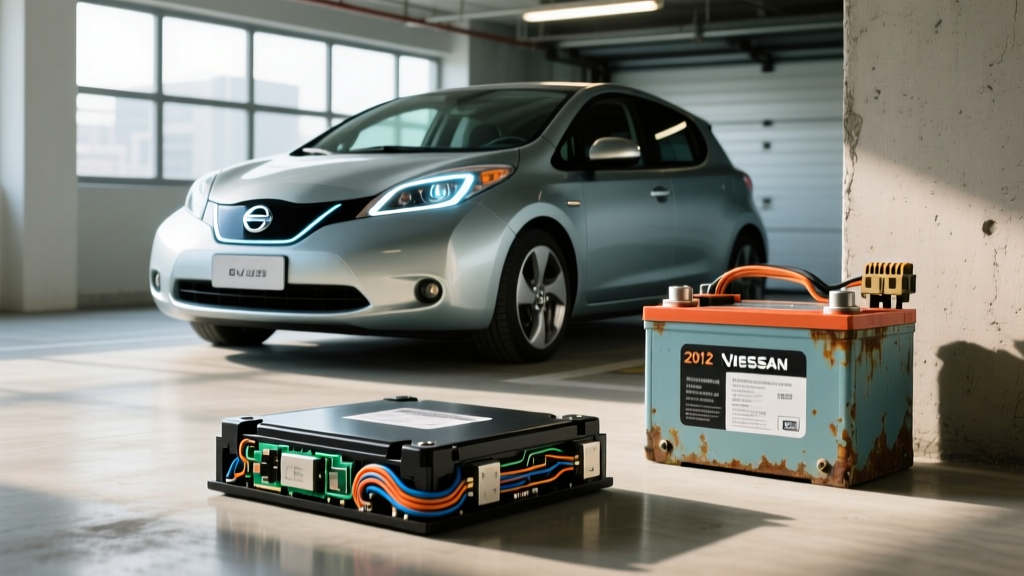
If you've searched for a 2012 Nissan Versa battery, you're likely dealing with a 12-volt lead-acid replacement — a $120–$180 purchase at any auto parts store, swap it in fifteen minutes, and you're rolling again. That simplicity is exactly what makes electric-vehicle battery ownership feel intimidating by comparison. The high-voltage traction battery in a modern EV is a 60–100+ kWh lithium-ion pack costing thousands to replace, wrapped in chemistry and software that most owners never fully understand.
But here's the data-driven reality that surprises most shoppers: modern EV traction batteries are outlasting the vehicles they power. According to long-term fleet data and manufacturer warranty claims, the average EV battery retains roughly 90% of its original capacity after 100,000 miles. The fear of a catastrophic $20,000 replacement bill at 60,000 miles is largely a myth — one that deserves a careful, number-by-number debunking.
This guide covers everything an EV buyer or owner needs to know about battery longevity, chemistry trade-offs, degradation data, warranty coverage, replacement costs, and the care habits that maximize lifespan. We'll also address why that 2012 Versa's 12V battery is a useful mental baseline — and where the comparison breaks down entirely.
LFP vs. NMC: The Chemistry Decision That Shapes Your Ownership
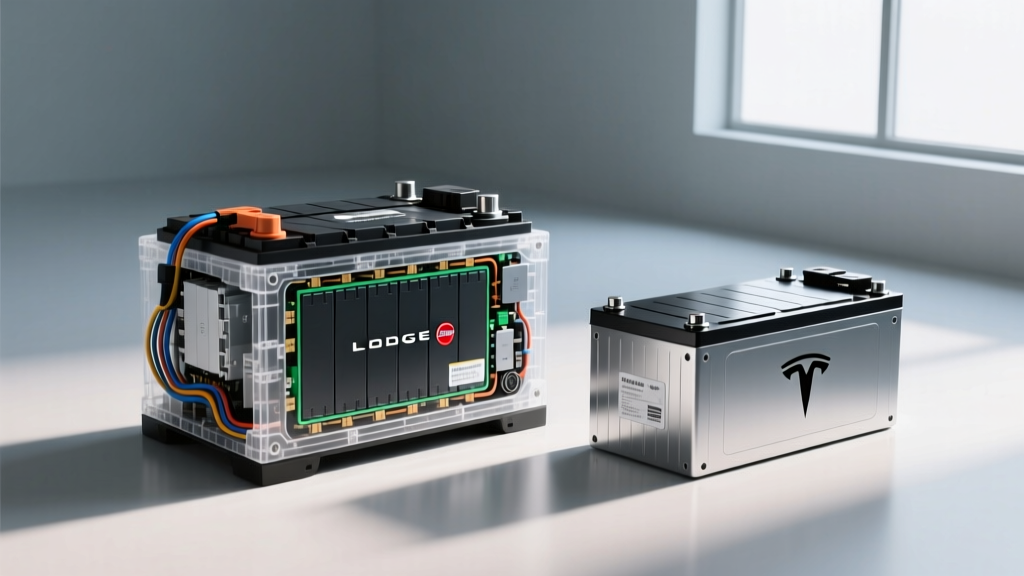
Not all lithium-ion batteries are the same. Two dominant chemistries power today's EVs, and the choice between them affects range, longevity, cold-weather performance, and price.
| Attribute | LFP (Lithium Iron Phosphate) | NMC / NCA (Nickel Manganese Cobalt / Nickel Cobalt Aluminum) |
|---|---|---|
| Energy Density | Lower (~160 Wh/kg cell-level) | Higher (~250–300 Wh/kg cell-level) |
| Typical EV Range | 200–270 mi (smaller packs) | 250–400+ mi (larger packs) |
| Cycle Life | 3,000–5,000+ cycles to 80% SoH | 1,000–2,000 cycles to 80% SoH |
| Cold-Weather Performance | Weaker — more range loss below 32°F | Better low-temp discharge and charge acceptance |
| Cost per kWh | Lower — no cobalt or nickel | Higher — commodity-sensitive materials |
| Charging to 100% Daily | Recommended — BMS needs full SoC for calibration | Not recommended — 80% daily limit extends life |
| Notable Applications | Tesla Model 3 RWD, Ford Mustang Mach-E Select (LFP option), BYD Blade | Tesla Model Y Long Range, Hyundai Ioniq 5, Rivian R1T, most long-range models |
The practical takeaway: If you prioritize maximum range and live in a cold climate, NMC/NCA is the stronger choice. If you plan to keep the vehicle 10+ years, drive moderate daily distances, and want lower upfront cost, LFP's superior cycle life is compelling. Tesla's standard-range Model 3 uses LFP specifically because the chemistry tolerates daily 100% charging without accelerated degradation — a significant ownership simplification.
How Long Do EV Batteries Actually Last? The Degradation Data
Battery degradation follows a predictable curve: a steeper initial drop in the first year or two (typically 2–5%), then a long, slow linear decline. Here's what real-world data shows across major platforms:
| Vehicle / Platform | Battery Size | Capacity at 50k mi | Capacity at 100k mi | Capacity at 150k mi | Source |
|---|---|---|---|---|---|
| Tesla Model 3/Y (NMC) | 75–82 kWh | ~95% | ~90% | ~85–88% | Tesla Impact Report 2024, Recurrent Auto |
| Nissan Leaf (24–62 kWh) | Various | ~90–93% | ~82–88% | ~75–82% | Recurrent Auto fleet data |
| Chevrolet Bolt EV/EUV | 60–65 kWh | ~95% | ~91–93% | ~87–90% | GM warranty data, owner forums |
| Hyundai Ioniq 5 | 77.4 kWh | ~96% | ~92% | ~88% (projected) | Hyundai/Recurrent early fleet data |
| Ford Mustang Mach-E (ext. range) | 91 kWh | ~94% | ~89–91% | ~85–88% (projected) | Ford fleet reports |
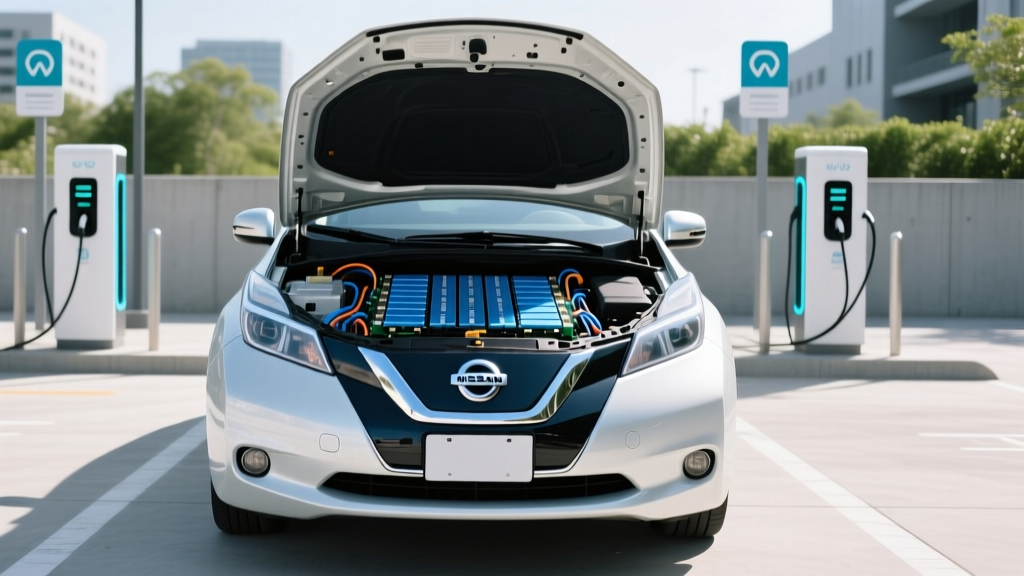
The Nissan Leaf deserves specific attention here because early models (2011–2017) used passive air-cooled battery packs, making them far more susceptible to heat-driven degradation — especially in hot climates with frequent DC fast charging. Modern EVs from Tesla, Hyundai, Ford, GM, and others use active liquid thermal management, which dramatically slows degradation. This is one of the most important generational improvements in EV battery durability.
How long do EV batteries last in years and miles? Based on current data, most liquid-cooled EV batteries will retain 70–80% capacity at 200,000 miles — well beyond the point where most vehicles are scrapped for other reasons (suspension, electronics, body damage). A battery "failure" requiring full replacement before 150,000 miles is statistically rare outside of manufacturing defects covered under warranty.
What Does the Battery Warranty Cover? Manufacturer Terms Compared
Federal law mandates a minimum 8-year/100,000-mile warranty on EV battery packs for emissions-related compliance, and every major automaker meets or exceeds this threshold. Here's how the leading warranties stack up:
| Manufacturer | Warranty Period | Capacity Retention Threshold | Notes |
|---|---|---|---|
| Tesla | 8 yr / 120,000 mi (Model 3/Y LR); 8 yr / 100,000 mi (RWD) | 70% | Covers defects and degradation below threshold |
| Hyundai / Kia | 10 yr / 100,000 mi | 70% | Among the longest coverage periods |
| Ford | 8 yr / 100,000 mi | 70% | Covers battery components and capacity loss |
| GM (Chevrolet, Cadillac) | 8 yr / 100,000 mi | 70% (some Ultium models: 60% stated) | Verify specific model-year terms |
| Nissan (Leaf) | 8 yr / 100,000 mi | 66.25% (9 bars of 12 on capacity gauge) | Threshold is lower than competitors |
| Rivian | 8 yr / 175,000 mi (R1T/R1S) | 70% | Higher mileage cap reflects truck use case |
| Volkswagen (ID.4) | 8 yr / 100,000 mi | 70% | Standard coverage |
Critical nuance: These warranties cover capacity loss below the stated threshold. If your battery degrades from 100% to 72% over eight years, you have no claim — the battery is functioning within warranty expectations. The warranty is a floor, not a guarantee of minimal degradation. Also, warranties typically exclude damage from accidents, flooding, or improper modifications, but do cover manufacturing defects and abnormal degradation under normal use.
EV Battery Replacement Cost: What It Actually Takes
This is where the comparison to a 2012 Nissan Versa battery replacement is starkest. A 12V lead-acill battery for that Versa costs roughly $130–$180 installed. An EV traction battery replacement is a fundamentally different proposition — but also one that most owners will never face.
| Vehicle | Battery Size | Estimated Replacement Cost (Parts + Labor) | Typical Replacement Timeline |
|---|---|---|---|
| Nissan Leaf (40 kWh) | 40 kWh | $6,500–$9,000 | Rarely needed before 150k+ mi; early Leafs may need sooner if air-cooled |
| Chevrolet Bolt EV | 65 kWh | $9,000–$14,000 (pre-recall); post-recall packs replaced under warranty | Most addressed by 2022–2023 recall campaign |
| Tesla Model 3 | 50–82 kWh | $12,000–$16,000 | Extremely rare under 150k mi; Tesla offers refurbished packs at lower cost |
| Ford Mustang Mach-E | 70–91 kWh | $12,000–$18,000 | No widespread replacement trend; covered under warranty |
| Hyundai Ioniq 5 | 58–77.4 kWh | $10,000–$15,000 | Too new for replacement data; 10-year warranty provides coverage |
| Large trucks (Rivian R1T, F-150 Lightning) | 100–135 kWh | $18,000–$30,000+ | Larger packs = higher cost; no mass replacement trend yet |
Context that matters: According to Recurrent Auto's fleet analysis, fewer than 5% of EVs in their 15,000-vehicle study dataset required battery replacement outside of warranty-covered recalls. The vast majority of EV batteries outlive the vehicle's economic lifespan. When replacements do occur, they're typically covered by the 8–10 year warranty. Out-of-pocket replacement is a real cost to budget for on a 12+ year-old EV, but it's not the looming crisis that headlines suggest.
Five Factors That Determine How Fast Your Battery Degrades
Not all miles are equal when it comes to battery wear. These five factors have the most measurable impact on long-term State of Health (SoH):
- DC Fast Charging Frequency: Occasional fast charging (1–2 times per week) has minimal impact. Daily reliance on 150+ kW DC fast charging accelerates degradation by an estimated 1–3% over 100,000 miles compared to primarily Level 2 home charging. The heat generated during high-C-rate charging stresses cell chemistry. Tesla's own data shows vehicles that Supercharge frequently vs. rarely show a ~2–3 percentage-point difference in capacity retention at 100k miles.
- Extreme Temperature Exposure: Sustained operation in ambient temperatures above 95°F or below 10°F accelerates degradation. Vehicles in Phoenix, AZ show slightly faster degradation than those in San Francisco. Liquid-cooled packs mitigate this substantially, but parking in shade or a garage in extreme heat is a measurable benefit. Cold weather primarily affects range (not permanent degradation) unless you're charging at high power on a frozen pack without preconditioning.
- State of Charge Habits: For NMC/NCA batteries, routinely charging to 100% and letting the battery sit at full SoC for days accelerates calendar aging. The optimal daily range is 20–80% SoC. LFP batteries are an exception — manufacturers like Tesla recommend regular 100% charges for LFP to keep the BMS calibrated. Never let any EV sit at 0% SoC for extended periods.
- Depth of Discharge Patterns: Shallow cycles (using 20–30% of capacity daily and recharging) are gentler than deep cycles (draining from 90% to 10% regularly). If your daily commute uses only 25% of your battery, you're in an ideal usage pattern.
- Storage Conditions: If you leave your EV for weeks (airport parking, seasonal use), store it at roughly 50% SoC in a temperate environment. Storing at 100% or near 0% for weeks causes measurable calendar degradation.
Monitoring Your Battery's State of Health
Modern EVs provide varying levels of battery health transparency. Here's how to check SoH across major platforms:
Tesla: The in-car display does not show a direct SoH percentage. However, you can estimate it by charging to 100% and comparing the displayed range to the original EPA rating. Third-party tools like TeslaFi or Tessie pull detailed battery data from the vehicle's API, including nominal full-pack energy (kWh), which provides an accurate SoH calculation. Tesla service centers can also run a battery health test on request.
Hyundai/Kia: The E-GMP platform (Ioniq 5, Ioniq 6, EV6, EV9) includes a battery health indicator in the infotainment system under EV settings, showing a percentage. This is one of the more transparent OEM implementations.
Nissan Leaf: The Leaf uses a 12-bar capacity gauge on the dashboard. Each bar represents roughly 8.3% of original capacity. Losing bars indicates degradation — a Leaf showing 10 of 12 bars has approximately 83% SoH. This is a coarse but effective visual indicator.
OBD-II and Third-Party Tools: For vehicles without built-in SoH displays, OBD-II readers like the OBDLink SX paired with apps such as Leaf Spy (Nissan), Car Scanner, or ABRP (A Better Route Planner) can read battery management system data directly, including pack voltage, cell imbalance, and estimated capacity.
Recurrent Auto and Fleet Services: Companies like Recurrent Auto offer free battery health reports for enrolled vehicles, comparing your degradation curve against a fleet of identical models. This is one of the most data-rich ways to understand your battery's trajectory.
Emerging Battery Technology: What's Next and When
The battery landscape is evolving rapidly, but separating announced breakthroughs from production reality is essential for buyers making decisions today.
Solid-State Batteries: These replace the liquid electrolyte with a solid material, promising higher energy density (potentially 400+ Wh/kg), faster charging, and improved safety. Toyota, Samsung SDI, and QuantumScape are leading development. Toyota has announced a 2027–2028 production timeline for vehicles with solid-state packs, initially in limited, premium models. Samsung SDI targets 2027 for mass production. These are not available in any production vehicle as of 2026. Expect solid-state to reach mainstream, affordable EVs no earlier than 2030–2032.
Silicon Anode Technology: Companies like Sila Nanotechnologies and Group14 are replacing graphite anodes with silicon-dominant materials, boosting energy density by 20–40%. Mercedes-Benz's G-Class EV (2025+) uses silicon anode cells from Sila. This technology is production-ready now and will appear in increasing numbers of high-performance and premium EVs through 2026–2028.
Sodium-Ion Batteries: CATL and BYD are producing sodium-ion packs that eliminate lithium entirely, reducing cost and supply-chain risk. Energy density is lower (~140 Wh/kg), making them suited for budget city EVs and stationary storage. Expect sodium-ion in affordable Chinese-market EVs first, with potential US-market applications in fleet and budget segments by 2028–2030.
LFP Improvements: LFP chemistry continues to gain energy density through cell-to-pack and cell-to-chassis integration (BYD Blade, CATL Shenxing). The 2026 CATL Shenxing LFP pack supports 4C charging (10–80% in ~10 minutes) with improved cold performance, narrowing the gap with NMC on the metrics where LFP traditionally lagged.
The practical advice for today's buyer: don't wait for solid-state. Current lithium-ion technology, properly cared for, will deliver 150,000–200,000+ miles of reliable service. The vehicles on sale today are not transitional compromises — they're mature products with proven battery durability.
Frequently Asked Questions
How long do EV batteries last in years and miles?
Most liquid-cooled EV batteries retain 80–90% of original capacity at 100,000 miles and 70–80% at 200,000 miles. In calendar years, expect 12–20 years of usable service before capacity drops below 70%. Real-world fleet data from Recurrent Auto and manufacturer impact reports consistently support these figures. The battery will likely outlast the vehicle's body, suspension, and electronics.
How much does an EV battery cost to replace?
Out-of-warranty replacement costs range from approximately $6,500 for a 40 kWh Nissan Leaf pack to $30,000+ for a 135 kWh Rivian R1T pack. Most replacements fall in the $10,000–$18,000 range for mainstream models. However, fewer than 5% of EVs require out-of-warranty battery replacement — most are covered under the 8–10 year manufacturer warranty. For comparison, replacing a 2012 Nissan Versa's 12V battery costs $130–$180, but that battery also needs replacement every 3–5 years.
What does the EV battery warranty actually cover?
Manufacturer warranties cover battery defects and capacity loss below a stated threshold (typically 70% of original capacity) for 8 years/100,000 miles (Hyundai/Kia: 10 years/100,000 miles). The warranty does not cover normal degradation above the threshold, accident damage, or improper modifications. If your battery falls below the guaranteed capacity within the warranty period, the manufacturer will repair or replace it at no cost.
How do I check and maximize my EV battery health?
Check SoH through your vehicle's built-in display (Hyundai, Nissan), by comparing 100% charge range to the EPA original rating, or via third-party OBD-II tools and services like TeslaFi, Leaf Spy, or Recurrent Auto. Maximize longevity by: using Level 2 home charging as your primary method, limiting DC fast charging to road trips, keeping NMC batteries between 20–80% SoC daily (LFP batteries should be charged to 100% regularly for BMS calibration), avoiding prolonged storage at extreme SoC levels, and preconditioning the battery before fast charging in cold weather.
LFP vs NMC — which battery chemistry is better?
Neither is universally better; they serve different use cases. NMC/NCA offers higher energy density (more range in a lighter pack) and better cold-weather performance, making it ideal for long-range vehicles and cold climates. LFP offers 2–3x the cycle life, lower cost, and tolerance for daily 100% charging, making it ideal for standard-range vehicles, high-mileage drivers, and owners who plan to keep their EV 10+ years. If you drive less than 200 miles daily and live in a moderate climate, LFP is the more durable and economical choice. If you need 300+ miles of range or regularly drive in sub-freezing temperatures, NMC/NCA is the stronger option.
Is the 2012 Nissan Versa battery the same as an EV battery?
No. The 2012 Nissan Versa uses a conventional 12-volt lead-acid battery (Group 35 or 26R, ~$130–$180) to start its internal combustion engine and power accessories. An EV's high-voltage traction battery (40–135 kWh, $6,500–$30,000+) is a lithium-ion pack that powers the electric motor. However, EVs also have a separate 12V auxiliary battery (often lithium-ion in newer models) for accessories and vehicle computers — and that 12V battery can fail just like the one in a Versa, typically requiring replacement every 4–6 years at a cost of $200–$500.