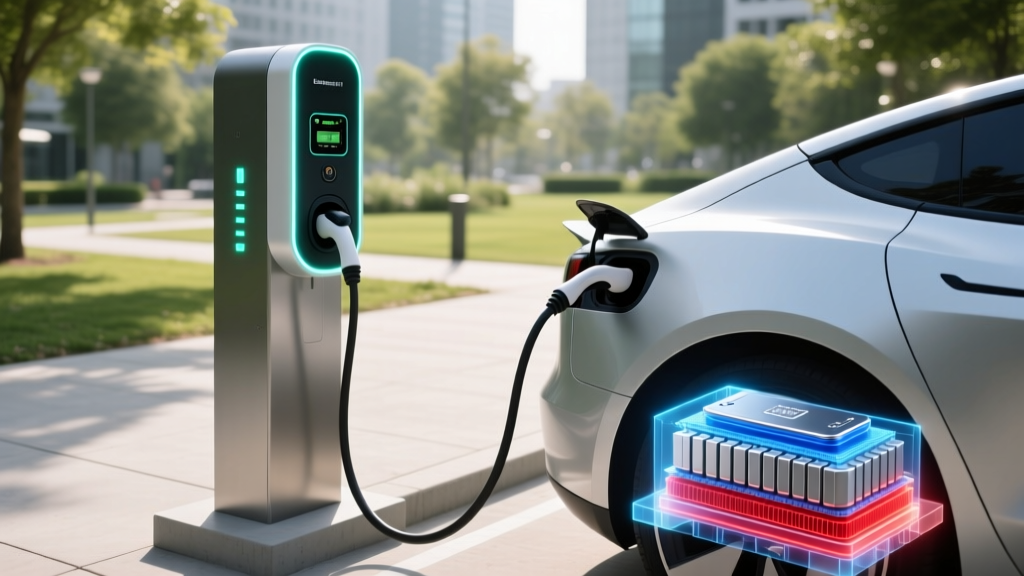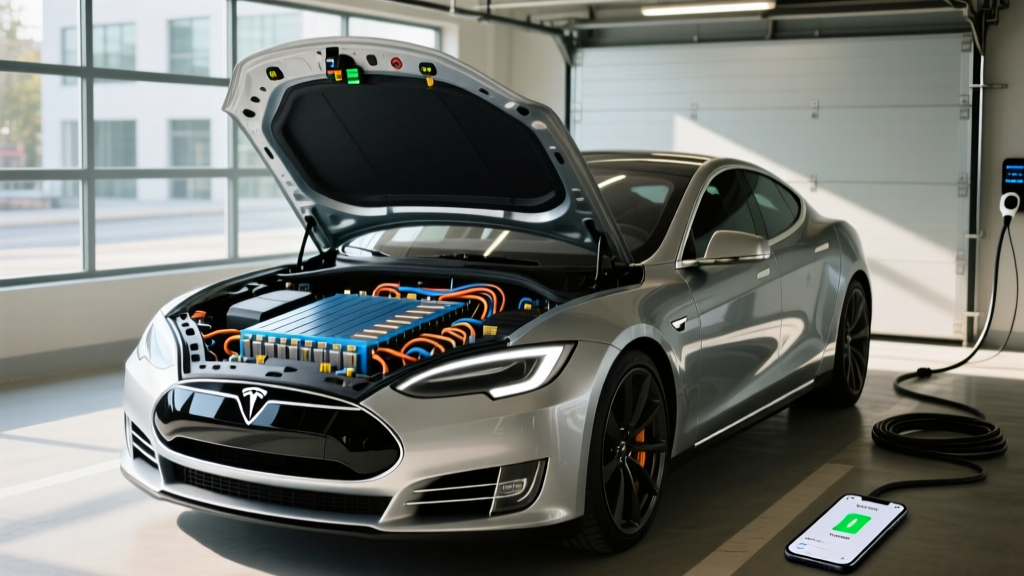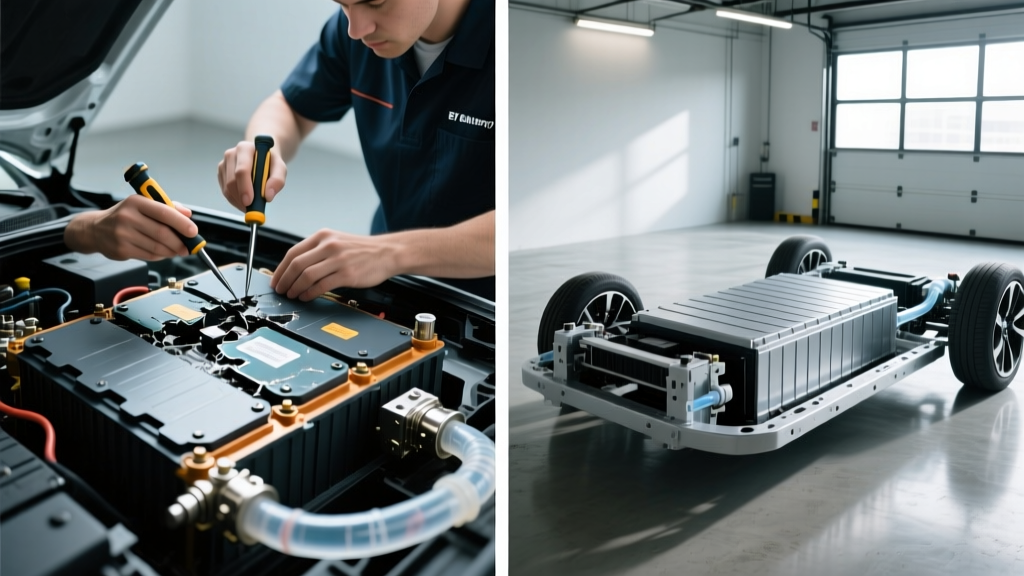
If you've searched for a "battery repair charger" hoping to revive a degraded electric vehicle battery, you've likely found a confusing mix of 12V desulfators, cell-balancing tools, and marketing claims that don't apply to high-voltage EV traction packs. The reality is more nuanced — and more encouraging — than those search results suggest.
Modern EV batteries are engineered to outlast the vehicles they power. But understanding what actually affects longevity, what your warranty covers, and when a repair versus a full replacement makes sense is essential for any current or prospective EV owner. This guide covers the chemistry, the data, and the practical decisions you'll face over the life of your battery.
How Long Do EV Batteries Actually Last?
The short answer: far longer than most buyers assume. Data aggregated from fleet operators, manufacturer reports, and owner communities shows that the average EV battery loses roughly 5–10% of its original capacity over the first 100,000 miles, with degradation slowing significantly after the initial break-in period.
Typical Degradation Curve (NMC Chemistry)
| Mileage | Avg. Capacity Retained | Typical Range Loss (from 300-mi EPA) |
|---|---|---|
| 25,000 mi | 95–97% | 9–15 mi |
| 50,000 mi | 92–95% | 15–24 mi |
| 100,000 mi | 88–93% | 21–36 mi |
| 150,000 mi | 85–90% | 30–45 mi |
| 200,000 mi | 80–88% | 36–60 mi |
Sources: Geotab fleet data, manufacturer warranty thresholds. LFP packs typically show slower degradation but start with slightly lower energy density.
Tesla's own impact report has stated that Model 3/Y batteries retain approximately 85% capacity after 200,000 miles. Hyundai, Kia, and Ford warranty their packs to retain at least 70% capacity over 8 years or 100,000 miles — a conservative floor that most packs exceed by a wide margin.
The key insight: catastrophic battery failure is rare. Gradual capacity loss is the norm, and it rarely renders the vehicle unusable. Most EVs sold in 2020 still have functional, albeit slightly reduced-range, batteries in 2026.
LFP vs. NMC: Which Battery Chemistry Is Right for You?
The two dominant lithium-ion chemistries in today's EVs are NMC (Nickel Manganese Cobalt) and LFP (Lithium Iron Phosphate). Each has distinct trade-offs that affect range, longevity, cost, and daily usability.
| Factor | NMC / NCA | LFP |
|---|---|---|
| Energy Density | Higher (~250 Wh/kg cell-level) | Lower (~170 Wh/kg cell-level) |
| Typical Vehicles | Tesla Model 3 LR, Hyundai Ioniq 5, Ford Mustang Mach-E ER | Tesla Model 3 RWD, standard-range BYD models, some Ford F-150 Lightning trims |
| Cycle Life | 1,000–2,000 full cycles | 3,000–5,000+ full cycles |
| Cold-Weather Performance | Better low-temp conductivity | More range loss in freezing temps (~25–35% vs ~20–25% for NMC) |
| Optimal Daily SoC | 80% recommended for daily use | 100% charging is fine — BMS designed for it |
| Cost (per kWh) | Higher (~$110–130/kWh pack-level) | Lower (~$80–100/kWh pack-level) |
| Thermal Stability | Good, but more prone to thermal runaway | Excellent — inherently safer chemistry |
| Cobalt Content | Yes (supply-chain concern) | None |
The practical takeaway: If you prioritize maximum range in a smaller package and live in a cold climate, NMC is the stronger choice. If you want a battery that can be charged to 100% daily without worry, plan to keep the car 10+ years, or want a lower upfront price, LFP is increasingly compelling. Many 2026 model-year vehicles now offer LFP in standard-range trims — check the spec sheet before purchasing, as chemistry varies by trim and model year.
What Does the EV Battery Warranty Actually Cover?
Federal law mandates that EV batteries carry a minimum warranty of 8 years or 100,000 miles (10 years/150,000 miles in CARB states like California, New York, and others). But the details matter.
| Manufacturer | Warranty Period | Capacity Threshold | Notes |
|---|---|---|---|
| Tesla | 8 yr / 120,000 mi (Model 3/Y LR) | 70% retention | 100,000 mi for RWD/LFP trims |
| Hyundai / Kia | 10 yr / 100,000 mi | 70% retention | Among the longest coverage periods |
| Ford | 8 yr / 100,000 mi | 70% retention | Covers Mustang Mach-E, F-150 Lightning |
| GM (Chevrolet/Cadillac) | 8 yr / 100,000 mi | 70% retention (60% for Bolt) | Ultium platform vehicles |
| Rivian | 8 yr / 175,000 mi | 70% retention | Higher mileage cap for R1T/R1S |
| BMW | 8 yr / 100,000 mi | 70% retention | Covers i4, iX, i7 |
What's covered: Capacity loss below the stated threshold, manufacturing defects, and cell/module failures. Most warranties also cover the battery management system (BMS) and associated cooling hardware.
What's typically excluded: Damage from accidents, flooding, unauthorized modifications, or use outside normal operating parameters. Cosmetic issues and minor range reduction above the threshold are not covered.
If your battery drops below the warranty threshold — say, a 300-mile EPA vehicle now showing under 210 miles of range at full charge — the manufacturer is obligated to repair or replace the pack at no cost. In practice, most warranty claims result in module-level replacement rather than a full pack swap.
EV Battery Replacement Costs: What to Expect
Out-of-warranty battery replacement is the scenario that fuels the most anxiety. Here's what the numbers actually look like in 2026:
| Vehicle | Battery Size | Chemistry | Estimated Replacement Cost |
|---|---|---|---|
| Tesla Model 3 (LFP RWD) | ~60 kWh | LFP | $8,000–$12,000 |
| Tesla Model Y Long Range | ~75 kWh | NMC | $12,000–$16,000 |
| Hyundai Ioniq 5 | 77.4 kWh | NMC | $11,000–$15,000 |
| Ford Mustang Mach-E ER | 91 kWh | NMC | $14,000–$18,000 |
| Ford F-150 Lightning ER | 131 kWh | NMC | $18,000–$25,000 |
| Chevrolet Equinox EV | ~85 kWh | NMC (Ultium) | $12,000–$16,000 |
Costs include parts and labor at authorized service centers. Third-party and refurbished pack options are emerging but remain limited. Source: manufacturer service bulletins, Recurrent Auto.
When is replacement actually needed? Rarely before 150,000–200,000 miles for gradual degradation. Catastrophic failure (a dead cell group, coolant intrusion, or physical damage) can happen at any mileage but is uncommon. The vast majority of EVs are retired or sold before their battery requires full replacement.
Can a Battery Repair Charger Fix an EV Battery?
This is where the search term "battery repair charger" needs honest context. The products marketed under this name — pulse desulfators, smart trickle chargers, and "battery repair" devices — are designed for 12V lead-acid batteries, the kind found in conventional cars and as auxiliary batteries in EVs.
Your EV's high-voltage traction battery (the 60–130 kWh lithium-ion pack that powers the motor) is an entirely different system. It cannot be "repaired" by a plug-in charger. Here's what actually happens when a traction battery has issues:
- Cell imbalance: The onboard Battery Management System (BMS) handles cell balancing automatically. If imbalance persists, a technician with manufacturer software can perform a forced top-balance cycle.
- Module failure: Individual modules can be diagnosed and replaced without swapping the entire pack. This requires a high-voltage-certified technician and manufacturer diagnostic tools.
- Coolant system issues: Battery thermal management problems (leaks, pump failures) are mechanical repairs, not electrical ones.
- BMS faults: Software updates or BMS hardware replacement, handled at a service center.
Bottom line: no consumer-grade device can repair a degraded EV traction battery. The 12V auxiliary battery in your EV can be maintained with a standard smart charger or battery tender — and replacing the 12V battery ($150–$300) is a routine maintenance item every 3–5 years, just like in a gas car.
Factors That Affect EV Battery Life — and How to Maximize It
While modern batteries are remarkably durable, your habits do influence the rate of degradation. Here's what the data shows:
Battery Longevity Best Practices
- Daily charging limit: Set to 80% for NMC packs. LFP packs can be charged to 100% regularly — the manufacturer BMS is calibrated for this.
- Avoid prolonged storage at extremes: Don't leave the car at 100% or below 10% SoC for weeks. If storing, aim for 50–60%.
- DC fast charging: Occasional use is fine. Daily DCFC (especially at 250+ kW) accelerates degradation by ~1–2% over the pack's life compared to Level 2 charging. Preconditioning before fast-charging (most EVs do this automatically when you navigate to a charger) significantly reduces stress.
- Temperature extremes: Park in shade or a garage when possible. Battery thermal management systems protect the pack, but extreme heat (sustained 100°F+) and cold (below 0°F) still accelerate wear marginally.
- Regenerative braking settings: Standard regen is fine for the battery. There's no evidence that aggressive regen harms battery health.
- Software updates: Keep your vehicle updated. Manufacturers regularly refine BMS algorithms to improve longevity.
One often-overlooked factor: calendar aging. Even a garage-kept EV with low mileage will lose some capacity over time simply due to chemical processes. Expect roughly 1–2% loss per year regardless of mileage, on top of cycle-based degradation.
How to Check Your EV Battery Health (State of Health)
State of Health (SoH) is the metric that tells you how much of your battery's original capacity remains. Here's how to monitor it:
In-Vehicle Displays
Some manufacturers provide a battery health indicator directly in the infotainment system or app. Tesla shows estimated range at full charge (compare to original EPA rating). Hyundai and Kia display a battery health percentage in the EV menu on newer models. Nissan Leaf's dash shows a bar-based capacity indicator (12 bars when new).
OBD-II Diagnostic Tools
Third-party OBD-II readers paired with apps like LeafSpy (Nissan), Scan My Tesla, or Car Scanner can read the BMS-reported SoH percentage, cell voltages, and pack temperature. These tools cost $30–$80 and provide the most granular data available to owners.
Dealer or Service Center Diagnostic
Any authorized service center can run a full battery health report. This is useful if you're buying a used EV and want documented proof of SoH. Request a printout showing capacity retention percentage and any flagged cell imbalances.
The Range-Comparison Method
The simplest approach: charge to 100% (or your normal limit), note the displayed range, and compare to the original EPA figure. If your 300-mile EPA vehicle consistently shows 260 miles at full charge after 50,000 miles, that's roughly 87% SoH — well within normal expectations.
What's Next: Solid-State Batteries and Beyond
Emerging battery technologies promise significant improvements, but realistic timelines matter:
Solid-state batteries replace the liquid electrolyte with a solid material, offering higher energy density (~400+ Wh/kg), faster charging, and improved safety. Toyota has announced limited solid-state production for 2027–2028, initially in low-volume models. Samsung SDI and QuantumScape are targeting similar timelines. Widespread, affordable solid-state EVs are not expected before 2030.
Silicon anode batteries (used by companies like Sila Nanotechnologies and Group14) increase energy density by replacing graphite anodes with silicon composites. These are beginning to appear in 2026 model-year vehicles in limited applications and offer 10–20% energy density gains over current cells.
Sodium-ion batteries are entering the market in China for lower-cost, shorter-range EVs. They eliminate lithium and cobalt entirely but offer significantly lower energy density — suitable for city cars, not long-range vehicles. U.S. availability is not expected before 2028 at the earliest.
None of these technologies are available in production EVs sold in the U.S. as of early 2026. If a manufacturer advertises "next-gen battery" technology, check whether it's in current vehicles or announced for future models.
Frequently Asked Questions
How long do EV batteries last in years and miles?
Most EV batteries are designed to retain 70–85% of original capacity after 150,000–200,000 miles or 15–20 years. Data from Tesla, Geotab, and Recurrent Auto confirms that the vast majority of packs outlast the vehicle's useful life. Catastrophic failure before 100,000 miles is statistically rare.
How much does an EV battery cost to replace?
Full pack replacement ranges from approximately $8,000 for a 60 kWh LFP pack to $25,000 for a 131 kWh NMC pack (e.g., F-150 Lightning Extended Range). Module-level repairs are significantly less expensive, often $1,500–$5,000 depending on the number of modules replaced. Most owners never need an out-of-warranty replacement.
What does the battery warranty cover?
Federal minimum is 8 years/100,000 miles (10 years/150,000 miles in CARB states). Coverage applies when capacity drops below the manufacturer's threshold (typically 70% of original). The warranty includes cells, modules, BMS hardware, and associated cooling components. See the warranty table above for manufacturer-specific terms.
How do I check my EV's battery health?
Use your vehicle's built-in range display at full charge, an OBD-II diagnostic tool with an EV-compatible app (LeafSpy, Scan My Tesla, Car Scanner), or request a battery health report from your dealer. Compare current full-charge range to the original EPA rating for a quick SoH estimate.
LFP vs. NMC — which battery chemistry is better?
Neither is universally better. LFP offers longer cycle life, lower cost, no cobalt, and the ability to charge to 100% daily — but has lower energy density and worse cold-weather range. NMC provides more range per kWh and better cold performance but should be limited to 80% daily charge for longevity. Your choice depends on climate, driving habits, and how long you plan to keep the vehicle.
Does DC fast charging damage my battery?
Occasional DC fast charging has minimal impact. Daily use of 250+ kW chargers may accelerate degradation by 1–2% over the pack's lifetime compared to exclusive Level 2 charging. Modern BMS and thermal management systems mitigate most of the stress. Always precondition your battery before fast charging — most EVs do this automatically when a charger is set as your navigation destination.
Can I use a battery repair charger on my EV?
Consumer "battery repair chargers" are designed for 12V lead-acid batteries and can be used on your EV's auxiliary 12V battery. They cannot repair or restore the high-voltage traction battery. Traction battery issues require diagnosis and service by a high-voltage-certified technician using manufacturer-specific tools.