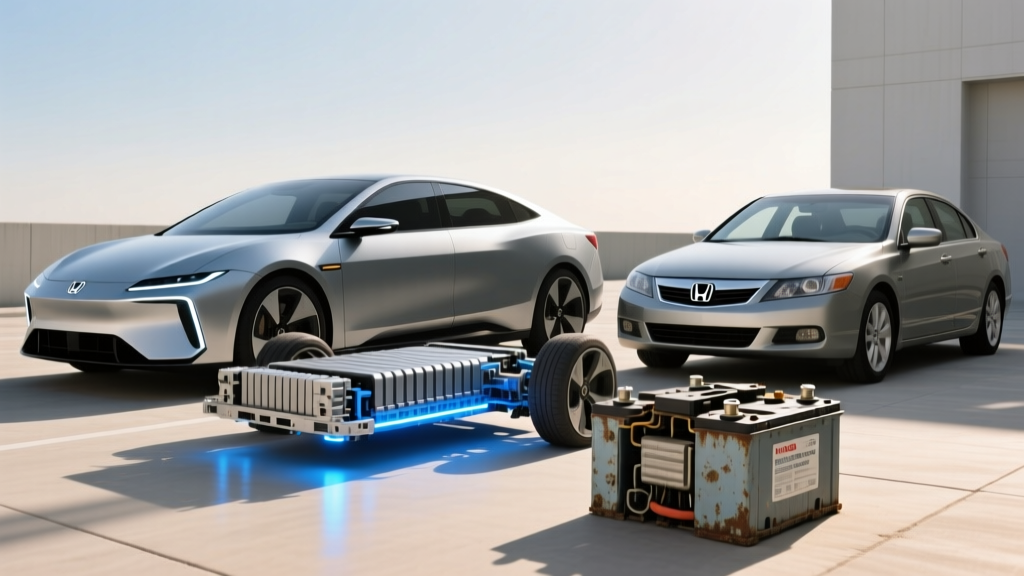
If you've searched for tools to remove battery from car in the context of an electric vehicle, you're likely facing one of two scenarios: you're a home mechanic wondering whether an EV traction battery is a DIY swap, or you're researching what a high-voltage battery replacement actually involves before buying an EV. Either way, the short answer is that EV battery removal is fundamentally different from swapping a 12V lead-acid battery in a gas car — and understanding why will save you time, money, and potentially your life.
This guide breaks down exactly what EV battery removal requires, how long these batteries actually last, what replacement costs in 2026, and how to maximize the pack you already have.
Why Removing an EV Battery Isn't a Wrench-and-Socket Job
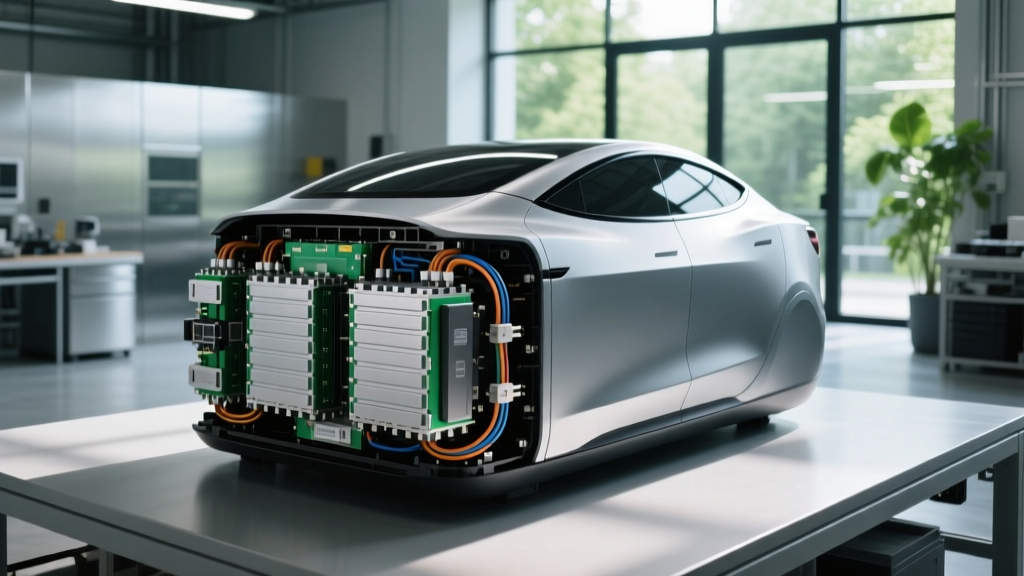
In a conventional car, removing the 12V battery takes a 10mm socket and maybe five minutes. An EV's high-voltage traction battery is a completely different animal. These packs typically operate between 350V and 800V, weigh between 700 and 1,500 pounds, and are structurally integrated into the vehicle's chassis — often serving as a stressed member that contributes to crash safety and torsional rigidity.
The tools required for professional EV battery removal include:
- High-voltage insulated gloves (Class 0, rated to 1,000V) and face shield — mandatory PPE per OSHA and manufacturer service protocols
- Insulated hand tools (VDE-rated screwdrivers, wrenches) to prevent arc flash
- Hydraulic battery lift table — packs weigh 700–1,500+ lbs and must be lowered evenly from the subframe
- OEM-specific diagnostic software to de-energize the high-voltage system, disconnect the service plug, and verify zero voltage at the bus bars before any physical work begins
- Torque-angle wrenches for reinstallation — structural fasteners on packs like the Tesla Model Y or Hyundai Ioniq 5 require precise multi-stage torque sequences
- Coolant evacuation and refill equipment — most liquid-cooled packs must have thermal management fluid drained and the system bled of air after reconnection
This is not a weekend garage project. Manufacturers and the National Highway Traffic Safety Administration (NHTSA) classify high-voltage service as specialist work. A mistake can cause electrocution, thermal runaway, or void your battery warranty entirely. If you're asking what tools you need, the honest answer is: you need a certified EV technician.
EV Battery Chemistry: LFP vs NMC/NCA Trade-Offs
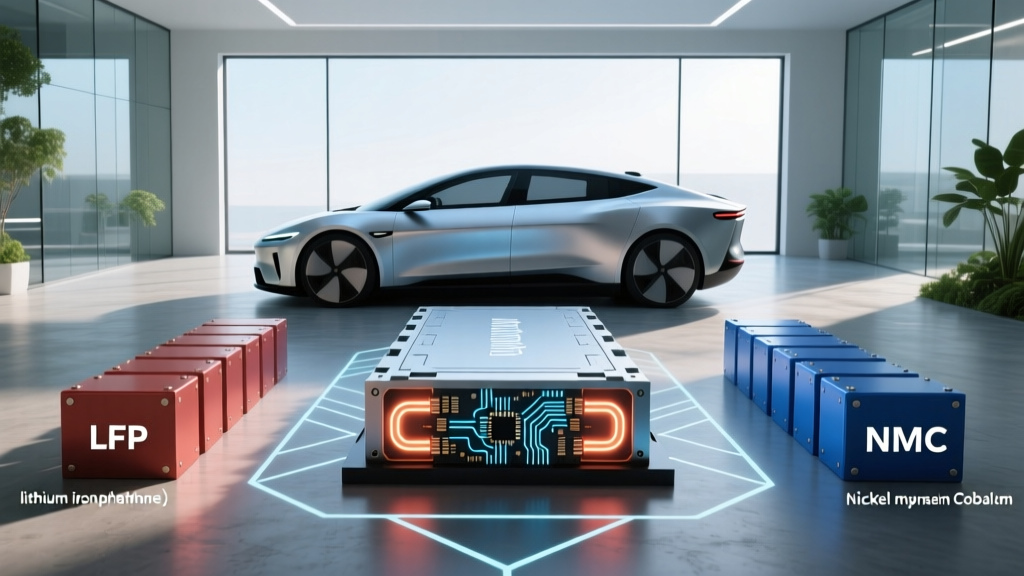
Before worrying about removal, understand what's actually inside the pack. Two dominant chemistries power nearly every EV sold in 2026, and the choice affects lifespan, range, cold-weather performance, and eventual replacement cost.
| Attribute | LFP (Lithium Iron Phosphate) | NMC/NCA (Nickel Manganese Cobalt / Nickel Cobalt Aluminum) |
|---|---|---|
| Energy Density | Lower (~160 Wh/kg cell-level) | Higher (~250–300 Wh/kg cell-level) |
| Cycle Life | 3,000–5,000+ cycles to 80% SoH | 1,000–2,000 cycles to 80% SoH |
| Cold Performance | Reduced — slower charging below 32°F, ~15–20% range loss at 20°F | Better low-temp performance, ~10–15% range loss at 20°F |
| Cost | Lower — no cobalt or nickel | Higher — commodity-sensitive materials |
| Recommended Charge Habit | Can be charged to 100% daily without significant degradation | Best kept 20–80% for daily use; 100% for road trips only |
| Common In 2026 | Tesla Model 3/Y RWD, BYD, standard-range offerings | Long-range and performance trims, most luxury EVs |
Which is better? There's no universal winner. If you want maximum range per charge and don't mind careful state-of-charge management, NMC/NCA delivers. If you prioritize longevity, lower cost, and the simplicity of charging to 100% every night, LFP is the pragmatic choice — especially for commuters covering under 200 miles daily.
How Long Do EV Batteries Actually Last?
The fear that EV batteries die at 100,000 miles is outdated. Real-world fleet data tells a more reassuring story — though degradation is real and measurable.
Typical Degradation Trajectory (NMC/NCA packs, moderate climate, mixed charging):
- Year 1 / 15,000 mi: ~2–4% capacity loss (initial settling)
- Year 3 / 45,000 mi: ~6–8% total loss
- Year 5 / 75,000 mi: ~8–12% total loss
- Year 8 / 120,000 mi: ~10–15% total loss
- Year 10 / 150,000 mi: ~12–20% total loss
LFP packs typically show 2–4% less degradation at equivalent milestones due to their superior cycle life.
A study tracking Tesla fleet data showed average degradation of approximately 12% at 200,000 miles — meaning a 350-mile EPA-rated Model 3 Long Range would still deliver roughly 308 miles when new-equivalent conditions apply. Data from fueleconomy.gov and manufacturer filings confirm that most modern packs retain well above 80% capacity through the warranty period.
The critical takeaway: most EV batteries will outlast the vehicle's economic life. The car's suspension, interior, and electronics will typically need more attention than the traction battery.
What the Battery Warranty Actually Covers
Federal law mandates a minimum 8-year/100,000-mile warranty on EV batteries for emissions-related compliance, and most manufacturers exceed this. Here's what current 2026 model-year warranties look like across major brands:
| Manufacturer | Warranty Term | Capacity Retention Threshold | Coverage Details |
|---|---|---|---|
| Tesla (Model 3/Y) | 8 yr / 120,000 mi (LR/AWD); 8 yr / 100,000 mi (RWD) | 70% | Defects + excessive degradation below threshold |
| Hyundai / Kia | 10 yr / 100,000 mi | 70% | Defects + degradation; among the longest terms |
| Ford (Mustang Mach-E, F-150 Lightning) | 8 yr / 100,000 mi | 70% | Defects + capacity loss below threshold |
| GM (Ultium-based) | 8 yr / 100,000 mi | 70% (some models 60% for Bolt-era) | Module-level replacement where possible |
| BMW / Mercedes-Benz | 8 yr / 100,000 mi | 70% | Defects + degradation; certified service centers only |
What "70% capacity retention" means in practice: If your 82 kWh (usable) NMC pack drops below 57.4 kWh of usable capacity within the warranty window, the manufacturer must repair or replace it — typically by swapping in a refurbished pack with at least 70% health, not necessarily a brand-new unit. The warranty does not cover damage from collisions, flooding, improper aftermarket modifications, or unauthorized high-voltage service.
EV Battery Replacement Cost: What to Budget
If your battery fails outside warranty — or you're buying a used EV with an uncertain history — replacement cost is the number that causes sticker shock. Here's the 2026 reality:
| Vehicle Category / Example | Battery Size (kWh Usable) | Estimated Replacement Cost (Parts + Labor) | When Typically Needed |
|---|---|---|---|
| Compact EV (Nissan LEAF, Chevy Bolt-equivalent) | 40–65 kWh | $6,500 – $12,000 | 150,000+ mi or 12+ years, if at all |
| Mid-size crossover (Tesla Model Y LR, Ioniq 5) | 75–84 kWh | $10,000 – $18,000 | 150,000+ mi; rarely within typical ownership |
| Full-size / luxury (F-150 Lightning Ext, BMW iX) | 100–131 kWh | $15,000 – $25,000+ | 200,000+ mi; module-level repair may reduce cost |
| LFP-equipped standard-range models | 50–60 kWh | $5,000 – $10,000 | Extremely rare — LFP cycle life often exceeds vehicle life |
Two factors are working in buyers' favor: module-level repair (replacing only the degraded cell modules rather than the full pack) is increasingly available on Ultium and Hyundai E-GMP platforms, cutting costs by 40–60%. And refurbished pack availability is growing as early EVs reach end-of-life, creating a secondary market for tested replacement units at 30–50% below new-pack pricing.
Still, for a vehicle originally priced at $40,000, a $15,000 out-of-warranty battery replacement at year 12 represents a significant ownership cost. This is why warranty terms and degradation data matter more than the replacement price alone.
Factors That Accelerate (or Protect) Battery Life
Not all miles age a battery equally. The same 100,000-mile pack can show 8% or 18% degradation depending on how it was treated. Here are the variables you control:
- Fast-charging frequency: Occasional DC fast charging (1–2x/week) has minimal impact. Daily 150+ kW fast charging in extreme heat accelerates degradation by an estimated 2–4% over 5 years vs. primarily Level 2 home charging.
- State of charge habits (NMC/NCA): Keeping daily SoC between 20–80% dramatically reduces calendar aging. Charging to 100% and letting the car sit for days in heat is the single worst habit for NMC chemistry.
- State of charge habits (LFP): Charge to 100% regularly — LFP cells benefit from full-charge calibration and don't suffer the same high-SoC stress as NMC.
- Extreme temperature exposure: Repeatedly fast-charging a cold-soaked battery without preconditioning causes lithium plating. Always use your car's preconditioning feature before DC fast charging in winter.
- Storage: If storing for 30+ days, leave SoC at approximately 50% and keep the vehicle in a temperature-stable environment. Avoid storing at 100% or below 10%.
- Thermal management: Vehicles with active liquid cooling (virtually all 2026 models except some budget LFP packs) handle heat far better than passive-air-cooled designs. This is a key buying consideration in hot climates.
How to Check Your Battery's State of Health (SoH)
State of Health (SoH) is the percentage of original capacity your pack can still hold. A new battery is 100% SoH; a pack at 85% SoH holds 85% of its original kWh. Here's how to monitor it:
- In-car displays: Tesla, Hyundai, BMW, and Mercedes offer SoH readouts or degradation graphs in the service or energy menus. On Tesla, navigate to Service → Battery Health for an estimated SoH percentage.
- OBD-II + third-party apps: Devices like the OBDLink MX+ paired with apps such as EV Health or Scan My Tesla can pull BMS (Battery Management System) data including measured capacity in kWh, cell voltage variance, and cycle count.
- Dealer diagnostic report: Request a battery health certificate during any service visit. Most OEMs will print a report showing measured capacity vs. original, individual module balance, and warranty status. This is essential documentation when buying or selling a used EV.
- Manual calculation: Charge to 100%, drive to near-empty, and compare the kWh consumed (shown in the trip computer) to the pack's original usable capacity. This gives a rough SoH estimate, though it's less precise than BMS data.
If you're buying a used EV, always obtain a dealer SoH report before purchase. It's the single most important data point — more predictive of future ownership cost than mileage alone.
What's Next: Solid-State and Silicon Anode Batteries
Emerging battery technologies promise step-change improvements, but realistic timelines matter more than press-release hype:
- Silicon anode cells: Companies like Sila Nanotechnologies and Group14 are shipping silicon-dominant anode materials to manufacturers now. Expect first production vehicles with meaningful silicon-anode content (10–20% energy density improvement) in the 2027–2028 model-year window. These enhance existing lithium-ion architecture rather than replacing it.
- Solid-state batteries: Toyota has announced a 2027–2028 target for limited solid-state production vehicles, with claims of 750+ km (466 mi) range and 10-minute fast charging. Samsung SDI and QuantumScape are pursuing similar timelines. However, initial availability will be restricted to low-volume, premium models. Broad market penetration at mainstream price points is not expected before 2030–2032.
- Sodium-ion: CATL and BYD are deploying sodium-ion cells in Chinese-market budget vehicles. Lower energy density limits US relevance for now, but the chemistry offers excellent cycle life and cold performance for future entry-level models.
None of these technologies are available in production EVs you can buy today. If you need an EV now, current lithium-ion and LFP packs are mature, well-warrantied, and proven to 200,000+ miles with proper care.
Frequently Asked Questions
Can I remove an EV battery myself at home?
No. High-voltage traction batteries operate at 350–800V and weigh 700–1,500+ lbs. Removal requires certified HV safety training, insulated PPE, hydraulic lift equipment, and OEM diagnostic software to safely de-energize the system. Attempting this without proper training risks fatal electrocution and will void all remaining warranty coverage. The 12V auxiliary battery, however, is user-serviceable like any conventional car battery.
How long do EV batteries last in years and miles?
Most modern EV batteries (2020 and later) are designed to last 15–20 years or 150,000–200,000+ miles while retaining above 70–80% of original capacity. Real-world fleet data shows average NMC degradation of approximately 12% at 200,000 miles. LFP packs typically degrade even less. The battery will usually outlast the rest of the vehicle.
How much does it cost to replace an EV battery?
Full pack replacement ranges from approximately $5,000–$10,000 for compact/LFP models to $15,000–$25,000+ for large luxury packs (100+ kWh). Module-level repairs on platforms like GM Ultium can cut this by 40–60%. However, most owners never need a replacement — the battery typically outlasts the vehicle's useful life.
What does the EV battery warranty cover?
Federal law mandates at minimum 8 years/100,000 miles. Most warranties cover manufacturing defects and capacity loss below a threshold (typically 70% of original capacity). Hyundai/Kia offer 10 years/100,000 miles. Warranties do not cover collision damage, flooding, unauthorized modifications, or improper service.
LFP vs NMC — which battery chemistry should I choose?
Choose LFP if you want longer cycle life, lower cost, and the convenience of daily 100% charging — ideal for commuters under 200 miles/day. Choose NMC/NCA if you need maximum range per charge, better cold-weather performance, and don't mind managing SoC between 20–80% for daily use. Neither is universally "better" — it depends on your driving pattern.
Does fast charging damage my EV battery?
Occasional DC fast charging has minimal long-term impact on modern packs with active thermal management. However, exclusive reliance on 150+ kW fast charging — especially in hot climates without preconditioning — can accelerate degradation by an estimated 2–4% over five years compared to primarily Level 2 home charging. Use fast charging for road trips; use Level 2 for daily needs.
How do I check my EV battery health before buying used?
Request a dealer battery health certificate showing measured capacity vs. original (SoH percentage), cell balance data, and warranty status. You can also use OBD-II diagnostic tools with EV-specific apps to pull BMS data independently. Never buy a used EV without verifying SoH — it's more important than odometer reading.