Why Owners Search "How to Remove the Battery" in an EV
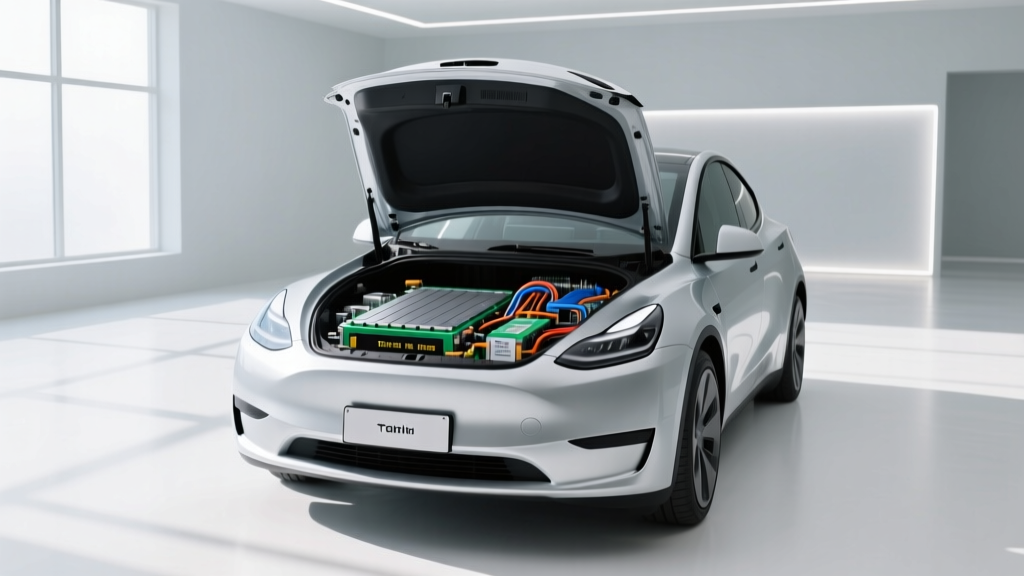
If you've typed "how to remove the battery" into a search bar, you're not alone — but the answer depends heavily on which battery you mean. Every electric vehicle carries two: a conventional 12V auxiliary battery (which powers lights, infotainment, and contactor relays) and the high-voltage traction battery (the large pack that actually drives the wheels). Removing the 12V unit is no more complex than swapping a battery in a gas car. Removing the high-voltage traction battery is an entirely different matter — it's a 600-to-1,500-pound component operating at 400V or 800V, requiring a professional lift, insulated tooling, manufacturer-specific diagnostic software, and a technician certified to work on high-voltage systems.
This guide addresses the real questions behind that search: How long do EV traction batteries last? What does a replacement cost? What does the warranty actually cover? And if you're choosing a new EV, which battery chemistry — LFP or NMC — gives you the best ownership experience? We'll answer all of these with exact figures, not marketing generalizations.
LFP vs. NMC/NCA: Which Battery Chemistry Fits Your Driving?
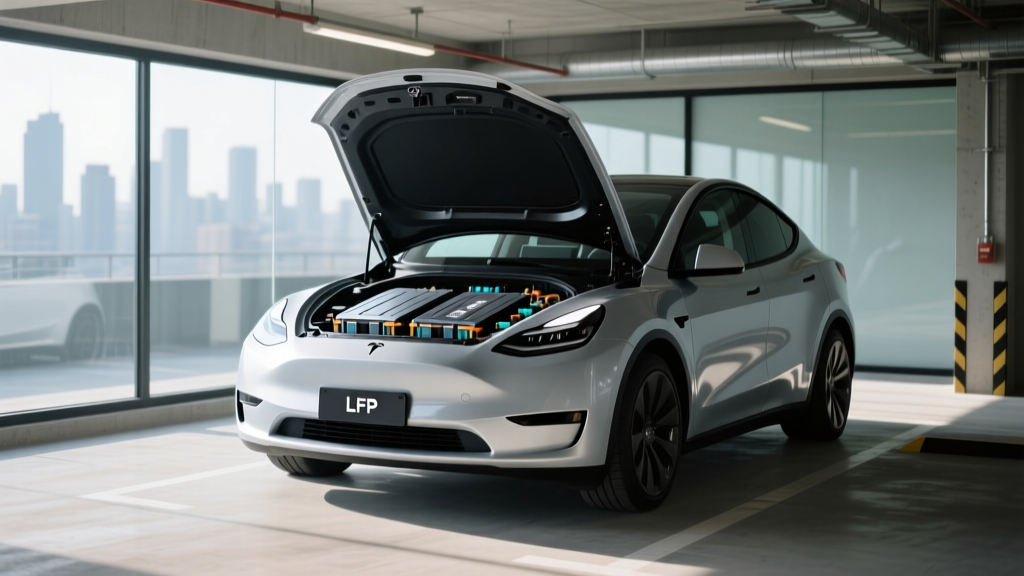
Modern EVs use one of two dominant lithium-ion chemistries in their traction packs: LFP (lithium iron phosphate) or NMC/NCA (nickel manganese cobalt / nickel cobalt aluminum). The choice affects your range, charging habits, cold-weather performance, and long-term degradation. Here's how they compare on the metrics that matter to owners.
| Attribute | LFP (Lithium Iron Phosphate) | NMC / NCA (Nickel-Based) |
|---|---|---|
| Energy Density | Lower (~160–180 Wh/kg cell-level) | Higher (~220–260 Wh/kg cell-level) |
| Typical EPA Range | 240–330 mi (heavier pack for same kWh) | 280–400+ mi |
| Cycle Life | 3,000–5,000+ cycles to 80% SoH | 1,000–2,000 cycles to 80% SoH |
| Cold-Weather Performance | Weaker — 25–35% range loss below 20°F | Better — 15–25% range loss below 20°F |
| Recommended Daily Charge | 100% SoC (no degradation penalty) | 80% SoC for daily; 100% only before trips |
| Cost per kWh (Pack-Level) | ~$100–$120/kWh | ~$130–$160/kWh |
| Cobalt Content | None | Present (supply-chain and ethical concerns) |
| Common In 2026 Models | Tesla Model 3/Y RWD, Ford Mustang Mach-E Select (base), BYD, Rivian Standard | Tesla Long Range, Hyundai Ioniq 5/6, Kia EV6/EV9, BMW iX, Lucid Air |
The practical takeaway: If you can charge at home daily and live in a moderate climate, LFP is the durability champion — charge it to 100% every night and don't worry. If you need maximum range per charge, frequently road-trip in cold weather, or can only charge to 80% daily, NMC/NCA delivers more usable miles from a lighter pack. Neither chemistry is universally "better"; the right choice maps to your driving pattern.
How Long Do EV Batteries Actually Last? Degradation Data
The fear that an EV battery will "die" at 100,000 miles is not supported by fleet data. Battery degradation is a gradual loss of total capacity, measured as State of Health (SoH) — a new pack is 100% SoH, and a pack at 80% SoH still functions perfectly but delivers roughly 20% fewer miles on a full charge.
Based on aggregated fleet data from sources like Recurrent Auto and manufacturer warranty claims, here is what typical degradation looks like across popular chemistries and model years:
| Milestone | NMC/NCA Average SoH | LFP Average SoH | Notes |
|---|---|---|---|
| Year 1 / 15,000 mi | 96–98% | 97–99% | Initial formation loss; steepest early drop |
| Year 3 / 45,000 mi | 92–95% | 95–97% | Degradation curve flattens significantly |
| Year 5 / 75,000 mi | 89–93% | 93–96% | Most owners notice ~10–15 mi range loss |
| Year 8 / 120,000 mi | 85–90% | 90–94% | Warranty threshold period ends |
| Year 12 / 180,000 mi | 80–87% | 87–92% | Pack still functional; reduced range |
Real-world context matters. Tesla's 2025 Impact Report showed its Model 3/Y fleet retained an average of 85% SoH at 150,000 miles. Hyundai and Kia's E-GMP platform vehicles (Ioniq 5, EV6) have demonstrated similar retention curves, with thermal management playing a critical role. Liquid-cooled packs — standard on virtually every 2026 BEV sold in the U.S. — outperform passively cooled packs by 5–10 percentage points of SoH at the 100,000-mile mark.
Bottom line: The vast majority of EV traction batteries outlast the vehicle's body, suspension, and interior. Total failure before 150,000 miles is statistically rare (well under 2% of packs, per Recurrent data). Most owners will sell or trade the car before the battery reaches end-of-life.
What Does the EV Battery Warranty Actually Cover?
Federal law mandates that all EV batteries carry a minimum warranty of 8 years / 100,000 miles (whichever comes first). In California and states adopting CARB (California Air Resources Board) emissions standards — which include Colorado, Maine, Massachusetts, New York, Oregon, Vermont, and Washington as of 2026 — the mandate extends to 10 years / 150,000 miles.
The warranty covers capacity loss below a specified threshold, typically 70% SoH, plus defects in materials and workmanship. Here's how major manufacturers structure their coverage for 2026 model-year vehicles:
| Manufacturer | Battery Warranty | Capacity Threshold | Notes |
|---|---|---|---|
| Tesla | 8 yr / 120,000 mi (Model 3/Y LR); 8 yr / 100,000 mi (RWD) | 70% SoH | Includes drive unit |
| Hyundai / Kia | 10 yr / 100,000 mi | 70% SoH | Among the longest in the industry |
| Ford | 8 yr / 100,000 mi | 70% SoH | Covers Mach-E, F-150 Lightning |
| BMW | 8 yr / 100,000 mi | 70% SoH | Includes iX, i4, i7 |
| Rivian | 8 yr / 120,000 mi (Max pack); 8 yr / 100,000 mi (Standard) | 70% SoH | Module-level replacement available |
| GM (Ultium) | 8 yr / 100,000 mi | 70% SoH | Covers Cadillac Lyriq, Chevy Blazer EV, Equinox EV |
Critical fine print: the warranty covers capacity degradation below the threshold — it does not cover range loss from tire wear, added vehicle weight, or extreme ambient conditions. It also does not cover damage from accidents, flooding, or unauthorized modifications. If your 85 kWh pack drops to 58 kWh (68% SoH) at year 6, the manufacturer must repair or replace it at no cost. If it's at 72% SoH and you're unhappy with the range, that's considered normal wear.
How Much Does an EV Battery Replacement Cost?
Out-of-warranty traction battery replacement is the single largest potential expense in EV ownership — and the question most drivers want answered before buying. Costs vary enormously by pack size, chemistry, vehicle architecture, and whether the replacement uses new, remanufactured, or salvaged modules.
| Vehicle Class | Example Models | Pack Size | Full Replacement Cost (Parts + Labor) | Module-Level Repair |
|---|---|---|---|---|
| Compact / Sedan | Tesla Model 3 RWD, Chevy Bolt EV | 50–65 kWh | $5,000–$9,000 | $1,500–$3,500 per module group |
| Midsize Crossover | Hyundai Ioniq 5, Tesla Model Y, Ford Mach-E | 72–88 kWh | $9,000–$15,000 | $2,000–$5,000 per module group |
| Large SUV / Truck | Rivian R1S, F-150 Lightning Extended, GMC Sierra EV | 100–135 kWh | $15,000–$22,000 | $3,000–$7,000 per module group |
| Luxury / Performance | Lucid Air, Mercedes EQS, Porsche Taycan | 90–118 kWh | $18,000–$28,000 | $4,000–$8,000 per module group |
Several important caveats accompany these figures:
- Module-level repair is increasingly common. Many modern packs (Tesla 4680 structural pack excepted) are built from discrete modules. A single degraded or failed module can be replaced for a fraction of the full-pack cost. Shops like Electrified Garage and independent EV specialists now offer this service routinely.
- Labor is a significant portion. The physical removal of a traction battery requires a hydraulic lift table, high-voltage safety lockout procedures, coolant system evacuation and refill, and post-install calibration. Labor alone typically runs $1,500–$3,500.
- Remanufactured packs are gaining availability. Companies like Redwood Materials and battery recyclers are supplying refurbished packs at 30–50% below new OEM pricing, though availability in 2026 is still limited to high-volume models (Model 3/Y, Leaf, Bolt).
- Most owners never pay this. Because the vast majority of packs outlast their warranty period with SoH above 70%, and because most EVs are traded before 150,000 miles, out-of-pocket battery replacement remains uncommon. Per Consumer Reports, fewer than 3% of EV owners have faced an out-of-warranty traction battery replacement as of 2025.
Factors That Accelerate (or Preserve) Battery Health
Battery degradation is not purely a function of time — how you use and charge the pack has a measurable impact on its lifespan. Here are the factors with the strongest evidence behind them, ranked by impact magnitude:
Habits That Preserve Battery Health
- Charge to 80% daily on NMC/NCA packs. Sustained high SoC accelerates electrolyte decomposition. LFP packs are the exception — charge them to 100% regularly, as their flat voltage curve requires full charges for accurate BMS (battery management system) calibration.
- Use Level 2 (home AC charging) as your primary method. Slow charging generates less heat and puts less stress on cell internals. A 7–11 kW Level 2 charger adds 25–40 miles per hour and is the ideal daily charging method.
- Precondition the battery before DC fast charging. Most 2026 EVs do this automatically when you navigate to a charger. Preconditioning warms the cells to 25–35°C, enabling faster charging and reducing lithium plating risk in cold weather.
- Park in shade or a garage when possible. Sustained high ambient temperatures (above 95°F) accelerate calendar degradation even when the car is unplugged. Vehicles with active thermal management handle this better, but reducing heat soak still helps.
- Avoid storing the vehicle at 100% SoC or below 10% SoC for extended periods. If leaving the car for a week or more, aim for 50–60% SoC.
Habits That Accelerate Degradation
- Exclusive DC fast charging. Fleet data from Recurrent shows vehicles that fast-charge more than 90% of the time exhibit 2–4% additional SoH loss at 80,000 miles compared to those primarily using Level 2. The effect is real but modest — not catastrophic.
- Frequent 100% charges on NMC packs. Occasional 100% charges before road trips are fine. Daily 100% charges on NMC chemistry measurably shorten cycle life.
- Deep discharges to 0% SoC. Running the pack to complete depletion stresses cell chemistry. The BMS reserves a buffer (typically 2–5 kWh at the bottom), but repeatedly hitting that buffer is inadvisable.
- Repeated high-C-rate discharges. Consistent aggressive acceleration and high-speed driving generate sustained high current draw, which heats cells. This is more relevant for performance driving than normal highway travel.
How to Check and Monitor Your EV's Battery Health
Unlike a gas car's engine, you can't visually inspect an EV's battery for wear. But you can monitor its State of Health (SoH) with reasonable accuracy using several methods:
Built-In Vehicle Displays
Some manufacturers provide direct SoH readouts. Tesla offers a "Battery Health" percentage in the service menu (accessible via the software screen on 2024+ models). Hyundai and Kia include SoH data in the dealer diagnostic tool, which you can request during a service visit. BMW's iDrive system shows an estimated range that adjusts based on historical degradation.
OBD-II Diagnostic Tools
Third-party OBD-II readers paired with EV-specific apps can pull SoH data from the BMS. Popular options in 2026 include:
- OBDLink MX+ with Leaf Spy (Nissan Leaf) or Scan My Tesla — reads cell-level voltage, pack SoH, and degradation curves.
- OBDeleven — supports Volkswagen Group EVs (ID.4, Audi Q4 e-tron, Porsche Taycan) and displays battery health metrics.
- Carista — offers basic SoH readouts for Toyota bZ4X and Subaru Solterra.
Manual Range Tracking
The simplest method: track your actual miles per full charge over time. If your Ioniq 5 delivered 260 real-world miles on a full charge when new and now delivers 240, that's roughly a 7–8% degradation. Log this quarterly to establish a trend line. Apps like Recurrent, Teslalogger, and EV Track automate this process and compare your data against fleet averages.
Dealer Diagnostics
Any authorized dealer can run a full battery health report. If you're approaching the warranty's capacity threshold (e.g., your 8-year-old Model Y is showing 71% SoH), request this report in writing — it's your documentation if a warranty claim becomes necessary.
Can You Remove an EV Battery Yourself?
To directly answer the keyword question: removing a high-voltage EV traction battery is not a DIY project. Here's why:
- Lethal voltage. EV packs operate at 400V (most vehicles) or 800V (Hyundai/Kia E-GMP, Porsche Taycan, Lucid Air). Contact with exposed bus bars or damaged wiring can be fatal. Proper lockout/tagout procedures and Class 0 insulated gloves are mandatory.
- Extreme weight. Traction batteries weigh between 600 lbs (Chevy Bolt, ~65 kWh) and 1,500 lbs (GMC Hummer EV, ~215 kWh). Removal requires a hydraulic lift table rated for the specific pack weight, plus a vehicle hoist.
- Coolant system integration. The battery is integrated into the vehicle's thermal management loop. Removal requires evacuating coolant, capping lines, and post-install vacuum-filling and bleeding the system.
- Software pairing. Most 2026 EVs require the replacement pack's BMS to be digitally paired with the vehicle's main controller. This requires manufacturer-specific diagnostic software not available to consumers.
- Structural role. In many modern EVs (Tesla Model Y, Rivian R1T, GM Ultium vehicles), the battery pack is a stressed structural member of the chassis. Incorrect removal or installation compromises crash safety.
If your battery needs replacement, the correct path is a certified EV service center — either the OEM dealer network or a qualified independent EV shop. The NHTSA maintains guidance on high-voltage vehicle servicing, and organizations like ASE offer the L3 (Light Duty Hybrid/Electric Vehicle) certification that qualified technicians hold.
What's Next: Solid-State and Silicon-Anode Batteries
Looking beyond current lithium-ion technology, two advancements are moving toward production — though neither is available in a vehicle you can buy today:
Solid-state batteries replace the liquid electrolyte with a solid material (ceramic, sulfide, or polymer), promising higher energy density (potentially 400–500 Wh/kg at the cell level), faster charging, and improved safety (no flammable electrolyte). Toyota has announced a solid-state EV for 2027–2028 with a claimed 460-mile range and 10-minute fast charge. Samsung SDI is targeting 2027 production. QuantumScape continues to ship prototype cells to Volkswagen Group for testing. Realistic mass-market availability remains 2028–2030, with initial deployment in luxury models at premium pricing.
Silicon-anode batteries replace the graphite anode with silicon, which can store roughly 10x more lithium ions per gram. Companies like Sila Nanotechnologies (supplying Mercedes for the upcoming G-Class EV) and Amprius are shipping cells with 15–20% higher energy density than current NMC. These are closer to market — expect them in select 2026–2027 luxury and performance EVs — but full-pack cost parity with current technology is still several years away.
For buyers shopping today, current LFP and NMC chemistries are mature, well-understood, and backed by robust warranties. Waiting for solid-state means waiting at least 3–4 years for meaningful availability, with no guarantee of affordable pricing at launch.
Frequently Asked Questions
How long do EV batteries last in years and miles?
Based on fleet data, most EV traction batteries retain 80–90% of their original capacity at 150,000 miles (roughly 10–12 years of average driving). Total pack failure before 150,000 miles is rare — under 2% of packs according to Recurrent Auto's 2025 dataset. Many packs will function acceptably past 200,000 miles, albeit with reduced range.
How much does an EV battery cost to replace?
Full pack replacement ranges from $5,000–$9,000 for compact EVs (50–65 kWh) to $15,000–$22,000 for large trucks and SUVs (100–135 kWh). Module-level repairs, where only the degraded section is replaced, cost $1,500–$7,000 depending on the vehicle. Most owners never pay this out of pocket because the battery outlasts the warranty period with acceptable capacity.
What does the EV battery warranty cover?
Federal law requires 8 years/100,000 miles minimum (10 years/150,000 miles in CARB states). The warranty covers capacity loss below a threshold — typically 70% of original capacity — and defects in materials and workmanship. It does not cover damage from accidents, misuse, or normal range reduction from tire wear and driving conditions.
How do I check and maximize my EV's battery health?
Monitor SoH through your vehicle's built-in display, an OBD-II diagnostic tool with EV software, or by manually tracking your real-world miles per full charge over time. To maximize longevity: charge NMC packs to 80% daily (100% for LFP), rely primarily on Level 2 home charging, precondition before fast charging, avoid prolonged storage at extreme SoC levels, and park in shade when possible in hot climates.
LFP vs. NMC — which battery chemistry is better?
Neither is universally better. LFP offers longer cycle life (3,000–5,000 cycles vs. 1,000–2,000), lower cost, no cobalt, and tolerance for daily 100% charging — but delivers less range per pound and performs worse in extreme cold. NMC offers higher energy density (more range from a lighter pack) and better cold-weather performance, but requires 80% daily charge limits and degrades faster over time. Choose LFP for daily commuting and home charging; choose NMC for maximum range and frequent road trips.
Is it safe to drive an EV with a degraded battery?
Yes. A degraded battery simply holds less energy — it doesn't become dangerous. A pack at 75% SoH will give you roughly 75% of the original EPA-estimated range. The vehicle's BMS continues to protect against overcharge, deep discharge, and thermal events regardless of SoH. If degradation falls below the warranty threshold, the manufacturer will repair or replace the pack.