If you've spent any time researching electric vehicles online, you've likely encountered a persistent claim: "Lead acid batteries cannot be recycled." It appears in forums, social media comment threads, and even some opinion pieces arguing against EV adoption. The statement is designed to cast doubt on the sustainability of battery technology in general.
The answer is unambiguous: False. Lead acid batteries are the most successfully recycled consumer product in history. According to the Battery Council International, the recycling rate for lead acid batteries in the United States consistently exceeds 99%. Virtually every automotive 12V lead acid battery you've ever replaced was broken down and rebuilt into a new one.
So why does this myth persist, and what does it actually mean for EV buyers evaluating high-voltage traction battery longevity, chemistry, and end-of-life recycling? This guide separates fact from fiction and gives you the exact data you need to evaluate EV battery ownership in 2026.
The Lead Acid Recycling Reality vs. EV Battery Recycling
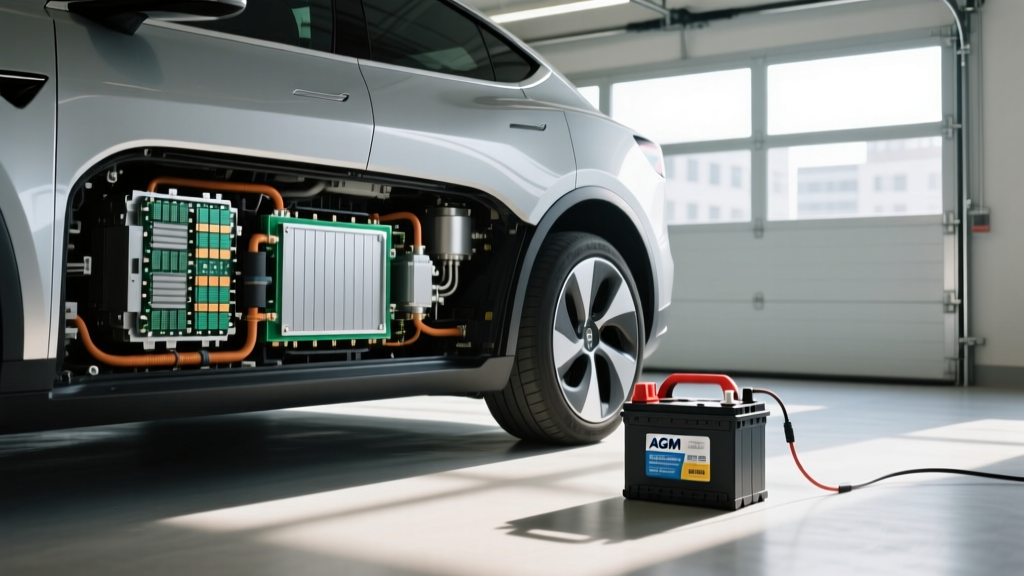
The irony of the "lead acid batteries cannot be recycled" claim is that the 12V auxiliary battery sitting in nearly every EV on the road — including Teslas, Rivians, and Hyundai Ioniqs — is itself a lead acid (or increasingly, lithium-ion 12V) battery, and it is recyclable. This small battery powers the vehicle's electronics, lights, and computers; it is completely separate from the high-voltage traction battery that propels the car.
The real recycling question EV buyers should focus on is the high-voltage lithium-ion traction battery — the 50–120 kWh pack that costs $10,000–$25,000 to replace and represents the core of the vehicle's powertrain.
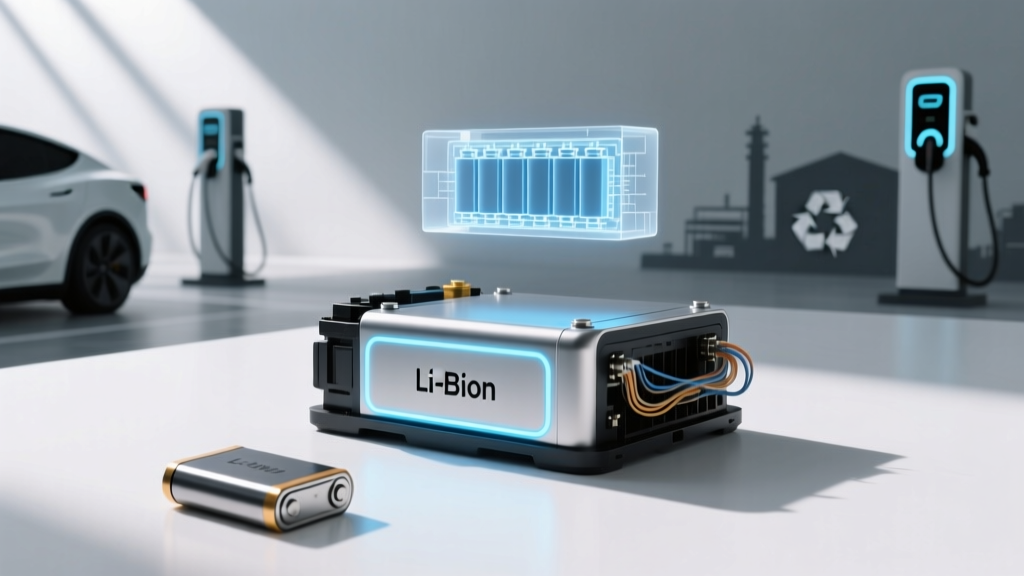
As of 2026, lithium-ion EV battery recycling is an established and rapidly scaling industry. Companies like Redwood Materials (founded by Tesla co-founder JB Straubel) and Li-Cycle use hydrometallurgical processes to recover 95%+ of critical minerals including lithium, cobalt, nickel, and copper from spent EV packs. These recovered materials feed directly back into new battery cell production, creating a genuine closed-loop supply chain.
- Lead acid batteries: ~99.0% recovery rate (Battery Council International)
- Lithium-ion EV batteries (2026): ~95%+ mineral recovery at commercial scale (Redwood Materials, Li-Cycle)
- Aluminum cans: ~50% recycling rate (for perspective)
- Smartphones: ~20% recycling rate globally
The claim that any automotive battery "cannot be recycled" is factually unsupported for both lead acid and lithium-ion chemistries.
EV Battery Chemistry: LFP vs. NMC Trade-Offs
The two dominant lithium-ion chemistries in 2026 EVs are LFP (Lithium Iron Phosphate) and NMC (Nickel Manganese Cobalt), with NCA (Nickel Cobalt Aluminum) used primarily by Tesla and Toyota. Your chemistry choice affects range, longevity, cold-weather performance, and end-of-life recyclability.
| Attribute | LFP (LiFePO4) | NMC / NCA |
|---|---|---|
| Energy Density | 160–180 Wh/kg (lower) | 220–300 Wh/kg (higher) |
| Cycle Life | 3,000–5,000+ cycles | 1,500–2,500 cycles |
| Cold Performance | Weaker — ~20–30% range loss at 20°F | Better — ~15–25% range loss at 20°F |
| Recommended SoC | 100% daily OK | 80% daily recommended |
| Cost per kWh | Lower (~$90–110/kWh cell-level) | Higher (~$120–150/kWh cell-level) |
| Cobalt/Critical Minerals | None (iron, phosphate) | Cobalt, nickel — supply-chain concerns |
| Recyclability | Recyclable, but lower-value materials | Recyclable, high-value cobalt/nickel recovery |
| Common 2026 Models | Tesla Model 3 RWD, Model Y RWD, Ford Mustang Mach-E Select, BYD, Rivian Standard | Tesla Long Range, Hyundai Ioniq 5/6, BMW iX, Porsche Taycan, Chevrolet Silverado EV |
Which is better? It depends on your use case. LFP offers superior longevity and tolerates daily 100% charging, making it ideal for commuters who can charge at home and don't need maximum range. NMC delivers higher energy density for longer-range road trips and better cold-weather performance, but you should keep daily charge at 80% to maximize cycle life.
How Long Do EV Batteries Actually Last?
The short answer: most EV traction batteries will outlast the vehicle they're installed in. Real-world degradation data from fleets and long-term owners consistently shows slower capacity loss than early EV skeptics predicted.
Here are concrete data points from 2026 available data:
- Tesla Model 3/Y (NMC, 2018–2022): ~5–7% capacity loss at 100,000 miles; ~8–12% at 150,000 miles (Tesla Impact Report)
- Chevrolet Bolt EV/EUV (NMC, 2017–2023): ~6–10% loss at 80,000 miles; many owners report >90% SoH at 100k miles
- Hyundai Ioniq 5 (NMC, 2022–2025): Early data shows ~3–5% loss at 50,000 miles
- Tesla Model 3 RWD (LFP, 2021–2025): ~2–4% loss at 60,000 miles; LFP degradation curve flattens significantly after initial break-in
- Nissan LEAF (NMC, passively cooled): Historically higher degradation — 15–25% at 80,000 miles in hot climates; newer LEAF models with active cooling perform better
Sources: Tesla Impact Report, fueleconomy.gov, Recurrent Auto fleet data.
A typical degradation curve is non-linear: you'll see the fastest loss in the first 10,000–20,000 miles (roughly 2–4%), then the curve flattens considerably. Most modern EVs with active thermal management lose less than 1.5% per year after the initial settling period.
What Does the EV Battery Warranty Cover?
Federal law in the United States mandates a minimum EV battery warranty of 8 years / 100,000 miles. In CARB states (California and states that follow California emissions standards), that extends to 10 years / 150,000 miles. Most manufacturers meet or exceed these minimums.
| Manufacturer | Warranty Term | Capacity Retention Threshold | Notes |
|---|---|---|---|
| Tesla | 8 yr / 100,000–120,000 mi (varies by model) | 70% | 120k mi for Long Range/Performance models |
| Hyundai / Kia | 10 yr / 100,000 mi | 70% | Among the best terms in the industry |
| Ford | 8 yr / 100,000 mi | 70% | Covers battery and electric powertrain components |
| General Motors (Chevrolet, Cadillac) | 8 yr / 100,000 mi | 60% (some models 70%) | Check specific model — Ultium terms vary |
| BMW | 8 yr / 80,000 mi | 70% | Lower mileage cap than competitors |
| Rivian | 8 yr / 175,000 mi (R1T/R1S) | 70% | Highest mileage cap among mainstream brands |
Key detail: The warranty triggers when capacity drops below the stated threshold. A battery at 71% capacity at 95,000 miles is not covered — it must fall below 70% (or the manufacturer's stated floor). In practice, very few modern EVs with active thermal management hit warranty thresholds under normal use.
EV Battery Replacement Costs: When and How Much
This is the topic that generates the most anxiety, so let's ground it in data. Most EV owners will never need a full battery replacement. The battery will retain sufficient capacity to remain functional for the vehicle's useful life. That said, here's what replacement costs look like if you do need one — typically due to a manufacturing defect, physical damage, or extreme degradation in an older vehicle.
| Vehicle | Battery Size | Estimated Replacement Cost (2026) | Context |
|---|---|---|---|
| Tesla Model 3 RWD (LFP) | ~60 kWh | $12,000–$16,000 | Out of warranty; LFP packs rarely need replacement |
| Tesla Model Y Long Range | ~75 kWh | $15,000–$20,000 | Typically covered under 8yr/120k mi warranty |
| Chevrolet Bolt EV | ~65 kWh | $14,000–$16,000 | Post-recall replacement packs are updated chemistry |
| Hyundai Ioniq 5 | ~77.4 kWh | $18,000–$22,000 | 10yr/100k warranty covers most ownership period |
| Ford F-150 Lightning Extended | ~131 kWh | $25,000–$35,000 | Largest packs carry highest replacement cost |
| Porsche Taycan | ~93.4 kWh | $25,000–$30,000+ | Premium brand pricing; modular repair may reduce cost |
Critical context: Cell-level prices have dropped from ~$1,200/kWh in 2010 to roughly $90–140/kWh in 2026 (per BloombergNEF). Installed pack replacement costs are higher due to labor, diagnostics, and dealer markup. Many manufacturers now offer module-level repair — replacing only degraded modules rather than the entire pack — which can reduce costs by 50–70%.
Factors That Affect EV Battery Lifespan
Your battery's longevity isn't random. Specific behaviors and environmental conditions measurably accelerate or slow degradation.
- Avoid sustained 100% SoC: For NMC/NCA batteries, charge to 80% for daily use. Reserve 100% for road trips. (LFP batteries are an exception — periodic 100% charges are recommended for cell balancing.)
- Minimize DC fast charging frequency: Occasional DCFC is fine, but daily 150+ kW fast charging accelerates degradation by ~1–2% extra over 100k miles compared to Level 2 home charging. The heat generated at high C-rates stresses cells.
- Precondition before fast charging: Most modern EVs automatically precondition the battery when you navigate to a charger. This brings cells to optimal temperature (~77–95°F), enabling faster charging and reducing stress. Always use the vehicle's built-in navigation to DCFC stations.
- Extreme heat is worse than extreme cold: Sustained ambient temperatures above 95°F accelerate calendar degradation. If you live in Phoenix or Houston, garage parking and preconditioning matter more. Cold weather reduces range temporarily but causes less permanent degradation.
- Don't store at 0% or 100%: If leaving the vehicle for weeks, set charge to ~50%. Storage at extreme SoC states accelerates calendar aging.
- Use Level 2 home charging as your primary method: A 7–11 kW Level 2 charger adds 25–44 miles per hour of charging and generates far less thermal stress than DCFC.
How to Check and Monitor Battery Health (SoH)
State of Health (SoH) is the percentage of original battery capacity remaining. A new EV has 100% SoH; at 85% SoH, your 300-mile EPA-rated EV now delivers roughly 255 miles of range.
How to check SoH in 2026:
- In-vehicle displays: Tesla, Hyundai, BMW, and Mercedes now include SoH or battery health indicators in the vehicle settings menu. Tesla's "Battery Health" section under Service mode shows estimated capacity.
- OBD-II dongles + apps: Tools like OBDeleven, Carly, or EV-specific apps like ABRP (A Better Route Planner) can read SoH data from the BMS (Battery Management System) via the OBD-II port.
- Third-party diagnostics: Companies like Recurrent and Geotab offer battery health reports based on telematics data. Some dealerships can pull detailed BMS logs.
- Manual calculation: Fully charge to 100% (for NMC, do this occasionally for calibration), note the displayed range, and compare it to the original EPA rating. Account for temperature — cold weather will artificially lower the displayed number.
For used EV buyers: always request a battery health report before purchase. A 2022 model with 40,000 miles showing 96% SoH is excellent; one showing 88% SoH may indicate excessive fast charging or thermal exposure and should be priced accordingly.
What's Next: Solid-State, Silicon Anode, and Emerging Tech
Multiple next-generation battery technologies are in development, but realistic timelines matter. Here's where things stand in 2026:
- Solid-state batteries: Toyota has announced limited production for 2027–2028, targeting 750+ km (WLTP) range and 10-minute fast charging. Samsung SDI and QuantumScape have prototype cells running in test fleets. Mass-market availability remains 2029–2030 at the earliest. Solid-state replaces the liquid electrolyte with a solid material, promising higher energy density, faster charging, and reduced fire risk — but manufacturing scale and cost are unsolved challenges.
- Silicon-dominant anodes: Companies like Sila Nanotechnologies and Group14 are replacing graphite anodes with silicon, boosting energy density by 20–40%. These cells are entering production in 2026–2027 for premium vehicles (Mercedes-Benz G-Class EV is an early adopter). Expect gradual rollout, not an overnight revolution.
- Sodium-ion batteries: CATL and BYD have begun producing sodium-ion cells for lower-cost, shorter-range EVs (primarily in China). Sodium is abundant and cheap, but energy density is ~30% lower than LFP. This chemistry may reach US-market budget EVs by 2028–2029.
Bottom line: If you're buying an EV in 2026, current LFP and NMC chemistries are mature, well-understood, and backed by extensive real-world data. Waiting for solid-state means waiting 3–5+ years for mass availability and likely paying a premium at launch.
Frequently Asked Questions
Is it true that lead acid batteries cannot be recycled?
No, this is definitively false. Lead acid batteries have a recycling rate exceeding 99% in the United States, making them the most recycled consumer product in the country. The lead, plastic, and sulfuric acid are all recovered and reused in new batteries. This myth is sometimes used to cast doubt on battery recycling in general, but both lead acid and lithium-ion EV batteries are recyclable at high recovery rates.
How long do EV batteries last in years and miles?
Modern EV batteries with active thermal management typically last 15–20 years or 200,000+ miles before degrading below 70% capacity. Real-world fleet data from Tesla, Hyundai, and Chevrolet shows most packs retain 85–93% capacity at 100,000 miles. The vehicle's body, suspension, and interior are more likely to reach end-of-life before the battery does.
How much does it cost to replace an EV battery?
Full pack replacement costs range from $12,000 to $35,000 depending on battery size and vehicle, with most mainstream EVs in the $15,000–$22,000 range out of warranty. However, most owners never need a replacement — the battery outlasts the car. Module-level repairs can reduce costs by 50–70%, and warranty coverage (8yr/100k mi minimum) protects against premature failure.
What does the EV battery warranty actually cover?
Federal law mandates a minimum 8-year / 100,000-mile battery warranty (10yr/150k in CARB states). The warranty covers capacity loss below a stated threshold — typically 70% of original capacity. If your battery degrades to 68% SoH at 85,000 miles, the manufacturer must repair or replace it at no cost. The warranty also covers defects, module failures, and BMS malfunctions.
LFP vs. NMC — which battery chemistry should I choose?
Choose LFP if: you charge primarily at home, want maximum cycle life (3,000–5,000+ cycles), prefer charging to 100% daily, live in a mild climate, and want lower cost. Choose NMC/NCA if: you need maximum range (higher energy density), frequently drive in cold weather, take regular road trips, and don't mind limiting daily charge to 80%. Both chemistries are proven, recyclable, and will outlast 200,000 miles with proper care.
Does fast charging damage my EV battery?
Occasional DC fast charging is perfectly fine. However, daily use of 150+ kW DCFC adds roughly 1–2% extra degradation over 100,000 miles compared to Level 2 charging, due to the heat generated at high charge rates. The best practice is to use Level 2 home charging (7–11 kW) as your daily routine and reserve DCFC for road trips. Always precondition the battery before fast charging — your EV does this automatically when you navigate to a charger.
Can I recycle my EV's lithium-ion battery when it reaches end of life?
Yes. Companies like Redwood Materials and Li-Cycle recover 95%+ of critical minerals (lithium, cobalt, nickel, copper) from spent EV packs using hydrometallurgical processes. Many manufacturers have take-back programs, and the recovered materials are used to produce new battery cells. The recycling infrastructure is scaling rapidly to match growing EV adoption volumes.
Sources: Battery Council International (lead acid recycling data), Tesla Impact Report (fleet degradation data), fueleconomy.gov (EPA range and efficiency data), IRS §30D (tax credit rules for battery sourcing). Always verify current warranty terms and recycling programs with your specific manufacturer.