Most electric vehicles on the road today will never need a battery replacement. Yet the question persists: what happens when an EV battery reaches end-of-life? The answer sits at the intersection of longevity data, replacement economics, and a rapidly maturing electric vehicle battery recycling industry that is reshaping the entire ownership equation.
This guide pulls together real degradation data from fleet studies, current replacement pricing, federal warranty mandates, and the state of battery recycling in 2026 — so you can evaluate long-term EV ownership costs with actual numbers instead of speculation.
How Long Do EV Batteries Actually Last?
The high-voltage traction battery in a modern EV is engineered to outlast the vehicle's structural and mechanical components. Fleet data from high-mileage operators tells a consistent story: the average lithium-ion EV battery retains 85–92% of its original capacity after 150,000 miles under normal operating conditions.
Here is what the degradation curve looks like in practice, based on aggregated fleet and consumer data tracked by organizations like Recurrent, a battery analytics firm that monitors over 15,000 EVs in real-world driving:
Typical EV Battery Degradation Curve (NMC Chemistry)
| Mileage | Average Capacity Retained | Range Impact (300-mi EPA Baseline) |
|---|---|---|
| New | 100% | ~300 miles |
| 30,000 mi | 95–97% | ~285–291 miles |
| 60,000 mi | 92–95% | ~276–285 miles |
| 100,000 mi | 89–93% | ~267–279 miles |
| 150,000 mi | 85–90% | ~255–270 miles |
| 200,000 mi | 80–87% | ~240–261 miles |
Note: LFP (lithium iron phosphate) batteries generally show slower degradation, often retaining 90–95% at 150,000 miles. Cold-climate and frequent DC fast-charging use cases trend toward the lower end of these ranges.
The critical takeaway: degradation is not linear. The steepest capacity loss occurs in the first 20,000–30,000 miles (typically 3–5%), after which the curve flattens considerably. Most batteries will deliver usable range well past 200,000 miles before capacity loss becomes a practical inconvenience.
LFP vs NMC/NCA: Chemistry Trade-Offs That Affect Lifespan and Recycling
The two dominant cathode chemistries in passenger EVs — LFP (lithium iron phosphate) and NMC/NCA (nickel manganese cobalt / nickel cobalt aluminum) — behave very differently over time and carry distinct implications for electric vehicle battery recycling economics.
| Attribute | LFP (Lithium Iron Phosphate) | NMC / NCA (Nickel-based) |
|---|---|---|
| Energy Density | Lower (~160 Wh/kg cell-level) | Higher (~250–300 Wh/kg cell-level) |
| Cycle Life | 3,000–5,000+ cycles to 80% SoH | 1,000–2,000 cycles to 80% SoH |
| Calendar Aging | Slower degradation at rest | Moderate; sensitive to high SoC storage |
| Cold Performance | Weaker below 32°F; needs preconditioning | Better low-temp discharge capability |
| Cost per kWh | Lower (~$85–100/kWh pack-level in 2026) | Higher (~$110–135/kWh pack-level in 2026) |
| Recycling Value | Lower — no cobalt or nickel to recover | Higher — cobalt, nickel, and manganese are high-value recovery targets |
| Typical Applications | Tesla Model 3 RWD, BYD models, Ford Mustang Mach-E Select (2025+) | Tesla Model Y Long Range, Hyundai Ioniq 5, BMW iX, most performance trims |
| Recommended Charge Limit | 100% daily is fine | 80% daily recommended; 100% for trips only |
Which is better? It depends on your use case. If you prioritize maximum range per charge, cold-weather performance, and don't mind managing charge limits, NMC/NCA delivers. If you want a battery that tolerates daily 100% charging, degrades more slowly, and costs less upfront — and you can accept 10–15% less range for the same pack weight — LFP is the practical choice. From a recycling perspective, NMC batteries currently generate more economic incentive for recyclers due to recoverable cobalt and nickel content, though hydrometallurgical processes for LFP recovery are scaling rapidly.
What Does the EV Battery Warranty Actually Cover?
Federal law mandates that EV batteries carry a minimum warranty of 8 years or 100,000 miles (whichever comes first). In California and states that follow CARB (California Air Resources Board) emissions standards, that requirement extends to 10 years or 150,000 miles.
However, warranty terms vary meaningfully between automakers — particularly the capacity retention threshold that triggers a claim:
| Manufacturer | Warranty Term | Capacity Threshold | Notes |
|---|---|---|---|
| Tesla | 8 yr / 120,000 mi (Model 3/Y); 8 yr / 150,000 mi (S/X) | 70% retention | LFP Model 3 RWD: 8 yr / 100,000 mi |
| Hyundai / Kia | 10 yr / 100,000 mi | 70% retention | Among the longest standard coverage |
| Ford | 8 yr / 100,000 mi | 70% retention | Covers battery and hybrid-specific components |
| GM (Chevrolet/Cadillac) | 8 yr / 100,000 mi | 70% retention (Ultium platform) | Module-level replacement available on Ultium |
| BMW | 8 yr / 100,000 mi | 70% retention | Extended warranty available for purchase |
| Volkswagen | 8 yr / 100,000 mi | 70% retention | ID.4 battery designed for modular repair |
What triggers a warranty claim? If your battery's State of Health (SoH) drops below the stated threshold — typically 70% of original capacity — within the warranty window, the manufacturer must repair or replace the battery at no cost. In practice, a 70% threshold on a 300-mile EPA-rated vehicle means the battery must still deliver at least ~210 miles of range. Very few EVs reach this threshold within the warranty period under normal use.
What's excluded: Damage from accidents, improper charging equipment, flooding, or unauthorized modifications is not covered. Gradual capacity loss above the threshold is considered normal wear — a battery at 72% SoH at 95,000 miles is functioning within warranty expectations, even if range has noticeably decreased.
EV Battery Replacement Costs: What the Numbers Show
Out-of-warranty battery replacement is the most cited fear among prospective EV buyers. The costs are real, but context matters: the vast majority of EV batteries never require replacement during the vehicle's usable life. When replacement is needed — typically after 150,000–200,000+ miles due to cell imbalance or module failure rather than total pack death — here is what pricing looks like in 2026:
| Vehicle / Battery Size | Battery Capacity | Estimated Replacement Cost |
|---|---|---|
| Tesla Model 3 RWD (LFP) | ~60 kWh | $8,000–$12,000 |
| Tesla Model Y Long Range (NMC) | ~82 kWh | $12,000–$16,000 |
| Hyundai Ioniq 5 (NMC) | 77.4 kWh | $11,000–$15,000 |
| Ford Mustang Mach-E Extended Range | 91 kWh | $14,000–$18,000 |
| Chevrolet Silverado EV | ~200 kWh (Ultium) | $20,000–$30,000+ (full pack) |
| BMW iX xDrive50 | ~111.5 kWh | $18,000–$22,000 |
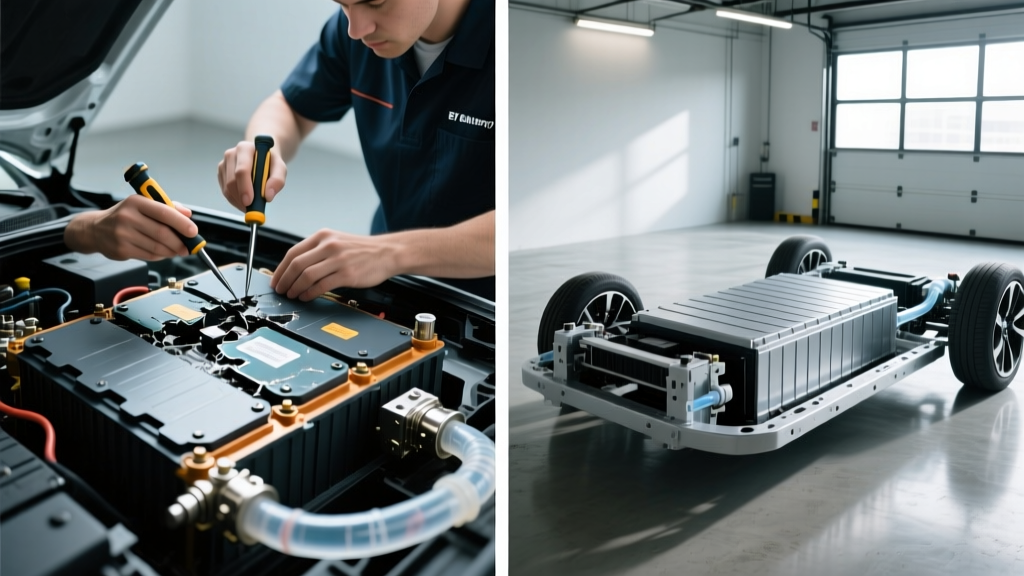
When is replacement actually needed? Most out-of-warranty replacements occur due to individual module or cell group failures rather than wholesale pack degradation. On modular platforms like GM's Ultium or VW's MEB, individual modules can be replaced for $2,000–$5,000 rather than swapping the entire pack. This is a significant and often-overlooked cost mitigator.
Additionally, the growing availability of refurbished and remanufactured packs from authorized recyclers is driving down replacement costs. A refurbished 75 kWh pack for a Model 3 can be sourced for $5,000–$7,000 in 2026 — roughly half the cost of a new OEM pack — and is a direct product of the electric vehicle battery recycling supply chain maturing.
How Electric Vehicle Battery Recycling Works in 2026
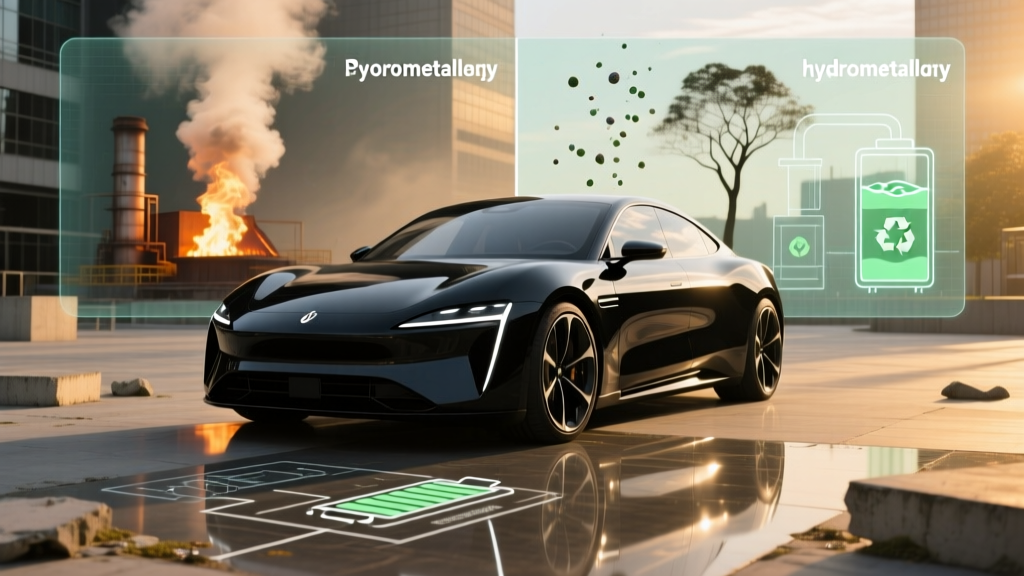
The EV battery recycling sector has scaled dramatically. Major recyclers including Redwood Materials, Li-Cycle, and Cirba Solutions (formerly Retriev) now operate at industrial scale in North America, recovering 95%+ of critical minerals from spent lithium-ion cells through hydrometallurgical processes.
What gets recovered:
- Cobalt, nickel, and manganese from NMC/NCA cathodes — the highest-value materials, directly re-entering battery manufacturing supply chains
- Lithium — recovered as lithium carbonate or lithium hydroxide; historically less economical but increasingly viable as processes improve
- Copper and aluminum from current collectors and bus bars
- Graphite from anodes — recovery is technically feasible but not yet widely economical at scale
How the process works: Spent battery packs are discharged, disassembled, and shredded in controlled environments to produce "black mass" — a powder containing the valuable cathode metals. Hydrometallurgical refining then separates individual elements to battery-grade purity. Redwood Materials, for example, reports recovering over 95% of nickel, cobalt, and copper, and over 80% of lithium from input material, feeding this directly back into new cathode production for partners like Panasonic and Tesla.
Why this matters for owners: Battery recycling directly suppresses replacement costs by increasing the supply of refurbished cells and modules. It also supports the domestic critical-mineral supply chain that underpins federal §30D tax credit eligibility, which requires increasing percentages of battery minerals to be sourced or recycled in North America or free-trade-agreement partners. As recycling volumes grow, the battery-sourcing requirements become easier for automakers to meet, keeping more vehicles credit-eligible.
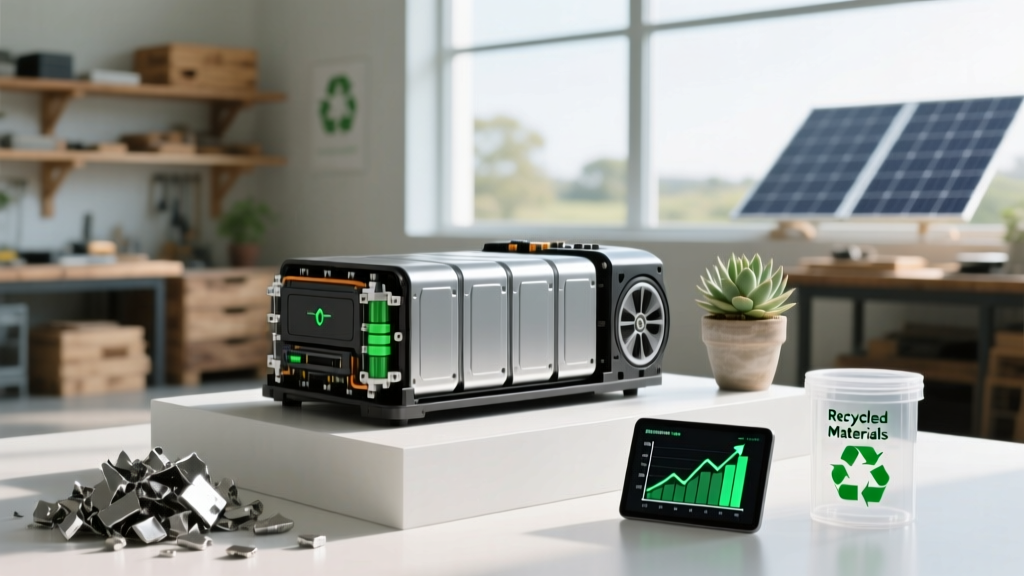
Second-life applications: Before recycling, packs that retain 70–80% capacity are increasingly repurposed for stationary energy storage — grid buffering, commercial solar storage, and residential backup systems. A pack that has degraded below automotive usefulness can still serve a decade or more in a stationary role where energy density and weight are irrelevant. This second-life market further offsets recycling costs and extends the economic value of every battery produced.
Factors That Affect Battery Life — and How to Monitor Health
Battery longevity is not a lottery. Specific, measurable behaviors determine how quickly your pack degrades:
Battery Care Checklist: Maximize Your Pack's Lifespan
- Minimize DC fast-charging frequency. Occasional road-trip fast-charging is fine, but daily use of 150+ kW DC chargers accelerates degradation by 1–3% over 100,000 miles compared to Level 2 home charging. Charge at home on Level 2 (7–11.5 kW) whenever possible.
- Manage state of charge (SoC) for NMC/NCA. Daily charging to 80% and avoiding prolonged storage above 90% or below 10% significantly extends cycle life. LFP owners can charge to 100% daily without concern — in fact, periodic 100% charges help the BMS (battery management system) recalibrate.
- Precondition before fast-charging. Battery preconditioning (automatic in Tesla navigation-to-Supercharger, available in most modern EVs) warms the cells to optimal temperature, reducing lithium plating risk during high-power charging.
- Avoid extreme temperature storage. Parking in a garage in winter or shade in summer reduces calendar aging. Sustained exposure to 95°F+ ambient temperatures with a high SoC is the most damaging combination for lithium-ion chemistry.
- Use regenerative braking moderately in cold weather. High regen on a cold battery forces high charge rates into cold cells. Most EVs automatically limit regen when the battery is cold, but gentle driving for the first 10–15 minutes in freezing conditions is still best practice.
How to Check Your Battery's State of Health (SoH)
Most EVs do not display a direct SoH percentage on the dashboard, but several methods exist:
- In-app diagnostics: Tesla's service menu, Hyundai's Bluelink, and BMW's Connected Drive include battery health indicators accessible through the vehicle's app or service screens.
- OBD-II tools: Devices like the OBDLink MX+ paired with apps such as EVbatmon or LeafSpy (for Nissan Leaf) read the BMS-reported SoH directly.
- Manual calculation: Charge to 100%, note the displayed range, and compare to the original EPA rating. A car that originally displayed 310 miles at 100% and now shows 280 miles has roughly 90% SoH — accounting for variables like temperature and tire pressure.
- Third-party services: Recurrent offers free battery health reports for participating owners, benchmarking your pack against a fleet of identical vehicles.
Emerging Battery Technology: What's on the Horizon
Several next-generation battery technologies are in advanced development, though none are yet available in production passenger vehicles as of 2026:
Solid-state batteries replace the liquid electrolyte with a solid ceramic or polymer, promising higher energy density (potentially 400+ Wh/kg), faster charging, and inherent safety advantages. Toyota has announced limited solid-state production for 2027–2028, initially in low volumes for premium models. Samsung SDI and QuantumScape are targeting similar timelines. Realistic mass-market availability remains 2029–2030 at the earliest.
Silicon-dominant anodes (replacing graphite with silicon to increase lithium storage capacity) are closer to market. Companies like Sila Nanotechnologies and Group14 are supplying silicon anode materials for production cells expected in 2026–2027 model-year vehicles, offering 10–20% energy density gains without the manufacturing challenges of full solid-state cells.
Sodium-ion batteries are entering production for lower-cost, shorter-range applications — primarily in China through CATL and BYD. These eliminate lithium entirely, trading energy density for cost and resource abundance. North American availability in passenger EVs is not expected before 2028.
All of these technologies will eventually enter the recycling stream, and recyclers are already developing processes for solid-state and sodium-ion chemistries. The recycling infrastructure being built today for NMC and LFP will adapt to next-generation cells, ensuring that end-of-life processing scales alongside battery innovation.
Frequently Asked Questions
How long do EV batteries last in years and miles?
Based on fleet data, most modern EV batteries retain 85–90% of original capacity at 150,000 miles and 80–87% at 200,000 miles. In years, that translates to 12–18 years of typical driving (12,000–15,000 miles/year) before capacity loss becomes practically limiting. Many batteries will outlast the vehicle's body and chassis components.
How much does it cost to replace an EV battery?
Full pack replacement ranges from approximately $8,000 for a ~60 kWh LFP pack (e.g., Tesla Model 3 RWD) to $20,000–$30,000 for large packs like the Chevrolet Silverado EV's ~200 kWh Ultium system. However, most replacements involve individual module swaps at $2,000–$5,000 on modular platforms. Refurbished packs from certified recyclers cost 40–60% less than new OEM units.
What does the battery warranty cover?
Federal law requires a minimum of 8 years / 100,000 miles of battery coverage (10 years / 150,000 miles in CARB states). The warranty covers capacity loss below a stated threshold (typically 70% of original capacity) and defects in materials or workmanship. It does not cover damage from accidents, improper charging, or environmental events.
Is LFP or NMC better for longevity?
LFP batteries generally offer superior cycle life (3,000–5,000+ cycles vs. 1,000–2,000 for NMC) and tolerate daily 100% charging without accelerated degradation. NMC offers higher energy density and better cold-weather performance. For a driver who charges at home daily and prioritizes long-term durability over maximum range, LFP is the stronger longevity choice.
Does fast charging damage EV batteries?
Frequent DC fast-charging at high power (150+ kW) accelerates degradation by approximately 1–3% over 100,000 miles compared to exclusive Level 2 charging. Occasional fast-charging on road trips has negligible impact. Battery preconditioning and modern thermal management systems have significantly reduced fast-charging harm compared to early-generation EVs.
Are EV batteries recyclable?
Yes. Modern hydrometallurgical recycling recovers 95%+ of cobalt, nickel, and copper, and 80%+ of lithium from spent cells. Major recyclers including Redwood Materials and Li-Cycle operate at industrial scale in North America. Recycled materials are already re-entering battery supply chains, and refurbished packs from recycled cells are available as lower-cost replacement options.
What happens to EV batteries that can't be recycled yet?
Packs with 70–80% remaining capacity are diverted to second-life stationary storage applications — grid buffering, solar farm storage, and residential backup — where they can serve 10+ additional years. Only at end of second life are they fully recycled. This cascading use model maximizes the economic and environmental value extracted from every battery produced.
Sources: Battery degradation data aggregated from Recurrent fleet studies; warranty terms verified against manufacturer specifications and fueleconomy.gov; tax credit sourcing rules per IRS §30D guidance. Replacement cost estimates reflect 2026 market pricing from OEM and authorized refurbisher data.