The question every prospective EV buyer eventually asks isn't just about range or charging speed — it's about what happens when the battery ages out. Can EV batteries be recycled? The short answer is yes, and the recycling infrastructure has scaled considerably by 2026. But recycling is only the final chapter. Most modern lithium-ion traction batteries spend 15 to 20 years in vehicles, then another 5 to 10 years in stationary storage applications, before they ever reach a recycler's shredder.
This guide covers the full lifecycle: the two dominant chemistries (NMC and LFP), how degradation actually plays out in real-world data, what your warranty guarantees, what a replacement costs if you're out of coverage, and the recycling processes recovering up to 95% of critical minerals today. Whether you're evaluating a 2026 Tesla Model Y, a Chevrolet Equinox EV, or a Ford F-150 Lightning, the battery is the single most expensive component in the vehicle — and understanding its trajectory is essential to making a smart purchase.
LFP vs NMC/NCA: The Two Chemistries Powering 2026 EVs
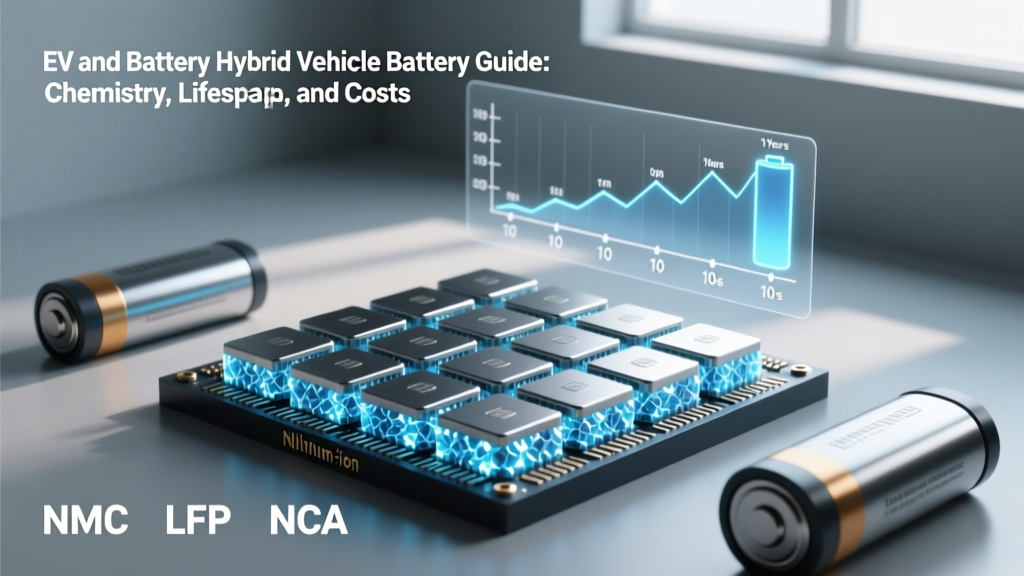
Not all EV batteries are built the same. The two dominant cathode chemistries in the U.S. market are NMC (nickel-manganese-cobalt) / NCA (nickel-cobalt-aluminum) and LFP (lithium iron phosphate). Each has distinct trade-offs that affect range, longevity, charging behavior, cost, and — critically — recyclability.
| Attribute | NMC / NCA | LFP |
|---|---|---|
| Energy Density | Higher (~250–300 Wh/kg cell-level) | Lower (~160–200 Wh/kg cell-level) |
| Typical Cycle Life | 1,000–2,000 full cycles | 3,000–5,000+ full cycles |
| Cold-Weather Performance | Better low-temp conductivity | Reduced performance below 32°F; preconditioning essential |
| Cost per kWh (2026) | $110–$135 | $75–$95 |
| State of Charge Recommendation | 20–80% daily; 100% for trips only | Can charge to 100% daily without accelerated degradation |
| Thermal Stability | Lower thermal runaway threshold | Higher thermal stability; safer chemistry |
| Recycling Value | Higher — cobalt and nickel are high-value recovery targets | Lower material value; iron and phosphate less profitable to recover |
| Examples (2026 Models) | Tesla Model S/X, Hyundai Ioniq 5 (Long Range), Rivian R1S, Ford F-150 Lightning (Extended Range) | Tesla Model 3/Y (Standard Range), Ford Mustang Mach-E (Select), Chevrolet Equinox EV, BYD models |
Which Chemistry Is Better?
There is no universal winner — it depends on your driving profile. NMC/NCA packs deliver more range per kilogram, making them ideal for long-range vehicles and cold-climate drivers who need every EPA mile. LFP packs sacrifice some energy density but last significantly longer (more charge cycles), tolerate daily 100% charging, cost less to manufacture, and offer superior thermal safety. For a commuter who charges at home nightly and drives under 50 miles a day, LFP is increasingly the pragmatic choice. For road-trippers and northern-climate owners, NMC remains the stronger fit.
How Long Do EV Batteries Actually Last?
Based on aggregated fleet data from fueleconomy.gov, manufacturer warranty filings, and independent studies by Recurrent Auto and Geotab, most EV batteries retain 85–92% of their original capacity after 100,000 miles and 75–85% after 200,000 miles. The average degradation curve is not linear: the steepest loss (roughly 3–5%) occurs in the first 20,000–30,000 miles, after which degradation flattens significantly.
Typical Capacity Retention by Mileage (NMC and LFP Combined Fleet Averages):
- 0–30,000 miles: 95–97% remaining (initial calibration loss)
- 50,000 miles: 92–95% remaining
- 100,000 miles: 87–92% remaining
- 150,000 miles: 82–88% remaining
- 200,000 miles: 76–85% remaining
Sources: Geotab 2024 fleet study (6,300+ EVs), Recurrent Auto battery health data (2025), manufacturer warranty thresholds.
LFP-equipped vehicles tend to cluster at the higher end of these ranges. Tesla's 2025 Impact Report noted that Model 3 Standard Range (LFP) vehicles retained an average of 92% capacity at 100,000 miles, compared to roughly 88% for the Long Range (NMC) variant over the same distance.
What Kills a Battery Early?
Several factors accelerate degradation beyond the fleet average:
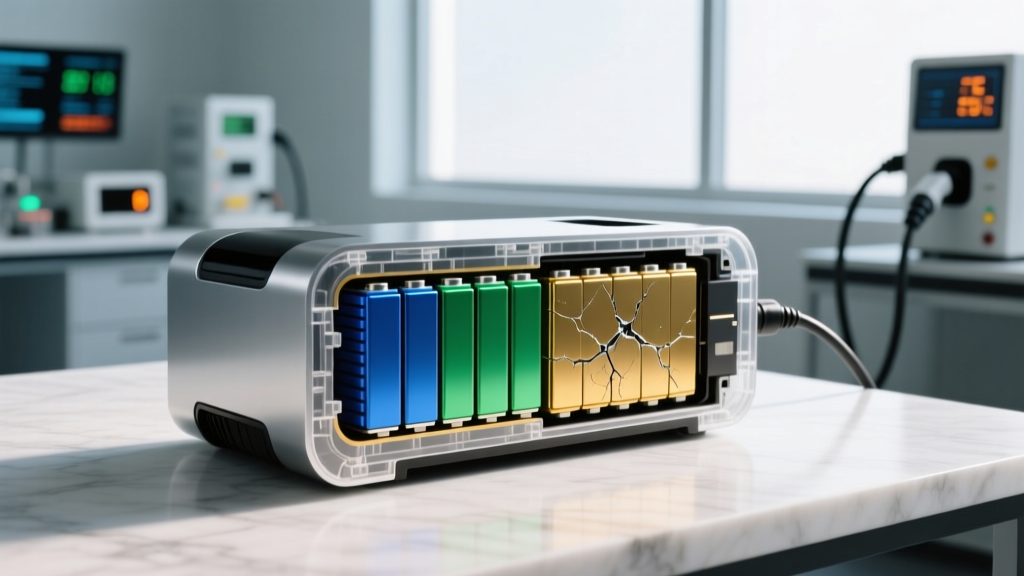
- Frequent DC fast charging above 150 kW without preconditioning — sustained high-C-rate charging generates heat that stresses cathode structures.
- Regularly sitting at 100% SoC (NMC/NCA only) — prolonged high voltage accelerates electrolyte oxidation.
- Deep discharges below 10% — low-voltage states can cause copper dissolution in the anode current collector.
- Extreme ambient heat — sustained operation in 100°F+ climates without active thermal management increases calendar aging.
- Infrequent use — batteries that sit unused for weeks at high SoC degrade faster than those cycled regularly.
EV Battery Warranties: What's Covered in 2026
Federal law mandates a minimum battery warranty of 8 years / 100,000 miles for emissions-related components, and most automakers apply this standard to the high-voltage traction battery. Many go further, especially in California Air Resources Board (CARB) states where 10 years / 150,000 miles is common.
| Manufacturer | Battery Warranty | Capacity Retention Threshold |
|---|---|---|
| Tesla (Model 3/Y Standard Range — LFP) | 8 yr / 100,000 mi | 70% |
| Tesla (Model 3/Y Long Range — NMC) | 8 yr / 120,000 mi | 70% |
| Hyundai / Kia (Ioniq 5, EV6, EV9) | 10 yr / 100,000 mi | 70% |
| Ford (Mustang Mach-E, F-150 Lightning) | 8 yr / 100,000 mi | 70% |
| Chevrolet (Equinox EV, Blazer EV, Silverado EV) | 8 yr / 100,000 mi | 60–70% (varies by model) |
| Rivian (R1T, R1S) | 8 yr / 175,000 mi | 70% |
| BMW (i4, iX, i7) | 8 yr / 100,000 mi | 70% |
What "capacity retention threshold" means: If your battery's usable capacity drops below the stated percentage within the warranty period, the manufacturer is obligated to repair or replace it — typically by swapping in a refurbished pack that meets the threshold, not necessarily a brand-new unit. Most warranties cover defects and abnormal degradation but exclude damage from accidents, flooding, or unauthorized modifications.
EV Battery Replacement Cost: What You'll Actually Pay
Here's the reality that fear-mongering headlines omit: the vast majority of EV batteries outlive the vehicle they're installed in. According to data from NHTSA and industry analyses, fewer than 2–3% of EV batteries require out-of-warranty replacement due to failure. Most EVs are retired from collision damage, body rust, or electronics obsolescence long before the battery reaches end-of-life.
That said, if you do need a replacement — whether due to an out-of-warranty defect, accident damage, or purchasing a high-mileage used EV with a degraded pack — here's what it costs in 2026:
| Vehicle / Battery Size | Replacement Cost (Parts + Labor) | Typical When Needed |
|---|---|---|
| Tesla Model 3 Standard Range (~60 kWh LFP) | $8,000–$12,000 | Rarely; most exceed 300,000 mi before reaching 70% SoH |
| Tesla Model Y Long Range (~82 kWh NMC) | $12,000–$16,000 | 200,000+ mi if heavily DC-fast-charged |
| Hyundai Ioniq 5 (~77.4 kWh NMC) | $11,000–$15,000 | Rarely under warranty; 200,000+ mi |
| Ford F-150 Lightning Extended Range (~131 kWh NMC) | $18,000–$22,000 | Very rare; large buffer means slower apparent degradation |
| Chevrolet Equinox EV (~85 kWh NMC) | $12,000–$16,000 | 200,000+ mi |
| Rivian R1S Large Pack (~128 kWh NMC) | $17,000–$21,000 | Rarely; 8 yr / 175,000 mi warranty |
These prices have declined roughly 30–40% since 2020 as cell costs have fallen and refurbished pack availability has grown. Third-party EV battery repair shops (which replace individual modules rather than the entire pack) can often resolve issues for $3,000–$7,000 — a fraction of a full replacement.
How to Check and Maximize Your Battery's State of Health
Modern EVs provide multiple ways to monitor battery health, though the depth of information varies by manufacturer.
How to Check SoH
- In-car displays: Tesla provides a "Battery Health" percentage in the service menu (software 2025.8+). Hyundai/Kia shows SoH via the infotainment diagnostics screen. BMW displays it in the iDrive service menu.
- OBD-II dongles + apps: Tools like OBDLink SX paired with apps such as EVNotify or Car Scanner can read the Battery Management System (BMS) directly for precise SoH percentages, cell voltage deltas, and degradation codes.
- Dealer diagnostics: Any authorized service center can pull a full battery health report, including individual module balance — request this when buying a used EV.
- Third-party services: Companies like Recurrent Auto offer free battery health reports based on telematics data, with comparisons to similar vehicles in their fleet.
Battery Care Checklist for Maximum Longevity
- NMC/NCA daily charge limit: Set to 80% for daily driving; charge to 100% only before long trips and drive off promptly after reaching full.
- LFP daily charge limit: Charge to 100% at least once per week to allow the BMS to recalibrate cell balance.
- DC fast charging: Use 150 kW or lower when possible; reserve 250–350 kW chargers for road trips. Always enable battery preconditioning (automatic on Tesla, Hyundai, Ford when a charger is set as your navigation destination).
- Avoid prolonged low SoC: Don't let the battery sit below 15% for more than a few days. If storing the vehicle, leave it at 50–60% SoC.
- Extreme heat mitigation: Park in shade or a garage during summer; the thermal management system draws less energy (and causes less wear) when starting from a cool pack.
- Extreme cold protocol: Always precondition the battery before driving or charging in sub-40°F weather. Cold charging without preconditioning can cause lithium plating on the anode — permanent and irreversible damage.
- Regen braking setting: Moderate regen is gentler on the battery than maximum regen in cold weather, where high charge-acceptance rates can stress cold cells.
So, Can EV Batteries Be Recycled? The 2026 Reality
Yes — and the recycling industry has matured dramatically. As of 2026, the three dominant recycling processes recover 90–95% of critical minerals from end-of-life lithium-ion packs:
- Hydrometallurgical recycling (used by Redwood Materials, Li-Cycle, Ascend Elements): Packs are shredded, then dissolved in acid solutions to extract lithium, cobalt, nickel, and manganese at 95%+ purity. Redwood Materials, founded by Tesla co-founder JB Straubel, supplies recycled cathode material directly back to Panasonic and Ford, creating a closed-loop supply chain.
- Pyrometallurgical recycling (traditional smelting): Packs are smelted at high temperatures. This recovers cobalt and nickel effectively but historically burned off lithium and aluminum. Newer facilities capture lithium from slag, improving yields to 80–90%.
- Direct recycling (emerging): The cathode material is extracted intact and reconditioned without breaking it down to constituent elements. This preserves the crystal structure and is less energy-intensive. Companies like Ascend Elements and OnTo Technology are scaling this process, with commercial volumes expected to grow through 2028.
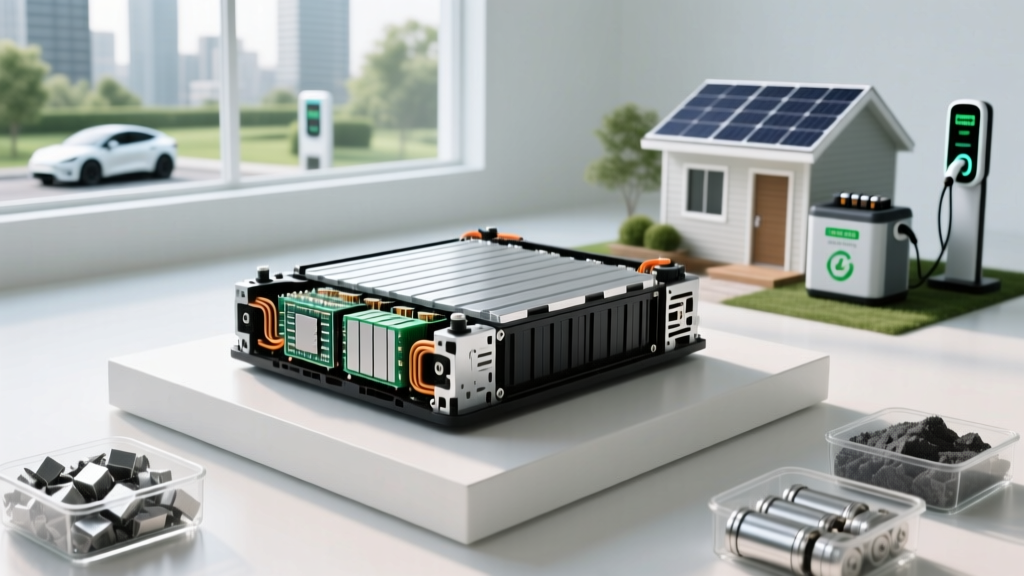
Before recycling comes second-life use. When an EV battery degrades to 70–75% capacity, it's no longer ideal for automotive use (reduced range and charge acceptance) but is perfectly suited for stationary energy storage — solar buffering, grid frequency regulation, and commercial peak-shaving. Companies like B2U Storage Solutions and Betteries repurpose retired EV packs for 7–12 additional years of service. A battery that spends 15 years in a vehicle and 10 years in stationary storage has amortized its manufacturing footprint across 25 years of useful life before recycling recovers its raw materials.
The IRS and the Department of Energy's battery sourcing requirements under §30D tax credit rules have also accelerated domestic recycling, as automakers must document that a growing percentage of critical minerals come from recycled or U.S.-sourced supply chains. By 2027, 80% of critical minerals must be sourced from the U.S. or free-trade-agreement partners — and recycled materials count toward that threshold, creating a direct financial incentive for recycling infrastructure.
What's Next: Solid-State and Silicon Anode Batteries
Looking forward — and this is forward-looking, not currently available — two technologies promise to reshape the battery landscape:
- Solid-state batteries: Replace the liquid electrolyte with a solid ceramic or polymer, enabling lithium-metal anodes and energy densities of 400–500 Wh/kg (roughly double current NMC). Toyota, Samsung SDI, and QuantumScape have announced pilot production, with limited vehicle deployment expected in 2027–2029 models. Challenges remain in manufacturing yield, cost (currently 3–5x NMC per kWh), and interface stability over thousands of cycles. Solid-state packs would also be simpler and safer to recycle due to the absence of flammable liquid electrolyte.
- Silicon-dominant anodes: Replacing graphite anodes with silicon can increase energy density by 20–40%. Sila Nanotechnologies and Group14 Technologies are supplying silicon anode materials to Mercedes-Benz and other OEMs for 2026–2027 model-year vehicles. This is an incremental improvement rather than a revolution — it works within existing NMC and LFP cathode architectures — but it meaningfully extends range without increasing pack weight.
Neither technology changes the recycling equation fundamentally: the cathode materials (nickel, cobalt, manganese, iron, phosphate) remain the primary recovery targets, and existing hydrometallurgical processes are compatible with both solid-state and silicon-anode architectures.
Frequently Asked Questions
How long do EV batteries last in years and miles?
Most modern EV batteries last 15–20 years and 200,000–300,000 miles before degrading to 70–80% of their original capacity. LFP chemistries tend to reach the upper end of that range. Complete failure (the battery becoming unusable) is rare — degradation is gradual, meaning you'll simply notice reduced range over time rather than a sudden loss of function.
How much does an EV battery cost to replace in 2026?
Full replacements range from $8,000 for a smaller LFP pack (Tesla Model 3 Standard Range) to $22,000 for a large NMC pack (Ford F-150 Lightning Extended Range). However, fewer than 3% of EV batteries ever require out-of-warranty replacement, and most vehicles are retired for other reasons before the battery reaches end-of-life. Module-level repairs at specialized shops cost $3,000–$7,000.
What does the EV battery warranty actually cover?
Federal law requires a minimum of 8 years / 100,000 miles. Most manufacturers guarantee that the battery will retain at least 70% of its original usable capacity during that period. If it drops below the threshold, the manufacturer will repair or replace the pack (often with a refurbished unit that meets the threshold). Warranties cover defects and abnormal degradation but not accident damage, flooding, or unauthorized modifications.
How do I check my EV battery's State of Health?
Many 2026 models display SoH directly in the vehicle's service or diagnostics menu (Tesla, Hyundai/Kia, BMW). For more granular data, an OBD-II dongle with an EV-compatible app can read cell-level voltage data from the BMS. Dealers can pull a full health report. When buying a used EV, always request this report — it's the single most important data point for assessing remaining battery life.
Is LFP or NMC better for my situation?
Choose LFP if you commute under 80 miles daily, charge at home, live in a moderate climate, and want maximum cycle life with the convenience of daily 100% charging. Choose NMC/NCA if you need maximum EPA range (300+ miles), frequently drive in sub-freezing temperatures, or regularly take long road trips where energy density matters. Both chemistries are recyclable; NMC packs have higher recovery value due to cobalt and nickel content.
Can I recycle my EV battery myself?
No — and you shouldn't try. High-voltage traction batteries operate at 400–800 volts and contain materials that require specialized handling. Recycling is performed by licensed facilities. When your EV reaches end-of-life, the dealer, dismantler, or recycler handles the battery through regulated channels. Under the EPA's universal waste rules, lithium-ion batteries must be transported and processed by certified handlers.
Does fast charging ruin my battery?
Occasional DC fast charging does not meaningfully accelerate degradation. However, daily use of 250–350 kW chargers without preconditioning can add 1–3% additional capacity loss over 100,000 miles compared to Level 2 home charging. The key mitigations are: enable preconditioning (navigate to the charger), prefer chargers at 150 kW or below for routine use, and avoid fast charging in extreme heat without allowing the thermal management system to cool the pack first.