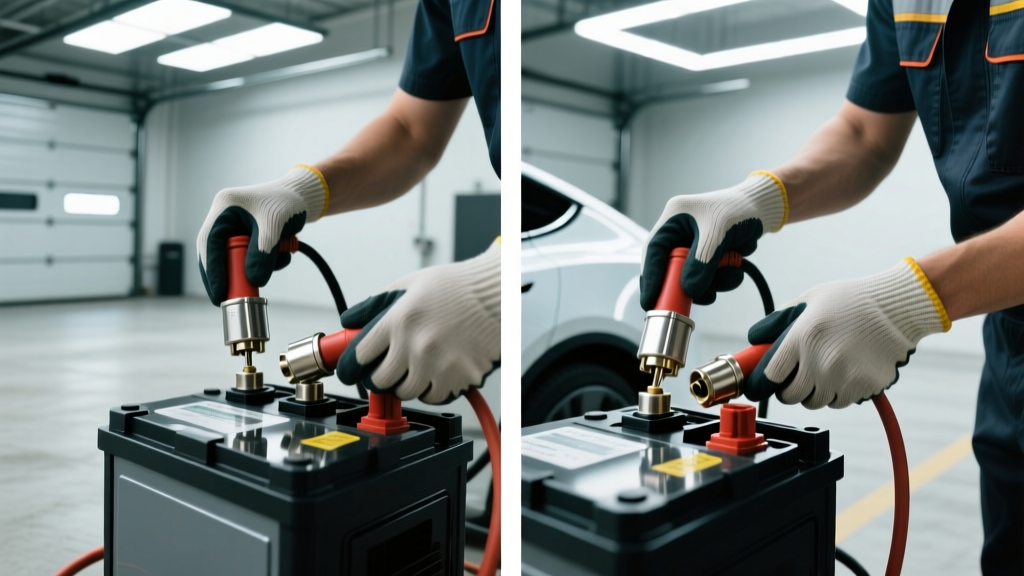
If you've ever typed "how long to run car to recharge battery" into a search bar, you're probably dealing with one of two very different problems. In a conventional gas car, that question usually means a dead 12V starter battery — and the answer is roughly 20 to 30 minutes of driving at highway speed to let the alternator top it up. But in an electric vehicle, there are two batteries: a high-voltage traction battery (the big one that powers the motor) and a 12V auxiliary battery (which runs the lights, infotainment, and computers). Confusing the two is the single most common source of EV battery misinformation online.
This guide tackles the real questions behind that search: how EV batteries recharge, how long they last, what degradation actually looks like in real ownership, and what it costs if you ever need a replacement. We'll also separate the traction battery from the 12V so you know exactly which system you're dealing with.
The Two Batteries in Your EV — and Why It Matters
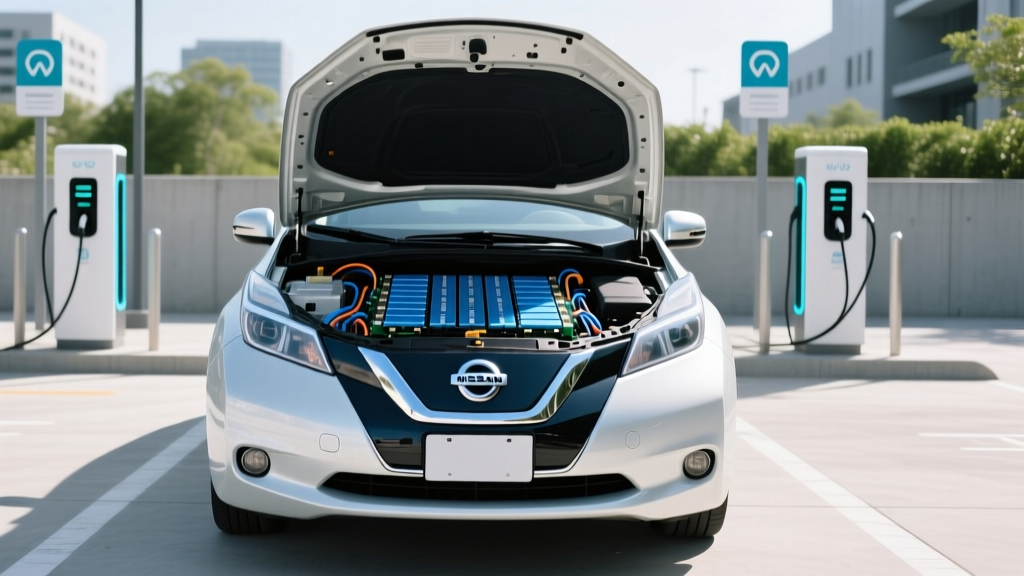
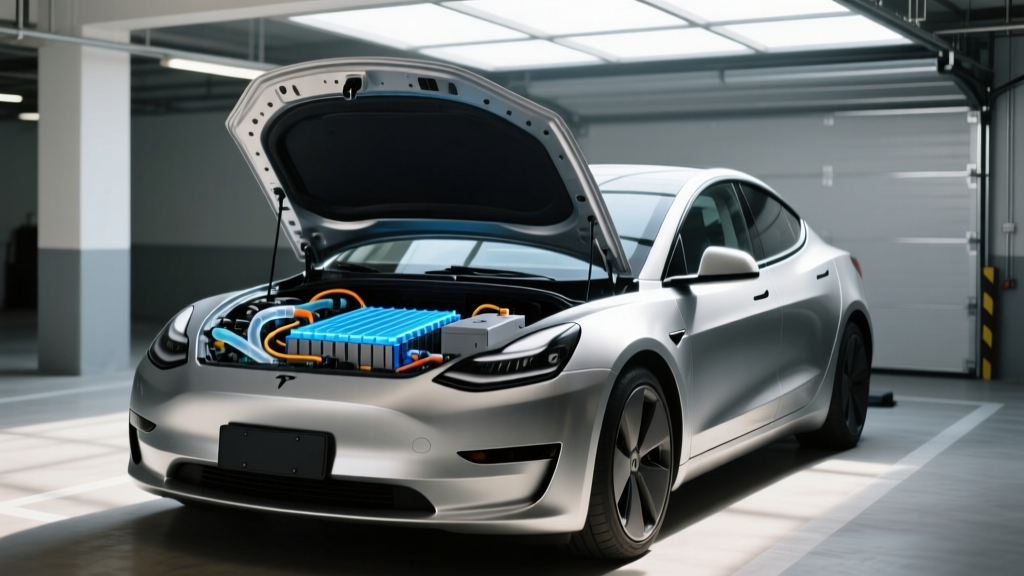
Every modern EV — from a Tesla Model 3 to a Ford F-150 Lightning to a Hyundai Ioniq 5 — carries two distinct battery systems:
- High-voltage traction battery: Typically 400V or 800V architecture, ranging from ~50 kWh to ~130+ kWh of usable energy. This is what propels the vehicle and what you recharge via Level 1, Level 2, or DC fast charging.
- 12V auxiliary battery: A small lead-acid or lithium-ion battery that powers the vehicle's computers, door locks, lights, and safety systems. It's recharged by a DC-DC converter that draws from the traction battery — not by an alternator, because EVs don't have one.
So if your question is really about a dead 12V auxiliary battery in an EV, the answer is different: the DC-DC converter recharges the 12V continuously whenever the car is powered on. Simply turning the car to "Ready" mode (even without driving) will begin replenishing the 12V from the traction battery. A deeply depleted 12V may need 30–60 minutes of the vehicle being powered on, or a dedicated 12V trickle charger overnight.
How Long Does It Take to Recharge an EV Traction Battery?
Since you can't recharge the main battery by driving, here's how long it actually takes at each charging level, using a mid-size crossover with a ~75 kWh battery as a representative example:
| Charging Level | Power (kW) | Miles Added per Hour | 10–80% Time (75 kWh battery) |
|---|---|---|---|
| Level 1 (120V household) | 1.0–1.4 kW | 3–5 mi/hr | ~45–55 hours |
| Level 2 (240V home/public) | 7.2–11.5 kW | 25–44 mi/hr | ~6–9 hours |
| DC Fast Charge (150 kW station) | Up to 150 kW | N/A (measured in minutes) | ~25–35 minutes |
| DC Fast Charge (350 kW station) | Up to 350 kW (vehicle-dependent) | N/A | ~15–22 minutes (if vehicle supports) |
Real-world caveat: Peak kW ratings are not sustained. A vehicle that advertises "250 kW peak" may only hold that rate between 10–30% state of charge (SoC), then taper significantly. The 10–80% time is the practical metric to watch, not the peak number. Cold batteries also charge substantially slower — preconditioning (warming the battery before arriving at the charger) is critical in winter. Most modern EVs do this automatically when you navigate to a charger.
Battery Chemistry: LFP vs NMC/NCA Trade-Offs
Not all EV batteries are the same. The two dominant lithium-ion chemistries in 2026 are LFP (lithium iron phosphate) and NMC/NCA (nickel manganese cobalt / nickel cobalt aluminum). Which one your EV uses affects range, longevity, charging habits, and cost.
| Attribute | LFP (Lithium Iron Phosphate) | NMC / NCA (Nickel-based) |
|---|---|---|
| Energy Density | Lower (~160–180 Wh/kg cell-level) | Higher (~220–260 Wh/kg cell-level) |
| Typical Range | Shorter for same pack size | Longer for same pack size |
| Cycle Life | 3,000–5,000+ cycles | 1,000–2,000 cycles |
| Recommended SoC for Daily Use | 100% is fine (and recommended periodically for BMS calibration) | 80% daily; 100% only before trips |
| Cold-Weather Performance | Weaker — greater range loss below freezing | Better cold performance |
| Cost | Lower (no cobalt or nickel) | Higher (critical mineral costs) |
| Common In (2026) | Tesla Model 3/Y RWD, Ford Mustang Mach-E Select, BYD models | Long-range/AWD trims, most luxury EVs |
Which is better? It depends on your use case. If you want maximum range and don't mind managing state of charge, NMC delivers more miles per kilogram. If you prioritize longevity, lower cost, and the simplicity of charging to 100% daily, LFP is the stronger pick — especially for commuters with home charging. Tesla's own guidance for LFP-equipped Model 3 and Model Y is to charge to 100% at least once per week for accurate state-of-charge estimation.
How Long Do EV Batteries Actually Last?
The short answer: far longer than most buyers fear. Data from fleets, owner surveys, and manufacturer reporting consistently show that modern EV batteries lose roughly 1–2% of total capacity per year under normal use. Here's what that looks like in practice:
Typical Capacity Retention Over Time (NMC chemistry, average use):
- Year 1 / 15,000 mi: ~97–98% capacity retained
- Year 3 / 45,000 mi: ~93–95% capacity retained
- Year 5 / 75,000 mi: ~90–93% capacity retained
- Year 8 / 120,000 mi: ~85–90% capacity retained
- Year 10 / 150,000 mi: ~80–87% capacity retained
LFP packs generally degrade more slowly, with many owners reporting 95%+ retention at 100,000 miles. Source: fleet data compiled by Geotab and owner-reported data on platforms like Recurrent Auto.
A battery at 80% capacity doesn't mean the car is dead — it means your 300-mile EPA range is now roughly 240 miles. For most daily driving, that's still entirely adequate. The vast majority of EV batteries outlast the vehicles they're installed in. Complete, sudden battery failure is exceedingly rare; degradation is a slow, gradual process.
What Does the Battery Warranty Cover?
Federal law mandates a minimum of 8 years / 100,000 miles for EV battery warranties (10 years / 150,000 miles in California and states that follow CARB standards). But the details vary by manufacturer, and the capacity-retention threshold is what really matters.
| Manufacturer | Warranty Term | Capacity Retention Threshold |
|---|---|---|
| Tesla (Model 3/Y) | 8 yr / 100,000 mi (LR/AWD: 8 yr / 120,000 mi) | 70% |
| Hyundai / Kia | 10 yr / 100,000 mi | 70% |
| Ford | 8 yr / 100,000 mi | 70% |
| GM (Chevrolet, Cadillac) | 8 yr / 100,000 mi | 70% (some models 60% for Ultium) |
| Rivian | 8 yr / 175,000 mi | 70% |
| BMW | 8 yr / 100,000 mi | 70% |
What this means practically: If your battery drops below 70% of its original capacity within the warranty period, the manufacturer will repair or replace it — usually by swapping in a refurbished pack that meets the threshold, not necessarily a brand-new unit. Most owners will never approach this threshold. If your battery is at 88% after 8 years (a typical outcome), the warranty doesn't apply because you're still above 70%.
EV Battery Replacement Cost: What to Expect
This is the question that generates the most anxiety — and the most misleading headlines. Here are the actual numbers as of 2026:
| Vehicle / Battery Size | Estimated Replacement Cost (Parts + Labor) | When Typically Needed |
|---|---|---|
| Nissan Leaf (40–62 kWh) | $6,500 – $10,000 | Rarely; mostly early-gen packs with passive cooling |
| Tesla Model 3/Y (60–82 kWh) | $12,000 – $16,000 | Very rarely under 200,000 mi |
| Hyundai Ioniq 5 (77.4 kWh) | $11,000 – $15,000 | Rarely; liquid-cooled packs show strong longevity |
| Ford F-150 Lightning (98–131 kWh) | $18,000 – $28,000 | Rarely; largest packs command highest prices |
| Chevrolet Bolt EV/EUV (65 kWh) | $14,000 – $16,000 (pre-recall replacement was free) | 2017–2022 models had recall; post-recall packs are robust |
| Luxury EVs (Porsche Taycan, Mercedes EQS, 90–108 kWh) | $20,000 – $35,000+ | Rarely; lower production volumes raise parts cost |
Context that matters: Battery replacement is uncommon. Data from Consumer Reports and warranty claim rates suggest fewer than 5% of EVs require a battery replacement during the warranty period, and most of those are due to manufacturing defects rather than degradation. By the time a battery degrades to the point of needing replacement (typically 15–20+ years), the vehicle's residual value is often less than the cost of a new pack. In practice, most EV batteries are retired with the car.
Factors That Accelerate Battery Degradation
Not all miles are equal when it comes to battery wear. These are the factors with the most significant impact on long-term health:
- Frequent DC fast charging: Occasional road-trip fast charging is fine, but daily reliance on 150+ kW DC charging accelerates degradation. Aim for Level 2 as your daily routine; use DCFC for trips.
- Sustained high state of charge: For NMC/NCA batteries, sitting at 100% SoC for extended periods (days or weeks) stresses the cells. Charge to 80% daily and only hit 100% when you'll drive soon after.
- Deep discharges: Regularly running the battery below 10% SoC causes more wear than keeping it in the 20–80% range.
- Extreme heat: Hot climates (consistently above 95°F / 35°C) are harder on batteries than cold ones. Liquid-cooled thermal management systems (standard on most 2026 EVs) mitigate this substantially.
- Extreme cold: Cold doesn't cause permanent damage, but charging a frozen battery without preconditioning can cause lithium plating — a form of irreversible degradation. Always precondition before winter fast charging.
- High-performance driving: Sustained high-current draws (track use, aggressive acceleration) generate heat that stresses cells over time.
How to Check and Maximize Your Battery's State of Health
State of Health (SoH) is the percentage of your battery's original capacity that remains usable. Here's how to monitor it:
In-vehicle tools: Many 2026 EVs display SoH or battery health estimates in the settings menu. Tesla provides a battery health percentage under Service mode. Hyundai/Kia include battery condition readouts in the EV settings. Ford's Sync system provides estimated range trends that indirectly reflect health.
OBD-II dongles and apps: Third-party tools like OBDLink paired with apps such as Leaf Spy (Nissan Leaf), Scan My Tesla, or Car Scanner can read detailed battery telemetry — including individual cell voltages, pack temperature, and precise SoH percentages that the manufacturer's display may smooth over.
Dealer diagnostics: During routine service, dealerships can run a full battery health report. Request one annually or before a warranty claim. This report is also valuable documentation if you sell the vehicle.
Maximizing SoH — the practical summary:
- Use Level 2 home charging as your primary method.
- Set charge limits to 80% for NMC/NCA; 100% is fine for LFP.
- Precondition the battery before DC fast charging, especially in cold weather.
- Avoid leaving the car at 100% SoC or below 10% SoC for extended periods.
- Drive normally — you don't need to baby the car, but know that daily track sessions will age the pack faster.
What's Next: Solid-State and Silicon-Anode Batteries
Looking forward, two technologies are generating significant interest:
Solid-state batteries replace the liquid electrolyte with a solid material, promising higher energy density, faster charging, and improved safety. Toyota has announced plans for limited solid-state EV production beginning around 2027–2028, while Samsung SDI and other cell manufacturers target similar timelines. However, these remain announced and preliminary — no mass-market EV currently on sale uses solid-state cells. Expect initial deployment in limited, premium models before any broad availability, likely not before 2029–2030 for mainstream vehicles.
Silicon-anode batteries (used in limited form by companies like Sila Nanotechnologies and adopted incrementally by GM's Ultium platform) increase energy density by incorporating silicon into the anode. These are already appearing in small quantities in 2025–2026 model-year vehicles and offer a ~10–20% energy density improvement over conventional graphite anodes. They represent an evolution rather than a revolution — meaningful, but incremental.
Neither technology changes the buying decision today. Current NMC and LFP batteries are mature, well-understood, and backed by extensive warranty coverage.
Frequently Asked Questions
How long do EV batteries last in years and miles?
Most modern EV batteries are designed to last 15–20 years or 150,000–200,000+ miles before degrading to 70–80% of original capacity. Many will outlast the vehicle itself. Fleet data shows an average degradation rate of 1–2% per year under normal use.
How much does an EV battery cost to replace?
Replacement costs range from roughly $6,500 for smaller packs (Nissan Leaf) to $28,000+ for large truck packs (F-150 Lightning Extended Range). However, the vast majority of EV owners never need a replacement — battery failure rates during the warranty period are below 5%.
What does the battery warranty actually cover?
Federal law requires at minimum 8 years / 100,000 miles of battery warranty coverage. Most manufacturers guarantee the battery will retain at least 70% of its original capacity during that period. If it drops below the threshold, the manufacturer repairs or replaces the pack. Review your specific owner's manual for exact terms, as they vary by brand and model.
How do I check my EV's battery health?
Most 2026 EVs include a battery health indicator in the infotainment settings. For more granular data, OBD-II adapters paired with apps like Scan My Tesla or Leaf Spy can display precise State of Health percentages, cell-level voltages, and temperature data. Dealerships can also run official diagnostic reports.
LFP vs NMC — which battery chemistry is better?
Neither is universally better. LFP offers longer cycle life, lower cost, and the convenience of 100% daily charging, but with lower energy density and weaker cold-weather range. NMC delivers more range per kilogram and better cold performance, but requires more careful state-of-charge management (80% daily limit). Choose LFP for commuting and simplicity; choose NMC for maximum range and cold-climate driving.
Can I recharge my EV's main battery by driving it?
No. Unlike a gas car's alternator recharging the 12V battery, an EV's traction battery only recharges from an external power source (Level 1, Level 2, or DC fast charger). Regenerative braking recovers small amounts of energy during deceleration, but this is not a practical recharging method — it extends range incrementally, not meaningfully.
Does fast charging damage my EV battery?
Occasional DC fast charging does not cause meaningful harm. However, daily reliance on high-power DC charging (150+ kW) does accelerate long-term degradation compared to Level 2 charging. The best practice is Level 2 at home for daily needs and DC fast charging for road trips. Always precondition the battery before a fast-charge session.
For official battery warranty details, consult your vehicle's owner's manual or the manufacturer's website. For federal tax credit eligibility related to EV battery sourcing requirements, refer to the IRS §30D guidelines. Battery range and efficiency figures sourced from fueleconomy.gov.