The Real Answer to "How Can You Recharge a Battery" in an EV
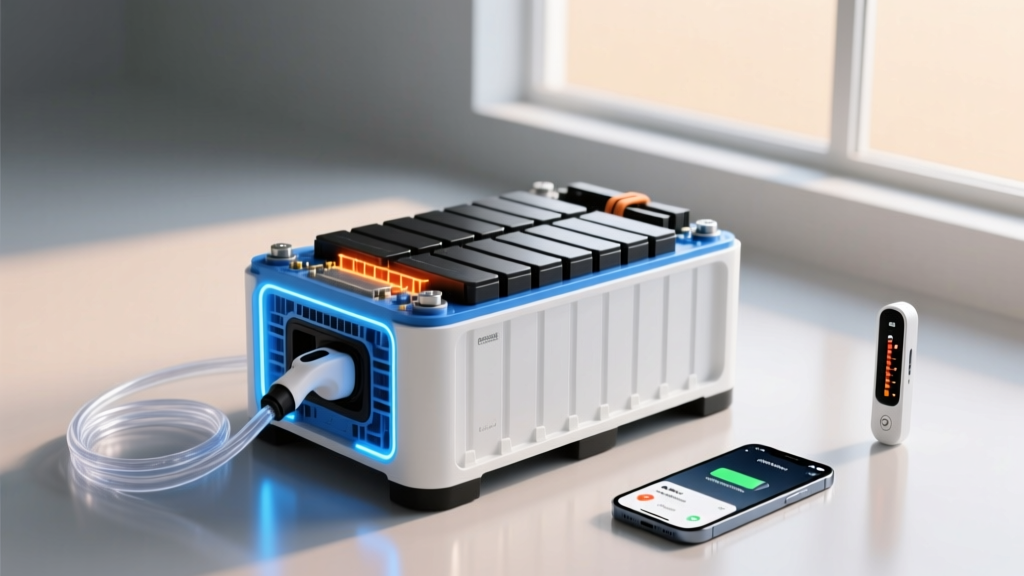
If you've typed "how can you recharge a battery" into a search bar, you're probably asking one of two things: how to physically plug in and charge your EV, or how to keep the high-voltage traction battery healthy over a decade or more of ownership. This guide answers both — but focuses on the second question, because how you recharge matters far more than most new EV owners realize.
Unlike a gasoline car where you fill the tank and forget about it, an EV battery is a living electrochemical system. Every charge cycle, every fast-charging session, every night parked at 100% or 10% — they all accumulate into a degradation curve that determines whether your battery delivers 95% of its original capacity at year five or 82%. The good news? Modern battery management systems (BMS) are remarkably good at protecting the pack. The better news? Most EV batteries outlast the vehicles they're installed in.
Let's break down the chemistry, the data, the costs, and the daily habits that actually move the needle on battery longevity.
LFP vs NMC: Which Chemistry Is Rechargeable Longer?
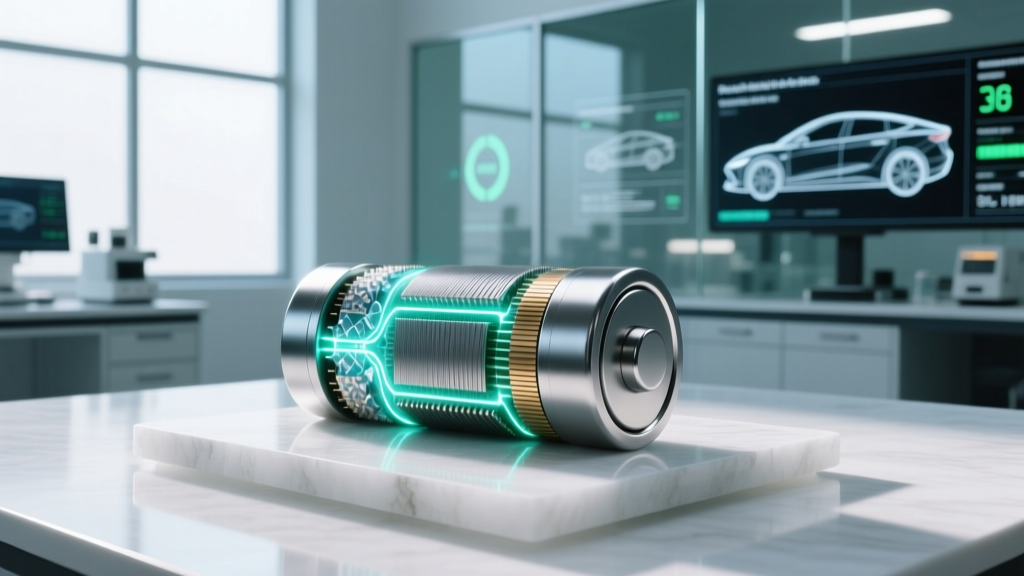
The two dominant lithium-ion chemistries in 2026 EVs are LFP (lithium iron phosphate) and NMC (nickel manganese cobalt), with NCA (nickel cobalt aluminum) appearing in some Tesla and Rivian packs. They recharge differently, degrade differently, and suit different ownership patterns.
| Attribute | LFP (LiFePO₄) | NMC / NCA |
|---|---|---|
| Energy Density | Lower (~160 Wh/kg cell-level) | Higher (~250-300 Wh/kg cell-level) |
| Cycle Life | 3,000-5,000+ cycles to 80% SoH | 1,000-2,000 cycles to 80% SoH |
| Recommended Daily SoC | 100% (charge to full regularly) | 80-90% for daily; 100% for trips |
| Cold-Weather Performance | Weaker — slower charging below 32°F | Better — more tolerant of cold charging |
| Cost per kWh | Lower (~$90-110/kWh pack-level) | Higher (~$120-150/kWh pack-level) |
| Thermal Stability | Excellent — less prone to thermal runaway | Good — requires more active cooling |
| Common In (2026) | Tesla Model 3/Y RWD, base Bolt, some BYD | Long-range AWD models, Rivian, Hyundai/Kia, Ford |
The practical takeaway: If you want to charge to 100% every night and drive a shorter-range commuter car, LFP is the lower-stress choice. If you need 320+ miles of EPA range and frequently road-trip, NMC delivers the energy density — but rewards you for keeping daily state of charge between 20-80%.
According to fueleconomy.gov, the EPA tests EV battery systems for durability as part of its labeling process, but real-world longevity depends heavily on your charging habits and climate.
How Long Do EV Batteries Actually Last?
The short answer: most EV batteries last 15-20 years or 150,000-200,000+ miles before reaching 70-80% of original capacity. Catastrophic failure is rare; gradual capacity loss is the norm.
Here's what the data actually shows from fleet studies and owner-reported telemetry:
Typical EV Battery Degradation Curve (Fleet Average Data)
| Time / Mileage | Average Capacity Retained (NMC) | Average Capacity Retained (LFP) |
|---|---|---|
| Year 1 / ~12,000 mi | 95-97% | 97-99% |
| Year 3 / ~36,000 mi | 91-94% | 94-97% |
| Year 5 / ~60,000 mi | 87-92% | 91-96% |
| Year 8 / ~96,000 mi | 82-89% | 88-94% |
| Year 10 / ~120,000 mi | 78-86% | 85-92% |
| Year 15 / ~180,000 mi | 72-82% | 80-90% |
Sources: Geotab fleet data (2024 update), Recurrent Auto battery health reports, Tesla Impact Report. Figures represent fleet averages — individual results vary with climate, charging behavior, and thermal management system quality.
Notice the pattern: degradation is non-linear. The steepest drop occurs in year one (roughly 3-5% loss as the solid electrolyte interphase layer stabilizes), then the curve flattens considerably. An NMC pack that retains 90% at year three will likely still be above 82% at year eight — well within warranty thresholds.
For context, a Tesla Model Y Long Range with a 75 kWh usable NMC pack losing 12% over eight years still delivers roughly 265 miles of its original 310-mile EPA range. That's a noticeable reduction on road trips, but irrelevant for daily commuting.
What Does the Battery Warranty Actually Cover?
Federal law mandates a minimum 8-year / 100,000-mile warranty on EV battery packs for emissions-related components, and most manufacturers meet or exceed this baseline. California and states adopting CARB standards push the requirement to 10 years / 150,000 miles.
| Manufacturer | Warranty Term | Capacity Threshold | Notes |
|---|---|---|---|
| Tesla (Model 3/Y) | 8 yr / 120,000 mi (LR/AWD); 8 yr / 100,000 mi (RWD) | 70% retention | Transferable to second owner |
| Hyundai / Kia | 10 yr / 100,000 mi | 70% retention | Among the longest coverage terms |
| Ford (Mustang Mach-E, F-150 Lightning) | 8 yr / 100,000 mi | 70% retention | Covers battery and hybrid/electric components |
| GM (Chevrolet, Cadillac) | 8 yr / 100,000 mi | 70% retention | Ultium packs; some models carry extended coverage |
| Rivian | 8 yr / 175,000 mi (R1T/R1S Max Pack) | 70% retention | Higher mileage cap for larger packs |
| BMW (iX, i4) | 8 yr / 100,000 mi | 70% retention | Includes battery conditioning system |
What "70% retention" means in practice: If your 82 kWh pack measures below 57.4 kWh of usable capacity within the warranty period, the manufacturer must repair or replace it at no cost. This is measured via dealer diagnostic tools that read the BMS-reported State of Health (SoH), not your dashboard range estimate.
Warranties typically do not cover damage from collisions, flooding, improper modifications, or use of non-certified charging equipment that causes electrical damage. Normal degradation above the 70% threshold is considered expected wear.
How Much Does It Cost to Replace an EV Battery?
This is the question that generates the most fear — and the most misinformation. Let's put real numbers to it.
| Vehicle / Pack Size | Battery Chemistry | Replacement Cost Range | Typical Replacement Timing |
|---|---|---|---|
| Tesla Model 3 RWD (~57 kWh) | LFP | $8,000 – $12,000 | Rarely needed; 15+ yr expected life |
| Tesla Model Y LR (~75 kWh) | NMC/NCA | $12,000 – $16,000 | Rarely before 200k+ miles |
| Hyundai Ioniq 5 (~77 kWh) | NMC | $11,000 – $15,000 | Module-level repair often possible |
| Ford F-150 Lightning Ext. Range (~131 kWh) | NMC | $20,000 – $30,000 | Largest consumer packs; most expensive |
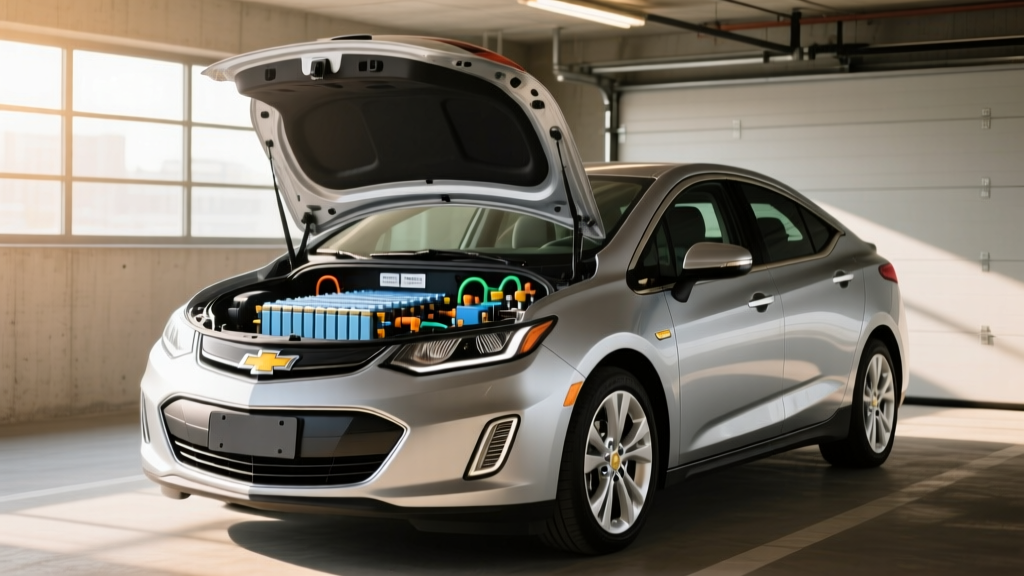
| Chevrolet Bolt EV (~65 kWh) | NMC | $9,000 – $14,000 | Post-recall packs show strong longevity |
| Rivian R1T Max Pack (~149 kWh) | NMC | $22,000 – $32,000 | Large pack; modular repair may reduce cost |
Critical context most articles skip: The vast majority of EV batteries never need full replacement. Data from Recurrent Auto shows that fewer than 1.5% of EVs in their 15,000-vehicle study required a battery replacement outside of recall campaigns. When replacements do occur, they're typically due to manufacturing defects caught under warranty, not end-of-life degradation.
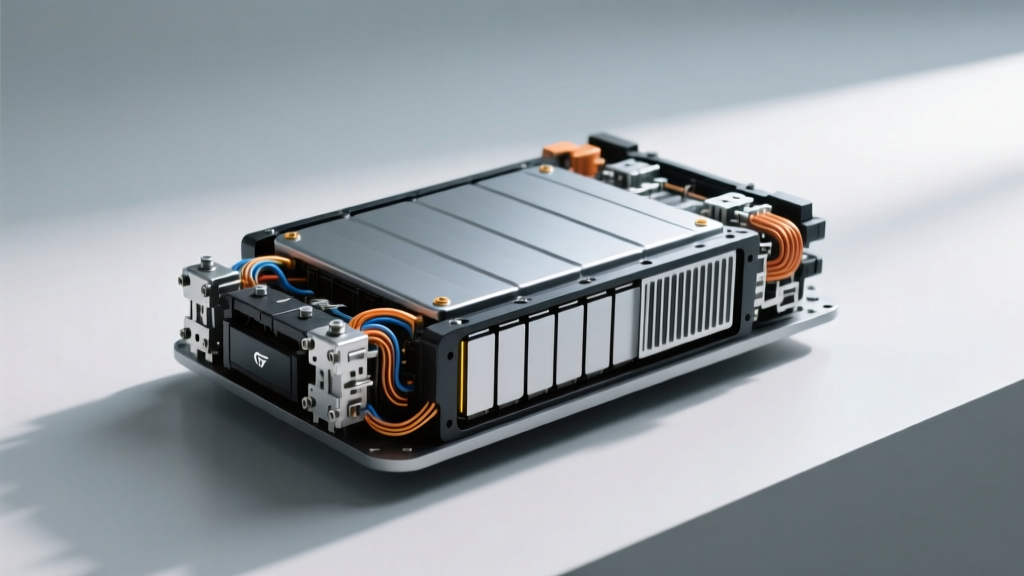
Additionally, many modern packs support module-level repair. Instead of replacing the entire $15,000 pack, a technician can swap a single degraded module for $1,500-$3,000. Hyundai's E-GMP platform, GM's Ultium architecture, and Tesla's structural packs vary in how modular they are — ask your service center about module-level service options before authorizing a full replacement.
Pack-level costs have also been declining. According to BloombergNEF, average lithium-ion pack prices fell from $1,200/kWh in 2010 to approximately $115/kWh by late 2025, meaning a 75 kWh pack that cost $22,000 in parts alone five years ago now runs closer to $8,600 at the cell level (before integration, labor, and BMS components).
Factors That Accelerate (or Slow) Battery Degradation
Understanding how you recharge a battery matters as much as the chemistry inside it. Here are the five factors with the largest measured impact on capacity retention, ranked by effect size:
Battery Care Priority Checklist
- 1. Extreme heat exposure (highest impact): Sustained battery temperatures above 95°F accelerate electrolyte decomposition. In Phoenix or Dubai, expect 2-4% more degradation over 5 years vs. a temperate climate. Park in shade or a garage when possible. EVs with active liquid cooling (Tesla, Hyundai E-GMP, GM Ultium) handle this far better than passively cooled packs.
- 2. Frequent DC fast charging: Daily use of 150+ kW DC fast chargers adds measurable wear. Tesla's own data shows vehicles that fast-charge more than 90% of the time see roughly 1-2% additional loss over 100,000 miles compared to primarily Level 2 home charging. Use DCFC for road trips; rely on Level 2 (7-11 kW) for daily needs.
- 3. Sustained high or low State of Charge: For NMC packs, parking at 100% SoC for days stresses the cathode. Parking below 10% for extended periods risks copper dissolution in the anode. The 20-80% daily window is the longevity sweet spot. LFP packs are the exception — manufacturers recommend periodic 100% charges for BMS calibration.
- 4. Cold-weather fast charging without preconditioning: Charging an NMC or LFP pack at high power when the battery is below 25°F can cause lithium plating on the anode — a permanent, irreversible capacity loss. Always use your vehicle's preconditioning feature (navigation to a charger typically triggers this automatically) to warm the pack before a DCFC session.
- 5. Aggressive acceleration habits (lowest impact): Frequent hard launches draw high C-rates from the pack, generating heat. The effect is small compared to thermal and SoC factors, but sustained track use or daily drag-racing will measurably increase degradation. Normal spirited driving is fine.
One factor that doesn't matter as much as people think: the total number of charge cycles. A cycle is one full 0-100% discharge and recharge. Most NMC packs are rated for 1,000-2,000 cycles to 80% health. At 250 miles per cycle, that's 250,000-500,000 miles — far more than most vehicles will ever see. Partial cycles (charging from 30% to 80%, for example) count as fractional cycles and are gentler on the chemistry.
How to Check Your Battery's State of Health (SoH)
State of Health (SoH) is the percentage of original capacity your battery can still hold. A new pack is 100% SoH; a pack that held 82 kWh when new and now holds 73 kWh is at roughly 89% SoH.
Methods to Check SoH
1. In-vehicle diagnostics: Some EVs display SoH directly. The Nissan Leaf shows battery health bars on the dash. Tesla owners can access a battery health test via Service Mode (tap the car icon → Software → hold model name for 3 seconds → Battery Health Test). Results appear after a controlled discharge cycle, typically requiring 24 hours.
2. Third-party OBD-II tools: Devices like the OBDLink MX+ paired with apps such as LeafSpy (Nissan), Teslalogger, or manufacturer-specific scan tools can read the BMS-reported SoH, cell voltage variance, and pack temperature. This is the most accessible method for most owners.
3. Dealer diagnostic report: Any authorized service center can pull a full battery health report, including individual module balance, internal resistance, and capacity measurement. Request this before purchasing a used EV — it's the single most valuable data point for assessing remaining battery life.
4. Telematics services: Companies like Recurrent offer free battery health reports that compare your pack's degradation to a fleet of identical vehicles. You connect your vehicle's telematics account, and they provide a percentile ranking and projected lifespan estimate.
Maximizing SoH: The 80/20/50 Rule
If you want a simple framework to remember:
- 80% — Charge NMC packs to 80% for daily use (100% is fine for LFP).
- 20% — Don't routinely discharge below 20% unless you need the range.
- 50°F — Try to keep the battery between 50°F and 85°F when parked for extended periods. Garage parking in summer and winter makes a measurable difference over a decade.
Emerging Battery Tech: What's Next (and When)
Several next-generation technologies promise to reshape how you recharge a battery in the coming years. Here's a realistic timeline — none of these are available in production consumer EVs as of early 2026.
Solid-state batteries: These replace the liquid electrolyte with a solid ceramic or polymer layer, enabling higher energy density (~400+ Wh/kg projected), faster charging (potentially 10-80% in under 10 minutes), and dramatically improved cycle life (5,000+ cycles). Toyota has announced a solid-state EV for 2027-2028, and Samsung SDI targets 2027 for initial production. However, manufacturing yield challenges and cost remain significant hurdles. Expect limited availability in premium models first, with mainstream adoption likely in the 2030-2032 timeframe.
Silicon-dominant anodes: Companies like Sila Nanotechnologies and Group14 are replacing graphite anodes with silicon composites, boosting energy density by 20-40%. The Mercedes-Benz G-Class Electric (2025) uses a Sila anode in its pack. Expect broader adoption by 2027-2028 as production scales.
Sodium-ion batteries: CATL and BYD are producing sodium-ion packs that eliminate lithium, cobalt, and nickel entirely. Energy density is lower (~140 Wh/kg), making them suited for city cars and stationary storage. These are expected in budget EVs in China by 2026-2027, with potential US-market availability later in the decade.
For current buyers, these technologies are forward-looking context, not purchase factors. Today's lithium-ion packs — whether LFP or NMC — are mature, well-understood, and backed by extensive warranty coverage. Waiting for solid-state is like waiting for a 500-mpg gas car: it might arrive, but today's options already solve the problem for most drivers.
Frequently Asked Questions
How can you recharge a battery without degrading it?
Use Level 2 home charging (7-11 kW) as your primary method, limit DC fast charging to road trips, keep NMC packs between 20-80% SoC for daily use, and avoid leaving any EV parked at 100% or below 10% for more than a few days. For LFP packs, charge to 100% at least once a week for BMS calibration. Precondition the battery before cold-weather fast charging.
How long do EV batteries last in years and miles?
Fleet data shows most EV batteries retain 78-92% of original capacity at the 10-year / 120,000-mile mark. LFP chemistries trend toward the higher end of that range. Full replacement before 150,000 miles is uncommon and usually covered by the 8-year/100,000-mile minimum warranty if capacity drops below 70%.
How much does an EV battery cost to replace in 2026?
Replacement costs range from approximately $8,000 for a smaller LFP pack (Tesla Model 3 RWD, ~57 kWh) to $30,000+ for a large NMC pack (Ford F-150 Lightning Extended Range, ~131 kWh). However, fewer than 2% of EVs require out-of-warranty replacement, and module-level repair can reduce costs to $1,500-$3,000 in many cases.
Does fast charging damage my EV battery?
Occasional DC fast charging (150-350 kW) causes negligible additional wear. The concern arises with exclusive fast charging — vehicles that DCFC for more than 90% of their sessions show roughly 1-2% more capacity loss over 100,000 miles compared to those primarily using Level 2. The bigger risk is fast charging a cold battery without preconditioning, which can cause lithium plating.
LFP vs NMC — which is better for my situation?
Choose LFP if you want lower cost, longer cycle life, the ability to charge to 100% daily without concern, and your range needs are under 270 miles EPA. Choose NMC/NCA if you need maximum range (300+ miles), better cold-weather charging performance, and you're willing to manage SoC between 20-80% for daily driving. Neither is objectively "better" — they're optimized for different use cases.
Can I check my EV battery health myself?
Yes. Tesla owners can run a Battery Health Test via Service Mode. Other brands may require an OBD-II adapter (such as the OBDLink MX+, ~$60) paired with a compatible app. Your dealer can also pull a full diagnostic report. For ongoing monitoring, services like Recurrent offer free fleet-comparison reports linked to your vehicle's telematics data.
For the latest EV battery warranty requirements and federal incentive rules that may affect your purchase decision, consult the IRS clean vehicle credit page and your vehicle manufacturer's current warranty documentation.