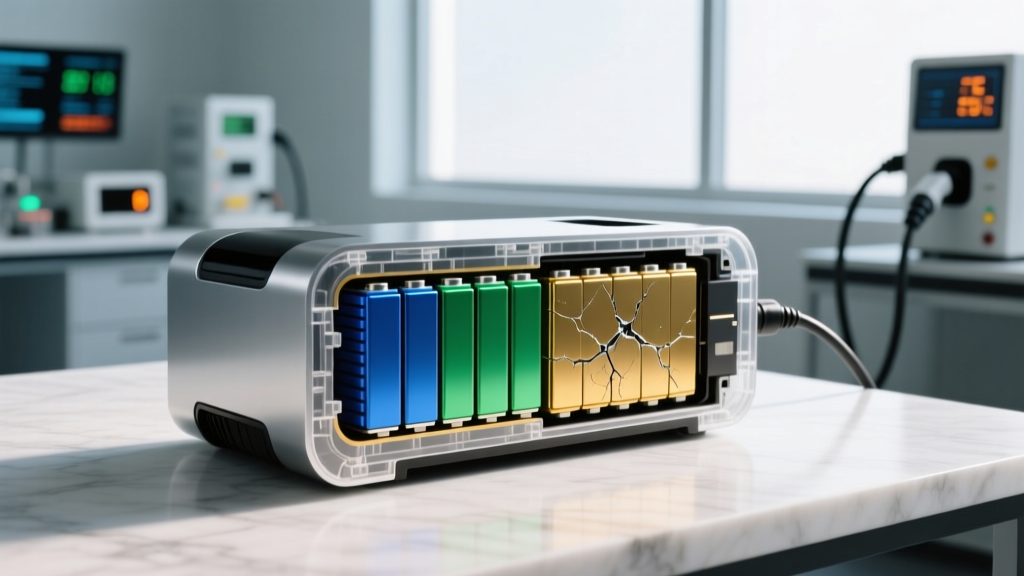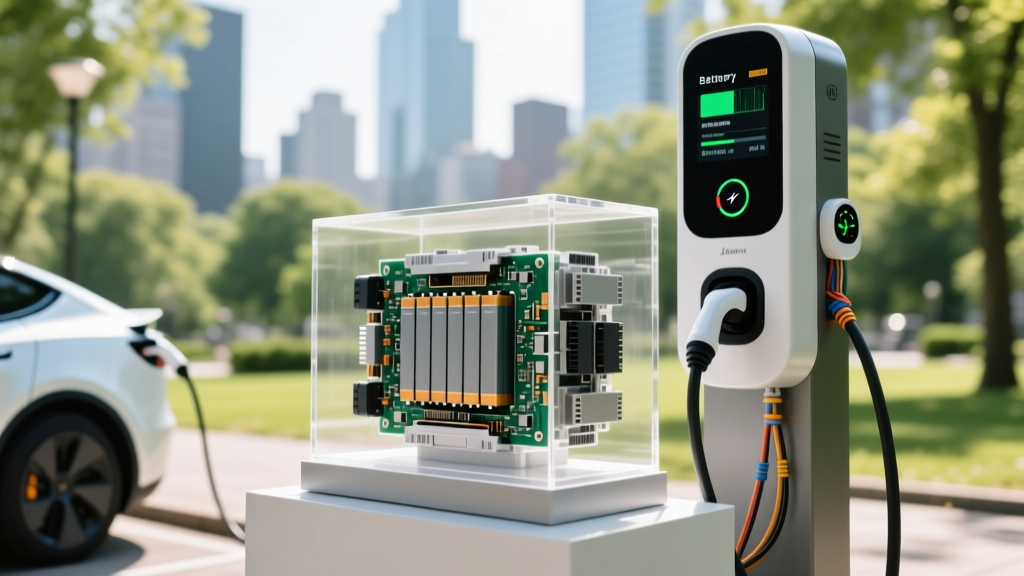
The short answer to "can you recharge a battery" is yes — thousands of times. But every recharge cycle, every fast-charge session, and every summer heat wave chips away at the lithium-ion cells inside your EV's high-voltage traction battery. The real question buyers and owners need answered is how much capacity you'll lose, when it matters, and what it costs if the pack actually fails.
This guide covers the data behind EV battery longevity: chemistry trade-offs, real-world degradation curves, warranty protections, replacement economics, and the habits that extend — or shorten — your pack's useful life. We're talking strictly about the main traction battery (the 60–130 kWh pack that propels the car), not the small 12V auxiliary battery that runs your lights and infotainment.
How Long Do EV Batteries Actually Last?
Modern lithium-ion EV batteries are engineered for 1,500 to 3,000 full charge-discharge cycles before reaching 70–80% of their original capacity. Translate that into miles and you're looking at 200,000 to 500,000 miles of driving before significant degradation — far beyond the lifespan most owners keep a vehicle.
Real-world fleet data backs this up. According to fueleconomy.gov, most EV batteries lose roughly 1–2% of capacity per year under normal use. Tesla's 2024 Impact Report showed its Model S and Model X fleet retained approximately 88% of original range at 200,000 miles. Hyundai and Kia have reported similar figures for their 77.4 kWh NMC packs in the Ioniq 5 and EV6.
Typical Degradation Curve (NMC Chemistry, Average Use):
- Year 1 / 15,000 mi: ~2–3% loss (initial formation drop)
- Year 3 / 45,000 mi: ~5–7% total loss
- Year 5 / 75,000 mi: ~8–10% total loss
- Year 8 / 120,000 mi: ~10–14% total loss
- Year 10 / 150,000 mi: ~12–18% total loss
LFP (lithium iron phosphate) packs, like those in the Tesla Model 3 RWD and base Ford Mustang Mach-E, typically show slower degradation — often 8–12% over the same 150,000-mile span — though with lower starting energy density.
The degradation curve isn't linear. Most packs experience a steeper drop in the first year (called "formation loss"), then settle into a slow, predictable decline. You're unlikely to wake up one morning to a battery that suddenly won't hold a charge.
LFP vs NMC: Which Battery Chemistry Is Better?
The two dominant chemistries in 2026 EVs are NMC (nickel manganese cobalt) and LFP (lithium iron phosphate). Each has distinct strengths, and the "better" choice depends entirely on your driving pattern.
| Attribute | NMC / NCA | LFP |
|---|---|---|
| Energy Density | Higher (~250 Wh/kg cell-level) | Lower (~170 Wh/kg cell-level) |
| Typical Pack Size | 75–130 kWh | 50–82 kWh |
| Cycle Life | 1,500–2,500 cycles | 3,000–5,000+ cycles |
| Cold-Weather Performance | Better (less range loss below 32°F) | Worse (can lose 30–40% range in extreme cold) |
| Fast-Charging Tolerance | Good, but heat-sensitive above 80% SoC | Excellent (handles frequent DCFC well) |
| Recommended Daily SoC | 80% (to reduce stress) | 100% (LFP benefits from full charges) |
| Cost | Higher (cobalt/nickel supply chain) | Lower (iron/phosphate abundant) |
| Common In | Long-range AWD models (Model Y LR, Ioniq 5, EV6, Rivian) | Standard-range RWD models (Model 3 RWD, base Mach-E, some BYD imports) |
Choose NMC if you need maximum range, drive in cold climates, or regularly take road trips where every mile of EPA-rated range matters.
Choose LFP if you commute daily, charge at home, live in a moderate climate, and want the longest possible cycle life with lower replacement risk. LFP's lower energy density means shorter EPA range per kWh, but its longevity often makes the trade worthwhile for urban drivers.
What Does the EV Battery Warranty Actually Cover?
Federal law mandates a minimum 8-year / 100,000-mile warranty on EV battery packs (10 years / 150,000 miles in California and states that follow CARB standards). Most manufacturers exceed this floor. Here's what the major brands offer as of the 2026 model year:
| Manufacturer | Warranty Term | Capacity Retention Threshold |
|---|---|---|
| Tesla (Model 3/Y LFP) | 8 yr / 100,000 mi | 70% of original capacity |
| Tesla (Model 3/Y LR, S, X) | 8 yr / 120,000–150,000 mi | 70% |
| Hyundai / Kia | 10 yr / 100,000 mi | 70% |
| Ford (Mach-E, F-150 Lightning) | 8 yr / 100,000 mi | 70% |
| GM (Ultium-based) | 8 yr / 100,000 mi | 70% (some models 60%) |
| Rivian | 8 yr / 120,000–175,000 mi | 70% |
| BMW | 8 yr / 100,000 mi | 70% |
The critical detail is the capacity retention threshold. If your pack drops below 70% of its original kWh capacity within the warranty period, the manufacturer must repair or replace it — typically with a refurbished or remanufactured unit that meets the threshold, not necessarily a brand-new pack.
Warranties cover defects and excessive degradation. They do not cover damage from collisions, flooding, improper modifications, or use of non-approved charging equipment. Read your owner's manual's battery section carefully.
How Much Does an EV Battery Cost to Replace?
This is the fear that keeps some buyers on the sideline. The reality: out-of-warranty replacements are expensive, but rarely needed within a vehicle's typical ownership period.
| Vehicle / Pack Size | Chemistry | Estimated Replacement Cost (2026) |
|---|---|---|
| Tesla Model 3 RWD (~60 kWh) | LFP | $8,000–$12,000 |
| Tesla Model Y LR (~82 kWh) | NMC | $12,000–$16,000 |
| Hyundai Ioniq 5 (77.4 kWh) | NMC | $11,000–$15,000 |
| Ford F-150 Lightning Ext. Range (131 kWh) | NMC | $18,000–$28,000 |
| Chevrolet Equinox EV (~85 kWh) | NMC (Ultium) | $12,000–$17,000 |
| Rivian R1T Dual-Motor (~128 kWh) | NMC | $18,000–$25,000 |
These figures include the battery module(s) and labor but can vary by region and dealership. Independent EV shops and third-party refurbishers are increasingly offering replacements at 20–40% below OEM dealer pricing.
Context matters: according to data from IIHS and industry sources, the average age of a scrapped vehicle in the US is roughly 12 years. Most EV batteries will outlast the rest of the car's components. Battery replacement is typically only needed after a collision, extreme abuse, or on vehicles driven well past 200,000 miles.
Factors That Accelerate Battery Degradation
Not all miles and charges are created equal. These habits have the biggest measurable impact on long-term battery health:
- Frequent DC fast charging above 150 kW: High-current charging generates heat inside cells. Occasional road-trip fast charging is fine, but daily reliance on 250–350 kW chargers without preconditioning accelerates wear. Sustained DCFC-only use can add 1–3% extra degradation over 100,000 miles versus home Level 2 charging.
- Sitting at 100% SoC for extended periods: For NMC packs, storing the car fully charged — especially in hot weather — stresses cathode material. This is why Tesla recommends 80% daily charge for NMC vehicles.
- Deep discharges below 10%: Regularly running the pack nearly empty stresses the anode. Most BMS (battery management systems) include a buffer, but repeatedly hitting 0% displayed SoC is still suboptimal.
- Extreme heat exposure: Battery degradation roughly doubles for every 18°F above 77°F sustained ambient temperature. Parking in shade or a garage in Arizona or Texas measurably helps.
- Extreme cold charging without preconditioning: Charging a frozen NMC pack at high kW can cause lithium plating. Always use your car's preconditioning feature before winter fast charging.
Battery Care Checklist for Maximum Longevity:
- ☐ Set daily charge limit to 80% (NMC) or 100% (LFP)
- ☐ Use Level 2 home charging as your primary method
- ☐ Precondition the battery before DC fast charging (most cars do this automatically when you navigate to a charger)
- ☐ Avoid letting SoC drop below 15% on a regular basis
- ☐ Park in shade or a garage during sustained 90°F+ weather
- ☐ Don't leave the car at 100% SoC for more than 24 hours (NMC)
- ☐ Use your car's scheduled charging feature to finish charging right before you leave
- ☐ Keep tire pressures at spec — underinflated tires increase energy draw and heat generation
How to Check Your Battery's State of Health (SoH)
State of Health (SoH) is the percentage of your battery's current maximum capacity compared to its original factory capacity. A new EV starts at 100% SoH; a pack at 85% SoH holds 85% of its original kWh.
In-car methods:
- Tesla: The mobile app shows estimated range at 100% SoC. Compare this to the original EPA range to approximate SoH. Some third-party tools like Tessie or TeslaFi log detailed SoH data from the vehicle's CAN bus.
- Hyundai/Kia: The infotainment system's EV diagnostics page displays battery health percentage on many 2024+ models.
- Ford: The FordPass app and in-cluster diagnostics provide a battery health indicator on newer Mach-E and Lightning models.
- GM (Ultium): The myChevrolet/myCadillac app includes a battery health section showing estimated capacity.
Third-party diagnostics: Services like Recurrent (now part of Recurrent Auto) offer battery health reports by connecting to your car's telematics. Some independent EV shops can pull detailed cell-level voltage data via OBD-II scanners designed for EVs.
For buyers considering a used EV, always request a battery health report before purchase. A car showing 90%+ SoH at 50,000 miles is in excellent shape; below 80% at any mileage warrants caution and a professional inspection.
What's Next: Solid-State and Silicon-Anode Batteries
The next generation of battery technology promises step-change improvements, but realistic timelines matter more than press-release hype.
Solid-state batteries replace the liquid electrolyte with a solid material, offering higher energy density (potentially 400+ Wh/kg at the cell level), faster charging, and reduced fire risk. Toyota has announced a solid-state battery targeting 2027–2028 production in limited models. Samsung SDI and QuantumScape are also in advanced testing. However, manufacturing scale-up remains the bottleneck — expect solid-state packs in mainstream, affordable EVs no earlier than 2029–2030.
Silicon-anode batteries (used by companies like Sila Nanotechnologies and Group14) replace graphite anodes with silicon-dominant materials, boosting energy density by 20–40%. These are closer to market — the Mercedes G-Class 580e (PHEV) already uses a silicon-anode pack, and several BEV applications are expected by 2027–2028.
Sodium-ion batteries from CATL and BYD offer lower cost and excellent cold-weather performance, though with significantly lower energy density. These are likely headed for budget city EVs and stationary storage before appearing in US-market long-range vehicles.
None of these technologies are available in currently purchasable mainstream EVs as of early 2026. If you're buying now, today's NMC and LFP packs are mature, well-understood, and backed by strong warranty protection.
Frequently Asked Questions
Can you recharge a battery too many times and wear it out?
Every charge cycle does cause minor chemical wear, but modern EV batteries are designed for 1,500–5,000+ cycles depending on chemistry. At an average of 250 miles per full cycle, that's 375,000 to 1.25 million miles — well beyond typical vehicle life. You're far more likely to sell or scrap the car for other reasons before the battery is "worn out" from recharging alone.
Is it bad to charge my EV to 100% every night?
For NMC/NCA batteries (most long-range EVs), yes — daily 100% charging accelerates degradation. Set your charge limit to 80% for daily use and only charge to 100% before long trips. For LFP batteries (Tesla Model 3 RWD, base Mach-E), manufacturers actually recommend charging to 100% regularly because LFP chemistry benefits from full-charge calibration and doesn't suffer the same high-SoC stress.
Does fast charging damage my battery?
Occasional DC fast charging — like on road trips — has minimal impact. The concern is exclusive reliance on high-power DCFC (150+ kW) without ever using slower Level 2 charging. Heat is the enemy; preconditioning your battery before fast charging and avoiding back-to-back high-power sessions in hot weather will keep degradation in check. Studies from Recurrent Auto show no statistically significant difference in degradation between frequent and infrequent fast-charger users when preconditioning is used.
How do I know if my battery needs replacing?
You'll notice reduced range (a 310-mile EPA car now showing 230 miles at 100% SoC), longer charge times, or warning lights indicating cell imbalance. If your SoH drops below the warranty threshold (typically 70%) within the coverage period, contact your dealer for a warranty claim. Outside warranty, independent EV repair shops can often replace individual modules rather than the entire pack, reducing cost significantly.
Will a replacement battery give me original range back?
A new or remanufactured replacement pack will typically restore 95–100% of original capacity. Refurbished packs (using tested, matched cells from salvaged vehicles) may restore 85–95%. Always ask what capacity guarantee comes with a replacement unit.
Does the federal tax credit apply to battery replacement?
No. The IRS §30D clean vehicle credit applies only to the purchase of a new or qualifying used EV — not to aftermarket battery replacements. However, if your battery fails within the warranty period, the manufacturer covers the cost.