What Raw Materials Actually Power Your EV
Every kilowatt-hour of range in your electric vehicle traces back to a specific cocktail of mined and refined elements. The raw materials for electric vehicle battery cells aren't just a supply-chain footnote — they determine your car's EPA range, how it charges in winter, how many miles the pack will deliver before noticeable degradation, and ultimately what a replacement costs. Understanding this connection between mineral inputs and real-world ownership is the single most useful thing an EV buyer or owner can learn before signing a purchase agreement.
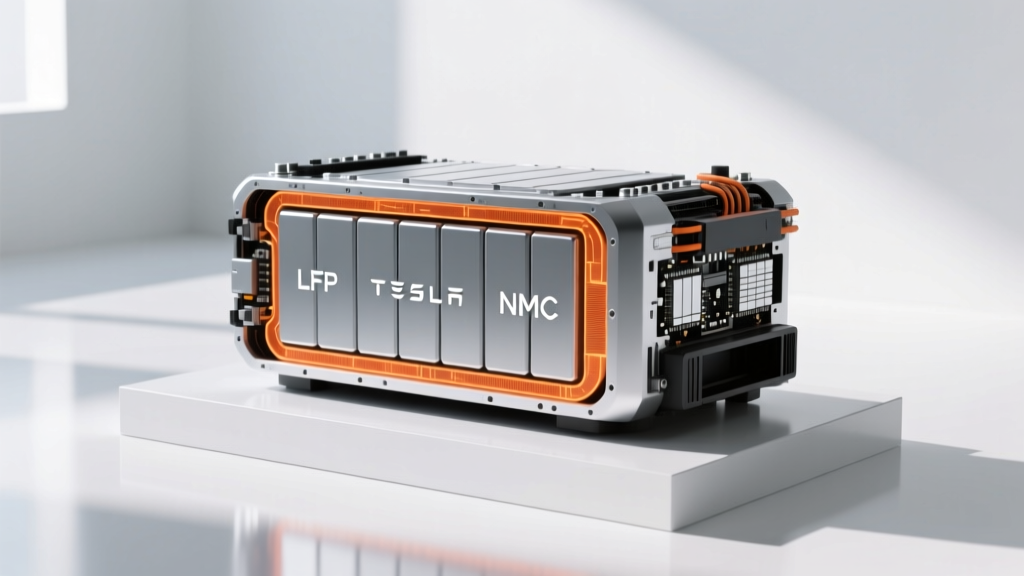
At the cell level, nearly all production EVs in 2026 use some variant of lithium-ion chemistry. The differences lie in what sits in the cathode — the positive electrode where most of the valuable (and geopolitically sensitive) raw materials concentrate. Two families dominate the market:
- NMC / NCA (Nickel-Manganese-Cobalt / Nickel-Cobalt-Aluminum) — higher energy density, used in most long-range and performance trims.
- LFP (Lithium Iron Phosphate) — lower energy density but longer cycle life, no cobalt or nickel, increasingly the default for standard-range models.
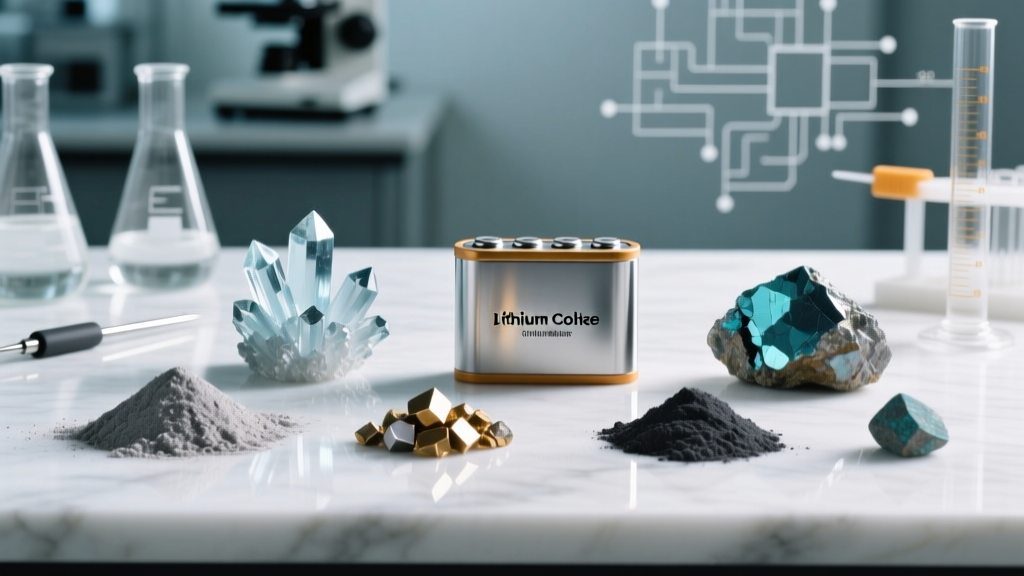
Both still rely on lithium, graphite (for the anode), copper current collectors, aluminum housings, and liquid electrolyte solvents. But the cathode chemistry is where the engineering — and the cost — diverges.
LFP vs NMC/NCA: The Raw Material Trade-Off
The choice between LFP and nickel-based chemistries isn't abstract. It changes how you charge, how far you can go per kWh, and how the pack behaves in a Minnesota January versus an Arizona August. Here's how the two families compare on the metrics that matter to owners:
| Metric | LFP (Lithium Iron Phosphate) | NMC / NCA (Nickel-Based) |
|---|---|---|
| Cathode raw materials | Lithium, iron, phosphorus | Lithium, nickel, manganese, cobalt or aluminum |
| Energy density (cell-level) | ~160–180 Wh/kg | ~220–280 Wh/kg |
| Typical EPA range per pack size | Lower — used in standard-range trims | Higher — used in long-range / performance trims |
| Cycle life (to 80% SoH) | ~2,500–4,000+ cycles | ~1,000–2,000 cycles |
| Recommended daily SoC | 100% (no penalty) | 80% daily; 100% for trips only |
| Cold-weather range loss | Higher — less efficient at low temps | Moderate — better low-temp discharge |
| Thermal runaway risk | Very low | Low, but higher than LFP |
| Relative cell cost (2026) | ~$80–95 / kWh | ~$110–140 / kWh |
| Key raw-material risk | Lithium price volatility | Nickel and cobalt supply + ethics |
The practical upshot: if you commute 40 miles round-trip, charge at home nightly, and want a pack that will outlast the car's body, LFP is the rational pick. If you regularly drive 250+ miles between charges, tow, or need the longest single-charge range for road trips, nickel-based packs still deliver more miles per kilogram of battery.
How Long Do EV Batteries Actually Last?
The fear that an EV battery will "die" at 80,000 miles is a hangover from early-2010s Nissan LEAF packs that lacked active thermal management. Modern liquid-cooled packs tell a very different story.
Real-world degradation data points (compiled from fleet studies, owner logs, and OEM disclosures):
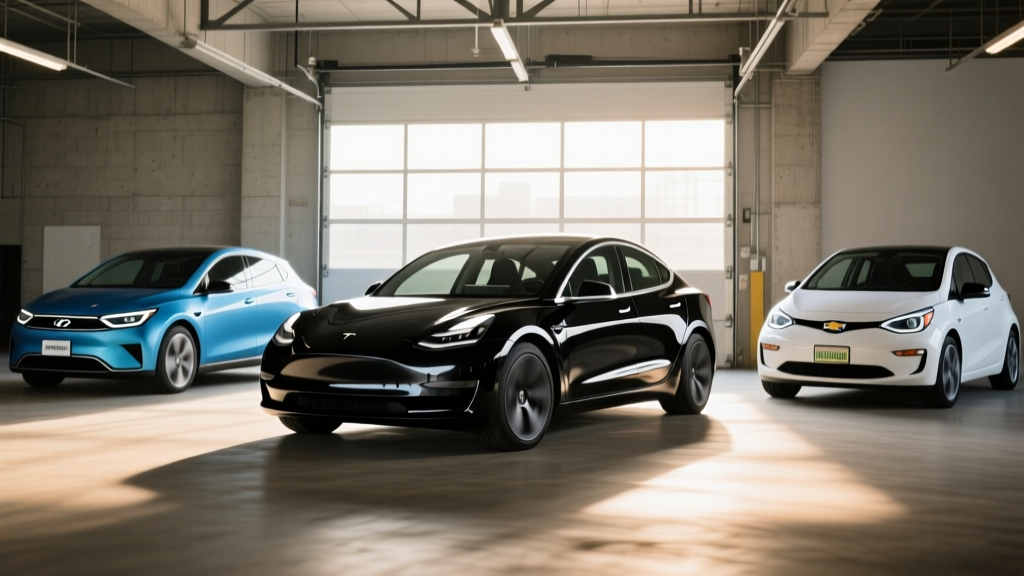
- Tesla Model 3 / Model Y (NMC, 2019–2024): ~5% capacity loss at 50,000 miles, ~8–10% at 100,000 miles, with the curve flattening after the initial drop. Tesla's 2024 Impact Report cites median ~88% retention at 200,000 miles.
- Chevrolet Bolt EV / EUV (NMC, 2017–2023): Geotab fleet data shows ~7–9% loss at 100,000 miles for liquid-cooled packs.
- Hyundai Ioniq 5 (NMC, 2022–2026): Early owner reports show ~3–5% loss in the first 30,000 miles, consistent with the typical "break-in" degradation curve.
- BYD / Tesla Model 3 RWD (LFP, 2021–2026): Anecdotal and fleet data suggests 2–4% loss at 60,000 miles, with LFP's flatter degradation curve projecting well past 200,000 miles before hitting 80% State of Health.
The pattern across chemistries: expect a 3–5% capacity drop in the first year or 15,000 miles (the "break-in" phase), then a slow linear decline of roughly 1–2% per year or 10,000–15,000 miles. Most 2026-model-year packs will reach 200,000 miles with 80–90% of original capacity intact — which means the battery will outlast the suspension, interior, and likely your interest in the car.
What the Battery Warranty Actually Covers
Federal law in the U.S. mandates a minimum of 8 years / 100,000 miles on EV battery packs (10 years / 150,000 miles in California and states that follow CARB rules). But the fine print matters enormously. Here's how major OEMs structure coverage in 2026:
| OEM | Warranty Period | Capacity Retention Threshold | Notes |
|---|---|---|---|
| Tesla | 8 yr / 120,000 mi (LR/AWD); 8 yr / 100,000 mi (RWD) | 70% | Module-level replacement at Tesla discretion |
| Hyundai / Kia | 10 yr / 100,000 mi | 70% | Among the longest standard coverage |
| GM (Chevy / Cadillac) | 8 yr / 100,000 mi | 60% (Bolt); 70% (Ultium) | Ultium packs carry tighter threshold |
| Ford | 8 yr / 100,000 mi | 70% | Mustang Mach-E, F-150 Lightning |
| Volkswagen | 8 yr / 100,000 mi | 70% | ID.4 — standard across MEB platform |
| BMW | 8 yr / 80,000 mi | 70% | Lower mileage cap than most rivals |
The critical detail: a warranty claim requires the pack to fall below the stated threshold — not merely show degradation. A pack at 72% State of Health at year 7 is degraded but not warrantable. In practice, very few modern packs breach these thresholds under normal use, which is why OEMs offer them confidently.
How Much Does an EV Battery Cost to Replace?
Replacement cost is the number-one anxiety for prospective EV buyers. The honest answer: out-of-warranty pack replacement is expensive, but it's also rare. Most packs outlive the vehicle's economic life. When replacement is needed — typically from physical damage, coolant intrusion, or rare manufacturing defect rather than simple wear — here's the cost landscape in 2026:
| Vehicle / Pack Size | Chemistry | Estimated Replacement Cost (parts + labor) |
|---|---|---|
| Tesla Model 3 RWD (~60 kWh) | LFP | $10,000–$13,000 |
| Tesla Model Y Long Range (~82 kWh) | NMC | $14,000–$18,000 |
| Hyundai Ioniq 5 (~77 kWh) | NMC | $13,000–$17,000 |
| Ford F-150 Lightning Ext. Range (~131 kWh) | NMC | $22,000–$30,000 |
| Chevrolet Silverado EV (~200 kWh) | NMC (Ultium) | $30,000–$40,000 |
| Nissan LEAF (40 / 62 kWh) | NMC (passive air-cooled) | $8,000–$12,000 |
Two important caveats. First, many shops now perform module-level repairs — replacing individual bad modules rather than the full pack — for $2,000–$6,000. Second, cell prices have fallen roughly 80% since 2013 (per BloombergNEF tracking), and that trend continues to push replacement costs down. The fear-mongering "$30,000 battery swap at 100k miles" scenario is not the reality for 2026-era liquid-cooled packs.
Factors That Accelerate (or Preserve) Battery Life
Not all miles age a pack equally. The raw materials inside your cells respond to how you use them. These are the factors with the strongest evidence behind them:
What Hurts Longevity
- Exclusive DC fast charging: Daily 150–350 kW sessions generate sustained heat. Occasional road-trip fast charging is fine; making it your primary method accelerates degradation by an estimated 1–3% over the pack's life vs. Level 2 home charging.
- Sitting at 100% SoC for days (NMC/NCA): High voltage stresses nickel-based cathodes. Charge to 80% daily; reserve 100% for departure day.
- Deep discharges below 10%: Repeatedly running the pack nearly empty stresses the anode. Try to plug in before dropping below 15–20%.
- Extreme heat exposure: Parking in direct sun at 100°F+ with a full battery accelerates chemical aging. A garage or shaded spot meaningfully helps in hot climates.
- Cold fast-charging without preconditioning: Charging a frozen pack at high kW causes lithium plating on the anode. Always use the car's navigation-based preconditioning (or manually warm the pack) before DC fast charging in winter.
What Helps Longevity
- Home Level 2 charging (7–11 kW): Gentle, slow charging is the easiest thing you can do for pack health.
- 20–80% SoC window (NMC/NCA): The middle of the charge curve is where lithium-ion cells are happiest.
- LFP owners: charge to 100% regularly: LFP cells benefit from periodic full charges to recalibrate the BMS and don't suffer the high-SoC stress that nickel chemistries do.
- Thermal management: Cars with active liquid cooling (virtually all 2026 models except base LEAF) handle heat far better. Keep coolant service intervals current.
- Software updates: OEMs periodically refine charge algorithms and thermal maps. Install them.
How to Check and Monitor Battery Health (SoH)
State of Health (SoH) is the percentage of original capacity your pack can still hold. A new pack is 100% SoH; a pack that held 80 kWh when new and now holds 72 kWh is at 90% SoH. Here's how to track it:
- In-car displays: Some OEMs (BMW, Mercedes, Hyundai) expose a SoH percentage or bar graph in the infotainment or service menu. Tesla does not natively display SoH in the UI.
- OBD-II dongles + apps: Tools like OBDLink SX paired with apps such as Leaf Spy (Nissan), TeslaFi or Stats (Tesla), and Car Scanner (multi-brand) can read BMS data including SoH, cell voltage deltas, and pack temperature.
- Manual calculation: Charge to 100%, note the displayed range (or kWh added from a known SoC to full via your charger's meter), and compare to the original EPA-rated capacity. A consistent 10% reduction from new = ~90% SoH.
- Dealer diagnostic: Any authorized service center can pull a full BMS report. Request one before buying a used EV — it's the most reliable pre-purchase check available.
Cell voltage delta (the spread between the highest and lowest cell in the pack) is an equally useful health indicator. A healthy pack shows deltas under 20–30 mV at rest. Consistent deltas above 50–80 mV suggest an imbalanced or degrading module worth investigating.
The Raw Material Supply Chain: What's Changing
The raw materials for electric vehicle battery production are undergoing a structural shift. As of 2026, several dynamics are reshaping what goes into your next pack:
- Cobalt reduction: NMC chemistries have progressively moved from NMC 111 (equal parts nickel, manganese, cobalt) to NMC 811 (80% nickel, 10% manganese, 10% cobalt) and even higher-nickel formulations. This cuts cobalt — the most ethically fraught material in the supply chain — by a factor of 3–5x per cell.
- LFP expansion: Tesla, Ford, Rivian, and several Chinese OEMs now use LFP in standard-range models sold in the U.S., eliminating nickel and cobalt entirely for those trims.
- Domestic sourcing and §30D tax credit: Under current IRS rules for the federal clean vehicle credit (§30D), eligible vehicles must meet critical-mineral and battery-component sourcing thresholds that increase annually. In 2026, a growing percentage of critical minerals must be sourced from the U.S. or free-trade-agreement partners. This is directly reshaping where lithium, nickel, and graphite come from.
- Recycling scale-up: Companies like Redwood Materials and Li-Cycle are recovering 90%+ of cathode metals from end-of-life packs, feeding them back into new cell production. By the early 2030s, recycled material is projected to supply a meaningful share of U.S. cathode demand.
What Comes After Lithium-Ion: Solid-State and Beyond
Solid-state batteries — which replace the liquid electrolyte with a solid conductor — promise higher energy density, faster charging, and improved safety. But it's critical to separate announcements from production reality:
- Toyota has announced a solid-state battery targeting 2027–2028 production in limited volumes, with claims of ~750 km (WLTP) range and 10-minute 10–80% charging. This remains announced/preliminary as of 2026.
- Samsung SDI and QuantumScape are in advanced prototype and A-sample testing with OEM partners. Volume production is not expected before 2028–2029 at the earliest.
- Silicon-dominant anodes (from companies like Sila Nanotechnologies and Group14) are closer to market, with early deployments in the Mercedes G-Class EV and select consumer electronics. They boost energy density 10–20% without requiring a full solid-state architecture.
- Sodium-ion batteries are entering production in China (CATL, BYD) for lower-range urban vehicles. They eliminate lithium entirely but trade ~30% energy density. U.S. availability in passenger vehicles remains unlikely before 2028+.
The realistic near-term trajectory: incremental chemistry refinements (higher nickel, silicon anode blends, improved electrolyte additives) will continue pushing energy density up 3–5% per year, while LFP captures the cost-sensitive segment. A wholesale technology shift is still years away.
Frequently Asked Questions
How long do EV batteries last in years and miles?
Modern liquid-cooled EV batteries are designed to last 15–20 years or 200,000+ miles before reaching 80% of original capacity. Real-world fleet data from Tesla, Geotab, and owner communities consistently shows 8–12% total degradation at 100,000 miles for NMC packs and 4–7% for LFP packs. Most packs will outlive the vehicle they're installed in.
How much does an EV battery cost to replace in 2026?
Full pack replacement ranges from ~$10,000 for a 60 kWh LFP pack (Tesla Model 3 RWD) to $30,000–$40,000 for a 200 kWh pack (Chevy Silverado EV). However, most out-of-warranty issues can be addressed with module-level repairs for $2,000–$6,000. Full pack replacement due to degradation alone is extremely rare on 2020+ vehicles.
What does the EV battery warranty cover?
Federal law mandates 8 years / 100,000 miles minimum (10 yr / 150,000 mi in CARB states). Coverage applies when the pack falls below a stated capacity threshold — typically 70% of original capacity. Some OEMs (BMW) use a lower 80,000-mile cap. The warranty covers defects and excessive degradation, not damage from accidents, flooding, or unauthorized modifications.
How do I check my EV battery's State of Health?
Use an OBD-II reader with a compatible app (TeslaFi, Leaf Spy, Car Scanner) to pull BMS SoH data. Some vehicles display SoH natively. You can also manually estimate SoH by charging to 100% and comparing displayed range or kWh added to the pack's original rated capacity. A dealer diagnostic report is the most authoritative option, especially for used-EV purchases.
LFP vs NMC — which battery chemistry is better?
Neither is universally better. LFP wins on cycle life (2,500–4,000+ cycles vs 1,000–2,000), cost (~$80–95/kWh vs ~$110–140/kWh), safety, and the ability to charge to 100% daily without degradation concerns. NMC wins on energy density (~220–280 Wh/kg vs ~160–180 Wh/kg), cold-weather performance, and suitability for long-range and performance applications. Choose LFP for daily commuting and cost savings; choose NMC for maximum range and road-trip flexibility.
Does DC fast charging damage the battery?
Occasional DC fast charging — the kind you'd do on road trips — has a negligible effect on modern packs. Daily exclusive fast charging does accelerate degradation slightly (estimated 1–3% over the pack's life) due to sustained heat. The bigger risk is fast-charging a cold pack without preconditioning, which can cause lithium plating. Use your car's nav-based preconditioning and rely on Level 2 home charging as your primary method.
Are the raw materials for EV batteries ethically sourced?
This varies by OEM, supplier, and material. Cobalt — primarily mined in the DRC — has drawn the most scrutiny over labor practices. The industry response has been twofold: shift to low-cobalt (NMC 811) and zero-cobalt (LFP) chemistries, and increase supply-chain auditing. The IRS §30D tax credit sourcing requirements also push manufacturers toward FTA-partner supply chains with higher transparency standards. Check your OEM's sustainability report for specific supplier disclosures.