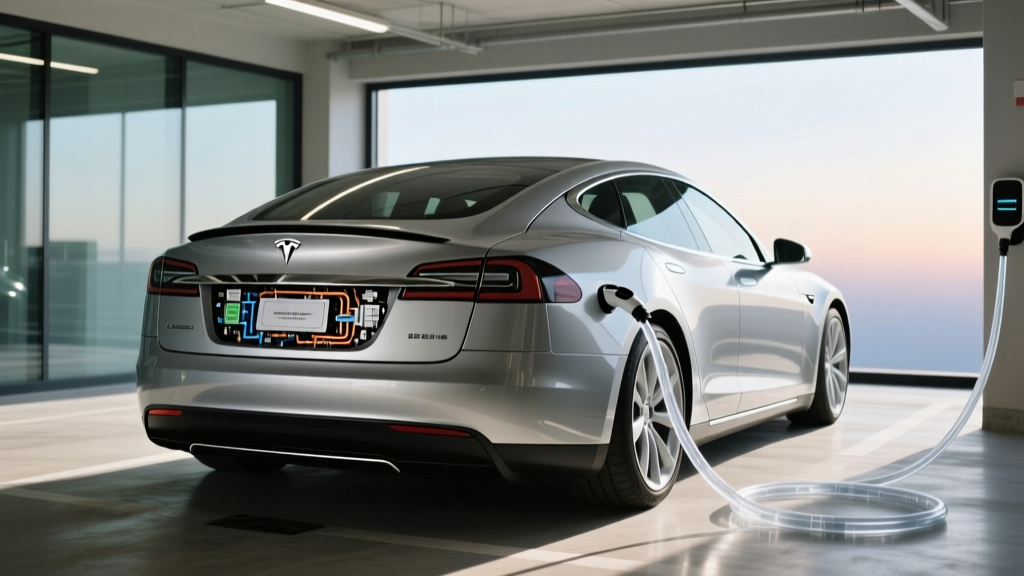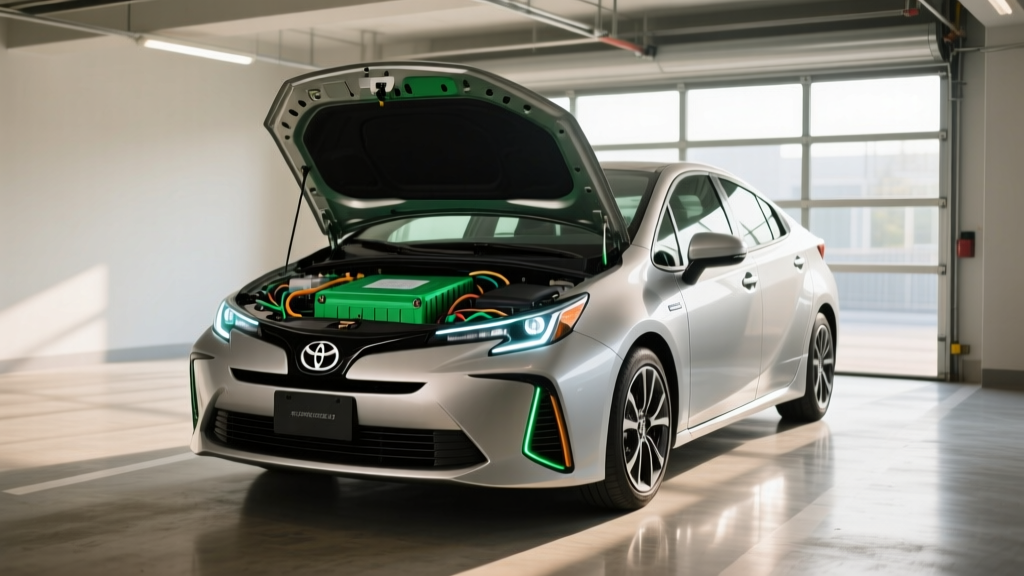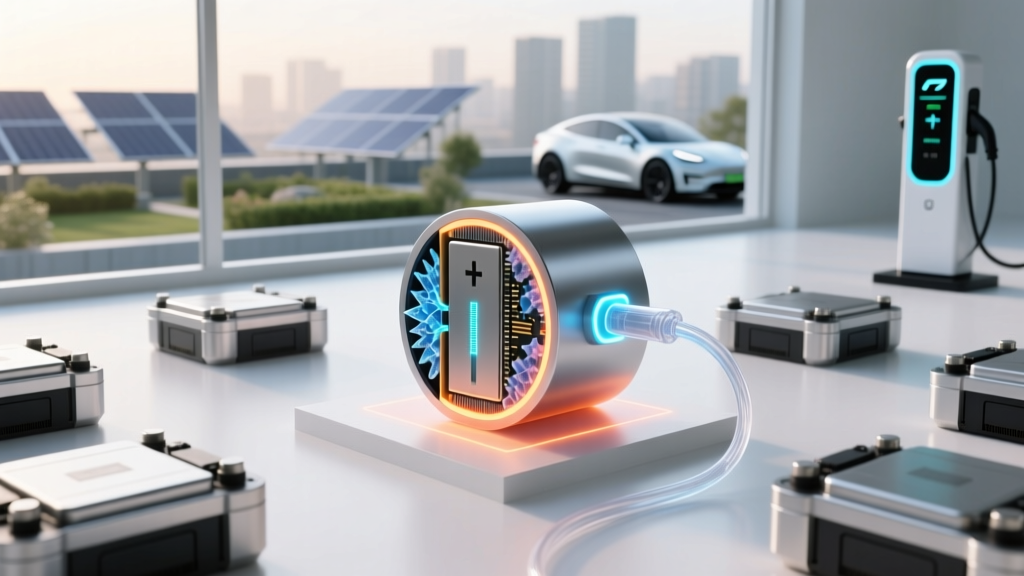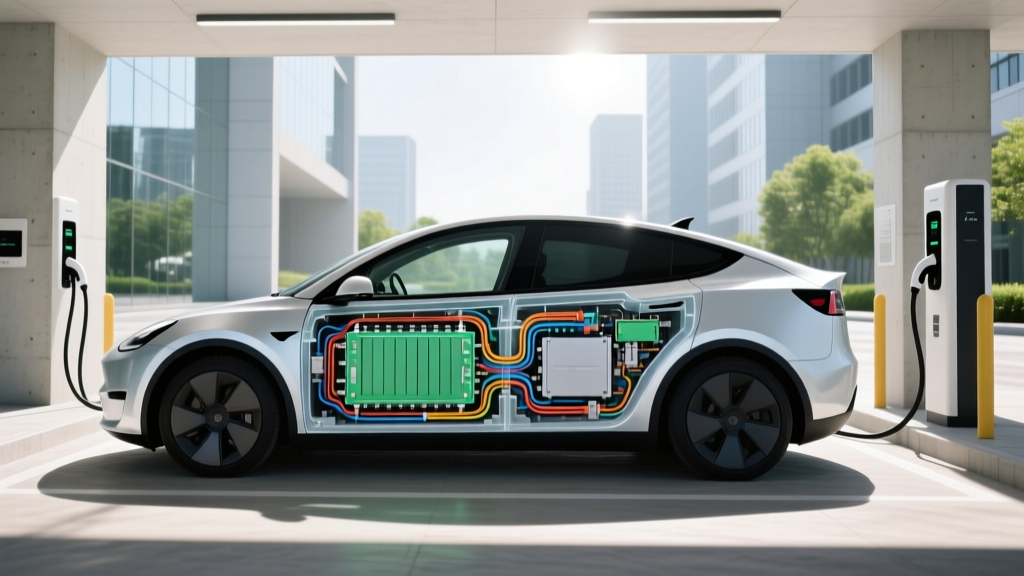
When EV shoppers ask about the "range of battery" life, they're usually wrestling with two distinct concerns: how far the car drives on a charge today, and how much of that range remains five or ten years down the road. The good news, backed by a growing body of fleet and owner data, is that modern EV traction batteries routinely outlast the vehicles they power. But chemistry choice, charging habits, and climate all shape the degradation curve — and understanding those variables is the difference between confident ownership and expensive surprises.
This guide covers the real-world lifespan of EV batteries in 2026, the chemistry trade-offs between LFP and NMC/NCA, what warranties actually cover, what a replacement costs if you need one, and how to monitor and maximize your pack's State of Health (SoH).
How Long Do EV Batteries Actually Last?
The short answer: most modern liquid-cooled EV battery packs are designed to deliver usable service for 15–20 years or 200,000+ miles before reaching the end of their automotive life. "End of life" in battery terms doesn't mean the pack dies — it means capacity has fallen below roughly 70–80% of original, at which point the vehicle's real-world range may feel noticeably reduced but the car remains drivable.
Data from large-scale fleet studies supports this timeline. Tesla's 2024 Impact Report showed its Model 3/Y packs retained approximately 85% of original capacity at 150,000 miles. Geotab's analysis of over 10,000 EVs across multiple brands found an average annual degradation rate of roughly 1.8% per year for liquid-cooled packs — meaning a 300-mile EPA-rated vehicle might offer around 270 miles of range after five years under typical use.
Year 1: ~3–5% loss (initial formation period) • Year 2–5: ~1.5–2% per year (steady state) • Year 6–10: ~1.5–2% per year • Year 10 cumulative: ~15–20% total loss • Example: 300 mi EPA → ~245–255 mi real range at year 10
Critical nuance: the degradation curve is non-linear. Most packs experience a steeper drop in the first 12–18 months (the "formation" period as the electrolyte stabilizes on the anode), then settle into a slow, predictable decline. This is why a one-year-old EV showing 5% loss is not a cause for alarm — it's normal electrochemistry.
LFP vs NMC/NCA: Which Chemistry Is Right for You?
The two dominant lithium-ion chemistries in 2026 EVs are Lithium Iron Phosphate (LFP) and Nickel Manganese Cobalt / Nickel Cobalt Aluminum (NMC/NCA). They behave differently, and the right choice depends on your priorities.
| Attribute | LFP (Lithium Iron Phosphate) | NMC / NCA |
|---|---|---|
| Energy Density | Lower (~160–180 Wh/kg cell-level) | Higher (~230–280 Wh/kg cell-level) |
| Cycle Life | 3,000–5,000+ cycles to 80% SoH | 1,000–2,000 cycles to 80% SoH |
| Cold Performance | Weaker — more range loss below 32°F | Better low-temp discharge capability |
| Charging to 100% | Recommended regularly for BMS calibration | Best kept at 80% daily; 100% for trips only |
| Cost | Lower — no cobalt or nickel | Higher — commodity-sensitive metals |
| Thermal Stability | Superior — higher runaway threshold | Good with active cooling management |
| Common In | Tesla Model 3 RWD, Ford Mustang Mach-E Select (2025+), base BYD/Rivian trims | Long-range/performance trims, Hyundai Ioniq 5, Kia EV6, BMW iX |
The bottom line: If you prioritize maximum range per charge and can charge to 80% daily, NMC/NCA delivers more miles in a lighter, more compact pack. If you want the longest possible calendar life, plan to own the car 10+ years, and don't mind a slightly heavier pack with 15–25 fewer miles of EPA range, LFP is the durability play. LFP's weaker cold-weather performance is a real trade-off for northern-climate buyers — expect 35–40% range loss at 10°F versus 25–30% for NMC in the same conditions.
What Does the Battery Warranty Actually Cover?
Federal law mandates that EV battery warranties cover at minimum 8 years / 100,000 miles. In California Air Resources Board (CARB) states, the requirement extends to 10 years / 150,000 miles for PZEV-classified vehicles. Most automakers structure their coverage around a capacity-retention threshold.
| Manufacturer | Coverage Period | Capacity Threshold | Notes |
|---|---|---|---|
| Tesla | 8 yr / 120,000 mi (Model 3/Y RWD); 8 yr / 120,000 mi (LR/Perf) | 70% retention | LFP packs: same terms |
| Hyundai / Kia | 10 yr / 100,000 mi | 70% retention | Among the longest periods |
| Ford | 8 yr / 100,000 mi | 70% retention | Mach-E, F-150 Lightning |
| GM (Chevrolet, Cadillac) | 8 yr / 100,000 mi | 70% retention (60% for Bolt pre-2024) | Ultium platform |
| Rivian | 8 yr / 175,000 mi | 70% retention | Higher mileage cap for R1T/R1S |
| BMW | 8 yr / 100,000 mi | 70% retention | Includes i4, iX, i7 |
What triggers a claim: If your battery's usable capacity drops below the threshold (typically 70%) within the warranty period, the manufacturer must repair or replace the pack at no cost. In practice, most replacements involve swapping failed modules rather than the entire pack. The warranty covers defects and abnormal degradation — it does not cover damage from accidents, flooding, or unauthorized modifications.
For the latest federal requirements on battery durability reporting under EPA and CARB rules, see fueleconomy.gov's EV technology overview.
EV Battery Replacement Cost: What You'll Actually Pay
The fear of a $20,000+ battery replacement keeps some buyers on the sideline. Here's the reality: most EVs will never need a full pack replacement under normal ownership. But if you're buying a used EV outside warranty or planning to keep a vehicle past 200,000 miles, here's what the market looks like in 2026.
| Vehicle / Pack Size | Full Pack (OEM New) | Refurbished / Reman | Module-Level Repair |
|---|---|---|---|
| Tesla Model 3 RWD (~57 kWh LFP) | $10,000–$13,000 | $7,000–$9,000 | $1,500–$3,000 per module |
| Tesla Model Y LR (~75 kWh NMC) | $13,000–$16,000 | $9,000–$12,000 | $2,000–$4,000 per module |
| Hyundai Ioniq 5 (~77 kWh NMC) | $14,000–$18,000 | $10,000–$13,000 | $2,000–$3,500 per module |
| Ford F-150 Lightning Ext. Range (~131 kWh) | $22,000–$28,000 | $16,000–$20,000 | $2,500–$5,000 per module |
| Chevrolet Equinox EV (~85 kWh Ultium) | $14,000–$17,000 | $10,000–$13,000 | $2,000–$3,500 per module |
When is replacement typically needed? Full pack replacement before 150,000 miles is rare and usually tied to a manufacturing defect (covered by warranty), physical damage, or coolant intrusion. Module-level repair — replacing individual failed cell groups — is increasingly common and dramatically cheaper. Independent EV shops and services like Electrified Garage now offer module-level diagnostics and repair for $1,500–$5,000, which restores most of the lost capacity without a full pack swap.
Cell prices have continued their long-term decline. According to BloombergNEF, average lithium-ion pack prices fell below $110/kWh at the cell level in late 2025, meaning replacement costs will keep trending downward through the rest of the decade.
Five Factors That Accelerate Battery Degradation
Not all miles are created equal. These five variables have the largest measurable impact on how quickly your pack loses capacity:
- Chronic DC fast charging: Frequent use of 150+ kW DC fast charging generates sustained heat inside cells. Packs that see >80% of their energy from DCFC degrade roughly 1.5–2x faster than those charged primarily on Level 2. Occasional road-trip fast charging is fine — daily reliance on it is the concern.
- Extreme temperatures without preconditioning: Charging a cold battery (below 40°F) without thermal preconditioning causes lithium plating on the anode — permanent, irreversible damage. Always use your car's navigation-based preconditioning when routing to a charger in cold weather.
- Sustained high State of Charge: For NMC/NCA packs, sitting at 100% SoC for days or weeks accelerates electrolyte oxidation. Store at 50–60% if the car won't be driven for extended periods. (LFP is an exception — regular 100% charges are recommended for BMS accuracy.)
- Deep discharges to 0%: Dropping below 5% SoC stresses the cathode structure. The small buffer below the displayed 0% protects against true cell damage, but habitually running the pack to near-empty shortens life.
- High ambient heat: Packs in consistently hot climates (Phoenix, Las Vegas, Central Valley CA) degrade ~0.3–0.5% faster per year than those in temperate zones. Active liquid cooling mitigates this substantially — it's why passively-cooled older EVs (early Nissan LEAF) showed much worse outcomes.
- ✅ Set daily charge limit to 80% (NMC/NCA) or 100% (LFP)
- ✅ Use Level 2 home charging as your primary source
- ✅ Enable navigation-based preconditioning for every DCFC session
- ✅ Avoid leaving the car at 100% SoC for more than a few hours
- ✅ If storing for 2+ weeks, set SoC to 50–60% and plug in if possible
- ✅ In extreme cold, keep the vehicle plugged in to maintain pack temperature
- ✅ Limit DC fast charging to road trips when Level 2 is available
How to Monitor Your Battery's State of Health
State of Health (SoH) is the percentage of original usable capacity your pack currently holds. A new EV starts at 100% SoH; at 70% SoH, your 300-mile car delivers roughly 210 miles on a full charge. Here's how to check it:
In-car displays: Tesla offers a battery health estimate in the Service menu (Service → Battery Health Test). Hyundai/Kia provides SoH via the dealer diagnostic tool and increasingly through the infotainment system on 2025+ models. BMW's iDrive includes a battery health indicator under vehicle settings.
OBD-II diagnostic tools: Devices like the OBDLink SX paired with apps such as EVNotify, LeafSpy (for Nissan), or ABRP's OBD integration can read the Battery Management System (BMS) directly. These tools report SoH, cell voltage variance, and pack temperature — valuable data when evaluating a used EV purchase.
Third-party testing: Companies like Recurrent provide battery health reports based on telematics data, and some dealerships now offer certified battery health certificates for pre-owned EVs. If you're buying used, requesting a SoH report should be as routine as checking a Carfax.
The DIY calculation: Charge to 100%, drive to near-empty under normal conditions, and compare the miles driven (adjusted for driving style) to the original EPA rating. If you consistently get 80% of the EPA number on a full charge after a year or two, your SoH is tracking normally.
What's Next: Solid-State and Silicon-Anode Batteries
Two emerging technologies promise to reshape the EV battery landscape — but neither is available in production vehicles as of 2026.
Solid-state batteries replace the liquid electrolyte with a solid ceramic or polymer separator, offering potential energy density of 400–500 Wh/kg (roughly double current NMC), faster charging, and improved safety. Toyota has announced a solid-state-equipped EV for 2027–2028, and Samsung SDI is targeting 2027 production. However, manufacturing scale-up remains the bottleneck — lab results have not yet translated to cost-competitive mass production. Realistic timeline for mainstream availability: 2029–2032.
Silicon-anode batteries (sometimes called silicon-dominant anode) replace the graphite anode with silicon, which can store roughly 10x more lithium ions per gram. Companies like Sila Nanotechnologies and Group14 are supplying silicon-anode materials to automakers now, with partial-silicon anodes appearing in the Mercedes G-Class EV (2025) and upcoming Porsche models. These offer 10–20% energy density improvement over pure graphite anodes and are a nearer-term evolution rather than a revolution. Expect broader adoption across premium segments by 2027–2028.
For current buyers, these technologies are forward-looking context, not purchase factors. The NMC and LFP packs in today's EVs represent mature, well-understood technology with proven longevity data.
Frequently Asked Questions
How long do EV batteries last in years and miles?
Most modern liquid-cooled EV battery packs deliver 15–20 years or 200,000+ miles of usable service before falling below 70–80% of original capacity. Fleet data from Tesla, Geotab, and Recurrent consistently shows average annual degradation of 1.5–2% per year for well-managed packs. Many first-generation Tesla Model S vehicles from 2012–2014 are still on their original packs at 200,000+ miles with 75–80% capacity retention.
How much does an EV battery cost to replace in 2026?
Full OEM pack replacement ranges from approximately $10,000 for a compact pack (57 kWh LFP in a Tesla Model 3 RWD) to $22,000–$28,000 for a large pack (131 kWh in an F-150 Lightning Extended Range). Refurbished packs cost 30–40% less. Module-level repair — replacing only the degraded cell groups — typically costs $1,500–$5,000 and is increasingly the standard approach for out-of-warranty vehicles. Most EVs never require a full replacement during typical ownership.
What does the EV battery warranty cover?
Federal minimum coverage is 8 years / 100,000 miles (10 yr / 150,000 mi in CARB states). The warranty guarantees the pack will retain at least 70% of its original usable capacity. If degradation falls below that threshold within the coverage period, the manufacturer repairs or replaces the pack at no cost. Warranties cover defects and abnormal degradation but exclude physical damage, accident damage, flooding, and unauthorized modifications. See the IRS clean vehicle credit page for how battery sourcing requirements interact with federal tax incentives.
LFP vs NMC — which battery chemistry is better?
Neither is universally better; they serve different priorities. LFP offers 2–3x longer cycle life, lower cost, better thermal safety, and the ability to charge to 100% daily without degradation concern — making it ideal for daily commuters who plan long ownership. NMC/NCA delivers higher energy density (more range in a lighter pack), better cold-weather performance, and faster DC charging speeds — making it the choice for road-trippers and cold-climate drivers. If your priority is owning the car 12+ years with minimal degradation, LFP wins. If you need maximum range per charge in winter, NMC wins.
How do I check and maximize my EV battery health?
Check SoH through your car's built-in battery health screen (Tesla, newer Hyundai/Kia/BMW models), an OBD-II reader with EV-specific software (EVNotify, LeafSpy), or a third-party battery health report from services like Recurrent. To maximize longevity: charge primarily on Level 2, set daily limits to 80% for NMC or 100% for LFP, enable preconditioning before every DC fast charge, avoid extended storage at high SoC, and limit DCFC to road trips rather than daily use.
Does fast charging damage the battery?
Occasional DC fast charging (road trips, a few times per month) causes negligible additional degradation on a liquid-cooled pack. The risk comes from chronic, high-frequency DCFC use — daily fast charging at 150+ kW without proper thermal management can accelerate degradation by 1.5–2x compared to Level 2 charging. Always precondition the battery before a fast-charge session, and avoid fast charging above 80% SoC where the charge curve tapers and heat builds disproportionately.