The global EV battery production pipeline now exceeds 2 terawatt-hours of annual capacity, but for the person plugging in at home, the question is far more personal: how long will this battery actually last, and what happens when it doesn't? The answer depends heavily on which chemistry rolled off the production line, how it's been treated, and what the warranty actually promises. This guide breaks down the data behind modern EV battery production choices and translates them into ownership reality.
How EV Battery Production Chemistry Determines Your Ownership Experience
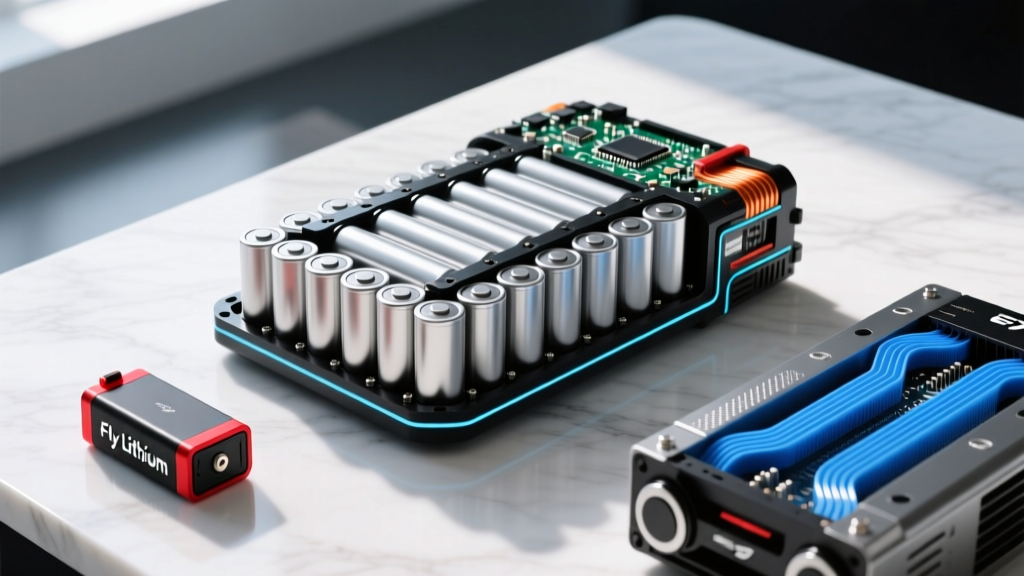
Two dominant chemistries define nearly every EV sold in the US market today: NMC/NCA (nickel manganese cobalt / nickel cobalt aluminum) and LFP (lithium iron phosphate). The choice isn't academic — it affects your real-world range, how the pack handles winter cold, how many charge cycles it can endure, and even whether you qualify for the full §30D federal tax credit based on critical-mineral sourcing rules.
| Attribute | LFP (Lithium Iron Phosphate) | NMC / NCA (Nickel-based) |
|---|---|---|
| Energy Density | ~160–180 Wh/kg (lower) | ~220–300 Wh/kg (higher) |
| Typical Cycle Life | 3,000–5,000+ cycles | 1,000–2,000 cycles |
| Cold-Weather Performance | Moderate loss; slower cold-charge acceptance | Better low-temp discharge; preconditioning helps |
| Cost per kWh (Production) | ~$80–$100/kWh at cell level | ~$110–$140/kWh at cell level |
| Recommended Daily SoC | 100% OK; benefits from periodic full charge for BMS calibration | 80% daily; 100% only before long trips |
| Cobalt Content | None | Varies; NCA minimal, NMC moderate |
| Common US Applications (2025–2026) | Tesla Model 3 RWD, Model Y RWD, Ford Mustang Mach-E Select (LFP option), BYD imports | Tesla Long Range/Performance, Hyundai Ioniq 5/6, Kia EV6/EV9, Rivian, Lucid, BMW iX |
The production trade-off is clear: NMC/NCA packs deliver more range in a lighter, smaller package — essential for 300+ mile vehicles and performance trims. LFP packs sacrifice some energy density but gain dramatically in cycle life, cost, and supply-chain simplicity (no cobalt). For a commuter who charges nightly at home and drives 30–50 miles daily, LFP's longevity advantage is substantial. For road-trippers and cold-climate drivers, NMC's energy density and cold-weather behavior still hold an edge.
Real Degradation Data: What EV Batteries Actually Lose Over Time
EV battery degradation is not linear. Most packs experience a steeper drop in the first 1–2 years (roughly 2–5% capacity loss as the solid-electrolyte interphase stabilizes), then settle into a slow, nearly linear decline of ~0.5–1.5% per year under normal use.
Observed Degradation Curves (Aggregated Fleet Data)
| Vehicle / Chemistry | 1 Year | 3 Years | 5 Years | 8 Years / ~100k mi | Source |
|---|---|---|---|---|---|
| Tesla Model 3 (NMC/NCA, pre-2024) | ~2–3% | ~5–7% | ~8–10% | ~10–14% | Tesla Impact Report, Recurrent fleet data |
| Tesla Model 3 RWD (LFP, 2023+) | ~1–2% | ~3–5% | ~5–7% | ~7–10% (projected) | Recurrent, owner telemetry aggregates |
| Hyundai Ioniq 5 (NMC, 77.4 kWh) | ~2% | ~4–6% | ~7–9% | ~10–12% | Hyundai specs, owner reports |
| Chevrolet Bolt EV/EUV (NMC, 65 kWh) | ~3–4% | ~6–8% | ~9–12% | ~12–16% | Recurrent, Bolt-specific fleet studies |
| Nissan LEAF (passive-cooled NMC) | ~3–5% | ~8–12% | ~14–20% | ~20–30% | Historical LEAF fleet data; thermal mgmt matters |
Note: These are aggregated ranges. Individual results vary with climate, charging habits, and fast-charging frequency. The Nissan LEAF's lack of active liquid cooling makes it an outlier — nearly all 2024+ EVs use liquid thermal management.
The key takeaway: modern liquid-cooled packs from major OEMs typically retain 85–92% of original capacity at the 8-year mark. That's enough range for most owners to never feel a meaningful loss in daily usability.
Battery Warranties: What's Covered and What the Fine Print Says
Federal law mandates a minimum 8-year / 100,000-mile warranty on EV battery packs for emissions-related components, and most manufacturers match or exceed this for capacity retention. Here's how the major warranties compare:
| Manufacturer | Duration | Mileage | Capacity Retention Threshold | Notes |
|---|---|---|---|---|
| Tesla (Model 3/Y RWD, LFP) | 8 years | 100,000 mi | 70% | Long Range/Performance: 8 yr / 120,000 mi |
| Hyundai / Kia | 10 years | 100,000 mi | 70% | Among the longest coverage in the US market |
| Ford (Mustang Mach-E, F-150 Lightning) | 8 years | 100,000 mi | 70% | Covers cells, modules, BMS, cooling system |
| General Motors (Ultium platform) | 8 years | 100,000 mi | 70% | Applies to Blazer EV, Equinox EV, Silverado EV, Cadillac Lyriq |
| Rivian | 8 years | 120,000 mi (R1T/R1S) | 70% | Commercial vans (EDV) have separate terms |
| BMW (iX, i4, i7) | 8 years | 100,000 mi | 70% | Includes high-voltage components beyond cells |
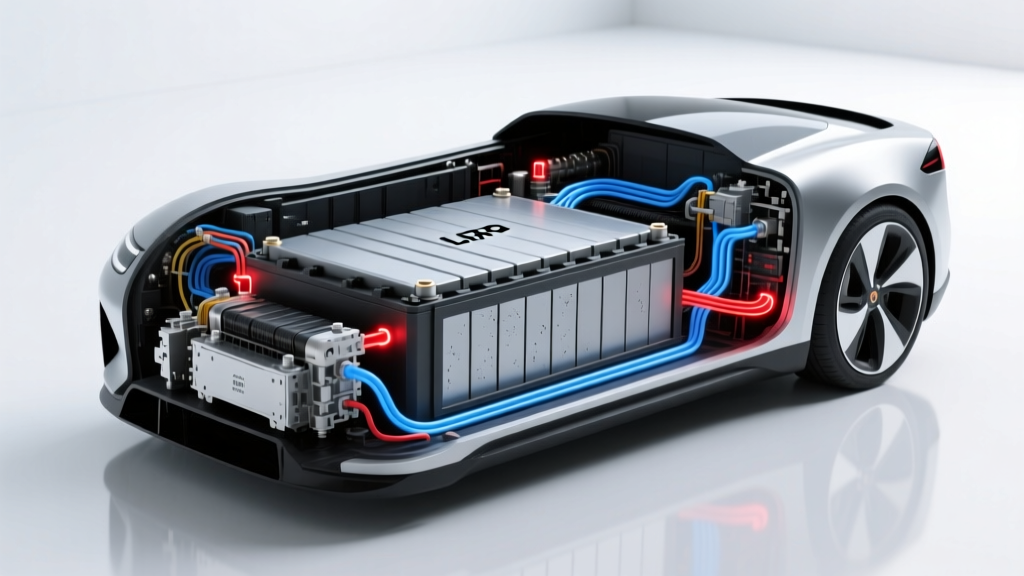
The 70% retention threshold is the industry standard. If your 80 kWh pack drops below 56 kWh of usable capacity within the warranty window, the manufacturer must repair or replace it — typically by swapping defective modules rather than the entire pack. Importantly, gradual degradation above that threshold is considered normal wear and is not covered. If you're at 74% at year 7, you're on your own.
Always confirm warranty specifics with your dealer and review the owner's manual supplement. Terms can shift between model years, and some states (notably California and states adopting CARB standards) may mandate longer coverage.
EV Battery Replacement Cost: The Numbers Behind the Fear
This is the question that keeps prospective buyers up at night — and it's the one most distorted by headlines. Here's the actual cost landscape for 2025–2026:
| Vehicle | Battery Size | Chemistry | Replacement Cost Range | Typical Need Timeline |
|---|---|---|---|---|
| Tesla Model 3 RWD | ~60 kWh | LFP | $7,000–$10,000 | 15+ years / 200k+ mi (projected) |
| Tesla Model Y Long Range | ~75 kWh | NMC/NCA | $10,000–$14,000 | 15+ years / 200k+ mi |
| Hyundai Ioniq 5 | 77.4 kWh | NMC | $11,000–$16,000 | 15+ years / 200k+ mi |
| Ford Mustang Mach-E Extended Range | 91 kWh | NMC | $14,000–$20,000 | 15+ years / 200k+ mi |
| Ford F-150 Lightning Extended Range | 131 kWh | NMC | $18,000–$25,000 | 15+ years / 200k+ mi |
| Chevrolet Bolt EV | 65 kWh | NMC | $8,000–$14,000 | 12–15 years / 150k+ mi |
| Rivian R1T (Large Pack) | 135 kWh | NMC | $20,000–$28,000 | 15+ years / 200k+ mi |
Context matters enormously here. First, most EV batteries will outlive the vehicle they're installed in. The average US vehicle age is ~12.6 years, and modern liquid-cooled packs are engineered for 15–20+ year lifespans. Second, EV battery production costs have dropped roughly 80% since 2013 and continue declining — by the time a 2026 EV actually needs a replacement pack in the 2040s, costs will likely be substantially lower than today's estimates. Third, module-level repair (replacing individual defective cell groups rather than the entire pack) is increasingly common and can cut costs by 50–70%.
The fear of a sudden $20,000 bill at 100,000 miles is not supported by the data. Catastrophic pack failure outside of collision damage is rare; gradual degradation is the norm, and it's slow enough that most owners sell or trade the vehicle before it becomes a concern.
Factors That Accelerate (or Preserve) Battery Life
Not all miles are created equal when it comes to battery wear. EV battery production quality sets the ceiling, but owner behavior determines how close you get to it.
Battery Care Essentials
- Minimize DC fast charging to when you need it. Occasional road-trip fast charging is fine, but daily 150+ kW sessions accelerate degradation. Studies from Recurrent show frequent fast-charged packs degrade 1–3% more over 4 years compared to primarily Level 2 charged packs.
- Avoid sitting at 100% SoC for extended periods. For NMC/NCA packs, set your daily charge limit to 80%. Charge to 100% only when departing on a long trip. LFP packs are more tolerant of 100% and actually benefit from periodic full charges for BMS cell-balancing calibration.
- Don't let the pack sit near 0% for days. If you're storing the vehicle, aim for 40–60% SoC. Deep discharge + heat is the most damaging combination for lithium-ion cells.
- Precondition before fast charging in cold weather. Most modern EVs do this automatically when you navigate to a charger. Cold cells charged at high power suffer lithium plating — a permanent, irreversible capacity loss mechanism.
- Park in shade or a garage when possible in extreme heat. Sustained pack temperatures above 95°F (35°C) accelerate calendar aging. Liquid cooling mitigates this but doesn't eliminate it.
- Use regenerative braking moderately in extreme cold. Aggressive regen on a freezing pack forces high charge current into cold cells. Many EVs automatically limit regen when the battery is cold — let the system do its job.
How to Monitor Your Battery's State of Health (SoH)
State of Health (SoH) represents your battery's current maximum capacity as a percentage of its original capacity. A new pack is 100% SoH; a pack that held 80 kWh when new but now holds 72 kWh is at 90% SoH.
Most EVs don't surface SoH directly in the infotainment system, but there are reliable ways to check:
- OBD-II diagnostic apps: Tools like OBDLink paired with apps such as EV Health or manufacturer-specific software can read the BMS-reported SoH value. Tesla owners can access this through third-party apps like TeslaFi or Tessie that log rated-range trends over time.
- Rated range tracking: Compare your current full-charge rated range to the EPA-sticker figure. If your 310-mile EPA Model 3 now shows 280 miles at 100%, you're at roughly 90% SoH (accounting for BMS estimation variance).
- Dealer diagnostic reports: Request a battery health printout during service visits. Most OEM service departments can pull a detailed SoH report from the BMS.
- Third-party services: Companies like Recurrent offer battery health reports based on connected-vehicle data, often used in pre-purchase inspections for used EVs.
Track SoH quarterly, not daily. BMS estimation has inherent variance (±2–3%), and temperature swings cause temporary range fluctuations that aren't actual degradation.
Emerging Battery Technology: What's Real and What's Still on the Horizon
EV battery production is evolving rapidly, but the gap between lab announcements and showroom availability remains significant. Here's a realistic timeline for next-generation technologies:
- Silicon-dominant anodes: Companies like Sila Nanotechnologies and Group14 are already shipping silicon-enhanced anode materials that boost energy density 10–20% over graphite. These are appearing in limited production applications (Porsche has used silicon-anode cells in the Taycan's Performance Battery Plus). Expect broader adoption in 2027–2029 model-year vehicles.
- Solid-state batteries: Toyota, Samsung SDI, and QuantumScape have demonstrated solid-state cells with 40–50% higher energy density and faster charging. Toyota has announced a 2027–2028 production target for limited-run vehicles. Mass production at competitive cost remains unproven — expect solid-state to be a premium-segment feature through the early 2030s before reaching mainstream pricing.
- Sodium-ion batteries: CATL and BYD are producing sodium-ion cells for lower-cost, lower-range applications. These trade energy density for raw-material cost and supply-chain independence (no lithium, no cobalt). Likely to appear in US-market budget EVs or as range-extender supplements by 2028–2030.
- LMFP (lithium manganese iron phosphate): An evolution of LFP that adds manganese for ~15–20% higher energy density while retaining cobalt-free chemistry. CATL and other producers are scaling LMFP production; expect it in mid-range EVs starting 2026–2027.
All next-generation technologies listed above are forward-looking. Production timelines are manufacturer estimates and subject to delays. No solid-state or sodium-ion EV is currently available for purchase in the US market as of early 2026.
LFP vs NMC: Which Battery Should You Actually Buy?
The Practical Decision Framework
Choose LFP if:
- You charge primarily at home (Level 2) and don't need maximum range
- Your daily commute is under 80 miles round-trip
- You plan to own the vehicle 8+ years and want maximum cycle life
- You prefer the simplicity of charging to 100% daily without worrying about degradation
- Lower purchase price is a priority (LFP trims are typically $3,000–$5,000 less than NMC Long Range equivalents)
Choose NMC/NCA if:
- You regularly drive 250+ miles between charges (road trips, rural routes)
- You live in a cold climate and need maximum range buffer in winter (expect 20–30% range loss below freezing)
- You want the fastest DC charging speeds (NMC packs typically sustain higher charge rates)
- You need performance-trim power (all high-horsepower variants use NMC/NCA)
- Towing is a factor — the energy density advantage matters when pulling a trailer
There is no universally "better" chemistry — only the right chemistry for your driving pattern. EV battery production has diversified precisely because different owners have different needs, and the market now offers genuine choice.
Frequently Asked Questions
How long do EV batteries last in years and miles?
Modern liquid-cooled EV batteries from major manufacturers are engineered to last 15–20+ years and 200,000+ miles before dropping below 70–80% of original capacity. Real-world fleet data from Tesla, Hyundai/Kia, and independent trackers like Recurrent show most packs retaining 85–92% capacity at 8 years / 100,000 miles. Catastrophic failure is rare; gradual degradation is the norm.
How much does an EV battery cost to replace?
Out-of-warranty replacement costs range from roughly $7,000 for a 60 kWh LFP pack (Tesla Model 3 RWD) to $25,000+ for a 131 kWh NMC pack (F-150 Lightning Extended Range). However, most packs outlive the vehicle. Module-level repairs — replacing individual cell groups rather than the full pack — can reduce costs by 50–70%. Production cost declines mean future replacements will likely be cheaper than today's estimates.
What does the EV battery warranty actually cover?
The standard US warranty is 8 years / 100,000 miles (Hyundai/Kia extend to 10 years) with a 70% capacity retention threshold. If your battery drops below 70% of original capacity within that window, the manufacturer covers repair or replacement. Gradual degradation above 70% is considered normal wear and is not covered. Warranties typically include cells, modules, the battery management system (BMS), and the thermal management system.
How do I check and maximize my EV battery health?
Monitor SoH through OBD-II diagnostic apps, rated-range tracking (compare full-charge range to EPA sticker), or dealer diagnostic reports. To maximize longevity: charge to 80% daily for NMC packs (100% is fine for LFP), minimize DC fast charging to road trips, avoid prolonged storage at 0% or 100% SoC, precondition before cold-weather fast charging, and park in shade during extreme heat.
Is LFP better than NMC for my EV?
Neither is universally better. LFP offers longer cycle life (3,000–5,000+ vs 1,000–2,000 cycles), lower cost, and no cobalt, but sacrifices energy density and cold-weather performance. NMC/NCA delivers more range per kWh, better cold-weather behavior, and faster charging, at a higher cost and shorter cycle life. For commuters charging at home, LFP is often the smarter long-term bet. For road-trippers and cold-climate drivers, NMC remains the practical choice.
Does fast charging damage my EV battery?
Occasional DC fast charging has minimal impact. However, daily use of 150+ kW chargers does accelerate degradation by 1–3% over a 4-year period compared to primarily Level 2 charging, according to fleet studies by Recurrent. Modern BMS and thermal management systems mitigate this significantly — the effect is measurable but not dramatic. The convenience of fast charging on road trips is worth the negligible long-term trade-off.
Will solid-state batteries make my current EV obsolete?
Not anytime soon. Solid-state batteries are expected to reach limited production in 2027–2028 (Toyota, Samsung SDI) but will initially appear only in premium vehicles at high cost. Mass-market solid-state EVs are unlikely before the early 2030s. Your current EV's battery technology will remain competitive and well-supported for its entire usable life. The transition will be gradual, not disruptive.
Understanding EV battery production choices — the chemistry, the engineering, the cost trajectory — is the single most important factor in making a confident EV purchase. The data consistently shows that modern packs are more durable, more affordable to replace, and more carefully warranted than the fear-based narratives suggest. Charge smart, monitor periodically, and let the engineering do its job.