Why Treat Your EV Battery Like a Project That Needs the Right Tools?
Think of a battery powered wrench as a metaphor for modern EV ownership: you apply precise torque (data) to a stubborn bolt (uncertainty). The traction battery is the single most expensive component in your EV, and the difference between a 10-year, 150,000-mile pack and an early replacement often comes down to how you monitor, charge, and thermally manage it. This guide gives you the exact numbers — chemistry trade-offs, degradation curves, warranty thresholds, and replacement costs — so you can tighten up your habits and loosen the myths.
LFP vs NMC/NCA: Which Chemistry Fits Your Driving?
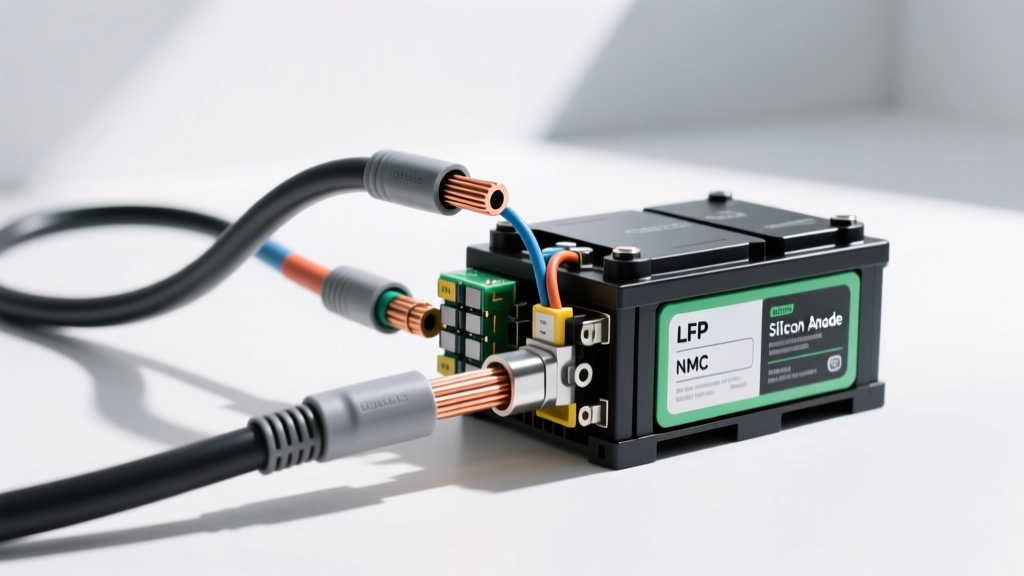
Most 2026 EVs sold in the U.S. use one of two lithium-ion families: LFP (lithium iron phosphate) or NMC/NCA (nickel manganese cobalt / nickel cobalt aluminum). The chemistry dictates energy density, cycle life, cold-weather behavior, and cost — and it's fixed at purchase, so choose carefully.
| Attribute | LFP (e.g., Tesla Model 3 RWD, BYD Seal) | NMC/NCA (e.g., Hyundai Ioniq 5, Ford F-150 Lightning Extended) |
|---|---|---|
| Energy density (cell-level) | ~160–180 Wh/kg | ~230–270 Wh/kg |
| Typical pack size / EPA range | 60 kWh / 272 mi (Model 3 RWD) | 77.4 kWh / 303 mi (Ioniq 5 Limited AWD) |
| Cycle life to 80% SoH | 2,500–3,500 cycles | 1,000–1,500 cycles |
| Cold-weather range loss (~20°F) | Higher (~30–40%) | Moderate (~20–30%) |
| Recommended daily SoC | 100% OK; periodic full-charge calibration helps | 80% daily; 100% only for trips |
| DC fast-charge tolerance | Excellent; less cathode stress | Good; frequent >150 kW sessions accelerate wear |
| Relative pack cost | Lower (~$110–130/kWh pack-level) | Higher (~$135–160/kWh pack-level) |
| Cobalt/nickel exposure | None | Significant — affects §30D critical-mineral sourcing |
The wrench-torque takeaway: Pick LFP if you commute daily, can charge to 100% at home, and live in a mild climate. Pick NMC if you need maximum range per kWh, tow, or regularly drive in sub-freezing conditions. Per fueleconomy.gov, chemistry is the single largest predictor of real-world efficiency variance.
How Long Do EV Batteries Actually Last?
The honest answer: most modern packs outlast the car around them. Data aggregated by Recurrent Auto across 15,000+ vehicles shows median degradation curves that flatten after year 3.
Typical NMC degradation curve (median, liquid-cooled packs, 2020–2026 model years):
- Year 1 / 15k mi: ~3–5% loss (initial formation)
- Year 3 / 45k mi: ~7–9% loss
- Year 5 / 75k mi: ~9–11% loss
- Year 8 / 120k mi: ~11–14% loss
- Year 10 / 150k mi: ~13–17% loss
LFP packs in comparable duty cycles typically show 2–4 percentage points less loss at each interval, thanks to the more stable olivine cathode structure.
Real-world example: a 2022 Tesla Model 3 Long Range (82 kWh NMC, EPA 358 mi) driven 15k miles/year with mostly Level 2 home charging typically reads ~310 mi of projected range at year 5 — a ~13% drop from new, consistent with the curve above. Highway-heavy drivers at 75+ mph and frequent DCFC users skew toward the higher-loss end.
What Does the Battery Warranty Actually Cover?
Federal law (49 CFR Part 537) effectively mandates 8-year/100,000-mile coverage on emissions-related components, and every major OEM extends comparable or better terms to the traction battery. The critical number is the capacity-retention threshold — the SoH level at which the manufacturer must repair or replace.
| Brand / Model | Term | Mileage | Capacity Threshold |
|---|---|---|---|
| Tesla Model 3/Y (LFP RWD) | 8 yr | 100,000 | 70% |
| Tesla Model 3/Y (Long Range/Perf) | 8 yr | 120,000 | 70% |
| Hyundai / Kia (Ioniq 5, EV6) | 10 yr | 100,000 | 70% |
| Ford F-150 Lightning | 8 yr | 100,000 | 70% |
| GM Ultium (Lyriq, Silverado EV) | 8 yr | 100,000 | 70% |
| Rivian R1T / R1S | 8 yr | 175,000 | 70% |
What's covered: capacity loss below threshold, cell/module defects, BMS failures, thermal-management faults. What's not: damage from collisions, flooding, improper charging equipment, or aftermarket modifications. Always read the specific warranty booklet — language varies on whether a "replacement" can be a refurbished pack of equivalent capacity.
How Much Does an EV Battery Cost to Replace?
Out-of-warranty replacement is rare before 150k miles on a liquid-cooled pack, but it's the number buyers fixate on. Costs below are 2026 out-the-door estimates including labor and core credit, sourced from OEM service bulletins and independent EV shops.
| Vehicle (Pack Size) | Approx. Cost | Typical Trigger |
|---|---|---|
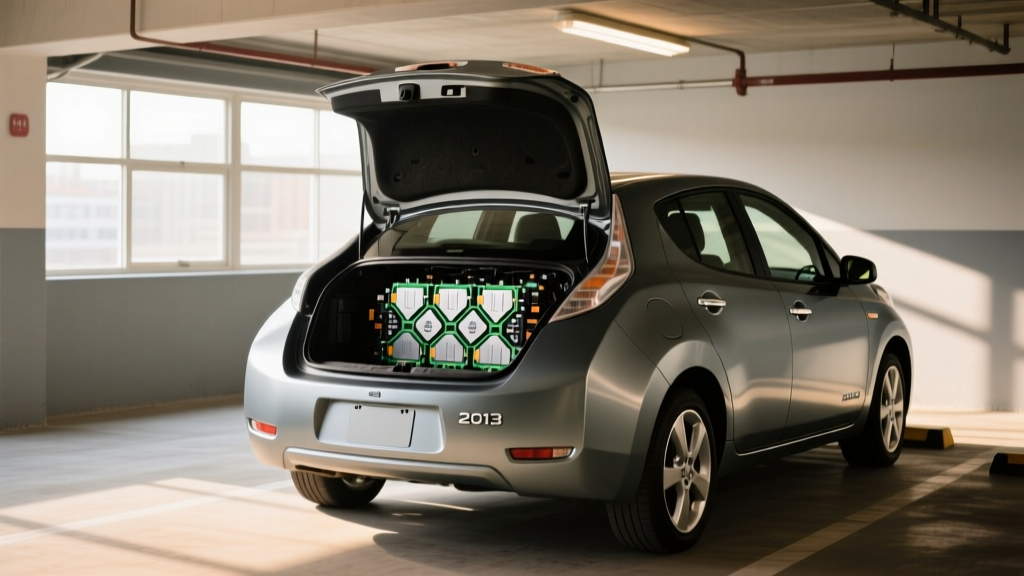
| Nissan Leaf 40 kWh (passive air-cooled) | $7,500–$9,500 | Accelerated degradation, no thermal mgmt |
| Tesla Model 3 LFP 60 kWh | $10,000–$13,000 | Rare — usually physical damage |
| Hyundai Ioniq 5 77.4 kWh | $13,000–$17,000 | Cell imbalance past warranty |
| Ford F-150 Lightning Ext 131 kWh | $22,000–$28,000 | Large pack, labor-intensive |
| GMC Hummer EV 212 kWh | $35,000–$42,000 | Double-stack Ultium architecture |
Module-level repair — replacing only the weak modules rather than the full pack — is increasingly available at EV specialists for 40–60% of full-pack cost. This is one reason catastrophic out-of-pocket bills are rarer than internet lore suggests.
Five Factors That Actually Move the Degradation Needle
Apply the wrench where torque matters. These five variables explain ~85% of variance between identical packs in the field:
- State-of-charge ceiling and floor. Storing NMC at 100% or below 10% for days accelerates electrolyte oxidation. LFP tolerates 100% far better.
- DC fast-charging frequency. Weekly 150+ kW sessions add ~1–2% extra annual loss vs. mostly Level 2. Occasional road-trip DCFC is negligible.
- Thermal extremes. Sustained pack temps above 95°F or below 10°F without preconditioning stress the anode SEI layer. Use scheduled departure + preconditioning.
- Depth of discharge. Shallow cycles (30–80%) beat deep cycles (5–95%) on NMC. LFP is more tolerant.
- Calendar aging. Even parked, a pack at 100% SoC in a hot garage loses ~1–2% per year. Store at 50% SoC in shade when possible.
Weekly Battery Care Checklist
- Set daily charge limit to 80% (NMC) or 100% (LFP)
- Enable scheduled departure preconditioning for morning drives
- Avoid letting SoC sit below 15% overnight
- On road trips, charge to 80% and move on — taper above 80% kills time and adds stress
- Check tire pressures monthly; under-inflation raises pack load by 2–4%
How to Check State of Health (SoH) Yourself
State of Health is the ratio of current usable capacity to original nameplate capacity. You don't need a dealer scan tool to approximate it:
- Tesla: Service Mode → Battery → Health Test (full discharge-to-charge cycle, ~30 min).
- Hyundai/Kia: Infotainment → EV → Battery → SoH % (on 2024+ models).
- OBD-II + app: Tools like OBDeleven, LeafSpy (Nissan), or Scan My Tesla read BMS-reported SoH directly.
- Manual check: Charge to 100%, note displayed kWh added via charger metering, divide by EPA-original usable capacity.
Track SoH quarterly. A sudden step-change drop (e.g., 88% to 82% in one month) flags a module imbalance worth a dealer visit — often fixable under warranty.
What's Next: Solid-State and Silicon Anodes (Forward-Looking)
Two technologies are frequently conflated with today's EVs. Be precise:
- Silicon-dominant anodes (e.g., Amprius, Group14) are entering limited production in 2026 luxury and performance applications, promising 10–20% energy-density gains. Expect trickle-down to mainstream models by 2028–2029.
- Solid-state batteries (Toyota, QuantumScape, Samsung SDI) remain in pilot and low-volume production as of 2026, primarily in Japan and Korea. Broad U.S. commercial availability in mainstream EVs is not expected before 2029–2031, per U.S. DOE analysis.
Neither technology changes today's purchase decision. Buy on today's LFP/NMC merits and treat solid-state announcements as announced/preliminary.
FAQ: The Questions Buyers Actually Ask
How long do EV batteries last in years and miles?
Most liquid-cooled NMC and LFP packs deliver 12–18 years and 150,000–250,000 miles before falling to 70% SoH. Air-cooled packs (older Leafs) degrade faster, often hitting 70% around 8–10 years in hot climates.
How much does an EV battery cost to replace out of warranty?
Roughly $10,000–$17,000 for mainstream sedans and crossovers, $22,000–$42,000 for large trucks. Module-level repair often cuts cost by 40–60%.
What does the battery warranty cover?
Typically 8 years/100,000 miles (10/100k on Hyundai/Kia) against capacity dropping below 70% of original, plus defects in cells, BMS, and thermal management. Physical damage and aftermarket tampering are excluded.
How do I maximize battery health day to day?
Charge NMC to 80% daily (LFP to 100%), precondition before fast-charging and cold drives, avoid long sits at 100% or below 10%, and favor Level 2 over DCFC for routine top-ups.
LFP vs NMC — which is better for me?
LFP wins on cycle life, cost, and daily-charge simplicity; NMC wins on energy density, cold-weather range, and towing. Match chemistry to your climate and commute, not to marketing.
Does fast charging ruin the battery?
Occasional DCFC (road trips) has negligible impact. Habitual daily DCFC above 150 kW can add 1–2% annual degradation. Preconditioning the pack before plugging in is the single biggest mitigator.
Will the §30D tax credit apply if I buy a used EV?
Yes, under the separate Used Clean Vehicle Credit (up to $4,000 / 30% of sale price) for vehicles under $25,000 and buyers under IRS income caps. Verify current-year rules at irs.gov, as sourcing and income thresholds are subject to change.