What Does "Battery Plane" Mean in an EV?
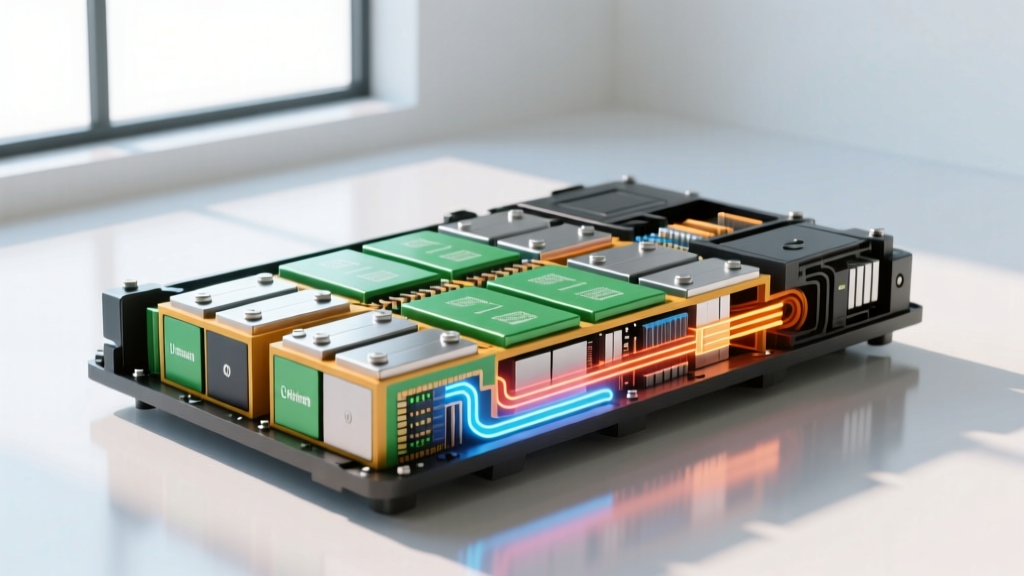
If you've been researching electric vehicles long enough, you'll eventually encounter the term battery plane — sometimes called a battery floor or battery skateboard. In modern EV architecture, the battery plane refers to the flat, structural slab that houses the high-voltage traction battery cells, modules, and thermal-management hardware beneath the passenger cabin. Unlike the fuel tank in a gas car, the battery plane is a load-bearing component that contributes to chassis rigidity, lowers the center of gravity, and dictates everything from interior packaging to crash safety.
Understanding what lives inside that plane — the cell chemistry, cooling channels, bus bars, and battery-management system (BMS) — is the single most important thing an EV buyer or owner can learn. The pack inside the plane will likely outlast the rest of the car, but its health directly governs your range, charging speed, and resale value for a decade or more.
LFP vs NMC: The Two Chemistries Dominating the Battery Plane
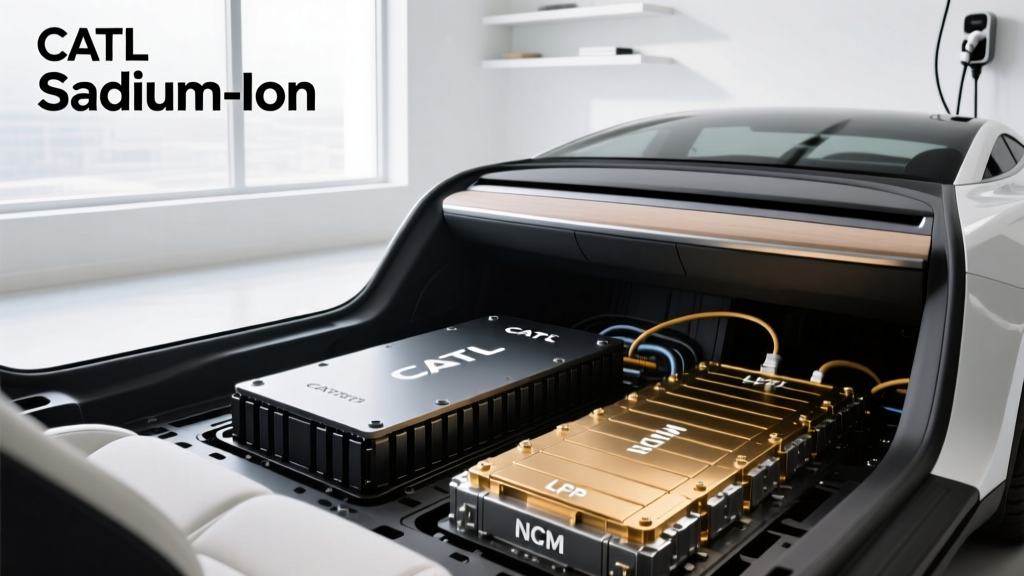
As of the 2026 model year, virtually every mass-market EV battery plane uses one of two lithium-ion chemistries at the cathode: NMC (nickel-manganese-cobalt, sometimes NCA with aluminum) or LFP (lithium iron phosphate). The choice shapes your ownership experience in measurable ways.
| Attribute | LFP (Lithium Iron Phosphate) | NMC / NCA |
|---|---|---|
| Energy Density (cell-level) | ~160–180 Wh/kg | ~230–280 Wh/kg |
| Typical Cycle Life | 3,000–5,000+ full cycles | 1,500–2,500 full cycles |
| Cold-Weather Performance | Moderate; slower charge below 32 °F | Better low-temp charge acceptance |
| Peak Range per Pack Size | Lower — heavier for same kWh | Higher — lighter, more compact |
| Cost per kWh (2026) | ~$75–$90 | ~$100–$125 |
| Daily Charge Recommendation | Can charge to 100% regularly | Best kept 20–80% for daily use |
| Cobalt Content | None | Some (declining in newer formulations) |
| Common 2026 Applications | Tesla Model 3 RWD, Ford Mustang Mach-E Select, BYD, base trims | Long-range / performance trims, Hyundai Ioniq 5/6, Rivian, Lucid |
The bottom line: If maximum range and lighter weight matter most — say you road-trip frequently or tow — NMC/NCA is the better fit. If you commute daily, charge at home, and want a pack that degrades more slowly over 15+ years, LFP is increasingly the pragmatic choice. Tesla's shift to LFP in all standard-range Model 3 and Model Y vehicles globally, and Ford's adoption of LFP in base Mustang Mach-E trims, reflects this trade-off calculus.
Real-World Degradation: What the Data Actually Shows
Headlines about EV batteries "dying" rarely match what fleet data reveals. According to analysis compiled by Geotab from over 10,000 vehicles, the average EV battery loses roughly 2.3% of its original capacity per year under typical use. That translates to about 85–90% State of Health (SoH) at the 8-year mark — well within warranty thresholds.
- Year 1: ~97% SoH (initial formation drop)
- Year 3: ~93% SoH
- Year 5: ~89% SoH
- Year 8: ~84% SoH
- Year 10: ~80% SoH (estimated, extrapolated)
LFP packs tend to flatten out even more gradually, often holding 90%+ at year 5. Data from Recurrent Auto's 2025 fleet report shows Tesla Model 3 LFP vehicles averaging 94% SoH at 60,000 miles.
Keep in mind that degradation is not linear. Most packs experience a steeper initial drop in the first 10,000–20,000 miles as the solid-electrolyte interphase (SEI) layer stabilizes, then the curve flattens considerably. A battery plane doesn't "fall off a cliff" — it slowly gives up a few miles of range each year.
What the Battery Warranty Actually Covers
Federal law mandates a minimum 8-year / 100,000-mile warranty on EV battery packs (10 years / 150,000 miles in California Air Resources Board states). Most manufacturers set the capacity-retention threshold at 70% of original capacity, meaning the warranty triggers only if your pack drops below that line during the coverage period.
| Manufacturer / Model | Warranty Term | Capacity Threshold | Chemistry |
|---|---|---|---|
| Tesla Model 3/Y RWD | 8 yr / 100,000 mi | 70% | LFP |
| Tesla Model 3/Y Long Range | 8 yr / 120,000 mi | 70% | NMC/NCA |
| Hyundai Ioniq 5 | 10 yr / 100,000 mi | 70% | NMC |
| Ford Mustang Mach-E | 8 yr / 100,000 mi | 70% | LFP (Select) / NMC (GT) |
| Chevrolet Equinox EV | 8 yr / 100,000 mi | 60% (GM Ultium) | NMC |
| Rivian R1T / R1S | 8 yr / 175,000 mi | 70% | NMC |
| BMW iX | 8 yr / 80,000 mi | 70% | NMC |
Critical nuance: the warranty covers capacity loss below the threshold, not cosmetic range reduction. If your 300-mile EPA-rated EV drops to 240 miles of real-world range at year 7, that's roughly 80% retention — still above the 70% trigger, so no warranty claim applies. This is why understanding degradation rates matters before you buy.
EV Battery Replacement Cost: Numbers and Context
This is where fear-mongering runs rampant, so let's ground the discussion in 2026 data. Full battery-plane replacement is exceedingly rare during the first decade of ownership. When it is needed — usually due to physical damage, coolant intrusion, or manufacturing defect — costs vary dramatically by pack size and chemistry.
| Model | Pack Size (kWh usable) | Chemistry | Estimated Replacement Cost |
|---|---|---|---|
| Tesla Model 3 RWD | ~60 kWh | LFP | $10,000 – $14,000 |
| Tesla Model Y Long Range | ~75 kWh | NMC | $13,000 – $18,000 |
| Hyundai Ioniq 5 | ~77.4 kWh | NMC | $14,000 – $20,000 |
| Ford F-150 Lightning Extended | ~131 kWh | NMC | $22,000 – $32,000 |
| Chevrolet Silverado EV | ~200 kWh | NMC | $30,000 – $42,000 |
| Rivian R1T Max Pack | ~149 kWh | NMC | $25,000 – $35,000 |
| Lucid Air Grand Touring | ~112 kWh | NMC | $20,000 – $28,000 |
Important context: cell prices have fallen from over $1,200/kWh in 2010 to roughly $85–$110/kWh at the cell level in 2026, per BloombergNEF tracking. Module-level repairs (replacing individual bad modules rather than the entire plane) are increasingly offered by dealerships and independent EV shops for $2,000–$6,000, depending on the fault. Most EVs will be retired or traded in before a full pack swap is economically justified.
Five Factors That Accelerate Battery Degradation
The battery plane's BMS works constantly to protect cells, but owner habits still matter. Here's what actually moves the needle on longevity:
- Chronic 100% SoC storage (NMC only): Keeping an NMC pack at full charge for days or weeks accelerates electrolyte oxidation. Set your daily charge limit to 80%. LFP packs are exempt — Tesla and Ford recommend periodic 100% charges to keep the BMS calibration accurate.
- Frequent DC fast charging above 150 kW: Occasional road-trip fast charging is fine. But daily reliance on 250–350 kW chargers generates sustained heat that stresses cells. Data from Recurrent Auto shows vehicles that fast-charge more than 3x per week degrade ~1–2% faster over 4 years than those primarily using Level 2.
- Extreme heat exposure: Ambient temperatures above 95 °F, especially combined with high SoC, are the single biggest degradation accelerant. Garage parking and preconditioning help. The battery plane's liquid cooling system is your first line of defense — don't ignore thermal-management warnings.
- Deep discharges below 10%: Regularly draining the pack to near-empty stresses the anode. Try to plug in before you hit 15%.
- Cold-weather fast charging without preconditioning: Charging a frozen battery at high kW causes lithium plating on the anode — a permanent capacity loss mechanism. Always use your vehicle's navigation-based preconditioning (it warms the pack before you arrive at the charger).
How to Monitor Your Battery's State of Health
State of Health (SoH) is the percentage of original capacity your pack can still hold. A new EV starts at 100% SoH; at 70%, you've hit the typical warranty threshold. Here's how to check it:
- In-vehicle displays: Tesla shows battery health indirectly via range estimates. Hyundai/Kia's infotainment includes an EV battery-status screen. BMW's iDrive surfaces SoH percentage directly.
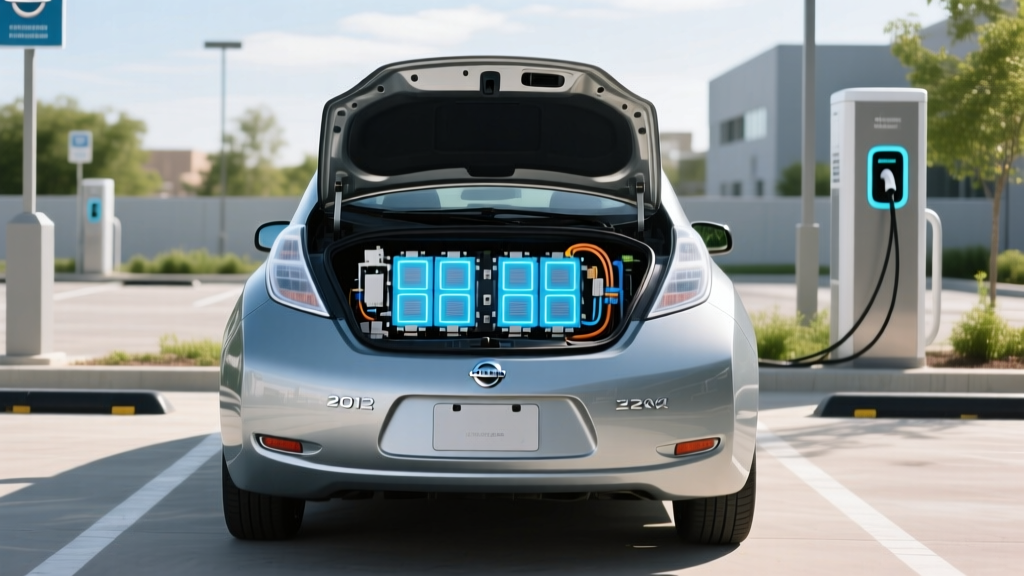
- OBD-II diagnostic apps: Tools like OBDeleven, Leaf Spy (Nissan), or manufacturer-specific apps can read SoH directly from the BMS via the OBD-II port. Expect accuracy within ±1–2%.
- Third-party services: Companies like Recurrent and fueleconomy.gov's Your Vehicle tool let you compare your real-world range against EPA baselines as a proxy for degradation.
- Dealer diagnostics: During service visits, ask for a battery health report. Most OEMs can pull a detailed cell-balance and SoH printout in minutes.
Pro tip: track your average kWh/100mi consumption over time. If that number creeps up while your driving habits stay the same, your pack is losing capacity — even if the dashboard doesn't explicitly say so.
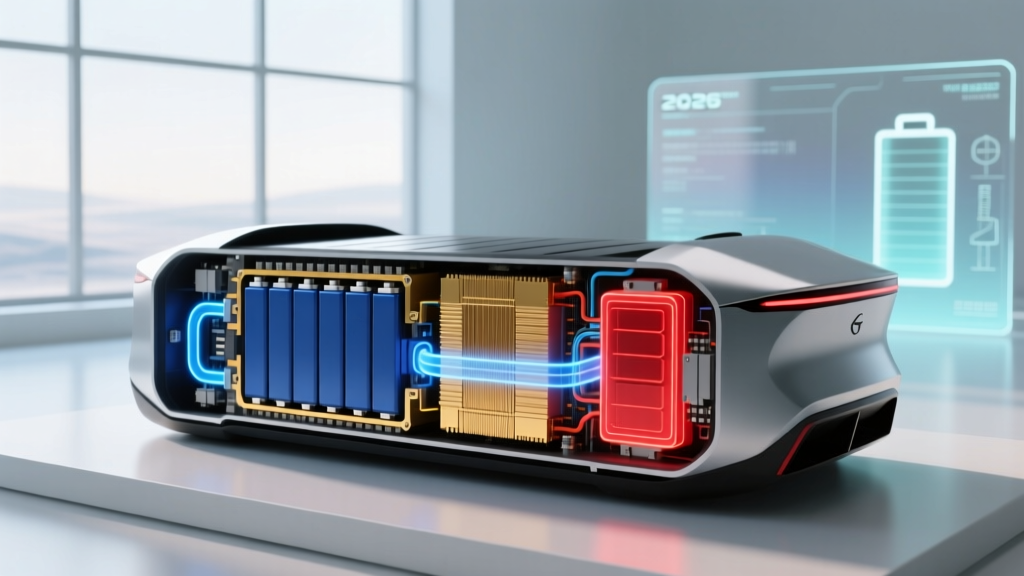
Beyond Today's Battery Plane: Solid-State and Silicon Anodes
The next generational leap in battery-plane technology involves solid-state batteries, which replace the liquid electrolyte with a solid ceramic, sulfide, or polymer layer. The theoretical advantages are substantial: 40–50% higher energy density, faster charging (potentially 10–80% in under 10 minutes), and reduced fire risk.
However, as of early 2026, solid-state packs remain in limited production trials. Toyota has announced a 2027–2028 commercialization target for a solid-state EV with ~750 km (WLTP) range, while Samsung SDI and QuantumScape are supplying prototype cells to select OEMs. Realistically, broad availability in mainstream-priced EVs is a 2029–2032 proposition.
A nearer-term evolution is the silicon-dominant anode. Companies like Sila Nanotechnologies and Group14 are already supplying silicon-carbon anode materials that boost cell energy density by 15–25% without the manufacturing challenges of solid-state. Expect silicon-anode cells to appear in production battery planes starting with premium models in 2027–2028, then cascading to mainstream vehicles by the early 2030s.
Neither technology changes the advice for today's buyers: current lithium-ion packs in LFP and NMC configurations are mature, well-warrantied, and proven to last 200,000+ miles with reasonable care.
Frequently Asked Questions
How long do EV batteries actually last?
Based on fleet data, most EV battery planes retain 80–90% of original capacity at the 8-year mark and can reasonably be expected to function for 15–20 years or 200,000–300,000 miles before capacity drops below 70%. The pack will likely outlast other major vehicle components.
How much does it cost to replace an EV battery?
Full replacement ranges from roughly $10,000 for a compact LFP pack (Tesla Model 3 RWD) to $30,000–$42,000 for a large NMC pack (Chevrolet Silverado EV 200 kWh). Module-level repairs cost $2,000–$6,000. Most owners never need a full replacement.
What does the battery warranty cover?
Federal minimum is 8 years / 100,000 miles (10/150k in CARB states). Coverage triggers if capacity drops below the manufacturer's threshold — typically 70% of original. The warranty covers defects and excessive degradation, not range loss from extreme temperatures or tire/weight changes.
LFP or NMC — which should I choose?
Choose LFP if you commute daily, charge at home, want maximum cycle life, and don't need the absolute longest range. Choose NMC/NCA if you road-trip often, tow, need maximum range from a given pack size, or live in a very cold climate where NMC's charge acceptance is better. Neither is universally "better" — the right answer depends on your driving profile.
Does fast charging damage the battery?
Occasional DC fast charging is fine and accounted for in the BMS design. However, exclusive reliance on high-power (150+ kW) fast charging adds measurable heat stress. Fleet data suggests a ~1–2% additional capacity loss over 4 years for vehicles fast-charging 3+ times weekly versus primarily Level 2. Use fast charging for road trips; use Level 2 for daily needs.
Can I check battery health myself?
Yes. Use your vehicle's built-in battery status screen, an OBD-II diagnostic dongle with an EV-compatible app, or request a health report from your dealer. Tracking your kWh/100mi efficiency over time is also an effective proxy for capacity loss.