If you've ever looked at an electric vehicle and wondered how do you put batteries into something that also needs to be safe, spacious, and efficient, the answer is one of the most consequential engineering decisions in modern automotive design. Unlike a gas tank tucked behind the rear axle, an EV's high-voltage traction battery is a massive, heavy, thermally sensitive component that dictates the car's floor height, crash structure, weight distribution, and ultimately its usable range.
This guide walks through exactly how EV batteries are physically packaged, what chemistry lives inside the cells, how long they actually last based on real-world degradation data, what warranties cover, and what you can do as an owner to maximize State of Health (SoH) over the vehicle's life.
Where and How EV Batteries Are Packaged
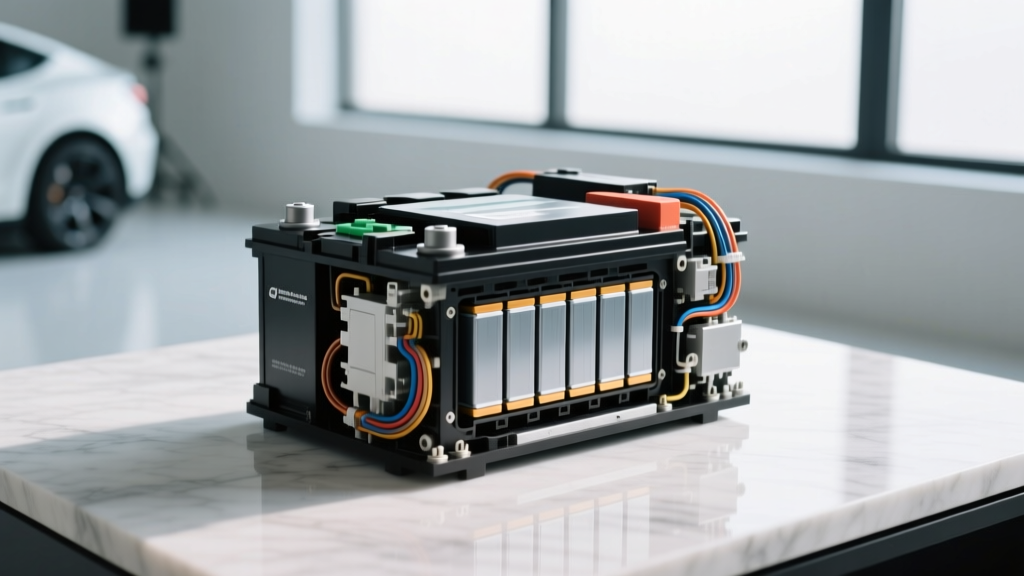
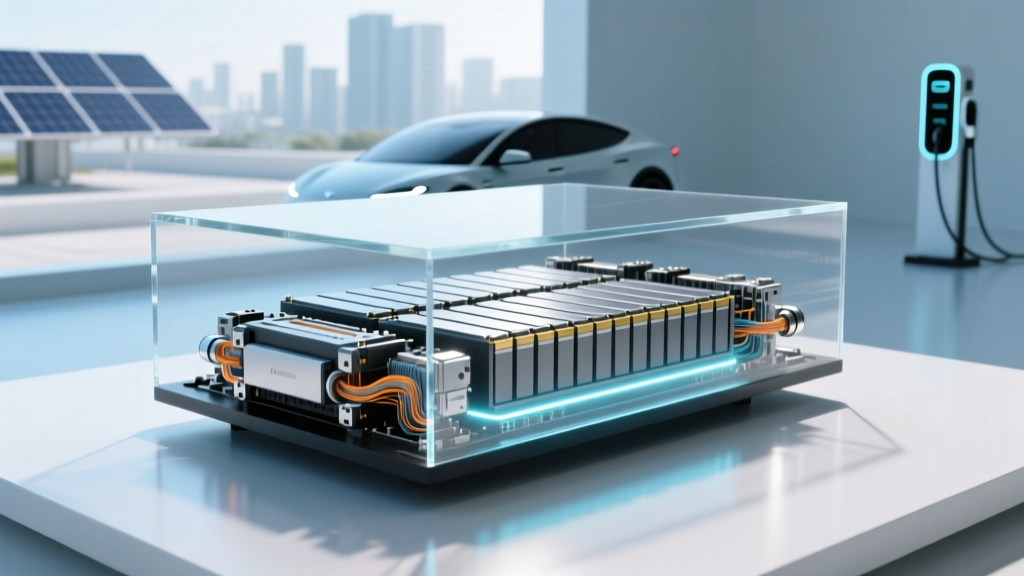
The overwhelming majority of modern EVs use a skateboard-style battery pack — a large, flat, rectangular enclosure bolted to the underside of the vehicle between the front and rear axles. This isn't arbitrary. Placing the heaviest single component (typically 700–1,200 lbs depending on capacity) as low as possible delivers a center of gravity that rivals many sports cars, which is why a 4,500-lb Tesla Model Y handles corners with surprisingly little body roll.
Here's how the packaging typically breaks down:
- Cell modules — Individual cylindrical (e.g., Tesla 4680), prismatic (e.g., BYD Blade), or pouch cells are grouped into modules.
- Thermal management plates — Liquid-cooled (or heated) plates sit between modules to maintain the battery in its optimal 20–40°C operating window.
- Structural enclosure — An aluminum or steel shell protects against road debris, side-impact intrusion, and water ingress. Many packs are rated IP67 or IP69K for water resistance.
- Battery Management System (BMS) — A dedicated computer monitors voltage, temperature, and current at the cell level, balancing charge across thousands of individual cells.
Some vehicles deviate. The Tesla Model S Plaid and Cybertruck use a structural battery pack where the cells themselves bear chassis loads, reducing weight but making out-of-warranty replacement more complex. Older or budget EVs (like early Nissan Leafs) used air-cooled packs, which degraded faster in hot climates — a key reason the Leaf's battery reputation suffered in the American Southwest.
LFP vs NMC vs NCA: Battery Chemistry Trade-Offs
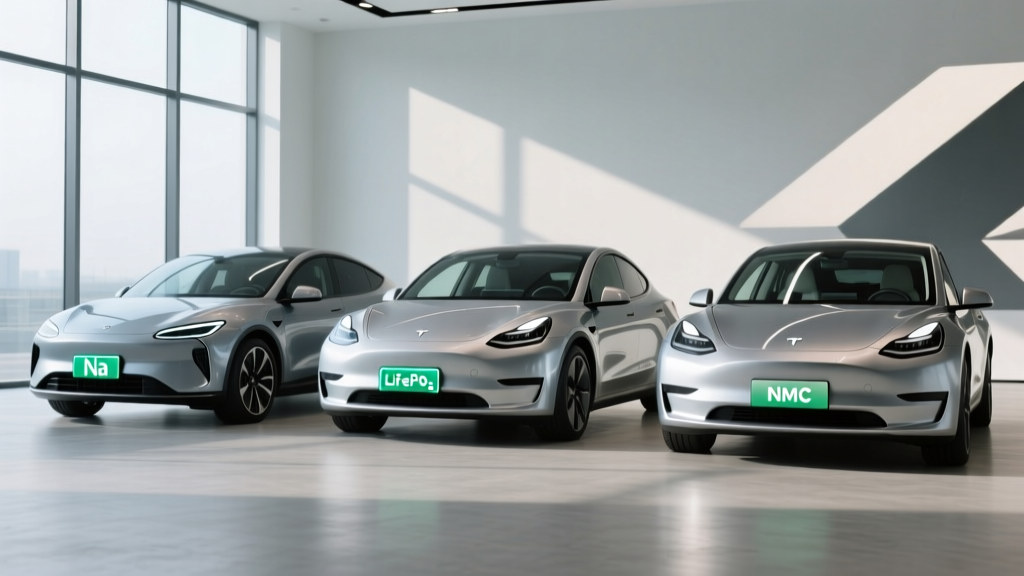
The two dominant lithium-ion chemistries in 2026 EVs are LFP (lithium iron phosphate) and NMC/NCA (nickel manganese cobalt / nickel cobalt aluminum). The chemistry choice affects your daily ownership experience more than most buyers realize.
| Attribute | LFP (LiFePO₄) | NMC / NCA |
|---|---|---|
| Energy density (Wh/kg) | 140–170 | 220–300 |
| Typical cycle life | 3,000–6,000 cycles | 1,000–2,500 cycles |
| Cold-weather performance | More range loss below 32°F | Better cold tolerance |
| Cost per kWh (cell-level) | ~$65–85 | ~$100–130 |
| Recommended daily SoC | 100% OK (periodic full charge encouraged) | 80% daily; 100% for trips only |
| Notable 2026 vehicles | Tesla Model 3 RWD, Model Y RWD, Ford Mustang Mach-E Select (LFP option) | Hyundai Ioniq 5, Kia EV6, Chevy Equinox EV, BMW i4 |
The practical takeaway: LFP is cheaper, lasts more charge cycles, and tolerates daily 100% charging — ideal for commuters who plug in every night. NMC/NCA packs offer more range in the same physical space, making them the choice for long-range AWD trims and larger SUVs. If you live in Minnesota and need every mile of range in January, NMC has the edge. If you're in Phoenix and charge nightly at home, LFP's cycle-life advantage compounds over years.
According to the International Energy Agency's Global EV Outlook, LFP's global market share in EV batteries rose past 40% in 2025, driven by cost reduction and supply-chain diversification away from cobalt and nickel.
How Long Do EV Batteries Actually Last?
The short answer: far longer than most first-time EV buyers assume. The high-voltage traction battery in a modern EV is designed to outlast the typical ownership cycle of the vehicle itself.
Real-world degradation benchmarks (compiled from fleet data and manufacturer disclosures):
- Tesla fleet data (2025 Impact Report): Model 3/Y batteries retain approximately ~85% of original capacity at 150,000 miles, with the degradation curve flattening significantly after the first 30,000 miles.
- Geotab fleet study (2024, 10,000+ EVs): Average annual degradation across all brands was ~1.8% per year, meaning a typical EV retains ~82% capacity after 10 years of average use.
- Hyundai/Kia E-GMP platform: Reports indicate ~90%+ retention at 100,000 miles under normal use, aided by robust thermal management and conservative buffer sizing.
- Early-generation contrast: 2011–2015 Nissan Leafs with air-cooled 24 kWh packs saw 20–30% loss within 5 years in hot climates — a problem largely solved by liquid cooling in modern packs.
Most degradation occurs in the first 20,000–40,000 miles (roughly 2–5% loss) as the solid electrolyte interphase (SEI) layer stabilizes. After that, capacity loss slows to roughly 0.5–1.5% annually under moderate use. A 2026 Hyundai Ioniq 5 with a 77.4 kWh (usable) NMC pack that EPA-rates at 303 miles will likely still deliver ~250–270 real-world miles at 150,000 miles — still highly livable for most drivers.
What Does the EV Battery Warranty Cover?
Federal law (EPA emissions warranty requirements) effectively mandates that EV battery packs carry a minimum of 8 years / 100,000 miles of coverage. In California and states adopting CARB standards (currently 17 states plus D.C.), that extends to 10 years / 150,000 miles. Here's how major manufacturers structure their battery warranties as of the 2026 model year:
| Manufacturer | Warranty Term | Capacity Retention Threshold | Notes |
|---|---|---|---|
| Tesla (Model 3/Y) | 8 yr / 120,000 mi (LR/AWD); 8 yr / 100,000 mi (RWD) | 70% minimum | Replacement or repair at Tesla discretion |
| Hyundai / Kia | 10 yr / 100,000 mi | 70% minimum | Among the longest coverage in the segment |
| Ford (Mustang Mach-E, F-150 Lightning) | 8 yr / 100,000 mi | 70% minimum | Covers battery components and management system |
| GM (Ultium platform) | 8 yr / 100,000 mi | 70% minimum (60% on some commercial) | Modular pack allows partial replacement |
| BMW | 8 yr / 80,000 mi | 70% minimum | Transferable to second owner |
What triggers a warranty claim: If diagnostic testing confirms the pack has fallen below the stated capacity threshold (typically 70% of original usable kWh), the manufacturer will repair or replace the pack — often by swapping failed modules rather than the entire enclosure, particularly on modular platforms like GM's Ultium. The warranty also covers defects in the BMS, cooling system, and high-voltage wiring within the pack.
Per the U.S. Department of Energy's EV technology resources on fueleconomy.gov, most EV owners never file a battery warranty claim because degradation stays well above the 70% threshold during the warranty period.
EV Battery Replacement Cost: What to Expect
This is the question that generates the most anxiety — and the most misinformation. Let's anchor the numbers in reality.
| Vehicle / Pack Size | Battery Capacity (usable) | Estimated Full Replacement Cost (2026) | When Typically Needed |
|---|---|---|---|
| Tesla Model 3 RWD (LFP) | ~57.5 kWh | $8,000–$12,000 | Rarely before 200,000+ mi |
| Hyundai Ioniq 5 (NMC) | 77.4 kWh | $12,000–$18,000 | Rarely before 180,000+ mi |
| Ford F-150 Lightning (Extended Range) | ~131 kWh | $20,000–$30,000 | Rarely before 150,000+ mi |
| Chevrolet Bolt EV (NMC) | 65 kWh | $9,000–$14,000 | Out-of-warranty cases post-recall |
| BMW i4 eDrive40 | 81.5 kWh | $15,000–$22,000 | Rarely before 180,000+ mi |
Several critical context points:
- Most packs outlive the car. The average U.S. vehicle is scrapped at roughly 170,000–200,000 miles. Given current degradation curves, most EV batteries will still hold 70–80% capacity at that mileage.
- Module-level repair is increasingly common. On modular packs (GM Ultium, BMW iX), a single failed module can be replaced for $1,500–$4,000 rather than swapping the entire pack.
- Costs are declining. Cell-level pricing has fallen from ~$1,200/kWh in 2010 to roughly $100–$130/kWh for NMC and $65–$85/kWh for LFP in 2026, per BloombergNEF battery price surveys. Installed pack costs will continue to trend downward.
- Aftermarket and refurbished packs are becoming available for older models, typically at 40–60% of OEM new-pack pricing.
Factors That Accelerate (or Preserve) Battery Life
Your daily habits have a measurable impact on how quickly the pack degrades. Here's what the electrochemistry actually cares about:
Practices That Maximize Battery Longevity
- Avoid sustained 100% SoC on NMC/NCA packs. Charge to 80% for daily use; set 100% only when you'll drive within a few hours. LFP packs tolerate 100% better and actually benefit from periodic full charges for BMS calibration.
- Minimize DC fast charging when Level 2 is available. Occasional fast charging is fine, but daily 150–350 kW sessions accelerate electrolyte decomposition. If you can charge overnight at 7–11 kW (Level 2), do it.
- Avoid extreme heat exposure. Parking in a garage or shade during 100°F+ summer days reduces calendar degradation. Liquid-cooled packs handle this better, but thermal soak still matters.
- Don't store at very low SoC. If leaving the car for weeks, leave it plugged in at ~50–70% SoC. Storing at 5% for extended periods risks cell damage.
- Use preconditioning before fast charging. Most EVs (Tesla, Hyundai/Kia, GM) warm the battery to optimal temperature before a DC session if you navigate to a charger. This protects the cells and improves charge speed.
- Regenerative braking on moderate settings reduces the C-rate (charge/discharge intensity) compared to max-regen one-pedal driving in stop-and-go traffic, though the difference is modest.
Practices That Accelerate Degradation
- Exclusive reliance on DC fast charging (daily 200+ kW sessions)
- Repeatedly draining below 10% SoC before recharging
- Storing the vehicle at 100% SoC in high ambient temperatures
- Aftermarket modifications that bypass the BMS or thermal limits
How to Check and Monitor Battery Health (SoH)
State of Health (SoH) is the percentage of original usable capacity the pack currently holds. A new EV starts at 100% SoH; at 70% SoH, the warranty threshold is typically triggered.
Here's how to check it:
- In-vehicle diagnostics. Some brands (Tesla via the service menu, BMW via iDrive, Hyundai via the EV-specific settings) display an SoH percentage or battery health indicator directly on the screen. Availability varies by model year and software version.
- Manufacturer app. The Tesla app, FordPass, Hyundai Bluelink, and myChevrolet apps provide varying levels of battery health data, sometimes under "Vehicle Health" or "Battery" tabs.
- OBD-II scanners with EV capability. Tools like the OBDLink SX paired with apps such as EVNotify or LeafSpy (for Nissan) can read the BMS directly and report SoH, cell voltage deltas, and pack temperature.
- Dealer diagnostic check. Any authorized service center can run a full battery health report, typically as part of a scheduled service visit. Request the printout — it shows individual module balance and capacity.
- Manual calculation method. Charge to 100%, note the displayed range, and compare to the original EPA-rated range adjusted for the vehicle's age. If a 303-mile Ioniq 5 shows 260 miles at 100% after 80,000 miles, that's roughly 86% SoH — consistent with expected degradation.
For used-EV buyers, a pre-purchase battery health report from the dealer (or an independent EV shop) is as essential as a compression test was for gas cars. Per the NHTSA's vehicle safety resources, understanding the high-voltage system's condition is critical for both safety and value assessment.
Emerging Battery Tech: Solid-State and Silicon Anodes
Two technologies are frequently cited as the next leap in EV batteries. Here's where they actually stand as of 2026:
Solid-state batteries replace the liquid electrolyte with a solid ceramic, polymer, or sulfide material, promising higher energy density (potentially 400+ Wh/kg at the cell level), faster charging, and improved safety (no flammable electrolyte). Toyota has announced a solid-state EV for limited production around 2027–2028, and Samsung SDI is targeting 2027 for commercial cells. However, manufacturing yield, cost (currently estimated at 3–5x current lithium-ion per kWh), and interface stability challenges mean widespread adoption in mainstream EVs is not expected before 2030.
Silicon-dominant anodes replace graphite with silicon, which can store roughly 10x more lithium ions per gram. Companies like Sila Nanotechnologies and Group14 are already supplying silicon-composite anode materials for limited applications (e.g., Mercedes G-Class 580e, Panasonic's 4680 cells). Expect incremental adoption through the late 2020s as silicon content in anodes rises from today's ~5–10% toward 30–50%, yielding 10–20% energy density gains without a full chemistry revolution.
Sodium-ion batteries are also entering the conversation for budget and urban EVs. CATL began shipping sodium-ion cells in Chinese-market vehicles in 2024–2025. With lower energy density (~120–150 Wh/kg) but dramatically lower cost and no lithium or cobalt, sodium-ion may appear in U.S.-market compact EVs or as a range-extender buffer in dual-chemistry packs by the end of the decade.
None of these technologies are available in 2026 production vehicles sold in the U.S. at scale. If you're buying now, today's LFP and NMC chemistries are mature, well-understood, and backed by robust warranties.
Frequently Asked Questions
How long do EV batteries last in years and miles?
Based on fleet data from Tesla, Geotab, and manufacturer reports, modern liquid-cooled EV batteries typically retain 80–90% of original capacity at 100,000 miles and 75–85% at 150,000 miles. In calendar years, expect roughly 1.5–2% loss per year under normal use. Most packs will remain functional (above 70% SoH) for 15–20 years or 200,000+ miles — often outlasting the rest of the vehicle.
How much does an EV battery cost to replace?
Full pack replacement in 2026 ranges from approximately $8,000 for a ~57 kWh LFP pack (Tesla Model 3 RWD) to $20,000–$30,000 for a ~130 kWh pack (F-150 Lightning Extended Range). However, full replacement is rarely needed before 200,000 miles. Module-level repairs on modular packs can cost $1,500–$4,000. Prices continue to decline as cell costs fall.
What does the battery warranty actually cover?
Federal minimum is 8 years/100,000 miles (10 years/150,000 miles in CARB states). Coverage guarantees the pack will retain at least 70% of original capacity. If it falls below that threshold, the manufacturer repairs or replaces the pack (or individual modules). The warranty also covers defects in the BMS, thermal management, and high-voltage components within the pack enclosure.
How do I check my EV battery's State of Health?
Check via the vehicle's onboard diagnostics menu (if supported), the manufacturer's mobile app, an OBD-II scanner with EV-capable software (like EVNotify or LeafSpy), or request a battery health report from an authorized dealer. For used-EV purchases, always get a dealer diagnostic printout before committing.
LFP vs NMC — which battery chemistry is better for me?
Choose LFP if you charge at home nightly, want maximum cycle life, live in a moderate-to-warm climate, and don't need the absolute longest single-charge range. Choose NMC/NCA if you need maximum range per charge, live in a cold climate where LFP's winter range penalty stings more, or are buying a long-range AWD trim (which typically comes with NMC regardless). Both chemistries are proven and well-warranted in 2026.
Does fast charging damage my EV battery?
Occasional DC fast charging (road trips, a few times a month) has minimal impact on modern liquid-cooled packs. Daily reliance on 150–350 kW charging does accelerate degradation slightly — studies suggest an additional 0.3–0.8% annual loss compared to Level 2-only charging. The bigger risk is heat buildup during fast charging, which is why preconditioning the battery before a DC session matters.
Can I extend my EV battery's life?
Yes. The highest-impact practices are: charge to 80% daily on NMC packs (100% is fine on LFP), avoid leaving the car at very low or very high SoC for extended periods, use Level 2 charging as your primary method, precondition before fast charging, and park in shade or a garage during extreme heat. These habits can reduce annual degradation from ~2% to ~1.2–1.5%.