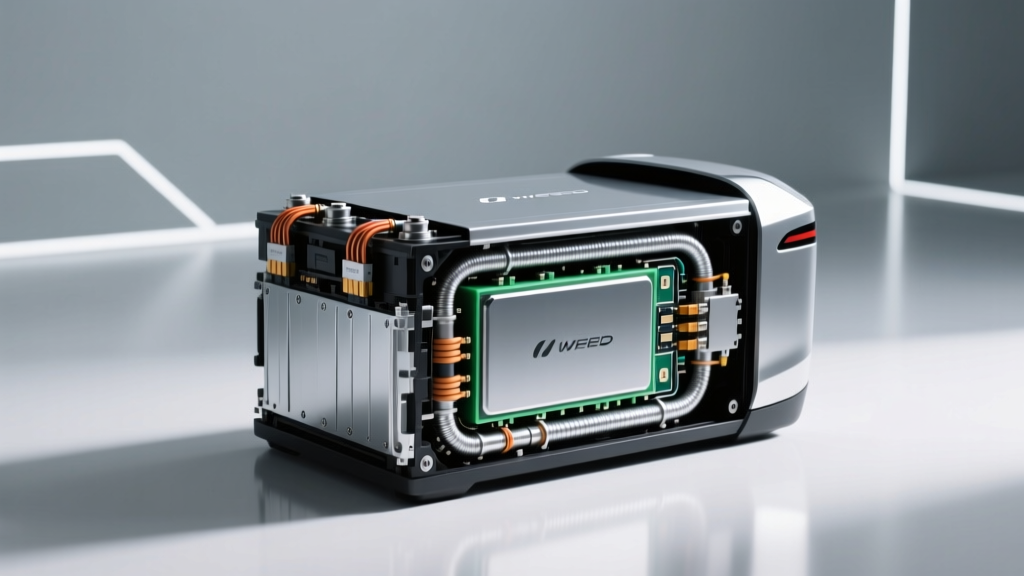
The electric vehicle battery pack is the single most expensive component in your car — and the one buyers worry about most. Will it degrade? What does replacement cost? How long will it actually last? These are the right questions, and the answers are more reassuring than the headlines suggest.
After a decade of real-world EV ownership data, millions of vehicles on the road, and multiple chemistry generations, we now have concrete numbers on battery longevity. This guide walks through exactly what's inside your battery pack, how it degrades, what warranties protect you, and what you can do to maximize its life — all backed by data, not marketing.
LFP vs NMC/NCA: Which Battery Chemistry Is in Your EV?
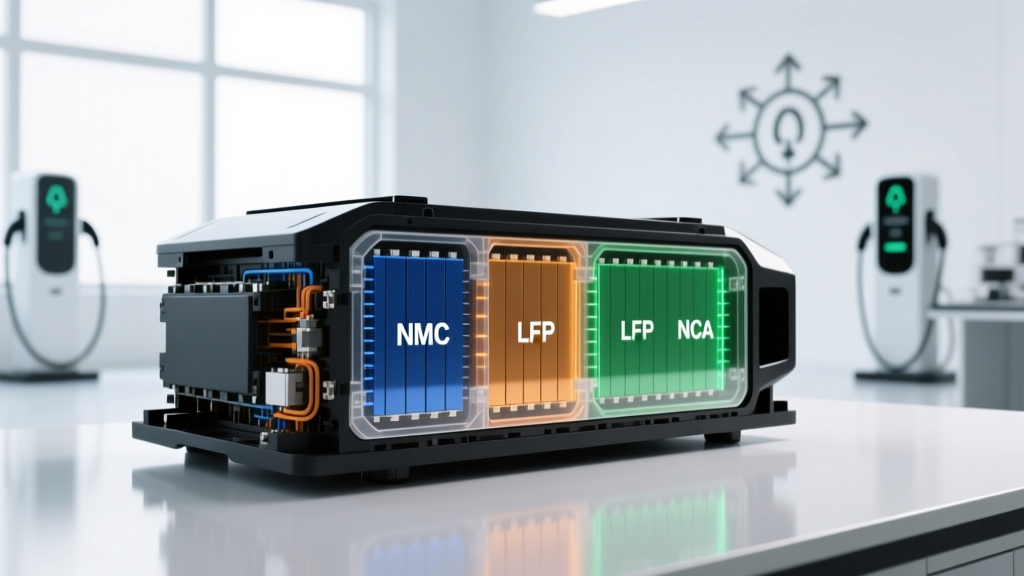
Not all electric vehicle battery packs are built the same. The two dominant lithium-ion chemistries in 2026 are LFP (lithium iron phosphate) and NMC/NCA (nickel manganese cobalt / nickel cobalt aluminum). The chemistry determines energy density, cycle life, cold-weather behavior, and cost — and it should influence your purchase decision.
LFP uses iron and phosphate in the cathode. It's cheaper to produce, offers longer cycle life (3,000+ full cycles vs ~1,000–2,000 for NMC), and can be charged to 100% daily without accelerating degradation. The trade-off: lower energy density (roughly 15–20% less range per kilogram) and poorer cold-weather performance. Tesla's standard-range Model 3 and Model Y, the base Rivian R1S, and many BYD models use LFP.
NMC and NCA use nickel-rich cathodes for higher energy density — essential for long-range and performance trims. They deliver more miles per kWh of battery weight and handle cold weather better, but they degrade faster if routinely charged to 100% or exposed to sustained high temperatures. Most long-range EVs — the Hyundai Ioniq 5, Chevrolet Equinox EV, Ford F-150 Lightning Extended Range, and Tesla Long Range models — use NMC or NCA.
| Attribute | LFP (Lithium Iron Phosphate) | NMC / NCA (Nickel-based) |
|---|---|---|
| Energy density | ~160–180 Wh/kg (cell-level) | ~220–270 Wh/kg (cell-level) |
| Typical cycle life | 3,000–5,000 full cycles | 1,000–2,000 full cycles |
| Daily 100% charging | Recommended by manufacturers | Not recommended; 80% daily advised |
| Cold-weather range loss | ~35–40% at 20°F | ~25–30% at 20°F |
| Cost per kWh (pack-level) | ~$90–$110 | ~$120–$145 |
| Thermal runaway risk | Very low | Low (but higher than LFP) |
| Common in | Tesla SR, BYD, base Rivian | Long-range trims, Hyundai, Ford, GM |
Which is better? If you prioritize maximum range, frequent road trips, or live in a cold climate, NMC/NCA delivers. If you want the longest possible pack lifespan, lower cost, and mostly commute under 200 miles daily, LFP is the more durable choice. Neither is universally superior — it depends on your driving pattern.
How Long Do EV Batteries Actually Last?
The short answer: most electric vehicle battery packs will outlast the car they're installed in. The long answer requires looking at degradation data across millions of miles.
Based on aggregated fleet data from Tesla's 2025 Impact Report, Geotab's analysis of over 10,000 EVs, and Recurrent Auto's research, here is what typical degradation looks like:
| Age / Mileage | Average Capacity Retained | Notes |
|---|---|---|
| Year 1 / 15,000 mi | 95–97% | Initial steeper drop, then plateau |
| Year 3 / 45,000 mi | 91–94% | Gradual linear decline |
| Year 5 / 75,000 mi | 88–92% | Most packs well within warranty threshold |
| Year 8 / 120,000 mi | 84–90% | Approaching warranty period end |
| Year 10+ / 150,000+ mi | 80–87% | Still functional; range reduced but usable |
Several important nuances:
- Early drop, then plateau: Most lithium-ion packs lose 2–5% in the first year as the solid electrolyte interphase (SEI) layer stabilizes. After that, degradation slows to roughly 1–2% per year under normal use.
- LFP degrades slower: Tesla's LFP-equipped Model 3 fleet shows an average of only ~8% loss at 125,000 miles, compared to ~12% for NMC packs in similar conditions.
- Heat is the enemy: EVs in Phoenix and Houston show 2–4% more degradation at the 5-year mark than identical models in Seattle or Portland, according to Recurrent Auto's climate-correlated data.
- Taxi/fleet data is encouraging: Tesla Model 3 taxis in Europe have exceeded 200,000 miles on original packs with ~78–82% capacity remaining — well above the 70% warranty threshold.
For context, the average American car is scrapped at around 150,000–180,000 miles (roughly 12 years). A pack retaining 82–87% capacity at that point still provides meaningful daily range. A 310-mile EPA pack at 85% health still delivers ~263 miles — more than sufficient for most drivers.
What Does the EV Battery Warranty Actually Cover?
Federal law mandates that all EV battery packs carry a minimum warranty of 8 years / 100,000 miles. In California and states that follow CARB (California Air Resources Board) emissions rules, the mandate extends to 10 years / 150,000 miles. Most manufacturers meet or exceed these minimums.
The critical detail is the capacity retention threshold — the percentage of original capacity below which the manufacturer must repair or replace the pack. This is typically set at 70%, though a few brands use 65% or 60%.
| Manufacturer | Warranty Term | Capacity Threshold | Notes |
|---|---|---|---|
| Tesla (Model 3/Y NMC) | 8 yr / 120,000 mi | 70% | Long Range & Performance trims |
| Tesla (Model 3/Y LFP) | 8 yr / 100,000 mi | 70% | Standard Range trims |
| Hyundai / Kia | 10 yr / 100,000 mi | 70% | Among the longest terms |
| Ford (F-150 Lightning) | 8 yr / 100,000 mi | 70% | Covers both battery and BEV components |
| GM (Ultium-based) | 8 yr / 100,000 mi | 70% | Cadillac, Chevrolet, GMC EVs |
| Rivian | 8 yr / 120,000 mi (Max pack) | 70% | Standard pack: 8 yr / 100,000 mi |
| BMW | 8 yr / 100,000 mi | 70% | i4, i5, i7, iX |
What's covered: Capacity loss below the threshold, manufacturing defects, and cell/module failures. What's typically excluded: Damage from accidents, improper charging equipment, unauthorized modifications, or use outside normal operating parameters. Always read your specific warranty booklet — terms vary by model year and trim.
Source: fueleconomy.gov maintains EV incentive and warranty reference information, and individual manufacturer warranty booklets are available on each brand's official site.
How Much Does It Cost to Replace an EV Battery Pack?
This is the question that generates the most anxiety — and the most misleading headlines. Let's ground it in real numbers.
| Vehicle / Pack Size | Battery Capacity | Replacement Cost (2026) | Typical Replacement Timeline |
|---|---|---|---|
| Tesla Model 3 SR (LFP) | ~60 kWh | $10,000–$13,000 | Rarely needed before 200,000+ mi |
| Tesla Model Y LR (NMC) | ~75 kWh | $13,000–$16,000 | Rarely needed before 180,000+ mi |
| Hyundai Ioniq 5 (NMC) | ~77.4 kWh | $12,000–$16,000 | Rarely needed before 170,000+ mi |
| Ford F-150 Lightning Ext. Range | ~131 kWh | $20,000–$28,000 | Rarely needed before 150,000+ mi |
| Chevrolet Equinox EV | ~85 kWh (Ultium) | $14,000–$18,000 | Rarely needed before 170,000+ mi |
| Rivian R1T Max Pack | ~149 kWh | $25,000–$32,000 | Rarely needed before 150,000+ mi |
Key realities about replacement:
- Most owners never pay for it. If degradation crosses the 70% threshold within the warranty period, the manufacturer covers it. If the pack lasts beyond the warranty, it usually still has 80%+ capacity — meaning replacement is a choice, not a necessity.
- Module-level repair is increasingly common. Many modern packs (GM Ultium, Hyundai E-GMP, Tesla 4680) allow individual module replacement rather than full-pack swaps, cutting costs by 50–70%.
- Costs are declining. Pack-level pricing has fallen from ~$200/kWh in 2020 to roughly $110–$140/kWh in 2026, and refurbished/remanufactured packs are entering the aftermarket.
- The car is usually totaled first. At 150,000+ miles, the vehicle's resale value is often less than the replacement cost, making a total-loss insurance scenario more likely than an out-of-pocket battery swap.
Five Factors That Accelerate Battery Degradation
Your driving and charging habits measurably affect how long your electric vehicle battery pack retains capacity. Here are the five biggest factors, ranked by impact:
1. Sustained High State of Charge (SoC)
Storing an NMC/NCA pack at 100% SoC for extended periods accelerates electrolyte decomposition and cathode stress. Tesla, Hyundai, and Ford all recommend setting daily charge limits to 80% for NMC packs. LFP packs are the exception — Tesla explicitly recommends charging to 100% at least weekly to maintain battery management system (BMS) calibration.
2. Frequent DC Fast Charging
DC fast charging at 150+ kW generates significant heat inside the cells. Occasional road-trip fast charging is fine, but daily reliance on DCFC (especially without preconditioning) accelerates degradation by an estimated 1–3% over the pack's life compared to exclusive Level 2 charging. Most modern EVs precondition the battery when you navigate to a charger, reducing this effect — always use navigation-based preconditioning when available.
3. Extreme Heat Exposure
Ambient temperatures above 95°F, combined with a high SoC, create the worst-case degradation scenario. Packs in hot climates (Arizona, Texas, Middle East) degrade 2–4% faster over 5 years than identical packs in moderate climates. Parking in shade or a garage meaningfully helps.
4. Deep Discharge Cycles
Regularly driving the pack below 10% SoC stresses the anode. Most BMS systems have a hidden buffer (typically 2–5 kWh below the displayed 0%) to prevent true deep discharge, but habitually running the battery very low still accelerates wear.
5. Extreme Cold Charging Without Preconditioning
Charging a cold battery (below 32°F) at high power can cause lithium plating on the anode — a permanent form of degradation. Always precondition before charging in cold weather. Most EVs do this automatically when you set a departure time or navigate to a charger.
Battery Care Best Practices
- Set daily charge limit to 80% (NMC/NCA) or 100% (LFP)
- Use Level 2 home charging as your primary method
- Reserve DC fast charging for road trips, not daily use
- Always precondition before fast charging (use nav to charger)
- Avoid storing the vehicle above 90% SoC for more than a few days
- In extreme heat, park in shade or a garage when possible
- Set a scheduled departure time in winter to precondition the pack
- Don't habitually run the pack below 10–15% SoC
How to Monitor Your Battery's State of Health (SoH)
State of Health (SoH) is the percentage of your pack's original capacity that remains usable. A new pack is 100% SoH; a pack that held 77.4 kWh when new and now holds 69.7 kWh is at 90% SoH.
Here's how to check it:
- In-vehicle displays: Tesla shows battery health in the service menu (Software → Service → Battery Health). Hyundai/Kia includes SoH in the EV-specific settings. BMW's iDrive displays it under the charging menu.
- OBD-II diagnostic tools: Apps like OBDeleven (VW/Audi/Porsche), Leaf Spy (Nissan), and Scan My Tesla can read SoH directly from the BMS via an OBD-II dongle (~$30–$60 for the hardware).
- Third-party services: Recurrent Auto offers a free battery health report that compares your pack's degradation curve to a fleet of identical vehicles. This is particularly useful for used-EV buyers.
- Manual calculation: Charge to 100%, note the displayed range, and compare it to the original EPA range. If your 310-mile EPA pack shows 275 miles at 100% (in moderate temperatures), that's roughly 89% SoH — though this method is imprecise because the displayed range estimate varies with driving conditions.
For used-EV buyers, requesting a SoH reading before purchase is essential. A pack at 92% SoH with 40,000 miles is in excellent shape. A pack at 83% SoH with the same mileage warrants investigation — it may indicate heavy DCFC use, hot-climate storage, or a manufacturing anomaly.
Emerging Battery Technology: What's Coming (and When)
The next generation of EV battery technology promises step-change improvements, but timelines matter. Here's where things stand in 2026:
Solid-state batteries replace the liquid electrolyte with a solid material, offering potentially 30–50% higher energy density, faster charging, and improved safety. Toyota has announced limited production in select 2027–2028 models, initially in Japan. Samsung SDI and QuantumScape are supplying prototype cells to OEMs. However, mass-market availability at competitive pricing is not expected before 2029–2031. Current packs are not "obsolete" — solid-state will debut in premium segments first.
Silicon-dominant anodes (replacing graphite) can increase energy density by 20–40%. Sila Nanotechnologies and Group14 are already supplying silicon-composite anode materials to manufacturers like Mercedes-Benz and Porsche for 2026–2027 model-year vehicles. This is an incremental improvement, not a revolution, but it meaningfully extends range without increasing pack size.
Sodium-ion batteries use abundant sodium instead of lithium, dramatically reducing cost. CATL has begun production for Chinese-market EVs, and the technology is expected to reach budget EVs in the US market by 2028–2029. Energy density is lower than LFP, so sodium-ion is best suited for city cars and short-range applications.
LFP improvements: Second-generation LFP cells from CATL and BYD have closed some of the energy-density gap with NMC, making LFP viable for mid-range vehicles (250–300 miles EPA) without the weight penalty of earlier generations.
The practical takeaway: today's lithium-ion packs are mature, well-understood, and backed by extensive warranty coverage. Waiting for solid-state is not a rational reason to delay an EV purchase — the technology won't be affordable or widely available for several years, and current packs already last the life of the vehicle.
Frequently Asked Questions
How long do electric vehicle battery packs last in years and miles?
Most EV battery packs retain 80–90% of their original capacity at 150,000 miles (roughly 10–12 years of average US driving). LFP packs tend to last longer, with some fleet data showing 85%+ retention at 200,000 miles. The pack typically outlasts the vehicle's economic life.
How much does it cost to replace an EV battery pack?
Full replacement costs range from ~$10,000 for a 60 kWh pack (Tesla Model 3 SR) to ~$30,000+ for a 149 kWh pack (Rivian R1T Max). However, most owners never pay for replacement — packs either remain within the 8-year/100,000-mile warranty period or retain enough capacity that replacement isn't necessary. Module-level repairs cost 50–70% less than full pack swaps.
What does the EV battery warranty cover?
Federal law requires a minimum 8-year/100,000-mile battery warranty (10 years/150,000 miles in CARB states). Coverage includes capacity loss below a specified threshold (typically 70% of original capacity), manufacturing defects, and cell failures. Damage from accidents, unauthorized modifications, or improper charging is excluded.
How do I check my EV battery's health?
Most modern EVs display State of Health (SoH) in the vehicle's settings or service menu. You can also use an OBD-II diagnostic tool with apps like Scan My Tesla or OBDeleven, or request a free report from Recurrent Auto that compares your degradation curve to a fleet average. For used-EV purchases, always request a SoH reading.
Is LFP or NMC better for my electric vehicle battery pack?
LFP offers longer cycle life, lower cost, and the ability to charge to 100% daily — ideal for commuters and drivers who want maximum pack longevity. NMC/NCA provides higher energy density and better cold-weather performance — better for long-range needs, frequent road trips, and cold climates. Neither is universally superior; the right choice depends on your driving pattern.
Does fast charging damage my EV battery?
Occasional DC fast charging (road trips, a few times per month) has minimal impact. Daily DCFC use without preconditioning can accelerate degradation by an estimated 1–3% over the pack's lifetime. Always use your vehicle's navigation-based preconditioning when heading to a fast charger, and rely on Level 2 home charging as your primary method.
Will my EV battery need replacing before the car wears out?
In most cases, no. Aggregated fleet data shows that the average EV battery pack retains 80–87% capacity at 150,000 miles. Since the average vehicle is retired at 150,000–180,000 miles, the pack usually outlasts the car. Outright pack failure (as opposed to gradual degradation) is rare and typically covered under warranty.
For official warranty and incentive information, refer to fueleconomy.gov and the IRS clean vehicle credit page for current tax credit eligibility rules that may affect your EV purchase decision.