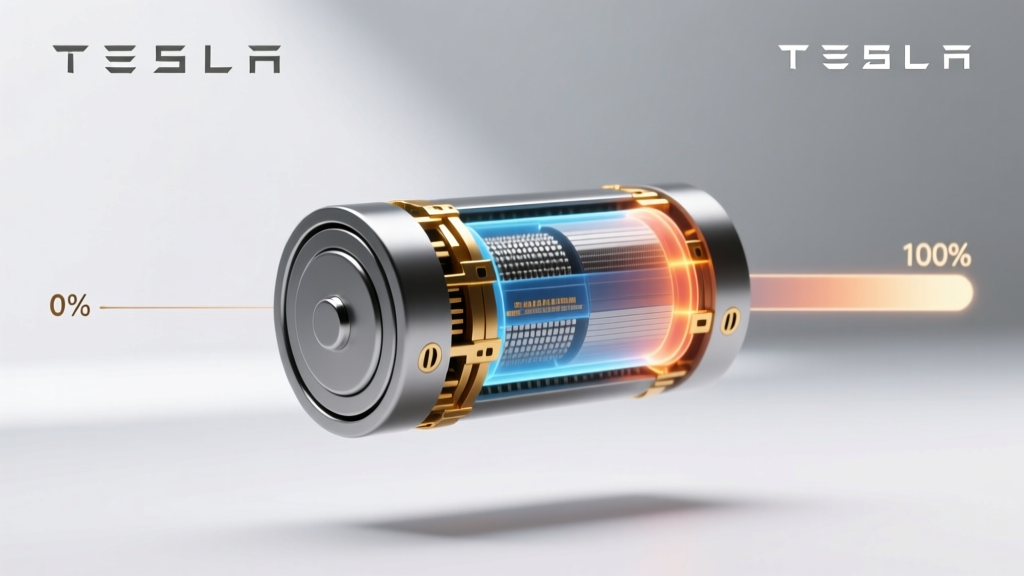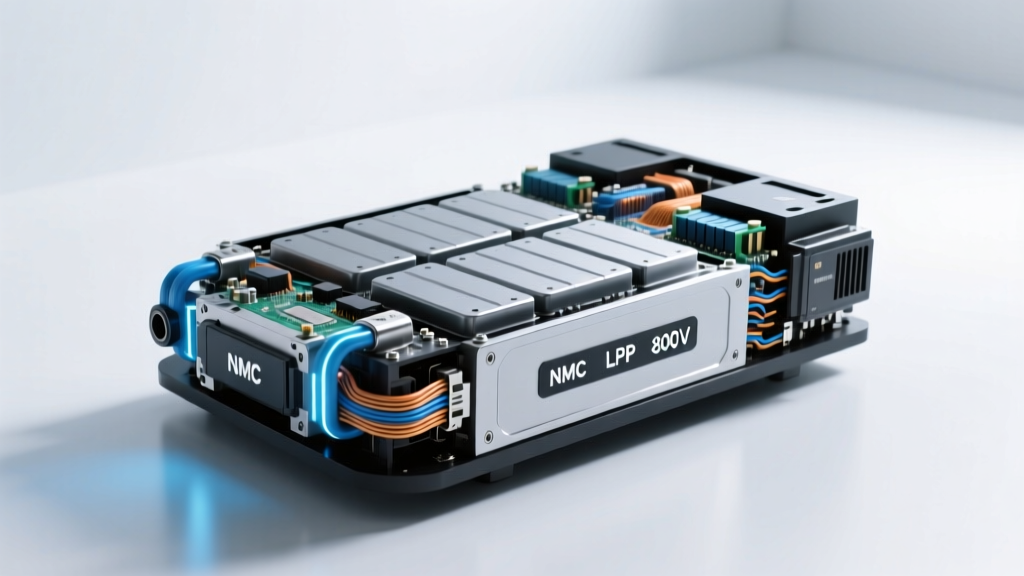
The high-voltage battery pack is the single most expensive component in any electric vehicle — and the one buyers worry about most. Whether you're evaluating a new purchase or optimizing how you charge your current EV, understanding what's inside that pack, how it degrades, and what it costs to replace is essential for making a smart financial decision.
This guide covers the battery pack for car charging from every practical angle: chemistry trade-offs, real-world degradation data, warranty coverage, replacement economics, and daily habits that extend pack life. We'll also look at what solid-state and silicon-anode technology actually means for buyers in 2026 and beyond.
LFP vs NMC/NCA: Which Battery Chemistry Should You Choose?
Two dominant lithium-ion chemistries power today's EVs, and the choice affects your range, charging habits, longevity, and wallet. Understanding the difference is the foundation of smart EV ownership.
NMC (Nickel Manganese Cobalt) and the closely related NCA (Nickel Cobalt Aluminum) chemistries prioritize energy density — packing more kWh into a lighter, smaller pack. This translates to longer EPA range ratings and stronger performance in cold weather. Most long-range EVs from Tesla, Hyundai, BMW, and Ford use NMC or NCA packs.
LFP (Lithium Iron Phosphate) sacrifices some energy density for dramatically longer cycle life, lower cost, and superior thermal stability. LFP packs tolerate repeated 100% charging without accelerated degradation — something NMC owners must avoid. Tesla's Standard Range Model 3 and Model Y, the base Ford Mustang Mach-E Select, and several BYD models now use LFP.
| Attribute | LFP (Lithium Iron Phosphate) | NMC / NCA |
|---|---|---|
| Energy Density | ~160–180 Wh/kg (lower) | ~220–260 Wh/kg (higher) |
| Typical Cycle Life | 3,000–5,000+ cycles | 1,000–2,000 cycles |
| Cold-Weather Performance | Moderate range loss (~30–40% at 20°F) | Better retention (~20–30% loss at 20°F) |
| 100% SoC Charging | Recommended regularly for BMS calibration | Avoid; keep daily charge at 80% or below |
| Cost per kWh | ~$90–$110 (lower) | ~$120–$150 (higher) |
| Thermal Stability | Excellent — very low thermal runaway risk | Good, but requires more active cooling |
| Best For | Daily commuters, high-mileage drivers, budget-conscious buyers | Long-range road trippers, cold-climate owners, performance seekers |
The bottom line: If you drive under 250 miles per day and can charge at home, LFP offers superior long-term value and simpler charging habits. If you regularly road-trip or live in a climate where winter temperatures stay below freezing for months, NMC's energy density and cold-weather advantage justify the higher cost.
How Long Do EV Batteries Actually Last?
The short answer: far longer than most buyers fear. Data from fleet operators, manufacturer reports, and independent testing consistently shows that modern EV battery packs retain the vast majority of their capacity well past the warranty period.
Here's what the real-world degradation data looks like across popular models:
Typical Degradation Curves by Model (Real-World Data)
- Tesla Model 3/Y (NMC, 2019–2023): ~5–7% capacity loss at 100,000 miles, based on Tesla's 2023 Impact Report and third-party fleet data from Recurrent Auto. Most packs retain 90–93% State of Health (SoH) at this mileage.
- Tesla Model 3 (LFP, 2021–2025): ~3–5% loss at 100,000 miles. LFP's cycle-life advantage is measurable, though these packs have less long-term fleet data since they're newer.
- Hyundai Ioniq 5 (NMC, 2022–2025): ~4–6% loss at 80,000 miles, per owner-reported data aggregated by fueleconomy.gov and Hyundai service records.
- Nissan Leaf (LMO/NMC, 2018–2023, air-cooled): ~8–12% loss at 80,000 miles. The Leaf's passive air-cooling system accelerates degradation compared to liquid-cooled packs — a cautionary data point for thermal management importance.
- Chevrolet Bolt EV/EUV (NMC, 2017–2025): ~5–8% loss at 100,000 miles. Earlier recall-affected packs (2017–2019) were replaced under warranty; post-recall packs show strong retention.
The pattern across all chemistries is consistent: a relatively steep 2–3% drop in the first year or 15,000 miles, followed by a very gradual linear decline of roughly 1–2% per year thereafter. Most packs will retain 80–85% of original capacity at 150,000–200,000 miles — still well above the threshold where most drivers notice range reduction in daily use.
What Does the EV Battery Warranty Actually Cover?
Federal law in the United States mandates that EV battery packs carry a minimum warranty of 8 years or 100,000 miles (whichever comes first). In California Air Resources Board (CARB) states, that extends to 10 years or 150,000 miles. Most manufacturers exceed these minimums.
| Manufacturer | Warranty Term | Capacity Retention Threshold | Notes |
|---|---|---|---|
| Tesla (Model 3/Y) | 8 yr / 120,000 mi (LR & Perf); 8 yr / 100,000 mi (RWD LFP) | 70% | Covers defects and capacity below threshold |
| Hyundai / Kia | 10 yr / 100,000 mi | 70% | Among the longest standard warranties |
| Ford (Mach-E, F-150 Lightning) | 8 yr / 100,000 mi | 70% | Covers battery components and capacity |
| General Motors (Ultium platform) | 8 yr / 100,000 mi | 70% | Modular pack design may allow partial replacement |
| BMW (i4, iX, i7) | 8 yr / 100,000 mi | 70% | Includes battery management system |
| Rivian (R1T, R1S) | 8 yr / 175,000 mi | 70% | Highest mileage threshold in the segment |
The critical detail most buyers miss: the warranty covers capacity loss below the stated threshold, not all degradation. If your pack retains 72% at year seven, you're within normal wear — no warranty claim applies. Only when SoH drops below 70% (the industry-standard floor) does the manufacturer owe you a repair, module replacement, or full pack replacement.
In practice, warranty claims for battery capacity loss are rare. Most manufacturers report claim rates under 1–2% of vehicles sold, according to data cited by NHTSA safety and recall records.
How Much Does an EV Battery Replacement Cost?
This is the question that generates the most anxiety — and the most misinformation. Let's separate the scary headline numbers from the realistic ownership picture.
| Vehicle | Pack Size | Chemistry | Out-of-Warranty Replacement Cost |
|---|---|---|---|
| Tesla Model 3 RWD | ~60 kWh | LFP | $10,000–$13,000 |
| Tesla Model Y Long Range | ~82 kWh | NMC | $14,000–$18,000 |
| Hyundai Ioniq 5 | ~77.4 kWh | NMC | $15,000–$20,000 |
| Ford Mustang Mach-E Ext. Range | ~91 kWh | NMC | $18,000–$24,000 |
| Ford F-150 Lightning Ext. Range | ~131 kWh | NMC | $25,000–$35,000 |
| Chevrolet Equinox EV | ~85 kWh | NMC (Ultium) | $14,000–$18,000 |
| Rivian R1T (Large Pack) | ~135 kWh | NMC | $25,000–$32,000 |
Context matters enormously here. These are worst-case, full-pack, out-of-warranty costs. In reality:
- Most packs never need replacement. Degradation data shows that the vast majority of EV battery packs outlast the vehicle itself. The average car is scrapped at 15–18 years; at current degradation rates, most packs will still hold 75–80% capacity at that age.
- Module-level repair is increasingly possible. Manufacturers like GM (Ultium), BMW, and Mercedes design packs with replaceable modules. A single degraded or failed module might cost $2,000–$5,000 to swap rather than replacing the entire pack.
- Cell costs continue to fall. Battery pack prices averaged approximately $115–$130/kWh at the pack level in 2025 (per BloombergNEF data), down from over $200/kWh just five years earlier. Replacement costs in 2030 will likely be meaningfully lower than today's figures.
- Third-party refurbishers are emerging. Companies like Redwood Materials and smaller regional shops now offer refurbished packs at 40–60% of OEM new-pack pricing, particularly for higher-volume models like the Tesla Model 3 and Nissan Leaf.
Five Factors That Determine Your Battery's Lifespan
Not all miles are created equal when it comes to battery wear. These five variables have the largest measurable impact on how quickly your pack degrades:
1. State of Charge Habits
For NMC/NCA packs, routinely charging to 100% and letting the car sit at full charge accelerates electrolyte decomposition and cathode stress. The optimal daily range is 20–80% SoC. Reserve 100% charges for road trips where you'll drive off shortly after reaching full.
For LFP packs, the rules flip: Tesla and BYD recommend charging to 100% at least once per week to allow the Battery Management System (BMS) to recalibrate cell voltages. LFP's flat voltage curve makes SoC estimation harder, and periodic full charges keep the gauge accurate.
2. DC Fast Charging Frequency
Occasional DC fast charging (1–2 sessions per week) has minimal impact on modern packs with active liquid cooling. However, daily reliance on high-power DC fast charging (150+ kW) does measurably accelerate degradation — studies show roughly 1–2% additional capacity loss over 100,000 miles compared to Level 2 home charging. If you have home charging access, use Level 2 for daily needs and save DCFC for road trips.
3. Temperature Extremes
Heat is the bigger long-term enemy. Sustained battery temperatures above 95°F (35°C) accelerate chemical degradation. This is why liquid-cooled packs (standard on nearly all 2026 EVs) outperform passively cooled designs like the older Nissan Leaf so dramatically.
Cold doesn't permanently damage the battery, but it temporarily reduces range by 20–40% at temperatures below 20°F (−7°C) and slows charging speeds until the pack warms. Using your EV's battery preconditioning feature — which heats the pack before you arrive at a DC fast charger — protects the cells and restores charging speed.
4. Depth of Discharge
Regularly draining the battery to very low SoC (below 10%) stresses cells similarly to holding them at 100%. Try to keep the pack above 15–20% for daily driving. If you must store the car for weeks, set SoC to approximately 50%.
5. Calendar Aging
Even a garage-parked EV that's never driven will slowly lose capacity over time — typically 1–2% per year at moderate temperatures. This is unavoidable chemistry, and it's why time (years) matters alongside mileage in warranty terms.
Daily Battery Care Checklist
- ✅ Set daily charge limit to 80% (NMC/NCA) or 100% weekly (LFP)
- ✅ Use Level 2 home charging for daily needs; reserve DCFC for trips
- ✅ Enable battery preconditioning before DC fast charging sessions
- ✅ Avoid leaving the car at 100% SoC for more than a few hours
- ✅ Park in shade or a garage during sustained heat waves when possible
- ✅ Don't let SoC sit below 10% for extended periods
- ✅ For long-term storage (2+ weeks), set SoC to ~50% and disable Sentry/vampire-drain features
How to Check Your EV Battery's State of Health (SoH)
State of Health (SoH) is the percentage of original capacity your battery pack currently holds. A new pack starts at 100% SoH; a pack at 85% SoH holds 85% of its original kWh.
Here's how to monitor it across major brands:
- Tesla: The in-car display doesn't show SoH directly, but you can estimate it by comparing your current displayed range at 100% charge to the original EPA rating. Third-party apps like Tessie or Stats (iOS) pull detailed battery data via the Tesla API. Tesla service centers can also run a formal health diagnostic.
- Hyundai/Kia: The EV menu in the infotainment system includes a battery health indicator. Dealerships can pull detailed cell-level data via the KDS (Kia Diagnostic System) or GDS (Genesis/Hyundai Diagnostic System).
- Ford: The FordPass app and in-car settings display estimated battery health. Ford dealers can run an OBD-II battery health report.
- BMW: The iDrive system includes a battery health readout under the EV-specific menus. BMW service can generate a detailed SoH certificate — useful for resale.
- OBD-II Tools: Universal scan tools like the OBDLink MX+ paired with apps such as ABRP (A Better Route Planner) or Car Scanner can read battery SoH data from most EVs' CAN bus systems.
Check SoH every 3–6 months, or whenever you notice a meaningful drop in displayed range at full charge. A sudden drop (more than 3–4% in a short period) warrants a service visit, as it may indicate a failing module rather than normal degradation.
What's Next: Solid-State and Silicon-Anode Batteries
Several next-generation battery technologies are in development, and it's worth understanding where they stand — and critically, when they'll actually reach production vehicles you can buy.
Solid-state batteries replace the liquid electrolyte with a solid material (ceramic, sulfide, or polymer), promising higher energy density (~350–400 Wh/kg at the cell level), faster charging, and improved safety. Toyota has announced solid-state EV prototypes targeting 2027–2028 production, while Samsung SDI and QuantumScape are working with multiple automakers on pilot programs. However, manufacturing scale-up remains the major bottleneck. Realistically, solid-state packs will appear in limited, premium models first — likely not reaching mainstream pricing until the early 2030s.
Silicon-anode technology replaces the graphite anode with silicon, which can store roughly 10× more lithium ions per gram. Companies like Sila Nanotechnologies and Group14 Technologies are already supplying silicon-dominant anode materials for some 2025–2026 production cells. This technology is closer to mainstream adoption than solid-state and is expected to incrementally boost energy density by 15–25% in packs arriving between 2026 and 2029.
Sodium-ion batteries are also emerging as a low-cost alternative for entry-level EVs. CATL has begun production of sodium-ion cells for Chinese-market vehicles, with energy density around 120–140 Wh/kg — lower than LFP, but cheaper and free of lithium and cobalt. These are unlikely to appear in US-market vehicles before 2028 at the earliest.
None of these technologies are available in production vehicles you can purchase today. If you're buying in 2026, today's LFP and NMC packs are mature, well-tested, and backed by extensive real-world data.
Frequently Asked Questions
How long do EV batteries last in years and miles?
Based on current fleet data, most modern liquid-cooled EV battery packs retain 80–85% of original capacity at 150,000–200,000 miles or 12–15 years. Catastrophic failure (sudden, total pack death) is extremely rare — under 1% of packs according to manufacturer and NHTSA data. Most EV battery packs will outlast the vehicle they're installed in.
How much does an EV battery cost to replace in 2026?
Full out-of-warranty pack replacement ranges from approximately $10,000 for a smaller LFP pack (Tesla Model 3 RWD) to $35,000 for a large truck pack (Ford F-150 Lightning Extended Range). However, most packs never require full replacement. Module-level repairs cost $2,000–$5,000, and refurbished packs from third-party suppliers are increasingly available at 40–60% of new OEM pricing.
What does the EV battery warranty cover?
Standard warranties cover battery defects and capacity loss below a stated threshold (typically 70% SoH) for 8 years/100,000 miles (10 years/150,000 miles in CARB states). The warranty does not cover normal gradual degradation above the threshold, damage from accidents or modifications, or the 12V auxiliary battery (which is a separate component). Check your specific manufacturer's warranty booklet for exact terms.
Is LFP or NMC better for daily driving?
For most daily drivers covering under 250 miles per day with home charging access, LFP is the stronger choice in 2026. It offers longer cycle life (3,000–5,000+ cycles vs 1,000–2,000), lower cost, tolerance for 100% daily charging, and better thermal safety. NMC remains the better pick if you need maximum range for frequent road trips or live in a climate with prolonged sub-freezing winters, where its superior energy density and cold-weather performance provide a tangible advantage.
Does fast charging damage my EV battery?
Occasional DC fast charging — a few sessions per week — causes negligible additional wear on modern liquid-cooled packs. However, exclusive reliance on high-power DCFC (150+ kW daily) has been shown to add approximately 1–2% extra degradation over 100,000 miles compared to Level 2 charging. The practical advice: use Level 2 at home for daily charging, and save DC fast charging for road trips. Always use preconditioning when available to warm the pack before a fast-charge session.
Can I replace just one battery module instead of the whole pack?
On vehicles with modular pack architectures — including GM's Ultium platform, BMW's iX/i4, and Rivian's pack design — individual module replacement is possible and significantly cheaper ($2,000–$5,000 per module vs $15,000+ for a full pack). Tesla's structural packs in newer Model Y vehicles are more integrated and harder to service at the module level. Ask your service provider about module-level diagnostics before agreeing to a full replacement.
How do I check my battery's State of Health?
Most EVs display battery health information in the infotainment system or companion app. Tesla owners can use third-party apps (Tessie, Stats) via the Tesla API. Universal OBD-II tools like the OBDLink MX+ can read SoH data from most brands. For a certified report — particularly useful when selling — your dealer can run a formal battery health diagnostic. Check SoH every 3–6 months or whenever you notice unexpected range drops.
Sources: EPA fueleconomy.gov, NHTSA safety and recall data, manufacturer warranty documentation. Battery pricing data referenced from BloombergNEF annual battery price surveys. Degradation data compiled from Tesla Impact Reports, Recurrent Auto fleet studies, and owner-reported databases. Tax credit eligibility for EV purchases is governed by IRS §30D rules and is subject to MSRP caps, buyer income limits, and battery sourcing requirements — consult a tax professional for your specific situation.