Why Your Battery Car Is Not Charging — And What It Actually Means
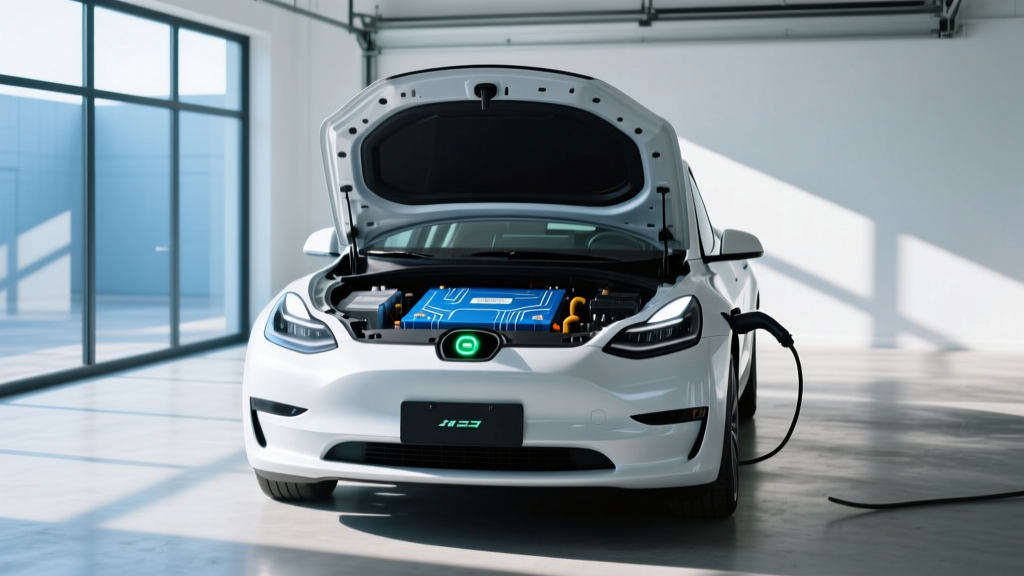
You plug in, the connector clicks, and… nothing. The dashboard stays dark, the app shows no session, and your morning commute is suddenly in jeopardy. A "battery car not charging" scenario is one of the most searched EV problems, but the root cause is rarely what owners fear most. In the vast majority of cases, the high-voltage traction battery — the 50–120 kWh pack under the floor — is not the culprit.
More often, the issue traces to a tripped GFCI outlet on Level 1 charging, a loose NACS or CCS connector, a dormant public charging station, or a software handshake failure between the car and the EVSE (Electric Vehicle Supply Equipment). Before we get into long-term battery health, let's address the immediate diagnosis.
- Level 1 (120V): Check for a tripped GFCI outlet or a shared circuit. A 12-amp draw on a 15-amp circuit with other loads will trip the breaker.
- Level 2 (240V): Verify the EVSE indicator light. If the wall unit shows no power, check the dedicated breaker in your panel. If the unit lights up but the car won't accept charge, try a hard reboot (unplug the EVSE for 30 seconds).
- DC Fast Charging: Connector compatibility matters. A CCS1-equipped car cannot use a NACS-only Tesla Supercharger without an adapter (now widely available). Check the network app for station status — Electrify America and EVgo stations occasionally go offline for maintenance.
- 12V auxiliary battery: If the car won't "wake up" at all, the small 12V battery (which powers the contactors that connect the high-voltage pack) may be dead. This is not a traction-battery failure — it's the same issue gas cars face. Many 2025–2026 models now use lithium-iron-phosphate 12V batteries to reduce this risk.
With the immediate problem diagnosed, let's address the deeper question: how long will your EV's traction battery actually last, what does degradation look like, and what happens in the rare event you need a replacement?
How Long Do EV Batteries Last? Real-World Degradation Data
The short answer: most modern EV traction batteries are engineered to outlast the vehicle itself. The long answer requires looking at actual fleet data rather than manufacturer claims.
According to data aggregated from Tesla's 2024 Impact Report and independent fleet analyses by Recurrent, the average lithium-ion EV battery loses approximately 5–8% of its original capacity over the first 100,000 miles. After that, degradation typically flattens into a slow linear decline. A battery that has lost 8% at 100,000 miles might lose only another 4–6% over the next 100,000 miles.
- Year 1 / 15,000 mi: ~2–3% capacity loss (initial "break-in" drop, mostly calendar aging)
- Year 3 / 45,000 mi: ~5–6% total loss
- Year 5 / 75,000 mi: ~7–9% total loss
- Year 8 / 120,000 mi: ~10–13% total loss
- Year 10 / 150,000 mi: ~12–17% total loss
Note: LFP (lithium iron phosphate) batteries in vehicles like the Tesla Model 3 RWD and base BYD models show even slower degradation — often under 5% at 100,000 miles — due to superior cycle life.
What does this mean in practice? A 2025 Hyundai Ioniq 5 with a 77.4 kWh (usable) NMC battery and an EPA range of 305 miles would, after 100,000 miles, likely deliver around 280–290 miles on a full charge. That's a noticeable but manageable reduction — not a crisis.
The critical threshold for most manufacturers is 70% capacity retention. If your battery drops below 70% of its original capacity within the warranty period, the manufacturer will repair or replace it. In practice, very few batteries reach this threshold under normal use.
LFP vs NMC vs NCA: Which Battery Chemistry Is Right for You?
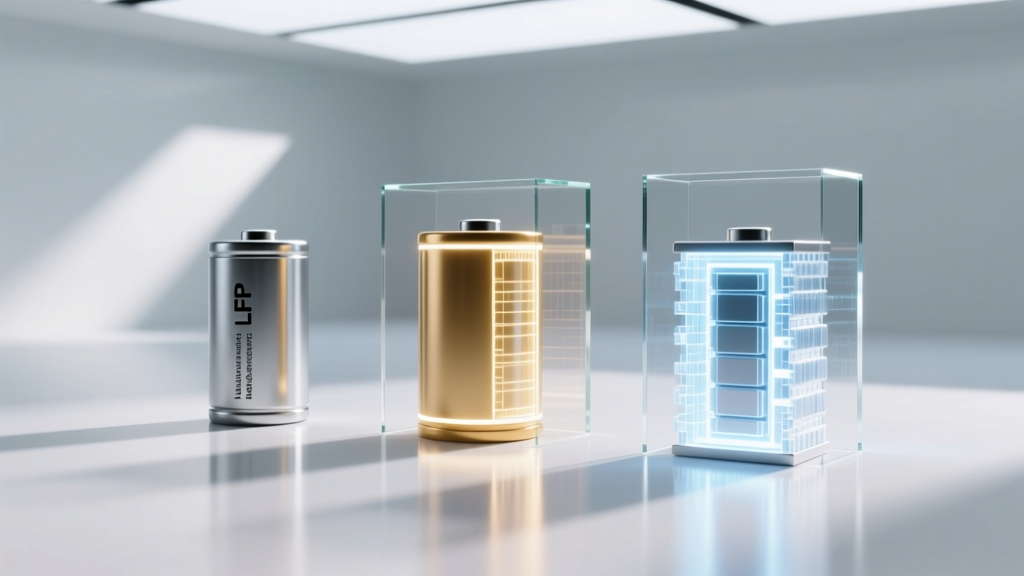
Not all EV batteries are the same. The two dominant chemistries in 2026 are LFP (lithium iron phosphate) and NMC/NCA (nickel manganese cobalt / nickel cobalt aluminum). Each has distinct trade-offs that affect range, longevity, cold-weather performance, and cost.
| Attribute | LFP (Lithium Iron Phosphate) | NMC / NCA (Nickel-based) |
|---|---|---|
| Energy Density | Lower (~160–180 Wh/kg cell-level) | Higher (~230–300 Wh/kg cell-level) |
| Typical Use | Standard-range / base trims (Tesla Model 3 RWD, BYD Seal, some Ford models) | Long-range / performance trims (Model Y LR, Ioniq 5, Rivian, Cadillac Lyriq) |
| Cycle Life | 3,000–5,000+ cycles to 80% SoH | 1,000–2,000 cycles to 80% SoH |
| Calendar Aging | Slower degradation at rest | Faster degradation if stored at 100% SoC |
| Cold Performance | Weaker — more range loss below 32°F | Better low-temp discharge capability |
| Charging to 100% | Recommended periodically (helps BMS calibration) | Generally advised to charge to 80% daily |
| Cost | ~15–25% cheaper per kWh to manufacture | Higher due to nickel/cobalt content |
| Safety / Thermal Stability | Superior — less prone to thermal runaway | Good, but requires more active thermal management |
The practical takeaway: If you commute under 60 miles daily, charge at home, and live in a moderate climate, an LFP-equipped vehicle offers exceptional longevity and lower cost. If you need maximum range, frequently road-trip, or live in a cold-weather state, NMC/NCA's higher energy density and better cold-weather performance justify the trade-off in cycle life.
EV Battery Warranty Terms — What's Actually Covered?
Federal law mandates that EV batteries carry a minimum warranty of 8 years or 100,000 miles (whichever comes first). In California Air Resources Board (CARB) states, the requirement extends to 10 years or 150,000 miles. Most manufacturers meet or exceed these minimums.
| Manufacturer / Model | Warranty Period | Mileage Cap | Capacity Retention Threshold |
|---|---|---|---|
| Tesla Model 3 RWD (LFP) | 8 years | 100,000 miles | 70% |
| Tesla Model Y Long Range (NMC) | 8 years | 120,000 miles | 70% |
| Hyundai Ioniq 5 / Ioniq 6 | 10 years | 100,000 miles | 70% |
| Ford Mustang Mach-E | 8 years | 100,000 miles | 70% |
| Chevrolet Equinox EV / Blazer EV | 8 years | 100,000 miles | 60% (some trims 70%) |
| Rivian R1T / R1S | 8 years | 120,000 miles | 70% |
| BMW iX / i4 | 8 years | 100,000 miles | 70% |
The capacity retention threshold is the critical number. If your battery's State of Health (SoH) drops below the stated percentage within the warranty window, the manufacturer will either replace failed modules, install a refurbished pack, or (rarely) replace the entire battery. The warranty covers defects and abnormal degradation — it does not cover damage from accidents, flooding, or unauthorized modifications.
For detailed federal warranty requirements, see the U.S. Department of Energy's EV technology page on fueleconomy.gov.
How Much Does an EV Battery Replacement Cost?
This is the question that generates the most anxiety — and the most misinformation. Let's ground it in actual numbers.
| Vehicle / Battery Size | Battery Chemistry | Estimated Pack Cost | Labor & Ancillary | Total Range |
|---|---|---|---|---|
| Tesla Model 3 RWD (~60 kWh) | LFP | $5,000–$7,500 | $1,500–$2,500 | $6,500–$10,000 |
| Hyundai Ioniq 5 (~77 kWh) | NMC | $8,000–$11,000 | $2,000–$3,000 | $10,000–$14,000 |
| Ford F-150 Lightning Ext. Range (~131 kWh) | NMC | $14,000–$18,000 | $2,500–$4,000 | $16,500–$22,000 |
| Chevrolet Silverado EV (~200 kWh) | NMC (Ultium) | $18,000–$25,000 | $3,000–$4,500 | $21,000–$29,500 |
| Rivian R1T Max Pack (~149 kWh) | NMC | $15,000–$20,000 | $2,500–$3,500 | $17,500–$23,500 |
These numbers deserve context. First, full battery replacements are rare. Most degradation-related issues involve individual modules (a pack contains 4–20+ modules), and replacing a single module costs $1,500–$4,000 rather than replacing the entire pack. Second, battery pack prices have fallen roughly 10–15% per year over the past decade. A replacement in 2032 will cost significantly less than one in 2026. Third, the vast majority of EVs are scrapped or sold before their batteries need replacement — data from Recurrent and Consumer Reports indicates fewer than 5% of EV batteries are replaced outside of warranty.
Factors That Accelerate Battery Degradation (and How to Avoid Them)
While modern Battery Management Systems (BMS) actively protect the pack, owner habits still influence long-term health. The five biggest degradation accelerators:
- Avoid sustained 100% SoC: For NMC/NCA batteries, set your daily charge limit to 80%. Charge to 100% only when you need the full range for a trip. LFP batteries are an exception — Tesla and BYD recommend periodic 100% charges for BMS calibration.
- Minimize DC fast charging in extreme heat: Repeated 150–350 kW sessions in 95°F+ ambient temperatures stress the cells. If you road-trip frequently in summer, precondition the battery (most EVs do this automatically when you navigate to a charger).
- Don't leave the car at 0% or 100% for weeks: If storing the vehicle, set SoC to 50–60%. Extended storage at very high or very low states of charge accelerates calendar aging.
- Use Level 2 for daily charging: Level 2 (7–11 kW) generates far less heat than DC fast charging. For daily use, a home Level 2 charger is both faster and gentler on the battery than repeated DCFC sessions.
- Precondition in cold weather: Below 32°F, battery resistance increases dramatically. Preconditioning (warming the pack before driving or charging) reduces stress and restores charging speed. Most EVs with heat pumps handle this automatically when scheduled departure is set.
The physics behind these recommendations is straightforward: lithium-ion cells degrade fastest at the extremes of voltage (very high or very low SoC) and temperature. The BMS enforces buffers — most EVs have a "top buffer" and "bottom buffer" of 2–5 kWh that the driver never accesses — but owner habits still matter at the margins.
How to Check Your EV Battery's State of Health (SoH)
State of Health is expressed as a percentage: a brand-new battery is at 100% SoH, and a battery that can hold only 65 kWh of its original 77.4 kWh is at approximately 84% SoH. Here's how to monitor it:
- In-car displays: Many 2025–2026 models include a battery health screen. Hyundai/Kia vehicles show SoH percentage in the EV settings menu. Tesla provides estimated range at 100% SoC, which you can compare to the original EPA figure to calculate approximate SoH.
- OBD-II dongles and apps: Devices like the OBDLink MX+ paired with apps such as ABRP (A Better Route Planner) or Car Scanner can read the BMS-reported SoH directly. This is the most accurate consumer-accessible method.
- Dealer diagnostics: Any authorized service center can pull a full battery health report. Request this during routine service, especially if you're approaching the warranty mileage threshold and want documentation.
- Charging data analysis: If your Level 2 charger or charging app logs total kWh delivered per session, you can track how much energy a full 10–80% charge requires over time. A declining kWh total for the same SoC window indicates degradation.
Emerging Battery Tech: Solid-State and Silicon Anodes
Looking ahead, two technologies promise to reshape EV batteries — but neither is ready for your next purchase.
Solid-state batteries replace the liquid electrolyte with a solid ceramic or polymer layer, enabling higher energy density (potentially 400+ Wh/kg at the cell level), faster charging, and improved safety. Toyota has announced a solid-state battery for a limited-production vehicle in 2027–2028, and Samsung SDI and QuantumScape are in advanced prototype testing with multiple OEMs. However, manufacturing scalability and cost remain unresolved. Realistic mass-market availability: 2029–2032.
Silicon-anode batteries (using silicon instead of graphite for the anode) offer 20–40% higher energy density and are closer to commercialization. Companies like Sila Nanotechnologies and Group14 are already supplying silicon-dominant anode materials to manufacturers. Expect to see vehicles with partial silicon-anode cells in 2027–2028 model years, with meaningful range or packaging benefits.
Neither technology changes the current buying calculus. Today's LFP and NMC batteries are mature, well-warrantied, and proven over billions of fleet miles. If you're shopping now, buy based on current specs — not future promises.
Frequently Asked Questions
Why is my battery car not charging at home?
The most common causes are a tripped GFCI outlet (Level 1), a tripped breaker on the dedicated 240V circuit (Level 2), a faulty EVSE, or a connector that isn't fully seated. Less commonly, the vehicle's onboard charger or the 12V auxiliary battery may be at fault. The high-voltage traction battery itself is rarely the issue. Start by checking breakers, trying a different outlet or EVSE, and consulting the vehicle's app for error codes.
How long do EV batteries last in years and miles?
Fleet data shows most EV batteries retain 85–92% of their original capacity at 100,000 miles and 80–88% at 150,000 miles. In terms of years, a well-maintained battery should provide reliable service for 12–15 years or more before dropping to the 70% capacity threshold that triggers warranty replacement. LFP batteries often exceed these averages.
How much does an EV battery cost to replace?
Out-of-warranty replacement costs range from approximately $6,500 for a smaller LFP pack (Tesla Model 3 RWD) to $22,000+ for a large NMC pack (Ford F-150 Lightning Extended Range, Chevrolet Silverado EV). However, full replacements are uncommon — most issues involve individual modules costing $1,500–$4,000. Battery prices continue to decline, and replacements in the 2030s will be significantly cheaper.
What does the EV battery warranty cover?
Federal law requires a minimum of 8 years/100,000 miles (10 years/150,000 miles in CARB states). The warranty covers capacity loss below a stated threshold — typically 70% — as well as manufacturing defects. It does not cover accident damage, flood damage, or degradation from extreme abuse. Check your specific manufacturer's warranty document for exact terms.
Should I charge my EV to 100% every day?
For NMC/NCA batteries, no — set the daily limit to 80% and charge to 100% only when you need the full range. For LFP batteries, manufacturers like Tesla and BYD actually recommend charging to 100% at least once a week to help the Battery Management System maintain accurate state-of-charge calibration. Check your owner's manual for chemistry-specific guidance.
LFP vs NMC — which battery chemistry is better?
Neither is universally better. LFP excels in longevity (3,000–5,000+ cycles), safety, and cost, making it ideal for daily commuters and moderate climates. NMC/NCA excels in energy density and cold-weather performance, making it better for long-range needs and cold climates. Choose based on your driving pattern, not on chemistry alone.