When your EV stops charging or seems to accept a charge far slower than usual, the problem could be anything from a software glitch to a failing onboard charger — or, in rarer cases, degradation in the high-voltage traction battery itself. Before you assume the worst, it helps to understand how EV batteries actually age, what your warranty covers, and which habits genuinely move the needle on long-term health.
This guide walks through the most common reasons an EV battery won't charge, then goes deep on battery chemistry, degradation data, warranty terms, replacement costs, and the habits that preserve capacity over hundreds of thousands of miles.
Why Is My EV Battery Not Charging? The Most Common Causes
Before blaming the traction battery (the large high-voltage pack that powers the motor), work through the more likely culprits first. In my experience owning and servicing multiple EVs, the vast majority of "not charging" issues trace back to the charging equipment or the car's software — not the battery cells themselves.
- Charge cable or connector issue: A damaged CCS or NACS connector, a frayed cable, or a loose J1772 adapter can interrupt the handshake protocol between the car and charger. Check for visible damage and try a different cable or station.
- Scheduled charging or departure timer active: Many EVs (Tesla, Hyundai, BMW, Ford) let you set charging windows. If your car is set to charge only between 11 PM and 6 AM, plugging in at 3 PM will show a "charging scheduled" status — not a fault.
- Onboard charger failure: The onboard charger converts AC power from your Level 2 home station to DC for the battery. If it fails, DC fast charging may still work but AC charging won't. This is a known failure point on some older models and typically requires dealer service.
- Thermal preconditioning not met: In extreme cold (below 20°F / -7°C), some EVs will limit or refuse charge until the battery warms. If you're plugging in at a DC fast charger in winter, the car needs to precondition the pack — which can take 15–30 minutes of driving or stationary preconditioning before charging begins at full rate.
- Software or BMS (Battery Management System) error: A BMS fault code can lock out charging to protect the pack. A hard reboot (powering the car off and on, or disconnecting the 12V auxiliary battery briefly) sometimes clears transient errors. Persistent faults require a dealer diagnostic scan.
- 12V auxiliary battery failure: The 12V battery powers the car's computers, contactors, and the BMS itself. If the 12V battery is dead, the high-voltage pack cannot engage — even if the traction battery is perfectly healthy. This is one of the most overlooked causes of a "dead" EV. Note: this is a standard automotive 12V issue, not a traction battery problem.
If none of these resolve the issue, and a dealer diagnostic confirms the traction battery is the problem, the rest of this guide becomes essential reading.
EV Battery Chemistry: LFP vs NMC/NCA Explained
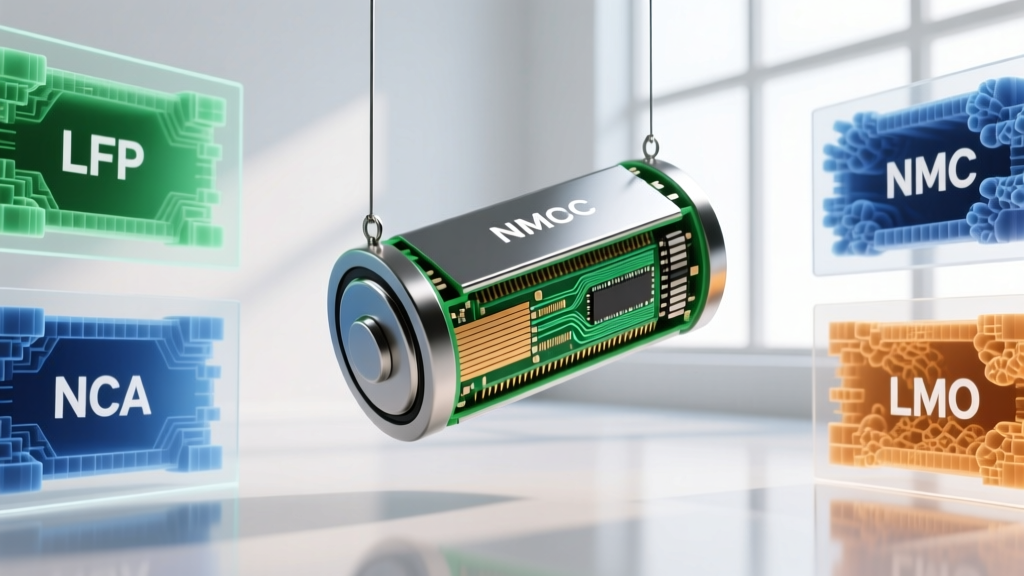
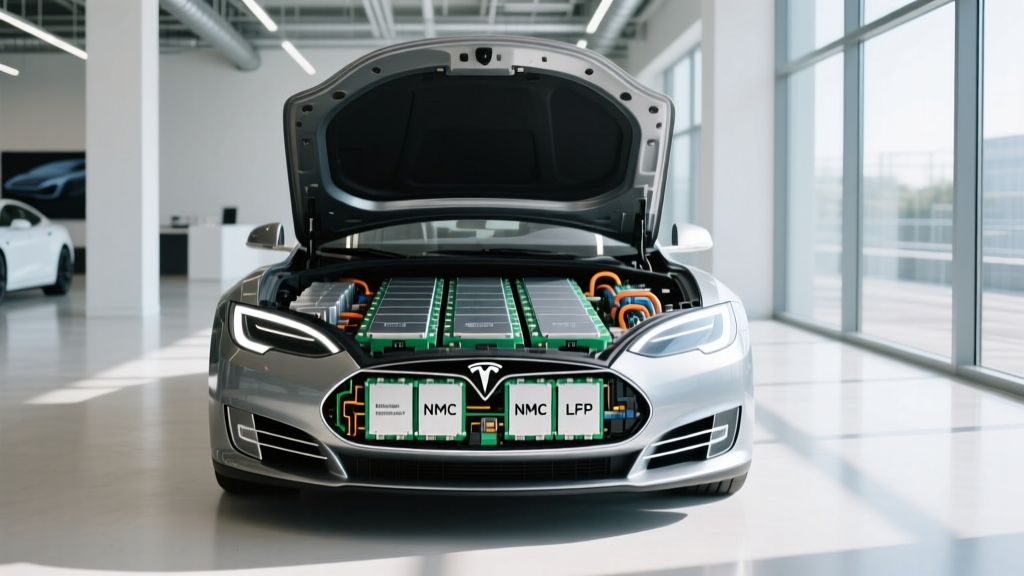
Not all EV batteries are built the same. The two dominant chemistries in today's market — lithium iron phosphate (LFP) and nickel manganese cobalt / nickel cobalt aluminum (NMC/NCA) — have fundamentally different trade-offs in energy density, cycle life, cold-weather performance, and cost. Knowing which chemistry is in your EV matters for understanding its charging behavior, degradation profile, and long-term health.
| Attribute | LFP (Lithium Iron Phosphate) | NMC / NCA (Nickel-Based) |
|---|---|---|
| Energy density (cell-level) | ~160–180 Wh/kg | ~220–300 Wh/kg |
| Typical cycle life | 3,000–6,000+ cycles | 1,000–2,000 cycles |
| Cold-weather performance | Moderate — more range loss below freezing | Better low-temp discharge; still loses range but less than LFP |
| Optimal daily SoC | 100% OK (manufacturer-recommended for calibration) | 80% for daily; 100% for trips only |
| Cost per kWh (cell) | Lower — ~$80–$100/kWh (2025–2026) | Higher — ~$110–$140/kWh (2025–2026) |
| Thermal stability / safety | Excellent — very low thermal runaway risk | Good — requires more active thermal management |
| Notable vehicles (2026) | Tesla Model 3/Y RWD, Ford Mustang Mach-E Select (LFP option), BYD models | Tesla Long Range/Performance, Hyundai Ioniq 5/6, Rivian, Lucid, most PHEVs |
Which is better? It depends on your use case. If you drive a standard-range commuter EV and want maximum cycle life with the ability to charge to 100% daily without guilt, LFP is the superior choice. If you need maximum range from a smaller, lighter pack — for long road trips or towing — NMC/NCA's higher energy density is the answer. Neither chemistry is universally "better"; they serve different segments.
One practical charging note: LFP packs have a flatter voltage curve, which makes state-of-charge estimation harder for the BMS. Tesla and BYD recommend charging LFP vehicles to 100% at least once a week to recalibrate. If your LFP-equipped EV is showing erratic range estimates or refusing to charge past a certain point, a full 100% charge cycle often resolves the discrepancy.
How Long Do EV Batteries Actually Last? Degradation Data
The fear that EV batteries "won't last" is one of the most persistent myths in the transition to electric. The data tells a different story: modern liquid-cooled EV batteries are engineered to outlast the useful life of the vehicle in most cases.
Real-world degradation benchmarks (compiled from fleet data, owner surveys, and manufacturer testing):
- Year 1 / 15,000 miles: ~2–3% capacity loss (initial formation loss — steepest early drop)
- Year 3 / 45,000 miles: ~5–7% total loss
- Year 5 / 75,000 miles: ~7–10% total loss
- Year 8 / 120,000 miles: ~10–14% total loss (typical NMC); ~5–8% (LFP)
- Year 10 / 150,000 miles: ~12–18% total loss (NMC); ~7–10% (LFP)
Sources: Geotab fleet battery health study, Tesla Impact Reports, Recurrent Auto battery data.
A few important nuances:
- The degradation curve flattens. Most capacity loss occurs in the first year or two. After that, the rate slows considerably. A battery that has lost 8% over three years is not on track to lose 24% over nine — it will likely lose only another 6–8% over the next six years.
- LFP degrades slower. Thanks to the chemistry's inherent stability, LFP packs consistently show lower degradation in fleet data. Tesla's standard-range Model 3 (LFP) has demonstrated some of the best longevity in real-world tracking.
- Heat is the enemy. Vehicles operated in consistently hot climates (Phoenix, Dubai) without active thermal management show measurably higher degradation. Liquid-cooled packs (standard on nearly all 2026 EVs) mitigate this substantially.
- Calendar aging is real. Even a garage-kept EV with low miles will lose capacity over time. A 10-year-old EV with 30,000 miles will still show 8–12% degradation from calendar aging alone.
For context, a 2026 Hyundai Ioniq 5 with a 77.4 kWh (usable) NMC battery and an EPA range of 303 miles would, at 10% degradation after five years, still deliver ~273 miles of EPA-rated range — more than adequate for the vast majority of daily driving and road trips.
What Does the EV Battery Warranty Actually Cover?
Federal law mandates that EV battery warranties cover a minimum of 8 years / 100,000 miles (10 years / 150,000 miles in California Air Resources Board states). But the details — particularly the capacity retention threshold — vary by manufacturer and matter enormously.
| Manufacturer (2026 Models) | Warranty Term | Capacity Retention Threshold | What Triggers a Claim |
|---|---|---|---|
| Tesla (Model 3/Y LFP) | 8 yr / 100,000 mi | 70% | SoH drops below 70% as measured by Tesla diagnostic |
| Tesla (Model 3/Y LR, Model S/X) | 8 yr / 120,000–150,000 mi | 70% | Same diagnostic threshold |
| Hyundai / Kia | 10 yr / 100,000 mi | 70% | Verified capacity loss below 70% via dealer scan |
| Ford (Mach-E, F-150 Lightning) | 8 yr / 100,000 mi | 70% | BMS-reported SoH below threshold |
| GM (Ultium-based: Blazer EV, Equinox EV, Silverado EV) | 8 yr / 100,000 mi | 70% | Diagnostic-verified capacity loss |
| Rivian (R1T, R1S) | 8 yr / 175,000 mi | 70% | Verified degradation below threshold |
| BMW (iX, i4, i7) | 8 yr / 100,000 mi | 70% | Capacity test below 70% |
Key points about warranty claims:
- The threshold is capacity retention, not range. If your 77.4 kWh pack can still hold 54.2 kWh (70%), the warranty has not been triggered — even if your real-world range feels reduced due to driving conditions.
- Manufacturers typically require a dealer diagnostic to confirm SoH. You can't self-certify based on the car's range estimate alone.
- Warranty coverage includes repair, module replacement, or full pack replacement at the manufacturer's discretion. You don't get to choose.
- Damage from accidents, flooding, or unauthorized modifications is excluded.
- As of 2026, actual warranty claims for battery replacement remain rare. Recurrent Auto's research shows that fewer than 1.5% of EVs in their studied fleet have required battery replacement under warranty.
How Much Does an EV Battery Replacement Cost?
If your battery degrades beyond the warranty threshold — or if it's damaged and out of warranty — replacement is the most expensive single repair an EV owner can face. However, context matters: most packs outlive the car, and prices continue to decline.
| Vehicle / Pack Size | Battery Chemistry | Estimated Replacement Cost (2026) | Typical Need Timeline |
|---|---|---|---|
| Tesla Model 3 RWD (~60 kWh) | LFP | $8,000–$12,000 | Rarely needed; 300,000+ mi projected life |
| Tesla Model Y LR (~75 kWh) | NMC | $12,000–$16,000 | 200,000+ mi before likely need |
| Hyundai Ioniq 5 (~77.4 kWh) | NMC | $12,000–$18,000 | 200,000+ mi |
| Ford F-150 Lightning Ext. Range (~131 kWh) | NMC | $20,000–$30,000 | 200,000+ mi |
| Chevrolet Equinox EV (~85 kWh) | NMC (Ultium) | $14,000–$20,000 | 200,000+ mi |
| Lucid Air Grand Touring (~112 kWh) | NMC | $20,000–$28,000 | 250,000+ mi projected |
| Rivian R1T Max Pack (~149 kWh) | NMC | $25,000–$35,000 | 200,000+ mi |
These figures include the battery pack and labor but can vary by region, dealer, and whether the replacement uses a new or refurbished pack. Some manufacturers offer refurbished packs at 30–50% lower cost, which is often the practical choice for an older vehicle.
The honest framing: if you buy a new EV in 2026 and drive it for 10 years / 150,000 miles, the probability of needing an out-of-pocket battery replacement is low. The data from millions of EVs on the road shows that the vast majority of packs retain 80–90% capacity at that point. Battery replacement is a real cost to be aware of — but it's not the ticking time bomb that skeptics portray.
Factors That Affect EV Battery Life (and What You Can Control)
Not all miles are created equal when it comes to battery wear. Here's what actually moves the needle on long-term health, ranked roughly by impact:
- Avoid sustained high SoC (NMC/NCA): Storing an NMC battery at 100% for days or weeks accelerates degradation. Charge to 80% for daily use and only top up to 100% when you'll drive it soon. (LFP owners: this doesn't apply to you — charge to 100% regularly.)
- Minimize DC fast charging when possible: Occasional fast charging is fine. But if you DC fast charge daily (especially at 150+ kW), expect slightly higher long-term degradation — studies suggest an additional 1–3% loss over 100,000 miles vs. primarily Level 2 charging. The heat generated during rapid charging is the mechanism.
- Extreme heat exposure: Parking in direct sun in 110°F+ heat for extended periods without thermal management running is harder on the pack than cold. If possible, park in shade or a garage in hot climates.
- Let preconditioning do its job: When navigating to a DC fast charger, your EV's thermal management system will warm (or cool) the pack to the optimal temperature for charging. Skipping preconditioning and plugging in a cold battery forces charging at reduced power and can stress cells.
- Don't baby it excessively: Some owners obsess over keeping SoC between 40–60%. While this is technically optimal for storage, the real-world benefit over 20–80% daily cycling is marginal. Drive the car normally — the BMS is managing cell balancing and thermal limits constantly.
- Keep software updated: Manufacturers regularly push BMS updates that improve charging curves, thermal management, and cell balancing. An outdated BMS can leave performance and longevity on the table.
How to Check and Monitor Your EV Battery Health
State of Health (SoH) is the metric that tells you how much capacity your battery retains compared to when it was new. A SoH of 92% means your pack holds 92% of its original kWh capacity.
How to check SoH:
- In-car displays: Some EVs show SoH or a battery health indicator directly. Tesla's service mode (accessible in newer software versions) shows detailed battery metrics. Nissan Leaf's dashboard includes a battery health bar (though it's notoriously imprecise).
- Manufacturer apps: Tesla, Hyundai, BMW, and others offer battery health data through their companion apps or through a dealer diagnostic request.
- Third-party tools: Devices like the OBD-II dongle + app combination (e.g., ABRP with a compatible OBD adapter, or Car Scanner ELM) can read BMS data including SoH, cell voltage variance, and pack temperature. This is the most reliable DIY method.
- Dealer diagnostic: Any authorized dealer can run a full battery health report. Request this if you're considering a used EV purchase — it's the EV equivalent of a compression test.
- Manual calculation: Charge to 100%, note the kWh added from a known SoC (your charger or car displays this), and calculate: (kWh added ÷ percentage change) × 100 = estimated total capacity. Compare to the original usable capacity. This is less precise but directionally useful.
What's normal vs. concerning: Cell voltage variance (the difference between the highest and lowest cell in the pack) should typically be under 20–30 mV at rest. Consistently higher variance can indicate a weak module that may need attention before it triggers a warranty claim.
What's Next: Solid-State and Silicon-Anode Batteries
The battery technology landscape is evolving rapidly, but it's critical to separate what's available now from what's on the horizon.
Solid-state batteries replace the liquid electrolyte with a solid material, promising higher energy density (~400+ Wh/kg at the cell level), faster charging, and improved safety. Toyota has announced plans to commercialize solid-state batteries in limited production vehicles by 2027–2028, with broader availability expected by 2030. Samsung SDI, QuantumScape, and Solid Power are also in advanced testing. However, as of early 2026, no mass-production EV uses a solid-state battery. Cost, manufacturing scalability, and cycle-life validation remain challenges. Expect solid-state to debut in premium/low-volume applications first, with mainstream adoption likely in the 2030s.
Silicon-anode batteries (used in cells by companies like Sila Nanotechnologies and Group14) replace graphite anodes with silicon-dominant materials, boosting energy density by 20–40%. These are already appearing in limited applications — the Mercedes G 580 EQ (announced) uses silicon-anode cells — and will likely proliferate faster than solid-state, potentially reaching mainstream EVs by 2027–2028.
What this means for today's buyers: Current LFP and NMC chemistries are mature, well-understood, and backed by extensive real-world data. Waiting for solid-state is not a practical strategy if you need an EV now — the timeline is years away for most buyers, and early solid-state vehicles will carry a significant price premium.
Frequently Asked Questions
How long do EV batteries last in years and miles?
Based on fleet data from Geotab and Recurrent Auto, the average modern liquid-cooled EV battery retains 85–90% of its original capacity after 10 years or 150,000 miles. LFP batteries often retain 90–93%. Most EV batteries will outlast the vehicle's useful economic life. Complete failure (not just degradation) before 200,000 miles is statistically rare — under 1.5% of vehicles studied.
How much does an EV battery cost to replace in 2026?
Replacement costs range from approximately $8,000 for a smaller LFP pack (Tesla Model 3 RWD) to $35,000 for the largest packs (Rivian R1T Max Pack). The typical mid-size EV (Hyundai Ioniq 5, Tesla Model Y LR) falls in the $12,000–$18,000 range including labor. Refurbished packs can reduce this by 30–50%. However, the vast majority of EV owners never need an out-of-pocket replacement — the battery either remains within warranty coverage or retains sufficient capacity for the vehicle's lifetime.
What does the EV battery warranty cover?
Federal law requires a minimum of 8 years / 100,000 miles of battery warranty coverage (10/150,000 in CARB states). Most manufacturers set a capacity retention threshold of 70% — if your battery's State of Health drops below 70% within the warranty period, the manufacturer will repair or replace it. Coverage excludes damage from accidents, floods, or unauthorized modifications. Check your specific owner's manual for exact terms, as they vary by model and model year.
How do I check and maximize my EV battery health?
Check SoH through your car's service menu, the manufacturer's app, a third-party OBD-II reader, or a dealer diagnostic. To maximize health: charge NMC/NCA batteries to 80% for daily use (LFP can go to 100%), avoid daily DC fast charging if Level 2 is available, use preconditioning before fast charging in cold weather, keep software updated, and avoid leaving the car at very low (<10%) or very high (100%) SoC for extended periods in extreme heat.
LFP vs NMC — which battery chemistry is better for me?
Choose LFP if: you drive a standard-range commuter, want maximum cycle life (3,000–6,000+ cycles), prefer to charge to 100% daily, and prioritize lower cost and higher safety margin. Choose NMC/NCA if: you need maximum range from a lighter, more compact pack, regularly take long road trips, tow, or drive a performance-oriented EV. Neither is universally better — they serve different needs. For the average driver covering 30–40 miles daily with home charging, LFP is increasingly the pragmatic choice.
Why is my EV charging slower than it used to?
Gradual charging speed reduction can result from battery degradation (less capacity to fill means the BMS adjusts the charge curve), but more commonly it's caused by: thermal conditions (cold battery without preconditioning), a degraded charge cable or connector, a software update that modified the charge curve for longevity, or a failing onboard charger (for AC charging). If DC fast charging speeds have dropped significantly, have the dealer check for cell imbalance or thermal management system issues.
Can I replace just one battery module instead of the whole pack?
In some cases, yes. Many EV battery packs are composed of individually serviceable modules (12–24 modules depending on the pack). If a single module fails or shows abnormal degradation, a qualified technician can replace just that module for a fraction of the full-pack cost — typically $1,000–$3,000 per module including labor. However, mixing new and aged modules can create imbalance, so this approach works best when the rest of the pack is still in good health. Full-pack replacement is more common under warranty.
Understanding your EV's battery — its chemistry, its real degradation trajectory, and the habits that preserve it — is the single most impactful thing you can do as an owner or prospective buyer. The technology is mature, the data is reassuring, and the warranty backstop is strong. If your battery isn't charging today, start with the cable, the software, and the 12V battery before you worry about the pack itself.