The high-voltage traction battery is the single most expensive component in any electric vehicle — and the one buyers worry about most. If you're researching the battery in a new car you're considering, you've likely encountered conflicting claims: some say modern packs last 20 years with minimal loss, while others warn of catastrophic replacement bills. The truth, backed by fleet data and manufacturer warranties, sits between those extremes and depends heavily on chemistry, climate, and charging habits.
This guide breaks down exactly what's inside today's EV batteries, how fast they degrade based on real-world evidence, what warranties actually cover, and what emerging technologies might change the calculus in the years ahead.
LFP vs NMC/NCA: Choosing the Right Chemistry for Your New Car Battery
Two dominant lithium-ion chemistries power the EVs you can buy today. The choice between them affects range, longevity, cold-weather performance, and even how you should charge at home.
LFP (Lithium Iron Phosphate) uses iron and phosphate in the cathode. It sacrifices some energy density — meaning a physically larger, heavier pack for the same kWh — but gains major advantages in cycle life, thermal stability, and cost. LFP cells tolerate regular charging to 100% without accelerated degradation, which simplifies daily ownership. Tesla offers LFP in the Model 3 and Model Y Standard Range trims; Ford uses LFP in the base Mustang Mach-E Select. Chinese manufacturers like BYD build their entire lineups around LFP (branded as "Blade Battery").
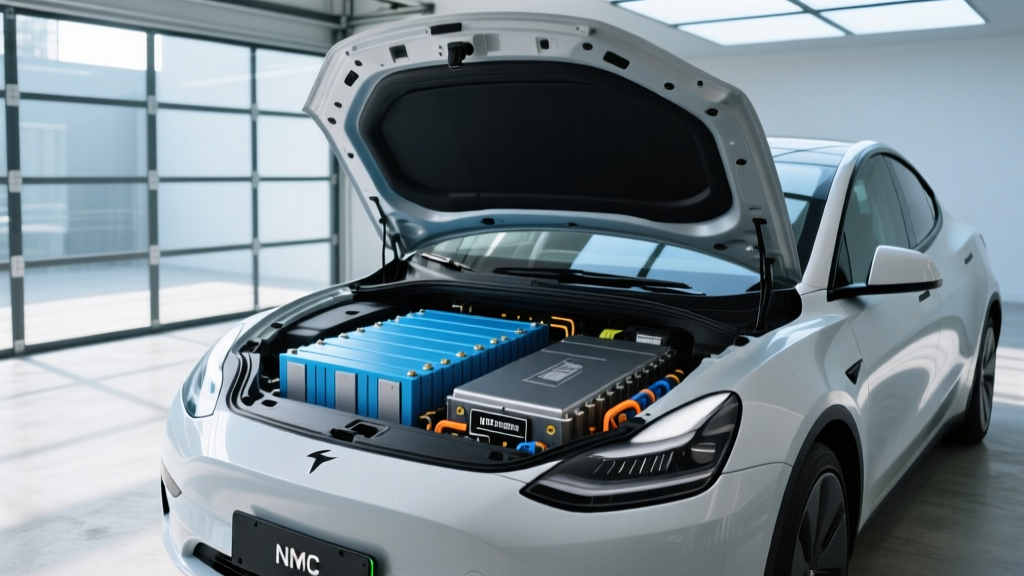
NMC (Nickel Manganese Cobalt) and NCA (Nickel Cobalt Aluminum) pack more energy into a smaller, lighter footprint. That's why most long-range and performance EVs — the Hyundai Ioniq 5, BMW iX, Rivian R1T, and Tesla Long Range models — use NMC or NCA packs. The trade-off is a somewhat shorter cycle life and greater sensitivity to sustained high states of charge. Most manufacturers recommend daily charging limits of 80% for NMC packs.
| Attribute | LFP (Lithium Iron Phosphate) | NMC / NCA |
|---|---|---|
| Energy Density | ~160–180 Wh/kg (cell level) | ~220–300 Wh/kg (cell level) |
| Typical Cycle Life | 3,000–5,000+ cycles to 80% SoH | 1,000–2,500 cycles to 80% SoH |
| Daily Charge Recommendation | 100% OK (BMS calibration benefits) | 80% recommended for daily use |
| Cold-Weather Performance | Reduced; slower charging below 32°F | Better low-temp conductivity |
| Thermal Stability | Excellent — very low thermal runaway risk | Good with active thermal management |
| Critical Mineral Concerns | No cobalt or nickel — simpler supply chain | Cobalt/nickel sourcing scrutiny |
| Cost per kWh (cell) | ~$70–$90 (2026 estimates) | ~$100–$130 (2026 estimates) |
| Found In (2026 examples) | Tesla Model 3 RWD, Ford Mach-E Select, BYD Seal | Hyundai Ioniq 5, BMW i4, Rivian R1S, Tesla LR |
Which is better? Neither is universally superior. If your commute is short, you charge at home, and you want a battery that tolerates simple "plug in to 100% every night" habits, LFP is the pragmatic choice. If you need maximum range per charge, tow frequently, or live in a cold climate where every kWh of usable capacity matters, NMC/NCA's energy density advantage is worth the slightly more careful charging routine.
How Long Do EV Batteries Actually Last? Degradation Data by the Numbers
The fear that an EV battery will "die" at 100,000 miles is not supported by current evidence. Lithium-ion degradation follows a curve: the steepest capacity loss occurs in the first 10,000–20,000 miles (typically 2–5%), after which the rate flattens considerably.
Real-world fleet data compiled by Recurrent Auto, which tracks over 15,000 EVs in daily service, shows that the median EV battery retains roughly 90–95% of its original capacity at 5 years / 75,000 miles. By 10 years / 150,000 miles, median retention sits around 80–88%, depending on climate and charging patterns.
| Milestone | Average Capacity Retained (SoH) | Context |
|---|---|---|
| Year 1 / ~12,000 mi | 95–98% | Initial calibration loss; steepest part of curve |
| Year 3 / ~36,000 mi | 92–95% | Degradation rate slows significantly |
| Year 5 / ~60,000 mi | 89–93% | Most owners notice minimal range change day-to-day |
| Year 8 / ~100,000 mi | 84–90% | Warranty threshold period; most packs still above 70% |
| Year 12 / ~150,000 mi | 78–86% | Noticeable but manageable range reduction |
| Year 15+ / ~200,000 mi | 72–82% | Approaching end-of-vehicle-life; pack still functional |
Sources: Recurrent Auto fleet data (2025), Geotab fleet study of 6,300+ EVs. Individual results vary by climate, DC fast-charge frequency, and chemistry.
To put this in perspective: a 2026 Hyundai Ioniq 5 Long Range with an EPA-estimated 318 miles of range and a 77.4 kWh (usable) NMC battery losing 12% over 10 years would still deliver roughly 280 EPA miles — more than sufficient for the vast majority of drivers. The pack doesn't "die"; it gradually holds less energy, much like a smartphone battery.
What Does the EV Battery Warranty Actually Cover?
Federal law in the United States mandates that EV batteries carry a minimum warranty of 8 years or 100,000 miles (whichever comes first). In California Air Resources Board (CARB) states — which include California, Colorado, Maine, Massachusetts, New Jersey, New York, Oregon, Rhode Island, Vermont, Virginia, and Washington — the mandate extends to 10 years or 150,000 miles.
The warranty covers capacity loss below a defined threshold, typically 70% of original usable capacity. If your battery's State of Health drops below that line within the warranty period, the manufacturer must repair or replace it at no cost.
| Manufacturer | Warranty Period | Mileage Cap | Capacity Threshold | Notes |
|---|---|---|---|---|
| Tesla (Model 3/Y RWD — LFP) | 8 years | 100,000 mi | 70% retention | LFP packs show strong retention; few claims |
| Tesla (Model 3/Y LR/Perf — NMC/NCA) | 8 years | 120,000 mi | 70% retention | Longer mileage cap on LR/Performance |
| Hyundai / Kia / Genesis | 8 years (10 in CARB) | 100,000 mi (150k CARB) | 70% retention | Ioniq 5, EV6, GV60 — transferable to second owner |
| Ford (Mustang Mach-E, F-150 Lightning) | 8 years (10 in CARB) | 100,000 mi (150k CARB) | 70% retention | Covers battery components and capacity |
| Rivian (R1T / R1S) | 8 years | 175,000 mi | 70% retention | Higher mileage cap reflects truck use case |
| BMW (i4, iX, i7) | 8 years | 100,000 mi | 70% retention | Preconditioning required for max DCFC speeds |
| GM (Ultium: Equinox EV, Blazer EV, Silverado EV) | 8 years | 100,000 mi | 60–70% retention (varies by model) | Check specific model terms — some list 60% |
Critical nuance: The warranty covers the battery against defective capacity loss — meaning the manufacturer's diagnostic must confirm SoH has fallen below the threshold under normal use. Damage from accidents, flooding, aftermarket modifications, or unauthorized repairs is excluded. Always review the specific warranty booklet for your model year; terms can shift between model years even within the same brand.
How Much Does It Cost to Replace an EV Battery? (And How Rarely It Happens)
Out-of-warranty battery replacement is the specter that haunts EV forums. Here are the actual numbers — and the context that makes them less alarming than they appear at first glance.
| Vehicle / Pack Size | Battery Capacity (usable kWh) | Estimated Pack Cost | Labor + Misc. | Total Estimate |
|---|---|---|---|---|
| Tesla Model 3 RWD (LFP, ~57.5 kWh) | 57.5 kWh | $8,000–$10,000 | $1,500–$2,500 | $9,500–$12,500 |
| Hyundai Ioniq 5 (NMC, 77.4 kWh) | 77.4 kWh | $12,000–$16,000 | $2,000–$3,000 | $14,000–$19,000 |
| Ford F-150 Lightning Ext. Range (131 kWh) | 131 kWh | $20,000–$28,000 | $2,500–$4,000 | $22,500–$32,000 |
| Chevrolet Equinox EV (NMC, ~85 kWh) | 85 kWh | $11,000–$15,000 | $1,500–$2,500 | $12,500–$17,500 |
| BMW iX xDrive50 (NMC, ~111.5 kWh) | 111.5 kWh | $18,000–$25,000 | $2,500–$4,000 | $20,500–$29,000 |
Costs based on 2026 parts pricing and independent shop estimates. OEM dealership pricing may be higher. Prices have declined ~40% since 2020 and continue trending downward as cell manufacturing scales.
When is replacement actually needed? Data from Geotab's fleet study of over 6,300 electric vehicles shows that fewer than 1.5% of EV batteries have been replaced outside of recall campaigns through 2025 — and the vast majority of those replacements were due to manufacturing defects covered under warranty, not age-related degradation. Catastrophic failure of a modern, liquid-cooled traction battery from normal use is extraordinarily rare.
The practical reality: most EV batteries will outlast the vehicle's useful economic life. A 15-year-old EV with 80% battery health is still a perfectly functional car — it simply has slightly less range than when new. Compare this to a 15-year-old gasoline vehicle, which may need a $4,000–$7,000 transmission replacement, engine work, or catalytic converter replacement — costs that are accepted as routine.
Factors That Accelerate (or Preserve) Battery Life
Not all miles are created equal when it comes to battery wear. Research from the Idaho National Laboratory and real-world fleet data point to several factors that meaningfully influence how quickly your pack degrades.
Practices That Help Maximize Battery Longevity
- Limit DC fast charging when possible. Occasional road-trip fast charging is fine, but daily reliance on 150+ kW DCFC accelerates degradation. Idaho National Lab testing showed vehicles that fast-charged exclusively lost roughly 5–8% more capacity over 50,000 miles compared to Level 2-charged counterparts. Home Level 2 (7–11 kW) is the gentlest routine.
- Avoid sustained extreme states of charge. For NMC/NCA packs, set your daily charge limit to 80%. Reserve 100% for road trips. For LFP packs, charging to 100% periodically (or even daily) is acceptable and helps the BMS calibrate.
- Use preconditioning. Most modern EVs let you precondition the battery — warming it to optimal temperature before a fast-charge session or before driving in cold weather. This reduces stress on the cells and improves charging speed. Tesla, Hyundai, BMW, and Ford all offer scheduled preconditioning.
- Park in shade or a garage in hot climates. Sustained high battery temperatures (above 95°F ambient, which can push pack temps higher) accelerate chemical aging. Active thermal management helps, but a shaded parking spot is free insurance.
- Don't let the pack sit at 0% or 100% for extended periods. If you're leaving the car unused for a week or more, aim for ~50% SoC. This is the most chemically stable state for lithium-ion cells.
- Use regenerative braking moderately in extreme cold. In sub-freezing temps, aggressive regen can stress cold cells. Many EVs automatically limit regen when the battery is cold, but easing into it manually in the first few miles helps.
Practices That Accelerate Degradation
- Exclusive reliance on DC fast charging (especially >150 kW) without Level 2 top-ups
- Repeatedly draining the battery to near 0% before recharging
- Leaving an NMC/NCA pack at 100% SoC for days in hot weather
- Aftermarket modifications that bypass the BMS or thermal management system
- Frequent towing at maximum capacity in high temperatures (high sustained C-rate draw)
How to Check Your EV Battery's State of Health (SoH)
State of Health (SoH) is expressed as a percentage: a brand-new battery is at 100% SoH, and a pack that can only hold 85% of its original energy is at 85% SoH. Monitoring this number helps you track degradation and provides documentation if you ever need to make a warranty claim.
Built-in vehicle tools: Most 2026 EVs display SoH or battery health information somewhere in the infotainment system or mobile app. Hyundai/Kia show a battery health percentage in the EV settings menu. Tesla provides range estimates that implicitly reflect degradation, and third-party apps like Tessie or Stats can extract more granular SoH data from the vehicle's API. BMW's iDrive includes a battery health report accessible through the service menu.
OBD-II diagnostic tools: Devices like the OBD Eleven, Carly, or Leaf Spy (for Nissan Leaf) can read the battery management system directly and report SoH, cell voltage spread, and temperature data. These tools cost $50–$150 and are particularly valuable when buying a used EV.
Dealer diagnostics: Any authorized service center can run a full battery health report, often for free during routine service visits. Request a printout showing SoH percentage, individual module voltages, and any flagged cells. This document is gold if you need to pursue a warranty claim.
Third-party services: Companies like Recurrent offer battery health reports that compare your pack's degradation to a fleet of identical vehicles, giving you a benchmarked view of how your battery is aging relative to peers.
Emerging Battery Technologies: Solid-State and Silicon Anodes
Next-generation battery chemistries promise step-change improvements, but timelines remain fluid and commercial availability for mainstream consumer vehicles is still ahead.
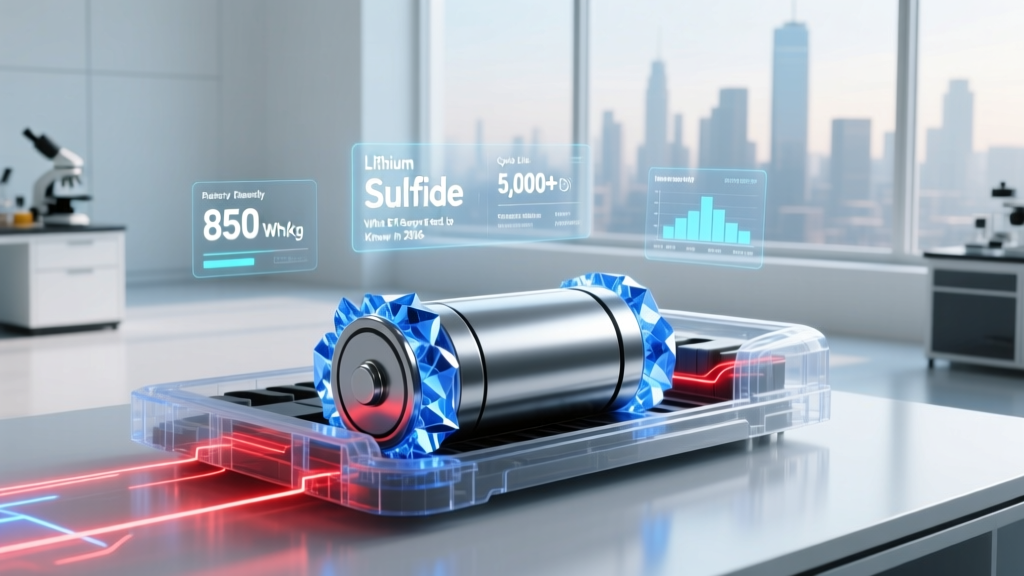
Solid-state batteries replace the liquid electrolyte with a solid material (ceramic, sulfide, or polymer), enabling lithium-metal anodes that could theoretically double energy density while improving safety. Toyota has announced a solid-state battery targeting 2027–2028 production in limited volumes, initially for luxury models. Samsung SDI and QuantumScape are also advancing solid-state cells, with pilot production underway. However, manufacturing yield challenges and cost remain significant hurdles. Expect solid-state to appear first in low-volume or premium applications before reaching mainstream pricing — realistically not before 2029–2030 for volume models.
Silicon-dominant anodes (sometimes called silicon-carbon composite anodes) increase the amount of silicon used in the anode, boosting energy density by 20–40% over conventional graphite anodes. Companies like Sila Nanotechnologies and Group14 are already supplying silicon anode materials for some 2025–2026 model-year vehicles, including certain Porsche and Mercedes-Benz applications. This technology is closer to mainstream adoption than solid-state and may become common in NMC cells by 2028.
Sodium-ion batteries use abundant sodium instead of lithium, dramatically reducing raw material costs. CATL has begun producing sodium-ion cells for lower-range EVs in China, and the technology may reach US-market vehicles in budget segments by 2028–2029. Energy density is lower than LFP, making sodium-ion best suited for city cars and short-range applications.
Bottom line on emerging tech: None of these technologies are available in a vehicle you can buy in the US today. If you need an EV now, current LFP and NMC chemistries are mature, well-understood, and backed by robust warranties. Waiting for solid-state means waiting at minimum 3–4 years for limited availability, likely at premium pricing.
Frequently Asked Questions
How long do EV batteries last in years and miles?
Based on fleet data from Recurrent Auto and Geotab, the median EV battery retains 80–90% of its original capacity at 10 years / 100,000–150,000 miles. Most packs remain functional well beyond 200,000 miles, albeit with reduced range. Complete failure outside of manufacturing defects or physical damage is rare — fewer than 1.5% of packs have required replacement in large fleet studies.
How much does an EV battery cost to replace out of warranty?
Replacement costs range from roughly $9,500 for a smaller LFP pack (Tesla Model 3 RWD) to $32,000 for a large truck battery (F-150 Lightning Extended Range), including labor. However, cell prices continue declining, and most batteries outlast the vehicle's economic life. The 8-year/100,000-mile federal warranty minimum (10-year/150,000-mile in CARB states) covers the vast majority of premature degradation cases.
What does the EV battery warranty actually cover?
The warranty covers capacity loss below a defined threshold — typically 70% of original usable capacity — within the warranty period (8 years/100,000 miles federally, 10/150,000 in CARB states). If the manufacturer's diagnostic confirms SoH has fallen below the threshold under normal use, the pack is repaired or replaced at no cost. Damage from accidents, flooding, or unauthorized modifications is excluded.
How do I check and maximize my EV battery health?
Check SoH through your vehicle's built-in battery health display, an OBD-II diagnostic tool, or a dealer service visit. To maximize longevity: charge primarily on Level 2, set daily limits to 80% for NMC/NCA packs (100% is fine for LFP), use preconditioning before fast charging, avoid leaving the pack at extreme SoC for extended periods, and park in shade in hot climates.
LFP vs NMC — which battery chemistry is better for a new car?
It depends on your use case. LFP offers longer cycle life (3,000–5,000+ cycles), simpler charging habits (100% daily is fine), lower cost, and no cobalt. It's ideal for commuters with home charging who don't need maximum range. NMC/NCA delivers higher energy density for longer range in a lighter, smaller pack, making it better for road trips, towing, and cold climates — but benefits from an 80% daily charge limit. Neither is universally "better"; match the chemistry to your driving pattern.
Does fast charging really damage the battery?
Occasional DC fast charging on road trips has negligible impact. The concern is exclusive reliance on high-power DCFC. Idaho National Laboratory testing found that vehicles charged exclusively via DC fast charging showed roughly 5–8% more capacity loss over 50,000 miles than those charged primarily on Level 2. Modern thermal management systems mitigate much of the stress, but daily 250+ kW sessions still accelerate wear compared to overnight Level 2 charging.
Will my EV battery need replacing before the car is done?
Statistically, it's unlikely. Fleet data shows fewer than 1.5% of EV batteries have been replaced outside of recalls. Most packs retain 75–85% capacity at 15 years. The car's body, suspension, or electronics are more likely to reach end-of-life before the traction battery becomes unusable. A 200,000-mile EV with 80% SoH still has plenty of range for daily driving.