Every EV buyer eventually asks the same question: what's inside the battery, and how long will it last? The answer depends heavily on the electric vehicle battery materials used in the high-voltage traction pack. In 2026, two dominant lithium-ion chemistries power the vast majority of new EVs sold in the U.S. — lithium iron phosphate (LFP) and nickel manganese cobalt (NMC), with nickel cobalt aluminum (NCA) still appearing in some Tesla applications. Each has measurable trade-offs in energy density, cycle life, cold-weather performance, and cost that directly affect real-world range, charging behavior, and long-term ownership.
This guide breaks down what these chemistries actually are, what the degradation data shows after years of use, what warranties really cover, what a replacement costs if you ever need one, and how to monitor and maximize your battery's State of Health (SoH) over the life of the vehicle.
LFP vs NMC/NCA: The Chemistry Breakdown
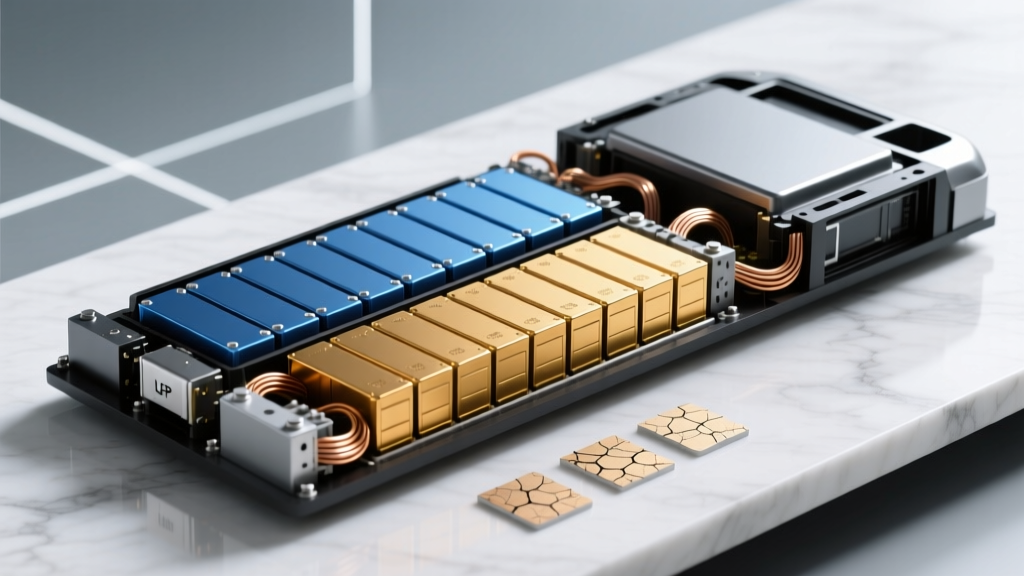
The cathode material in a lithium-ion cell determines most of its performance characteristics. Here is how the three chemistries currently in production compare across the metrics that matter to EV owners.
| Attribute | LFP (LiFePO₄) | NMC (Nickel Manganese Cobalt) | NCA (Nickel Cobalt Aluminum) |
|---|---|---|---|
| Energy density (cell-level) | ~160–180 Wh/kg | ~220–260 Wh/kg | ~250–280 Wh/kg |
| Typical cycle life | 3,000–5,000+ cycles | 1,000–2,000 cycles | 1,000–1,500 cycles |
| Cold-weather performance | Moderate — slower charge acceptance below 32°F | Better low-temp charge/discharge | Good low-temp performance |
| Thermal stability | Excellent — higher runaway threshold | Good — requires robust BMS | Good — requires robust BMS |
| Cost per kWh (pack-level) | ~$95–$115 | ~$120–$145 | ~$125–$150 |
| Recommended daily SoC | 100% OK (manufacturer-approved) | 80% daily, 100% for trips | 80% daily, 100% for trips |
| Critical mineral exposure | None — no cobalt, no nickel | High — cobalt + nickel supply chain | High — cobalt + nickel |
| Notable 2026 U.S. applications | Tesla Model 3/Y RWD, Ford Mustang Mach-E Select, Rivian Standard, Hyundai Ioniq 5 Standard Range | Cadillac Lyriq, Chevy Equinox EV, VW ID.4, BMW iX, Hyundai Ioniq 5 Long Range | Tesla Model S/X (Panasonic cells) |
LFP: The Durability-First Chemistry
LFP cells use iron and phosphate in the cathode, eliminating cobalt and nickel entirely. That translates to a lower raw-material cost, a supply chain less exposed to geopolitical risk, and a cell that can tolerate thousands more charge-discharge cycles before meaningful capacity loss. The trade-off is lower energy density — an LFP pack of equivalent kWh will weigh more and take up more volume than an NMC pack. That is why LFP tends to appear in standard-range and rear-wheel-drive trims where ultimate range-per-pound is less critical.
A practical advantage: most automakers approve daily charging to 100% on LFP packs. Because the voltage curve of LFP is very flat, the battery management system (BMS) actually benefits from periodic full charges to recalibrate SoC estimation. If your commute eats 60% of your battery every day and you want to plug in nightly without worrying about degradation, LFP is the more forgiving chemistry.
NMC/NCA: The Range-Maximizing Chemistry
NMC and NCA cathodes pack more energy per kilogram, which is why long-range and all-wheel-drive trims almost universally use one of these. A 77 kWh NMC pack weighs noticeably less than a 77 kWh LFP pack would, freeing up mass for performance or cargo. The trade-off is a shorter cycle life — though "shorter" here still means 1,000–2,000 full cycles, which at 250 miles per cycle translates to 250,000–500,000 miles before the pack approaches the end of its useful automotive life.
NMC/NCA owners should follow the 80% daily charge guideline and reserve 100% for road trips. Sustained storage at high SoC accelerates electrolyte oxidation and cathode surface degradation in nickel-rich cells. This is not a myth — it is well-documented in cell-level aging studies from NREL and other national labs.
Real-World Degradation: What the Data Shows
Battery degradation is not linear. Most packs experience a steeper drop in the first 20,000–30,000 miles (roughly 2–5% capacity loss), then settle into a slow, gradual decline for the remainder of their life. This "break-in" loss is primarily due to solid-electrolyte interphase (SEI) layer formation on the anode, which consumes a small amount of cyclable lithium early on.
Here is what aggregated fleet data and owner reports show for common degradation trajectories:
Typical Capacity Retention Over Time (Fleet Averages)
| Mileage / Timeframe | LFP Packs (avg. retention) | NMC/NCA Packs (avg. retention) |
|---|---|---|
| 20,000 mi / Year 1 | 96–98% | 94–97% |
| 50,000 mi / Year 3 | 93–96% | 90–94% |
| 100,000 mi / Year 5–6 | 90–94% | 86–91% |
| 150,000 mi / Year 8–10 | 87–92% | 82–88% |
| 200,000 mi / Year 12+ | 84–90% | 78–85% |
Sources: Recurrent Auto fleet data (2024–2025 reports), Geotab fleet study, owner-reported data from TeslaFi and ABRP community samples. Individual results vary based on climate, charging habits, and thermal management system quality.
These numbers should reassure most buyers: even an NMC pack at 150,000 miles retains roughly 85% of original capacity, meaning a vehicle with an EPA-rated 300-mile range when new still delivers approximately 255 miles — more than adequate for daily use and most road trips.
What the Battery Warranty Actually Covers
Federal law mandates a minimum battery warranty of 8 years / 100,000 miles for EVs sold in the U.S. California Air Resources Board (CARB) states extend that to 10 years / 150,000 miles for vehicles certified to CARB standards. Most automakers meet or slightly exceed these floors.
| Manufacturer / Model | Warranty Period | Capacity Retention Threshold | Notes |
|---|---|---|---|
| Tesla Model 3/Y RWD (LFP) | 8 yr / 120,000 mi | 70% | Higher mileage than AWD trims |
| Tesla Model 3/Y Long Range (NMC) | 8 yr / 120,000 mi | 70% | |
| Hyundai Ioniq 5 | 10 yr / 100,000 mi | 70% | Among the longest time periods |
| Ford Mustang Mach-E | 8 yr / 100,000 mi | 70% | |
| Chevrolet Equinox EV | 8 yr / 100,000 mi | 60% | Lower threshold — read fine print |
| VW ID.4 | 8 yr / 100,000 mi | 70% | |
| BMW iX / i4 | 8 yr / 100,000 mi | 70% | |
| Rivian R1T / R1S | 8 yr / 175,000 mi | 70% | Highest mileage cap in segment |
The critical detail is the retention threshold. If your pack drops below 70% of original capacity within the warranty window, the manufacturer must repair or replace it at no cost. A drop from 100% to 71% is not a warranty claim — the pack has lost nearly a third of its capacity, but it technically still meets the threshold. In practice, very few packs fall below 70% within the warranty period unless they have a manufacturing defect, which is what the warranty is primarily designed to catch.
Battery Replacement Cost: What to Budget (and Why You Probably Won't Need To)
If your battery does fail outside of warranty — or if you are buying a used EV and want to plan for worst-case scenarios — here is what out-of-pocket replacement looks like in 2026. These figures include the battery pack and labor but not taxes or ancillary components.
| Vehicle | Pack Size (usable kWh) | Chemistry | Estimated Replacement Cost |
|---|---|---|---|
| Tesla Model 3 RWD | 57.5 kWh | LFP | $10,000–$13,000 |
| Tesla Model Y Long Range | 75 kWh | NMC | $13,000–$16,000 |
| Hyundai Ioniq 5 Long Range | 77.4 kWh | NMC | $14,000–$18,000 |
| Ford Mustang Mach-E Extended Range | 91 kWh | NMC | $16,000–$22,000 |
| Chevrolet Silverado EV | 200 kWh | NMC | $30,000–$38,000 |
| Rivian R1T (Large Pack) | 135 kWh | NMC | $20,000–$27,000 |
| BMW iX xDrive50 | 105.2 kWh | NMC | $18,000–$24,000 |
Context matters here. The vast majority of EV batteries never require full replacement during the vehicle's first-owner lifespan. Data from Geotab's fleet study of over 10,000 EVs shows an average annual degradation rate of roughly 1.8% per year — meaning after 12 years, the average pack still retains about 78% of its capacity. Catastrophic failure (sudden, total loss) is rare and almost always covered under warranty. Module-level repairs — replacing one or two degraded modules rather than the entire pack — are becoming more common and cost significantly less, typically $2,000–$6,000 depending on the vehicle.
Factors That Accelerate Battery Degradation
Not all miles are created equal when it comes to battery wear. The following factors have the largest measurable impact on how quickly your pack loses capacity:
Battery Care Essentials
- DC fast-charging frequency: Occasional DC fast charging (1–2 times per week) has a modest effect. Daily DC fast charging at 150+ kW, especially without preconditioning, measurably accelerates degradation. Studies show a roughly 2–4% additional capacity loss over 100,000 miles for vehicles that fast-charge daily vs. those that primarily use Level 2.
- Extreme heat exposure: Sustained ambient temperatures above 95°F, especially combined with high SoC, accelerate electrolyte decomposition. Garage parking in hot climates is one of the single best things you can do for battery longevity.
- Storing at 100% SoC: For NMC/NCA packs, leaving the car at 100% for days or weeks (e.g., before a delayed road trip) causes elevated stress on the cathode. Set your charge limit and departure timer so the car reaches 100% just before you leave.
- Deep discharges to 0%: Letting the pack sit at or near 0% for extended periods can cause copper dissolution in the anode current collector. If you must store the car for weeks, aim for 40–60% SoC.
- Cold charging without preconditioning: Plugging into a DC fast charger with a battery below 32°F without thermal preconditioning can cause lithium plating on the anode — a permanent and potentially safety-relevant form of degradation. Always use the vehicle's navigation-based preconditioning feature (route to a charger via the built-in nav) to warm the pack before arrival.
- Aggressive track use / sustained high-C-rate discharge: Repeated hard acceleration and high-speed driving generate significant internal heat. Occasional spirited driving is fine; sustained track use without adequate cooling intervals will shorten pack life.
Monitoring Battery Health: How to Check Your SoH
State of Health (SoH) is the percentage of your battery's current maximum capacity relative to its original capacity when new. A new pack is 100% SoH; a pack that can now hold only 66 kWh out of an original 77 kWh is at roughly 86% SoH.
Built-in methods:
- Tesla: The service menu (accessible via the software screen with a long-press) shows a battery health test that runs over several days and provides a SoH estimate. Tesla also logs detailed cell-level data accessible through the API.
- Hyundai/Kia: The EV dashboard in the infotainment system displays a battery health percentage. The Bluelink/Kia Connect app also shows this remotely.
- Ford: The FordPass app and in-vehicle diagnostics provide a battery health indicator, though it is less granular than some competitors.
- BMW: The iDrive system includes a battery health report accessible through the service menu, and BMW dealerships can run a full State of Health certificate.
Third-party methods:
- OBD-II dongles + apps: Devices like the OBDLink SX paired with apps such as ABRP (A Better Route Planner) or Scan My Tesla can read real-time battery data including pack voltage, cell delta, and estimated capacity.
- Recurrent Auto: This free service connects to your vehicle's telematics and provides ongoing SoH tracking benchmarked against a fleet of identical vehicles. It also generates a battery health report useful for resale.
- Dealer diagnostic: Any authorized dealer can run a full battery health check, typically taking 30–60 minutes. Request this as part of a pre-purchase inspection on any used EV.
For used-EV buyers, a SoH reading is one of the most important data points you can obtain before purchase. A 2023 model with 40,000 miles showing 94% SoH is in excellent shape; one showing 85% under the same conditions warrants investigation into charging habits or a potential defect.
Emerging Battery Materials: What's Next
The electric vehicle battery materials landscape is evolving rapidly. Here is what is on the horizon — with realistic timelines, not hype:
Silicon-Dominant Anodes
Replacing graphite anodes with silicon (or silicon-carbon composites) can boost cell energy density by 20–40%. Companies like Sila Nanotechnologies and Group14 are already supplying silicon anode materials to manufacturers. Expect broader adoption in production EVs starting in the 2027–2028 model year, initially in premium segments where cost is less constraining. The challenge remains cycle life — silicon expands ~300% during lithiation, which causes mechanical stress and cracking over repeated cycles.
Solid-State Batteries
Solid-state cells replace the liquid electrolyte with a solid ceramic, polymer, or sulfide conductor, promising higher energy density, faster charging, and improved safety. Toyota has announced a commercialization target of 2027–2028 for a limited-production vehicle, while QuantumScape is working with Volkswagen on pilot production. However, manufacturing yield, cost, and scalability challenges remain significant. Realistic timeline for broad U.S. market availability: 2029–2032 at the earliest. No solid-state EV is currently available for purchase in the United States.
Sodium-Ion Batteries
Sodium-ion cells use abundant, inexpensive sodium instead of lithium. They offer lower energy density (~120–150 Wh/kg) but excellent cycle life and low-temperature performance. CATL has begun mass production in China for small EVs. U.S. applications are likely limited to light-duty urban vehicles and stationary storage in the near term, with a possible 2028–2030 entry into the U.S. EV market for budget-oriented models.
LMFP (Lithium Manganese Iron Phosphate)
A hybrid chemistry that adds manganese to the LFP formula, boosting energy density by ~15–20% while retaining cobalt-free sourcing and strong cycle life. Several Chinese manufacturers have begun production, and U.S.-market vehicles using LMFP cells are expected around 2027–2028. This may become the "sweet spot" chemistry for mainstream EVs — offering near-NMC energy density with LFP-like durability and cost.
Frequently Asked Questions
How long do EV batteries last in years and miles?
Based on fleet data from Geotab, Recurrent Auto, and manufacturer warranty claims, most EV batteries retain 80–90% of original capacity after 100,000 miles (roughly 6–8 years of average driving). Many packs reach 200,000 miles with 78–85% retention. Catastrophic failure is rare. In practical terms, most batteries outlast the vehicle's first-owner lifecycle, and the car's body, suspension, or electronics are more likely to end its service life before the pack does.
How much does an EV battery cost to replace?
Full pack replacement in 2026 ranges from approximately $10,000 for a smaller LFP pack (Tesla Model 3 RWD) to $30,000–$38,000 for a very large pack (Chevrolet Silverado EV 200 kWh). Most mid-size crossovers fall in the $13,000–$22,000 range. Module-level repairs — replacing only the degraded section — cost $2,000–$6,000 and are increasingly common as an alternative to full-pack replacement. These costs are expected to decline as pack-level prices continue their downward trend.
What does the battery warranty cover?
Federal law requires a minimum 8-year/100,000-mile warranty on EV batteries (10 years/150,000 miles in CARB states). The warranty covers capacity loss below a specified threshold (typically 70% of original capacity) and manufacturing defects. It does not cover damage from accidents, flooding, improper modifications, or failure to follow the manufacturer's maintenance guidelines. Check your specific warranty document — the IRS and your manufacturer are the authoritative sources for current terms.
How do I check and maximize my battery's health?
Check SoH through your vehicle's built-in diagnostics, a connected app (Recurrent Auto, TeslaFi), or an OBD-II reader paired with EV-specific software. To maximize longevity: charge primarily on Level 2 at home, limit NMC/NCA daily SoC to 80%, avoid daily DC fast charging when possible, use navigation-based preconditioning before fast charging, avoid prolonged storage at 100% or 0% SoC, and park in shade or a garage in hot climates. LFP owners can charge to 100% daily without concern.
LFP vs NMC — which is better and why?
Neither is universally better; the right choice depends on your priorities. Choose LFP if you want maximum cycle life, lower cost, the ability to charge to 100% daily, and less exposure to cobalt/nickel supply-chain issues — and you can accept ~10–15% less range for a given pack size. Choose NMC/NCA if you need the longest possible range per charge, plan to drive frequently in very cold climates, or prioritize performance and lighter pack weight. For most commuters who charge at home nightly, LFP's durability advantage is the more practical choice. For road-trip-heavy drivers in northern states, NMC's cold-weather and range advantages justify the slightly faster degradation curve.
Sources referenced: fueleconomy.gov (EPA range and efficiency data), Geotab EV Battery Degradation Study, IRS §30D Clean Vehicle Credit guidelines, manufacturer warranty documentation. Degradation figures represent fleet averages; individual results vary.