Who Actually Makes Your EV Battery?
When you buy an electric vehicle, the brand on the badge rarely built the battery pack. Automakers source cells from a handful of specialized battery manufacturers — and knowing which supplier is inside your EV tells you a lot about the chemistry, expected degradation curve, charging behavior, and long-term replacement economics you're signing up for.
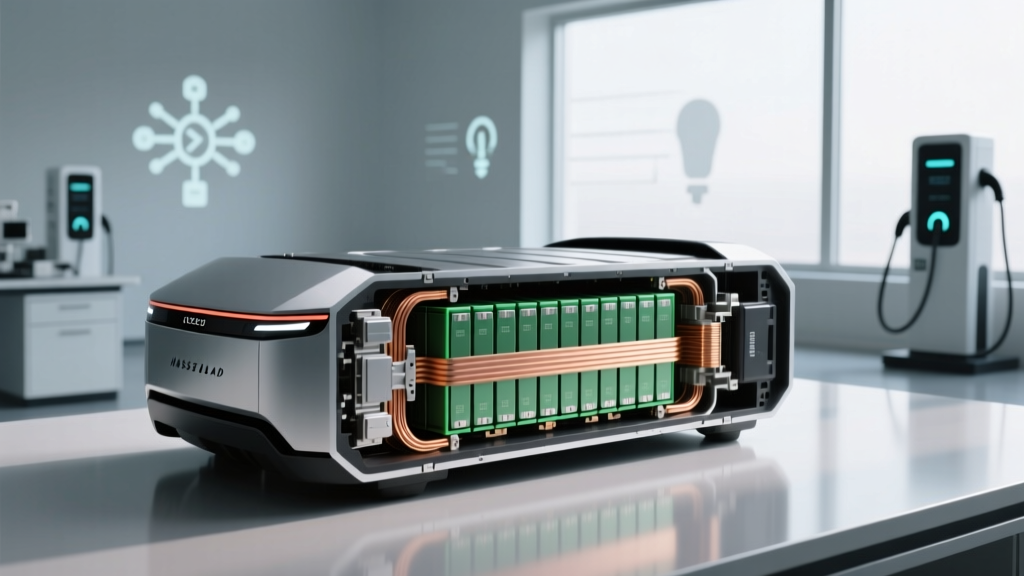
As of the 2026 model year, the global EV battery supply chain is dominated by a few key players: CATL (China), LG Energy Solution (South Korea), Panasonic (Japan), SK On (South Korea), Samsung SDI (South Korea), and BYD (China, which also builds its own vehicles). In North America, joint ventures like Ultium Cells (GM–LG), BlueOval SK (Ford–SK On), and Panasonic's Tesla supply partnership in Nevada and Kansas produce cells domestically.
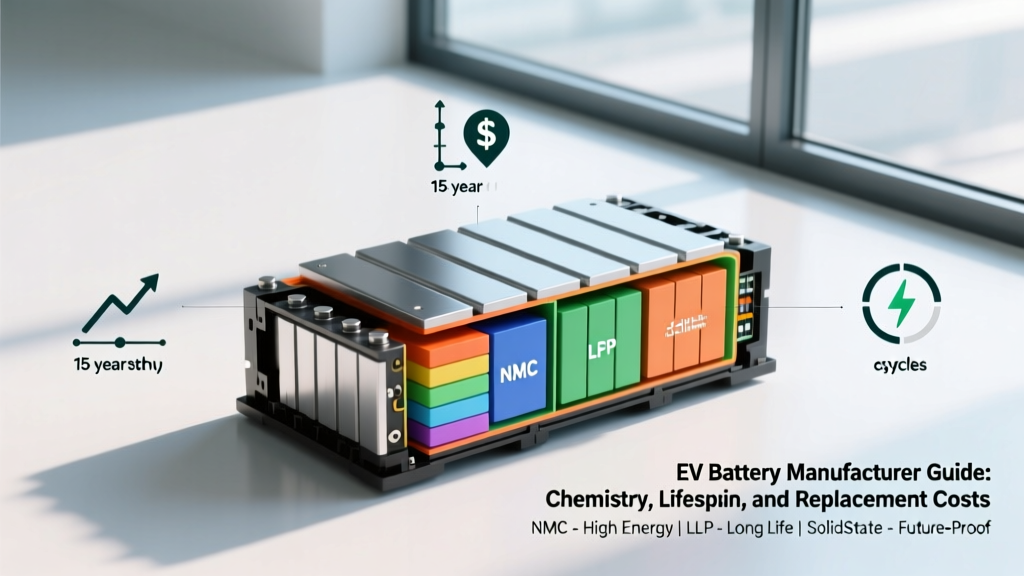
But the manufacturer name matters less to most buyers than what's inside the cell: the chemistry. Whether your pack uses lithium iron phosphate (LFP) or nickel manganese cobalt (NMC) — or the related NCA variant — determines energy density, cycle life, cold-weather behavior, and cost. Let's break down what each major battery manufacturer supplies, and what it means for your ownership experience.
LFP vs NMC vs NCA: The Chemistry Trade-Off Matrix
Every major battery manufacturer produces cells in at least one of two dominant lithium-ion chemistries. Here's how they compare across the metrics that matter to owners:
| Attribute | LFP (Lithium Iron Phosphate) | NMC / NCA (Nickel-based) |
|---|---|---|
| Energy Density | Lower (~160–180 Wh/kg cell-level) | Higher (~220–300 Wh/kg cell-level) |
| Typical EPA Range Impact | Slightly less range for same pack weight | More range per kg — favored for long-range trims |
| Cycle Life | 3,000–5,000+ full cycles before 80% SoH | 1,000–2,000 full cycles before 80% SoH |
| Cold-Weather Performance | Greater range loss below 32°F; slower cold charging | Better low-temp conductivity and preconditioning response |
| Cost per kWh | Lower — no cobalt or nickel | Higher — tied to nickel/cobalt commodity prices |
| State of Charge Tolerance | Can be charged to 100% daily without accelerated degradation | Best kept at 80% daily; 100% only for trips |
| Key Battery Manufacturers | CATL, BYD (Blade Battery) | LG Energy Solution, Panasonic, SK On, Samsung SDI |
| Example 2026 Vehicles | Tesla Model 3 RWD, Ford Mustang Mach-E Select (LFP option), base Chevy Equinox EV | Tesla Model Y LR, Hyundai Ioniq 5, BMW i4, Rivian R1T |
The bottom line: LFP wins on longevity, cost, and daily charging simplicity. NMC/NCA wins on range-per-pound and cold-weather usability. Neither is universally "better" — the right choice depends on your climate, commute, and how long you plan to keep the vehicle.
How Long Do EV Batteries Actually Last?
The most persistent myth in EV ownership is that batteries need frequent replacement. The data tells a different story. Most modern EV battery packs from major manufacturers are engineered to outlast the vehicle's economic life.
Real-World Degradation Data Points:
- Tesla fleet data (2025 Impact Report): Model 3/Y packs retain approximately 85% of original capacity at 200,000 miles — roughly 15% loss over the average vehicle lifetime.
- Geotab fleet study (aggregated across 10,000+ EVs): Average annual degradation is approximately 1.8% per year under normal use, meaning a typical pack holds ~82% capacity after 10 years.
- Recurrent Auto data (2025): Chevrolet Bolt EV owners showed ~8% range loss at 100,000 miles; Hyundai Kona Electric owners showed ~6% at 80,000 miles.
- Taxi/ride-share high-mileage data: Tesla Model 3 units used in ride-share service (100,000+ miles in 2–3 years with frequent DC fast charging) showed 10–14% degradation — higher than average, but still well above the 70% warranty threshold.
Translation: under normal ownership (home Level 2 charging, moderate fast-charging, mixed SoC habits), expect roughly 80–88% of original range at the 10-year / 150,000-mile mark. That's a noticeable reduction on a 250-mile EPA vehicle (now ~200–220 miles real-world), but it's not a cliff — and it's well within the warranty coverage window.
What Does the EV Battery Warranty Actually Cover?
Federal law mandates a minimum 8-year / 100,000-mile warranty on EV battery packs for emissions-related compliance, but most manufacturers exceed this baseline. Here's how the major brands stack up for 2026 models:
| Manufacturer | Battery Warranty | Capacity Retention Threshold | Notes |
|---|---|---|---|
| Tesla | 8 yr / 120,000 mi (Model 3/Y LR); 8 yr / 100,000 mi (RWD) | 70% minimum | LFP RWD models at 100k; NMC LR/AWD at 120k |
| Hyundai / Kia | 10 yr / 100,000 mi | 70% minimum | Among the longest coverage in the industry |
| General Motors (Ultium) | 8 yr / 100,000 mi | 70% minimum | Covers Bolt EV/EUV, Equinox EV, Blazer EV, Silverado EV |
| Ford | 8 yr / 100,000 mi | 70% minimum | Mach-E, F-150 Lightning |
| BMW | 8 yr / 100,000 mi | 70% minimum | i4, iX, i7 |
| Rivian | 8 yr / 175,000 mi | 70% minimum | Higher mileage cap reflects adventure-use positioning |
| Volkswagen | 8 yr / 100,000 mi | 70% minimum | ID.4 |
What's covered: Defects in materials/workmanship AND capacity loss below the stated threshold (typically 70% of original usable kWh). If your 82 kWh pack drops below ~57 kWh usable within the warranty window, the manufacturer must repair or replace it — at no cost to you.
What's NOT covered: Damage from accidents, flooding, or unauthorized modifications. Gradual degradation above the threshold is considered normal wear. Always check your specific model-year warranty booklet, as terms can shift between model years.
EV Battery Replacement Cost: What You'd Actually Pay
If your battery degrades beyond the warranty threshold — or if you're buying a used EV with an expired warranty — replacement is the nuclear option. Here's the current cost landscape:
| Vehicle / Pack Size | Battery Chemistry | Battery Manufacturer | Estimated Replacement Cost (Parts + Labor) |
|---|---|---|---|
| Tesla Model 3 RWD (~60 kWh LFP) | LFP | CATL | $8,000–$12,000 |
| Tesla Model Y LR (~82 kWh NMC) | NMC | Panasonic | $12,000–$16,000 |
| Hyundai Ioniq 5 (~77 kWh NMC) | NMC | SK On | $10,000–$15,000 |
| Ford Mustang Mach-E ER (~91 kWh NMC) | NMC | SK On / LG | $13,000–$18,000 |
| Chevrolet Silverado EV (~200 kWh NMC) | NMC | Ultium Cells (LG) | $18,000–$22,000+ |
| Nissan Leaf (40–62 kWh NMC) | NMC | AESC / Envision | $6,500–$9,000 |
When is replacement actually needed? Rarely before 200,000+ miles under normal use. The most common real-world replacement triggers are:
- Physical damage from road debris or collision (covered by insurance, not battery warranty)
- Manufacturing defect caught within warranty (replaced free)
- Extreme high-mileage use — ride-share, delivery fleets — at 250,000+ miles
For the vast majority of private owners who charge at home and don't abuse DC fast charging, the battery pack will outlast the car's body, suspension, and interior. According to Recurrent Auto's longevity research, fewer than 1.5% of EVs in their dataset of 15,000+ vehicles have required a battery replacement.
What Kills an EV Battery Early — and How to Prevent It
Not all miles are equal when it comes to battery wear. Here are the factors that accelerate degradation, ranked by impact based on fleet data:
Battery Care Checklist for Maximum Longevity:
- Avoid sustained 100% SoC (NMC/NCA only): Store your daily charge limit at 80%. LFP owners can charge to 100% daily — in fact, CATL and BYD recommend periodic 100% charges for accurate BMS calibration.
- Minimize DC fast charging frequency: Occasional road-trip fast charging is fine. Daily DCFC use (especially at 150+ kW without adequate preconditioning) accelerates degradation by ~1–2% additional per year vs. Level 2 home charging.
- Use preconditioning before fast charging: Most 2026 EVs automatically precondition the pack when you navigate to a charger. This brings cells to the optimal ~95–104°F range, reducing lithium plating risk.
- Avoid prolonged storage at extreme SoC: Don't leave an NMC vehicle at 100% or below 10% for weeks. For long storage, aim for ~50% SoC.
- Extreme heat is worse than extreme cold: Sustained ambient temperatures above 100°F (common in Arizona, Texas summers) accelerate calendar aging. Park in shade or a garage when possible. Active thermal management systems in modern EVs mitigate this significantly.
- Cold weather reduces range, not longevity: A 20°F winter day may cut your range 20–30% due to increased internal resistance and cabin heating demand, but this is temporary — capacity returns when temperatures normalize.
How to Check Your Battery's State of Health
State of Health (SoH) is the percentage of original usable capacity your pack currently holds. Monitoring it helps you track degradation and plan for warranty claims if needed.
In-vehicle methods:
- Tesla: The Service menu (hold the model badge on the About screen) shows estimated range at 100% — compare this to the original EPA figure to approximate SoH. Third-party apps like Tessie or TeslaFi log detailed SoH data over time.
- Hyundai/Kia: The EV-specific menu in the infotainment system shows battery health percentage on most 2024+ models.
- General Motors: The myChevrolet/myCadillac app provides a battery health estimate tied to OnStar diagnostics.
- OBD-II scanners: Devices like the OBDLink MX+ paired with apps such as ABRP or Car Scanner can read the BMS-reported SoH on most EVs — this is the most accurate consumer-accessible method.
Rule of thumb: If your vehicle originally rated at 310 miles EPA and now shows ~270 miles at 100% charge after 60,000 miles, that's roughly 87% SoH — perfectly normal. Flag it for warranty attention only if it drops below 70% within the warranty period.
Which Battery Manufacturer Supplies Your EV?
Here's a practical lookup for the most common 2026 EVs sold in North America:
| Vehicle | Battery Manufacturer | Chemistry | Usable kWh |
|---|---|---|---|
| Tesla Model 3 RWD | CATL | LFP | ~60 kWh |
| Tesla Model 3/Y Long Range | Panasonic | NMC/NCA | ~82 kWh |
| Hyundai Ioniq 5 | SK On | NMC | ~77.4 kWh |
| Kia EV6 | SK On | NMC | ~77.4 kWh |
| Ford Mustang Mach-E Select | CATL / SK On | LFP (base) / NMC (ER) | ~70 / 91 kWh |
| Ford F-150 Lightning | SK On (BlueOval SK) | NMC | ~98 / 131 kWh |
| Chevrolet Equinox EV | Ultium Cells (LG) | NMC | ~85 kWh |
| BMW i4 eDrive40 | Samsung SDI / CATL | NMC | ~83.9 kWh |
| Rivian R1T / R1S | Samsung SDI | NMC | ~106 / 141 kWh |
| Volkswagen ID.4 | SK On / LG | NMC | ~82 kWh |
Note that some automakers dual-source cells depending on production batch and trim. A Tesla Model 3 RWD built in Fremont may use CATL LFP cells, while the same model year built at Giga Shanghai could use BYD Blade LFP cells. The chemistry class (LFP vs NMC) is consistent within a trim, even if the specific manufacturer varies.
What's Next: Solid-State and Silicon Anode Batteries
The next major leap in battery technology is solid-state batteries, which replace the liquid electrolyte with a solid ceramic or polymer layer. The promised benefits are significant: 30–50% higher energy density, faster charging (potentially 10–80% in under 10 minutes), and improved safety (no flammable electrolyte).
Realistic timeline: Toyota has announced solid-state EV production beginning in limited volumes around 2027–2028, with broader availability not expected before 2030. Samsung SDI and QuantumScape (backed by Volkswagen) are also targeting late-2020s production. Cost remains the primary barrier — current solid-state prototypes are estimated at 2–4x the cost per kWh of conventional lithium-ion.
Silicon anode batteries are closer to market. By replacing graphite anodes with silicon-dominant materials, these cells gain 10–20% more energy density without a full chemistry overhaul. Sila Nanotechnologies (partnered with Mercedes-Benz/Panasonic) and Group14 (partnered with Porsche) are targeting 2026–2027 production vehicles. This is an incremental but meaningful improvement, not a revolution.
For buyers shopping today: don't wait for solid-state. Current NMC and LFP packs from established manufacturers already deliver 200,000+ mile lifespans with manageable degradation. The next-generation tech will debut in premium vehicles at premium prices — and trickle down over years.
Frequently Asked Questions
How long do EV batteries last in years and miles?
Based on fleet data from Geotab, Tesla, and Recurrent Auto, modern EV battery packs retain 80–88% of original capacity at 10 years or 150,000 miles under normal use. Many packs reach 200,000+ miles before dropping to the 70% warranty threshold. The battery is typically the longest-lasting major component in an EV.
How much does it cost to replace an EV battery?
Replacement costs range from roughly $6,500 for a small pack (Nissan Leaf 40 kWh) to $22,000+ for a very large pack (Chevrolet Silverado EV 200 kWh). Most mainstream EVs (60–90 kWh packs) fall in the $8,000–$16,000 range including labor. However, fewer than 2% of EVs ever require an out-of-warranty battery replacement based on current fleet data.
What does the EV battery warranty cover?
Standard warranties cover defects and capacity loss below a threshold (usually 70% of original usable kWh) for 8 years / 100,000 miles minimum. Hyundai and Kia extend to 10 years. Rivian covers up to 175,000 miles. If your battery drops below the threshold within the warranty period, the manufacturer replaces or repairs it at no charge. Physical damage and unauthorized modifications are excluded.
How do I check and maximize my EV battery health?
Check SoH through your vehicle's built-in battery health display, a third-party app (TeslaFi, Tessie), or an OBD-II scanner with BMS access. To maximize longevity: set daily charge limits to 80% for NMC/NCA (100% is fine for LFP), minimize daily DC fast charging, use preconditioning before fast charges, avoid prolonged storage at extreme SoC levels, and park in shade during extreme heat.
LFP vs NMC — which battery chemistry is better?
LFP offers superior cycle life (3,000–5,000 cycles vs 1,000–2,000), lower cost, and the ability to charge to 100% daily. NMC/NCA delivers higher energy density (more range per pound) and better cold-weather performance. Choose LFP if you prioritize longevity, commute daily, and live in a mild climate. Choose NMC if you need maximum range, frequently drive in cold weather, or tow heavy loads. For 2026, both chemistries from reputable battery manufacturers are proven and reliable.