The Heart of Your EV: Understanding What Powers It
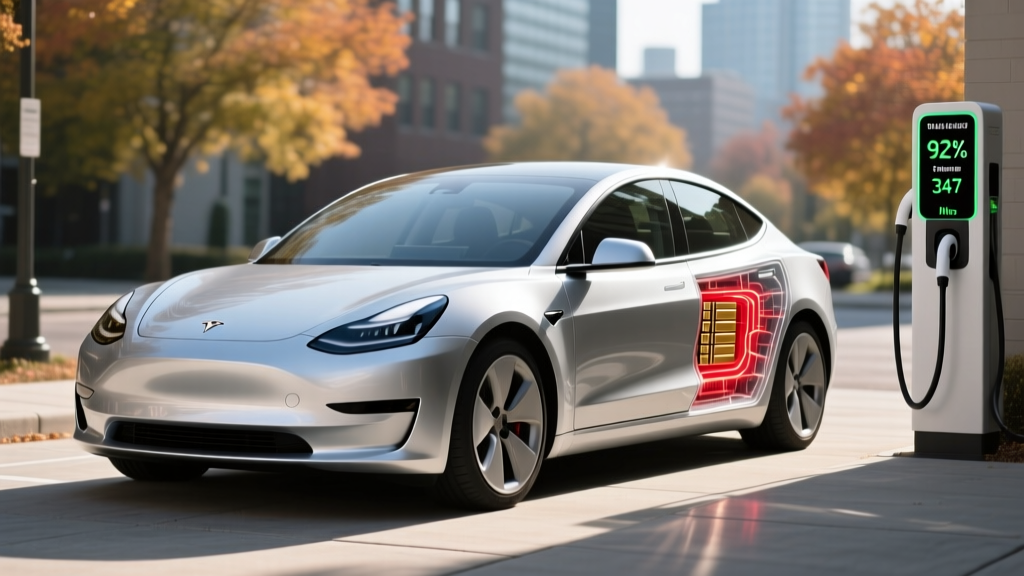
Every electric vehicle lives and dies by one component: the high-voltage traction battery pack. It's the single most expensive part of the car, the heaviest, and the one buyers worry about most. If you've ever searched where the battery sits in an EV, the answer is almost always the same — a flat, skateboard-style pack mounted low in the chassis between the axles, lowering the center of gravity and freeing up cabin space. But knowing where it is matters far less than understanding what it is, how long it lasts, and what happens when it degrades.
This guide breaks down battery chemistry, real degradation data from vehicles now hitting 100,000+ miles, warranty fine print, replacement economics, and the daily habits that add or subtract years of usable life. Whether you're shopping for a 2026 model or optimizing a car you already own, the numbers below will anchor your decisions in data, not marketing.
Chemistry 101: LFP vs NMC — What's Inside Your Pack
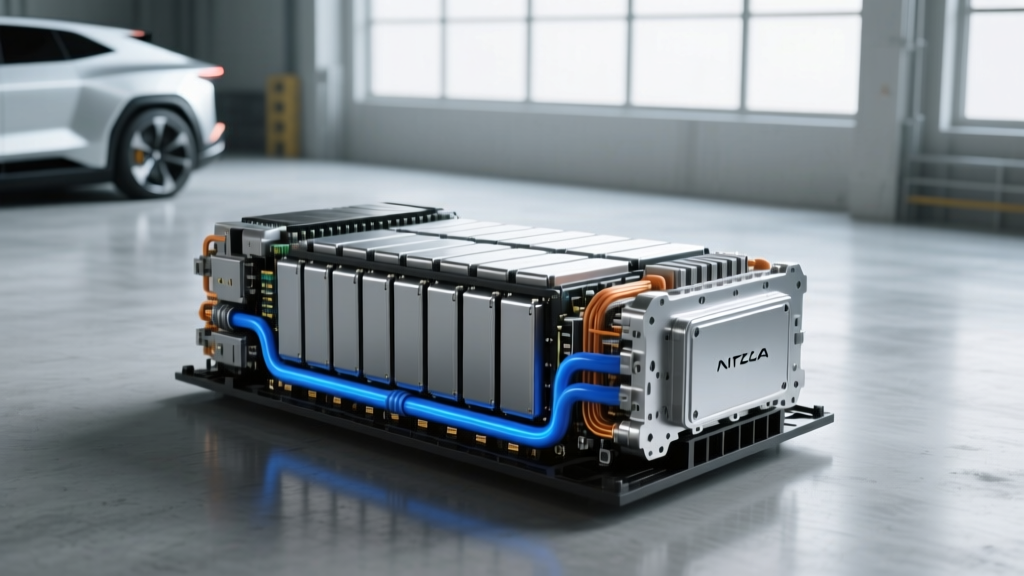
Not all EV batteries are built the same. The two dominant lithium-ion chemistries in 2026 passenger EVs are LFP (lithium iron phosphate) and NMC (nickel manganese cobalt), with NCA (nickel cobalt aluminum) appearing in some Tesla and legacy applications. The chemistry determines energy density, cycle life, cold-weather behavior, and ultimately cost.
| Attribute | LFP (LiFePO₄) | NMC / NCA |
|---|---|---|
| Energy Density (cell-level) | ~160–180 Wh/kg | ~220–300 Wh/kg |
| Typical Cycle Life | 3,000–5,000+ cycles | 1,000–2,500 cycles |
| Cold-Weather Performance | Weaker; ~20–35% range loss at 20°F | Better; ~15–25% range loss at 20°F |
| Thermal Stability / Safety | Excellent; higher runaway threshold | Good; requires more active thermal mgmt |
| Cost per kWh (pack-level) | ~$90–$110 | ~$120–$150 |
| Optimal Daily Charge Limit | 100% OK (recommended weekly) | 80% daily; 100% for trips only |
| Common In 2026 Models | Tesla Model 3/Y RWD, BYD Seal, base Ford Mustang Mach-E Select | Hyundai Ioniq 5/6, Kia EV6/EV9, Chevy Equinox EV, Tesla LR/Perf |
The practical takeaway: LFP wins on longevity and cost, making it ideal for daily commuters and high-mileage drivers who can charge to 100% regularly. NMC wins on energy density and cold-weather range, suiting long-range trims and northern-climate buyers. Neither is universally "better" — the right choice depends on your driving pattern and climate.
How Long Do EV Batteries Actually Last?
Federal law mandates that EV battery warranties cover at least 8 years / 100,000 miles (10 years / 150,000 miles in California Air Resources Board states). But real-world data consistently shows that modern packs outlast those minimums — often by a wide margin.
Typical Degradation Curve — 2020–2026 Model-Year EVs
Based on aggregated fleet data from Recurrent Auto, Geotab fleet studies, and owner-reported measurements:
- Year 1–2 (0–30K mi): ~2–5% capacity loss (initial "break-in" drop, mostly SEI layer formation)
- Year 3–5 (30K–75K mi): ~1–2% loss per year (linear, gradual phase)
- Year 6–10 (75K–150K mi): ~1–1.5% loss per year; most packs retain 80–88% SoH
- 150K–200K+ mi: Highly variable by chemistry and use; LFP packs often still above 80% SoH
A 2023 Geotab study of 10,000+ EVs found an average annual degradation of 1.8%, meaning a typical pack retains roughly 82% of original capacity after 10 years. That's well above the 70% warranty threshold most manufacturers guarantee.
The critical nuance: degradation isn't always linear. Many packs experience a steeper initial drop (2–4% in the first year), then settle into a slow, predictable decline. A small number exhibit a "knee point" after 120K–150K miles where loss accelerates — this is more common in early-generation NMC packs subjected to frequent DC fast charging and high SoC storage.
What the Battery Warranty Actually Covers
Every manufacturer's battery warranty has three key numbers: duration (years), mileage cap, and minimum capacity retention threshold. If your pack falls below the threshold within the warranty period, the manufacturer must repair or replace it — typically at no cost to you.
| Manufacturer / Model | Warranty Period | Min. Capacity Retention | Chemistry |
|---|---|---|---|
| Tesla Model 3/Y RWD | 8 yr / 100,000 mi | 70% | LFP |
| Tesla Model 3/Y Long Range | 8 yr / 120,000 mi | 70% | NMC/NCA |
| Hyundai Ioniq 5 / Kia EV6 | 10 yr / 100,000 mi | 70% | NMC |
| Chevrolet Equinox EV / Blazer EV | 8 yr / 100,000 mi | 60% (some trims 70%) | NMC (Ultium) |
| Ford Mustang Mach-E | 8 yr / 100,000 mi | 70% | NMC / LFP (Select) |
| BMW i4 / iX | 8 yr / 100,000 mi | 70% | NMC |
| Rivian R1T / R1S | 8 yr / 175,000 mi | 70% | NMC (Samsung SDI) |
Source: Manufacturer spec sheets and warranty guides. CARB-state vehicles may carry extended 10 yr / 150,000 mi powertrain coverage. Always confirm with your dealer.
What's covered: Capacity loss below the stated threshold, cell/module defects, BMS (battery management system) failures, and thermal management system defects that cause battery damage.
What's typically excluded: Damage from accidents, flooding, unauthorized modifications, or using non-OEM charging equipment that causes electrical faults. Cosmetic issues and minor range loss above the threshold are not warrantable.
EV Battery Replacement Cost: What to Budget For
The question every cautious buyer asks: how much does an EV battery cost to replace? The honest answer depends heavily on the vehicle, pack size, and whether you need a full pack or a module-level repair.
| Vehicle | Pack Size (usable kWh) | Full Pack Replacement | Module Repair (if avail.) |
|---|---|---|---|
| Tesla Model 3 RWD | ~57 kWh (LFP) | $7,000–$10,000 | $2,500–$4,500 |
| Tesla Model Y Long Range | ~75 kWh (NMC) | $10,000–$14,000 | $3,000–$5,500 |
| Hyundai Ioniq 5 | ~77.4 kWh (NMC) | $12,000–$16,000 | $3,500–$6,000 |
| Chevrolet Bolt EV/EUV (2023) | ~65 kWh (NMC) | $9,000–$14,000 | N/A (full pack typical) |
| Ford F-150 Lightning Ext. Range | ~131 kWh (NMC) | $18,000–$25,000+ | $5,000–$8,000 |
| Rivian R1T (Max Pack) | ~141 kWh (NMC) | $20,000–$28,000+ | $6,000–$10,000 |
| BMW iX xDrive50 | ~105.2 kWh (NMC) | $18,000–$24,000 | $5,000–$8,000 |
Costs include parts and labor at OEM or authorized service centers (2026 estimates). Independent EV shops may offer 15–30% savings. Prices decline as pack-level $/kWh falls and refurbished packs become more available.
When is replacement actually needed? Far less often than critics suggest. The vast majority of EV batteries never require full replacement during the car's useful life. Most out-of-warranty replacements occur after 150,000+ miles, and many packs from 2018–2020 model years are still in daily service with 75–85% SoH. Module-level repairs — replacing a few defective cell groups rather than the entire pack — are increasingly available and cost a fraction of a full swap.
Five Factors That Accelerate (or Preserve) Battery Life
Battery degradation isn't random. It's driven by chemistry, temperature, and how you charge. Here are the five most impactful factors, ranked by effect size:
Battery Longevity — Do's and Don'ts
- ✅ Charge to 80% daily (NMC/NCA): Sustained 100% SoC stresses NMC cathodes. Set your charge limit to 80% for daily driving and only charge to 100% when you need full range for a trip. LFP owners: charge to 100% at least once weekly for BMS cell-balancing calibration.
- ✅ Minimize DC fast charging when possible: Occasional DCFC (1–2x/week) is fine. Daily 150–350 kW sessions accelerate degradation by ~0.5–1% annually vs. Level 2 charging. Use home Level 2 as your primary charging method.
- ✅ Avoid extreme SoC storage: Don't leave your EV sitting at 100% or below 10% for days. If storing for a week+, set SoC to 40–60%.
- ✅ Use preconditioning: In cold weather, precondition the battery (via your car's app or scheduled departure) before driving and before DC fast charging. A cold battery charges slower and suffers more lithium plating stress. Most 2026 EVs with heat pumps handle this automatically when you navigate to a charger.
- ✅ Park in shade or a garage when possible: Sustained pack temperatures above 95°F accelerate calendar aging. A garage or shaded spot reduces thermal stress significantly in hot climates.
- ❌ Don't obsess over 1–2% SoH changes: BMS estimates fluctuate. Track SoH over months, not days. A single reading can vary ±2% based on temperature and recent charge patterns.
- ❌ Don't skip software updates: OEMs regularly refine BMS algorithms, thermal management, and charge curves via OTA updates. These often improve longevity.
Monitoring Battery Health: How to Check Your SoH
State of Health (SoH) is the percentage of your battery's original usable capacity that remains. A new pack is 100% SoH; at 70% SoH, your 300-mile EPA-range EV effectively has ~210 miles of range. Here's how to check it:
Methods Available to Owners
- In-car BMS readout: Some vehicles (Tesla via service mode, Hyundai/Kia via hidden diagnostic menus, BMW iDrive) display SoH or usable kWh directly. Access varies by model year and firmware version.
- OBD-II + third-party app: Devices like the OBDLink SX paired with apps such as EV Health, Car Scanner, or A Better Routeplanner can read BMS-reported SoH, cell voltage spread, and pack temperature. This is the most reliable DIY method for most 2020+ EVs.
- Dealer diagnostic report: Any authorized service center can pull a full battery health report, including individual module voltages and internal resistance. Request this during routine service or before a warranty claim.
- Charge-tracking analysis: Apps like Recurrent or TeslaFi (Tesla-specific) track your actual energy delivered vs. range over time, computing a degradation trend without direct BMS access. Less precise but useful for long-term monitoring.
What to watch for: A cell voltage spread (delta) greater than 0.15V at rest may indicate a weak module — worth investigating before it triggers a warranty issue. Consistent SoH drops of more than 3% per year after the initial break-in phase warrant a dealer diagnostic.
Looking Ahead: Solid-State, Silicon Anodes, and What's Realistic
The battery landscape is evolving, but hype outpaces reality. Here's where next-generation tech actually stands as of 2026:
Solid-state batteries — replacing the liquid electrolyte with a solid conductor — promise higher energy density (~400–500 Wh/kg at cell level), faster charging, and improved safety. Toyota has announced limited production in select 2027–2028 models, and Samsung SDI is targeting 2027 mass production. However, no mass-market 2026 EV uses solid-state cells. Expect early adoption in premium, low-volume applications before reaching mainstream pricing around 2029–2031.
Silicon-dominant anodes (used by startups like Sila Nanotechnologies and Group14) increase energy density by 20–40% vs. graphite anodes. These are beginning to appear in limited 2025–2026 production vehicles (notably some Mercedes-Benz and GM applications) and represent the most near-term meaningful improvement in pack-level energy density.
Sodium-ion batteries — cheaper, cobalt-free, but lower energy density (~120–160 Wh/kg) — are entering the Chinese market via BYD and CATL. US availability in passenger EVs remains unlikely before 2028, and they'll target budget city-car segments rather than long-range applications.
Bottom line: If you're buying in 2026, today's LFP and NMC chemistries are mature, well-understood, and backed by extensive real-world data. Waiting for solid-state means waiting 3–5 years for limited availability at premium pricing.
Frequently Asked Questions
How long do EV batteries last in years and miles?
Most modern EV batteries (2020+ model years) retain 80–88% of original capacity after 10 years or 150,000 miles. LFP chemistry packs often exceed this. Full failure requiring replacement is rare before 150K–200K miles. The car's body, suspension, and interior are more likely to reach end-of-life before the battery does.
How much does an EV battery cost to replace?
Full pack replacement ranges from roughly $7,000 for a Tesla Model 3 RWD (LFP, ~57 kWh) to $25,000+ for a Ford F-150 Lightning Extended Range (~131 kWh). Module-level repairs, when available, cost $2,500–$10,000. Prices are declining ~8–12% annually as pack costs fall and refurbished units become more common.
What does the EV battery warranty cover?
Federal minimum is 8 years / 100,000 miles with a capacity retention threshold (typically 70%). CARB states extend to 10 years / 150,000 miles. Coverage includes capacity loss below threshold, cell defects, BMS failures, and thermal management defects. It does not cover accident damage, flood damage, or degradation above the threshold.
How do I check my EV's battery health?
Use an OBD-II adapter with an EV-compatible app (Car Scanner, EV Health) to read BMS-reported SoH. Tesla owners can access diagnostics via service mode. Dealers can pull full module-level reports. Track trends over months rather than reacting to single readings.
LFP vs NMC — which battery chemistry is better?
Neither is universally better. LFP wins on cycle life (3,000–5,000+ cycles), cost, and safety — ideal for daily commuters and warm-climate drivers. NMC wins on energy density and cold-weather performance — better for long-range trims and northern climates. Choose based on your driving pattern, not chemistry alone.
Does frequent DC fast charging damage the battery?
Exclusive reliance on DC fast charging (daily 150–350 kW sessions) can add ~0.5–1% annual degradation vs. primarily Level 2 charging. Occasional DCFC (1–3 times per week) has a negligible effect on modern packs with active thermal management. For road trips, fast charge freely — the convenience outweighs the marginal wear.
Will my EV battery need to be replaced before I sell the car?
Statistically, no. The average American keeps a car ~8.4 years. Most 2020+ EV packs retain 80%+ capacity at that age. Battery replacement is primarily a concern for very high-mileage drivers (30K+ miles/year), rideshare operators, or second/third owners of early-generation EVs (pre-2018).
Sources: U.S. Department of Energy / fueleconomy.gov, Geotab EV Battery Degradation Study, Recurrent Auto Battery Research, manufacturer warranty documentation.