If you've ever searched "how long to drive a car to recharge battery," you're probably dealing with one of two very different problems. In a conventional gas car, that question refers to the 12-volt starter battery — and the answer is roughly 20–30 minutes of highway driving to let the alternator restore a depleted 12V unit. But in an electric vehicle, there's a critical distinction that trips up many new owners: the 12V auxiliary battery and the high-voltage traction battery are completely separate systems, and neither recharges the way a gas-car driver might expect.
This guide untangles that confusion and then dives deep into what actually matters for EV owners: how long your high-voltage battery will last, what degrades it, what the warranty covers, what a replacement costs, and the daily habits that maximize its lifespan. We'll also break down the LFP versus NMC chemistry question that defines the modern EV market in 2026.
The 12V vs. Traction Battery Confusion — What "Recharge" Really Means in an EV
In a gasoline car, the alternator continuously tops up the 12V battery while the engine runs. Drive for 20–30 minutes at highway speed after a jump-start, and the alternator typically restores enough charge for reliable starting. That's the origin of the "how long to drive to recharge" advice.
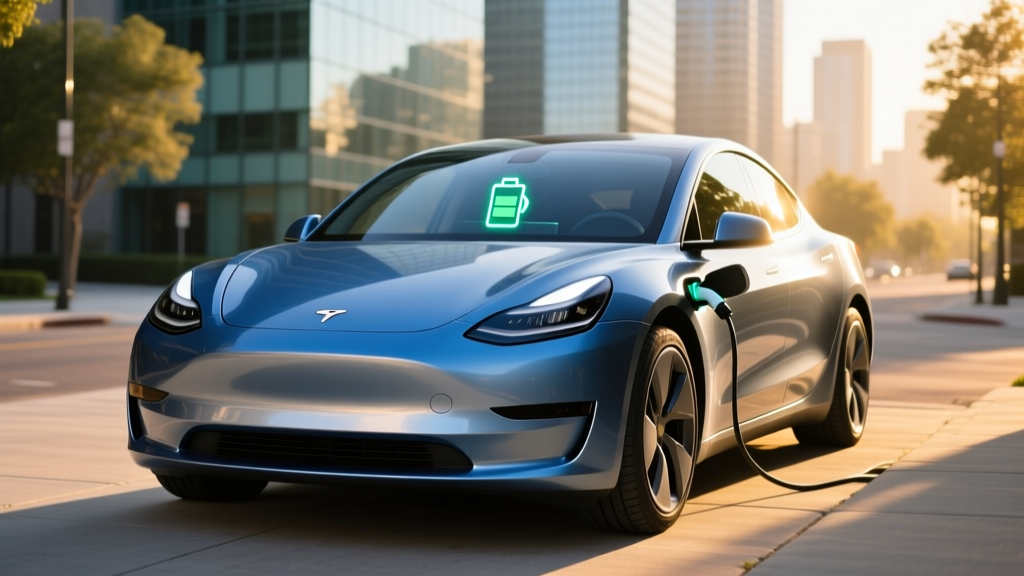
In an EV, the high-voltage traction battery (the large pack that powers the motor, typically 50–120 kWh of usable capacity) is not recharged by driving. It's recharged by plugging in — either to a Level 1 (120V) outlet, a Level 2 (240V) home or public charger, or a DC fast charger. Driving consumes energy from the traction battery; regenerative braking recaptures a portion of it (typically 15–30% in mixed driving, depending on terrain and driving style), but the net result is always a declining state of charge until you plug in.
The 12V auxiliary battery in an EV powers the lights, infotainment, computers, and door locks. It's kept charged by a DC-DC converter that steps down voltage from the traction pack whenever the car is "on" or in a ready-to-drive state. If the 12V battery dies — a surprisingly common issue if the car sits unplugged for weeks — you may not be able to unlock the doors or start the vehicle, even if the traction battery is fully charged. The fix is the same as in a gas car: a jump-start or a 12V battery replacement, not more driving.
How Long Do EV Batteries Last? Real-World Degradation Data
The short answer: most modern EV traction batteries are designed to outlast the vehicle's practical ownership life. But "last" doesn't mean zero degradation — it means retaining enough capacity to remain useful. Here's what the data shows.
Typical degradation trajectory: Most lithium-ion EV batteries lose roughly 5–10% of their original capacity in the first 2 years or 30,000 miles, then degradation slows significantly to roughly 1–2% per year thereafter. According to data aggregated by Recurrent Auto from over 15,000 vehicles in their fleet, the average EV retains approximately 90–95% of its original range at 50,000 miles and 85–92% at 100,000 miles, depending on chemistry, climate, and charging habits.
Real-world data points by chemistry:
- Tesla Model 3/Y (NMC/NCA, 2018–2023): Fleet data shows ~12% average degradation at 100,000 miles, with significant variance based on Supercharger frequency and climate.
- Tesla Model 3 Standard Range (LFP, 2021+): Early LFP packs show approximately 5–7% degradation at 60,000 miles, with a notably flatter degradation curve.
- Chevrolet Bolt EV/EUV (NMC, 2017–2023): Post-recall replacement batteries show minimal degradation (~2–4% at 40,000 miles), though pre-recall data was complicated by the fire-risk recall.
- Hyundai Ioniq 5 / Kia EV6 (NMC, 2022+): Early data at 30,000–50,000 miles shows 4–7% degradation, consistent with Hyundai's robust thermal management.
When is replacement actually needed? A battery is generally considered "failed" or in need of replacement when it drops below 70% of original capacity — the threshold most manufacturers use for warranty coverage. Based on current degradation curves, reaching 70% capacity typically requires 200,000+ miles for NMC packs and potentially 300,000+ miles for LFP packs under normal use. Most EV batteries will never need replacement during a typical ownership period of 8–12 years.
LFP vs. NMC/NCA Battery Chemistry — Which Is Better for You?
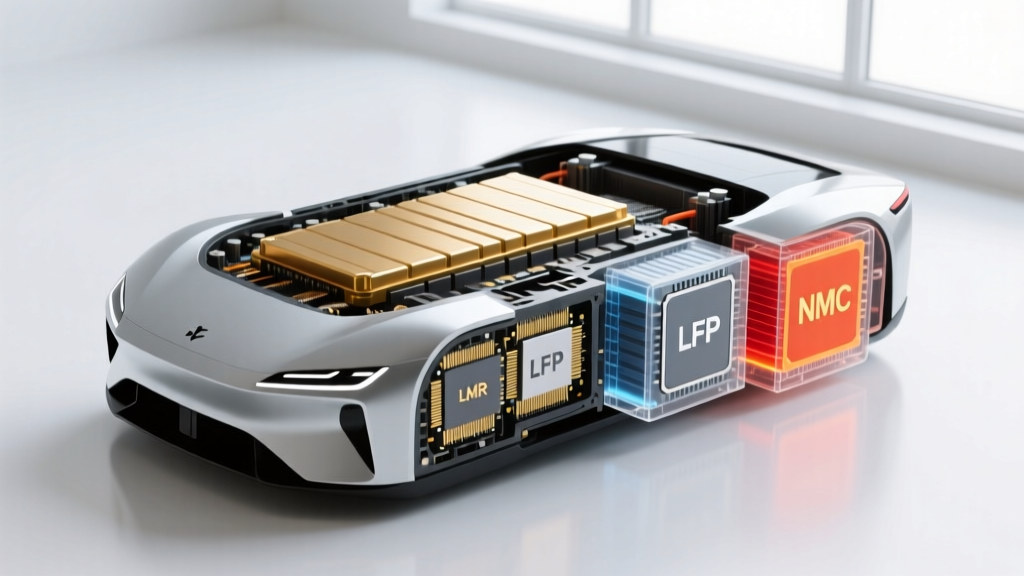
The two dominant lithium-ion chemistries in 2026 EVs are LFP (lithium iron phosphate) and NMC/NCA (nickel manganese cobalt / nickel cobalt aluminum). Each has distinct trade-offs that matter for real buyers.
| Attribute | LFP (Lithium Iron Phosphate) | NMC / NCA (Nickel-based) |
|---|---|---|
| Energy Density | Lower (~160–180 Wh/kg cell-level). Heavier pack for same kWh. | Higher (~220–300 Wh/kg cell-level). Lighter, more compact. |
| Cycle Life | 3,000–5,000+ full cycles. Exceptional longevity. | 1,000–2,000 full cycles. Adequate for vehicle life. |
| Cold-Weather Performance | Weaker. Greater range loss below freezing (~35–40% loss at 20°F). | Better. ~25–30% range loss at 20°F with preconditioning. |
| Recommended SoC for Daily Use | 100% — LFP benefits from regular full charges for cell balancing. | 80% — prolonged storage at 100% accelerates degradation. |
| Cost | Lower. No cobalt or nickel. Typically $100–130/kWh at pack level. | Higher. Commodity-sensitive. Typically $130–160/kWh at pack level. |
| Thermal Stability / Safety | Excellent. Very resistant to thermal runaway. | Good, but requires more active thermal management. |
| Common In (2026) | Tesla Model 3/Y RWD, Ford Mustang Mach-E Select, many Chinese-market EVs | Long-range/AWD variants, Hyundai Ioniq 5, BMW i4, Rivian, most premium EVs |
Which is better? It depends on your use case. If you live in a moderate or warm climate, charge primarily at home, and prioritize longevity and lower cost, LFP is the stronger choice. If you live in a cold climate, need maximum range from a smaller/lighter pack, or regularly take long road trips where energy density matters, NMC/NCA is preferable. Neither chemistry is universally "better" — they're optimized for different priorities.
EV Battery Warranty Terms — What's Actually Covered
Federal law mandates that EV battery warranties cover a minimum of 8 years / 100,000 miles (10 years / 150,000 miles in California and states that follow CARB standards). Here's how the major manufacturers structure their coverage in 2026:
| Manufacturer | Coverage Period | Capacity Retention Threshold | Notes |
|---|---|---|---|
| Tesla | 8 yr / 100,000–120,000 mi (varies by model) | 70% | Model 3/Y RWD: 100k mi; Long Range/Performance: 120k mi |
| Hyundai / Kia | 10 yr / 100,000 mi | 70% | Among the longest coverage in the industry |
| Ford | 8 yr / 100,000 mi | 70% | Covers battery and electric components |
| GM (Chevrolet, Cadillac) | 8 yr / 100,000 mi | 70% (60% on Bolt post-recall replacement) | Ultium platform vehicles included |
| BMW | 8 yr / 80,000 mi | 70% | Slightly lower mileage cap than competitors |
| Rivian | 8 yr / 175,000 mi | 70% | Highest mileage cap; reflects adventure-use positioning |
What triggers a warranty claim? If your battery's usable capacity falls below the stated threshold (typically 70% of original) within the coverage period, the manufacturer will repair or replace the battery — often by swapping in a refurbished pack with equivalent capacity, not necessarily a brand-new unit. Normal gradual degradation above the threshold is not covered. Damage from accidents, flooding, or unauthorized modifications is excluded.
Important caveat: Warranty terms are current as of 2026 model-year vehicles and are subject to change. Always verify with the manufacturer and review the specific warranty booklet for your vehicle. See the U.S. Department of Energy's EV technology page for general guidance on EV battery expectations.
EV Battery Replacement Cost — What It Actually Costs and When You'd Need It
Battery replacement is the single biggest fear among prospective EV buyers — and the most overstated. Here are the actual numbers.
| Vehicle / Pack Size | Battery Capacity | Estimated Replacement Cost (Parts + Labor) | Typical Replacement Timeline |
|---|---|---|---|
| Tesla Model 3 RWD (LFP) | ~60 kWh | $8,000 – $12,000 | Rarely needed; 250,000+ mi expected life |
| Tesla Model Y Long Range (NMC) | ~75 kWh | $12,000 – $16,000 | 200,000+ mi expected life |
| Hyundai Ioniq 5 (NMC) | 77.4 kWh | $11,000 – $15,000 | 200,000+ mi expected life |
| Ford F-150 Lightning (Extended) | ~131 kWh | $18,000 – $25,000 | 200,000+ mi expected life |
| Chevrolet Equinox EV | ~85 kWh | $10,000 – $14,000 | 200,000+ mi expected life |
Context that matters: These costs are comparable to a major engine or transmission replacement on a gasoline vehicle — an event that's also rare within a normal ownership period. Pack-level battery prices have fallen from over $1,000/kWh in 2010 to approximately $110–140/kWh in 2026 (source: BloombergNEF battery price surveys), and the trend is expected to continue as manufacturing scales. Module-level repair — replacing individual degraded modules rather than the entire pack — is increasingly common and can cost $2,000–$5,000 depending on the vehicle.
When is replacement typically needed? In practice, very few EV batteries are replaced due to degradation. The cases that do arise usually involve manufacturing defects (caught under warranty), physical damage from collisions or ground strikes, or extreme high-mileage commercial use (fleet vehicles, rideshare). For a personal-use EV driven 12,000–15,000 miles per year, the battery will almost certainly outlast the rest of the vehicle.
Factors That Accelerate Battery Degradation — and How to Minimize Them
Lithium-ion batteries degrade through a combination of chemical aging and mechanical stress. The following factors have the most measurable impact on long-term capacity retention:
- Limit DC fast charging to road trips. Daily use of 150+ kW DC fast chargers can add 1–3% extra degradation over 100,000 miles compared to Level 2 home charging. Use Level 2 as your daily driver.
- Avoid prolonged storage at extreme SoC. For NMC batteries, don't leave the car at 100% or below 10% for days at a time. Store at ~50% if the car will sit for weeks. LFP batteries are more tolerant and benefit from periodic 100% charges for cell balancing.
- Precondition in cold weather. Most EVs allow you to schedule departure times or precondition the battery while plugged in. This warms the pack before driving and before charging, reducing stress and improving regen effectiveness.
- Use scheduled/limited charging for daily needs. If your daily commute uses 30% of your range, set your charge limit to 80% (NMC) or 100% (LFP) and charge during off-peak hours. There's no benefit to keeping the car plugged in at full charge unnecessarily.
- Park in shade or a garage in extreme heat. Sustained battery temperatures above 100°F (38°C) accelerate calendar aging. A garage or shaded spot meaningfully reduces thermal stress in hot climates.
- Don't obsess over perfection. Modern battery management systems (BMS) are sophisticated. Occasional 100% charges, fast-charging on road trips, and imperfect habits will not destroy your battery. The degradation difference between "perfect" and "normal" care is typically 3–5% over a decade.
Fast-charging frequency: The most debated factor. Research from Idaho National Laboratory and real-world fleet data suggests that exclusive DC fast charging (3+ times per week at 150+ kW) can accelerate degradation by approximately 0.5–1.5% per year compared to exclusive Level 2 charging. This is measurable but not catastrophic — over 8 years, it might mean the difference between 88% and 84% capacity retention. For most owners who fast-charge primarily on road trips and use Level 2 at home, the impact is negligible.
Extreme temperatures: Both heat and cold stress batteries, but in different ways. Heat accelerates chemical degradation permanently. Cold temporarily reduces capacity and power (you'll see less range and slower charging in winter), but preconditioning mitigates most of the cold-weather charging stress. The worst scenario is sustained high-temperature storage at high SoC — for example, leaving an NMC-equipped car at 100% in a Phoenix summer for a week.
State of charge habits: Lithium-ion cells experience the most stress at the extremes — above 90% and below 10% SoC. For NMC batteries, keeping daily SoC between 20–80% is the well-established best practice. LFP batteries have a flatter voltage curve and different chemistry that makes them more resilient at high SoC; Tesla and other manufacturers actually recommend charging LFP vehicles to 100% at least once per week for accurate SoC estimation and cell balancing.
How to Check and Monitor Your EV Battery's State of Health
State of Health (SoH) is the metric that tells you what percentage of your battery's original capacity remains usable. Here's how to monitor it:
Built-in vehicle tools:
- Tesla: The mobile app displays estimated range at 100% charge, which you can compare to the original EPA-rated range to approximate SoH. Third-party apps like Tessie or Stats provide more granular SoH estimates by reading the vehicle's CAN bus data.
- Hyundai/Kia: The infotainment system includes an EV battery diagnostics page showing battery health as a percentage (typically found under EV settings → Battery).
- Ford: The FordPass app provides a battery health indicator, and dealerships can run a full diagnostic.
- GM (Ultium): The myChevrolet/myCadillac app provides battery health status; a full SoH readout is available through OnStar diagnostics.
- BMW: The My BMW app and iDrive system provide battery health status; a certified diagnostic is available at dealerships.
Third-party tools: Devices and apps like OBD-II dongles paired with apps (e.g., ABRP with a compatible OBD adapter, Car Scanner) can read real-time battery data including SoH, cell voltage variance, and pack temperature. For used-EV buyers, a pre-purchase battery health check at a certified dealership or through a service like Recurrent provides an independent SoH assessment.
What to watch for: A sudden or accelerating drop in range (beyond normal seasonal variation), significantly increased cell voltage variance (visible through OBD tools), or a noticeable reduction in charging speed can indicate module-level issues that may be covered under warranty. Gradual, linear range loss of 1–2% per year is normal and not a concern.
Emerging Battery Technology — What's Coming and When
Several next-generation battery technologies are in development, but none are widely available in production vehicles as of 2026. Here's a realistic timeline assessment:
Solid-state batteries: These replace the liquid electrolyte with a solid material, promising higher energy density (potentially 400–500 Wh/kg at cell level), faster charging, and improved safety. Toyota has announced limited production of solid-state-equipped vehicles for 2027–2028, and companies like QuantumScape are working with Volkswagen and other OEMs. However, mass-market availability at competitive pricing is not expected before 2030 at the earliest. Current prototypes face challenges with manufacturing scale, cost, and cycle-life durability.
Silicon-anode batteries: Companies like Sila Nanotechnologies and Group14 are developing silicon-dominant anodes that can increase energy density by 20–40% over current graphite anodes. Limited commercial deployment has begun in consumer electronics, and automotive-grade production is targeted for 2026–2028 in select models. This is the most likely near-term improvement to reach production vehicles.
Sodium-ion batteries: Using abundant sodium instead of lithium, these offer lower cost and good cycle life at the expense of lower energy density. CATL has begun limited production for Chinese-market vehicles, but U.S. availability is not expected before 2028–2029. Best suited for affordable, shorter-range city EVs where energy density is less critical.
LMFP (lithium manganese iron phosphate): An evolution of LFP that adds manganese to increase energy density by roughly 15–20% while retaining LFP's cost and safety advantages. Expected to enter broader production in 2026–2027, primarily from Chinese battery manufacturers. This is the most pragmatic near-term chemistry improvement.
The practical takeaway: current LFP and NMC chemistries are mature, well-understood, and sufficient for the vast majority of EV buyers. Waiting for solid-state or silicon-anode batteries means waiting at minimum 3–5 years for meaningful market availability, with early-adopter pricing premiums. Today's EVs are not a compromise purchase — they represent proven, durable technology.
Frequently Asked Questions
How long do you have to drive to recharge a car battery?
For a conventional 12V car battery in a gasoline vehicle, roughly 20–30 minutes of highway driving allows the alternator to restore a meaningful charge after a jump-start. In an EV, the 12V auxiliary battery is maintained by a DC-DC converter from the traction pack — driving doesn't recharge it in the traditional sense, and the traction battery itself is only recharged by plugging in.
How long do EV batteries last in years and miles?
Most modern EV batteries retain 85–92% of original capacity at 100,000 miles and are designed to remain functional (above 70% capacity) for 200,000–300,000+ miles, depending on chemistry. In years, that translates to 15–20+ years of typical use. LFP batteries generally outlast NMC in cycle life, though NMC offers better cold-weather performance.
How much does it cost to replace an EV battery?
Full pack replacement costs range from approximately $8,000 for a smaller pack (e.g., Tesla Model 3 RWD, ~60 kWh) to $25,000 for a very large pack (e.g., Ford F-150 Lightning Extended Range, ~131 kWh), including parts and labor. Module-level repairs are less expensive ($2,000–$5,000). Most batteries never need replacement during normal ownership.
What does the EV battery warranty actually cover?
Federal law requires a minimum of 8 years / 100,000 miles of battery warranty coverage. Most manufacturers warrant the battery against capacity loss below 70% of original. This covers defective cells, excessive degradation, and BMS failures. It does not cover damage from accidents, flooding, or unauthorized modifications, nor does it cover normal gradual degradation above the 70% threshold.
Is LFP better than NMC?
Neither is universally better. LFP offers longer cycle life (3,000–5,000 cycles vs. 1,000–2,000), lower cost, better thermal safety, and the convenience of regular 100% charging — but it's heavier, has lower energy density, and performs worse in extreme cold. NMC offers higher energy density, lighter weight, and better cold-weather range, making it preferable for long-range and cold-climate use. Choose LFP for moderate climates and daily commuting; choose NMC for maximum range and cold-weather performance.
Does fast charging damage my EV battery?
DC fast charging causes slightly more degradation than Level 2 charging — approximately 0.5–1.5% additional capacity loss per year with frequent use (3+ sessions per week). For owners who fast-charge primarily on road trips and use Level 2 at home, the impact is negligible. Modern battery management systems actively manage charge rates and temperatures during fast charging to minimize stress.
How can I check my EV battery health at home?
Compare your vehicle's estimated range at 100% charge to the original EPA-rated range — a significant discrepancy suggests degradation. For more precise data, use an OBD-II adapter with an app like Car Scanner or ABRP to read SoH percentage and cell voltage data. Many manufacturer apps (Tesla, FordPass, My BMW) also provide battery health indicators. For a certified assessment, a dealership diagnostic provides the most authoritative SoH reading.