If you're researching a 2016 Hyundai Elantra battery, you're likely looking at one of two things: the 12V auxiliary battery that starts a conventional gas Elantra, or — more relevant to this site — the high-voltage traction battery in Hyundai's early electrified models from that era, such as the Sonata Hybrid or the Ioniq Electric (which debuted for the 2017 model year after a late-2016 reveal). That 2016-era lithium-ion polymer pack was a milestone in Hyundai's electrification strategy and a useful baseline for understanding how far EV battery technology has come in a decade.
In 2026, the EV battery landscape looks radically different. Energy densities have climbed, LFP (lithium iron phosphate) chemistry has gone mainstream, warranties have tightened around measurable capacity thresholds, and solid-state cells are finally appearing in limited production vehicles. This guide breaks down everything an EV buyer or owner needs to know about battery longevity, degradation, chemistry trade-offs, replacement economics, and care — grounded in real data, not marketing.
How Long Do EV Batteries Last? The Data Behind the Decade
The short answer: modern EV traction batteries routinely outlast 150,000–200,000 miles before degradation meaningfully affects daily usability. Many will outlive the vehicle they're installed in.
The long answer requires separating calendar aging (degradation that happens over time regardless of use) from cycle aging (degradation from charge/discharge cycles). A 2016-era Hyundai pack — like the 28 kWh lithium-ion polymer battery in the first-generation Ioniq Electric — typically showed 10–15% capacity loss after 8 years and 80,000–100,000 miles in temperate climates. That's consistent with broader industry data: a large-scale analysis by Geotab tracking over 6,300 EVs found an average annual degradation rate of roughly 1.8% per year across all chemistries and model years through 2024.
- Year 1: ~2–4% loss (initial formation settling)
- Years 2–5: ~1.5–2% per year (steady-state)
- Years 6–10: ~1–1.5% per year (gradual taper)
- Expected retention at 150,000 miles / 10 years: 80–88% of original capacity
LFP packs generally show slower degradation in the 2–5% annual range early on but maintain a flatter curve over time, often retaining 85–92% at the same mileage interval.
For context, the 2016 Hyundai Sonata Hybrid used a 1.62 kWh lithium-ion polymer battery (a small pack by today's standards) that Hyundai warranted for 10 years / 100,000 miles. Owners who drove those cars to 120,000+ miles generally reported the battery still providing meaningful electric assist, though with noticeably reduced electric-only range at low speeds.
LFP vs NMC vs NCA: Chemistry Trade-Offs Explained
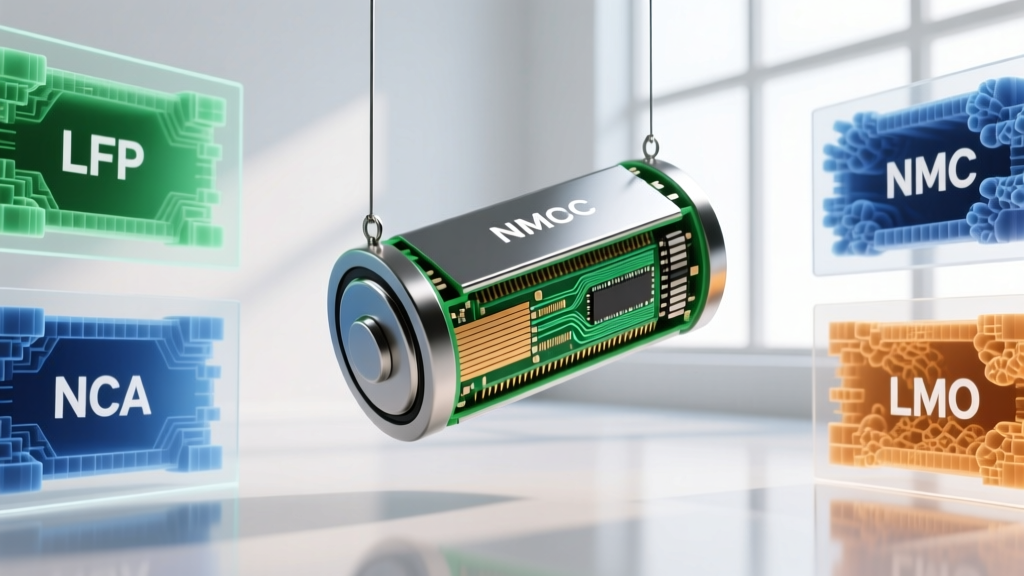
Not all lithium-ion batteries are the same. The cathode chemistry determines energy density, lifespan, thermal stability, and cost. In 2026, the two dominant chemistries in consumer EVs are NMC (nickel manganese cobalt) / NCA (nickel cobalt aluminum) and LFP (lithium iron phosphate).
| Attribute | LFP (Lithium Iron Phosphate) | NMC / NCA |
|---|---|---|
| Energy density | Lower (~160–180 Wh/kg cell-level) | Higher (~220–260 Wh/kg cell-level) |
| Cycle life | 3,000–6,000+ cycles to 80% SoH | 1,000–2,500 cycles to 80% SoH |
| Cold-weather performance | Weaker — greater range loss below 32°F, slower charge acceptance when cold | Better low-temp discharge, faster cold-weather charging |
| Thermal stability | Excellent — higher thermal runaway threshold (~270°C) | Good — requires more active thermal management |
| Cost (per kWh) | Lower — no cobalt or nickel | Higher — commodity-sensitive pricing |
| Recommended SoC ceiling | 100% daily charging is fine | 80% daily recommended; 100% for trips only |
| Typical 2026 use cases | Tesla Model 3/Y RWD, Ford Mustang Mach-E Select, BYD models | Long-range / performance trims, Rivian, Hyundai Ioniq 5/6 AWD |
Which is better? It depends on your driving profile. If you commute daily, charge at home, and don't regularly need 300+ miles of range, LFP is the superior longevity play — you can charge to 100% every night without accelerating degradation. If you road-trip frequently, live in a cold climate, or need maximum range from a smaller physical pack, NMC/NCA still wins on energy density and cold-weather usability.
What Does the Battery Warranty Actually Cover?
Federal law (EPA emissions warranty requirements) effectively mandates that manufacturers warrant hybrid and EV batteries for a minimum of 8 years / 80,000 miles. In California Air Resources Board (CARB) states, that extends to 10 years / 150,000 miles. Most manufacturers exceed these minimums voluntarily.
| Manufacturer (2026) | Warranty Term | Capacity Retention Threshold |
|---|---|---|
| Hyundai / Kia | 10 yr / 100,000 mi | 70% of original capacity |
| Tesla | 8 yr / 100,000–120,000 mi (varies by model) | 70% of original capacity |
| Ford | 8 yr / 100,000 mi | 70% of original capacity |
| GM (Ultium-based) | 8 yr / 100,000 mi | 70% of original capacity |
| Rivian | 8 yr / 175,000 mi | 70% of original capacity |
The critical detail is the capacity retention threshold. Most warranties define a "defect" as the battery dropping below 70% of its original usable capacity within the warranty period. If your 77.4 kWh Hyundai Ioniq 5 pack degrades to 54.2 kWh usable (70%) at year 7 and 90,000 miles, that's a warranty claim. If it's at 72% — still reduced, still frustrating — you're on your own.
Worth noting: the 2016-era Hyundai Elantra was a conventional gasoline vehicle. Its 12V lead-acid battery carries a typical 3-year warranty and is not covered under EV/hybrid battery provisions. If you're looking at a used 2016 Sonata Hybrid or Ioniq, the original 10yr/100,000mi powertrain warranty may still have remaining coverage depending on the vehicle's in-service date and mileage.
EV Battery Replacement Cost: What to Expect in 2026
This is the question that generates the most anxiety — and the most misinformation. Yes, a full high-voltage battery replacement is expensive. No, most EV owners will never need one.
| Vehicle / Pack Size | Battery Chemistry | Replacement Cost Range (Parts + Labor) |
|---|---|---|
| Small PHEV pack (8–18 kWh) | NMC | $4,000–$8,000 |
| Mid-size BEV (50–65 kWh) | LFP | $7,000–$12,000 |
| Mid-size BEV (70–85 kWh) | NMC | $10,000–$18,000 |
| Large BEV / truck (100–135 kWh) | NMC | $15,000–$25,000 |
| Legacy pack (2016-era, e.g., 28 kWh Ioniq) | Li-ion polymer | $5,000–$9,000 (if available) |
Several factors are pushing replacement costs down: cell-level pricing has fallen from roughly $230/kWh in 2016 to approximately $95–110/kWh in 2026 for NMC and below $80/kWh for LFP at volume, according to BloombergNEF tracking. The growth of module-level repair — where a technician replaces individual degraded modules rather than the entire pack — can cut costs by 50–70% for vehicles with modular pack architectures (common in Hyundai/Kia, BMW, and older Tesla Model S/X designs).
When is replacement typically needed? For most BEVs, not until 200,000+ miles or 15+ years, and even then the pack usually retains 70–80% capacity — enough for daily driving with reduced range. PHEV batteries, being smaller and cycled more aggressively relative to their capacity, may show noticeable degradation sooner, around 100,000–130,000 miles.
Factors That Accelerate (or Slow) Battery Degradation
Battery longevity isn't random. It's heavily influenced by how you charge, what temperatures you expose the pack to, and how deeply you cycle it.
- Avoid frequent DC fast charging above 150 kW — occasional road-trip use is fine, but daily 350 kW sessions accelerate degradation by an estimated 1–3% over 5 years compared to Level 2 home charging.
- Keep SoC between 20–80% for NMC/NCA daily driving. LFP owners can charge to 100% regularly without penalty.
- Don't let the battery sit at 100% SoC for extended periods — especially in hot weather. If you charge to full, drive within a few hours.
- Precondition the battery before fast charging in cold weather. Most 2026 EVs do this automatically when you navigate to a charger.
- Park in shade or a garage when possible — sustained pack temperatures above 95°F accelerate calendar aging.
- Don't store the vehicle at 0% or 100% SoC for weeks. For long storage, target 50% SoC.
- Use regenerative braking normally — the charge/discharge micro-cycles from regen are well within design tolerances.
The single most impactful habit is reducing time spent at extreme states of charge. A 2023 study published by the National Renewable Energy Laboratory (NREL) found that NMC cells stored at 100% SoC and 40°C degraded 3–4× faster than cells stored at 50% SoC and 25°C. Temperature and SoC interact multiplicatively — high heat plus full charge is the worst combination.
How to Check and Monitor Your Battery's State of Health
State of Health (SoH) is the percentage of original capacity your battery currently holds. A new pack is 100% SoH; a pack that originally held 77.4 kWh and now holds 65.8 kWh is at approximately 85% SoH.
Most 2026 EVs display SoH or a range-adjusted health indicator through the infotainment system or companion app. Hyundai's Bluelink, Tesla's app, FordPass, and GM's myChevrolet/myHyundai all provide some form of battery health data. Third-party tools like OBD-II dongles paired with apps such as Car Scanner or ABRP (A Better Route Planner) can read the BMS (Battery Management System) directly for more granular data including cell voltage variance, which reveals whether specific modules are degrading unevenly.
For used-EV buyers, requesting a dealer battery health report before purchase is essential. Hyundai dealers can pull a detailed SoH readout that shows per-module voltage data — far more informative than simply looking at the dashboard range estimate, which can fluctuate with temperature and driving style.
Emerging Battery Tech: Solid-State, Silicon Anodes, and What's Real
The battery pipeline is full of promising technology. Here's what's real, what's close, and what's still years away — marked clearly so you can plan purchases accordingly.
Silicon-dominant anodes (replacing graphite with silicon to boost energy density by 20–40%) are in limited production in 2026. Companies like Sila Nanotechnologies and Group14 are supplying cells for select applications, but widespread automotive adoption at scale is expected in the 2027–2029 timeframe.
Solid-state batteries (replacing liquid electrolyte with a solid conductor for improved safety, faster charging, and higher energy density) remain in pre-commercial or very limited production status. Toyota has announced solid-state-equipped vehicles for 2027–2028 delivery in Japan, and Samsung SDI targets 2027 for mass production. However, cost and manufacturing yield challenges mean solid-state packs will initially appear only in premium vehicles at significant price premiums. Expect meaningful market penetration in the US not before 2029–2030.
Sodium-ion batteries are emerging as a low-cost alternative for smaller, shorter-range EVs and energy storage. CATL and BYD have begun production, but energy density remains too low for long-range passenger vehicles. Watch for sodium-ion in city cars and commercial fleet applications in the 2027–2028 window.
None of these technologies are available in a vehicle you can buy today in the US. If a 2026 EV meets your range, charging, and budget needs, waiting for solid-state is unlikely to be a practical strategy — the first generations will be expensive and limited in availability.
Frequently Asked Questions
How long do EV batteries last in years and miles?
Most modern EV traction batteries (2020 and newer) are designed to retain 70–85% of original capacity at 150,000–200,000 miles or 12–15 years. Real-world fleet data from Geotab and Recurrent Auto consistently shows average annual degradation of 1.5–2.5% for NMC packs and 1–2% for LFP packs under normal use. Many packs will remain functional (albeit with reduced range) well past 200,000 miles.
How much does an EV battery cost to replace in 2026?
Full pack replacement ranges from approximately $7,000 for a mid-size LFP pack to $25,000 for a large-format NMC truck battery, including labor. Module-level repairs — replacing individual degraded sections rather than the full pack — can reduce costs by 50–70% on vehicles with modular architectures. Cell pricing has dropped roughly 55% since 2016, and costs continue to decline.
What does the EV battery warranty cover?
Manufacturer warranties cover defects and excessive capacity loss — typically defined as dropping below 70% of original usable capacity — within the warranty period (commonly 8 years/100,000 miles, or 10 years/100,000 miles for Hyundai/Kia). Warranties do not cover gradual, normal degradation above the threshold, damage from accidents, or improper modifications.
How do I check my EV battery's State of Health?
Most 2026 EVs show battery health data in the infotainment system or companion app. For more detailed analysis, an OBD-II scanner paired with apps like Car Scanner can read BMS data directly, including per-cell voltage variance. A Hyundai/Kia dealer can generate a full battery health report showing module-level data — recommended before purchasing any used EV.
LFP vs NMC — which battery chemistry should I choose?
Choose LFP if: you charge at home nightly, commute under 200 miles daily, want maximum cycle life (3,000–6,000+ cycles), and don't mind slightly reduced cold-weather range. Choose NMC/NCA if: you need maximum range per charge, frequently drive in sub-freezing temperatures, take regular road trips requiring fast charging, or need the lightest possible pack for performance applications.
Does fast charging damage my EV battery?
Occasional DC fast charging (road trips, 1–2 times per week) has minimal impact on modern packs with active thermal management. Daily use of 250–350 kW chargers can accelerate degradation by an estimated 1–3% over 5 years compared to exclusive Level 2 (7–11 kW) home charging. The bigger risk is fast charging in extreme heat without preconditioning.
Will the 2016 Hyundai Elantra battery work in an EV?
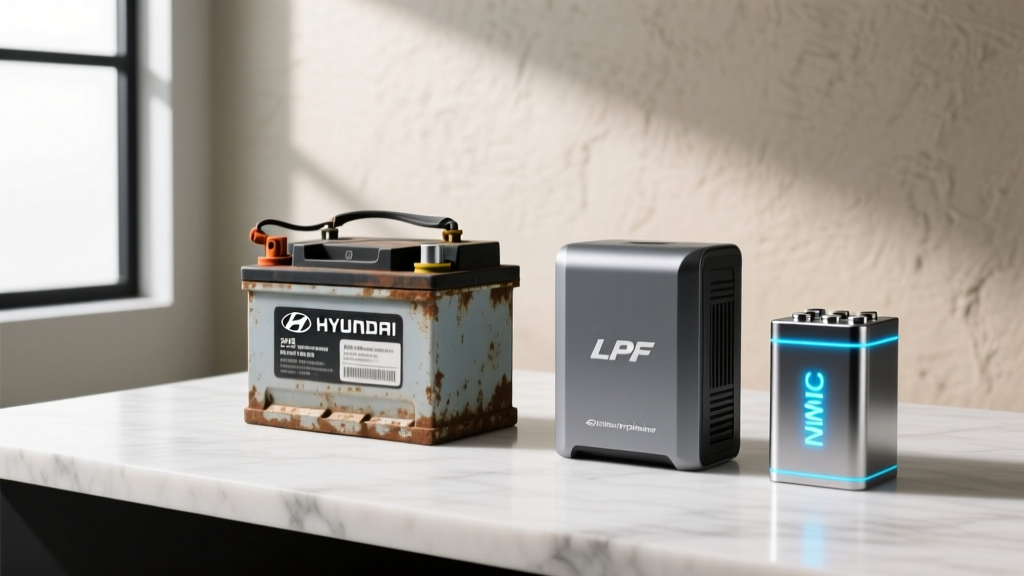
The 2016 Hyundai Elantra is a conventional gasoline vehicle that uses a standard 12V lead-acid auxiliary battery — not a high-voltage traction battery. If you're looking for EV battery information from that era, the relevant Hyundai models are the 2016 Sonata Hybrid (1.62 kWh Li-ion polymer pack) or the 2017 Ioniq Electric (28 kWh pack), which was announced in 2016. The 12V battery in a gas Elantra is a maintenance item with a typical 3–5 year lifespan and $120–200 replacement cost.
Sources: EPA fuel economy data via fueleconomy.gov; Hyundai warranty specifications via Hyundai USA; battery degradation fleet data via Geotab and Recurrent Auto published research.