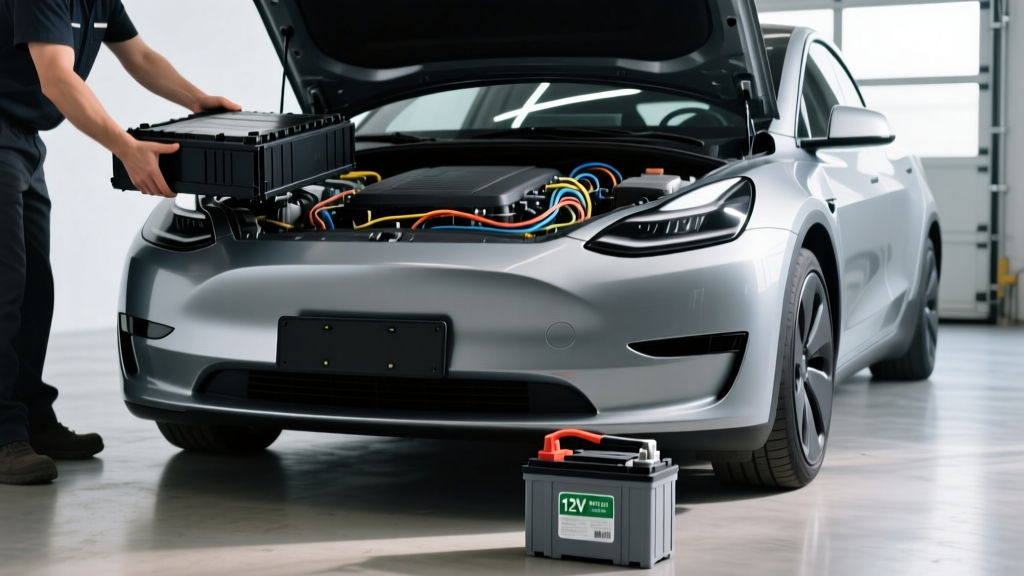
If you've landed here searching for a battery for 2017 Dodge Journey, you're likely dealing with a dead 12-volt auxiliary battery — the small lead-acult unit under the hood that starts your crossover's electronics. That's a straightforward $150-$250 fix at any auto parts store, and it has nothing to do with the high-voltage traction batteries we cover in this guide.
But if you're researching EV battery longevity because you own an electric vehicle, are considering buying one, or simply want to separate fact from fear-mongering, you're in the right place. This guide covers everything from chemistry trade-offs (LFP vs. NMC) to real degradation data, warranty coverage, replacement costs, and how to monitor your pack's State of Health (SoH) in 2026.
How Long Do EV Batteries Actually Last?
The short answer: far longer than most buyers assume. Data from fleet operators, manufacturer reports, and independent testing consistently shows that modern lithium-ion EV traction batteries retain 85-95% of their original capacity after 100,000 miles. Many packs outlive the vehicles they're installed in.
According to fueleconomy.gov, the U.S. Department of Energy notes that EV batteries are designed to last the life of the vehicle. Real-world data from Tesla's 2025 Impact Report showed that Model 3/Y packs retained approximately 85% capacity at 200,000 miles. Hyundai and Kia have reported similar figures for their E-GMP platform vehicles (Ioniq 5, EV6) with NMC chemistry packs showing roughly 90% retention at 100,000 miles in fleet data.
- Tesla Model 3/Y (NMC/NCA): ~85% capacity at 200,000 miles; ~92% at 100,000 miles
- Hyundai Ioniq 5 / Kia EV6 (NMC): ~90% capacity at 100,000 miles (fleet averages)
- BYD Blade (LFP): ~95% capacity at 100,000 miles in Chinese fleet data; LFP's cycle life advantage shows here
- Chevrolet Bolt EV/EUV (NMC, 65 kWh): ~88-90% at 80,000 miles per owner forums; some early 2017-2019 packs recalled for fire risk, not degradation
- Nissan Leaf (passive air cooling, NMC): Historically higher degradation — early 24 kWh packs lost 20-30% by 80,000 miles; newer 62 kWh packs improved with better thermal management
The critical variable is thermal management. Liquid-cooled packs (Tesla, Hyundai E-GMP, GM Ultium, Ford) consistently outperform passively air-cooled packs (older Nissan Leaf) in long-term capacity retention.
LFP vs. NMC/NCA: Which Battery Chemistry Is Better?
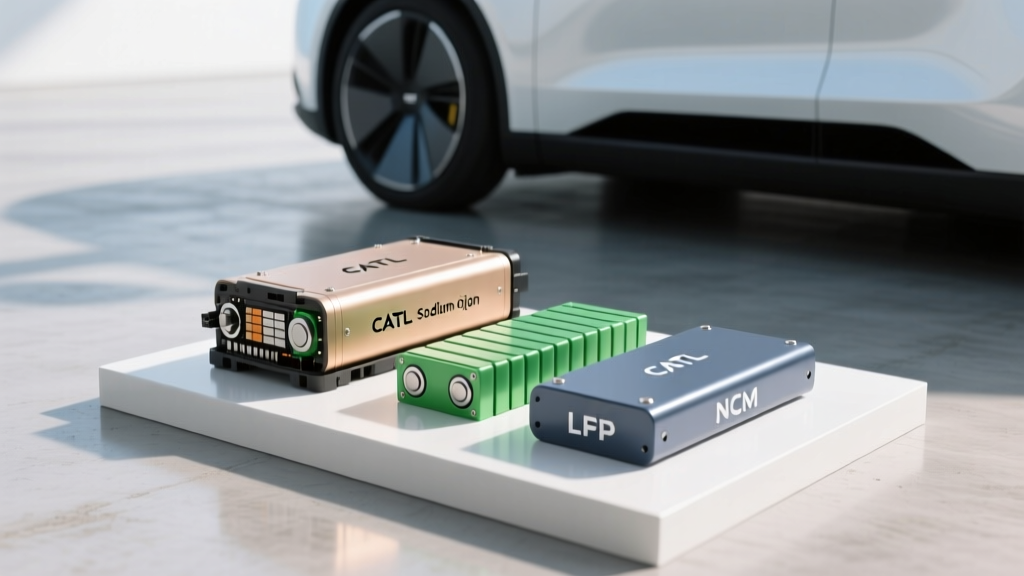
Not all lithium-ion batteries are the same. The two dominant chemistries in 2026 EVs are LFP (lithium iron phosphate) and NMC/NCA (nickel manganese cobalt / nickel cobalt aluminum). Each has distinct trade-offs that affect range, longevity, cost, and cold-weather performance.
| Attribute | LFP (Lithium Iron Phosphate) | NMC / NCA (Nickel-based) |
|---|---|---|
| Energy density | ~160-180 Wh/kg (lower) | ~220-280 Wh/kg (higher) |
| Cycle life | 3,000-5,000+ cycles (superior) | 1,000-2,500 cycles |
| Cost per kWh | ~$80-100 (lower) | ~$110-140 (higher) |
| Cold-weather performance | Weaker — more range loss below 32°F | Better low-temp performance |
| SoC charging recommendation | Can charge to 100% daily (no degradation penalty) | 80% daily recommended; 100% for trips only |
| Safety / thermal runaway | More stable; higher thermal runaway threshold | Requires more active thermal management |
| Examples in 2026 U.S. market | Tesla Model 3 RWD, Model Y RWD, Ford Mustang Mach-E Select (base), BYD (if U.S. entry) | Tesla Long Range, Hyundai Ioniq 5, Kia EV6, GM Ultium vehicles, BMW iX |
Which is better? It depends on your use case. LFP wins on longevity and cost — ideal for daily commuters who charge at home and don't need maximum range. NMC wins on energy density and cold-weather efficiency — better for long-range models and buyers in northern climates. Tesla's strategy of offering LFP in Standard Range trims and NMC in Long Range trims reflects this practical split.
What Does the EV Battery Warranty Actually Cover?
Federal law mandates that EV battery warranties cover a minimum of 8 years or 100,000 miles (whichever comes first). In California and states adopting CARB (California Air Resources Board) standards, that extends to 10 years / 150,000 miles. Most manufacturers exceed these minimums.
The warranty trigger is capacity retention — typically, the manufacturer guarantees the battery will retain at least 70% of its original capacity during the warranty period. If your 75 kWh pack drops below 52.5 kWh of usable capacity within 8 years/100,000 miles, you're eligible for a repair, module replacement, or full pack replacement at no cost.
| Manufacturer | Warranty Period | Capacity Threshold | Notes |
|---|---|---|---|
| Tesla | 8 yr / 120,000 mi (Model 3/Y); 8 yr / 150,000 mi (S/X) | 70% | Covers defects and capacity loss below threshold |
| Hyundai / Kia | 10 yr / 100,000 mi | 70% | Among the longest coverage periods |
| GM (Chevrolet, Cadillac, GMC) | 8 yr / 100,000 mi | 70% (Ultium platform) | Covers battery and specific EV components |
| Ford | 8 yr / 100,000 mi | 70% | Covers traction battery capacity loss |
| BMW | 8 yr / 100,000 mi | 70% | Includes high-voltage battery and related systems |
| Rivian | 8 yr / 175,000 mi | 70% | Highest mileage threshold among major OEMs |
Critical nuance: Warranties cover defects and excessive degradation (below the threshold). Normal, gradual capacity loss above 70% is considered expected wear and is not covered. Read your specific warranty booklet — exclusions vary for damage from flooding, improper charging equipment, or aftermarket modifications.
How Much Does an EV Battery Replacement Cost?
This is the question that generates the most anxiety — and the most misinformation. Let's ground it in actual numbers.
| Vehicle / Battery Size | Battery (kWh) | Estimated Pack Cost | Installed (with labor) |
|---|---|---|---|
| Tesla Model 3 RWD (LFP) | ~60 kWh | $8,000 - $12,000 | $12,000 - $16,000 |
| Tesla Model Y Long Range (NMC) | ~82 kWh | $12,000 - $16,000 | $16,000 - $22,000 |
| Hyundai Ioniq 5 (NMC) | 77.4 kWh | $11,000 - $15,000 | $14,000 - $20,000 |
| Chevrolet Equinox EV (Ultium NMC) | 85 kWh | $10,000 - $14,000 | $14,000 - $19,000 |
| Ford F-150 Lightning Extended Range | 131 kWh | $18,000 - $25,000 | $22,000 - $32,000 |
| Nissan Leaf (40 kWh pack) | 40 kWh | $6,500 - $9,000 | $9,000 - $13,000 |
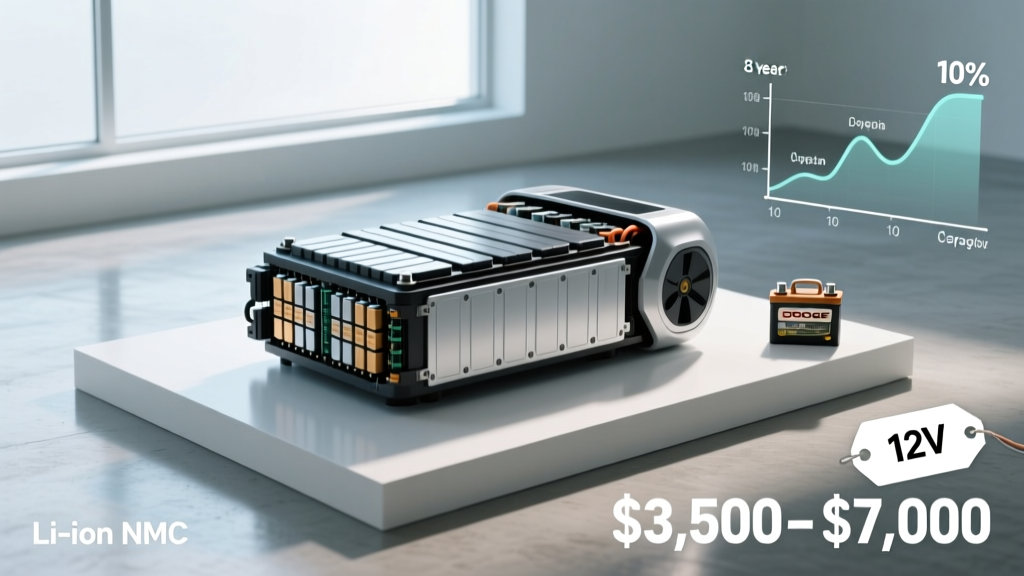
Important context: Full pack replacement is rare. Most out-of-warranty battery issues are resolved by replacing individual modules (a fraction of the full cost — typically $1,500-$4,000 per module). And because most modern packs retain 85%+ capacity at 150,000 miles, the vast majority of EVs will be scrapped or sold before the battery needs replacement.
Battery pack pricing has fallen from roughly $1,200/kWh in 2010 to approximately $110-$140/kWh for NMC and $80-$100/kWh for LFP in 2026, per BloombergNEF data. This trend continues, meaning replacement costs will be lower when (and if) you ever need one.
Factors That Affect EV Battery Lifespan
Your battery's degradation rate isn't random. It's driven by a handful of controllable factors:
- Avoid sustained 100% SoC (NMC/NCA only): Daily charging to 80% dramatically reduces calendar degradation. LFP owners can charge to 100% daily without penalty — in fact, periodic 100% charges help LFP's BMS (Battery Management System) calibrate.
- Minimize DC fast charging when possible: Occasional road-trip fast charging is fine. But daily use of 150+ kW DC chargers accelerates degradation. Studies show packs charged primarily on Level 2 (7-11 kW AC) retain 3-5% more capacity at 100,000 miles vs. daily DC fast-charged packs.
- Precondition before fast charging: Most modern EVs do this automatically when you navigate to a charger. A warm battery (optimal ~70-95°F internal) charges faster and with less stress. Cold batteries forced to accept high kW rates suffer lithium plating — an irreversible degradation mechanism.
- Avoid extreme heat exposure: Parking in direct sun in Phoenix for weeks with a full battery accelerates calendar aging. If possible, park in shade or a garage during summer.
- Don't store at 0% or 100% for extended periods: If leaving your EV for weeks, set the charge limit to 50-60%. Long-term storage at extremes stresses the chemistry.
- Use regenerative braking moderately in extreme cold: Aggressive regen on a freezing-cold battery can stress cells. Many EVs automatically limit regen when cold — let the system do its job.
How to Check Your EV Battery's State of Health (SoH)
State of Health (SoH) is the percentage of your battery's original capacity that remains usable. A new pack is 100% SoH; at 70% SoH, you've hit the typical warranty threshold. Here's how to monitor it:
Built-in vehicle tools
Most 2026 EVs display SoH or estimated range degradation in the settings menu. Tesla shows a "Battery Health" percentage under Service mode (accessible via a specific tap sequence on the software screen). Hyundai/Kia display battery health status through the dealer diagnostic tool, accessible during service visits. GM's Ultium-platform vehicles provide a battery health indicator through the myChevrolet/myCadillac app.
OBD-II diagnostic apps
Third-party tools like OBDeleven, Leaf Spy (for Nissan Leaf), and Scan My Tesla can read the BMS (Battery Management System) directly through the OBD-II port. These report SoH percentage, individual cell voltages, and pack temperature — far more granular than the dashboard display.
Dealer diagnostics
Any authorized service center can run a full battery health report. Request this during routine service visits, especially if you're approaching the warranty mileage threshold and want documentation of capacity retention.
Charging-based estimation
Compare your actual energy consumed during a 10%-to-80% charge session (displayed on the charger or in the vehicle) against the battery's rated usable capacity. If your 77.4 kWh Ioniq 5 only accepts 62 kWh from 10-80% (which represents 70% of the pack), your SoH is approximately 89%. This isn't perfectly precise but provides a useful trend line over time.
What's Coming Next: Solid-State and Silicon Anode Batteries
Next-generation battery technologies are advancing, but realistic timelines matter. Here's where things stand in 2026:
Solid-state batteries replace the liquid electrolyte with a solid material, promising higher energy density (~400+ Wh/kg projected), faster charging, and improved safety. Toyota has announced limited production of solid-state-equipped vehicles for 2027-2028, initially in small volumes for the Japanese market. Samsung SDI and QuantumScape are targeting 2028-2030 for broader commercialization. These are not available in any production vehicle as of 2026.
Silicon anode batteries replace graphite anodes with silicon, boosting energy density by 20-40%. Companies like Sila Nanotechnologies and Group14 are supplying silicon-dominant anode materials to manufacturers. Mercedes-Benz's EQG (G-Class electric) has been announced with a silicon anode option. Expect broader adoption in performance-oriented models by 2027-2028, with mainstream trickle-down by 2030.
Sodium-ion batteries offer a lower-cost alternative (~$40-60/kWh projected) with no lithium, cobalt, or nickel. CATL and BYD are producing these in China for budget EVs. U.S. market availability remains uncertain due to supply chain and import considerations.
The practical takeaway: today's lithium-ion batteries (both LFP and NMC) are mature, well-understood, and demonstrably long-lasting. Waiting for solid-state means waiting 3-5+ years for limited availability at premium prices.
Frequently Asked Questions
How long do EV batteries last in years and miles?
Most modern EV batteries (2020 and newer) retain 85-95% capacity at 100,000 miles and are designed to last 15-20 years or 200,000+ miles before dropping below the 70% warranty threshold. Fleet data from Tesla, Hyundai, and others confirms this. The battery will almost certainly outlast other vehicle components.
How much does an EV battery cost to replace?
Full pack replacement ranges from roughly $9,000 for a 40 kWh Nissan Leaf pack to $22,000-$32,000 for a 131 kWh Ford F-150 Lightning Extended Range pack, installed. However, most out-of-warranty issues are resolved with module-level repairs ($1,500-$4,000). And because most packs retain 85%+ at 150,000 miles, full replacement is uncommon.
What does the EV battery warranty cover?
Federal minimum is 8 years / 100,000 miles (10 yr / 150,000 mi in CARB states). The warranty covers defects and capacity loss below a threshold (typically 70% of original capacity). It does not cover normal gradual degradation above that threshold, physical damage, or misuse. Check your specific warranty booklet for exclusions.
LFP vs. NMC — which battery chemistry should I choose?
Choose LFP if you want maximum cycle life, lower cost, and the convenience of daily 100% charging — ideal for commuting and home-charging setups. Choose NMC if you need maximum range per charge, better cold-weather efficiency, or are buying a Long Range / AWD model. Both chemistries are proven to last the life of the vehicle with proper care.
Does fast charging damage my EV battery?
Occasional DC fast charging (road trips, a few times per month) causes negligible additional degradation. Daily DC fast charging at 150+ kW does accelerate wear — studies show 3-5% more capacity loss at 100,000 miles compared to Level 2 charging. If you have home Level 2 access, use it for daily charging and reserve DC fast charging for trips.
Can I replace just one battery module instead of the whole pack?
Yes, in most modern EV packs. Battery packs consist of multiple modules (typically 4-12 depending on the vehicle). If a single module develops a fault or degrades disproportionately, a qualified EV technician can replace just that module for $1,500-$4,000 — far less than a full pack replacement. This is one reason full pack swaps are rare.
Sources: U.S. Department of Energy / fueleconomy.gov, IRS §30D Clean Vehicle Credit guidelines, manufacturer warranty documentation (Tesla, Hyundai, GM, Ford, Rivian).