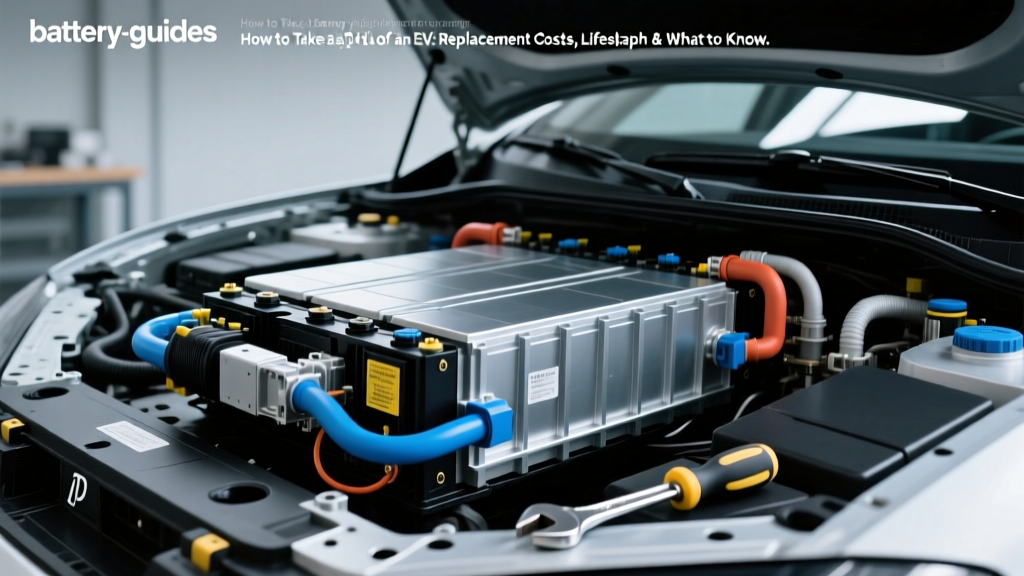
The Real Story on EV Battery Longevity
If you've spent any time researching electric vehicles, you've likely encountered the big fear: "What happens when the battery dies?" It's the single most common objection to EV ownership, and it deserves a data-driven answer rather than marketing reassurance or doom-scrolling forum posts.
Here's what the data actually shows: modern EV traction batteries — the high-voltage packs that propel the vehicle, not the small 12V auxiliary battery that runs accessories — are outlasting initial projections. According to data compiled by the National Renewable Energy Laboratory (NREL), the average EV battery retains approximately 85-90% of its original capacity after 100,000 miles. Many packs reach 200,000 miles before approaching the warranty replacement threshold.
But longevity isn't uniform. It depends heavily on battery chemistry, thermal management design, charging habits, and climate. This guide breaks down exactly what you need to know about the pack under your EV's floor — with real numbers, not vague promises.
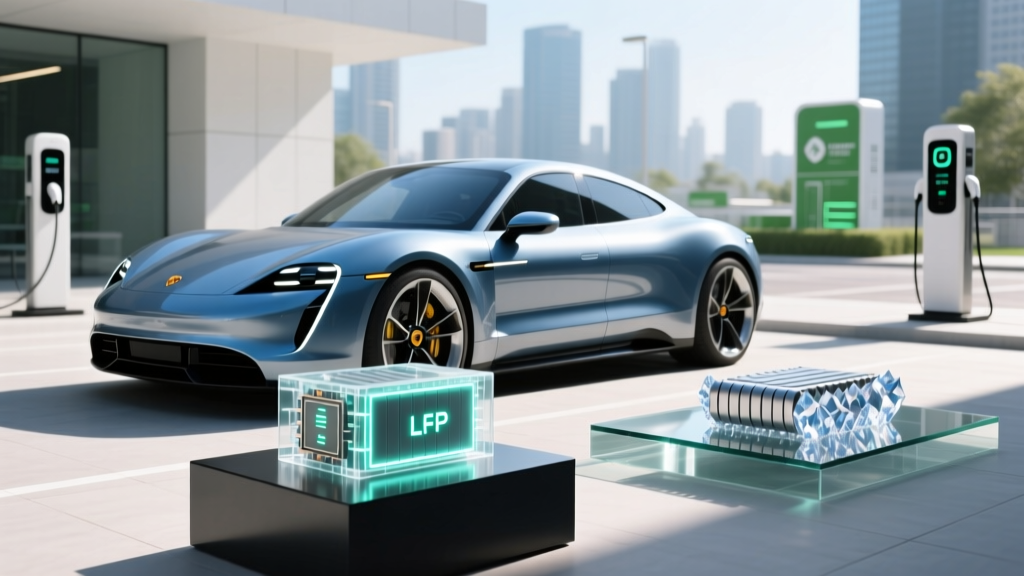
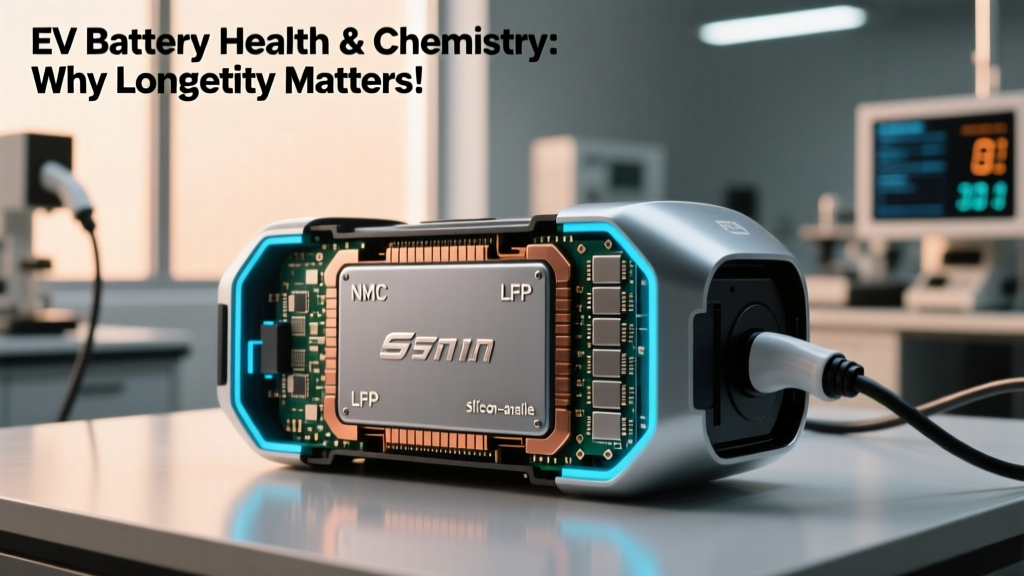
LFP vs NMC/NCA: Which Battery Chemistry Powers Your EV?
Not all EV batteries are built the same. The two dominant lithium-ion chemistries in the 2026 market are LFP (lithium iron phosphate) and NMC/NCA (nickel manganese cobalt / nickel cobalt aluminum). Each has distinct trade-offs that affect range, longevity, charging behavior, and cost.
| Attribute | LFP (Lithium Iron Phosphate) | NMC/NCA (Nickel-Based) |
|---|---|---|
| Energy Density | Lower (~160-180 Wh/kg cell-level) | Higher (~220-280 Wh/kg cell-level) |
| Typical Range | Shorter; used in Standard Range models | Longer; used in Long Range/Performance models |
| Cycle Life | 3,000-5,000+ full cycles | 1,000-2,000 full cycles |
| Calendar Life | Superior; less degradation when parked at high SoC | Good; prefers 20-80% SoC storage |
| Cold-Weather Performance | Weaker; greater range loss below freezing, slower cold charging | Better low-temp conductivity and charge acceptance |
| Recommended Daily Charge | 100% OK (Tesla, Ford recommend it for LFP) | 80% preferred for daily; 100% for trips only |
| Cost per kWh | Lower — no cobalt or nickel | Higher — commodity-sensitive metals |
| SoC Estimation | Flatter voltage curve makes % estimation less precise | More linear voltage curve; easier BMS estimation |
| Common Applications (2026) | Tesla Model 3/Y RWD, Ford Mustang Mach-E Select, BYD models | Tesla LR/Performance, Hyundai Ioniq 5/6 LR, Rivian, BMW iX |
So which is better? It depends on your use case. LFP is the clear winner for longevity and cost — if you plan to keep your EV 10+ years or put on very high mileage, LFP's superior cycle life is a significant advantage. NMC/NCA wins on range and cold-weather usability, making it preferable for long-distance commuters and those in northern climates. Neither is universally superior; the right choice maps to your driving profile.
EV Battery Degradation: What the Data Actually Shows
Battery degradation — the gradual loss of usable capacity over time and charge cycles — is a fact of lithium-ion chemistry. But the rate is slower than most buyers fear, and it's not linear.
Typical degradation follows a curve: a steeper initial drop in the first 10,000-20,000 miles (often 2-4%), followed by a long, gradual decline. Here's what aggregated fleet data and owner reports indicate for modern liquid-cooled packs:
| Mileage | Approximate Capacity Retention | Notes |
|---|---|---|
| 0 miles (new) | 100% | Factory baseline |
| 25,000 miles (~1 year) | 95-97% | Initial formation loss stabilizes |
| 50,000 miles (~2-3 years) | 92-95% | Gradual linear decline phase begins |
| 100,000 miles (~5 years) | 87-92% | Most packs well above warranty threshold |
| 150,000 miles (~7-8 years) | 82-88% | Approaching warranty threshold for some chemistries |
| 200,000+ miles | 75-85% | End-of-automotive-life; still functional for secondary use |
Sources: These figures align with Geotab's fleet battery health study of over 6,300 EVs and Tesla's own 2024 Impact Report, which showed Model S/X batteries retaining ~88% capacity at 200,000 miles.
Key insight: Degradation doesn't mean the battery "dies" at 70% capacity. It means your 300-mile EPA range gradually becomes a 255-mile range over a decade. The vehicle remains fully drivable — you just plan charging stops slightly differently.
Battery Warranty Terms: What's Actually Covered?
Federal law mandates that EV batteries carry a minimum warranty of 8 years or 100,000 miles (10 years/150,000 miles in CARB states like California). But the specific terms — particularly the capacity retention threshold — vary by automaker and matter enormously.
| Manufacturer | Duration | Mileage | Capacity Threshold | Notes |
|---|---|---|---|---|
| Tesla (Model 3/Y) | 8 years | 100,000-120,000 mi | 70% retention | Varies by trim; LFP RWD = 100k mi, LR = 120k mi |
| Hyundai/Kia | 10 years | 100,000 mi | 70% retention | Among the longest duration in the market |
| Ford (Mach-E, F-150 Lightning) | 8 years | 100,000 mi | 70% retention | Covers battery and hybrid/electric components |
| GM (Ultium-based) | 8 years | 100,000 mi | 70% retention (60% for commercial) | Covers capacity loss beyond threshold |
| Rivian | 8 years | 175,000 mi (R1T/R1S) | 70% retention | Higher mileage limit reflects truck use case |
| BMW | 8 years | 100,000 mi | 70% retention | Includes high-voltage components |
What triggers a warranty claim? The battery's State of Health (SoH) must fall below the stated threshold (typically 70%) within the warranty period. The automaker will repair or replace modules or the full pack to bring capacity above that threshold. Importantly, gradual degradation above 70% is considered normal wear — it's not a defect.
Most manufacturers also cover defects in materials and workmanship separately, which is distinct from capacity-loss coverage. Always read the specific warranty booklet for your model year.
EV Battery Replacement Cost: When and How Much?
This is where fear-mongering runs hottest, so let's anchor this in reality: the vast majority of EV batteries are never replaced during the vehicle's useful life. Based on current degradation data, most packs retain 75%+ capacity at 200,000 miles — well beyond what most first and second owners will drive.
That said, out-of-warranty replacement costs are real and significant. Here's the current landscape:
| Vehicle / Pack Size | Battery Capacity | Estimated Replacement Cost | Notes |
|---|---|---|---|
| Tesla Model 3 RWD (LFP) | ~60 kWh | $8,000 - $12,000 | Lower cost due to LFP chemistry; module repair may be possible |
| Tesla Model Y Long Range | ~75 kWh | $12,000 - $16,000 | Structural pack design may require full replacement |
| Hyundai Ioniq 5 Long Range | ~77.4 kWh | $11,000 - $15,000 | E-GMP platform; module-level service available |
| Ford F-150 Lightning Extended | ~131 kWh | $18,000 - $28,000 | Largest consumer pack; highest replacement cost |
| Chevrolet Equinox EV | ~85 kWh | $12,000 - $16,000 | Ultium platform; module replacement possible |
| Rivian R1T (Large Pack) | ~135 kWh | $20,000 - $30,000 | Complex pack; limited third-party service options |
When is replacement actually needed? Typically only when: (1) the pack falls below the warranty capacity threshold and the vehicle is out of warranty, (2) a manufacturing defect manifests after warranty expiration, or (3) physical damage occurs (e.g., from a collision or ground strike) that isn't covered by insurance. For context, a $15,000 battery replacement at year 12 on a vehicle that saved $8,000-$12,000 in fuel and maintenance over that period is a manageable cost — not the financial catastrophe often portrayed.
Module-level repair is increasingly available, where individual degraded modules are replaced rather than the entire pack, reducing costs to $3,000-$8,000 in many cases.
Factors That Affect Battery Life (and What You Can Control)
Not all miles age a battery equally. The following factors have the most significant impact on long-term State of Health:
- Avoid sustained high State of Charge: For NMC/NCA batteries, daily charging to 80% is ideal. Reserve 100% charges for road trips. LFP owners can charge to 100% daily without significant penalty.
- Minimize DC fast charging when possible: Frequent use of 150+ kW DC fast charging accelerates degradation due to heat and lithium plating risk. Use Level 2 home charging as your primary method; fast-charge for road trips.
- Precondition before fast charging: Most modern EVs automatically precondition the battery when navigating to a charger. This brings the pack to optimal temperature (typically 30-40°C), improving charge speed and reducing stress. Ensure preconditioning is enabled in your vehicle settings.
- Avoid extreme SoC in extreme temperatures: Don't leave an NMC vehicle sitting at 100% SoC in summer heat or below 10% SoC in winter cold for extended periods. If storing the vehicle, aim for 50% SoC.
- Use scheduled charging: Set your EV to finish charging just before you leave rather than sitting at full charge overnight. This minimizes time at high SoC.
- Drive normally: Aggressive acceleration generates pack heat. Moderate driving is easier on the battery — and your energy bill.
The fast-charging question deserves nuance. Studies from Idaho National Laboratory showed that exclusive DC fast charging caused measurably more degradation than Level 2 charging — but the difference over 50,000 miles was approximately 3-5 percentage points of capacity. Occasional fast charging on road trips is not a concern; daily fast charging as your only charge method will accelerate wear.
How to Monitor Your EV Battery's State of Health
State of Health (SoH) is the percentage of original capacity your battery currently retains. Unlike your phone's battery health indicator, EV SoH isn't always displayed prominently on the dashboard. Here's how to check it:
- In-vehicle displays: Some EVs (notably the Nissan Leaf, and newer Hyundai/Kia models) show a battery health indicator directly on the dash or infotainment screen. Tesla does not natively display SoH percentage in the vehicle UI.
- Manufacturer apps: Many OEM apps (FordPass, myHyundai, BMW Connected) provide battery health data or capacity estimates.
- OBD-II diagnostic tools: Third-party apps like Leaf Spy (Nissan), Scan My Tesla, or generic OBD-II readers with EV-capable software can read the BMS (Battery Management System) directly for SoH percentage, cell voltage deltas, and pack temperature data.
- Dealership diagnostic reports: Any authorized service center can pull a full battery health report. Request one before purchasing a used EV — it's the single most important data point for assessing remaining battery life.
- Manual range tracking: Charge to a consistent SoC (e.g., 100% for LFP, 90% for NMC) and note the displayed range. Compare this to the EPA-rated range at the same SoC when the vehicle was new. A consistent 10% reduction in displayed range roughly correlates to ~10% degradation.
Cell imbalance matters. A healthy pack has cells within a tight voltage window (typically within 20-30 millivolts of each other). Widening cell deltas indicate module-level degradation that may precede a warranty claim. OBD-II tools can reveal this data.
What's Next: Solid-State and Silicon Anode Batteries
The next frontier in EV battery technology includes solid-state batteries (replacing liquid electrolyte with a solid conductor) and silicon-dominant anodes (replacing graphite to increase energy density). Here's where these stand in 2026:
- Solid-state batteries: Toyota, Samsung SDI, and QuantumScape have demonstrated prototype cells with promising energy density (400+ Wh/kg) and faster charging potential. However, manufacturing scale-up remains the primary barrier. Toyota has announced limited solid-state EV production beginning in 2027-2028, but at low volumes and premium pricing. Widespread, cost-competitive solid-state availability is realistically a 2030+ proposition.
- Silicon anode technology: Companies like Sila Nanotechnologies and Group14 are already supplying silicon-enhanced anode materials for some 2025-2026 model-year vehicles, providing modest energy density improvements (5-15%). This is an incremental evolution, not a revolution, but it's happening now.
- Sodium-ion batteries: CATL and BYD have begun deploying sodium-ion packs in lower-cost Chinese-market EVs. These offer lower energy density but dramatically reduced material costs and better cold performance. U.S. availability remains limited as of 2026 but may appear in entry-level models within 2-3 years.
Should you wait? If you need a vehicle now, current lithium-ion technology — whether LFP or NMC — is mature, well-understood, and backed by real-world longevity data. Waiting for solid-state means waiting at minimum 3-4 years for limited availability at premium prices. The best battery is the one in the EV that fits your needs today.
Frequently Asked Questions
How long do EV batteries last in years and miles?
Based on current fleet data, most modern liquid-cooled EV batteries retain 80-90% capacity at 100,000 miles and 75-85% at 200,000 miles. In terms of calendar years, expect 15-20 years of usable service life before the pack falls below 70% capacity — the point at which range reduction becomes noticeable for daily driving. Most batteries will outlast the vehicle's economic life.
How much does it cost to replace an EV battery?
Out-of-warranty replacement costs range from approximately $8,000 for smaller LFP packs (Tesla Model 3 RWD) to $28,000+ for the largest packs (Ford F-150 Lightning Extended Range, Rivian R1T). Module-level repair, where available, can reduce this to $3,000-$8,000. However, the majority of EV batteries never require replacement during typical ownership.
What does the EV battery warranty cover?
Federally mandated minimum coverage is 8 years/100,000 miles (10 years/150,000 miles in CARB states). The warranty covers capacity loss below a stated threshold — typically 70% of original capacity. It also covers manufacturing defects. It does not cover gradual, normal degradation above the threshold, nor does it cover damage from accidents, modifications, or improper use.
How do I check and maximize my EV battery health?
Check SoH through your vehicle's app, an OBD-II diagnostic tool, or a dealership service report. To maximize longevity: charge NMC batteries to 80% daily (LFP to 100% is fine), minimize DC fast charging frequency, precondition before fast charging, avoid leaving the vehicle at extreme SoC in extreme temperatures, and use scheduled charging to minimize time spent at high SoC.
LFP vs NMC — which battery chemistry is better for me?
Choose LFP if you prioritize maximum battery lifespan, lower cost, and don't need the longest possible range. LFP tolerates 100% daily charging and has 2-3x the cycle life of NMC. Choose NMC/NCA if you need maximum range, frequently drive in cold climates, or take regular road trips where the extra range and faster cold-weather charging matter. Neither chemistry is universally superior — match the chemistry to your driving profile.