Why Are People Searching About Charging an 8 Volt Battery?
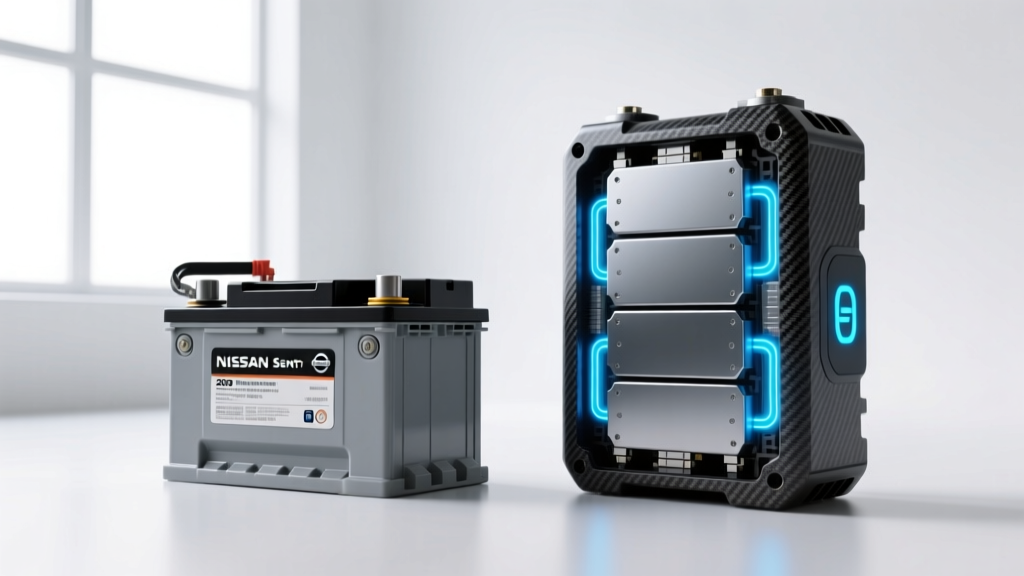
If you've stumbled across discussions about charging an 8 volt battery, you're likely encountering one of two scenarios: vintage 8V lead-acid batteries used in old tractors, some golf carts, and antique farm equipment — or a misunderstanding of how modern electric vehicle powertrains work. An 8V battery (typically four lead-acid cells in series) has no role in a 2026 EV. Modern battery-electric vehicles operate on high-voltage traction packs ranging from roughly 400V nominal (most mainstream models) to 800V architectures (Hyundai/Kia E-GMP, Porsche Taycan, Lucid Air). Even the 12V auxiliary battery that powers lights, infotainment, and ECU logic in an EV is a 12-volt unit, not 8V.
That said, the curiosity behind the search is valid: how does battery voltage relate to charging, longevity, and ownership cost? This guide answers that question thoroughly, using real degradation data, warranty terms, replacement costs, and chemistry trade-offs to give you a complete picture of what to expect from an EV battery over 10+ years of ownership.
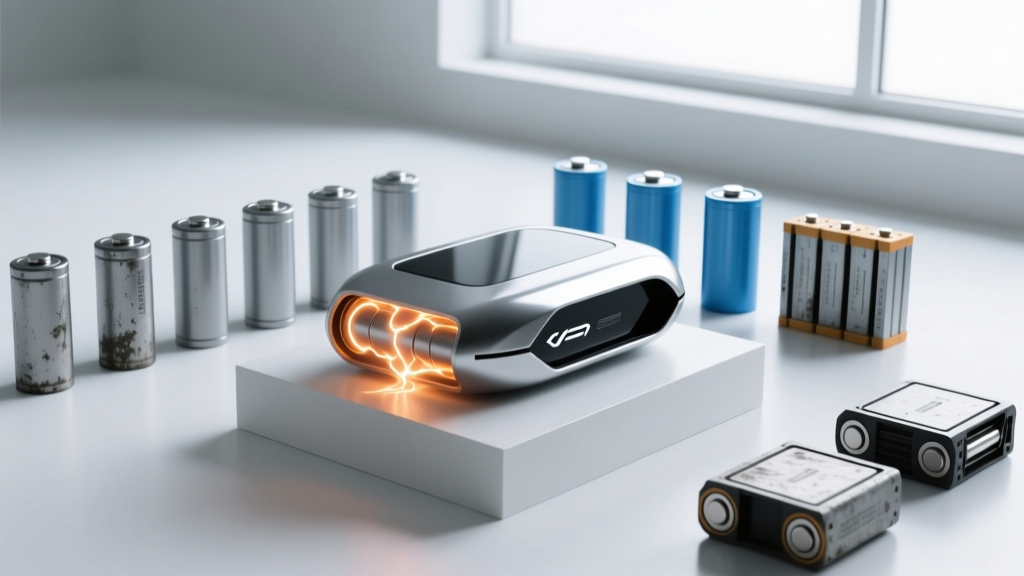
LFP vs NMC vs NCA: The Chemistry That Defines Your Battery's Life
Not all EV batteries are built the same. The cathode chemistry determines energy density, cycle life, cold-weather behavior, and cost. In 2026, two families dominate the US market: LFP (lithium iron phosphate) and NMC/NCA (nickel manganese cobalt / nickel cobalt aluminum).
| Attribute | LFP (LiFePO₄) | NMC / NCA |
|---|---|---|
| Energy density (cell-level) | ~160–180 Wh/kg | ~220–260 Wh/kg |
| Typical cycle life | 3,000–5,000+ cycles to 80% SoH | 1,000–2,000 cycles to 80% SoH |
| Cold-weather performance | Weaker below 32°F; slower charge acceptance | Better low-temp discharge and regen |
| Thermal stability / safety | Excellent; very resistant to thermal runaway | Good, but requires robust BMS and cooling |
| Cost (cell-level, 2026) | ~$60–80/kWh | ~$90–120/kWh |
| Recommended daily SoC | 100% is fine; periodic full charges help BMS calibration | 80% daily; 100% only for trips |
| Notable 2026 US vehicles using it | Tesla Model 3/Y RWD, base Ford Mustang Mach-E, some Rivian Standard packs | Hyundai Ioniq 5/6, BMW i4/iX, Ford F-150 Lightning Extended, Chevy Silverado EV |
Which is better? Neither is universally superior. LFP wins on longevity and cost — if you plan to keep a car 10+ years and mostly drive in moderate climates, an LFP pack will likely outlast the vehicle. NMC wins on range-per-kilogram and cold-weather usability — important for 300+ mile EPA targets and northern-tier winters. Tesla's split (LFP for RWD Standard Range, NMC/NCA for Long Range and Performance) reflects exactly this calculus.
How Long Do EV Batteries Actually Last? Real Degradation Data
The fear that EV batteries need replacement at 100,000 miles is not supported by fleet data. Most modern packs are engineered to retain 70–80% of original capacity well beyond the warranty period. Here's what the numbers show:
Observed degradation trajectories (fleet averages, multiple sources):
- Tesla Model 3/Y (NMC, 2019–2023): ~5–7% capacity loss at 100,000 miles; ~10–12% at 200,000 miles (data from Tesla Impact Reports and Recurrent Auto fleet studies).
- Chevrolet Bolt EV/EUV (NMC, 2017–2023): ~6–9% loss at 100k miles; early models had recall-related replacements, but post-fix packs show strong retention.
- Hyundai Ioniq 5 (NMC, 2022–2025): Limited long-term data, but 50k-mile fleet averages show 3–5% loss; thermal management appears effective.
- Tesla Model 3 RWD (LFP, 2021–2025): Very low degradation; Recurrent Auto data suggests <5% loss at 80k miles, consistent with LFP's cycle-life advantage.
- Nissan LEAF (passive air cooling, 2011–2017): The cautionary tale — 15–25% loss by 80k–100k miles in hot climates, underscoring why active liquid cooling is now standard.
Sources: Recurrent Auto, Tesla Impact Reports, fueleconomy.gov.
How long do EV batteries last in years/miles? Based on current evidence, expect a modern liquid-cooled pack to deliver 150,000–250,000+ miles before reaching 70% State of Health (SoH) — the typical warranty threshold. In calendar years, that's often 12–20 years for average drivers (12k–15k miles/year). The battery will usually outlive the rest of the car's mechanical and cosmetic life.
What the Battery Warranty Actually Covers — and What It Doesn't
Federal mandate requires a minimum 8-year / 100,000-mile warranty on EV battery packs (10 years / 150,000 miles in CARB states like California, New York, and others). Most manufacturers meet or exceed this baseline.
| Manufacturer / Model | Warranty Term | Capacity Retention Threshold | Notes |
|---|---|---|---|
| Tesla Model 3/Y Long Range | 8 yr / 120,000 mi | 70% | Covers defects + excessive degradation below threshold |
| Tesla Model 3 RWD (LFP) | 8 yr / 100,000 mi | 70% | Same threshold; LFP's slower degradation makes claims rare |
| Hyundai Ioniq 5 / 6 | 10 yr / 100,000 mi | 70% | Among the longest term in the industry |
| Ford F-150 Lightning | 8 yr / 100,000 mi | 70% | Covers battery and high-voltage components |
| Chevrolet Equinox EV / Blazer EV | 8 yr / 100,000 mi | 60% (some trims 70%) | Verify exact threshold by model year; GM has varied this |
| Rivian R1T / R1S | 8 yr / 175,000 mi | 70% | Higher mileage cap reflects truck use case |
| BMW i4 / iX | 8 yr / 100,000 mi | 70% | BMW offers optional extended coverage in some markets |
What does the warranty cover? Manufacturing defects, module failures, and capacity loss below the stated threshold (typically 70% of original kWh). It does not cover damage from accidents, flooding, improper charging equipment, or modifications. Read your owner's manual: some warranties require you to avoid leaving the car at 100% SoC for extended periods or using non-certified DC fast chargers repeatedly.
How Much Does an EV Battery Replacement Cost?
Out-of-warranty battery replacement is expensive, but the context matters: most original packs never need replacement during typical ownership. When they do — usually on high-mileage vehicles at 150k+ miles — costs depend on pack size, chemistry, and whether you use OEM new, OEM remanufactured, or third-party refurbished modules.
| Vehicle / Pack Size | New OEM Pack | Remanufactured / Refurbished | Typical Replacement Trigger |
|---|---|---|---|
| Tesla Model 3 RWD (~57 kWh LFP) | $12,000–$15,000 | $7,000–$9,000 | Rarely needed; LFP cycle life exceeds most ownership |
| Tesla Model Y Long Range (~75 kWh NMC) | $15,000–$20,000 | $9,000–$13,000 | 150k–200k+ miles if at all |
| Hyundai Ioniq 5 (~77 kWh NMC) | $14,000–$18,000 | $8,000–$12,000 | 10-year warranty covers most original owners |
| Ford F-150 Lightning Extended (~131 kWh) | $22,000–$30,000 | $14,000–$18,000 | Large pack = higher cost; module-level repair may be possible |
| Chevrolet Bolt EV (~65 kWh) | $10,000–$14,000 | $6,000–$9,000 | Post-recall packs showing strong longevity |
| Porsche Taycan (~93 kWh) | $25,000–$35,000 | $15,000–$20,000 | Low production volume keeps prices high |
Module-level repair — replacing only degraded modules rather than the entire pack — is becoming more common and can cut costs by 40–60%. Independent EV shops and services like Recurrent are making SoH diagnostics more accessible, helping owners avoid unnecessary full-pack swaps.
Factors That Accelerate (or Preserve) Battery Life
Not all miles are equal. A battery that lives in Phoenix and DC fast-charges daily will age differently from one garage-kept in Portland and charged overnight on Level 2. Here's what the physics says:
Battery care checklist for maximum longevity:
- Avoid sustained 100% SoC (NMC/NCA only): Daily charging to 80% reduces stress on the cathode. LFP owners can charge to 100% regularly — in fact, periodic 100% charges help the BMS recalibrate cell balancing.
- Minimize DC fast charging frequency: Occasional road-trip DCFC is fine. Daily reliance on 150–350 kW charging accelerates degradation by ~1–3% over 100k miles compared to Level 2 home charging (Recurrent Auto data).
- Precondition before fast charging: Cold batteries charge slower and suffer lithium plating risk. Use your car's preconditioning feature (navigation to a charger usually triggers this automatically).
- Avoid extreme SoC storage: Don't leave the car at 100% or 0% for weeks. If storing for vacation, set SoC to 50–60%.
- Park in shade/garage in hot climates: Sustained 95°F+ battery temps accelerate calendar aging. Active thermal management mitigates this, but it still helps.
- Use Level 2 (7–11 kW) for daily charging: This is the sweet spot — fast enough for overnight replenishment, gentle enough for decades of use.
The single biggest predictor of long battery life is moderate State of Charge + moderate temperature + moderate charge rates. Fleet data from Teslas used as airport shuttles (high mileage, frequent DCFC, but consistent use without long idle periods) shows that high mileage alone doesn't kill batteries — it's the combination of heat, high SoC, and fast charging that does.
How to Check Your EV Battery's State of Health (SoH)
State of Health (SoH) is the percentage of original capacity your pack can still hold. A new battery is 100% SoH; a degraded battery at 77 kWh usable (from an original 84 kWh) is ~91.7% SoH. Here's how to monitor it:
- In-car displays: Tesla shows estimated range at 100% (compare to original EPA to infer SoH). Hyundai/Kia's infotainment includes an EV battery health screen on recent models. BMW's iDrive shows SoH percentage directly.
- OBD-II dongles + apps: Tools like OBDLink SX paired with apps like EV Battery Health or LeafSpy (Nissan-specific) can pull BMS data including SoH, cell voltages, and pack temperature.
- Recurrent Auto: A free service that connects to your EV's telemetry and provides SoH reports, degradation curves, and comparison to similar vehicles in their fleet. Highly recommended for used-EV buyers.
- Dealer diagnostics: Any authorized service center can run a full pack health report. Request this during routine service or before a used-EV purchase.
- Manual calculation: Charge to 100%, note the displayed range, and compare to the original EPA sticker. Adjust for temperature (cold reduces displayed range temporarily). A persistent 15%+ drop from original suggests meaningful degradation.
Used-EV buying tip: Always check SoH before purchasing. A 2020 Tesla Model 3 Long Range showing 230 miles at 100% (vs. 322 EPA original) has ~71% SoH — right at the warranty threshold and a candidate for a warranty claim or price negotiation.
Beyond 8 Volts: How Modern EV Charging Actually Works
To close the loop on the charging an 8 volt battery query: an 8V lead-acid battery charges at roughly 9.6–10.4V (about 2.4–2.6V per cell) using a simple constant-voltage charger delivering 2–10 amps. It's a completely different paradigm from EV charging.
A modern EV traction battery at 400V nominal charges via:
- Level 1 (120V AC, 1.4 kW): Adds ~3–5 miles of range per hour. Emergency/trickle use only.
- Level 2 (240V AC, 7–19 kW): The daily workhorse. Adds 20–50 miles per hour. A full overnight charge for most EVs.
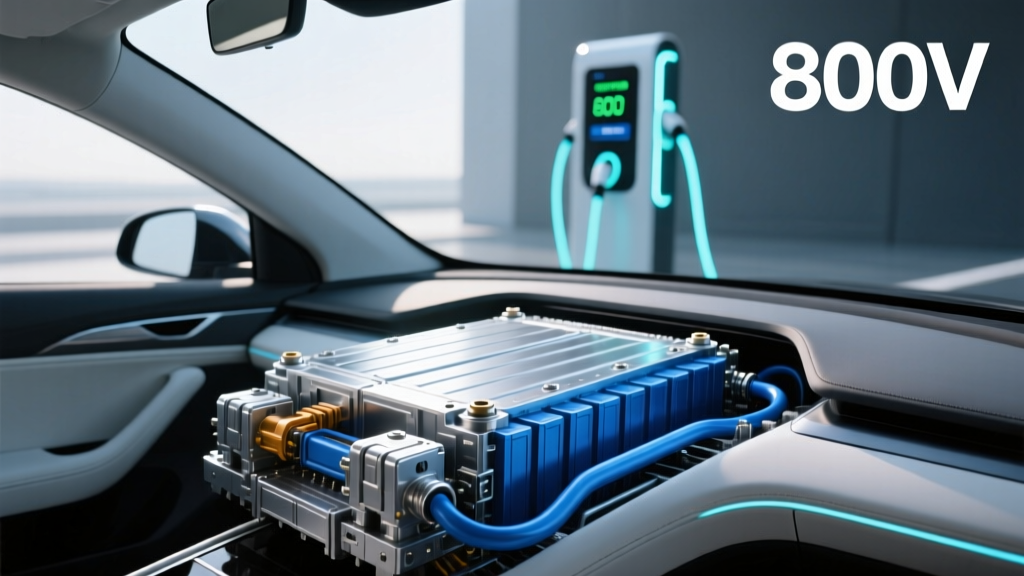
- DC Fast Charging (400–800V DC, 50–350 kW): Adds 150–300+ miles in 15–25 minutes (10–80% SoC). The vehicle's BMS manages the charge curve — peak kW is sustained only between ~10–50% SoC, then tapers to protect the cells.
The 800V architectures (Hyundai E-GMP, Porsche, Lucid) charge faster because they can accept higher power at lower current, reducing heat. This is the opposite end of the spectrum from an 8V tractor battery — but the fundamental electrochemistry principle is the same: controlled voltage and current to safely move lithium ions between anode and cathode.
What's Next: Solid-State and Silicon-Anode Batteries
Forward-looking — not yet available in production US vehicles as of 2026.
- Solid-state batteries: Replace the liquid electrolyte with a solid ceramic or polymer, promising 30–50% higher energy density, faster charging, and improved safety. Toyota has announced limited production for 2027–2028 in Japan; US availability is likely 2029+. Samsung SDI and QuantumScape are also in pilot production. Realistic timeline for mainstream US EVs: 2029–2032.
- Silicon-anode batteries: Replace graphite anodes with silicon, boosting energy density by 20–40%. Sila Nanotechnologies and Group14 are supplying early production cells. Expect limited adoption in premium models (Mercedes, Porsche) by 2027–2028, with broader availability by 2030.
- Sodium-ion batteries: Lower cost, no lithium or cobalt required, but ~30% lower energy density. CATL is producing these in China for budget EVs; US adoption is possible for fleet/commercial vehicles by 2028.
None of these are buyable today. If you're shopping now, LFP and NMC are mature, proven chemistries with extensive real-world track records. The "wait for solid-state" advice has been given since 2015 — and while the technology is genuinely progressing, current batteries already deliver 250,000+ mile lifespans for most owners.
Frequently Asked Questions
Can I charge an 8 volt battery with a 12 volt charger?
No. A 12V charger will overcharge and damage an 8V lead-acid battery, potentially causing overheating, gassing, or failure. Always use a charger matched to the battery's nominal voltage (8V chargers deliver ~9.6–10.4V). This is entirely separate from EV charging, which uses sophisticated BMS-controlled protocols.
How long do EV batteries last in years and miles?
Modern liquid-cooled EV batteries (LFP or NMC) typically last 150,000–250,000+ miles before reaching 70% State of Health. In calendar years, that's 12–20+ years for average drivers. Fleet data from Tesla, Hyundai, and others supports this. The battery usually outlasts the vehicle's useful life.
How much does an EV battery cost to replace?
Out-of-warranty replacement costs range from ~$10,000 for a Chevy Bolt pack to $25,000–$35,000 for a Porsche Taycan. Most mainstream EVs (Tesla Model 3/Y, Ioniq 5) fall in the $12,000–$20,000 range for new OEM packs. Remanufactured options cost 40–50% less. However, most original packs never need replacement during typical ownership.
What does the EV battery warranty cover?
Federal mandate requires 8 years / 100,000 miles minimum (10/150k in CARB states). Coverage includes manufacturing defects and capacity loss below a threshold (typically 70% of original capacity). It does not cover accident damage, flooding, or abuse. Always read your specific warranty booklet.
How do I check my EV battery's health?
Use in-car SoH displays (where available), OBD-II diagnostic apps, free services like Recurrent Auto, or dealer diagnostics. For used-EV purchases, always verify SoH before buying — compare displayed range at 100% to the original EPA figure.
LFP vs NMC — which battery chemistry should I choose?
Choose LFP if you prioritize longevity, lower cost, and plan to keep the car 10+ years in a moderate climate. Choose NMC/NCA if you need maximum range, live in a cold climate, or want the longest single-charge road trips. Both are excellent; the right choice depends on your use case.
Does fast charging damage my EV battery?
Occasional DC fast charging has minimal impact. Daily reliance on 150–350 kW charging can accelerate degradation by 1–3% over 100k miles compared to Level 2 home charging. Modern BMS and thermal management mitigate this significantly. For daily use, Level 2 (7–11 kW) at home is ideal.