The high-voltage traction battery is the single most expensive component in any electric vehicle — and the one that generates the most ownership anxiety. Unlike a gas car's fuel tank, an EV battery is a chemically active system that degrades over time, responds to temperature, and costs thousands to replace. Yet the data tells a reassuring story: modern EV battery packs routinely outlast 150,000 miles with manageable capacity loss, and federal warranty mandates protect buyers for at least eight years.
Whether you're evaluating a Tesla Model 3 with its LFP pack, a Hyundai Ioniq 5 with NMC chemistry, or a heavy-duty electric truck that functions as a battery locomotive hauling freight, the underlying electrochemistry, degradation physics, and ownership economics follow the same principles. This guide breaks down exactly what you need to know.
LFP vs NMC vs NCA: Which Battery Chemistry Powers Your EV?
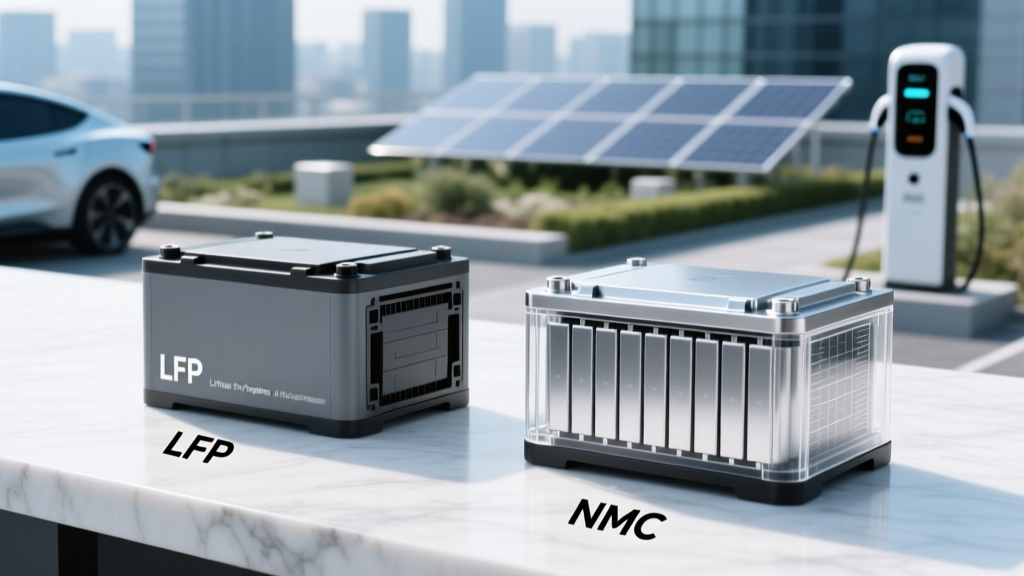
Not all lithium-ion batteries are the same. The cathode chemistry determines energy density, cycle life, cold-weather performance, cost, and safety. In 2026, three chemistries dominate the EV market:
- LFP (Lithium Iron Phosphate): Used in Tesla Model 3/Y Standard Range, Ford Mustang Mach-E Select, and many Chinese-market EVs. Lower energy density but exceptional cycle life and thermal stability.
- NMC (Nickel Manganese Cobalt): Found in Hyundai Ioniq 5/6, Kia EV6/EV9, BMW iX, VW ID.4, and most long-range EVs. Higher energy density, moderate cycle life.
- NCA (Nickel Cobalt Aluminum): Primarily used by Tesla in Long Range and Performance variants, and by Rivian. Highest energy density, slightly lower thermal stability than LFP.
| Attribute | LFP | NMC | NCA |
|---|---|---|---|
| Energy Density | ~160 Wh/kg | ~220-260 Wh/kg | ~250-280 Wh/kg |
| Cycle Life (to 80% SoH) | 3,000-5,000+ | 1,500-2,500 | 1,200-2,000 |
| Cold Performance | Moderate (more range loss) | Good | Good |
| Thermal Stability | Excellent | Good | Moderate |
| Cobalt Content | None | Yes (reduced in newer cells) | Yes |
| Cost per kWh (cell) | ~$80-$100 | ~$110-$140 | ~$120-$150 |
| Typical SoC Recommendation | 100% daily OK | 80% daily, 100% for trips | 80% daily, 100% for trips |
Which is better? It depends on your use case. If you want maximum range per charge and don't mind charging to 80% daily, NMC or NCA delivers. If you prioritize longevity, lower cost, and the ability to charge to 100% without degradation guilt, LFP is the superior choice — especially for commuter vehicles and fleet applications including battery-electric locomotives where thousands of deep cycles matter more than energy density.
How Long Do EV Batteries Actually Last?
The short answer: longer than most buyers expect. Data from fleet operators, manufacturer reports, and independent testing consistently shows that modern liquid-cooled EV battery packs lose roughly 10-15% of their original capacity over the first 150,000 miles — meaning a car with an EPA-rated 300-mile range would still deliver approximately 255-270 miles at that mileage.
Here's what the data shows across popular models:
| Model / Fleet | Battery kWh | Chemistry | Avg. Loss at 100k mi | Source |
|---|---|---|---|---|
| Tesla Model 3/Y (all variants) | 60-82 kWh | LFP / NCA | ~8-12% | Tesla Impact Report 2024 |
| Hyundai Ioniq 5 | 77.4 kWh | NMC | ~7-10% | Owner fleet data / fueleconomy.gov |
| Chevrolet Bolt EV/EUV | 65 kWh | NMC | ~6-9% | Recurrent Auto fleet data |
| Nissan LEAF (air-cooled) | 40-62 kWh | NMC | ~12-20% | Owner reports / Recurrent |
| BMW iX xDrive50 | 111.5 kWh | NMC | ~5-8% | Early fleet telemetry |
Key insight: Degradation is not linear. Most packs lose 2-5% in the first year (the "break-in" period), then settle into a slow, steady decline of roughly 1-2% per year. The Nissan LEAF's higher loss illustrates the importance of active thermal management — liquid-cooled packs (standard on virtually all 2026 EVs) significantly outperform passively cooled designs.
For context, battery-electric locomotives and heavy-duty commercial EVs using LFP cells are being designed for 5,000+ cycles — potentially 1 million miles — before reaching 80% State of Health, because their massive packs operate at lower C-rates and benefit from robust thermal management.
What Does the EV Battery Warranty Cover?
U.S. federal law mandates that EV batteries carry a minimum warranty of 8 years or 100,000 miles (whichever comes first). In California Air Resources Board (CARB) states, that extends to 10 years or 150,000 miles. Most manufacturers exceed these minimums.
| Manufacturer | Warranty Period | Capacity Threshold | Notes |
|---|---|---|---|
| Tesla | 8 yr / 120,000 mi (Model 3/Y); 8 yr / 150,000 mi (S/X) | 70% retention | Transferable to second owner |
| Hyundai / Kia | 10 yr / 100,000 mi | 70% retention | Among the longest coverage |
| GM (Chevy/Cadillac) | 8 yr / 100,000 mi | 70% retention (60% for Bolt recall replacements) | Ultium packs covered |
| Ford | 8 yr / 100,000 mi | 70% retention | Covers Mustang Mach-E, F-150 Lightning |
| BMW | 8 yr / 100,000 mi | 70% retention | Covers i4, iX, i7 |
| Rivian | 8 yr / 175,000 mi (R1T/R1S) | 70% retention | Higher mileage cap reflects adventure use |
The warranty covers capacity loss below the stated threshold — not cosmetic issues or 12V auxiliary battery failure. If your pack drops below 70% of original capacity within the warranty period, the manufacturer will repair or replace modules (or the full pack) to bring it above threshold. According to IRS guidelines, warranty replacement does not affect your original §30D tax credit eligibility.
How Much Does an EV Battery Replacement Cost?
Out-of-warranty battery replacement remains expensive, but costs have declined steadily as cell prices drop and module-level repair becomes more common. Here's the current landscape:
| Vehicle | Pack Size | Full Pack Replacement | Module Repair |
|---|---|---|---|
| Tesla Model 3 (LFP) | ~60 kWh | $8,000-$12,000 | $2,500-$4,500 |
| Tesla Model Y (NCA) | ~75-82 kWh | $12,000-$16,000 | $3,500-$5,500 |
| Hyundai Ioniq 5 | 77.4 kWh | $14,000-$18,000 | $3,000-$6,000 |
| Ford F-150 Lightning (Extended) | 131 kWh | $20,000-$28,000 | $4,000-$8,000 |
| Chevrolet Silverado EV | 200 kWh | $25,000-$35,000+ | $5,000-$10,000 |
| Nissan LEAF | 40-62 kWh | $6,500-$9,000 | Limited module availability |
Critical context: Most EV owners will never need a full battery replacement. Data from NHTSA complaint databases and fleet operators shows that catastrophic pack failure (outside of collision damage or manufacturing defects) is rare — well under 1% of vehicles. The far more common scenario is gradual capacity loss, which the warranty covers for 8-10 years. By the time a pack degrades enough to warrant out-of-pocket replacement, many vehicles have already been traded in or retired.
Module-level repair is increasingly viable: if one cell group or module fails, specialized EV shops can replace just that section for a fraction of the full-pack cost. This is particularly relevant for large-pack vehicles like the F-150 Lightning or commercial battery locomotive platforms where full replacement would be cost-prohibitive.
What Kills an EV Battery? Five Factors That Accelerate Degradation
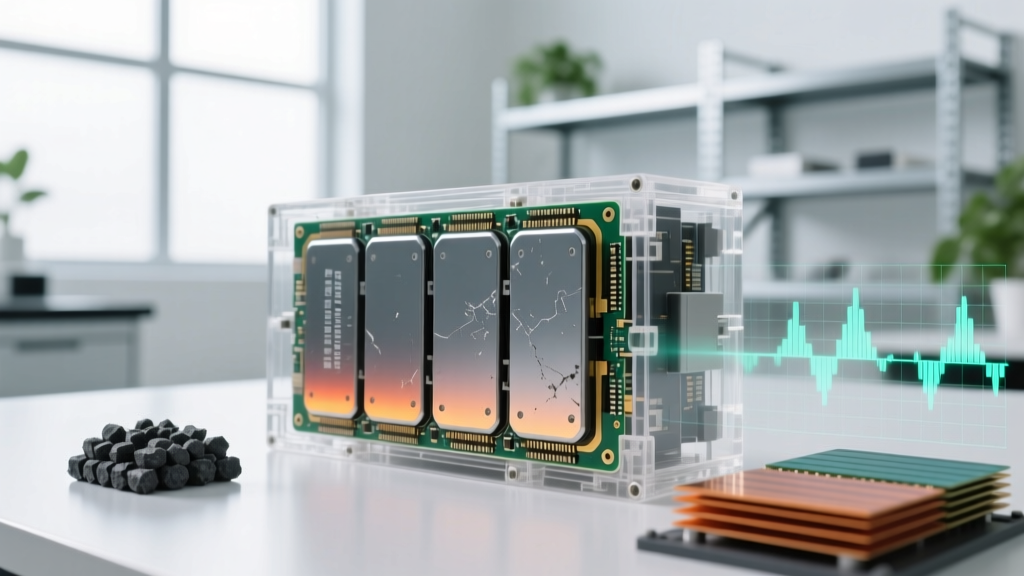
Battery degradation is driven by electrochemical stress. Here are the five biggest factors, ranked by impact:
Battery Care Checklist: What to Do (and Avoid)
- Avoid sustained 100% SoC: For NMC/NCA packs, set your daily charge limit to 80%. Reserve 100% for road trips. LFP packs tolerate 100% better and Tesla recommends periodic 100% charges for BMS calibration.
- Minimize DC fast charging when possible: Occasional Supercharging or Electrify America stops won't destroy your pack, but daily DCFC sessions at 150-350 kW generate significant heat. Home Level 2 charging (7-11 kW) is gentler. Studies show vehicles that DCFC more than 3x per week show 1-3% additional degradation over 100k miles versus primarily L2 chargers.
- Precondition in cold weather: Lithium-ion cells charge very slowly and experience stress below 32°F. Use your EV's preconditioning feature (or simply schedule departure times) to warm the pack before charging or hard driving. Most 2026 EVs with heat pumps handle this automatically.
- Avoid extreme heat exposure: Parking in direct sun for weeks in Phoenix or Death Valley conditions accelerates calendar aging. A garage or shaded spot meaningfully extends pack life.
- Don't let it sit at 0%: Storing an EV at very low SoC for weeks can cause copper dissolution in the anode. If storing for more than two weeks, leave the pack at 50-60% SoC.
The chemistry matters here. LFP cells tolerate high SoC and deep cycling far better than NMC, which is why fleet operators and battery locomotive designers increasingly favor LFP for high-utilization applications. An LFP pack charged to 100% daily will often outlast an NMC pack charged to 80% daily over the same calendar period.
How to Check and Monitor Your Battery's State of Health
State of Health (SoH) is the percentage of original capacity your battery currently holds. A new pack is 100% SoH; at 70% SoH, your 300-mile EPA range becomes roughly 210 miles.
Here's how to check it:
- In-vehicle display: Tesla shows battery health estimates in the Service menu (or via the app). Hyundai/Kia provides SoH data through the infotainment system on 2024+ models. BMW's iDrive includes a battery health indicator.
- OBD-II dongle + app: Tools like the OBDLink SX paired with apps such as EV Health or LeafSpy (Nissan-specific) read BMS data directly. These show real SoH, cell voltage variance, and pack temperature — far more precise than the dashboard guess-o-meter.
- Dealer diagnostic: Any authorized service center can pull a full battery health report. Request this during routine service or before a used-EV purchase.
- Third-party services: Companies like Recurrent Auto provide battery health reports based on telematics data, often free for members. Useful for pre-purchase verification on used EVs.
What to watch for: Cell voltage imbalance. If one module consistently reads 0.1V or more below the others at full charge, that module is degrading faster and may eventually trigger a warranty claim. Catching this early through regular SoH monitoring gives you time to pursue warranty coverage before expiration.
The Future: Solid-State, Silicon Anode, and Next-Gen Battery Tech
Several emerging technologies promise to reshape EV batteries, but realistic timelines matter:
- Solid-state batteries: Replace the liquid electrolyte with a solid ceramic or polymer, enabling higher energy density (~350-500 Wh/kg), faster charging, and improved safety. Toyota has announced a solid-state EV for 2027-2028, and Samsung SDI targets 2027 production. However, manufacturing yield and cost remain unsolved for mass-market vehicles. Expect solid-state in premium models first, with mainstream adoption likely in the 2030s.
- Silicon anode cells: Replacing graphite anodes with silicon increases energy density by 20-40%. Companies like Sila Nanotechnologies and Group14 are shipping cells to manufacturers now. Expect silicon-dominant anodes in production EVs by 2027-2028, with incremental range gains of 30-60 miles per pack size.
- Sodium-ion batteries: Cheaper than lithium, with no cobalt or nickel. CATL and BYD are producing sodium-ion cells for budget EVs in China. U.S. availability is limited, but sodium-ion could power entry-level EVs and battery-electric locomotive platforms where weight is less critical than cost by the late 2020s.
Forward-looking note: None of these technologies are available in 2026 production vehicles sold in the U.S. market. Announcements should be treated as preliminary until independent verification and volume production are confirmed. For today's buyers, current-gen LFP and NMC packs already deliver 10-15 year usable lifespans.
Frequently Asked Questions
How long do EV batteries last in years and miles?
Most modern liquid-cooled EV battery packs retain 85-90% of original capacity at 100,000 miles and 80-85% at 150,000 miles. In calendar years, that translates to 12-15+ years of usable service before capacity drops below 70%. Fleet data from Tesla, Hyundai, and BMW consistently supports these figures. Air-cooled packs (older Nissan LEAF) degrade faster.
How much does an EV battery cost to replace?
Full pack replacement ranges from approximately $6,500 (Nissan LEAF) to $35,000+ (Chevrolet Silverado EV 200 kWh pack). Module-level repair typically costs $2,500-$10,000. However, the vast majority of EV owners never pay for a replacement — the 8-year/100,000-mile federal warranty minimum covers capacity loss below 70%, and most packs outlast the vehicle's economic life.
What does the EV battery warranty actually cover?
The warranty covers capacity loss below a defined threshold (typically 70% of original capacity) within the warranty period (8 years/100,000 miles minimum; 10/150,000 in CARB states). It does not cover damage from collisions, flooding, or unauthorized modifications. The manufacturer may replace individual modules rather than the entire pack. Warranty is typically transferable to second owners.
How do I check and maximize my EV battery health?
Monitor SoH through your vehicle's built-in display, an OBD-II diagnostic tool, or dealer service reports. Maximize longevity by: charging to 80% daily (NMC/NCA) or 100% (LFP), minimizing frequent DC fast charging, preconditioning the pack in cold weather, avoiding prolonged storage at 0% or 100% SoC, and parking in shade during extreme heat.
LFP vs NMC — which battery chemistry is better for me?
Choose LFP if you want maximum cycle life, lower cost, cobalt-free sourcing, and don't mind slightly lower range per kWh. LFP is ideal for daily commuters, fleet vehicles, and battery locomotive applications. Choose NMC or NCA if you need maximum range per charge (long road trips, towing) and are comfortable with 80% daily charging limits. NMC offers roughly 30-50% more energy density, translating to 40-80 additional miles of EPA range in comparable vehicles.
Does frequent DC fast charging damage my battery?
Occasional DC fast charging (1-2 sessions per week) has minimal measurable impact on modern liquid-cooled packs. However, daily DCFC use at 150-350 kW generates sustained heat that accelerates degradation by roughly 1-3% over 100,000 miles compared to primarily Level 2 home charging. If you rely on public DCFC daily, preconditioning and choosing chargers that taper power above 80% SoC helps mitigate stress.
Will solid-state batteries make current EVs obsolete?
Not in the near term. Solid-state batteries remain in pre-production as of 2026, with Toyota, Samsung SDI, and others targeting limited production in 2027-2028 for premium models. Mass-market solid-state EVs are unlikely before the early 2030s. Current LFP and NMC packs already provide 10-15 year lifespans, so today's EVs will remain practical and supported well into the next decade.
Sources: EPA fueleconomy.gov, Tesla Impact Report, NHTSA, manufacturer warranty documentation, Recurrent Auto fleet data.