If you've spent any time in EV forums, you've likely encountered the phrase "battery loco" — community shorthand for the obsessive tracking of traction battery health, chemistry, degradation curves, and replacement economics that defines modern EV ownership. Unlike a gas car's engine, which can be rebuilt piecemeal, the high-voltage traction battery is the single most expensive component in your electric vehicle. Understanding how it works, how it ages, and what it costs when it fails isn't optional — it's the foundation of smart EV buying and ownership.
This guide breaks down everything a current or prospective EV owner needs to know about battery chemistry trade-offs, real-world degradation data, warranty coverage, replacement costs, and the emerging technologies on the horizon. All figures reflect 2026 model-year vehicles and current market conditions.
LFP vs NMC vs NCA: Which Battery Chemistry Powers Your EV?
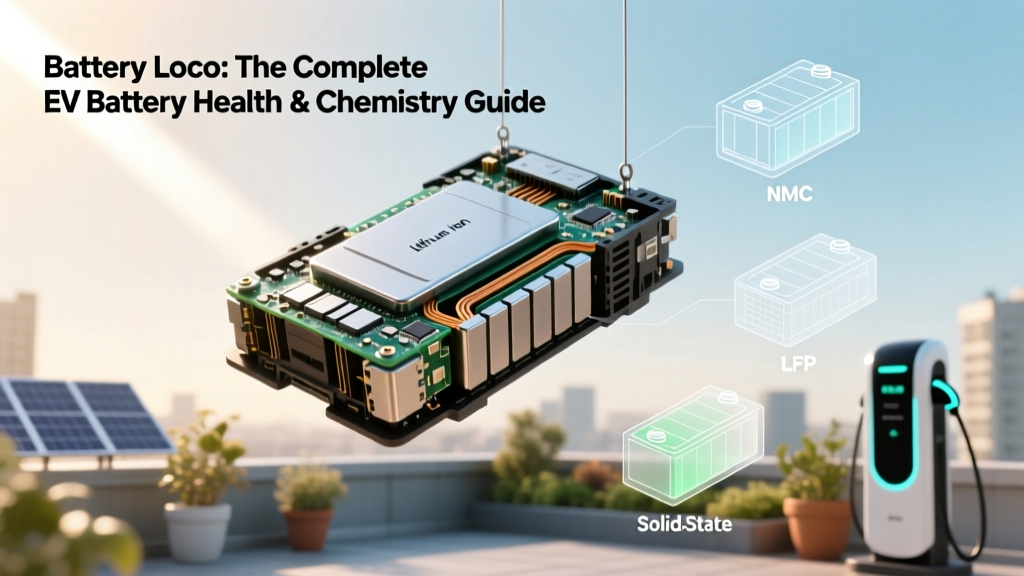
Not all EV batteries are created equal. The cathode chemistry determines energy density, cycle life, cold-weather behavior, cost, and even how you should charge the vehicle daily. In 2026, three chemistries dominate the US market:
- LFP (Lithium Iron Phosphate): Used in Tesla Model 3/Y Standard Range, Ford Mustang Mach-E Select (2025+), and many Chinese-market imports. No nickel or cobalt.
- NMC (Nickel Manganese Cobalt): Found in Hyundai Ioniq 5/6, Kia EV6/EV9, VW ID.4, BMW iX, and most long-range models.
- NCA (Nickel Cobalt Aluminum): Primarily Tesla's Long Range and Performance vehicles, plus some Panasonic-supplied applications.
| Attribute | LFP | NMC (811/622) | NCA |
|---|---|---|---|
| Energy Density (cell-level) | ~160-180 Wh/kg | ~220-260 Wh/kg | ~250-280 Wh/kg |
| Typical Cycle Life | 3,000-5,000+ cycles | 1,000-2,000 cycles | 1,000-1,500 cycles |
| Daily Charge Recommendation | 100% OK (recommended weekly) | 80% daily, 100% for trips | 80% daily, 100% for trips |
| Cold-Weather Performance | Moderate loss; slower cold-charge | Better low-temp conductivity | Best low-temp performance |
| Cost per kWh (pack-level) | ~$95-$115 | ~$125-$150 | ~$130-$155 |
| Thermal Stability | Excellent (very low runaway risk) | Good (requires robust BMS) | Good (requires robust BMS) |
| Common Applications | Standard Range, fleet, budget EVs | Long Range, AWD, SUVs | Tesla LR/Performance, premium |
The practical takeaway: LFP sacrifices roughly 15-20% energy density for dramatically longer cycle life and the ability to charge to 100% daily without accelerated degradation. If your commute is under 200 miles round-trip and you want a battery that will likely outlast the car's body, LFP is the pragmatic choice. NMC and NCA deliver more range per kilogram — critical for large SUVs and trucks like the Rivian R1S or Ford F-150 Lightning Extended Range — but demand more careful charging habits.
How Long Do EV Batteries Actually Last? Real Degradation Data
The most common question from prospective EV buyers: "Will I need a $20,000 battery replacement in five years?" The short answer, backed by fleet data, is almost certainly no. Most modern EV batteries are engineered to outlast 200,000 miles with meaningful capacity remaining.
Typical Degradation Curve (NMC/NCA, liquid-cooled packs, 2020-2026 models):
- Year 1 / 15,000 mi: 2-4% capacity loss (initial "formation" drop)
- Year 3 / 45,000 mi: 6-9% total loss
- Year 5 / 75,000 mi: 8-12% total loss
- Year 8 / 120,000 mi: 12-18% total loss
- Year 10 / 150,000 mi: 15-22% total loss (varies heavily by climate and charging habits)
Sources: Geotab fleet data (6,300+ vehicles), Recurrent Auto battery health reports.
LFP packs degrade more slowly. Tesla's LFP Model 3 fleet data and BYD's Blade battery testing suggest LFP cells retain 90%+ capacity at 200,000 miles under normal use. The trade-off is that LFP's lower energy density means you start with fewer EPA-rated miles — so a 10% loss on a 272-mile EPA Model 3 RWD (LFP) leaves you at ~245 miles, while a 10% loss on a 358-mile Model 3 Long Range (NCA) leaves ~322 miles.
Real-world range impact: Degradation isn't linear. Most packs lose 2-4% in the first year (the steepest drop), then settle into a slow, roughly linear decline of 1-2% per year. A 2022 Hyundai Ioniq 5 with a 77.4 kWh NMC pack rated at 303 miles EPA will realistically show ~275-285 miles of usable range at 60,000 miles — still well above most daily needs.
What Does the EV Battery Warranty Actually Cover?
Federal law mandates a minimum 8-year/100,000-mile battery warranty for EVs sold in the US, but the details matter enormously. Here's how major manufacturers structure their coverage in 2026:
| Manufacturer | Duration | Mileage | Capacity Threshold | Covers |
|---|---|---|---|---|
| Tesla (Model 3/Y LFP) | 8 years | 100,000 mi | 70% retention | Defect + degradation below threshold |
| Tesla (Model 3/Y LR/Perf) | 8 years | 120,000 mi | 70% retention | Defect + degradation below threshold |
| Hyundai / Kia | 10 years | 100,000 mi | 70% retention | Defect + degradation below threshold |
| Ford (Mach-E, F-150 Lightning) | 8 years | 100,000 mi | 70% retention | Defect + degradation below threshold |
| GM (Ultium platform) | 8 years | 100,000 mi | 70% retention | Defect + degradation below threshold |
| VW (ID.4) | 8 years | 100,000 mi | 70% retention | Defect + degradation below threshold |
| Rivian | 8 years | 175,000 mi | 70% retention | Defect + degradation below threshold |
Critical nuance: The 70% threshold means the manufacturer only replaces or repairs the battery if it falls below 70% of original usable capacity within the warranty period. A pack that degrades to 72% at 99,000 miles — meaning you've lost 28% of your range — is technically "within spec" and won't trigger a warranty claim. In practice, fleet data shows very few modern liquid-cooled packs breach 70% within the warranty window unless there's a manufacturing defect.
Warranties cover defects in materials and workmanship, plus capacity loss beyond the stated threshold. They do not cover damage from collisions, flooding, improper charging equipment, or aftermarket modifications to the electrical system. Always review your specific owner's manual for exclusions.
EV Battery Replacement Cost: What You'll Actually Pay
Here's where "battery loco" anxiety peaks — and where context is essential. Yes, a full traction battery replacement is expensive. But the probability of needing one within the first 10-15 years of ownership is low, and costs have been declining steadily.
| Vehicle / Pack Size | Battery Capacity | Chemistry | Replacement Cost (Parts + Labor) |
|---|---|---|---|
| Tesla Model 3 RWD (LFP) | ~60 kWh | LFP | $12,000 - $15,000 |
| Tesla Model Y Long Range | ~82 kWh | NCA | $16,000 - $22,000 |
| Hyundai Ioniq 5 | 77.4 kWh | NMC | $14,000 - $20,000 |
| Ford F-150 Lightning Ext. Range | ~131 kWh | NMC | $25,000 - $35,000 |
| Chevrolet Silverado EV | ~200 kWh | NMC (Ultium) | $35,000 - $45,000 |
| Nissan Leaf (40 kWh pack) | 40 kWh | NMC (passive air-cooled) | $8,000 - $12,000 |
Costs include refurbished or new pack + installation labor at dealer or certified EV shop. Prices vary by region and parts availability. Source: RepairPal, manufacturer service bulletins, independent EV shop surveys.
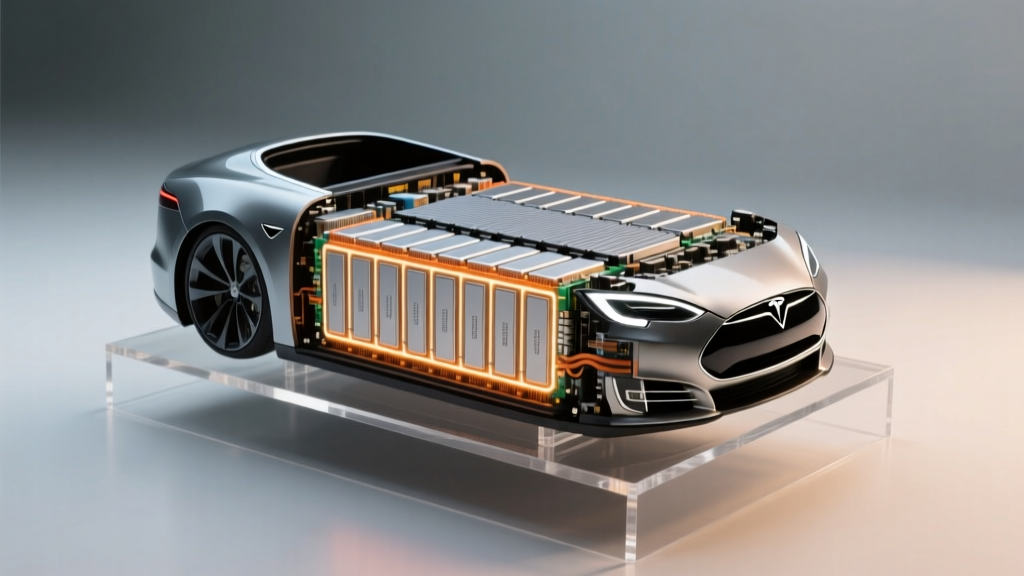
Module-level repair is increasingly viable. Many packs — especially modular designs like the older Nissan Leaf, BMW i3, and some VW MEB-platform vehicles — allow individual module replacement rather than a full pack swap. A single degraded module replacement can cost $1,500-$4,000 instead of a full pack. Shops like Electrified Garage and independent EV specialists are expanding this service nationwide.
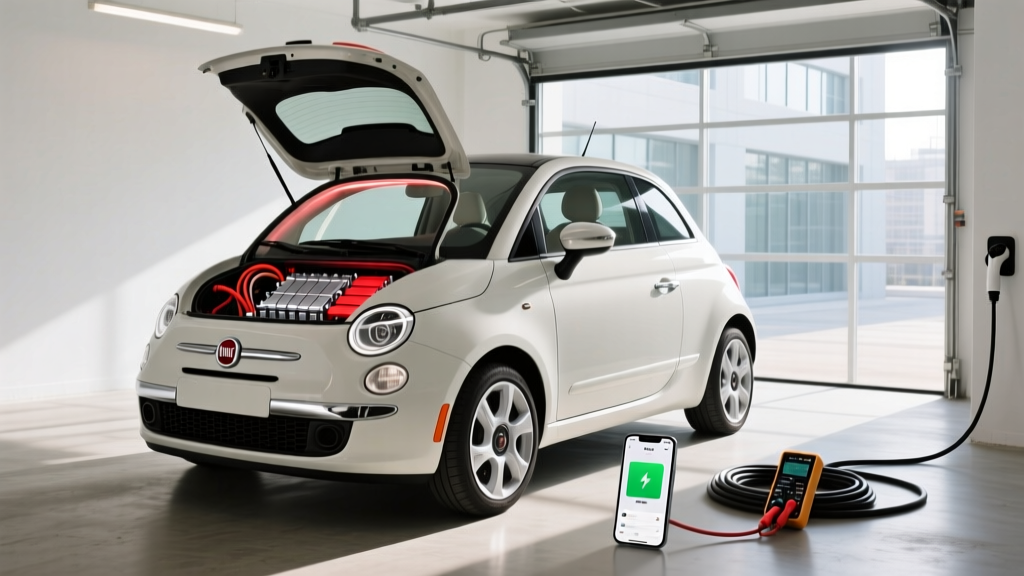
When is replacement typically needed? Based on current degradation data, most liquid-cooled NMC/NCA packs won't breach the 70% threshold until 200,000-300,000 miles under normal use. LFP packs may never reach that point within a vehicle's practical lifespan. The exceptions are early-generation air-cooled packs (2011-2017 Nissan Leaf, early Fiat 500e) which degraded faster due to thermal stress, and vehicles subjected to extreme heat with frequent DC fast charging.
Factors That Accelerate (or Preserve) Battery Life
Your battery's lifespan isn't just a function of time and miles — it's heavily influenced by how you charge, where you park, and how you drive. Here's the hierarchy of degradation factors, ranked by impact:
High Impact
- Extreme heat exposure: Sustained ambient temps above 95°F (35°C), especially when the battery is at high SoC, accelerates electrolyte decomposition. Parking in shade or a garage matters significantly in Arizona, Texas, and Southern California.
- Frequent DC fast charging to 100%: DCFC sessions generate significant heat. Repeatedly charging to 100% at high power stresses cells. Best practice: DCFC to 80% on road trips, top off the last 20% on Level 2 at home.
- Storing at extreme SoC: Leaving an NMC/NCA vehicle at 100% SoC for days or weeks in heat is one of the fastest ways to degrade a pack. Conversely, storing at 0% for extended periods risks copper dissolution. Target 50-60% SoC for long-term storage.
Moderate Impact
- Cold-weather fast charging without preconditioning: Charging a cold battery at high power causes lithium plating on the anode — permanent capacity loss. Always use your vehicle's preconditioning feature (navigation to a charger triggers this automatically in Teslas, Hyundais, Fords, and most modern EVs).
- Consistent 100% daily charging (NMC/NCA): For nickel-based chemistries, daily 100% charges accelerate degradation compared to 80% daily. LFP owners: charge to 100% at least once per week for BMS calibration.
Lower Impact
- Aggressive driving / high discharge rates: While sustained high-power discharge generates heat, modern BMS and thermal management systems mitigate this effectively. Track days are fine; daily hard launches are a minor factor.
- Level 1 (120V) vs Level 2 (240V) charging: Slower Level 1 charging generates less heat per session and is marginally gentler on cells. However, the difference is small compared to temperature and SoC factors.
How to Check Your Battery's State of Health (SoH)
State of Health (SoH) represents your battery's current maximum capacity as a percentage of its original capacity when new. A 77.4 kWh pack at 92% SoH holds approximately 71.2 kWh when fully charged. Here's how to monitor it:
Manufacturer Apps and In-Dash Displays
- Tesla: No native SoH display, but you can estimate by charging to 100% and comparing displayed range to original EPA rating. Third-party tools like Tessie or TeslaFi track degradation curves over time.
- Hyundai/Kia: The EV app and infotainment system show a battery health indicator. Some models display SoH percentage in the service menu.
- Ford: FordPass provides a battery health status. Dealers can pull detailed SoH via OBD-II diagnostic tools.
- BMW: The iDrive system includes a battery health display under the EV menu, and the My BMW app provides periodic SoH reports.
Third-Party and OBD-II Tools
- OBD-II dongles + apps: Devices like the OBDLink SX paired with apps such as ABRP (A Better Route Planner) or Car Scanner can read real-time battery data including SoH, cell voltage variance, and pack temperature.
- Recurrent Auto: This service (free for enrolled owners) provides battery health reports and compares your degradation to a fleet of identical vehicles.
- Dealer diagnostic check: Any authorized dealer can pull a detailed battery health report. Request this during routine service visits — it's typically free.
Manual Estimation Method
Charge to 100% and note the displayed range. Divide by the original EPA-rated range and multiply by 100. Example: Your 2022 Ioniq 5 originally rated at 303 miles now shows 278 miles at 100%. Estimated SoH = (278/303) × 100 = 91.7%. This is approximate — displayed range is affected by recent driving patterns and temperature — but it's directionally useful when tracked over months.
Emerging Battery Tech: Solid-State and Silicon Anodes
The next generation of battery technology promises step-change improvements, but timelines matter. Here's a realistic assessment as of 2026:
Solid-state batteries replace the liquid electrolyte with a solid ceramic, polymer, or sulfide material. Benefits include higher energy density (potentially 400+ Wh/kg at cell level), faster charging, improved safety (no flammable electrolyte), and longer cycle life. Toyota has announced a solid-state EV for limited production in 2027-2028, and Samsung SDI is targeting 2027 for mass production. However, manufacturing yield challenges and cost remain significant barriers. Expect solid-state to appear first in premium/limited-production vehicles before reaching mainstream pricing around 2030-2032.
Silicon-dominant anodes (replacing graphite) can increase energy density by 20-40%. Companies like Sila Nanotechnologies and Group14 are already supplying silicon-carbon anode materials to battery manufacturers. The Mercedes-AMG EQG (G-Wagen EV) uses a silicon-anode pack from Sila. Expect broader adoption across premium EVs by 2027-2028, with mainstream vehicles following by 2029-2030.
Sodium-ion batteries are entering the market for lower-cost, shorter-range applications. CATL began shipping sodium-ion packs in Chinese-market vehicles in 2024, and BYD has announced sodium-ion models. These won't replace lithium-ion in long-range vehicles but could power affordable city EVs and energy storage systems.
Bottom line: If you're buying an EV in 2026, current lithium-ion technology (LFP and NMC) is mature, reliable, and backed by robust warranties. Waiting for solid-state means waiting 4-6+ years for mainstream availability at affordable prices.
Frequently Asked Questions
How long do EV batteries last in years and miles?
Based on fleet data from Geotab and Recurrent Auto, modern liquid-cooled EV batteries (2020+) typically retain 80-88% of original capacity at 150,000 miles / 10 years. LFP packs often retain 90%+ at 200,000 miles. Most EV batteries will outlast the vehicle's body, suspension, and interior before reaching end-of-life capacity thresholds.
How much does an EV battery cost to replace?
Out-of-warranty replacement costs range from approximately $8,000 for a small pack (Nissan Leaf 40 kWh) to $35,000-$45,000 for large truck packs (Chevrolet Silverado EV 200 kWh). Most mainstream EVs (60-82 kWh packs) fall in the $12,000-$22,000 range including labor. Module-level repairs, where available, can cost $1,500-$4,000 for a single degraded module.
What does the battery warranty cover?
Federal law requires a minimum 8-year/100,000-mile warranty covering defects and capacity loss below a stated threshold (typically 70% retention). Hyundai/Kia offer 10-year/100,000-mile coverage. Rivian covers 8 years/175,000 miles. The warranty does not cover collision damage, flood damage, or degradation caused by improper aftermarket charging equipment.
How do I check and maximize my battery's health?
Monitor SoH through your vehicle's app, OBD-II diagnostic tools, or dealer service visits. To maximize longevity: avoid sustained 100% SoC on NMC/NCA packs (charge to 80% daily), use preconditioning before DC fast charging, park in shade/garages in hot climates, and avoid storing the vehicle at extreme SoC levels for extended periods. LFP owners should charge to 100% at least weekly for BMS calibration.
LFP vs NMC — which battery chemistry is better?
Neither is universally "better" — it depends on your use case. Choose LFP if you want maximum cycle life, can charge to 100% daily without worry, prioritize lower cost, and don't need the absolute longest range. Choose NMC/NCA if you need maximum range per charge (road trips, long commutes), live in a very cold climate where NMC's low-temperature performance helps, or drive a large vehicle (SUV/truck) where energy density is critical for practical range.
Does frequent DC fast charging damage my battery?
Occasional DC fast charging (road trips, 1-2 times per week) has minimal impact on modern liquid-cooled packs. However, daily DCFC — especially to 100% SoC in hot weather — accelerates degradation. Studies suggest vehicles that rely primarily on DCFC may lose an additional 2-5% capacity over 100,000 miles compared to primarily Level 2 home charging. Use DCFC for what it's designed for: road trips and quick top-ups, not daily routine charging.
Can I upgrade my EV's battery to a larger or newer one?
In most cases, no. Battery packs are vehicle-specific in physical dimensions, voltage architecture, BMS software, and cooling connections. Exceptions exist: some Tesla owners have swapped older 85 kWh packs for newer 100 kWh units through specialized shops, and the Nissan Leaf community has developed upgrade paths from 24 kWh to 40 kWh or 62 kWh packs. These are aftermarket, unsupported by manufacturers, and may void warranties. For most owners, the practical "upgrade" is purchasing a newer vehicle.
For authoritative data on EV efficiency and range ratings, consult fueleconomy.gov. For current federal tax credit rules that may apply to your EV purchase, see the IRS Clean Vehicle Credits page.