Why Battery Chemistry and Domestic Lithium Matter More Than Ever
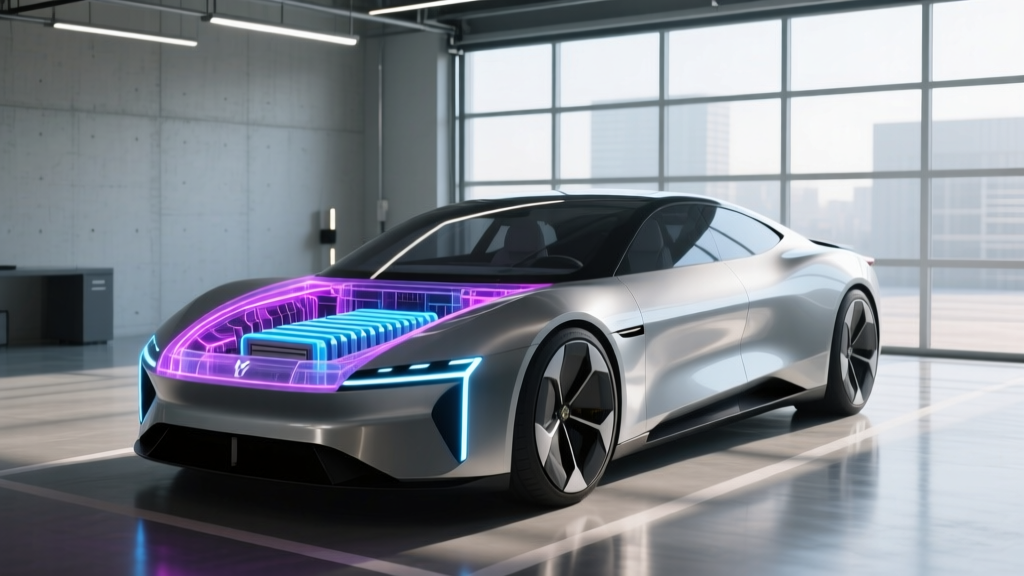
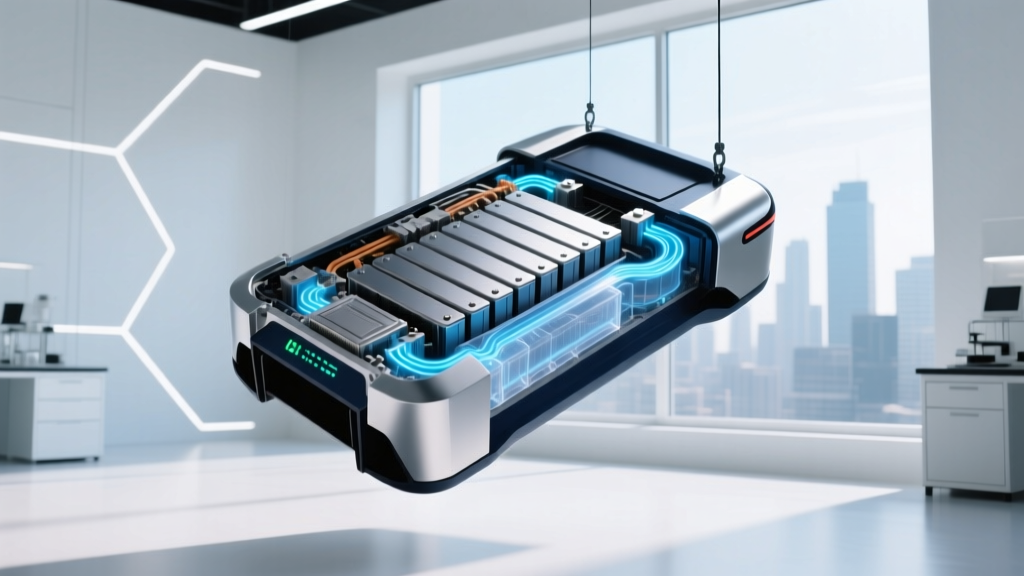
The electric vehicle you drive is only as good as the battery pack beneath its floor. In 2026, the average new EV carries between 60 and 100 kWh of usable energy stored in either lithium iron phosphate (LFP) or nickel-manganese-cobalt (NMC/NCA) cells. But the raw materials inside those cells — lithium, nickel, cobalt, graphite — have become as geopolitically charged as the vehicles themselves.
That's where programs like the Department of Energy's ATVM loan program and related federal vehicle manufacturing incentive financing come in. Projects such as the controlled thermal resources lithium extraction facility near Calipatria, California, aim to produce battery-grade lithium from Salton Sea brine using direct extraction technology. If scaled successfully, this domestic lithium could feed directly into the cells powering your next EV, reducing reliance on imports from Australia, Chile, and China while helping automakers meet the critical-mineral sourcing requirements of the §30D federal tax credit.
This guide breaks down everything an EV buyer or owner needs to know about battery technology today — chemistry trade-offs, real degradation data, warranty coverage, replacement costs, and the emerging supply-chain investments shaping what's inside tomorrow's packs.
LFP vs NMC/NCA: Which Chemistry Should You Choose?
Not all lithium-ion batteries are created equal. The two dominant chemistries in 2026 passenger EVs are LFP and NMC (with NCA, nickel-cobalt-aluminum, used by Tesla and a few others in similar high-nickel configurations). Each has distinct engineering trade-offs that affect your daily driving experience.
| Attribute | LFP (Lithium Iron Phosphate) | NMC / NCA (Nickel-based) |
|---|---|---|
| Energy density | ~160–180 Wh/kg (cell level) | ~230–300 Wh/kg (cell level) |
| Typical cycle life | 3,000–5,000+ cycles to 80% SoH | 1,500–2,500 cycles to 80% SoH |
| Cold-weather performance | Moderate — slower charge acceptance below 32°F | Better low-temp charge/discharge |
| Cost per kWh (cell) | ~$60–$75 (2026 estimates) | ~$90–$115 (2026 estimates) |
| Cobalt content | None | Varies — NMC811 uses minimal cobalt |
| Thermal stability | Excellent — higher runaway threshold | Good — requires robust BMS/cooling |
| Common in | Tesla Model 3/Y RWD, Ford Mustang Mach-E Select, many Chinese-market EVs | Long-range/performance trims, Hyundai Ioniq 5, BMW iX, Rivian |
| §30D tax credit impact | No cobalt eases critical-mineral sourcing | Nickel/cobalt must meet US or FTA-partner sourcing rules |
What This Means for Buyers
If you prioritize maximum range in a single charge and drive in cold climates, NMC/NCA still holds an edge due to higher energy density — you get more kWh in the same physical pack volume, and cold-weather charge acceptance is marginally better. If you plan to keep your EV for 10+ years, charge frequently to 100%, or want the lowest cost of ownership, LFP's superior cycle life and tolerance for high state-of-charge storage make it the pragmatic pick. Standard-range Tesla Model 3 and Model Y variants switched to LFP globally, and the data so far shows minimal degradation even with daily 100% charging — a practice Tesla explicitly recommends for LFP packs to keep the BMS calibrated.
How Long Do EV Batteries Actually Last? Real Degradation Data
The fear of a dead battery pack at 60,000 miles is largely a myth carried over from early-generation EVs like the 2011 Nissan Leaf, which lacked active thermal management. Modern liquid-cooled packs degrade far more slowly.
Typical degradation trajectory (liquid-cooled packs, 2020–2026 models):
- Year 1 / ~15,000 miles: 2–4% capacity loss (initial "break-in" drop)
- Year 3 / ~45,000 miles: 5–8% total loss
- Year 5 / ~75,000 miles: 8–12% total loss
- Year 8 / ~120,000 miles: 10–15% total loss
- Year 10 / ~150,000 miles: 12–18% total loss
Sources: Recurrent Auto fleet data, Geotab longitudinal study of 6,300+ EVs. Individual results vary based on climate, charging habits, and chemistry.
The degradation curve is non-linear: most loss happens in the first year or two, then the rate flattens considerably. A 2023 Tesla Model 3 Long Range with an NMC pack at 100,000 miles typically retains 88–92% of its original 75 kWh usable capacity — translating to roughly 285–300 miles of real-world range versus its original EPA-rated 341 miles. That's still more range than most gas cars get on a tank, and it's why battery replacement is rarely the ownership crisis some headlines suggest.
Factors That Accelerate Degradation
- Frequent DC fast charging above 150 kW: Occasional road-trip fast charging is fine, but daily reliance on 250+ kW chargers adds thermal stress. Expect 1–2% additional annual loss vs. predominantly Level 2 charging.
- Sustained high state of charge (NMC/NCA only): Parking an NMC pack at 100% SoC for days in hot weather accelerates electrolyte decomposition. LFP is largely immune to this concern.
- Extreme heat exposure: Ambient temperatures consistently above 95°F without garage parking degrade cells faster. Active thermal management mitigates this significantly.
- Deep discharge cycles: Regularly driving below 10% SoC stresses the anode. The BMS maintains a buffer, but habitually running the pack near-empty isn't ideal.
- Cold-weather fast charging without preconditioning: Forcing high current into a cold battery causes lithium plating on the anode — a permanent capacity loss mechanism. Always precondition before DC fast charging in freezing temperatures.
What Does the Battery Warranty Actually Cover?
Federal law mandates that EV battery packs carry a minimum warranty of 8 years / 100,000 miles (10 years / 150,000 miles in California Air Resources Board states). Most manufacturers exceed this baseline with capacity-retention guarantees.
| Manufacturer | Warranty Period | Capacity Retention Threshold | Notes |
|---|---|---|---|
| Tesla (Model 3/Y LFP) | 8 yr / 100,000 mi | 70% | Applies to RWD with LFP |
| Tesla (Model 3/Y LR/Perf, S/X) | 8 yr / 120,000 mi | 70% | NMC/NCA packs |
| Hyundai / Kia (E-GMP) | 10 yr / 100,000 mi | 70% | Ioniq 5, EV6, EV9 |
| Ford (Mach-E, F-150 Lightning) | 8 yr / 100,000 mi | 70% | Covers battery and hybrid components |
| GM (Ultium platform) | 8 yr / 100,000 mi | 70% | Blazer EV, Silverado EV, Equinox EV |
| Rivian (R1T/R1S) | 8 yr / 175,000 mi | 70% | Longest mileage coverage among startups |
| BMW (iX, i4, i7) | 8 yr / 100,000 mi | 70% | Covers cell, module, and pack level |
The key phrase is capacity retention threshold. If your pack falls below 70% of its original capacity during the warranty period, the manufacturer must repair or replace it at no cost. In practice, hitting 70% within 8 years requires severe abuse or a manufacturing defect — the vast majority of packs retain well above 80% at the 8-year mark. Warranty coverage typically excludes damage from collisions, flooding, or unauthorized modifications, but covers defects and abnormal degradation under normal use.
How Much Does an EV Battery Replacement Cost?
For the small percentage of owners who need an out-of-warranty replacement — typically at 150,000+ miles or 12+ years — costs have dropped substantially but remain significant.
| Vehicle / Pack Size | Battery Chemistry | Replacement Cost Range (Parts + Labor) | Typical Replacement Timeline |
|---|---|---|---|
| Tesla Model 3 RWD (~60 kWh) | LFP | $8,000–$12,000 | 15+ years / 200,000+ mi |
| Tesla Model Y Long Range (~82 kWh) | NMC | $12,000–$16,000 | 12–15 years / 180,000+ mi |
| Hyundai Ioniq 5 (~77.4 kWh) | NMC | $11,000–$15,000 | 12–15 years / 180,000+ mi |
| Ford F-150 Lightning Ext. Range (~131 kWh) | NMC | $18,000–$25,000 | 12–15 years / 150,000+ mi |
| Chevy Bolt EV (~65 kWh) | NMC | $9,000–$14,000 | 12–15 years / 180,000+ mi |
| Rivian R1T Large Pack (~135 kWh) | NMC | $20,000–$28,000 | 12–15 years / 180,000+ mi |
Context matters here. By the time an out-of-warranty replacement is needed, most EVs will have already saved their owners $8,000–$15,000 in fuel and maintenance costs versus a comparable gas vehicle. Additionally, third-party battery refurbishment and module-level replacement (swapping individual degraded modules rather than the full pack) is becoming more common, cutting costs by 40–60% for compatible vehicles. As domestic lithium production from projects like the Calipatria Salton Sea facility scales up, and as cell manufacturing expands under §30D critical-mineral sourcing incentives, pack prices are projected to continue declining through the late 2020s.
How to Check and Maximize Your Battery's Health
Monitoring State of Health (SoH) is straightforward with modern EVs, and a few habits can meaningfully extend your pack's useful life.
Checking State of Health
- In-vehicle displays: Tesla's service menu, Hyundai's infotainment diagnostics, and BMW's iDrive system show estimated SoH as a percentage. Access varies by model — consult your owner's manual.
- OBD-II apps: Tools like OBDeleven (VW Group), Leaf Spy (Nissan), or Scan My Tesla read detailed cell-level data including individual cell voltage variance, which is a more granular health indicator than overall SoH.
- Third-party services: Companies like Recurrent and fueleconomy.gov tracking tools let you log range over time and compare against fleet averages for your model.
- Dealer diagnostics: During scheduled service, dealerships can pull a full battery health report showing capacity, internal resistance, and cell balance — useful before a warranty claim or a used-EV purchase.
Battery Care Best Practices
- NMC/NCA daily charging: Set charge limit to 80–90% for daily driving. Charge to 100% only when needed for long trips, and drive away soon after reaching full.
- LFP daily charging: Charge to 100% at least once per week to keep the BMS calibrated. LFP cells tolerate full SoC storage well.
- Precondition before fast charging: Use your EV's navigation-based preconditioning (Tesla, Hyundai, GM) or manually warm the battery via the app in cold weather. This optimizes the charge curve and prevents lithium plating.
- Minimize sustained extreme SoC in heat: If parking for days in 95°F+ heat, store at ~50% SoC rather than 100%.
- Use Level 2 as your primary charge method: Home or workplace Level 2 (7–11 kW) is gentler on cells than daily DC fast charging. Reserve 150+ kW DCFC for road trips.
- Avoid deep discharges: Try not to regularly drive below 10–15% SoC. The BMS buffer protects against true zero, but higher average SoC reduces anode stress.
Federal Incentives, Lithium Supply, and What Calipatria Means for Your Next EV
The connection between a lithium project in Imperial County, California, and the EV sitting in your driveway is more direct than it might seem. The DOE's Advanced Technology Vehicles Manufacturing (ATVM) loan program and related federal financing mechanisms support the entire battery supply chain — from raw material extraction to cell manufacturing to vehicle assembly.
The Salton Sea region near Calipatria holds an estimated 3.4 million metric tons of lithium in geothermal brine. Companies like Controlled Thermal Resources (CTR) are developing direct lithium extraction (DLE) technology that pulls battery-grade lithium carbonate from this brine with a smaller environmental footprint than traditional hard-rock mining or evaporation ponds. If financed and scaled through federal incentive programs, this domestic lithium source could:
- Reduce import dependence: The US currently imports the vast majority of its lithium from Australia (hard rock) and Chile (brine). Domestic production insulates automakers from supply-chain disruptions.
- Support §30D tax credit eligibility: The federal EV tax credit's critical-mineral sourcing requirement (phased in through 2027) mandates increasing percentages of battery minerals from the US or FTA partners. California-sourced lithium directly helps vehicles qualify.
- Lower cell costs over time: Shorter supply chains and reduced shipping costs contribute to the ongoing decline in $/kWh at the cell level, making EVs cheaper to produce.
For buyers, the practical implication is that EVs purchased in 2027 and beyond are likely to contain a growing share of domestically sourced lithium — and the tax credit eligibility rules will increasingly reward vehicles with transparent, US-linked supply chains. Checking the IRS qualified vehicle list before purchasing remains essential, as eligibility shifts with sourcing changes.
Emerging Battery Tech: Solid-State and Silicon Anodes
Looking beyond current lithium-ion, two technologies dominate the R&D pipeline:
Solid-state batteries replace the liquid electrolyte with a solid ceramic or polymer separator, promising energy densities of 400–500 Wh/kg (roughly double current NMC), faster charging without thermal risk, and improved safety. Toyota, Samsung SDI, and QuantumScape are targeting limited production in 2028–2030, but costs remain prohibitive for mass-market vehicles. Expect solid-state to debut in premium applications (likely $80,000+ vehicles) before trickling down. This technology is not currently available in any production vehicle as of 2026.
Silicon anode technology blends silicon into the graphite anode to increase lithium-ion storage capacity. Companies like Sila Nanotechnologies and Group14 are already shipping silicon-dominant anode materials for consumer electronics, with automotive-scale production expected in 2027–2028. Silicon anodes can boost energy density by 20–40% without changing the cathode chemistry, meaning both LFP and NMC packs could benefit. The challenge has been silicon's tendency to swell during charge cycles — a problem being solved through nanostructured composites.
Both technologies are genuinely promising but remain forward-looking. For buyers shopping today, current-generation LFP and NMC packs are mature, well-understood, and backed by real-world fleet data spanning hundreds of millions of miles.
Frequently Asked Questions
How long do EV batteries last in years and miles?
Modern liquid-cooled EV batteries are designed to last 15–20 years or 200,000+ miles before reaching 70% of original capacity. Real-world fleet data from Recurrent Auto and Geotab shows most 2020–2026 EVs retaining 85–92% capacity at 100,000 miles. Complete failure requiring replacement before 150,000 miles is rare and typically covered under the 8-year/100,000-mile federal minimum warranty.
How much does an EV battery cost to replace out of warranty?
Full pack replacement ranges from roughly $8,000 for a 60 kWh LFP pack (Tesla Model 3 RWD) to $25,000+ for a 130+ kWh NMC pack (F-150 Lightning Extended Range, Rivian R1T). Module-level repairs and third-party refurbishment can cut costs by 40–60%. By the time replacement is needed (typically 15+ years), fuel and maintenance savings versus a gas vehicle usually exceed the replacement cost.
What does the EV battery warranty actually cover?
Federal law requires at least 8 years / 100,000 miles of coverage (10 years / 150,000 miles in CARB states). The warranty guarantees the battery will retain at least 70% of its original capacity. It covers defects and abnormal degradation but excludes collision damage, flooding, and unauthorized modifications. Some manufacturers (Rivian, Hyundai/Kia) offer longer or more generous terms.
How do I check my EV battery's State of Health?
Most modern EVs display SoH in the service or diagnostics menu. OBD-II apps like Scan My Tesla or OBDeleven provide detailed cell-level data. Dealerships can pull comprehensive health reports during service visits. For used-EV purchases, always request a battery health report before finalizing the sale.
LFP vs NMC — which chemistry is better for me?
Choose LFP if you want maximum cycle life, lower cost, and plan to keep your EV 10+ years or charge to 100% daily. Choose NMC/NCA if you need maximum range per charge, drive in very cold climates regularly, or want the highest energy density in a given pack size. Both chemistries are proven and reliable — the "better" choice depends on your driving pattern and ownership timeline.
Does the federal lithium project near Calipatria affect EV prices today?
Not directly yet. The Salton Sea DLE facilities are in the development and early financing stage, supported by federal vehicle manufacturing incentive programs like the DOE's ATVM loans. If scaled, domestic lithium production would reduce supply-chain costs and help automakers meet §30D critical-mineral sourcing requirements — potentially preserving tax credit eligibility for more models in the late 2020s and beyond.